
 Angkor Awakens: A Portrait of Cambodia[/caption]
Angkor Awakens: A Portrait of Cambodia is a fascinating portrait of a growing nation struggling to come to terms with its past. The follows the people of Cambodia as they fight to recover their culture and history in the wake of the Khmer Rouge genocide (1975-1979).
The documentary film includes an unprecedented appearance by Cambodia’s Strongman/Prime Minister Hun Sen, who seems to align himself here with President Trump.
Directed by Robert H Lieberman, Angkor Awakens: A Portrait of Cambodia will open on May 5th, 2017 in New York at Landmarks Sunshine Cinema and in DC at the E Street Theater, in LA on May 12th at Laemmle’s Monica Theater and at Playhouse 7 in Pasadena and Claremont 5. Additional cities to follow
“Angkor Awakens” is a sweeping and eye-opening portrait of a nation now poised at the tipping point. The film documents the process and collective efforts of the Khmer people as they work to recover their culture and history in the aftermath of the Khmer Rouge regime. It views the present through the lens of the country’s tangled history. Though the legacy of past violence and present-day repression lives on, it is counterbalanced by the hope and aspirations of the new generation of Cambodians.
Built around intimate interviews and stunning footage of the country, this is the film for anyone desiring to learn more about one of Asia’s youngest populations as it seeks to leave behind its brutal past.
“”Angkor Awakens: A Portrait of Cambodia” is directed by Robert H. Lieberman, a best-selling novelist, award winning filmmaker and long-time member of Cornell University Physics faculty. It is Lieberman’s background as a child of the holocaust that has led him to explore the effects of the genocide on the mentality of today’s young Cambodian.
The film opens with a rush of motion, the camera speeding up a flight of stairs with increasing momentum, panning out to reveal lush hills, stone steps and a vibrant earth that stretches on and on. Ambient music fills the theatre; the screen slips to a red backdrop, with the shadows of traditional dancers gliding about; a voiceover extracted from one of the many interviews speaks, introducing us to an eighty-minute documentary probe into Cambodia.
Following independence from France, the Cambodia of the ’60s and ’70s was sucked into the Cold War when its neighbor Vietnam fell into civil chaos, despite efforts to stay neutral. What eventually emerged from the din and struggle for national survival was the brutal rule of the Khmer Rouge, an extremist Communist group led by Pol Pot, which proceeded to commit one of the worst mass killings of the 20th century, claiming up to an estimated two million lives. Angkor Awakens is a poignant, revealing documentary in how it chooses to look at this highly volatile and violent time.” – Cornell Daily Sun
Angkor Awakens: A Portrait of Cambodia[/caption]
Angkor Awakens: A Portrait of Cambodia is a fascinating portrait of a growing nation struggling to come to terms with its past. The follows the people of Cambodia as they fight to recover their culture and history in the wake of the Khmer Rouge genocide (1975-1979).
The documentary film includes an unprecedented appearance by Cambodia’s Strongman/Prime Minister Hun Sen, who seems to align himself here with President Trump.
Directed by Robert H Lieberman, Angkor Awakens: A Portrait of Cambodia will open on May 5th, 2017 in New York at Landmarks Sunshine Cinema and in DC at the E Street Theater, in LA on May 12th at Laemmle’s Monica Theater and at Playhouse 7 in Pasadena and Claremont 5. Additional cities to follow
“Angkor Awakens” is a sweeping and eye-opening portrait of a nation now poised at the tipping point. The film documents the process and collective efforts of the Khmer people as they work to recover their culture and history in the aftermath of the Khmer Rouge regime. It views the present through the lens of the country’s tangled history. Though the legacy of past violence and present-day repression lives on, it is counterbalanced by the hope and aspirations of the new generation of Cambodians.
Built around intimate interviews and stunning footage of the country, this is the film for anyone desiring to learn more about one of Asia’s youngest populations as it seeks to leave behind its brutal past.
“”Angkor Awakens: A Portrait of Cambodia” is directed by Robert H. Lieberman, a best-selling novelist, award winning filmmaker and long-time member of Cornell University Physics faculty. It is Lieberman’s background as a child of the holocaust that has led him to explore the effects of the genocide on the mentality of today’s young Cambodian.
The film opens with a rush of motion, the camera speeding up a flight of stairs with increasing momentum, panning out to reveal lush hills, stone steps and a vibrant earth that stretches on and on. Ambient music fills the theatre; the screen slips to a red backdrop, with the shadows of traditional dancers gliding about; a voiceover extracted from one of the many interviews speaks, introducing us to an eighty-minute documentary probe into Cambodia.
Following independence from France, the Cambodia of the ’60s and ’70s was sucked into the Cold War when its neighbor Vietnam fell into civil chaos, despite efforts to stay neutral. What eventually emerged from the din and struggle for national survival was the brutal rule of the Khmer Rouge, an extremist Communist group led by Pol Pot, which proceeded to commit one of the worst mass killings of the 20th century, claiming up to an estimated two million lives. Angkor Awakens is a poignant, revealing documentary in how it chooses to look at this highly volatile and violent time.” – Cornell Daily Sun
-
Angkor Awakens: A Portrait of Cambodia is “A Fascinating Portrait of a Nation Struggling to Come to Terms with its Past”
[caption id="attachment_21671" align="aligncenter" width="1200"] Angkor Awakens: A Portrait of Cambodia[/caption]
Angkor Awakens: A Portrait of Cambodia is a fascinating portrait of a growing nation struggling to come to terms with its past. The follows the people of Cambodia as they fight to recover their culture and history in the wake of the Khmer Rouge genocide (1975-1979).
The documentary film includes an unprecedented appearance by Cambodia’s Strongman/Prime Minister Hun Sen, who seems to align himself here with President Trump.
Directed by Robert H Lieberman, Angkor Awakens: A Portrait of Cambodia will open on May 5th, 2017 in New York at Landmarks Sunshine Cinema and in DC at the E Street Theater, in LA on May 12th at Laemmle’s Monica Theater and at Playhouse 7 in Pasadena and Claremont 5. Additional cities to follow
“Angkor Awakens” is a sweeping and eye-opening portrait of a nation now poised at the tipping point. The film documents the process and collective efforts of the Khmer people as they work to recover their culture and history in the aftermath of the Khmer Rouge regime. It views the present through the lens of the country’s tangled history. Though the legacy of past violence and present-day repression lives on, it is counterbalanced by the hope and aspirations of the new generation of Cambodians.
Built around intimate interviews and stunning footage of the country, this is the film for anyone desiring to learn more about one of Asia’s youngest populations as it seeks to leave behind its brutal past.
“”Angkor Awakens: A Portrait of Cambodia” is directed by Robert H. Lieberman, a best-selling novelist, award winning filmmaker and long-time member of Cornell University Physics faculty. It is Lieberman’s background as a child of the holocaust that has led him to explore the effects of the genocide on the mentality of today’s young Cambodian.
The film opens with a rush of motion, the camera speeding up a flight of stairs with increasing momentum, panning out to reveal lush hills, stone steps and a vibrant earth that stretches on and on. Ambient music fills the theatre; the screen slips to a red backdrop, with the shadows of traditional dancers gliding about; a voiceover extracted from one of the many interviews speaks, introducing us to an eighty-minute documentary probe into Cambodia.
Following independence from France, the Cambodia of the ’60s and ’70s was sucked into the Cold War when its neighbor Vietnam fell into civil chaos, despite efforts to stay neutral. What eventually emerged from the din and struggle for national survival was the brutal rule of the Khmer Rouge, an extremist Communist group led by Pol Pot, which proceeded to commit one of the worst mass killings of the 20th century, claiming up to an estimated two million lives. Angkor Awakens is a poignant, revealing documentary in how it chooses to look at this highly volatile and violent time.” – Cornell Daily Sun
-
RAT FILM, 2+2=22 [THE ALPHABET], EMPATHY Among ‘Boundary-Pushing Nonfiction Film’ on Lineup for Art of the Real Showcase
[caption id="attachment_20400" align="aligncenter" width="1200"]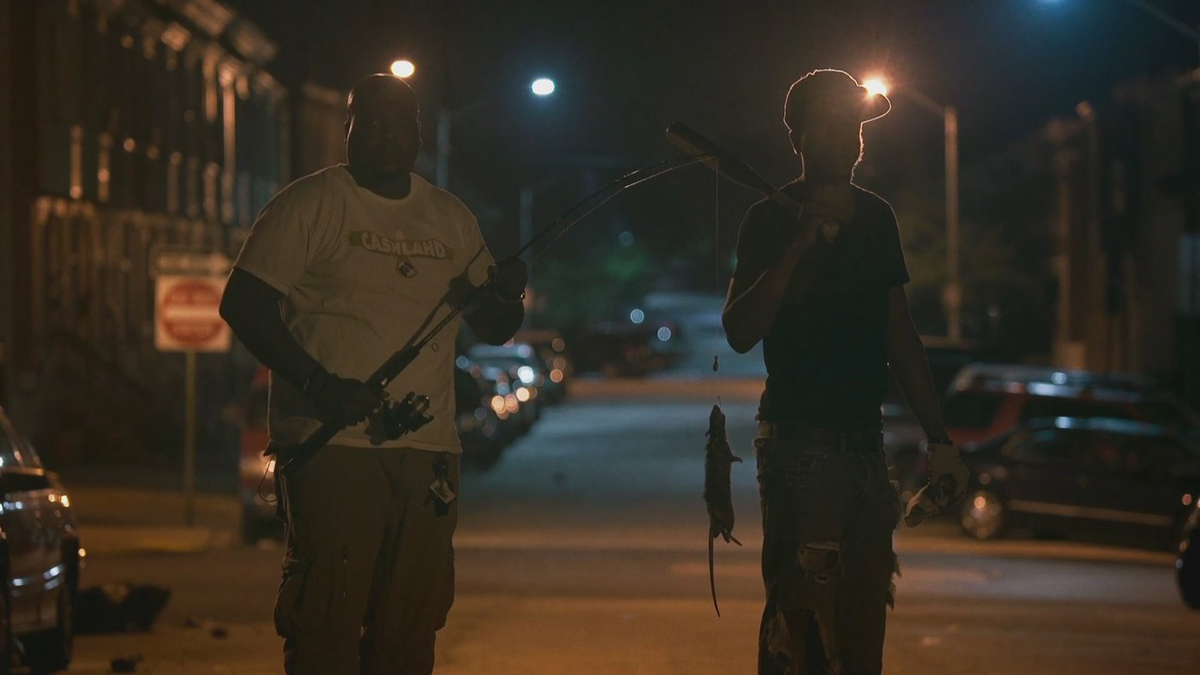 Rat Film[/caption]
Art of the Real, a showcase for boundary-pushing nonfiction film presented each year by the Film Society of Lincoln Center will open with the New York premiere of Theo Anthony’s eye-opening Rat Film, a buzzed-about film that creates a damning account of segregation and injustice in Baltimore via the cultural history of rats in the city.
New works by familiar names at the festival include World Without End (No Reported Incidents) from director Jem Cohen (Museum Hours, Benjamin Smoke), a sweet, structuralist look at three small English towns along the Thames Estuary; Pow Wow, a series of visually striking vignettes by Robinson Devor (Zoo); and Untitled, a moving elegy to the late Michael Glawogger composed of remarkable footage from the filmmaker’s unfinished final project, lovingly assembled by his longtime editor Monika Willi. Complementing the roster of esteemed filmmakers are works by innovative and exciting new artists, including Salomé Jashi, whose acerbic The Dazzling Light of Sunset follows a local news team in rural Georgia, and Shengze Zhu, whose compassionate Another Year follows a series of meals shared by a family of Chinese migrant workers, revealing both intimate household dynamics and the broader socioeconomic realities of the country.
Highlights also include the North American premiere of two works from Heinz Emigholz’s ambitious “Streetscapes” series—his magnum opus Streetscapes [Dialogue], and 2+2=22 [The Alphabet], a response to Godard’s One Plus One— and special events with artists Basma Alsharif, whose cine-performance Doppelgänger has been performed around the world, and Moyra Davey, who will participate in a career-spanning discussion after the U.S. premiere of her two new works, essayistic tributes to Chantal Akerman, Karl Ove Knausgård, and Virginia Woolf.
In addition, there will be a spotlight on Ignacio Agüero and José Luis Torres Leiva, two prominent Chilean documentarians whose works act in conversation. They will be represented here by one new premiere and one older film each, including Agüero’s This Is the Way I Like It II, in its U.S. premiere, which moves between past and present and follows the director as he interviews fellow filmmakers, and his personal The Other Day (2013), beautifully shot in his own home; and José Luis Torres Leiva’s The Sky, the Earth, and the Rain (2008), about four rural Chileans struggling to find meaningful connection, alongside the U.S. premiere of his The Wind Knows That I’m Coming Back Home, a hybrid work that features Agüero, following the elder filmmaker as he prepares to shoot his first fiction film.
This year’s Art of the Real also features a tribute to the late Brazilian filmmaker Andrea Tonacci, a key figure in Brazil’s udigrudi(“underground”) or marginal cinema movement, who passed away last December. Three rarely screened key films will be presented on 35mm, including Blah Blah Blah and Bang Bang, two short classics of the marginal cinema movement that opposed both Cinema Novo and Brazil’s military government, and Hills of Disorder, which tells the story of an indigenous man who survived the massacre of his tribe through a blend of re-enactments and archival news reports.
The fourth edition of Art of the Real will take place April 20 to May 2, 2017 at the Elinor Bunin Munroe Film Center (144 West 65th St.).
FILMS & DESCRIPTIONS
OPENING NIGHT
Rat Film
Theo Anthony, USA, 2016, 84m
Balancing a cultural history of rats in Baltimore with portraits of the city’s present-day rat catchers, Theo Anthony presents a damning account of entrenched racism and (sometimes questionable) scientific research ordered by governments and financial institutions. With a hypnotic voiceover by Maureen Jones and music by Baltimore native Dan Deacon, the film connects these multitudinous injustices with footage of Google Maps navigation, archival materials, interviews, poetry, and a tour of Frances Glessner Lee’s “Nutshell Studies of Unexplained Death” forensic dioramas. Dense but accessible, Rat Film is a vital document that refuses easy answers or classifications. A Cinema Guild release. New York Premiere
2+2=22 [The Alphabet]
Heinz Emigholz, Germany, 2017, 88m
German with English subtitles
Celebrated for his rigorous films about the experience of architecture (Schindler’s Houses, Loos Ornamental), Heinz Emigholz launches a new chapter of his “Photography and Beyond” project with an ambitious four-film cycle titled “Streetscapes” (which premiered to great acclaim at the recent Berlinale). The first installment is an open-ended response to Godard’s One Plus One, which chronicled the Rolling Stones in the studio at the height of the 1960s counterculture. This 21st-century update documents the German post-rock band Kreidler at work on their album ABC in a wood-paneled hall in Tbilisi, Georgia. Throughout Emigholz cuts to shots of the city streets outside and to the briskly leafed pages of his densely illustrated notebooks, while a voiceover ruminates on the nature of art and desire. North American Premiere
Ama-San
Cláudia Varejão, Portugal/Switzerland, 2016, 113m
Japanese with English subtitles
Cláudia Varejão’s intimate documentary focuses on women living in a small town off of Japan’s Shima Peninsula who have carried on the 2,000-year-old tradition of diving for pearls, sea urchins, and abalone. Challenging notions of how Japanese females are supposed to behave, the Ama (“sea women”) dive without scuba gear or oxygen tanks, wearing minimal protection. Like the Ama probing the ocean’s depths, Varejão’s camera examines the minutiae of the women’s day-to-day existence: their hair curlers, the sea salt clinging to their skin, and assorted daily feminine tasks that are all too often taken for granted. Winner of best Portuguese documentary at DocLisboa. U.S. Premiere
Another Year
Shengze Zhu, China, 2016, 181m
Chinese (Hubei dialect) with English subtitles
Thirteen meals shared by a family of migrant workers over 14 months. Through this simple premise, Shengze Zhu’s film speaks volumes about life in contemporary China. Shot in leisurely long takes with a static camera amid cramped living quarters, Another Yearconstantly finds something new and unexpected to focus on, magnifying small physical and psychological details and capturing subtly shifting family dynamics. Zhu uses her subjects as a microcosm for China’s broader socioeconomic realities, but her compassionate commitment to patient observation does justice to their specificity and dignity. U.S. Premiere
Brothers of the Night / Brüder der Nacht
Patric Chiha, Austria, 2016, 88m
Romani, Bulgarian, and German with English subtitles
In a Viennese underworld that’s somewhere between the theatrical glam of Fassbinder’s Querelle and the cinéma du look of 1980s France, Patric Chiha (Domain) follows a group of Bulgarian Roma who support their families back home by taking on gay sex work. Through stylized interviews and staged situations, these (mostly straight) men frankly discuss their rates, customers’ requests, and the financial hardships they face. Nevertheless, the film never shies away from the inherent humor and playfulness of human sexuality: every aspect of desire gets burlesqued, be it cash or water sports. U.S. Premiere
Casa Roshell
Camila José Donoso, Chile, 2016, 71m
Spanish with English subtitles
Roshell Terranova, 51, is the co-owner of Club Roshell, a transgender club on an unassuming street in Mexico City that holds “personality workshops” for its clientele, offering tutorials on makeup, costumes, heels, and other accessories. A “safe space” in the sincerest sense, the club allows men to eschew the limits of macho culture, push the boundaries of their own gender, and, as Roshell emphasizes in an address to the club’s patrons, to own their identities and desires, to feel pretty and less alone. As with her previous feature, Naomi Campbel (an Art of the Real 2015 selection), Camila José Donoso’s richly detailed film immerses itself in its world, mixing digital, 16mm film, and even closed-circuit TV footage to locate a glamorous utopia within the confines of the club. New York Premiere
The Dazzling Light of Sunset / Daisis miziduloba
Salomé Jashi, Georgia/Germany, 2016, 74m
Georgian with English subtitles
Beautifully shot and strangely comic, Salomé Jashi’s documentary follows Dariko and Khaka, an ultra-low-budget local news team in rural Georgia. Whether it’s elections, death announcements, a rare owl, or an oddly stressful fashion show for prepubescent and teenage girls, the pair approach each story without ego and with absolute professionalism, managing every aspect of reporting and production themselves. Through subtle editing choices, Jashi suggests that nothing truly changes in this former Soviet satellite—but allows her subjects to have one last acerbic word on the matter of representation. New York Premiere
Dark Skull / Viejo Calavera
Kiro Russo, Bolivia/Qatar, 2016, 80m
Spanish with English subtitles
A hybrid work set in the uniquely rough world of the Bolivian mines, Dark Skull is a character drama and an idiosyncratic portrait of workers’ daily lives. The narrative unfolds around the troubled and troublesome Elder, sent to live with his grandmother in Huanuni, a small country town in Bolivia. Once there, Elder proves a constant embarrassment to his godfather, Francisco, frequently skipping work to get drunk or high. But his off-the-clock activities eventually lead him to a dark secret about Francisco’s involvement in his father’s death. Shot largely inside the mines, and made in collaboration with the miners’ union, Kiro Russo’s elegant and formally daring film employs an ambitious structure and gorgeous cinematography to express the nuances and codes of the workers. New York Premiere
LIVE EVENT
Doppelgänger: a cine-performance by Basma Alsharif
2014, 45m
In Doppelgänger, which premiered at the Berlin Documentary Forum, and has since been performed at the Sharjah Biennial and in Gwangju, South Korea, artist and filmmaker Basma Alsharif examines her own family history and the concept of the double in a performance that reflexively weaves together the Occupation of Palestine, narrative cinema, and the possibility for Utopia. In reference to her own practice, Alsharif proposes how bilocation and doubling might enable the moving image to embody the Palestinian perspective, and invites the audience to engage in a new kind of voluntary collective memory. U.S. Premiere
Empathy
Jeffrey Dunn Rovinelli, USA, 2016, 83m
This rigorous yet sensitive debut from Jeffrey Dunn Rovinelli follows Em, a queer sex worker, as she moves between New York City and her native Pittsburgh, struggling to kick her heroin addiction and get on with her life. With intimate access to seemingly all aspects of her life—her friends, lovers, clients, and Em alone—we witness firsthand the difficulties of getting clean and are given a stark but touching image of what it means to be young and at odds with oneself today. Elegantly shot on a mixture of digital and Super 16mm film and suffused with an intricate and atmospheric score, Empathy deftly chronicles its subject’s attempts to regain (or preserve) a shred of autonomy and evokes both the tragedy and the comedy of dire personal struggles. North American Premiere
From a Year of Non-Events
Ann Carolin Renninger & René Frölke, Germany, 2017, 83m
German with English subtitles
The latest by Renninger and Frölke (Le Beau danger) tenderly traces the daily rhythms and rituals of 90-year-old Willi Detert on his rural northern German farm by way of an elegantly interwoven tapestry of 16mm and Super 8mm images. With Willi no longer able to work the land, the farm’s grounds are overrun and his house is littered with physical remnants of days gone by (and cats). In his presence, time itself passes in an altogether distinctive way, and the filmmakers meticulously capture this present speckled with the past. From a Year of Non-Events leaves us with a rich sense of both a man and a place as conduits for history. North American Premiere
Gray House
Austin Lynch & Matthew Booth, USA, 2017, 76m
Deftly blending vérité footage, interviews, landscapes, and fictional elements (some of which involve actors Denis Lavant and Aurore Clément), Gray House candidly explores blue-collar lives across five different settings. By way of stunning nocturnal imagery and a commandingly atmospheric sound design, the film presents glimpses of corners of the country seldom portrayed in cinema—trailer parks, industrial hallways, cluttered desks in small business offices—and methodically unearths their obscure beauty. Perhaps more urgently, Lynch and Booth provide ample screen time to American working-class people who are seen in films even less often, carving out a space for them to express their fears, desires, politics, and musings about their everyday realities. North American Premiere
In Time to Come
Tan Pin Pin, Singapore, 2017, 62m
Returning to themes of redevelopment and excavation of the past, Tan Pin Pin carefully probes the topography of Singapore with long, slow-burning shots of schoolchildren, shopping malls, and workers, digging up a time capsule buried by the state. Less overtly political than her film To Singapore, with Love (Art of the Real 2014), In Time to Come questions Singaporeans’ relationship to time and each other. In every quotidian interaction we witness, an underlying question burns: how can true connection take place when so much has been preshaped and destroyed by a government that’s only looking out for its own interests? U.S. Premiere
The Modern Jungle / La Selva Negra
Charles Fairbanks & Saul Kak, Mexico/USA, 2016, 72m
Zoque and Spanish with English subtitles
Centered on the relationship between indigenous and Western culture, The Modern Jungle documents the tensions that emerge when an elderly Zoque couple come into contact with global capitalism and the filmmaking process. Carmen and Juan are fighting to keep the small plot of land they’ve worked on their whole lives in southern Mexico. Juan, who is also a shaman, struggles with a hernia that traditional methods can’t treat, and soon gets sucked into a nutritional supplement pyramid scheme. Fairbanks and Kak (himself an advocate for indigenous rights) disclose upfront that Juan and Maria are being paid, dismissing long-held myths about “pure” relationships between ethnographer and subject. New York Premiere
MOYRA DAVEY: TWO PREMIERES
Hemlock Forest (2016, 42m) + Wedding Loop (2017, 23m)
Moyra Davey, USA
Steeped in personal and literary history, Moyra Davey’s videos explore compulsion, creativity, and the feminine. Hemlock Forest, a sequel to her 2011 work Les Goddesses, and Wedding Loop, employ the same rigorous formal strategy: Davey paces in front of the camera inside her apartment, reciting her narration from an iPhone, then incorporates old photographs or home movies to form a visual essay around the monologue. In the former, Davey traces the worlds of Karl Ove Knausgård and Chantal Akerman as she considers the implications of her son leaving home and Akerman’s suicide; the latter recounts a wedding party and the women involved, reflected through Virginia Woolf’s family history. An in-depth discussion, tracing many different facets of Davey’s decades-long career as an artist, will follow the screening. U.S. Premiere
The Other Day / El otro díaIgnacio
Agüero, Chile, 2013, 122m
Spanish with English subtitles
Ignacio Agüero fashions a documentary that manages to encompass his family and national history, Chile’s economic problems, identity, and nature via the most low-key of approaches: the film is shot primarily inside his home and through a door that leads to the street, establishing a clear line between the self and the world. Beautifully photographed, this impressive work locates the profound through family heirlooms and encounters with strangers who come knocking.
Pow Wow
Robinson Devor, USA, 2016, 72m
Robinson Devor (Police Beat, Zoo) returns to documentary after a 10-year hiatus with Pow Wow, a visually striking series of vignettes. Showcasing the many environmental contrasts of the Coachella Valley in Palm Springs, CA, the film has an equally diverse array of subjects, including legendary Las Vegas comedian Shecky Greene, an elderly Austrian heiress, trust-funders, Native Americans, and white golfers who participate in their club’s annual “pow wow” party by wearing feather headdresses. These slices of life gradually come to illustrate the story of Willie Boy, a Paiute youth who escaped a mounted posse on foot across 500 miles of desert in 1908. New York Premiere
The Sky, the Earth, and the Rain / El Cielo la tierra y la lluvia
José Luis Torres Leiva, Chile/France/Germany, 2008, 35mm, 112m
Spanish with English subtitles
In a remote, rural harbor town in southern Chile, Ana carries out her daily routines in silence, even when she’s with others. After she is fired, her gregarious best friend Veronica secures her a job as a housekeeper for Toro, a solitary man who lives outside the city. As the characters struggle to connect and discover themselves, Torres Leiva’s camera finds the beauty in their sepia-toned surroundings: the inside of Veronica’s home, a lonely forest path, the muddy bayous that encircle their town. As these moments accumulate, the film achieves a state of contemplative grace.
Streetscapes [Dialogue]
Heinz Emigholz, Germany, 2017, 132m
A director speaks at length to a psychoanalyst, confiding his obsessions, fears, ideas about cinema, and psychological blocks, and eventually comes to realize that this all-encompassing exchange could be the basis of a film . . . Streetscapes [Dialogue] is based on a six-day psychoanalytic marathon that Emigholz undertook with trauma specialist Zohar Rubinstein—their roles are played in the film by American actor John Erdman and Argentinian filmmaker Jonathan Perel, who are photographed in and around buildings in Uruguay by Julio Vilamajó, Eladio Dieste, and Arno Brandlhuber. The result is Emigholz’s magnum opus, a demonstration of his singular working methods, and a playful, moving treatise on trauma and architecture in which foreground and background carry equal weight. North American Premiere
This Is the Way I Like It II / Como me da la gana II
Ignacio Agüero, Chile, 2016, 86m
Spanish with English subtitles
In 1985, Ignacio Agüero spontaneously visited other Chilean directors on set to ask them about making films under Pinochet’s dictatorship. (The resulting 30-minute short, Como me da la gana, was, unsurprisingly, censored.) Thirty years later, Agüero revisits the concept, but he dramatically complicates it, by both rephrasing his line of questioning and repeatedly interrupting these recorded scenes with clips from his family’s home movies and his own films, interviews with random people, and landscape shots. This complex and entertaining film, which won the International Competition Grand Prix at FIDMarseille, dramatizes an ongoing negotiation between past and present. U.S. Premiere
THREE BY TONACCI
Blah Blah Blah / Blablablá (1968, 35mm, 26m) + Bang Bang / Bangue Bangue (1971, 35mm, 80m)
Andrea Tonacci, Brazil
Portuguese with English subtitles
A key figure in Brazil’s udigrudi (“underground”) or marginal cinema movement, Andrea Tonacci passed away last December at the age of 72. Blah Blah Blah, his seminal short, is a middle finger to both Cinema Novo and Brazil’s military government at the time: in the face of national crisis, a dictator makes a long speech on television, seeking to justify his government in order to achieve an illusory peace. Bang Bang, his structurally radical first feature, is a “Maoist detective comedy”: a monkey man is chased by a gang of bizarre criminals, each encounter growing increasingly absurd.
and
Hills of Disorder / Serras da Desordem
Andrea Tonacci, Brazil, 2006, 35mm, 135m
Portuguese with English subtitles
Remaining true to his radical roots, Andrea Tonacci retells the true story of Carapiru, an indigenous man who survived the massacre of his tribe in 1978, roaming over 350 miles through the mountains of Central Brazil and toward Western civilization. Years later, a government agency attempts to resettle him to his native village—yet another uprooting. Commenting on Brazil’s alternately fetishistic and ugly treatment of native peoples as well as the director’s own gaze, Tonacci’s penultimate film constantly asks difficult questions, and employs a challenging aesthetic approach that blends re-enactments and archival news reports.
Untitled
Michael Glawogger & Monika Willi, Austria, 2017, 107m
In English and German with English subtitles
A traveling filmmaker who found beauty in some of the harshest living conditions on the planet, Michael Glawogger (Whores’ Glory, Workingman’s Death) contracted malaria and died in 2014 while filming in Liberia, a little over four months into what was meant to be a year-long journey around the world. (“The most beautiful film I could imagine is one which would never come to rest,” he said of the project.) His longtime editor, Monika Willi, has assembled the extraordinary footage—shot by Attila Boa—into Untitled, based on Glawogger’s notes for its completion and incorporating excerpts from his witty and meditative journal entries. The result is a revelatory glimpse into Glawogger’s ideas and process as well as a moving elegy to the man. North American Premiere
Voyage to Terengganu / Kisah Pelayaran Ke Terengganu
Amir Muhammad & Badrul Hisham Ismail, Malaysia, 2016, 62m
Malay with English subtitles
Retracing the early 19th-century travels of the great Malaysian writer Munshi Abdullah, Amir Muhammad (The Big Durian) and Badrul Hisham Ismail journey across the state of Terengganu and interview its inhabitants, including a dirt bike enthusiast/mechanic, the owner of a camera repair shop, and various wheeler-dealers at the marketplace. Interspersing these present-day observations with excerpts of Abdullah’s text—by turns critical and ironic, some outdated and some still relevant—the directors fashion a warm, sly, humanistic travelogue that explores their countrymen’s beliefs about money, religion, and nationhood. North American Premiere
The Wind Knows That I’m Coming Back Home / El viento sabe que vuelvo a casa
José Luis Torres Leiva, Chile, 2016, 103m
Spanish with English subtitles
In the early 1980s, a couple vanished without a trace in the woods of Meulín Island. Director Ignacio Agüero (This Is the Way I Like It II) had intended to shoot a documentary about this strange occurrence, but eventually abandoned the project. Now, he journeys to the area to shoot his first fiction film based on the events, and José Luis Torre Leiva follows Agüero as he speaks with locals about the legends that have arisen surrounding this mysterious occurrence in between scouting for locations and auditioning nonprofessionals, who often provide a source of tender comic relief. The film is also a meditation on the isolation of those living on Chile’s Chiloé Archipelago, capturing its unique and solitary landscapes. U.S. Premiere
World Without End (No Reported Incidents)
Jem Cohen, USA/UK, 2016, 56m
Perfectly encapsulating the sweet-hearted chatter unique to small-town England, Jem Cohen offers views of three different (yet almost identical) cities along the Thames Estuary: Southend-on-Sea, Leigh-on-Sea, and Canvey Island. With a structuralist approach, Cohen (Museum Hours) shows the high street, black sand dunes, and shops with great care; meanwhile, the cities’ inhabitants offer insights into the class codes of hats, Indian curry, the imaginary beaches of London, and punk rock (courtesy of members of Dr. Feelgood). A Grasshopper Film release. New York Premiere
Rat Film[/caption]
Art of the Real, a showcase for boundary-pushing nonfiction film presented each year by the Film Society of Lincoln Center will open with the New York premiere of Theo Anthony’s eye-opening Rat Film, a buzzed-about film that creates a damning account of segregation and injustice in Baltimore via the cultural history of rats in the city.
New works by familiar names at the festival include World Without End (No Reported Incidents) from director Jem Cohen (Museum Hours, Benjamin Smoke), a sweet, structuralist look at three small English towns along the Thames Estuary; Pow Wow, a series of visually striking vignettes by Robinson Devor (Zoo); and Untitled, a moving elegy to the late Michael Glawogger composed of remarkable footage from the filmmaker’s unfinished final project, lovingly assembled by his longtime editor Monika Willi. Complementing the roster of esteemed filmmakers are works by innovative and exciting new artists, including Salomé Jashi, whose acerbic The Dazzling Light of Sunset follows a local news team in rural Georgia, and Shengze Zhu, whose compassionate Another Year follows a series of meals shared by a family of Chinese migrant workers, revealing both intimate household dynamics and the broader socioeconomic realities of the country.
Highlights also include the North American premiere of two works from Heinz Emigholz’s ambitious “Streetscapes” series—his magnum opus Streetscapes [Dialogue], and 2+2=22 [The Alphabet], a response to Godard’s One Plus One— and special events with artists Basma Alsharif, whose cine-performance Doppelgänger has been performed around the world, and Moyra Davey, who will participate in a career-spanning discussion after the U.S. premiere of her two new works, essayistic tributes to Chantal Akerman, Karl Ove Knausgård, and Virginia Woolf.
In addition, there will be a spotlight on Ignacio Agüero and José Luis Torres Leiva, two prominent Chilean documentarians whose works act in conversation. They will be represented here by one new premiere and one older film each, including Agüero’s This Is the Way I Like It II, in its U.S. premiere, which moves between past and present and follows the director as he interviews fellow filmmakers, and his personal The Other Day (2013), beautifully shot in his own home; and José Luis Torres Leiva’s The Sky, the Earth, and the Rain (2008), about four rural Chileans struggling to find meaningful connection, alongside the U.S. premiere of his The Wind Knows That I’m Coming Back Home, a hybrid work that features Agüero, following the elder filmmaker as he prepares to shoot his first fiction film.
This year’s Art of the Real also features a tribute to the late Brazilian filmmaker Andrea Tonacci, a key figure in Brazil’s udigrudi(“underground”) or marginal cinema movement, who passed away last December. Three rarely screened key films will be presented on 35mm, including Blah Blah Blah and Bang Bang, two short classics of the marginal cinema movement that opposed both Cinema Novo and Brazil’s military government, and Hills of Disorder, which tells the story of an indigenous man who survived the massacre of his tribe through a blend of re-enactments and archival news reports.
The fourth edition of Art of the Real will take place April 20 to May 2, 2017 at the Elinor Bunin Munroe Film Center (144 West 65th St.).
FILMS & DESCRIPTIONS
OPENING NIGHT
Rat Film
Theo Anthony, USA, 2016, 84m
Balancing a cultural history of rats in Baltimore with portraits of the city’s present-day rat catchers, Theo Anthony presents a damning account of entrenched racism and (sometimes questionable) scientific research ordered by governments and financial institutions. With a hypnotic voiceover by Maureen Jones and music by Baltimore native Dan Deacon, the film connects these multitudinous injustices with footage of Google Maps navigation, archival materials, interviews, poetry, and a tour of Frances Glessner Lee’s “Nutshell Studies of Unexplained Death” forensic dioramas. Dense but accessible, Rat Film is a vital document that refuses easy answers or classifications. A Cinema Guild release. New York Premiere
2+2=22 [The Alphabet]
Heinz Emigholz, Germany, 2017, 88m
German with English subtitles
Celebrated for his rigorous films about the experience of architecture (Schindler’s Houses, Loos Ornamental), Heinz Emigholz launches a new chapter of his “Photography and Beyond” project with an ambitious four-film cycle titled “Streetscapes” (which premiered to great acclaim at the recent Berlinale). The first installment is an open-ended response to Godard’s One Plus One, which chronicled the Rolling Stones in the studio at the height of the 1960s counterculture. This 21st-century update documents the German post-rock band Kreidler at work on their album ABC in a wood-paneled hall in Tbilisi, Georgia. Throughout Emigholz cuts to shots of the city streets outside and to the briskly leafed pages of his densely illustrated notebooks, while a voiceover ruminates on the nature of art and desire. North American Premiere
Ama-San
Cláudia Varejão, Portugal/Switzerland, 2016, 113m
Japanese with English subtitles
Cláudia Varejão’s intimate documentary focuses on women living in a small town off of Japan’s Shima Peninsula who have carried on the 2,000-year-old tradition of diving for pearls, sea urchins, and abalone. Challenging notions of how Japanese females are supposed to behave, the Ama (“sea women”) dive without scuba gear or oxygen tanks, wearing minimal protection. Like the Ama probing the ocean’s depths, Varejão’s camera examines the minutiae of the women’s day-to-day existence: their hair curlers, the sea salt clinging to their skin, and assorted daily feminine tasks that are all too often taken for granted. Winner of best Portuguese documentary at DocLisboa. U.S. Premiere
Another Year
Shengze Zhu, China, 2016, 181m
Chinese (Hubei dialect) with English subtitles
Thirteen meals shared by a family of migrant workers over 14 months. Through this simple premise, Shengze Zhu’s film speaks volumes about life in contemporary China. Shot in leisurely long takes with a static camera amid cramped living quarters, Another Yearconstantly finds something new and unexpected to focus on, magnifying small physical and psychological details and capturing subtly shifting family dynamics. Zhu uses her subjects as a microcosm for China’s broader socioeconomic realities, but her compassionate commitment to patient observation does justice to their specificity and dignity. U.S. Premiere
Brothers of the Night / Brüder der Nacht
Patric Chiha, Austria, 2016, 88m
Romani, Bulgarian, and German with English subtitles
In a Viennese underworld that’s somewhere between the theatrical glam of Fassbinder’s Querelle and the cinéma du look of 1980s France, Patric Chiha (Domain) follows a group of Bulgarian Roma who support their families back home by taking on gay sex work. Through stylized interviews and staged situations, these (mostly straight) men frankly discuss their rates, customers’ requests, and the financial hardships they face. Nevertheless, the film never shies away from the inherent humor and playfulness of human sexuality: every aspect of desire gets burlesqued, be it cash or water sports. U.S. Premiere
Casa Roshell
Camila José Donoso, Chile, 2016, 71m
Spanish with English subtitles
Roshell Terranova, 51, is the co-owner of Club Roshell, a transgender club on an unassuming street in Mexico City that holds “personality workshops” for its clientele, offering tutorials on makeup, costumes, heels, and other accessories. A “safe space” in the sincerest sense, the club allows men to eschew the limits of macho culture, push the boundaries of their own gender, and, as Roshell emphasizes in an address to the club’s patrons, to own their identities and desires, to feel pretty and less alone. As with her previous feature, Naomi Campbel (an Art of the Real 2015 selection), Camila José Donoso’s richly detailed film immerses itself in its world, mixing digital, 16mm film, and even closed-circuit TV footage to locate a glamorous utopia within the confines of the club. New York Premiere
The Dazzling Light of Sunset / Daisis miziduloba
Salomé Jashi, Georgia/Germany, 2016, 74m
Georgian with English subtitles
Beautifully shot and strangely comic, Salomé Jashi’s documentary follows Dariko and Khaka, an ultra-low-budget local news team in rural Georgia. Whether it’s elections, death announcements, a rare owl, or an oddly stressful fashion show for prepubescent and teenage girls, the pair approach each story without ego and with absolute professionalism, managing every aspect of reporting and production themselves. Through subtle editing choices, Jashi suggests that nothing truly changes in this former Soviet satellite—but allows her subjects to have one last acerbic word on the matter of representation. New York Premiere
Dark Skull / Viejo Calavera
Kiro Russo, Bolivia/Qatar, 2016, 80m
Spanish with English subtitles
A hybrid work set in the uniquely rough world of the Bolivian mines, Dark Skull is a character drama and an idiosyncratic portrait of workers’ daily lives. The narrative unfolds around the troubled and troublesome Elder, sent to live with his grandmother in Huanuni, a small country town in Bolivia. Once there, Elder proves a constant embarrassment to his godfather, Francisco, frequently skipping work to get drunk or high. But his off-the-clock activities eventually lead him to a dark secret about Francisco’s involvement in his father’s death. Shot largely inside the mines, and made in collaboration with the miners’ union, Kiro Russo’s elegant and formally daring film employs an ambitious structure and gorgeous cinematography to express the nuances and codes of the workers. New York Premiere
LIVE EVENT
Doppelgänger: a cine-performance by Basma Alsharif
2014, 45m
In Doppelgänger, which premiered at the Berlin Documentary Forum, and has since been performed at the Sharjah Biennial and in Gwangju, South Korea, artist and filmmaker Basma Alsharif examines her own family history and the concept of the double in a performance that reflexively weaves together the Occupation of Palestine, narrative cinema, and the possibility for Utopia. In reference to her own practice, Alsharif proposes how bilocation and doubling might enable the moving image to embody the Palestinian perspective, and invites the audience to engage in a new kind of voluntary collective memory. U.S. Premiere
Empathy
Jeffrey Dunn Rovinelli, USA, 2016, 83m
This rigorous yet sensitive debut from Jeffrey Dunn Rovinelli follows Em, a queer sex worker, as she moves between New York City and her native Pittsburgh, struggling to kick her heroin addiction and get on with her life. With intimate access to seemingly all aspects of her life—her friends, lovers, clients, and Em alone—we witness firsthand the difficulties of getting clean and are given a stark but touching image of what it means to be young and at odds with oneself today. Elegantly shot on a mixture of digital and Super 16mm film and suffused with an intricate and atmospheric score, Empathy deftly chronicles its subject’s attempts to regain (or preserve) a shred of autonomy and evokes both the tragedy and the comedy of dire personal struggles. North American Premiere
From a Year of Non-Events
Ann Carolin Renninger & René Frölke, Germany, 2017, 83m
German with English subtitles
The latest by Renninger and Frölke (Le Beau danger) tenderly traces the daily rhythms and rituals of 90-year-old Willi Detert on his rural northern German farm by way of an elegantly interwoven tapestry of 16mm and Super 8mm images. With Willi no longer able to work the land, the farm’s grounds are overrun and his house is littered with physical remnants of days gone by (and cats). In his presence, time itself passes in an altogether distinctive way, and the filmmakers meticulously capture this present speckled with the past. From a Year of Non-Events leaves us with a rich sense of both a man and a place as conduits for history. North American Premiere
Gray House
Austin Lynch & Matthew Booth, USA, 2017, 76m
Deftly blending vérité footage, interviews, landscapes, and fictional elements (some of which involve actors Denis Lavant and Aurore Clément), Gray House candidly explores blue-collar lives across five different settings. By way of stunning nocturnal imagery and a commandingly atmospheric sound design, the film presents glimpses of corners of the country seldom portrayed in cinema—trailer parks, industrial hallways, cluttered desks in small business offices—and methodically unearths their obscure beauty. Perhaps more urgently, Lynch and Booth provide ample screen time to American working-class people who are seen in films even less often, carving out a space for them to express their fears, desires, politics, and musings about their everyday realities. North American Premiere
In Time to Come
Tan Pin Pin, Singapore, 2017, 62m
Returning to themes of redevelopment and excavation of the past, Tan Pin Pin carefully probes the topography of Singapore with long, slow-burning shots of schoolchildren, shopping malls, and workers, digging up a time capsule buried by the state. Less overtly political than her film To Singapore, with Love (Art of the Real 2014), In Time to Come questions Singaporeans’ relationship to time and each other. In every quotidian interaction we witness, an underlying question burns: how can true connection take place when so much has been preshaped and destroyed by a government that’s only looking out for its own interests? U.S. Premiere
The Modern Jungle / La Selva Negra
Charles Fairbanks & Saul Kak, Mexico/USA, 2016, 72m
Zoque and Spanish with English subtitles
Centered on the relationship between indigenous and Western culture, The Modern Jungle documents the tensions that emerge when an elderly Zoque couple come into contact with global capitalism and the filmmaking process. Carmen and Juan are fighting to keep the small plot of land they’ve worked on their whole lives in southern Mexico. Juan, who is also a shaman, struggles with a hernia that traditional methods can’t treat, and soon gets sucked into a nutritional supplement pyramid scheme. Fairbanks and Kak (himself an advocate for indigenous rights) disclose upfront that Juan and Maria are being paid, dismissing long-held myths about “pure” relationships between ethnographer and subject. New York Premiere
MOYRA DAVEY: TWO PREMIERES
Hemlock Forest (2016, 42m) + Wedding Loop (2017, 23m)
Moyra Davey, USA
Steeped in personal and literary history, Moyra Davey’s videos explore compulsion, creativity, and the feminine. Hemlock Forest, a sequel to her 2011 work Les Goddesses, and Wedding Loop, employ the same rigorous formal strategy: Davey paces in front of the camera inside her apartment, reciting her narration from an iPhone, then incorporates old photographs or home movies to form a visual essay around the monologue. In the former, Davey traces the worlds of Karl Ove Knausgård and Chantal Akerman as she considers the implications of her son leaving home and Akerman’s suicide; the latter recounts a wedding party and the women involved, reflected through Virginia Woolf’s family history. An in-depth discussion, tracing many different facets of Davey’s decades-long career as an artist, will follow the screening. U.S. Premiere
The Other Day / El otro díaIgnacio
Agüero, Chile, 2013, 122m
Spanish with English subtitles
Ignacio Agüero fashions a documentary that manages to encompass his family and national history, Chile’s economic problems, identity, and nature via the most low-key of approaches: the film is shot primarily inside his home and through a door that leads to the street, establishing a clear line between the self and the world. Beautifully photographed, this impressive work locates the profound through family heirlooms and encounters with strangers who come knocking.
Pow Wow
Robinson Devor, USA, 2016, 72m
Robinson Devor (Police Beat, Zoo) returns to documentary after a 10-year hiatus with Pow Wow, a visually striking series of vignettes. Showcasing the many environmental contrasts of the Coachella Valley in Palm Springs, CA, the film has an equally diverse array of subjects, including legendary Las Vegas comedian Shecky Greene, an elderly Austrian heiress, trust-funders, Native Americans, and white golfers who participate in their club’s annual “pow wow” party by wearing feather headdresses. These slices of life gradually come to illustrate the story of Willie Boy, a Paiute youth who escaped a mounted posse on foot across 500 miles of desert in 1908. New York Premiere
The Sky, the Earth, and the Rain / El Cielo la tierra y la lluvia
José Luis Torres Leiva, Chile/France/Germany, 2008, 35mm, 112m
Spanish with English subtitles
In a remote, rural harbor town in southern Chile, Ana carries out her daily routines in silence, even when she’s with others. After she is fired, her gregarious best friend Veronica secures her a job as a housekeeper for Toro, a solitary man who lives outside the city. As the characters struggle to connect and discover themselves, Torres Leiva’s camera finds the beauty in their sepia-toned surroundings: the inside of Veronica’s home, a lonely forest path, the muddy bayous that encircle their town. As these moments accumulate, the film achieves a state of contemplative grace.
Streetscapes [Dialogue]
Heinz Emigholz, Germany, 2017, 132m
A director speaks at length to a psychoanalyst, confiding his obsessions, fears, ideas about cinema, and psychological blocks, and eventually comes to realize that this all-encompassing exchange could be the basis of a film . . . Streetscapes [Dialogue] is based on a six-day psychoanalytic marathon that Emigholz undertook with trauma specialist Zohar Rubinstein—their roles are played in the film by American actor John Erdman and Argentinian filmmaker Jonathan Perel, who are photographed in and around buildings in Uruguay by Julio Vilamajó, Eladio Dieste, and Arno Brandlhuber. The result is Emigholz’s magnum opus, a demonstration of his singular working methods, and a playful, moving treatise on trauma and architecture in which foreground and background carry equal weight. North American Premiere
This Is the Way I Like It II / Como me da la gana II
Ignacio Agüero, Chile, 2016, 86m
Spanish with English subtitles
In 1985, Ignacio Agüero spontaneously visited other Chilean directors on set to ask them about making films under Pinochet’s dictatorship. (The resulting 30-minute short, Como me da la gana, was, unsurprisingly, censored.) Thirty years later, Agüero revisits the concept, but he dramatically complicates it, by both rephrasing his line of questioning and repeatedly interrupting these recorded scenes with clips from his family’s home movies and his own films, interviews with random people, and landscape shots. This complex and entertaining film, which won the International Competition Grand Prix at FIDMarseille, dramatizes an ongoing negotiation between past and present. U.S. Premiere
THREE BY TONACCI
Blah Blah Blah / Blablablá (1968, 35mm, 26m) + Bang Bang / Bangue Bangue (1971, 35mm, 80m)
Andrea Tonacci, Brazil
Portuguese with English subtitles
A key figure in Brazil’s udigrudi (“underground”) or marginal cinema movement, Andrea Tonacci passed away last December at the age of 72. Blah Blah Blah, his seminal short, is a middle finger to both Cinema Novo and Brazil’s military government at the time: in the face of national crisis, a dictator makes a long speech on television, seeking to justify his government in order to achieve an illusory peace. Bang Bang, his structurally radical first feature, is a “Maoist detective comedy”: a monkey man is chased by a gang of bizarre criminals, each encounter growing increasingly absurd.
and
Hills of Disorder / Serras da Desordem
Andrea Tonacci, Brazil, 2006, 35mm, 135m
Portuguese with English subtitles
Remaining true to his radical roots, Andrea Tonacci retells the true story of Carapiru, an indigenous man who survived the massacre of his tribe in 1978, roaming over 350 miles through the mountains of Central Brazil and toward Western civilization. Years later, a government agency attempts to resettle him to his native village—yet another uprooting. Commenting on Brazil’s alternately fetishistic and ugly treatment of native peoples as well as the director’s own gaze, Tonacci’s penultimate film constantly asks difficult questions, and employs a challenging aesthetic approach that blends re-enactments and archival news reports.
Untitled
Michael Glawogger & Monika Willi, Austria, 2017, 107m
In English and German with English subtitles
A traveling filmmaker who found beauty in some of the harshest living conditions on the planet, Michael Glawogger (Whores’ Glory, Workingman’s Death) contracted malaria and died in 2014 while filming in Liberia, a little over four months into what was meant to be a year-long journey around the world. (“The most beautiful film I could imagine is one which would never come to rest,” he said of the project.) His longtime editor, Monika Willi, has assembled the extraordinary footage—shot by Attila Boa—into Untitled, based on Glawogger’s notes for its completion and incorporating excerpts from his witty and meditative journal entries. The result is a revelatory glimpse into Glawogger’s ideas and process as well as a moving elegy to the man. North American Premiere
Voyage to Terengganu / Kisah Pelayaran Ke Terengganu
Amir Muhammad & Badrul Hisham Ismail, Malaysia, 2016, 62m
Malay with English subtitles
Retracing the early 19th-century travels of the great Malaysian writer Munshi Abdullah, Amir Muhammad (The Big Durian) and Badrul Hisham Ismail journey across the state of Terengganu and interview its inhabitants, including a dirt bike enthusiast/mechanic, the owner of a camera repair shop, and various wheeler-dealers at the marketplace. Interspersing these present-day observations with excerpts of Abdullah’s text—by turns critical and ironic, some outdated and some still relevant—the directors fashion a warm, sly, humanistic travelogue that explores their countrymen’s beliefs about money, religion, and nationhood. North American Premiere
The Wind Knows That I’m Coming Back Home / El viento sabe que vuelvo a casa
José Luis Torres Leiva, Chile, 2016, 103m
Spanish with English subtitles
In the early 1980s, a couple vanished without a trace in the woods of Meulín Island. Director Ignacio Agüero (This Is the Way I Like It II) had intended to shoot a documentary about this strange occurrence, but eventually abandoned the project. Now, he journeys to the area to shoot his first fiction film based on the events, and José Luis Torre Leiva follows Agüero as he speaks with locals about the legends that have arisen surrounding this mysterious occurrence in between scouting for locations and auditioning nonprofessionals, who often provide a source of tender comic relief. The film is also a meditation on the isolation of those living on Chile’s Chiloé Archipelago, capturing its unique and solitary landscapes. U.S. Premiere
World Without End (No Reported Incidents)
Jem Cohen, USA/UK, 2016, 56m
Perfectly encapsulating the sweet-hearted chatter unique to small-town England, Jem Cohen offers views of three different (yet almost identical) cities along the Thames Estuary: Southend-on-Sea, Leigh-on-Sea, and Canvey Island. With a structuralist approach, Cohen (Museum Hours) shows the high street, black sand dunes, and shops with great care; meanwhile, the cities’ inhabitants offer insights into the class codes of hats, Indian curry, the imaginary beaches of London, and punk rock (courtesy of members of Dr. Feelgood). A Grasshopper Film release. New York Premiere
-
ABORTION: STORIES WOMEN TELL Spotlighting Voices on Both Sides of The Polarizing Issue, will Debut April 3 on HBO | Trailer
[caption id="attachment_21645" align="aligncenter" width="1200"] ABORTION: STORIES WOMEN TELL[/caption]
ABORTION: STORIES WOMEN TELL, a documentary film that presents a candid dialogue about one of the most divisive and timely issues facing America today, will debut Monday, April 3 on HBO.
Although 44 years have passed since the U.S. Supreme Court decision in Roe v. Wade recognized a woman’s right to choose, abortion remains one of the most polarizing issues in America. Since 2011, more than half of the states have imposed significant restrictions on abortion, including in Missouri, where only one abortion clinic remains open in the entire state, and patients and their doctors must navigate a 72-hour waiting period.
ABORTION: STORIES WOMEN TELL offers an intimate window into the lives of women living in Missouri. Tracy Droz Tragos (winner of the Sundance Film Festival Grand Jury Prize for U.S. Documentary for “Rich Hill”), a native of the state, sheds new light on the issue, focusing not on the debate, which is typically dominated by legislators and advocates, but on women’s personal stories. Presenting a candid dialogue about one of the most divisive and timely issues facing America today, the film debuts MONDAY, APRIL 3 (8:00-9:35 p.m. ET/PT) on HBO.
Wherever they stand the issue, the women in the film base their choices on individual circumstances and beliefs. ABORTION: STORIES WOMEN TELL underscores their strength and capacity to overcome and persevere through complicated and unexpected circumstances.
As a result of the state’s restrictions and the availability of just one operating clinic, many women in Missouri travel across the state line, to Hope Clinic for Women in Granite City, Ill., just 15 minutes from downtown St. Louis, but more than 100 miles from rural Missouri. Drawing on access to the clinic, the film features interviews with a range of women of all ages, backgrounds and faiths, as well as doctors, nurses and staff who face protestors on a daily basis, and activists on both sides, hoping to sway decisions and lives.
The film provides a balanced looks at abortion through women’s own words and experiences. Among the subjects:
Amie, a 30-year-old single mom who splits custody of her two children with her ex and works 70 hours a week as a waitress and bartender to make ends meet. She drives 400 miles round-trip to get to Hope Clinic, where she’s given a prescription for an abortion pill. Crying, Amie thinks of her kids and says, “I’m not just doing this for me.”
Chi Chi, a guard at Hope Clinic, who shields women daily from the anti-choice protesters in the clinic’s parking lot. Challenging a particularly vocal protestor, Chi Chi demands, “Are you gonna take care of these babies?” Reflecting on her own abortion years ago – her son was only six months old at the time – Chi Chi says it was the right decision because she didn’t want to end up on public assistance.
Erin, a doctor at Hope Clinic who says she had no problems when she worked at Planned Parenthood in Chicago, but has had protestors show up at her house since moving to the St. Louis area. “They identified me as an abortion provider, where I just think of myself as a gynecologist,” she says. When she feels worn down, Erin looks at a book with messages left by clinic patients, but warns that access to abortion keeps shrinking.
Kathy, a pro-life activist, who says that her dad once told her that she was almost aborted, and that she always felt “a kinship with the baby in the womb.” Kathy hosts a local event featuring Susan, a prominent pro-life speaker who has had three abortions and sees herself as protecting women from the shame and guilt that she felt.
Chelsea, a young woman who learned that her baby had a genetic defect and would not survive past birth. She and her husband consulted their pastor, who they say was supportive of their decision to terminate. As Christians, the couple says it was a tough choice, but knowing that they are not alone is the reason they want to share their story.
Reagan, an anti-abortion activist for Students for Life of America. Reagan says there’s a stereotype of pro-life people as old men and women holding up graphic signs of aborted fetuses, but insists that is changing. She and other members of her group hand out anti-Planned Parenthood information on campus, and are challenged by a pro-choice student, who points out that Planned Parenthood provides many other services for women besides abortion.
Te’Aundra, a young mother who was set to go to college on a basketball scholarship when she got pregnant. She wanted to give the baby up for adoption, but the father disagreed, though he didn’t want to be involved in raising the child. With a baby daughter now in her care and her college dreams dashed, Te’Aundra says, “I’d hate to say… I probably would have just had an abortion and just been on my way.”
Interspersed throughout the film are short stories of women who have had an abortion in the recent or distant past. A few regret the decision, while others say they would not be where they are now if they hadn’t made that choice.
The documentary had its world premiere at the 2016 Tribeca Film Festival.
https://www.youtube.com/watch?v=-X94ZaE7pso
ABORTION: STORIES WOMEN TELL[/caption]
ABORTION: STORIES WOMEN TELL, a documentary film that presents a candid dialogue about one of the most divisive and timely issues facing America today, will debut Monday, April 3 on HBO.
Although 44 years have passed since the U.S. Supreme Court decision in Roe v. Wade recognized a woman’s right to choose, abortion remains one of the most polarizing issues in America. Since 2011, more than half of the states have imposed significant restrictions on abortion, including in Missouri, where only one abortion clinic remains open in the entire state, and patients and their doctors must navigate a 72-hour waiting period.
ABORTION: STORIES WOMEN TELL offers an intimate window into the lives of women living in Missouri. Tracy Droz Tragos (winner of the Sundance Film Festival Grand Jury Prize for U.S. Documentary for “Rich Hill”), a native of the state, sheds new light on the issue, focusing not on the debate, which is typically dominated by legislators and advocates, but on women’s personal stories. Presenting a candid dialogue about one of the most divisive and timely issues facing America today, the film debuts MONDAY, APRIL 3 (8:00-9:35 p.m. ET/PT) on HBO.
Wherever they stand the issue, the women in the film base their choices on individual circumstances and beliefs. ABORTION: STORIES WOMEN TELL underscores their strength and capacity to overcome and persevere through complicated and unexpected circumstances.
As a result of the state’s restrictions and the availability of just one operating clinic, many women in Missouri travel across the state line, to Hope Clinic for Women in Granite City, Ill., just 15 minutes from downtown St. Louis, but more than 100 miles from rural Missouri. Drawing on access to the clinic, the film features interviews with a range of women of all ages, backgrounds and faiths, as well as doctors, nurses and staff who face protestors on a daily basis, and activists on both sides, hoping to sway decisions and lives.
The film provides a balanced looks at abortion through women’s own words and experiences. Among the subjects:
Amie, a 30-year-old single mom who splits custody of her two children with her ex and works 70 hours a week as a waitress and bartender to make ends meet. She drives 400 miles round-trip to get to Hope Clinic, where she’s given a prescription for an abortion pill. Crying, Amie thinks of her kids and says, “I’m not just doing this for me.”
Chi Chi, a guard at Hope Clinic, who shields women daily from the anti-choice protesters in the clinic’s parking lot. Challenging a particularly vocal protestor, Chi Chi demands, “Are you gonna take care of these babies?” Reflecting on her own abortion years ago – her son was only six months old at the time – Chi Chi says it was the right decision because she didn’t want to end up on public assistance.
Erin, a doctor at Hope Clinic who says she had no problems when she worked at Planned Parenthood in Chicago, but has had protestors show up at her house since moving to the St. Louis area. “They identified me as an abortion provider, where I just think of myself as a gynecologist,” she says. When she feels worn down, Erin looks at a book with messages left by clinic patients, but warns that access to abortion keeps shrinking.
Kathy, a pro-life activist, who says that her dad once told her that she was almost aborted, and that she always felt “a kinship with the baby in the womb.” Kathy hosts a local event featuring Susan, a prominent pro-life speaker who has had three abortions and sees herself as protecting women from the shame and guilt that she felt.
Chelsea, a young woman who learned that her baby had a genetic defect and would not survive past birth. She and her husband consulted their pastor, who they say was supportive of their decision to terminate. As Christians, the couple says it was a tough choice, but knowing that they are not alone is the reason they want to share their story.
Reagan, an anti-abortion activist for Students for Life of America. Reagan says there’s a stereotype of pro-life people as old men and women holding up graphic signs of aborted fetuses, but insists that is changing. She and other members of her group hand out anti-Planned Parenthood information on campus, and are challenged by a pro-choice student, who points out that Planned Parenthood provides many other services for women besides abortion.
Te’Aundra, a young mother who was set to go to college on a basketball scholarship when she got pregnant. She wanted to give the baby up for adoption, but the father disagreed, though he didn’t want to be involved in raising the child. With a baby daughter now in her care and her college dreams dashed, Te’Aundra says, “I’d hate to say… I probably would have just had an abortion and just been on my way.”
Interspersed throughout the film are short stories of women who have had an abortion in the recent or distant past. A few regret the decision, while others say they would not be where they are now if they hadn’t made that choice.
The documentary had its world premiere at the 2016 Tribeca Film Festival.
https://www.youtube.com/watch?v=-X94ZaE7pso
-
Full Frame Documentary Film Festival Celebrates 20th Anniversary with DoubleTake Retrospective
[caption id="attachment_21642" align="aligncenter" width="1200"] La Laguna (Director: Aaron Schock)[/caption]
For the 20th anniversary of the Full Frame Documentary Film Festival, the Thematic Program, DoubleTake, will be a retrospective celebrating the films and filmmakers who helped put the festival on the map.
“It was a remarkable journey to take, looking back over the milestones and moments highlighting two decades of Full Frame,” said curator, Full Frame artistic director Sadie Tillery. “Above all else, this retrospective is a celebration of the the artistry, courage, and power of storytelling we see every year from documentary filmmakers around the world. We’re proud to continue to provide a stage where their work can be experienced and appreciated.”
La Laguna (Director: Aaron Schock)[/caption]
For the 20th anniversary of the Full Frame Documentary Film Festival, the Thematic Program, DoubleTake, will be a retrospective celebrating the films and filmmakers who helped put the festival on the map.
“It was a remarkable journey to take, looking back over the milestones and moments highlighting two decades of Full Frame,” said curator, Full Frame artistic director Sadie Tillery. “Above all else, this retrospective is a celebration of the the artistry, courage, and power of storytelling we see every year from documentary filmmakers around the world. We’re proud to continue to provide a stage where their work can be experienced and appreciated.”
2017 Thematic Program: DoubleTake
12 Notes Down (12 Toner ned) (Director: Andreas Koefoed) This touching portrayal of transition follows a talented adolescent as he is forced to abandon his longstanding role in the Copenhagen Royal Chapel Choir when his voice begins to change. Festival Year: 2009 Benjamin Smoke (Directors: Jem Cohen, Peter Sillen) A portrait of the band Smoke’s lead singer unfolds through a patchwork of still images, rehearsal and performance footage, black-and-white collages, and interviews with Benjamin himself. Festival Year: 2001 Black Out (Director: Eva Weber) With no power at home, Guinean children walk miles to study for exams beneath the humming glow of airport, gas station, and parking lot lights. Festival Year: 2013 The Chances of the World Changing (Director: Eric Daniel Metzgar) What begins as a desire to help save endangered turtles becomes an all-consuming passion for New Yorker Richard Ogust, who eventually shares his apartment with 1,200 tortoises from around the globe. Festival Year: 2006 Father’s Day (Director: Mark Lipman) With its deceptively restrained tone, this film investigates a father’s passing through edited home movies and a contemporary soundtrack in which family members talk about the father’s life. Festival Year: 2004 Flag Wars (Directors: Linda Goode Bryant, Laura Poitras) This stark journey into the heart of a divided community documents the gentrification of an African American working-class neighborhood in Ohio, where the white newcomers are mostly gay. Festival Year: 2003 Helvetica (Director: Gary Hustwit) An insightful examination of typography, graphic design, and global visual culture through the lens of the iconic typeface. Festival Year: 2007 Il Capo (Director: Yuri Ancarani) This stunning cinematic short follows an Italian machinery conductor as he deftly directs his crew to carve marble out of a mountain. Festival Year: 2011 In Harm’s Way (Director: Jan Krawitz) An affecting portrait of the filmmaker’s own life story, told through striking contemporary images and excerpts from the “safety first” films shown in school classrooms during the 1950s and 60s. Festival Year: 1998 La Laguna (Director: Aaron Schock) In the rainforests of southern Mexico, a Mayan boy faces the impending loss of his childhood freedoms as family pressures and economic realities close in. Festival Year: 2016 Last Day of Freedom (Directors: Dee Hibbert-Jones, Nomi Talisman) Beautiful animation accompanies poignant testimony in this haunting short about a man who discovers his brother has committed a serious crime. Festival Year: 2015 Paradise – Three Journeys in This World (Director: Elina Hirvonen) A lyrical exploration of the fragile hopes and harsh realities of African immigrant journeys to Spain. Festival Year: 2008 Phantom Limb (Director: Jay Rosenblatt) This experimental fusion of found footage and home movies takes us through the grieving process the filmmaker, who lost his brother when he was just nine years old, was denied as a child. Festival Year: 2005 Santa Cruz del Islote (Director: Luke Lorentzen) On this remote island, the most densely populated on the planet, a community struggles to maintain their way of life as resources and opportunities dwindle. Festival Year: 2014 Strong at the Broken Places: Turning Trauma into Recovery (Directors: Margaret Lazarus, Renner Wunderlich) Four individuals who survived unspeakable trauma in their youth tell their stories, and in doing so, make profound statements about inner strength and empowerment. Festival Year: 1999 Sun Come Up (Director: Jennifer Redfearn) When climate change causes the ocean to slowly consume their idyllic South Pacific island, residents of the Carteret Atoll must make a painful choice—evacuate or cling to the land they love—and time is running out. Festival Year: 2010 Two Towns of Jasper (Directors: Whitney Dow, Marco Williams) After the murder of a black man makes national headlines, the filmmakers dispatch two crews to Jasper, Texas—one black, one white—to get at the truth of what life in the town is really about. Festival Year: 2002 The Waiting Room (Director: Peter Nicks) This gripping vérité film is a symphony of patients, caregivers, loved ones, bureaucracy, and hard choices in an Oakland ER’s waiting room. Festival Year: 2012 The Way I Look at You: 5 Stories of Driving School (La bonne conduite: 5 histoires d’auto-école) (Director: Jean-Stéphane Bron) This uniquely insightful film explores the relationships that develop between five pairs of Swiss driving school instructors and their students; in their obligatory interactions, complex personal stories are revealed. Festival Year: 2000
-
Full Frame Documentary Film Festival Announces New Docs and Invited Program Lineups
[caption id="attachment_21639" align="aligncenter" width="1200"]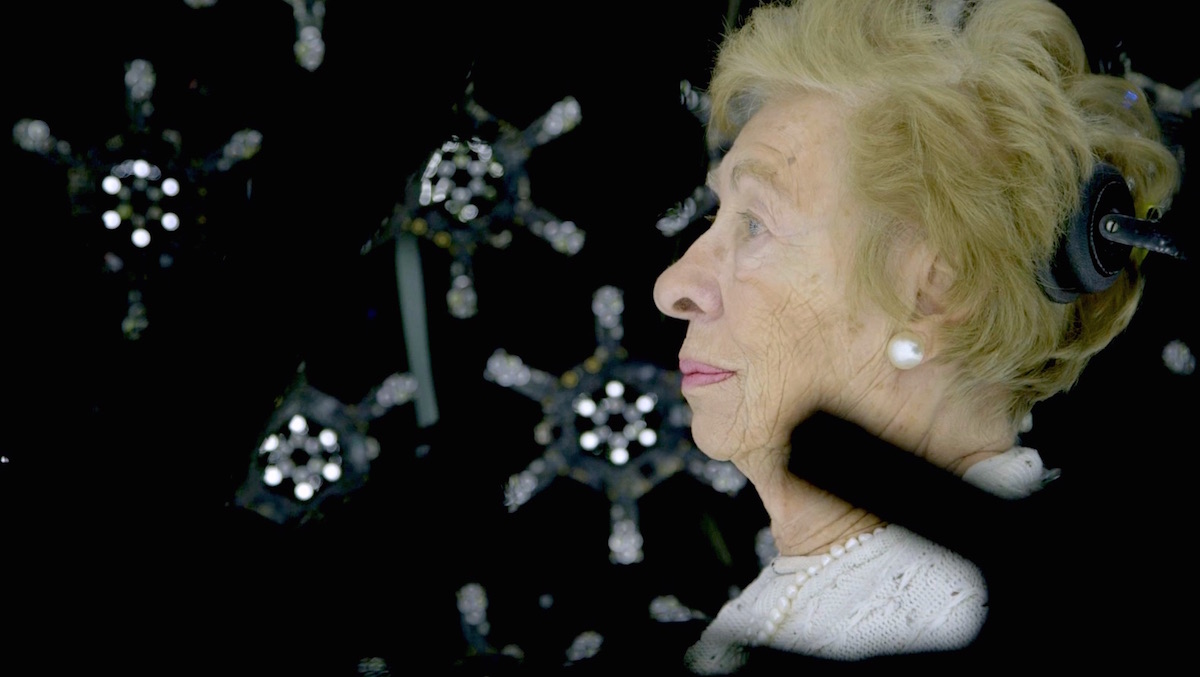 116 Cameras[/caption]
The 2017 Full Frame Documentary Film Festival, revealed its NEW DOCS lineup of 48 films – 27 features and 21 shorts; and the Invited Program lineup featuring 23 films – 22 features and 1 short— screening out of competition.
“We are proud to present 71 new titles at the festival this year,” said Full Frame artistic director Sadie Tillery. “These selections represent a wide breadth of current work, and illuminate the many forms that documentary film can take. Festival attendees are in for an extraordinary experience that is fitting of our 20th anniversary.”
The 20th Annual Full Frame Documentary Film Festival will be held April 6 to 9, 2017, in Durham, North Carolina.
116 Cameras[/caption]
The 2017 Full Frame Documentary Film Festival, revealed its NEW DOCS lineup of 48 films – 27 features and 21 shorts; and the Invited Program lineup featuring 23 films – 22 features and 1 short— screening out of competition.
“We are proud to present 71 new titles at the festival this year,” said Full Frame artistic director Sadie Tillery. “These selections represent a wide breadth of current work, and illuminate the many forms that documentary film can take. Festival attendees are in for an extraordinary experience that is fitting of our 20th anniversary.”
The 20th Annual Full Frame Documentary Film Festival will be held April 6 to 9, 2017, in Durham, North Carolina.
NEW DOCS
116 Cameras (Director: Davina Pardo) Surrounded by a twinkling constellation of cameras, Holocaust survivor Eva Schloss records her stories for an interactive hologram project, preserving her experience for future generations. World Premiere All Skate, Everybody Skate (Director: Nicole Triche) Tucked away in picturesque Topsail Island, N.C., Miss Doris’s roller skating rink pops with energy as she leads her customers in games and skates, as she’s done for over 50 years. Anatomy of a Male Ballet Dancer (Directors: David Barba, James Pellerito) Praised for the sublime way he partners ballerinas, Marcelo Gomes is the center of this intimate film that takes us inside his world to chart a luminous 20-year career with American Ballet Theater. Asiyeh (Director: Leila Merat) An intelligent, no-nonsense bonesetter in northern Iran has been healing the people in her community for as long as anyone can remember. US Premiere Balloonfest (Director: Nathan Truesdell) In 1986, the United Way of Cleveland sets out to break a world record, releasing over a million balloons in the air, but the event has unexpected consequences when the lift off doesn’t go as planned. The Botanist (ботаник) (Directors: Maude Plante-Husaruk, Maxime Lacoste-Lebuis) This breathtaking short follows Raimberdi as he ingeniously constructs a hydroelectric generator to better survive in the mountains of Tajikstan. City of Ghosts (Director: Matthew Heineman) Captivating in its immediacy, City of Ghosts follows the journey of “Raqqa is Being Slaughtered Silently,” a group of anonymous Syrian activists who band together to document the Islamic State’s crimes after the city is taken by ISIS. Depth Two (Dubina Dva) (Director: Ognjen Glavonić) This suspenseful illumination of long-buried war crimes, which began in 1999 with NATO bombings in Serbia, is told in a harrowing combination of narrated testimonies and present-day images of the sites in suburban Belgrade where the crimes took place. Donkeyote (Director: Chico Pereira) The grandest adventure of all is afoot for a Spanish septuagenarian and his mischievous dog and stalwart donkey, if only they can survive chronic arthritis, impertinent travel agents, and just one more bridge. Dysphoria: Inside the Mind of a Holocaust Survivor (Director: Joseph Edward) This poetic and visually arresting exploration of one man’s memories takes an inventive and sensory approach, immersing the viewer in his experiences. World Premiere The Earth Did Not Speak (La Tierra No Habló) (Director: Javier Briones) Survivors of the 1982 government-sponsored massacre in Rio Negro, Guatemala, share their stories as the camera quietly pans across seemingly tranquil places that once were home. Far Western (Director: James Payne) Fueled by music and personal charisma, Charlie Nagatani embodies Japan’s obsession with American country and western music. North American Premiere The Force (Director: Peter Nicks) A riveting, on-the-ground look at the Oakland Police Department during a period of intense scrutiny and reform, as a new sergeant aims to correct protocol in the wake of charges of misconduct and abuse. Funne – Sea Dreaming Girls (Le ragazze che sognavano il mare) (Director: Katia Bernardi) A whimsical tale of a group of elderly women in a small Italian village who get creative while trying to raise funds for a trip to the sea, which many of them have never seen. North American Premiere The Great Theater (Wielki Teatr) (Director: Sławomir Batyra) A meandering camera takes a graceful, evocative journey through the spaces and operations of Warsaw’s Grand Theatre as it presents the opera Madama Butterfly. Heaven Is a Traffic Jam on the 405 (Director: Frank Stiefel) Animated drawings and extraordinary shots of Mindy Alper’s sculptures create a lovely portrait of the artist as she unabashedly examines her experiences with a mental disorder (that prevented her from speaking) while discussing art, love, and life. I’M OKAY (Director: Pia Lenz) Adult themes unfold through the perspective of young protagonists in this beautifully photographed feature that captures the experiences of two refugee families struggling to rebuild their lives in Germany. North American Premiere Island Soldier (Director: Nathan Fitch) Through the intimate stories of two soldiers, this film explores the high cost of opportunity. In the Federated States of Micronesia—an “associated state” of the U.S.—a high proportion of residents serve in the American military, with few resources to support their lives after duty ends. World Premiere The Kodachrome Elegies (Director: Jay Rosenblatt) A short and lyrical ode to Kodachrome film stock that reflects on family, loss, and the end of an era. Last Men in Aleppo (Director: Feras Fayyad) Urgent and harrowing, this film follows the White Helmets’ unrelenting efforts to save fellow Syrians. When air strikes devastate homes, they descend on the wreckage to rescue buried men, women, and children, refusing to leave their people or their city behind. The Last Pig (Director: Allison Argo) This lyrical film follows an introspective farmer as his beliefs undergo a dramatic shift, from believing that there are more humane ways to slaughter animals to questioning the premise of his life’s work. US Premiere Life in Riva (Tra ponente e levante) (Director: Lorenzo Giordano) An aging resident imparts the history of his seaside Italian town. His recollections, and a trove of impeccably photographed artifacts, reveal the evolutions of one place over time. North American Premiere Luis & I (Directors: Roger Gómez, Dani Resines) The wife of a human cannonball describes their life in the circus and the ways their love has endured decades of this itinerant lifestyle. Mommy’s Land (Director: Garret Atlakson) As the Cambodian government demolishes homes, and arrest counts and brutal police violence increase, elder resident “Mommy” and other neighborhood women prove to be peaceful, and vivacious, resisters. World Premiere My Father’s Film (Director: Priscilla Gonzalez Sainz) A daughter crafts a portrait of her father through the spaces he occupied, a meditation shaped by the tools he left behind. World Premiere One October (Director: Rachel Shuman) Filmed in the final weeks of the 2008 presidential campaigns, this city symphony follows a radio reporter as he takes to the streets to invite fellow New Yorkers to share their thoughts and opinions in a time of great uncertainty. World Premiere The Original Richard McMahan (Director: Olympia Stone) A visionary artist painstakingly recreates the masterpieces of others, producing thousands of intricate miniature replicas of works made across centuries, from Van Gogh’s The Starry Night to King Tutankhamun’s tomb. Plastic China (Director: Jiu-liang Wang) At a recycling center in the Chinese countryside, two families survive between seas of plastic bottles and wrappers shipped from the U.S. and other countries; processing this waste has become their burden, and yet for their children, they dream of a better life. QUEST (Director: Jonathan Olshefski) This thoughtful and incisive observation of the Rainey family over the course of ten years seamlessly captures pivotal life experiences as well as issues of poverty, politics, and gun violence in a North Philadelphia neighborhood. The Rain Will Follow (Director: Eugene Richards) From his chair in a retirement home, 90-year-old Melvin Wisdahl shares poignant recollections of wartime and strife in this deeply personal account set aglow by beautiful images of North Dakotan farmland. Samuel in the Clouds (Director: Pieter Van Eecke) Samuel Mendoza continues the family tradition of operating the ski lift in a Bolivian Andes resort, while a melting glacier below threatens everyone’s way of life. Shivani (Director: Jamie Dobie) In this unique tale of grief and healing, three-year-old Dolly Shivani, believed by her parents to be the reincarnation of their dead son, trains as an Olympic archer. World Premiere Slowerblack (Director: Jessica Edwards) A hand-poke tattoo artist in Brooklyn reflects on her unique style and approach to inking. World Premiere Socotra, the Island of Djinns (Socotra, la Isla de lod Genios) (Director: Jordi Esteva) In this extraordinary black-and-white account, a group of camel herders travel inland on the island of Socotra to avoid the rainy season while sharing nighttime tales of supernatural djinns. US Premiere Still Tomorrow (摇摇晃晃的人间) (Director: Jian Fan) In rural China, a determined, courageous woman balances her fame as an eloquent and frank poet with societal expectations around disability, independence, and family obligation. Storyboard P, a stranger in Sweden (Director: Matthew D’Arcy) In this mesmerizing vignette, a dynamic Brooklyn street dancer travels to Sweden to teach and perform—a journey that tests his devotion to the art form. Strong Island (Director: Yance Ford) Director Yance Ford rigorously unpacks the events surrounding the death of his brother, who was shot in 1992. Profoundly cinematic and deeply personal, their family story is a powerful examination of race in America. The Submarine (Director: Wenceslao Scyzoryk) A 95-year-old cinematographer returns to his lab each day to perfect his invention—a machine that repairs celluloid damage. The Swirl (El Remolino) (Director: Laura Herrero Garvin) As the largely abandoned town of El Remolino in Chiapas, Mexico, struggles to yield viable crops and keep its school open, two siblings remain to battle the rainy season and their painful childhood. They Took Them Alive (Director: Emily K. Pederson) In 2014, 43 students disappeared from a bus traveling in Iguala, Mexico. Their families seek answers as the official investigation comes to a troubling and suspicious halt. World Premiere Through the Repellent Fence (Director: Sam Wainwright Douglas) The artist collective Postcommodity examines lines, origins, and the people to whom land really belongs with a two-mile-long installation of inflatable spheres high above the U.S.–Mexico border. Timberline (Director: Elaine McMillion Sheldon) This short documents a West Virginia town caught between transitional pressures: an abandoned naval base is up for auction, and the NSA occupies a station just down the road. What will become of the locals for whom this place is home? World Premiere Tribal Justice (Director: Anne Makepeace) Two dynamic Native American women—chief judges for the state’s largest tribes—draw on tradition and village wisdom to help defendants rebuild their lives, encouraging healing over jail time and punishment. Two Worlds (Dwa Swiaty) (Director: Maciej Adamek) In this expressive study of family relationships, a daughter helps her two deaf parents navigate the world—as she has since she was three—and balances life between school, home, and self. Waiting for Hassana (Director: Ifunanya Maduka) Jessica, an escapee, recollects a friendship shattered by the 2014 kidnapping of 276 Nigerian girls by the Boko Haram. Winter’s Watch (Director: Brian Bolster) The longtime winter caretaker of the Oceanic Hotel off the coast of New England welcomes months of solitude, relishing the opportunity for introspection and productivity. Zaatari Djinn (Director: Catherine van Campen) This incandescent portrait documents four children in a refugee camp who are transformed by the light of imagination and possibility despite numerous hardships. North American Premiere Zuzana: Music Is Life (Directors: Peter Getzels, Harriet Getzels) The life story of eminent Czech harpsichordist Zuzana Ruzickowva transcends the personal in a deeply affecting look at the redemptive power of art throughout the Czech Republic’s turbulent 20th century. World PremiereINVITED PROGRAM
500 Years (Director: Pamela Yates) A sweeping examination of resistance movements in Guatemala, including the recent uprising, and a chronicle of the country’s first trial for war crimes committed against the Mayan people. Abacus: Small Enough to Jail (Director: Steve James) In the wake of the 2008 financial crisis, the only U.S. bank accused of mortgage fraud was the family-owned Abacus Federal Savings in Manhattan’s Chinatown. This stunning film chronicles the Sungs’ legal battle as they fight to defend their business and their family name. Austerlitz (Director: Sergei Loznitsa) In vivid black and white, tourists and guides visit concentration camps. In observing their interactions, Austerlitz provides a powerful meditation on the (often imperfect) ways human beings connect, remember, and reflect. Bronx Gothic (Director: Andrew Rossi) With a blend of performance footage and penetrating discussions about her purpose and process, this film follows Okwui Okpokwasili as she tours her powerful one-woman play around the country. World Premiere Buzz One Four (Director: Matt McCormick) In 1964, a B-52 long-range bomber crashed on a Maryland mountainside with two thermonuclear bombs on board. This suspenseful account, crafted by the pilot’s grandson, skillfully weaves archival footage with personal recollections. The Challenge (Director: Yuri Ancarani) Miles of barren desert provide the backdrop for this surreal compilation of images: private jets, race cars, exquisite birds, and even a pet cheetah descend on the Qatar dunes to take part in a remote falconry tournament. Dina (Directors: Dan Sickles, Antonio Santini) At once tender and triumphant, humorous and hard, Dina introduces a woman in love as she navigates complex expectations in the days leading up to her impending nuptials. EXPRMNTL (Director: Brecht Debackere) This lively overview of the legendary EXPRMNTL film festivals held in Belgium from 1949 to 1974 interweaves archival footage with the recollections of the makers who defined experimental cinema. US Premiere The Good Postman (Director: Tonislav Hristov) An inspired citizen decides to run for mayor on a daring platform: that embracing the arrival of refugees may be the key to revitalizing his Bulgarian village. The Grown Ups (Director: Maite Alberdi) Adult students with Down Syndrome question their unknown futures. After attending the same school for decades, is there anything left to be discovered in this place, and what opportunities exist in the outside world? In Loco Parentis (Directors: Neasa Ní Chianáin, David Rane) For more than 40 years, John and Amanda Leyden have taught elementary-age children at a remote Irish boarding school. Filmed over the course of a year, the teachers bring wonder to their classrooms and roll with the joys and challenges that the changing seasons bring their young pupils. An Insignificant Man (Directors: Khushboo Ranka, Vinay Shukla) With unimaginable access, this film follows the turbulent campaign of Arvind Kejriwal, a businessman turned politician who formed India’s Aam Aadmi Party (Common Man’s Party) in 2012, as he runs for his country’s top office. Life – Instruction Manual (Leben – Gebrauchsanelitung) (Directors: Joerg Adolph, Ralf Buecheler) Featuring short excerpts from a wide range of classes, from childbirth to end-of-life care, this film reflects on the myriad ways that we depend on learning, particularly from others. North American Premiere Long Strange Trip (Director: Amir Bar-Lev) Personal interviews, performances, and never-before-seen footage create a multifaceted portrait of the Grateful Dead. They were more than a band. They were a movement. May It Last: A Portrait of the Avett Brothers (Directors: Judd Apatow, Michael Bonfiglio) Personal, rich, and from the soul, this film follows the equally soulful Avett Brothers as they record a new album, reflect on the creative process, and navigate strong ties while managing lives spent on the road. Project X (Directors: Laura Poitras, Henrik Moltke) Rami Malek and Michelle Williams understatedly narrate guidelines from a top-secret NSA handbook, as the viewer travels from stark and isolated spots in the National Business Park to a windowless skyscraper in downtown Manhattan. Purple Dreams (Director: Joanne Hock) This film follows six students at the Northwest School of the Arts in Charlotte, N.C., who thrive as performers in the first-ever high school musical production of The Color Purple while grappling with difficult and stressful issues in their own lives. World Premiere STEP (Director: Amanda Lipitz) This inspiring film follows three members of the Lethal Ladies step-dance team at the Baltimore Leadership School for Young Women. With the support of their intrepid coach and an uncompromising counselor, they are determined to attend college. TAKE EVERY WAVE: The Life of Laird Hamilton (Director: Rory Kennedy) In sparkling cinematography and intimate interviews, this epic look at the surfing legend’s life in and out of the waves is also a no-holds-barred illustration of one man’s dedication to continually reigniting his passion. Tell Them We Are Rising: The Story of Black Colleges and Universities (Director: Stanley Nelson) A monumental, essential, and compelling survey of the history and cultural significance of HBCUs in America. This Is Everything: Gigi Gorgeous (Director: Barbara Kopple) Gregory Lazzarato to Gregory Gorgeous to Gigi Gorgeous—family members and millions of followers support the makeup and beauty YouTube star before, during, and after her transition. Trophy (Director: Shaul Schwarz, Co-Director: Christina Clusiau) This revelatory and exquisitely photographed investigation into conservation practices and big game hunting invites nuanced scrutiny and debate. Whose Streets? (Director: Sabaah Folayan, Co-Director: Damon Davis) This unflinching story of the Ferguson uprising is told by the activists who were there, chronicling the birth of a new generation of resisters in America.
-
Indie Comedy DAVE MADE A MAZE Will Kickoff 41st Atlanta Film Festival | Trailer
[caption id="attachment_19888" align="aligncenter" width="1200"]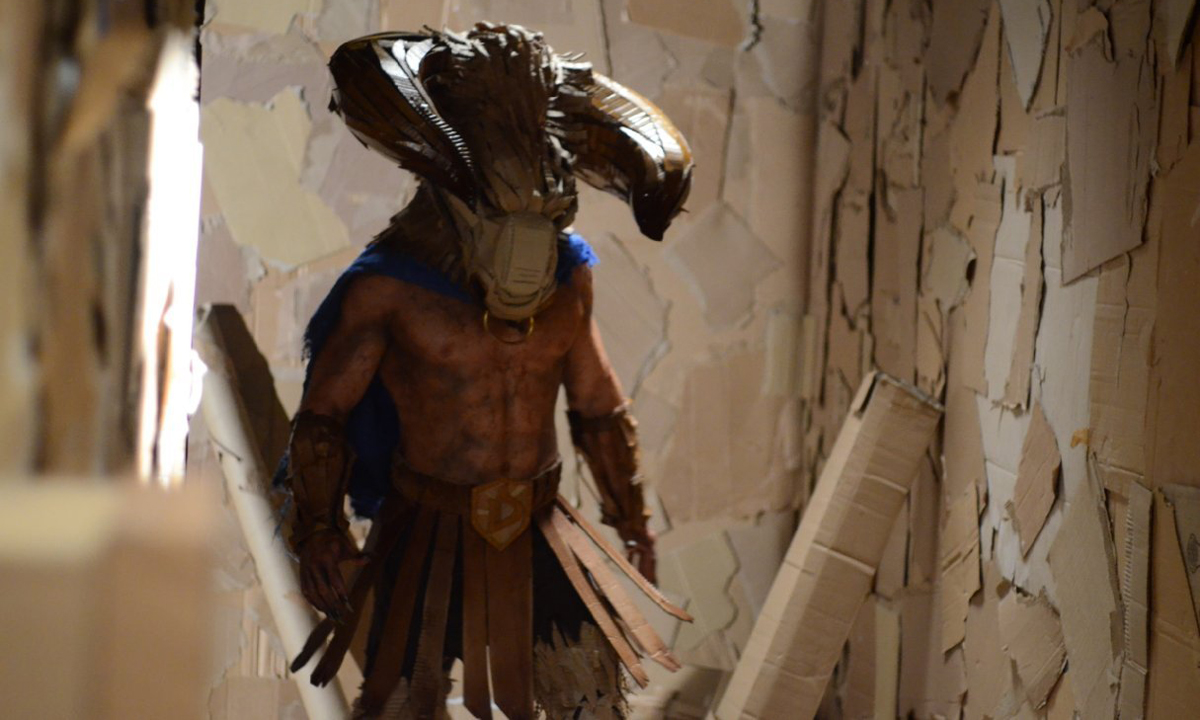 DAVE MADE A MAZE[/caption]
DAVE MADE A MAZE, a feature-length adventure comedy using practical effects and stop-motion animation, directed by Bill Watterson, will kick off the 41st Atlanta Film Festival on Friday, March 24, 2017.
In a struggling attempt to create something of significance, Dave builds a fort in his living room where he falls victim to his own creation. Now trapped in a world filled with booby traps and fantastical pitfalls, Dave advises his girlfriend against entering the ever-changing mythical world to save him.
Dave Made a Maze, starring Nick Thune, Meera Rohit Kumbhani, Kirsten Vangsness, Stephanie Allynne, James Urbaniak, Scott Krinsky, Adam Busch, John Hennigan, Kamilla Alnes, Frank Caeti, Tim Nordwind, and Scott Narver, had its World Premiere earlier this year at the 2017 Slamdance Film Festival.
DAVE MADE A MAZE[/caption]
DAVE MADE A MAZE, a feature-length adventure comedy using practical effects and stop-motion animation, directed by Bill Watterson, will kick off the 41st Atlanta Film Festival on Friday, March 24, 2017.
In a struggling attempt to create something of significance, Dave builds a fort in his living room where he falls victim to his own creation. Now trapped in a world filled with booby traps and fantastical pitfalls, Dave advises his girlfriend against entering the ever-changing mythical world to save him.
Dave Made a Maze, starring Nick Thune, Meera Rohit Kumbhani, Kirsten Vangsness, Stephanie Allynne, James Urbaniak, Scott Krinsky, Adam Busch, John Hennigan, Kamilla Alnes, Frank Caeti, Tim Nordwind, and Scott Narver, had its World Premiere earlier this year at the 2017 Slamdance Film Festival.
-
Restored Version of Marcel Ophuls’ THE MEMORY OF JUSTICE to Air April 24, Holocaust Remembrance Day, on HBO
[caption id="attachment_21634" align="aligncenter" width="1200"]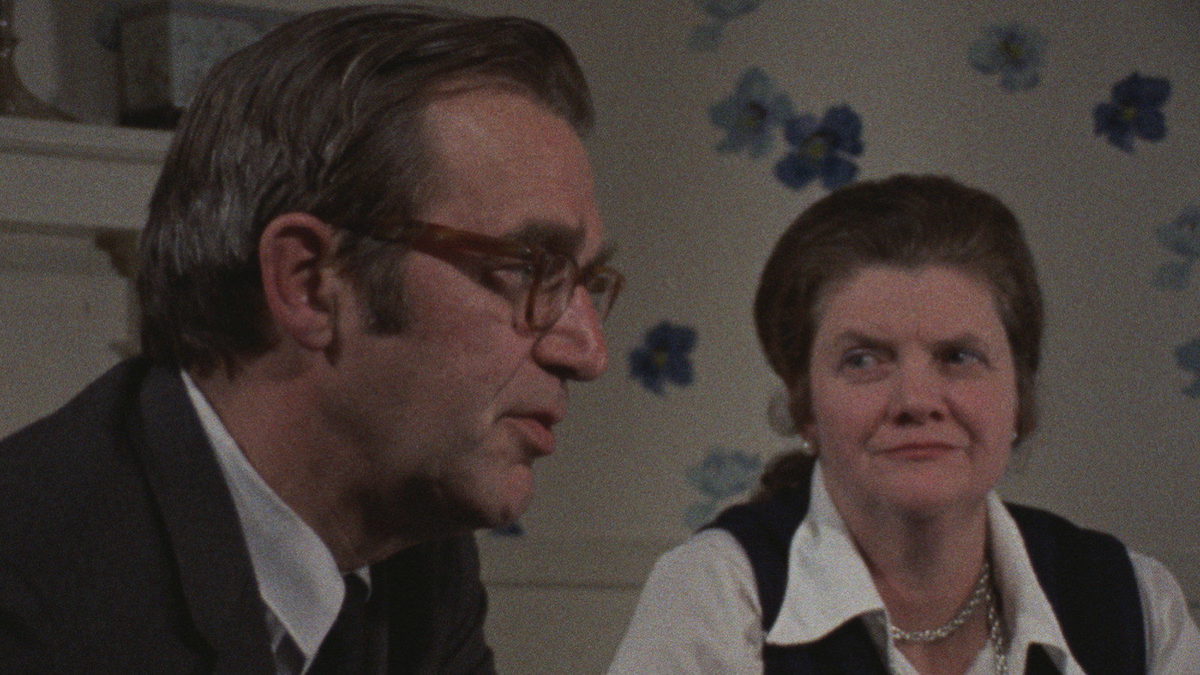 Marcel Ophuls’ THE MEMORY OF JUSTICE[/caption]
Following the film’s restoration by the Academy Film Archive and The Film Foundation, the newly restored version of Oscar(R)-winner Marcel Ophüls’ 1976 documentary THE MEMORY OF JUSTICE will be debut on HBO2 on Holocaust Remembrance Day, Monday, April 24. The rarely seen epic was presented at the Berlin, Toronto and New York film festivals in 2015.
THE MEMORY OF JUSTICE explores the relationship between individual and collective responsibility, as Ophüls investigates then-recent alleged war crimes committed by France in Algeria and by the U.S. in Vietnam in light of atrocities committed by the Nazis. The director was inspired by the 1970 book “Nuremberg and Vietnam: An American Tragedy,” by Telford Taylor, a counsel for the prosecution at the Nuremberg trials, who became a harsh critic of America’s escalating involvement in Vietnam.
Filmed 30 years after the end of World War II and the Nuremberg trials, the film draws on the unique perspectives of those who lived through the conflict and those who came of age afterward. THE MEMORY OF JUSTICE features rare archival footage and interviews with both victims and architects of atrocities, raising essential questions about the moral choices made by individuals and governments in the latter half of the 20th century that are equally relevant today.
“It seems to me that THE MEMORY OF JUSTICE, which flopped pretty badly when it first came out, is the best work I ever did in my life, or at any rate the most personal and the most sincere of my films,” says Marcel Ophüls. “Now, thanks to Martin Scorsese and The Film Foundation, and with the help of my favorite studio, my favorite child has been put back into circulation as an adult. Needless to say, I’m immensely grateful!”
“THE MEMORY OF JUSTICE is a monumental documentary achievement; an essential work of historic and intellectual importance,” notes Martin Scorsese, founder and chair of The Film Foundation. “The film was unavailable for decades and, strongly encouraged by my friend Jay Cocks, the Academy and The Film Foundation undertook the nearly ten-year process of restoration. We were incredibly fortunate to have support for this project from Olivia Harrison’s Material World Charitable Foundation and Steven Spielberg’s Righteous Persons Foundation.”
After years of research, The Film Foundation and the Academy Film Archive discovered an original, unlabeled, 16mm camera negative of THE MEMORY OF JUSTICE in a studio vault, and worked closely with Ophüls and producer Hamilton Fish on its restoration. Newly discovered original recordings of Ophüls’ interviews with French and German speaking interview subjects were restored and substituted for the existing English-language voiceover tracks. New subtitles in English, French and German were created for the restoration so that the participants’ own voices can now be heard, along with Ophüls’ questions.
The original film screened at the 1976 Cannes and New York Film Festivals, and was hailed by Vincent Canby as “a standard against which all other non-fiction cinema must be measured.”
Marcel Ophuls’ THE MEMORY OF JUSTICE[/caption]
Following the film’s restoration by the Academy Film Archive and The Film Foundation, the newly restored version of Oscar(R)-winner Marcel Ophüls’ 1976 documentary THE MEMORY OF JUSTICE will be debut on HBO2 on Holocaust Remembrance Day, Monday, April 24. The rarely seen epic was presented at the Berlin, Toronto and New York film festivals in 2015.
THE MEMORY OF JUSTICE explores the relationship between individual and collective responsibility, as Ophüls investigates then-recent alleged war crimes committed by France in Algeria and by the U.S. in Vietnam in light of atrocities committed by the Nazis. The director was inspired by the 1970 book “Nuremberg and Vietnam: An American Tragedy,” by Telford Taylor, a counsel for the prosecution at the Nuremberg trials, who became a harsh critic of America’s escalating involvement in Vietnam.
Filmed 30 years after the end of World War II and the Nuremberg trials, the film draws on the unique perspectives of those who lived through the conflict and those who came of age afterward. THE MEMORY OF JUSTICE features rare archival footage and interviews with both victims and architects of atrocities, raising essential questions about the moral choices made by individuals and governments in the latter half of the 20th century that are equally relevant today.
“It seems to me that THE MEMORY OF JUSTICE, which flopped pretty badly when it first came out, is the best work I ever did in my life, or at any rate the most personal and the most sincere of my films,” says Marcel Ophüls. “Now, thanks to Martin Scorsese and The Film Foundation, and with the help of my favorite studio, my favorite child has been put back into circulation as an adult. Needless to say, I’m immensely grateful!”
“THE MEMORY OF JUSTICE is a monumental documentary achievement; an essential work of historic and intellectual importance,” notes Martin Scorsese, founder and chair of The Film Foundation. “The film was unavailable for decades and, strongly encouraged by my friend Jay Cocks, the Academy and The Film Foundation undertook the nearly ten-year process of restoration. We were incredibly fortunate to have support for this project from Olivia Harrison’s Material World Charitable Foundation and Steven Spielberg’s Righteous Persons Foundation.”
After years of research, The Film Foundation and the Academy Film Archive discovered an original, unlabeled, 16mm camera negative of THE MEMORY OF JUSTICE in a studio vault, and worked closely with Ophüls and producer Hamilton Fish on its restoration. Newly discovered original recordings of Ophüls’ interviews with French and German speaking interview subjects were restored and substituted for the existing English-language voiceover tracks. New subtitles in English, French and German were created for the restoration so that the participants’ own voices can now be heard, along with Ophüls’ questions.
The original film screened at the 1976 Cannes and New York Film Festivals, and was hailed by Vincent Canby as “a standard against which all other non-fiction cinema must be measured.”
-
2017 SXSW Film Awards – MOST BEAUTIFUL ISLAND, THE WORK Win Grand Jury Awards
[caption id="attachment_20918" align="aligncenter" width="1200"] Most Beautiful Island[/caption]
The South by Southwest (SXSW) Conference and Festivals announced the 2017 Jury and Special Award winners of the SXSW Film Awards.
SXSW also announced the Jury Award winners in Shorts Filmmaking and winners of the SXSW Film Design Awards, as well as Special Awards including the Louis Black “Lone Star” Award and Karen Schmeer Film Editing Fellowship, plus new categories with the SXSW Adam Yauch Hörnblowér Award alongside the SXSW LUNA® Gamechanger Award – Narrative and SXSW LUNA® Chicken & Egg Award – Documentary.
Most Beautiful Island[/caption]
The South by Southwest (SXSW) Conference and Festivals announced the 2017 Jury and Special Award winners of the SXSW Film Awards.
SXSW also announced the Jury Award winners in Shorts Filmmaking and winners of the SXSW Film Design Awards, as well as Special Awards including the Louis Black “Lone Star” Award and Karen Schmeer Film Editing Fellowship, plus new categories with the SXSW Adam Yauch Hörnblowér Award alongside the SXSW LUNA® Gamechanger Award – Narrative and SXSW LUNA® Chicken & Egg Award – Documentary.
2017 SXSW Film Festival Awards
Feature Film Grand Jury Awards
NARRATIVE FEATURE COMPETITION Winner: Most Beautiful Island Director: Ana Asensio Special Jury Recognition for Breakthrough Performance: The Strange Ones Actor: James Freedson-Jackson Special Jury Recognition for Best Ensemble: A Bad Idea Gone Wrong Cast: Matt Jones, Eleanore Pienta, Will Rogers, Jonny Mars, Sam Eidson, Jennymarie Jemison DOCUMENTARY FEATURE COMPETITION Winner: The Work Directors: Jairus McLeary and Gethin Aldous Special Jury Recognition for Excellence in Observational Cinema: Maineland Director: Miao Wang Special Jury Recognition for Excellence in Documentary Storytelling: I Am Another You Director: Nanfu WangShort Film Grand Jury Awards
NARRATIVE SHORTS Winner: Forever Now Director: Kristian Håskjold Special Jury Recognition for Acting: DeKalb Elementary Actor: Tarra Riggs DOCUMENTARY SHORTS Winner: Little Potato Director: Wes Hurley & Nathan M. Miller MIDNIGHT SHORTS Winner: The Suplex Duplex Complex Director: Todd Rohal ANIMATED SHORTS Winner: Wednesday with Goddard Directors: Nicolas Menard Special Jury Recognition: Pussy Director: Renata Gasiorowska MUSIC VIDEOS Winner: Leon Bridges – ‘RIVER’ Director: Miles Jay Special Jury Recognition: Tame Impala – ‘The Less I Know The Better’ Director: CANADA TEXAS SHORTS Winner: The Rabbit Hunt Director: Patrick Bresnan TEXAS HIGH SCHOOL SHORTS Winner: Better Late Than Never Director: Atheena Frizzell Special Jury Recognition: Darcy’s Quinceañera Director: Sam CooperSXSW Film Design Awards
EXCELLENCE IN POSTER DESIGN Winner: Fry Day Designer: Caspar Newbolt Special Jury Recognition: Like Me Designer: Jeremy Enecio EXCELLENCE IN TITLE DESIGN Winner: Into The Current Directors: Chris R. Moberg and Jared YoungSXSW Special Awards
SXSW LUNA® Gamechanger Award – Narrative Winner: INFLAME Director: Ceylan Ozgun Ozcelik SXSW LUNA® Chicken & Egg Award – Documentary Winner: I Am Another You Director: Nanfu Wang SXSW Louis Black “Lone Star” Award To honor SXSW co-founder/director Louis Black, a jury prize was created in 2011 called the Louis Black “Lone Star” Award, to be awarded to a Texas film in content, filmmaker residency, or primary shooting location. (Opt-in Award) Louis Black “Lone Star” Award Winner: Mr. Roosevelt Director: Noël Wells SXSW Adam Yauch Hörnblowér Award In honor of a filmmaker whose work strives to be wholly its own, without regard for norms or desire to conform. The Adam Yauch Hörnblowér Award is presented to a filmmaker from our Visions screening category. SXSW Adam Yauch Hörnblowér Award Presented to: Assholes directed by Peter Vack SXSW Karen Schmeer Film Editing Fellowship Presentation The Karen Schmeer Film Editing Fellowship is a year-long experience that encourages and champions the talent of an emerging documentary editor. Awarded annually, the fellowship was created to honor the memory of gifted editor Karen Schmeer. Karen Schmeer Film Editing Fellowship Presented to: Leigh Johnson The SXSW Film Awards are presented by FilmStruck. FilmStruck is a new streaming service for serious film fans, offering a comprehensive library including indie, contemporary and classic art house, foreign and cult films. It is the exclusive streaming home of The Criterion Collection.
-
13 Films on Lineup for 2017 Bosnian-Herzegovinian Film Festival in NYC
[caption id="attachment_21627" align="aligncenter" width="1200"]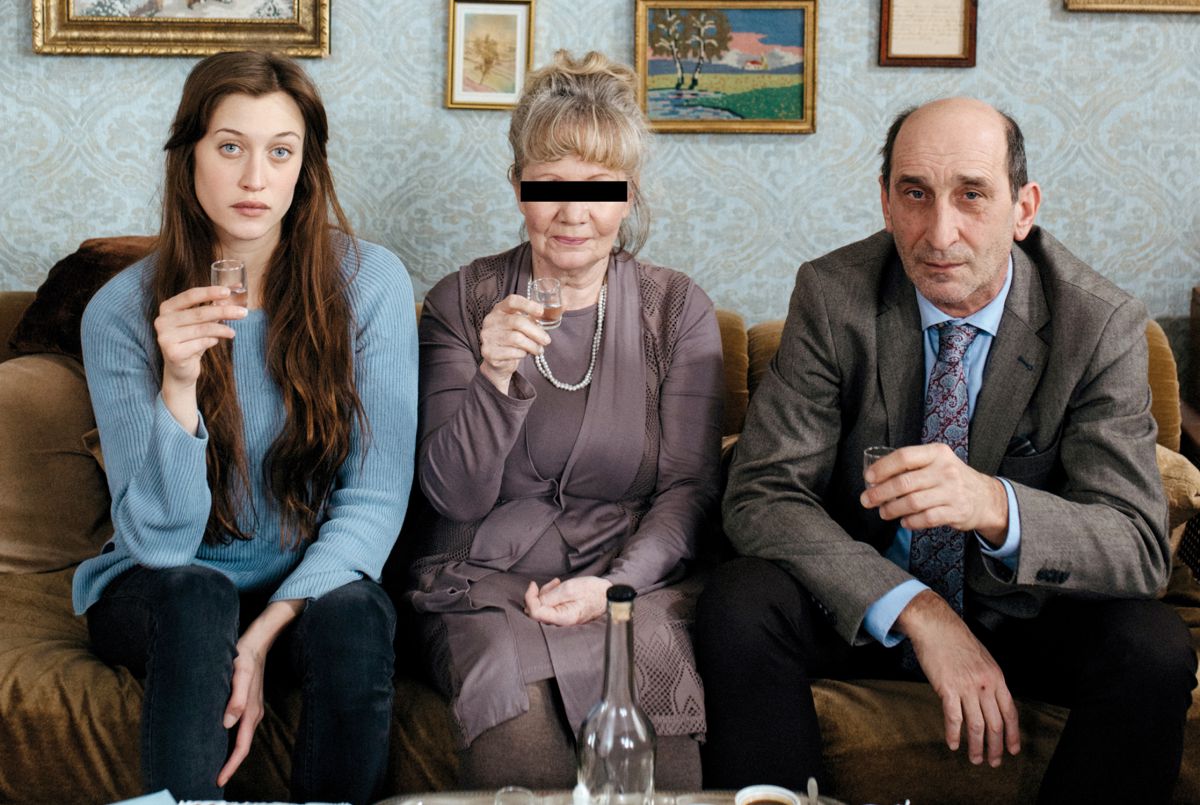 My Aunt in Sarajevo | Goran Kapetanović[/caption]
A total of 13 films, including 6 Q&A and discussion panels with the filmmakers, will screen at the 2017 Bosnian-Herzegovinian Film Festival (BHFF) running from Wednesday, April 12 through Saturday, April 15 at two Manhattan venues.
Starting things off on Wednesday, April 12 at Anthology Film Archives will be a special screening of Branko Ištvančić documentary feature film Album, a look at the Balkan wars through the memories of photos left behind, followed by a panel discussion on the subject of post-Yugoslav cinema.
The festival’s competition program will be held at SVA Theater on Thursday, Friday and Saturday, from April 13-15, and will consist of four narrative feature films, four narrative shorts and four documentary films. Films in competition are:
Films selected to screen at the 14th Annual BHFF competition program are eligible to win a number of honors including the Golden Apple audience and jury awards.
My Aunt in Sarajevo | Goran Kapetanović[/caption]
A total of 13 films, including 6 Q&A and discussion panels with the filmmakers, will screen at the 2017 Bosnian-Herzegovinian Film Festival (BHFF) running from Wednesday, April 12 through Saturday, April 15 at two Manhattan venues.
Starting things off on Wednesday, April 12 at Anthology Film Archives will be a special screening of Branko Ištvančić documentary feature film Album, a look at the Balkan wars through the memories of photos left behind, followed by a panel discussion on the subject of post-Yugoslav cinema.
The festival’s competition program will be held at SVA Theater on Thursday, Friday and Saturday, from April 13-15, and will consist of four narrative feature films, four narrative shorts and four documentary films. Films in competition are:
Films selected to screen at the 14th Annual BHFF competition program are eligible to win a number of honors including the Golden Apple audience and jury awards.
FEATURE FILMS
Nika | Slobodan Maksimović | 92 min A young girl’s determination to become a racecar driver against the wishes of her mother evokes themes of teenage rebellion and generationalism. My Aunt in Sarajevo | Goran Kapetanović | 58 min An 18-year-old girl convinces her father to take her to the land of his birth, Bosnia, where the pair discovers their roots and comes to terms with the past. A Good Wife | Mirjana Karanović | 94 min A woman’s life is shaken when she discovers that her husband may have participated in war crimes. Death in Sarajevo | Danis Tanović | 85 min Calamity erupts at a hotel in Sarajevo on the 100th anniversary of Archduke Franz Ferdinand assassination.DOCUMENTARY FILMS
Cameraperson | Kirsten Johnson | 102 min Documentarian Kirsten Johnson uses work ranging across her 25-year career to examine the ethics of documentary filmmaking. City of Elephants | Marko Mijatović | 29 min The mountains of Bosnia form a stunning backdrop for an exploration into the lives of three people struggling to make a living in an economically-deprived mining town. Man With the Will of Steel | Amar Spahic | 16 min Nadir Hajro defies the odds by fighting through his cerebral palsy to become a bodybuilder. No Smoking in Sarajevo | Gianluca Loffredo | 75 min The iconic Bosnian rock band No Smoking is examined with rare footage in a look at one of the most famous bands in Bosnia and the former Yugoslavia.NARRATIVE SHORT FILMS
Game | Senad Alihodžić | 7 min A man’s daily routine is shaken up when he becomes entangled in a unique and surreal game. Refugee 532 | Goran Kapetanović | 14 min A young refugee living alone in Sweden must adopt to his new country while seeking news from his family in Bosnia. I Remember | Elma Tataragić | 15 min A woman repeatedly returns to her family home, probing her own memories and grappling with her recollections of the beginning of the Bosnian War. The Dragon | Ivan Ramadan | 10 min Innovative animation methods explore the myths of Bosnia through the journey of the legendary dragon Aždaja. The 2017 edition of the BHFF will also introduce a new jury award for Best Acting Performance, awarded to an actor or actress in a lead or supporting role in any of the narrative short and feature films. The nominees for the BHFF 2017 Jury Award for Best Acting Performance are: Milan Dragišić, lead actor in the role of Zlatan in “My Aunt in Sarajevo” Sadžida Šetić, supporting actress in the role of Radmila in “My Aunt in Sarajevo” Mirjana Karanović, lead actress in the role of Milena in “A Good Wife” Alena Džebo, lead actress in the unnamed role in “I Remember” Snežana Vidović, lead actress in the role of Lamija in “Death in Sarajevo” Faketa Salihbegović-Avdagić, supporting actress in the role of Hatidža in “Death in Sarajevo”
-
Ethan Hawke will be Honored with Special Tribute at San Francisco International Film Festival
[caption id="attachment_21622" align="aligncenter" width="1200"]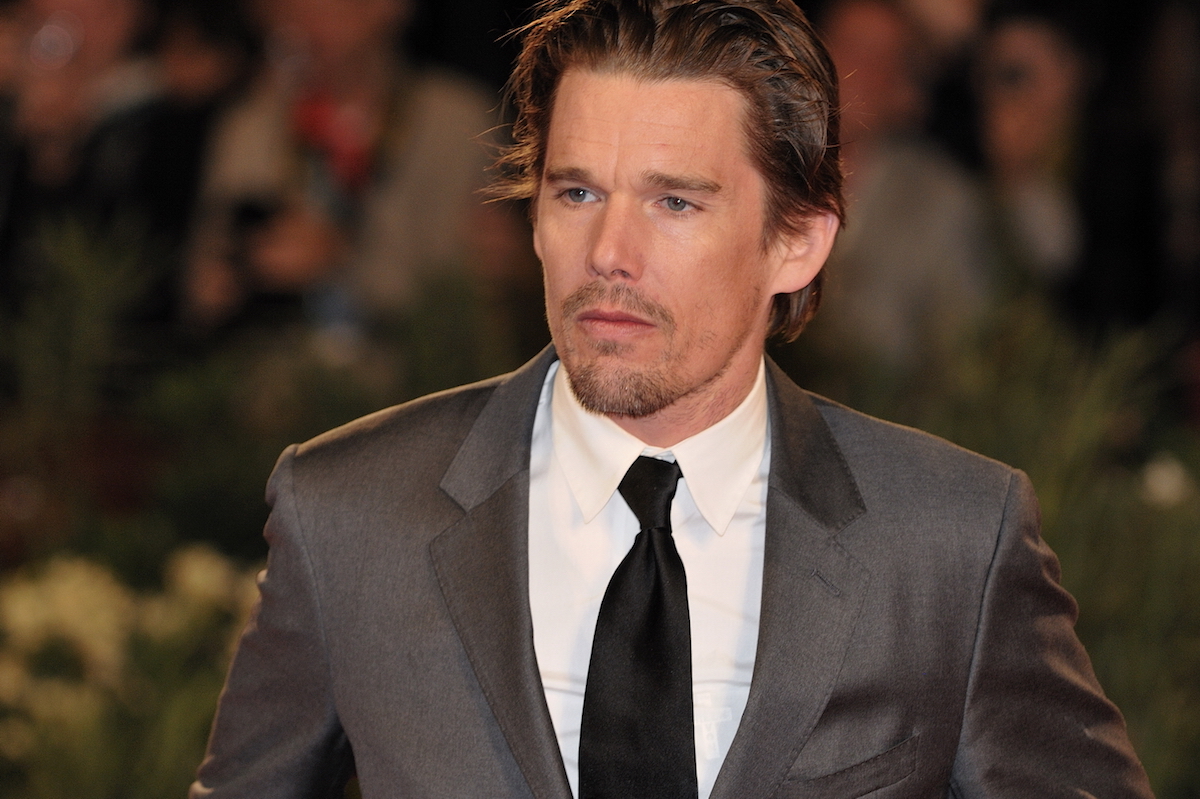 Ethan Hawke[/caption]
Ethan Hawke will be honored during the 60th San Francisco International Film Festival with a special tribute on Saturday, April 8, and a screening of his new film, Aisling Walsh’s Maudie.
“Ethan Hawke is worthy of celebration on so many levels,” said Rachel Rosen, SF Film Society Director of Programming. “It’s been a pleasure to experience his work as a director of both fiction and documentary alongside his countless indelible performances. He effortlessly communicates his artistic vision across his various creative pursuits, and we’re thrilled to be able to honor him for the full scope of his work in film.”
In a career spanning 30 years and four Academy Award nominations, Ethan Hawke has solidified his reputation as a truly multifaceted artist, challenging himself as a screenwriter, director, novelist, and actor of the stage and screen. In 2016, Hawke portrayed the late Chet Baker in Born to Be Blue, for which he received great critical acclaim, and was also seen in The Phenom, Maggie’s Plan, The Magnificent Seven, and In a Valley of Violence.
Additional notable acting credits include: Dead Poets Society (1989), Reality Bites (1994), Alive (1993), the Before trilogy, Hamlet (Festival 2000), Gattaca (1997), The Purge (2013), Boyhood (Festival 2014), and Before the Devil Knows You’re Dead (2007). He recently finished production on Blaze, a drama he co-wrote and directed about the life of country western musician Blaze Foley.
In Maudie, Maud played by Sally Hawkins, stricken with juvenile rheumatoid arthritis, faces rejection from her own family in 1930s Nova Scotia. But she finds acceptance in the home of another outsider, curmudgeonly fishmonger Everett Lewis (Festival tributee Ethan Hawke), who hires her to be his housekeeper. In his home, she blossoms as an artist—the decorative touches she adds to everyday surfaces like cookie sheets and wallboard eventually garnering her a reputation as one of Canada’s best-known folk artists. Aisling Walsh’s drama spans 35 years, depicting the growth of her unexpected career and her relationship with a difficult husband. Despite her disability and her relationship struggles, Maud’s spirit remains indomitable. Hawkins is unforgettable as an irrepressible woman who can find an upside in the most trying circumstances. Hawke imbues his difficult character with gruff charm. The difference between this odd couple is night and day. Nevertheless, they somehow fit. As Maud says, “We’re like a pair of old socks.”
Ethan Hawke[/caption]
Ethan Hawke will be honored during the 60th San Francisco International Film Festival with a special tribute on Saturday, April 8, and a screening of his new film, Aisling Walsh’s Maudie.
“Ethan Hawke is worthy of celebration on so many levels,” said Rachel Rosen, SF Film Society Director of Programming. “It’s been a pleasure to experience his work as a director of both fiction and documentary alongside his countless indelible performances. He effortlessly communicates his artistic vision across his various creative pursuits, and we’re thrilled to be able to honor him for the full scope of his work in film.”
In a career spanning 30 years and four Academy Award nominations, Ethan Hawke has solidified his reputation as a truly multifaceted artist, challenging himself as a screenwriter, director, novelist, and actor of the stage and screen. In 2016, Hawke portrayed the late Chet Baker in Born to Be Blue, for which he received great critical acclaim, and was also seen in The Phenom, Maggie’s Plan, The Magnificent Seven, and In a Valley of Violence.
Additional notable acting credits include: Dead Poets Society (1989), Reality Bites (1994), Alive (1993), the Before trilogy, Hamlet (Festival 2000), Gattaca (1997), The Purge (2013), Boyhood (Festival 2014), and Before the Devil Knows You’re Dead (2007). He recently finished production on Blaze, a drama he co-wrote and directed about the life of country western musician Blaze Foley.
In Maudie, Maud played by Sally Hawkins, stricken with juvenile rheumatoid arthritis, faces rejection from her own family in 1930s Nova Scotia. But she finds acceptance in the home of another outsider, curmudgeonly fishmonger Everett Lewis (Festival tributee Ethan Hawke), who hires her to be his housekeeper. In his home, she blossoms as an artist—the decorative touches she adds to everyday surfaces like cookie sheets and wallboard eventually garnering her a reputation as one of Canada’s best-known folk artists. Aisling Walsh’s drama spans 35 years, depicting the growth of her unexpected career and her relationship with a difficult husband. Despite her disability and her relationship struggles, Maud’s spirit remains indomitable. Hawkins is unforgettable as an irrepressible woman who can find an upside in the most trying circumstances. Hawke imbues his difficult character with gruff charm. The difference between this odd couple is night and day. Nevertheless, they somehow fit. As Maud says, “We’re like a pair of old socks.”
-
International Wildlife Film Festival Returns to Missoula, Montana April 15 to 22, Fest to Honor Bear Researcher Dr. Chuck Jonkel
[caption id="attachment_21586" align="aligncenter" width="1200"]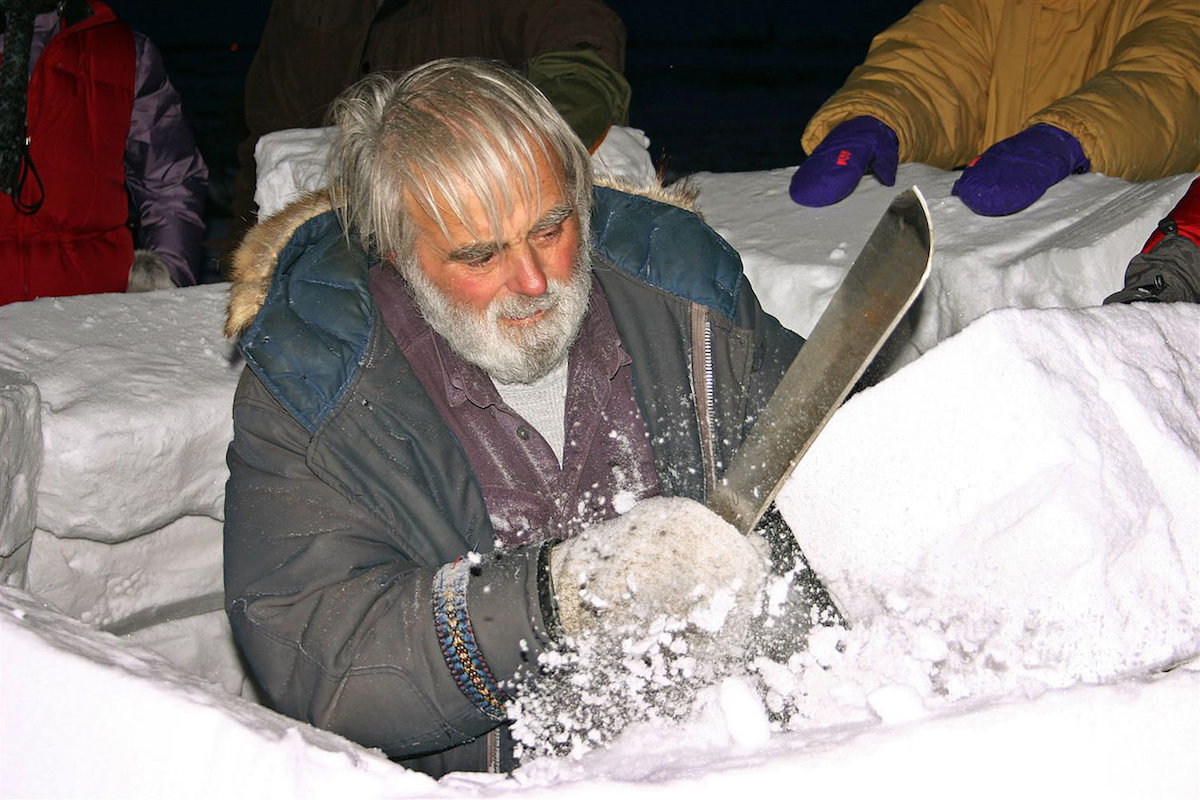 Dr. Chuck Jonkel[/caption]
This April, Missoula, Montana will play host to nearly 100 diverse, groundbreaking and inspirational films from around the world and some of the most talented wildlife filmmakers working today at the 40th International Wildlife Film Festival.
The roots of the festival will be honored with a celebration of the life and work of Dr. Chuck Jonkel. A famed bear researcher and the inventor of bear spray, Dr. Jonkel founded IWFF in 1977 to be a film festival for accurate and ethical depictions of wildlife in films. A small ceremony and unveiling of a permanent memorial at the Roxy Theater will precede a screening Walking Bear Comes Home:The Life and Work of Chuck Jonkel on April 20.
The annual WildWalk celebrates it’s own milestone this year, 2017 will mark the 25th year of the community parade.
A first for the festival, IWFF Labs is an immersive, cross-disciplinary science filmmaking workshop that brings scientists and student media creators together to learn effective tools to communicate science, nature, and conservation with broad audiences. The results of the pairings will be presented in a program of mini-docs that will screen Monday April 17th as well as a series of nightly seminars by industry professionals open to the public April 12th -14th.
Programming highlights include all six episodes of Planet Earth 2 and the eye-opening animal rights film Unlocking the Cage. Film strands include retrospectives from Gorillas in the Mist cinematographer and producer Alan Root and screenwriter and documentarian John Heminway. IWFF and Montana Public Radio will present a special night focusing on former Missoula resident Amy Martin’s new bison-focused Threshold podcast. The winners of Fusion’s Project Earth Documentary Challenge will premiere at IWFF along with other dynamic shorts programs from the world’s most engaging wildlife film directors.
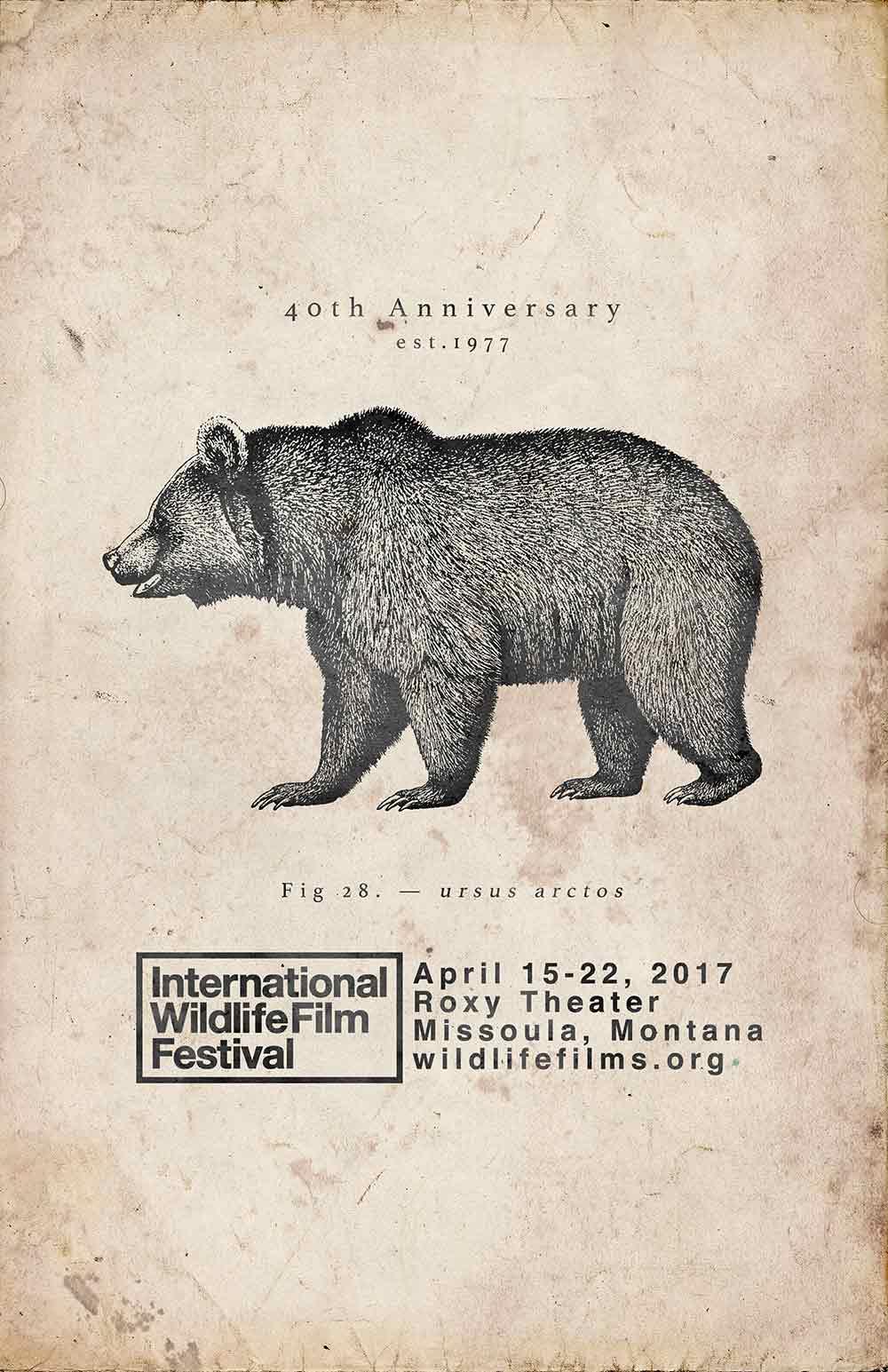
The 40th International Wildlife Film Festival will take place April 15 to 22, 2017.
-
2017 Miami Film Festival Awards – Chilean Film FAMILY LIFE Wins Grand Prize
[caption id="attachment_21583" align="aligncenter" width="1180"]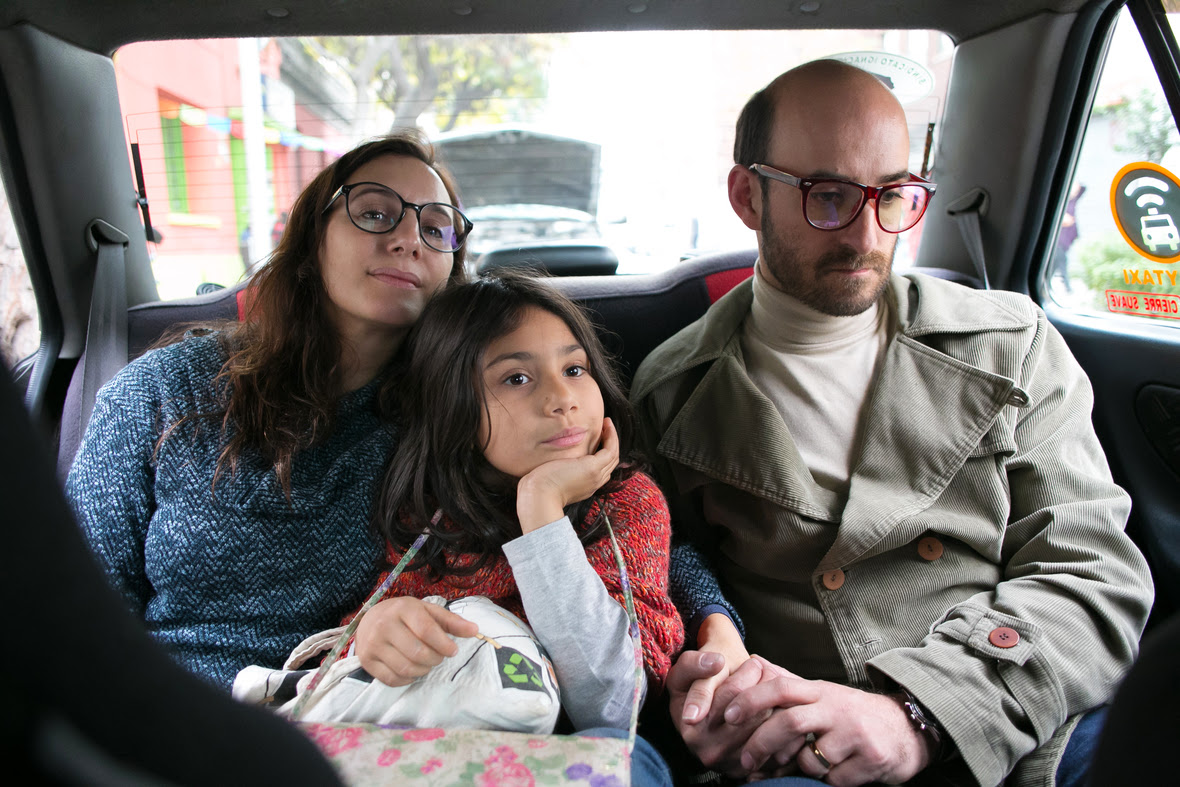 Family Life (Vida De Familia)[/caption]
Chilean filmmakers Cristian Jiménez and Alicia Scherson’s Family Life (Vida De Familia) won the Knight Competition Grand Jury Prize of the 34th annual Miami Dade College’s Miami Film Festival.
Family Life, which had its World Premiere at the 2017 Sundance Film Festival, stars Jorge Becker, Gabriela Arancibia, Blanca Lewin, Cristián Carvajal. In the film, Bruno and his family leave their Santiago home for a three-month visit to France. Bruno’s cousin Martín is left in charge of the house and cat. The cat goes missing, which leads Martín to meet Pachi. A romance begins, albeit one based on false pretenses: Martín claims the house is his, and that he’s a father and divorcé. Martín invents a whole new life—but when happens when real life comes back from holiday?
The awards ceremony capped a stellar edition of the Festival featuring a total of 140 films from 41 countries, including 17 World Premieres.
2017 MIAMI FILM FESTIVAL AWARD WINNERS
KNIGHT COMPETITION
BEST FILM: $30,000 Prize Family Life / Director: Cristian Jiménez, Alicia Scherson (Chile) BEST DIRECTOR: $5,000 Prize Daniel Hendler for The Candidate (Uruguay) BEST ACTOR: $5,000 Prize (shared) Lola Amores and Eduardo Martinez for Santa y Andres (Cuba)HBO IBERO-AMERICAN FEATURE FILM COMPETITION
BEST FILM: $10,000 Prize Maria (And Everyone Else) / Frida Films – Director: Nely Reguera) (Spain) HONORABLE MENTION Marc Crehuet for The One Eyed King (El Rey Tuerto) (Spain)JORDAN RESSLER SCREENWRITING COMPETITION
BEST SCRIPT: $10,000 Prize Tomas Alzamora for Little White Lie (La mentirita blanca) (Chile) KNIGHT DOCUMENTARY ACHIEVEMENT AWARD: Take My Nose…Please! / Director: Joan Kron (USA, Mexico)ZENO MOUNTAIN AWARD
BEST FILM: $5,000 PREMIO – The Grown-Ups (Los Niños) / Director: Maite Alberdi (Chile)AUDIENCE FAVORITE
La Soledad by Jorge Thielen Armand (Venezuela)AUDIENCE FAVORITE SHORT
Havana House by Gaspar González (USA)SHORTS COMPETITION AWARD
BEST FILM: $2,500 Prize The Head Vanishes / Director: Frank Dion (Canada, France)RENE RODRIGUEZ CRITICS AWARD
BEST FILM: Harmonium / Director: Kôji Fukada (Japan)ENCUENTROS AWARD (WORKS-IN-PROGRESS)
$10,000 Prize (shared) – Tigre (Argentina, Pucará Cine) & Camocim (Brazil, Ponte Produções)MIAMI FILM 2017 $5,000 each to:
And The Whole Sky Fit in the Dead Cow’s Eye (Y todo el cielo cupo en el ojo de la vaca) by Francisca Alegria (Chile) Connection (CONECTIFAI) by Zoe Garcia (Cuba) The Inconvenience (El Inconveniente) by Adriana Yurcovich (Argentina)