
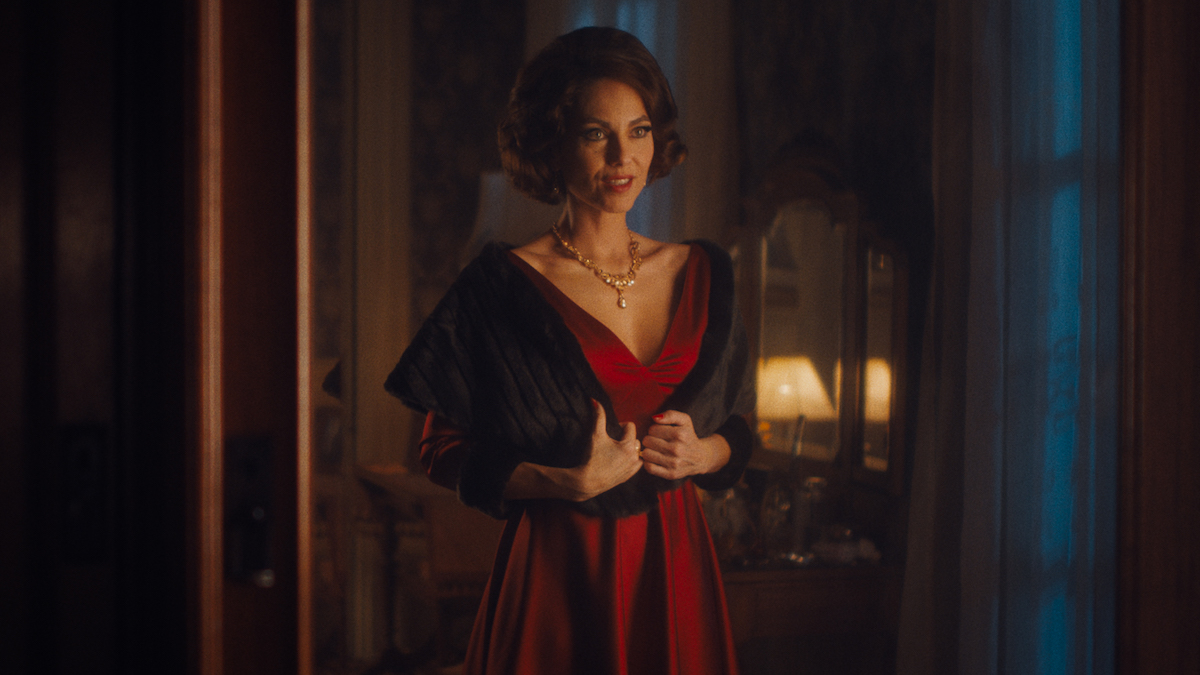
Set against the colorful backdrop of 1960s Lima, writer-director Ricardo de Montreuil’s latest feature, Mistura, tells the story of Norma Piet, a privileged French-Peruvian woman whose life is forever changed when her husband’s betrayal ostracizes her from the elite society around which she had forged her identity.
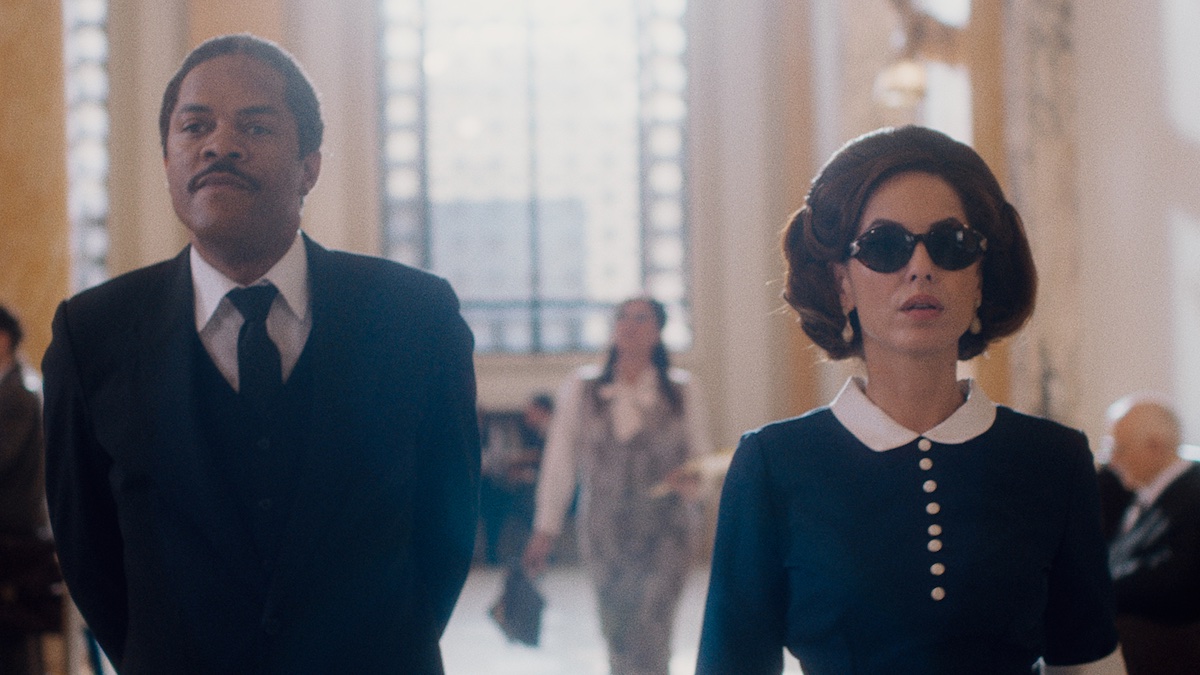
Played by acclaimed Uruguayan-Mexican actress Bárbara Mori, Norma undergoes a transformative journey when she begins to immerse herself in Peru’s vibrant and diverse culinary world. She forges an unlikely bond with Oscar, played by renowned Afro-Peruvian musician César “Pudy” Ballumbrosio, the family’s chauffeur and an Afro-Peruvian musician, whose initial sense of duty evolves into a meaningful partnership.
Together, the pair traverses Peru’s culinary heritage, exploring markets, local eateries, and intimate kitchens, leading Norma to rediscover her identity and embrace the country’s cultural richness. Alongside Norma, audiences are introduced to the diverse and intersectional cuisine of Peru, a fusion of flavors shaped by influences from indigenous cultures and immigration from Europe, Asia, and Africa. What begins as a personal reinvention for Mistura’s protagonist grows into a bold culinary venture that challenges social norms and redefines her place in Lima society.
At its core, Mistura is a story of self-discovery, identity, resilience, and cultural pride, using food as a powerful lens through which to explore belonging, transformation, and the beauty of Peru’s cultural diversity.
VIMooZ met with writer-director Ricardo de Montreuil to discuss the powerful story of Mistura. What unfolded was a conversation that unveiled the film’s personal inspirations, delved deeper into the lush culinary landscape of Peru, and reflected on the characters and team that made the film what it is.
MAKENNA BROWN: To begin, I wanted to ask about the setting of the film. From the costumes and vintage cars to the various cultural and political events, the setting of 1960s Lima provided a very colorful and immersive backdrop to the story. Why was it important to you to set the story during this time period?
RICARDO DE MONTREUIL: I think I’m going to start with why I decided to make and write this film.
Early 2022, in January, I was exhausted of our politicians and leaders with their divisive rhetoric, and I really wanted to make a film that could prove them wrong and show how diversity can make a country better. I thought that Peruvian gastronomy was a perfect example for this, because it’s a gastronomy that is born out of the fusion of several cultures through 500 years of mixing. It started with the Incas, then the Spanish arrived and mixed with them, then the Africans, then the Chinese, then the Japanese, and before that, the Italians, the French, and now the Venezuelans. Lima has 10 million people. 1 million are from Venezuela. So that’s what makes Peruvian food great. Its creativity lies in its diversity. The moment you remove one of those cultures from that mix, it wouldn’t taste like Peru. It wouldn’t be as good as it is. So that’s where it came from.
And then, I’m from Lima, actually, I was born in Miraflores, but when I was six, my family moved to Trujillo. Trujillo is a city up north in Peru and is a beach town. I didn’t grow up in the big city, so Lima always had this kind of magic, because it was a big city with a lot of things that we didn’t have in Trujillo.
But my family’s from Lima. I grew up hearing their stories about Lima. And my grandparents divorced in the 60s, so I also grew up hearing how hard it was for my grandmother, because back then, divorce was not accepted. It was seen as something sinful. So it was hard for her, especially in those days, when there were all these themes of racism and prejudice, prejudices which were much more exacerbated back then.
Also, Peru, back then, economically, was doing very well. You can see in the film that it was very progressive, very similar to what’s happening today. There was a lot of money in Peru. People were doing great, but that’s just in Lima. Not everybody was living that reality. And what happened in the 60s was that the government ignored what was happening, really, in the rest of the country, and that’s what caused this hyperinflation and our economic collapse. It took us 20 years to get out of that hole, and I think people are already forgetting why we got in that hole. That was one of the reasons why I thought that the 60s was a good setup for the story.
MB: Was Norma also inspired by your grandmother?
RM: My grandmother’s parents were British, not French. So she never cooked. She didn’t know how to cook. So that’s why I made the character French, because I mean, the French have a great cuisine. And my grandmother, she would never raise her voice. She was always very proud of her British heritage, so she was always very proper. So that’s something maybe that I got from my grandmother, but not really her essence. The opposite of Norma, my grandmother was always very progressive, very independent, unlike Norma, who’s a woman that’s suffering because she wants to fit in the mold that Lima society is telling her that she has to, and she doesn’t realize that she suffers. That’s what makes her happy and bitter. And this movie is a journey for her to realize that she doesn’t need to do that. And in this case, she finds freedom. Once she gets free from society, that’s the moment where she realizes how much she was missing.
MB: What role did the Peruvian cuisine play in reflecting the broader themes of cultural identity and unity in this film?
RM: Well, I was also inspired by Gastón Acurio. Gastón is probably one of the largest and most successful restaurateurs in the world. He owns several restaurants that are listed on the Top 50 Best Restaurants in the world, and he’s the one who created this revolution in Peruvian gastronomy.
Right now, the best restaurant in the world is in Peru. It’s called Maido, and it’s a Nikkei restaurant in Peru. They call it the fusion of Peruvian and Japanese culture. So it’s a Nikkei restaurant, and it’s the number one. Two years ago, it was Central. Lima is the only city in the world that has two restaurants in the top 10.
We have a law that all produce in Peru has to be non-GMO by law. And all that work came from this chef. He’s a guy who went to study gastronomy, or to be a chef in France. And then he came back to Peru and opened a French restaurant in Miraflores, and it didn’t work, and then they started preparing Peruvian dishes. That was the first restaurant, I think, in all of Latin America to be included in the Top 50 Best Restaurants in the world. And he found success once he embraced his roots instead of trying to imitate the French.
So I was inspired by him. Also, with this gastronomic revolution that he created in Peru, his idea was that you have to protect the farmers and the fishermen, all the way to everybody that’s involved for the food to get all the way to your plate. And also, Peru is a very diverse country. Historically, we haven’t gotten along, all of us, all the time. I think he realized that what we have in common in Peru, every single Peruvian, I think I can say for certain, is that every Peruvian loves Peruvian food. You won’t be able to find a Peruvian who will tell you the opposite. So all those ideas that he had, his life story was also very inspirational for me.
MB: I haven’t been to Lima, but I have been to Cusco. I just remember being blown away, going to the open-air markets and trying all the different fruits and the tamales, and there was a lot of street food. I remember the cuy and all of these different delicacies, and my host family would cook for us most days. I remember being surprised because I feel like, at least in North America, we’re not really exposed to the diversity of South American cuisine. But it was a great experience. So it was so interesting to see how all of these different cultural elements kind of came together within the cuisine while watching the film.
RM: And that diversity of Peru, I think you can feel it more in Lima because I think that’s where everybody meets, where everybody mixes. But Peru has something that we didn’t value before this gastronomic revolution. Potatoes are from Peru, and then tomatoes are from Peru as well. And the place of origin of a vegetable or an animal is where you can find the most diverse genetic diversity. We are the birthplace of some products that, because they were born in Peru, we have thousands of varieties, because that is where it’s from. Also, something that’s great is that there are laws that protect that because instead of creating monoculture, like one single type of potato, they’re protecting that variety, and that also makes your pantry much, much bigger. You have many, many more options to make different foods.
MB: So, in addition to getting the inspiration from Chef Acurio and his story, I’m curious if you have had any personal experiences with food that inspired the film?
RM: Trujillo, where I grew up, is a beach town and was the home of several pre-Inca cultures. The Chimu, Moche… basically, where I grew up was full of ruins. There was a huge pre-Incan culture, and that’s where ceviche was born. So when you try a lot of the Peruvian dishes, the classic Peruvian dishes, and you try them where I grew up, they feel more special maybe because they use produce that’s only local. For example, the ceviche we made with seaweed over there, which tastes amazing. And we use sweet potatoes, we use a different kind of chili. So I feel like I grew up in a city that really loved its food, and I think that it has incredible food.
When I moved to the States, I came to study film. I was very proud of my food, but I don’t think many people back then knew about Peruvian food. They had no idea. And there were not many Peruvian restaurants. So I decided to learn how to cook because sometimes I wanted to eat Peruvian food. And now I have two daughters, and they love Peruvian food. So I cook every time I have a chance. I cook Peruvian food, and they love it. So that’s my connection to food. I also like to cook on weekends, I like to invite friends to come and cook Peruvian food for them.
MB: So outside of food, the film has broader messages about unity and the intersection of different identities across lines of class, gender, and ethnicity. We can see the tension within Norma as she kind of internalized a lot of these Eurocentric ideas about what makes good food. When she’s doing the talk show, she goes along with the idea that Peruvian food is unsophisticated. But I think, through her relationships with people like Oscar and Rosa and Raul, she’s able to really expand her understanding and kind of get rid of these prejudices.
Could you talk a bit about these key relationships within the film and what they represent in terms of these broader messages?
RM: Yeah. As I was saying before, I think the inciting incident is Norma getting rejected by Lima society, and, luckily, she had Oscar, who—unlike her, a woman who hasn’t experienced life—is a man who has lived discrimination, has suffered from racism, and comes from a lower-class family. He had a kid, and the woman had to move to the States, so this is a man who has suffered, who has lived. So I think that Oscar has patience with her.
At first, I think he just doesn’t want to lose his job. He needs the work. And then he realizes she’s suffering too. Maybe she’s suffering a different kind of discrimination, and he empathizes with her and starts to help her. I mean, he realizes that she’s like a little kid, and she’s acting based on being accustomed to doing the same thing over and over. I think he’s kind of wise in a way. He convinces her; he doesn’t push her to do it, but she throws little fits, and slowly, Norma realizes how much she was missing. She meets Raul, and suddenly, it has to be a French chef. But then she realizes, well, he’s Peruvian-Japanese, but his food is amazing. What difference does it make?
So yeah, these characters somehow have the wisdom and the experience and the heart to help this woman, even though she starts out being a horrible person, and it is through these experiences that she finds happiness. I think that’s something beautiful about the movie, her arc. It’s a very, very strong arc. I think Bárbara did an amazing job creating that subtle performance. And Bárbara, she’s nothing like Norma. Bárbara, she’s a woman who’s one of the kindest people I know–extremely open-minded, tolerant, but she really understood the character, and she did an incredible job. Also, something that, probably, you didn’t realize. She’s from Mexico, and she did that perfect Peruvian accent.
The Peruvian accent is very hard to imitate for Latin Americans. In Latin America, everybody ends the sentence going up in a different way, like Argentinians, Mexicans, and Colombians. And we are the only ones who end a sentence down. So it’s very unnatural for them, for the rest of the Latinos, and she did an amazing job. I mean, it was hard for her to be able to do that character so restrained, plus having to do it with a Peruvian accent made it much more difficult for her. And I think she killed it. I think that she did an incredible job.
MB: Yeah, there were so many beautiful subtleties in her performance because Norma is trying to present this image of herself to the wider Lima society that’s very poised, very put together. She has a level of privilege, but then at the same time, because she’s a woman, she can no longer attend the country club until she’s invited by her son, because she couldn’t be a member herself. These kinds of things remind you of the period in which the film takes place.
RM: Most women wouldn’t have had the chance to study back then. I’m making a movie now about Einstein’s first wife. This producer brought me, I dunno, like 75 unpublished letters between Einstein and his first wife, which shows that they did all the work together and that Albert kept the credit for. When doing research, I suddenly realized that so many women had to publish, back then, their work through their husband or through a man, because otherwise it wouldn’t just be published, it would be ignored. It didn’t exist.

MB: It was so common. It reminds me also of Emily, Charlotte, and Anne Brontë, who had to publish their books under male names initially. There’s been so much progress, but it’s sad to think about how many women’s stories go untold because of this.
RM: Yeah, no, it’s crazy. I mean, I already wrote the script, but as I was writing, I was looking for music from the period, and I found this composer, Clara Schumann, and then I realized that she was married to Robert Schumann, who’s a famous composer. I realized that actually a lot of her work was published under his name. I’m the oldest grandson, so I grew up close to my grandmother. I also grew up close to my mom. I’m married. I have two daughters. So I feel surrounded by women, and somehow I feel like I empathize, especially with my daughters, because now I see their struggles. To me, [the film is] a little bit of a love letter to Peru and to my grandmother.
MB: Obviously, this film has a lot of strong messages, so why was it important for you to put out this film today and within our current landscape?
RM: I wanted people who go and watch the movie to have a good time. I mean, it is a feel-good film. It’s a very novel film, but I wanted them to leave the theater or the movie being more tolerant, open-minded, and curious about other people. Maybe, I dunno, it can demystify prejudices somehow, and I think it’s doing that. The movie has played amazingly well in American festivals, and most festivals in the States are in not very diverse towns, so most of the people who have watched the movie in the States have been white people. But the response has been extremely positive, which makes me very happy. That means that people are connecting with the character, understanding her dilemmas, and at the same time, hopefully, like the character, are going through this journey and leaving the theater with their minds a little bit more open.
MB: So you kind of ended up answering my other question, which was: What do you hope that audiences gain from their experience watching the film?
RM: No, I think it’s that, and I’m so happy, again, that the response has been good because I hope that the movie is able to help society a little bit, to help move us forward, because I feel like right now we’re going backwards, so we’ll see.
MB: Yeah, and I think that when it comes to uniting people in general, food is such an important piece. And also music, which plays a role within the film. These are things that bring people together within a community, to spend time with each other and share parts of themselves with each other.
RM: I agree! Did I mention the team that I worked with on Mistura?
So my second film, Máncora, which I shot in 2007, I shot in Peru with the same crew 20 years ago. When I made Máncora, I was 29, very young, and everybody was all in our twenties and early thirties. That was such an amazing experience that 20 years later, I worked with the same team. Back then, I thought that they were amazing, but now they have, each one, like 20 films or more, and a lot of awards, experience… So it was great to meet again after so many years and to be able to work with them and see them do the work they did.
I mean, the movie looks incredible because of them. Laura Quijandria, who did the makeup and hair, Bárbara doesn’t look like that. She’s Norma. She’s not Bárbara, because she did little changes on the eyebrows–very subtle, I mean, if they don’t tell you, you don’t even see it.
Pudy, who plays Oscar, was 39 when we shot the film. So I mean, it was just a little bit of makeup to make him a little bit older. Also, he was not an actor. He’s a percussionist. He plays in Lima in this jazz band. He comes from a family of musicians. His dad is an iconic Afro-Peruvian musician. So all his life, he has been in front of cameras. He was famous when he was little, because he was the youngest of 15 brothers, and they’re all musicians. He’s an artist. He’s a performer. So he worked with an acting coach for six months, and he was very professional and focused, and I think he did a great job. He was the lead on a film, and I think he killed it. And also, Bárbara was great. She really loved the challenge of working with a non-actor. So she was very supportive of him, trying to make sure that he was feeling confident, which is something very important for an actor to be. And they have great chemistry. I mean, they became really good friends behind the camera as well.
The cinematography was done by Nicolás Wong. Nicolás Wong is Peruvian, but grew up in Costa Rica. And I found out about Nico because he shot La Llorona, from Jayro Bustamante, the Guatemalan film. When I saw La Llorona, I remember I was like, “Wow! It looks amazing.” And I was very jealous, actually, when I saw La Llorona. So I called Jayro, the director, and he connected me with Nico. It was an amazing surprise to find out that he was Peruvian. So he came to Peru, but nobody knew him there because he didn’t grow up there. He was excited to be able to work in Peru for the first time on a film like this, and I think he also did an incredible job. He’s a very young DP. He’s in his early thirties, and he’s a member of The Academy; he’s also a producer, and a lot of his films open in Cannes. So it was a great experience to work with him.
Also, Tim Williams was the composer of the film. Tim composed music for Guardians of the Galaxy and Get Out. He saw a cut of the film, and he told me, “If you don’t have a composer, I would love to,” and he did it for the little money that we had, and he did an incredible job. It was an amazing experience to work with a composer of that level. And I think he really elevated the film. Mistura is a much better film because of him.
This interview has been edited for length, clarity, and formatting. Some responses may have been condensed or lightly modified to improve readability while maintaining the original intent.
Leave a Reply
You must be logged in to post a comment.