
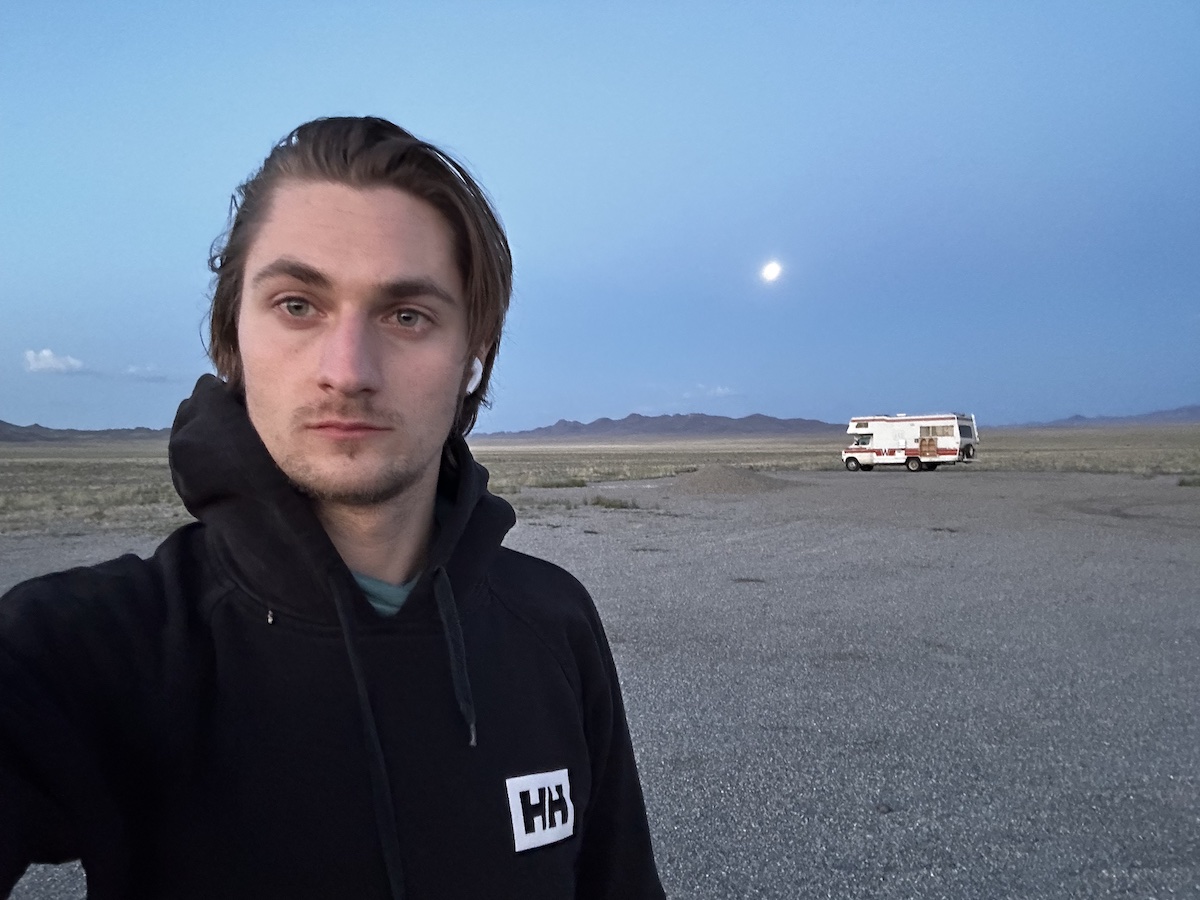
Filmmaker Joaquim Adrià Pujol premiered his experiential documentary film Màquina at this year’s Brooklyn Film Festival.
The film is among the selections featured at the festival, which showcases emerging and independent voices from around the world.
Màquina follows a father consumed by alcoholism who agrees to join his son on a journey through psychedelic-assisted addiction treatment in Colorado. Their road trip across the American West in an aging Winnebago becomes an unflinching exploration of codependency, memory, and hope.
Joaquim Adrià Pujol is a director and cinematographer working across documentary, narrative, and commercial film. A graduate of the Brooks Institute of Film (Class of 2017), his work is grounded in a raw, intimate approach that favors immediacy and character. As a cinematographer, he has worked on documentaries including Common Ground, recipient of the 2023 Human/Nature Award at Tribeca, and Groundswell, selected for the Official Selection (Special Screening) at the Cannes Film Festival in 2026. His directorial debut feature, Màquina, follows a father and son confronting addiction and codependent dynamics through a harm reduction approach, primarily through the use of ibogaine.
Ahead of the screening, we spoke with Pujol about the origins of the project, his approach to documentary storytelling, and the creative decisions that shaped the film.
ADDISON HAMMOND: Can you introduce Màquina and tell us what it’s about?
JOAQUIM ADRIÀ PUJOL: Màquina is an experiential documentary that follows a father and son as they struggle with addiction and explore a harm reduction approach to recovery, primarily through ibogaine and 5-MeO-DMT. While psychedelic-assisted therapy forms the backbone of the story, the film is really about the decision to change. It’s a deeply personal exploration of codependent family dynamics, generational addiction, and the painful process of separating your love for a person from the addiction that’s consuming them.
AH: What inspired you to bring this story to the screen?
JAP: I was in a very dark place with my own addictions and working on a TV show that was slowly eating away at my soul. Around the same time my brother crashed a car while driving drunk and nearly died. His rock bottom forced me to look at our family’s generational cycles of addiction. Making a film felt like the most honest way to explore those questions.
AH: Before production began, did you know what kind of film Màquina would become, or did its shape emerge during the process?
JAP: I wasn’t really sure what the film would become. I was less concerned with the outcome than I was with the process. I just knew I needed to make it. Given how intimate the subject was, and the fact that the main characters were my own family, I felt the only way to approach it was through complete immersion. I lived with my father and brother for weeks and rarely put the camera away. Even when we weren’t filming it was usually sitting beside me or in my lap. After a while the camera almost disappeared, and I think that helped create the level of intimacy the film needed.
AH: Documenting your own family creates unique challenges. How did you navigate being both a son and a filmmaker?
JAP: I won’t say it was the hardest thing I’ve ever done, but it definitely broke me a few times. Even now I still feel a strange mix of hesitation and guilt about sharing something this personal. The most important thing was that we were pursuing healing as a family. There were moments when supporting the film and supporting recovery weren’t the same thing. At those times I tried to choose the people over the project. There were several moments where I put the camera down and just showed up as a son and a brother.
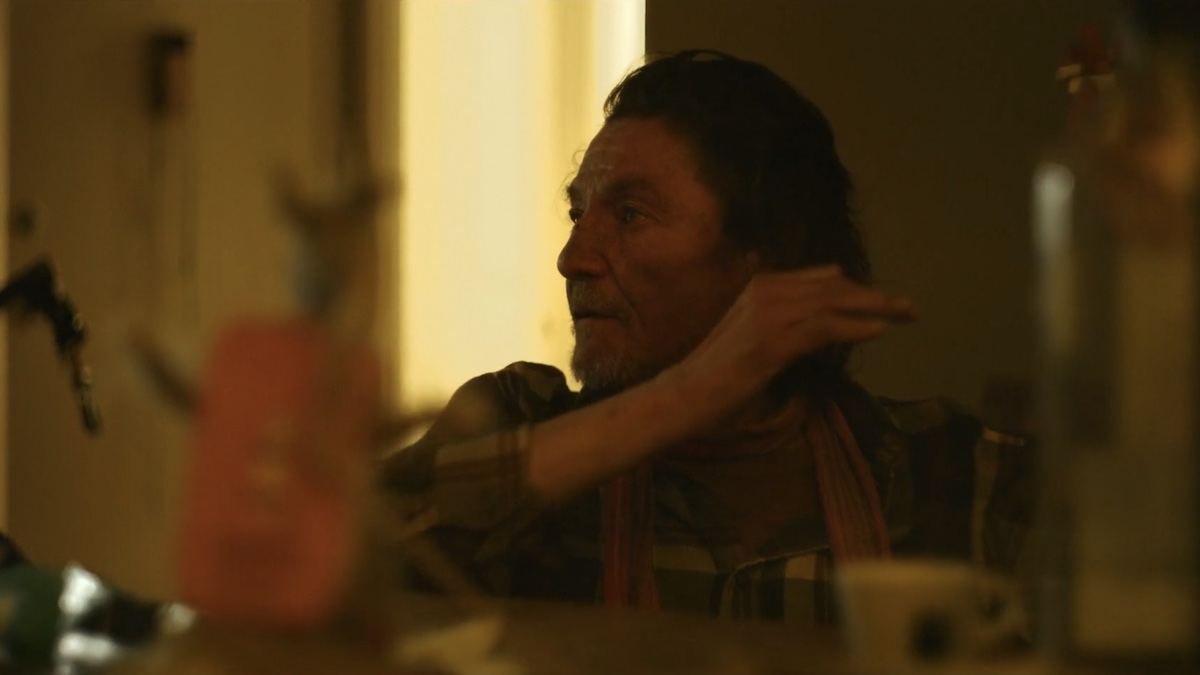
AH: What drew you to document psychedelic-assisted addiction treatment as part of the story?
JAP: My father and brother had both been through traditional treatment programs multiple times, and they never really felt like the right fit. We’ve always been a bit of an alternative family and were already familiar with different ideas around health and medicine. Psychedelics weren’t completely foreign territory for us. We chose ibogaine because of its reputation as a powerful pattern interrupter and because it has no real recreational use. At the same time, one thing I wanted the film to make clear is that there’s no miracle cure for addiction. The medicine can create an opportunity for change, but the work still has to come from the individual. In many ways, the film isn’t really about ibogaine at all. It’s about the willingness to change and the complicated ways addiction impacts a family.
AH: How did the landscape of the American West contribute to the emotional atmosphere of the film?
JAP: There’s something deeply melancholic and inspiring about the raw energy of the American West. Many of the locations in the film were places my brother and I had explored years earlier. It felt important that the treatment process included long stretches of time in nature. The timeline in the film is intentionally vague, but we spent about a week driving to Colorado and two weeks coming back through small highways and backroads. Living together in an RV without a crew created a very immersive environment. We’d pull off into the desert, build a fire, and have conversations that would have happened whether a camera was there or not. That constant immersion helped preserve a raw and honest tone.
AH: How did making the film affect your relationship with your father?
JAP: It allowed me to separate my love for him from his addiction and let go of a lot of anger and guilt. For years, I carried the feeling that I might get a call telling me he was dead. Watching him go through ibogaine and making the film together changed something in me. In a strange way, I got to watch a version of him die, and I was finally able to accept him for who he is. Today we have a healthier relationship with clearer boundaries. Breaking those codependent dynamics was painful, but it ultimately led to more respect and acceptance between all of us.
AH: Why did you decide to showcase the film at the Brooklyn Film Festival?
JAP: Màquina doesn’t fit neatly into a category. It’s part documentary, part personal essay, and at times it feels almost dreamlike. Brooklyn has a long history of supporting independent work that takes risks both formally and emotionally. It felt like a place where audiences would be open to sitting with the ambiguity and vulnerability that the film explores.
AH: What advice would you give to emerging filmmakers trying to make their first feature?
JAP: The barrier to making a feature is probably lower than it has ever been, so there’s really no excuse not to go out and make your movie. I self-funded Màquina with money from another documentary job. Most people would tell you that’s a terrible idea, and maybe they’re right. But if you feel compelled to tell stories, you have to find a way to do it. I think it’s better to try and fail than spend years wondering what could have happened if you’d just gone for it.
AH: Are you currently developing any future projects you can tell us about?
JAP: Yes. I recently finished principal photography on a project called Alma Verde. It’s a creative non-fiction feature about two lovers who travel to Peru to end their seven-year relationship. The film takes a very unconventional approach to narrative filmmaking. Instead of a traditional script, we worked from outlines, character histories, and emotional objectives. Most of the dialogue was discovered in the moment. Other than our lead actors, nearly all of the locations and interactions are real and were approached more like a documentary. We’ve just entered the edit phase and I’m equal parts excited and terrified. Working without a script gives you a lot of freedom, but it also means you have to find the film all over again in the edit.
This interview has been edited for length, clarity, and formatting. Some responses may have been condensed or lightly modified to improve readability while maintaining the original intent.
Leave a Reply
You must be logged in to post a comment.