
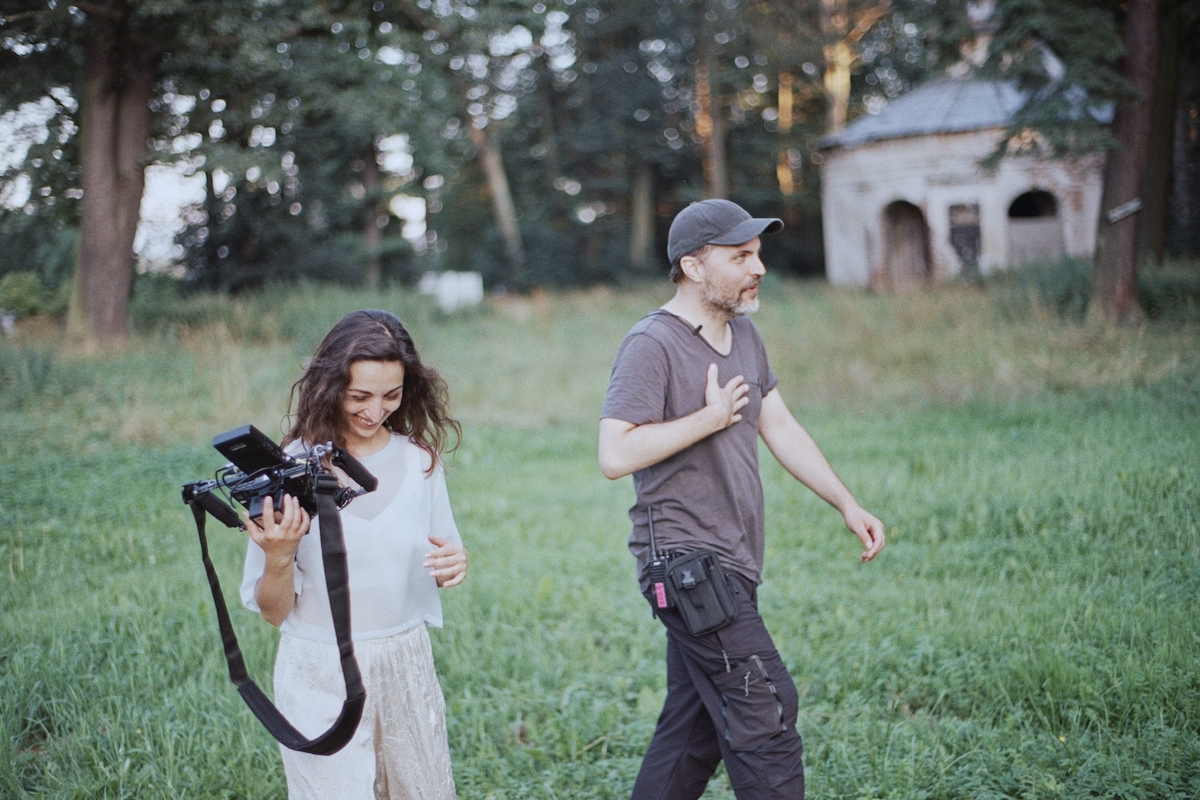
Filmmakers Helena Ganjalyan and Bartosz Szpak bring Glorious Summer to this year’s Brooklyn Film Festival. The film is among the selections featured at the festival, which showcases emerging and independent voices from around the world.
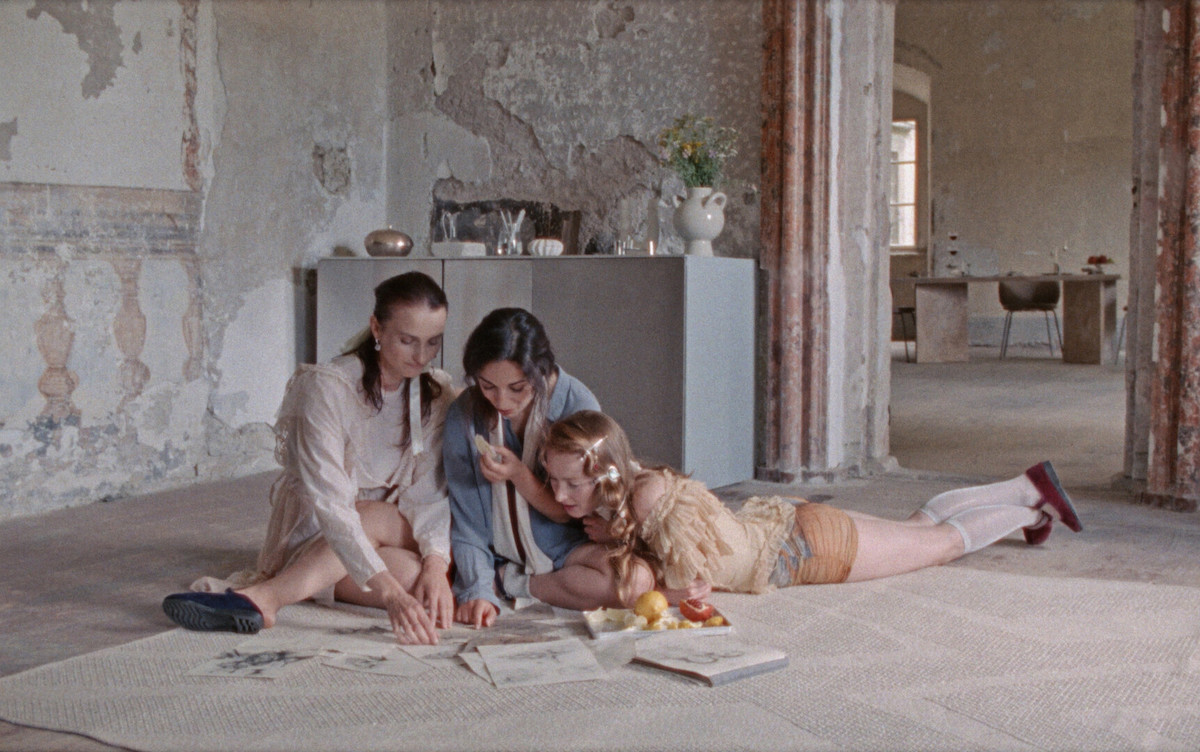
Glorious Summer takes place in a sun-drenched Renaissance palace. Three women exist in an airy state of suspension, a liminal, responsibility-free bubble, where summer never ends. An enigmatic system fulfills all their needs – providing food, entertainment, and a daily routine focused on wellness affirmations. There’s just one rule: they are forbidden to cross the surrounding wall. Soon, cracks begin to appear in this idyllic picture: using a ‘touch language’ – as some things can’t be said out loud, secretly practicing how to die, which is supposed to be their ticket to ‘another place’. Long-suppressed anger and a desperate need to escape emerge. Will the girls, raised in a state of perpetual immaturity, manage to break free from the boundaries enforced by the system?
Helena Ganjalyan is a director, actress, and choreographer of Polish-Armenian origin, born in Yerevan. She graduated from the Acting Department of the Ludwik Solski State Drama School in Kraków and trained as a dancer at the State Ballet School in Gdańsk. She creates original film and theatre projects and works with other directors as a choreographer and movement director. In a directing duo with Bartosz Szpak, she has worked on international commercial projects and co-directed their debut feature ‘Glorious Summer.’ Her practice combines film, theatre, and movement as interconnected forms, with a focus on detail, rhythm, and perspective, using unexpected combinations to create layered, expressive storytelling.
Bartosz Szpak is a director and composer, a graduate of the Acting Department at the National Film School in Łódź. He works with Helena Ganjalyan as a creative duo, making films, music videos, and commercials. They are currently developing two feature films: ‘Two Peas’ and ‘Heavyland’. With a background in music composition and audio directing, he takes a multidisciplinary approach to storytelling, with a strong focus on dialogue and rhythm. He composed the original scores for ‘Glorious Summer’ (SXSW 2025) and for Il Maestro by Andrea di Stefano (Venice Film Festival 2025).
We spoke with Ganjalyan and Szpak about the inspiration for Glorious Summer, the creative choices in the film, and the impact they hope the film has.
ADDISON HAMMOND: Can you introduce Glorious Summer and tell us what it’s about?
HELENA GANJALYAN and BARTOSZ SZPAK: Glorious Summer is a dystopian drama set in a sun-drenched Renaissance palace. Three women live in an isolated environment where an invisible system takes care of all their needs: food, entertainment, and self-development. The only rule is that they must never cross the wall surrounding the estate. What initially feels like paradise gradually reveals a darker side. At its core, the film explores freedom, responsibility, fear of the unknown, and the question of how much we are willing to sacrifice in exchange for comfort and security.
AH: What inspired you to bring this story to the screen?
HG and BS: The project evolved through several stages. Its origins go back to a theatre piece, where we explored themes of language manipulation and systems of care that can become tools of oppression. Later, while making a music video in Gorzanow Palace, we discovered the location that would eventually become the world of Glorious Summer. As the screenplay developed, we shifted the focus toward contemporary wellness and mindfulness culture, self-optimization. Rather than criticizing these ideas directly, we wanted to explore what happens when even positive concepts are pushed to an extreme and transformed into systems of control, when ideas designed to help us become rigid systems that limit freedom and choice.
AH: The film’s setting is vital to the story. How did you create the visual tension between the beauty of the palace and the underlying unease of the atmosphere?
HG and BS: We wanted the film to feel suspended outside of time. The Renaissance palace offered a sense of beauty and grandeur, but at the same time it carries a subtle feeling that everything could fall apart at any moment. Shooting on 16mm film added texture, fragility, and a certain ambiguity to the image. Together with our production and costume designers, we created a world where historical architecture coexists with minimalist furniture, contemporary technology, and stylized costumes. We were interested in contrasts: old and new, nature and control, openness and confinement. The lush gardens suggest freedom and abundance, yet they are enclosed within invisible boundaries. The visual beauty is intentionally seductive because the world of the film is seductive. The unease emerges gradually, as the audience begins to recognize the stagnation, control, and loss of agency hidden beneath the idyllic surface.
AH: The film presents a world where every need is met, yet the characters give up their freedom for this security. Were there any particular philosophical texts, political ideas, or contemporary trends that influenced your development of this world?
HG and BS: Rather than responding to one specific political idea, we were interested in broader contemporary tendencies. The film was influenced by the language of mindfulness, self-optimization, and the desire for safety in an increasingly overwhelming world. We were fascinated by the idea that even positive concepts can become oppressive when pushed to an extreme. The story asks where care ends, and control begins, and what happens when discomfort, doubt, and negative emotions are removed from human experience. We also discussed what a contemporary form of totalitarianism might look like. Rather than operating through visible force, it would probably function through care, comfort, and the promise of safety. The most dangerous systems are often those that make us feel protected while quietly discouraging independent thought and choice.
AH: What do you hope viewers take away after watching the film?
HG and BS: We hope the film encourages viewers to examine their own “walls” – whatever form they may take. For us, the story is about finding the courage to step beyond fear, comfort, or familiar limitations. We love when audiences bring their own interpretations to the film, but if there is one feeling we would like to leave them with, it is a sense of empowerment and curiosity about what lies beyond their personal boundaries. Also, one of the central questions in Glorious Summer is whether safety and freedom must always be presented as opposites. We don’t believe they are. The film asks what happens when the desire for certainty becomes so strong that it limits our ability to choose, take risks, or define ourselves independently. We also hope viewers leave the cinema with their own interpretations. The most rewarding reactions have often come from people who kept thinking about the film for days afterward, discovering meanings we never consciously placed there.
AH: What were some of the biggest challenges you faced during production?
HG and BS: One of the biggest day-to-day challenges was simply the weather. The story unfolds in what feels like an eternal summer, while we were shooting in Poland. Storms and heavy rain became a regular part of our schedule – we constantly rearranged scenes, moving interiors and exteriors around to catch brief windows of sunlight. It was demanding, but it also brought a certain energy and adaptability to the production process.
As first-time feature directors, balancing ambition with limited resources was another major challenge. Looking back, those limitations ultimately helped shape the film’s identity and forced us to make very precise creative choices.
AH: Helena, as both a director and performer, how did you navigate balancing those roles on set?
HG: It required a great deal of preparation and trust. Before arriving on set, we had developed a very detailed storyboard for the entire film, so there was very little need to invent things on the spot. That preparation gave us more space to focus on the present moment and on working with the actresses. We also spent a lot of time rehearsing, which meant everyone had a clear understanding of the characters, relationships, and emotional stakes of each scene. Building that shared confidence within the team was essential because once shooting began, we could concentrate entirely on execution.
Bartosz and I developed the project together from the very beginning, so we shared the same understanding of the story, the characters, and the tone of the film. Having that creative partnership allowed me to move between acting and directing without losing sight of the larger vision. At the same time, filmmaking is always a collective effort. We had an incredible first assistant director, script supervisor, and crew who helped hold everything together.
The most difficult part was switching between the two mindsets. As a director, you’re constantly making decisions, solving problems, and thinking about hundreds of things at once. As an actor, especially in a role built around presence and subtle emotional shifts, you need to let go of all that noise. Stepping in front of the camera meant temporarily forgetting everything happening around me and becoming fully immersed in the character.
AH: Why did you decide to showcase the film at the Brooklyn Film Festival?
HG and BS: Brooklyn Film Festival has a strong reputation for supporting independent voices and distinctive auteur cinema, which aligns closely with the spirit of Glorious Summer. After premiering internationally at SXSW, we wanted to continue presenting the film to audiences who are open to unconventional storytelling and discussion. Festivals like Brooklyn FF create the ideal environment for that kind of exchange.
AH: What advice would you give to emerging filmmakers trying to make their first
feature?
HG and BS: Use the resources and relationships you already have. Glorious Summer grew out of earlier projects, including theatre work and a music video that became a kind of proof of concept. Don’t wait for
perfect conditions. Build your voice through smaller projects, find collaborators you trust, and focus on telling a story that genuinely matters to you. It’s also worth developing several projects simultaneously. Not every film will move forward at the same pace, and working on multiple ideas increases the chances that one of them will gain momentum. Most importantly: trust your instincts. There will always be opinions, doubts, and external expectations, but your intuition is often your most valuable creative tool.
AH: Are you currently developing any future projects you can tell us about?
HG and BS: Yes, we are currently developing two films: Two Peas (our first English-language feature) and Heavyland. While it’s still early to reveal many details, both projects continue our interest in building distinctive worlds and exploring contemporary anxieties through genre-inflected storytelling.
This interview has been edited for length, clarity, and formatting. Some responses may have been condensed or lightly modified to improve readability while maintaining the original intent.
Leave a Reply
You must be logged in to post a comment.