
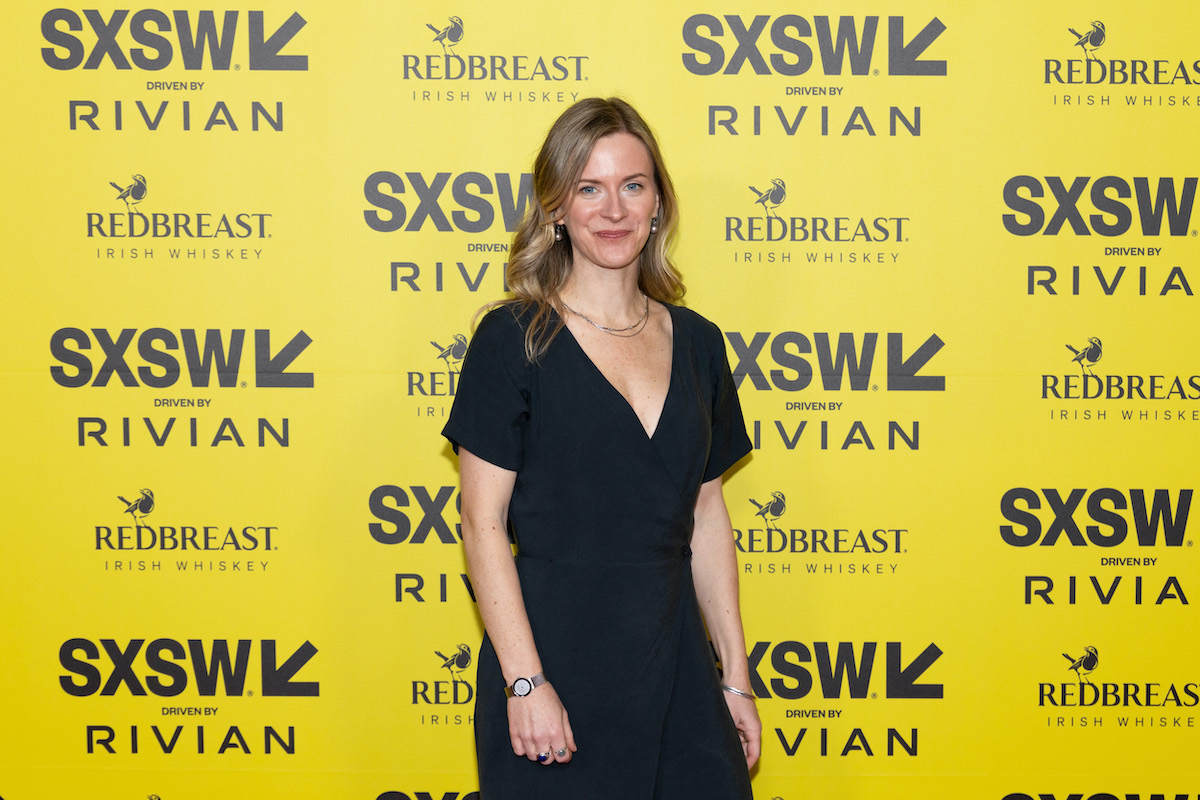
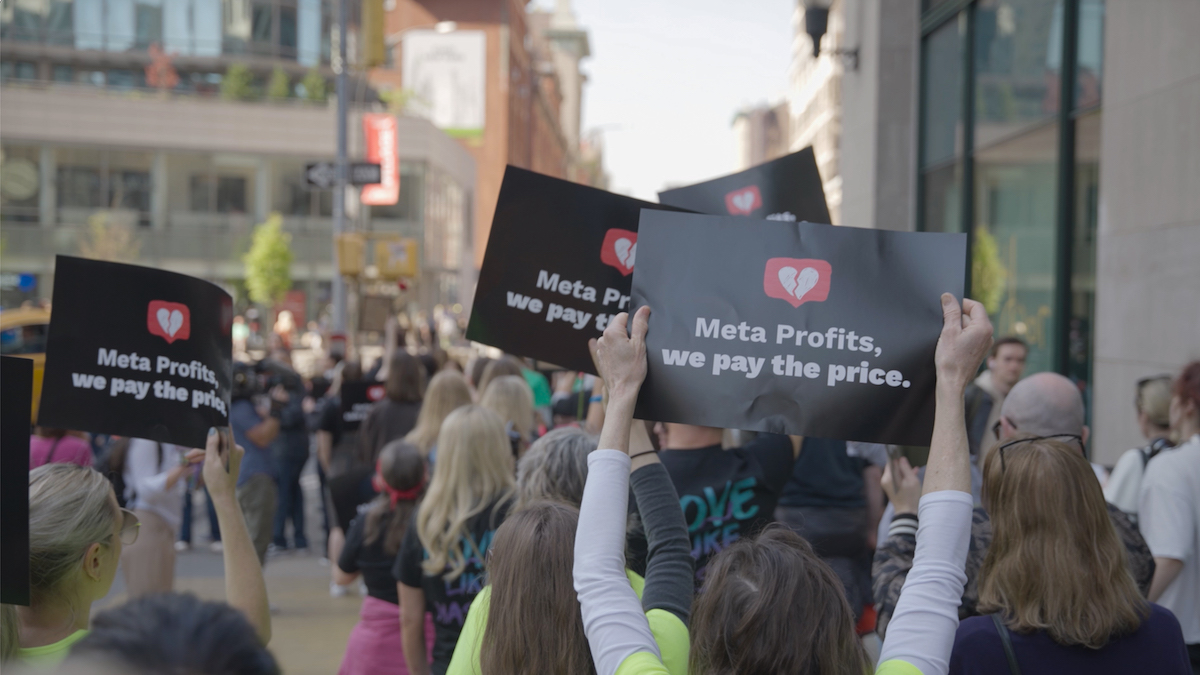
Directed by Sara Robin, Your Attention Please investigates how social media and the attention economy reshape childhood, mental health, and human relationships.
Through stories of parents, young people, activists, educators, and technology reformers, the film examines the real-world consequences of addictive digital platforms.
The film flips the script on traditional tech documentaries by adopting a more emotional, character-focused approach.
VIMooZ spoke with director Sara Robin at the New York premiere of Your Attention Please at the Brooklyn Film Festival about the inspiration behind the film, the challenges of documenting a rapidly evolving technological landscape, the creative process behind its production, and why protecting human connection remains one of the defining issues of our time.
JUNO JIANG: To begin, could you introduce the film and what it’s about?
SARA ROBIN: Your Attention Please is a feature documentary that explores how the attention economy is shaping our relationships, mental health, and human attention. This can be a pretty heady topic, and so we decided to flip the script on traditional tech docs.
JJ: What made you bring this story to the screen?
SR Back in 2019, I discovered that I could no longer make it through a single page in a book without reaching for my phone. I had this constant need to check what was on there. I used to love reading; disappearing between the pages of a book was one of my favorite things growing up. I mean, I literally read the first Harry Potter book 7 times! Because each time a new one came out, I would reread all of the previous ones. Losing that passion was a wake-up call for me. I wanted to regain my ability to sit still, to focus, to be present. Going through this experience was the first spark of inspiration for YAP. But as I spoke with parents, teachers, and young people, I quickly realized that individual solutions would only get us so far. This isn’t just about one person’s screen time. It is about human connection, our agency, and our well-being. And those larger issues demand collective solutions.
JJ: How was the journey of making this film?
SR: Exciting, exhausting, and full of surprises. This is my first feature, and when I started, I knew very little about what it would take to get it done. I just felt that this was the time to talk about this topic, and I had a clear idea of some of the experts I wanted in the film. I started with nothing but an idea, a pitch deck, and a website. I’m happy to say that what made this film possible were, in fact, many face-to-face interactions. I flew myself to conferences to get the chance to talk to some of the people who inspired me.
From there, I got connected to more people in the responsible tech and digital wellbeing space, and it snowballed from there. We had to bootstrap the project for almost two years until we finally got the film funded. None of this would have been possible without the support of my dedicated team, who continued working on the film even when its future was uncertain.
The story evolved, and we pivoted several times. Once Jack LeMay came on board as editor and eventually writer and co-creator of the film, we made significant changes to the structure and added new storylines. There was some debate about whether we would need a narrator to pull the film together. I was adamant that we could weave the story together relying only on expert and participant soundbites, and in the end, that worked out beautifully. It was a lot more work in the edit room, and I really credit Jack for sticking with me when I refused to give him a narrator.
JJ: What scene or moment in the film means the most to you personally?
SR: There are so many. But I will say one of my favorites is the animated scene of Jordy sitting in his room, scrolling on his phone….and the books in the shelves around him fall out, and transform into birds that guide him outside. I believe the power of reading is that it trains our imagination. Reading teaches us to dream. I think that’s what ultimately makes us human…and it is something we’re at risk of losing in the digital age. The scene captures this beautifully, and I feel it’s one of the most visually evocative moments in the film.
JJ: What were some of the biggest challenges you faced during production?
SR: The evolving nature of the topic was perhaps our greatest challenge. How do you say something that’s timely enough to capture an audience, yet timeless enough to remain relevant amidst the rapid advance of technology? The biggest shift, of course, was the advance of AI. ChatGPT went mainstream about a year into our production, and it became quickly apparent that in many ways the playbook of social media was being repeated with AI. Rapid deployment, a massive economic incentive, minimal oversight—it’s a recipe for harm.
Unfortunately, we’re already seeing a multitude of AI harms affecting people, from deepfakes and job loss to chatbots becoming aides in teen suicide. We knew we had to connect the dots between our exploration of social media and what we’re beginning to see with AI, so we completely reworked our ending in 2025 to make space for that.
JJ: Why did you decide to showcase the film at the Brooklyn Film Festival?
SR: We premiered at SXSW in March, and since then, we’ve been screening at a handful of festivals that are community-driven and create spaces that challenge the status quo. I had attended the Brooklyn Film Festival in the past because the short film Altars, which I DP’d back in 2021, screened there. I loved the experience and knew the festival has a strong track record of backing independent voices and giving films a platform that are not afraid to speak their mind. BKFF was on our radar from the start. I also lived in Brooklyn from 2023 to 2024, so bringing the film to my former borough is particularly exciting to me.
JJ: What advice would you give to aspiring independent filmmakers?
SR: Just start. Once you take the first step, you’ll take another, and another. It’s okay if you don’t know how everything will come together. None of us do. You’ll discover it along the way, and that’s the beauty of filmmaking.
JJ: Are you currently developing any future projects you can tell us about?
SR: It will be a project about protecting what makes us human in the Age of AI. It might be a sci-fi. It might be a feature documentary. Maybe both.
This interview has been edited for length, clarity, and formatting. Some responses may have been condensed or lightly modified to improve readability while maintaining the original intent.
Leave a Reply
You must be logged in to post a comment.