International Film Festival Rotterdam (IFFR)

  • IFFR unearths São Paulo’s ‘60s, ‘70s and ‘80s low-budget film culture

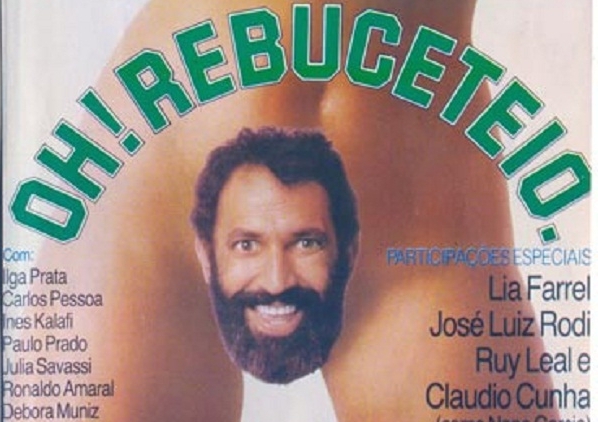
    [caption id="attachment_2399" align="alignnone"]OH! REBUCETEIO (Claudio Cunha, 1984)[/caption]
    In the Signals section’s theme programme ‘The Mouth of Garbage: Sub Culture and Sex in São Paulo’, the International Film Festival Rotterdam (IFFR) will present a vast panorama of features and shorts from São Paulo’s so-called ‘Boca do Lixo’ (Mouth of Garbage), the nickname for the working class neighborhood in the center of the Brazilian metropolis. These quick and dirty productions frequently highlighted the sleazy underbelly of Brazilian society using established genres such as noir, horror, the western, and pornography.

    In the Boca do Lixo district a constellation of entrepreneurial producers and up-and-coming filmmakers came together to create low-budget films in the mid 1960s, remaining active for nearly thirty years. An accessible option to burgeoning directors who felt excluded from high-end studio filmmaking and elite artistic movements such as Cinema Novo, the Boca do Lixo yielded some of Brazilian filmmaking’s chief talents, among them: Rogério Sganzerla, Carlos Reichenbach, José Mojica Marins (Coffin Joe), Ozualdo Candeias, and others.

    Despite the fact that several of the Boca films were hugely successful with national audiences, producers at the time found themselves fighting constantly against government censors and the constraints of a distribution landscape saturated with Hollywood product. Some films managed to cleverly elude government control and market limitations even as they presented a fiercely critical outlook; others were banned or phased-out of the commercial distribution circuit outright. As a result, large portions of the films associated with the Boca have remained elusive.

    The International Film Festival Rotterdam presents about eighteen films in tribute to the Boca do Lixo, including rare works by João S. Trevisan, Claudio Cunha, Ody Fraga, and Jean Garret, many of them presented in new transfers made from the films’ original 35mm negatives.

    ‘The Mouth of Garbage: Sub Culture and Sex in São Paulo’, curated by film scholar Gabe Klinger and IFFR programmer Gerwin Tamsma, is supported by The Netherlands Film Fund as part of the Central de Cultura program. The Central de Cultura program aims to intensify and extend cultural exchange and cultural cooperation between Brazil and The Netherlands. The IFFR also thanks the Cinemateca Brasileira in São Paulo for its generous collaboration.

    The lineup of ‘The Mouth of Garbage: Sub Culture and Sex in São Paulo’, to be announced shortly, includes:

    THE MARGIN (Ozualdo Candeias, 1967) – Truck driver-turned-director Candeias fled the commercial filmmaking scene to be able to tell this neo-realistic story of São Paulo’s underprivileged citizens living near the Tietê river.

    THE PORNOGRAPHER (João Callegaro, 1970) – A pop art portrait of the trials and tribulations of a young man hired to edit a porno rag run by a shady madame.

    ORGY OR: THE MAN WHO GAVE BIRTH (João S. Trevisan, 1970) – Celebrated novelist Trevisan’s sole feature is a radical, plotless re-envisioning/critique of Cinema Novo, loosely recounting the journey of a deranged youth who has killed his father. Summarily banned by the military, IFFR will present the world premiere of the director’s cut of the film made from a new 35mm transfer especially for the occasion of the retrospective.

    THE VAMPIRE OF THE CINEMATHEQUE and THE INSIGNI FICANT (Jairo Ferreira, 1976 and 1980) – Free-flowing essay/diary works in Super 8 featuring many of the Boca’s luminaries in candid moments compiled by the critic and scholar Ferreira.

    SNUFF – THE VICTIMS OF PLEASURE (Claudio Cunha, 1977) – One of the biggest box-office successes of its era, Cunha’s William Castle-like production deals with two American filmmakers who come to Brazil and attempt to make a snuff film in a remote barn.

    THE EMPIRE OF DESIRE/SENSUAL ANARCHY (Carlos Reichenbach, 1981) – Though unfairly maligned by critics of its day, this wild road trip sex romp has recently been hailed as one of the great Brazilian films by a few noted scholars. Long unavailable, IFFR presents Reichenbach’s masterpiece in a new 35mm transfer.

    OH! REBUCETEIO (Claudio Cunha, 1984) – A hard-core porn Chorus Line parody featuring an egomaniacal theater director who inspires his actors to perform lurid, freeform sexual acts on stage.

    SIT ON MINE AND I’LL ENTER YOURS (Ody Fraga, 1985) – A witty diptych about a talking vagina and a man with a strange penile outgrowth on his head, Fraga’s surreal farce is full of zingers and has a lighthearted sensibility reminiscent of Russ Meyer and Radley Metzger’s classics.

    FUK FUK BRAZILIAN STYLE (Jean Garret, 1986) – A class conflict satire featuring little person actor Chumbinho as a domestic-cum-slave who escapes the home of his wealthy employers to go on dream-like journey through a subterranean universe of repressed sexual yearning.
    Read more


  • IFFR 2012 to present film and visual arts from the Arab world

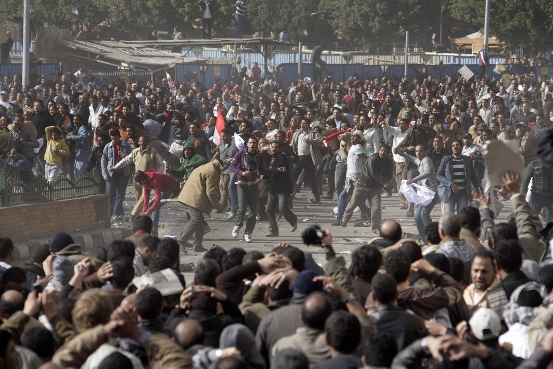
    [caption id="attachment_2401" align="alignnone"]Tahrir square in Cairo, Egypt[/caption]

    Power Cut Middle East, a themed program within the IFFR’s main Signals section, presents recent films and visual art works from the region with a focus on Syria and Egypt. The program, a collaboration with Hivos Culture Fund, consists of short films, documentaries, feature films and visual art installations guided by discussions, lectures and artist talks.

    Since the change of power in Tunisia, Egypt and Libya, a revolutionary spirit runs through several Middle Eastern countries. What seem to be sudden revolutions have however a clear history. Power Cut Middle East offers two focused visions on this ‘history in the making’: the Visual Arts Festival in Damascus travels for an edition ‘in exile’ to Rotterdam with a programme of fiction and documentary films and arts installations.

    Secondly, together with Egyptian filmmakers, IFFR looks at the years preceding the Tahrir Square revolutions by presenting films in which the resistance announced itself in more or less direct ways. In the context of Power Cut Middle East, the central question to be considered is what the role was – and is – of the moving image.

    Films from Syria
    In collaboration with the Visual Arts Festival Damascus, Power Cut Middle East presents a choice of strong Syrian auteur cinema from the period 1977-2002. Prominent Syrian filmmaker Mohammad Malas will be in attendance.

    From the period 2000-2010, Power Cut Middle East screens short, more experimental works by a new generation of Syrian documentary filmmakers such as Reem Ghazzi, Soudade Kaadan, Reem Ali, Ammar Al-Beik, Joude Gorani and Hazem Alhamwi.
    This will be supplemented by three compilations programs with recent short films and installation work from the region.

    Films from Egypt
    The other main focus within Power Cut Middle East is on Egypt with films made in the period running up to the 2011 revolution. Egyptian artists Omar Robert Hamilton, Ahmed Khaled, Hala Elkoussy, Sherif el Azma and Dina Hamza, among others, will present one of their own recent works as well as an Egyptian film or art work that influenced them as artist.

    Images of the revolutions
    Finally, Power Cut Middle East presents three lectures that shed light on the role and meaning of the images of the revolutions in the Arab world that have swept the global media during the past year. Contributors will be Dutch journalist Ferry Biedermann, former Middle East correspondent of de Volkskrant and currently publishing in The National and Elsevier Magazine; Lebanese artist and musician Raed Yassin who will present a new performance and Jasmina Metwaly, artist, journalist and one of the initiators from Mosireen, a new independent media center in Cairo which was born at Tahrir Square with the objective to document the ‘revolution’.

    Read more


  • International Film Festival Rotterdam announces first five films for 2012 Tiger Awards Competition

    [caption id="attachment_2397" align="alignnone"]SUDOESTE (SOUTHWEST) by Eduardo Nunes[/caption]
    The International Film Festival Rotterdam announces the first five films selected for its Tiger Awards Competition 2012. Polish-American co-production IT LOOKS PRETTY FROM A DISTANCE by Anka and Wilhelm Ankal ventures into the darker sides of country life. Midi Z’s RETURN TO BURMA is a rare contemporary fiction from the Southeast Asian country. Eduardo Nunes’ black and white, fairylike SOUTHWEST from Brazil has been supported by IFFR’s Hubert Bals Fund. A FISH from South Korea is the first 3D-film in the Tiger Awards Competition. Focusing on the plights of a young adolescent girl, Huang Ji’s EGG AND STONE from China will receive its world premiere at the festival.

    Only first or second films can be selected for IFFR’s Tiger Awards Competition. All the films mentioned here are first fiction features. A jury will decide on three equal Tiger Awards, each with prize money of 15,000 Euro. The Tiger Awards Competition will comprise approximately fifteen titles.

    The first five films selected in the Tiger Awards Competition 2012 are:

    JIDAN HE SHITOU (EGG AND STONE) by HUANG Ji
    China, 2012, World premiere

    Huang Ji shot her feature début drama in her Hunan province hometown with a cast of non-professional actors. Like numerous others in China, the 14 year old protagonist is living with relatives because her parents are working a big city. She has few friends, and at home she tries to keep her door shut.

    Z DALEKA WIDOK JEST PIEKNY (IT LOOKS PRETTY FROM A DISTANCE) by Anka & Wilhelm Sasnal
    Poland/USA, 2011, International premiere

    In their début feature film, renowned visual artists and painters Anka and Wilhelm Sasnal explore the dark and antisocial sides of life on the beautiful Polish countryside, where in a hot summer everything seems to fall apart.

    GUI LAI DE REN (RETURN TO BURMA) by Midi Z
    Burma/Taiwan, 2011, European premiere

    Film maker Midi Z, born in Burma and raised in Taiwan, shot his début feature film in his native country, working with non-professional actors. A realistic and authentic portrayal of daily life in the least known and least accessible Southeast Asian country, RETURN TO BURMA will see its European premiere in Rotterdam.

    SUDOESTE (SOUTHWEST) by Eduardo Nunes
    Brazil, 2011, European premiere

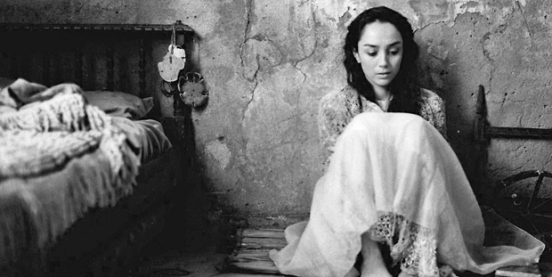
    Eduardo Nunes made several successful short films, three of which were screened at IFFR. A tale of fantasy and mystery shot in stunning black-and-white, his fiction feature début SUDOESTE is situated in a sleepy Brazilian coastal village. Here, a baby, a girl and a woman named Clarice seem to live their (or is it her?) life in one single day.

    MULGOGI (A FISH) by PARK Hong-min
    South Korea, 2011, International première

    Park Hong-min’s first feature film A FISH will be the first 3D-film in the Tiger Awards Competition. Produced for only about 100,000 Euro, A FISH tells a tragic absurdist tale of a professor who travels South in search of his wife who apparently has deserted him to become a shaman.

    Read more


  • Chinese non-fiction and work by Ai Weiwei to be screened at Film Festival Rotterdam


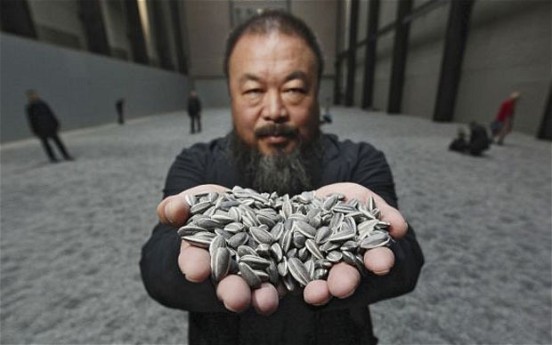
    Recent films by Chinese documentary makers and films by versatile artist Ai Weiwei will be screened during the 41st edition of the International Film Festival Rotterdam. The films highlight hidden aspects of Chinese society in an intimate and surprising way. These films and Ai’s work will be shown in Hidden Histories, a themed program of the IFFR main Signals section.

    Signals: Hidden Histories

    What the films in Hidden Histories have in common is that their makers focus on hidden aspects of Chinese society such as for example poverty, corruption or misrule. The ‘hidden’ aspect also applies to the films themselves: screenings and distribution are often thwarted. In spite of this, the makers have managed to create convincing, substantively strong and visually impressive work on minimal budgets.

    As part of Hidden Histories, the festival will also be showing works of Chinese artist Ai Weiwei: six long films which he refers himself to as ‘social documentaries’ and four documentary art videos. There is a remarkable difference between Ai’s sometimes highly conceptual art videos and his social documentaries. For the latter, he acts – before and behind the camera – as a committed research journalist, persistent to bring injustice in the open. Hidden Histories is being compiled by IFFR programmers Gertjan Zuilhof and Gerwin Tamsma.

    Documentaries in Hidden Histories

    Hidden Histories will include the film APUDA by He Yuan. This film won the main prize at Yunfest in China and its only other prior screening was during the Vancouver film festival in Canada. APUDA provides a sober portrayal of the daily life of a carpenter and his dying father.

    Hidden Histories will also be showing BACHELOR MOUNTAIN, the new documentary by Yu Guangyi and the sequel to his SURVIVAL SONG, which was screened at IFFR 2009. In BACHELOR MOUNTAIN, Yu returns to the barren north of China and provides an intimate portrait of the uneasy friendship between a lumberjack and the women he has taken a shine to.

    The documentary SHATTERED is filmmaker Xu Tong’s third work. In 2010 and 2011, the IFFR screened his films WHEAT HARVEST and FORTUNE TELLER. In SHATTERED, socially committed Xu once again films the daily lives of those on society’s margins in a very straightforward manner. This time around he follows with his camera a retired railway worker and the former’s daughter, who is also active in the underworld.

    The complete line up of Hidden Histories will be available online at www.filmfestivalrotterdam.com as of Thursday 19 January 2012.

    About Ai Weiwei

    Ai Weiwei, who was born in 1957, is a conceptual artist, political activist and philosopher. He is a multifaceted artist who also engages in architecture, photography and film. He is also known for his criticism of the social and cultural changes in his country, and this has resulted in his being hampered in many ways by the Chinese authorities. Spring 2011, Ai Weiwei was imprisoned for 81 days. He was released after being issued a hefty fine for alleged back taxes. Recently Ai paid the bond raised by supporters from China and abroad.

    Ai grew up in Sianking in the northwest of China. Because his father – a famous writer, painter and poet – was banished to a labour camp twice during the 1950s and 1960s, the family lived in poverty. In 1975 they moved to Beijing. Ai enrolled at the film academy and was a classmate of, among others, Zhang Yimou and Chen Kaige. After living in New York for 12 years, Ai returned to Beijing. In 1999, he founded the gallery Chinese Art Archive & Warehouse in the south of the city with Dutch artist and collector Hans van Dijk and the Flemish art collector Frank Uytterhaegen. From the mid-1990s onwards, Ai often exhibited his large-scale installations in and outside China, founded a firm of architects, wrote books on the new generation of artists in China and collaborated on the design for the Olympic stadium (the bird’s nest) in Peking. At the moment, Ai is China’s most famous artist and this year he topped the magazine ArtReview’s ‘Power 100 List’.

    The International Film Festival Rotterdam has a long tradition of screening independently made feature films, shorts and documentaries from China. In recent years, some of these films came about thanks to contributions from the Hubert Bals Fund, including, for example, the epic TIE XI QU: WEST OF THE TRACKS by Wang Bing. In 2012, the IFFR intends to continue on this course and will select films from China for several parts of the programme. On Thursday 19 January 2012, the full festival programme will be made available as an insert in the Volkskrant newspaper and online at: www.filmfestivalrotterdam.com. The 41st edition of the festival is set to take place from 25 January – 5 February 2012.

    Read more


  • International Film Festival Rotterdam appoints Bianca Taal as programmer for 2012 edition

    The International Film Festival Rotterdam has appointed Bianca Taal as programmer for its upcoming edition. Bianca will oversee the 2012 selection of feature length films from Greece, Turkey, Israel, Iran and the Arab world. She is also a member of the CineMart Selection Committee.

    After finishing her Film and Television Studies at the University of Utrecht, Bianca Taal started working with the International Film Festival Rotterdam in 2001 as a staff member of the Hubert Bals Fund and the CineMart. From 2005 – 2007 Bianca was co-Head of the CineMart. Consecutively Bianca has been director of the Hubert Bals Fund from 2007 – 2009.

    From 2009 – November 2011, Bianca worked as Head of Programmes at the Binger Filmlab in Amsterdam. Bianca was an advisor on the Committee Feature Fiction Film of the Dutch Film Fund from 2006 – 2010. Furthermore she is a member of the CineMart selection committee as well as the commission moving images of the Rotterdam Culture Council and she is a board member of the Holland Animation Festival in Utrecht.

    The International Film Festival Rotterdam (IFFR) offers a quality selection of independent, innovative and experimental cinema, video and media art. During twelve festival days, hundreds of filmmakers and other artists present their work to a large audience (2011: 340,000 admissions) and 3,000 film professionals. The 41st edition of the International Film Festival Rotterdam takes place from Wednesday January 25 up to and including Sunday February 5, 2012.

    Read more


  • 2011 International Film Festival Rotterdam Winners of Tiger Awards

    Finisterrae by Sergio Caballero

    The winning films of the 40th International Film Festival Rotterdam were announced and the three Tiger Awards were granted to feature débuts:

    Read more


  • The King’s Speech to close 40th International Film Festival Rotterdam | Trailer

    Following up its win at the Golden Globes for Best Actor (Colin Firth), and its buzz for the upcoming Oscars and BAFTAs, The King’s Speech was announced as the closing film for the 40th International Film Festival Rotterdam on Saturday 5 February.

    Read more


  • Fourteen films for 2011 International Film Festival Rotterdam Tiger Awards Competition

    Fourteen films have been selected for International Film Festival Rotterdam (IFFR)’s Tiger Awards Competition 2011.  The winners will be announced during the Tiger Awards Ceremony on Friday, February 4. The complete lineup, comprising first or second feature films include:

    Read more


  • Wasted Youth opens 40th International Film Festival Rotterdam

    Still from Wasted Youth

    The 40th International Film Festival Rotterdam will open on Wednesday 26 January with the world première of the Greek film Wasted Youth, a fiction film also selected for the festival’s Tiger Awards Competition.

    Read more