
 Thierry Frémaux, director of the Cannes Film Festival, will screen his film Lumière! L’aventure commence at the 2017 San Sebastian International Film Festival.
Lumière! L’aventure commence (2016) is a collection of restored Lumière brother copies, of which Frémaux is the director, the editor together with Thomas Valette, the producer accompanied by Bertrand Tavernier, and the voice of a film in which, as well as the siblings Auguste and Louis, and we can see Martin Scorsese. The movie was screened at the Cannes Classics and at the Official Selection in Toronto.
On the 23rd he will introduce and comment on the film in the Tabakalera cinema as part of the San Sebastian Festival framework. “I am extremely happy and proud to show my film, Lumière!, at the San Sebastian Festival, which is one of my favorite film festivals in the world, and not only because it is, with Lyon, the best place to eat on the planet”, he says.
“As an ambassador of the Lumière brothers, I will follow the path of Alexandre Promio, the Lumière brother’s famous cinematographer who came to Spain for the first time in 1896. With me, I have a feature film by the Lumières, a programme I have composed to show how rich, fascinating and powerful that cinema was. Louis Lumière was not only a creator, he was a true artist, the last inventor and the first director. At the age of thirty, he was young and full of joy, exactly what this 90 minute programme reveals. The world shown by the Lumières was fashioned from generosity, sensitivity and artistic quality. I will be on stage to explain that and it will be a marvellous journey for all of us”, Frémaux ends.
LUMIÈRE!
THIERRY FRÉMAUX (FRANCE)
A journey into the universe of the founders of cinema, narrated by Frémaux with passion and humour, Lumière! delivers unforgettable images and a unique view of France and the world at the dawn of the modern era; truly essential films that illuminate the world of contemporary filmmaking.
https://www.youtube.com/watch?v=BVcRXIN_woc
Thierry Frémaux, director of the Cannes Film Festival, will screen his film Lumière! L’aventure commence at the 2017 San Sebastian International Film Festival.
Lumière! L’aventure commence (2016) is a collection of restored Lumière brother copies, of which Frémaux is the director, the editor together with Thomas Valette, the producer accompanied by Bertrand Tavernier, and the voice of a film in which, as well as the siblings Auguste and Louis, and we can see Martin Scorsese. The movie was screened at the Cannes Classics and at the Official Selection in Toronto.
On the 23rd he will introduce and comment on the film in the Tabakalera cinema as part of the San Sebastian Festival framework. “I am extremely happy and proud to show my film, Lumière!, at the San Sebastian Festival, which is one of my favorite film festivals in the world, and not only because it is, with Lyon, the best place to eat on the planet”, he says.
“As an ambassador of the Lumière brothers, I will follow the path of Alexandre Promio, the Lumière brother’s famous cinematographer who came to Spain for the first time in 1896. With me, I have a feature film by the Lumières, a programme I have composed to show how rich, fascinating and powerful that cinema was. Louis Lumière was not only a creator, he was a true artist, the last inventor and the first director. At the age of thirty, he was young and full of joy, exactly what this 90 minute programme reveals. The world shown by the Lumières was fashioned from generosity, sensitivity and artistic quality. I will be on stage to explain that and it will be a marvellous journey for all of us”, Frémaux ends.
LUMIÈRE!
THIERRY FRÉMAUX (FRANCE)
A journey into the universe of the founders of cinema, narrated by Frémaux with passion and humour, Lumière! delivers unforgettable images and a unique view of France and the world at the dawn of the modern era; truly essential films that illuminate the world of contemporary filmmaking.
https://www.youtube.com/watch?v=BVcRXIN_wocSan Sebastian International Film Festival
The San Sebastián International Film Festival is one of the most prestigious and important film festivals in the world, held annually in the Spanish city of Donostia-San Sebastián.
San Sebastian’s film program consists of some 200 films selected for six competitive sections (Official Selection, New Directors, Horizontes Latinos, Zabaltegi-Tabakalera, Perlak and Nest) and seven non-competitive sections (Culinary Zinema, Made in Spain, Zinemira, Velodrome, Movies for Kids, Retrospective and Klasikoak).
San Sebastian International Film Festival started in 1953 and takes place in Donostia-San Sebastián, Basque Country, Spain
-
Thierry Frémaux, Director of Cannes Festival, Will Present ”Lumière!” at San Sebastian Festival | TRAILER
Thierry Frémaux, director of the Cannes Film Festival, will screen his film Lumière! L’aventure commence at the 2017 San Sebastian International Film Festival.
Lumière! L’aventure commence (2016) is a collection of restored Lumière brother copies, of which Frémaux is the director, the editor together with Thomas Valette, the producer accompanied by Bertrand Tavernier, and the voice of a film in which, as well as the siblings Auguste and Louis, and we can see Martin Scorsese. The movie was screened at the Cannes Classics and at the Official Selection in Toronto.
On the 23rd he will introduce and comment on the film in the Tabakalera cinema as part of the San Sebastian Festival framework. “I am extremely happy and proud to show my film, Lumière!, at the San Sebastian Festival, which is one of my favorite film festivals in the world, and not only because it is, with Lyon, the best place to eat on the planet”, he says.
“As an ambassador of the Lumière brothers, I will follow the path of Alexandre Promio, the Lumière brother’s famous cinematographer who came to Spain for the first time in 1896. With me, I have a feature film by the Lumières, a programme I have composed to show how rich, fascinating and powerful that cinema was. Louis Lumière was not only a creator, he was a true artist, the last inventor and the first director. At the age of thirty, he was young and full of joy, exactly what this 90 minute programme reveals. The world shown by the Lumières was fashioned from generosity, sensitivity and artistic quality. I will be on stage to explain that and it will be a marvellous journey for all of us”, Frémaux ends.
LUMIÈRE!
THIERRY FRÉMAUX (FRANCE)
A journey into the universe of the founders of cinema, narrated by Frémaux with passion and humour, Lumière! delivers unforgettable images and a unique view of France and the world at the dawn of the modern era; truly essential films that illuminate the world of contemporary filmmaking.
https://www.youtube.com/watch?v=BVcRXIN_woc
-
SO HELP ME GOD, BEYOND WORDS Among Final Official Selections of San Sebastian International Film Festival
[caption id="attachment_24161" align="aligncenter" width="1200"] SO HELP ME GOD[/caption]
New films SO HELP ME GOD by the Belgians Jean Libon and Yves Hinant, BEYOND WORDS by Polish helmer Urszula Antoniak, ALANIS by Argentine Anahí Berneri, MEMOIR OF PAIN by the French Emmanuel Finkiel, POROROCA by the Romanian Constantin Popescu and the THE CAPTAIN by German director Robert Schwentke, complete the Official Selection of the 65th edition of the San Sebastian International Film Festival, made up of 18 competing films, 3 movies participating out of competition and 4 special screenings.
Emmanuel Finkiel (Boulogne-Billancourt, France, 1961) participates for the first time at San Sebastian with La douleur / Memoir of Pain, adaptation of the diary of anguish and desolation written by Marguerite Duras at the end of World War II, when no news was forthcoming of her husband, Robert Antelme, member of the Resistance and deported by the Gestapo. Among the films made by Finkiel, who was assistant director to Bertrand Tavernier, Krzysztof Kieslowski and Jean-Luc Godard, are Madame Jacques sur la Croisette (1997), César for Best Short Film; her debut, Voyages (1999), which garnered two César Awards and the Youth Award at Cannes; Nulle part terre promise (2008), Jean Vigo Award; and Je ne suis pas un salaud / A Decent Man (2016), winner of an award in Angoulême. In La douleur / Memoir of Pain she directs Mélanie Thierry (Babylon, A Perfect Day, Au revoir là-haut / See You Up There), Benoît Magimel (La Haine / Hate, La Pianiste / The Piano Teacher, Les petits mouchoirs / Little White Lies) and the musician and actor Benjamin Biolay (Stella, Personal Shopper).
Constantin Popescu (Bucharest, 1973) directed the fragment Pig in Tales from the Golden Age (2009), by Christian Mungiu. His first feature, Portrait of the Fighter as a Young Man (2010), was selected for the Berlinale Forum and, with the second, Principles of Life (2010), he participated in Zabaltegi-New Directors at San Sebastian. In Pororoca, his third film, he narrates the transformation experienced by a family when one of their children disappears.
Robert Schwentke (Stuttgart, Germany, 1968) debuted as a filmmaker in his native country with Tattoo (2002) and Eierdiebe (The Family Jewels, 2003). In 2005 he debuted with Flightplan, starring Jodie Foster, in the United States, where he has continued to work in the last decade: The Time Traveler’s Wife (2009), RED (2010) and the two instalments of the Divergente series, Insurgent (2015) and Allegiant (2016). In Der Hauptmann / The Captain he returns to Germany and to the last moments of World War II.
The debut from Urszula Antoniak (Czestochowa, Poland, 1968), Nothing Personal (2009), bagged six awards at the Locarno Festival and was nominated for two European Film Academy Awards; her second work, Code Blue (2011), premiered at the Cannes Festival Directors’ Fortnight. Beyond Words, her fourth film, follows a young and ambitious lawyer whose father’s visit leaves him with painful memories of his roots.
The first film by Anahí Berneri (Martínez, Argentina, 1975), Un año sin amor (A Year Without Love, 2005), won the Teddy Award at the Berlin Festival, to which she returned with Por tu culpa (It’s Your Fault, 2010). In San Sebastian she will compete for the third time after presenting Encarnación (Incarnation, 2007), winner of the Fipresci Prize, and Aire libre (Open Air, 2014), which had participated two years previously in the I Europe-Latin America Co-Production Forum. Berneri, who sat on the Festival’s Official Jury last year, describes in Alanis the difficulties experienced by a woman, mother of a young child, who works as a prostitute.
In 1985, the graphic reporter and documentary-maker Jean Libon created the documentary series Strip-Tease, on which he was joined by the journalist Yves Hinant. Both directed, with Eric Cardot and Delphine Lehericey, the documentary Les arbitres (Kill the Referee, 2009), looking at the reality of referees in the 2008 European Championship. In Ni juge, ni soumise / So Help Me God the sardonic team behind the Strip-Tease series closely followed the anything-but-conventional examining magistrate in Brussels, Anne Gruwez.
ALANIS
ANAHÍ BERNERI (ARGENTINA)
Cast: Sofía Gala Castiglione, Dante Della Paolera, Dana Basso, Silvina Sabater, Carlos Vuletich
Alanis works as a prostitute. She has a baby and, with her friend Gisela, shares the flat in which she lives and attends to her clients, until two municipal inspectors close down her home and arrest Gisela, accused of procurement. Let down by everybody, Alanis heads for her aunt’s place, across from the Plaza Miserere. From this mixed race and violent neighbourhood, Alanis struggles to recover her dignity, help her friend and take care of her son. She offers her services in the street, but even that has its own rules and Alanis must fight for her place.
BEYOND WORDS
URSZULA ANTONIAK (POLAND – NETHERLANDS)
Cast: Jakub Gierszał, Andrzej Chyra, Christian Löber
Michael and his boss and best friend Franz feel at home in Berlin’s hip restaurants, bars and clubs. There is seemingly no difference between them, but Michael, who emigrated from Poland after the death of his mother several years ago, still pays extra attention to his accent. Michael is thrown into turmoil when a run-down Polish bohemian shows up on his doorstep and claims to be his father. Father and son, two complete strangers spend a weekend together, torn between empathy, rejection and mistrust. As Michael’s roots catch up with him, a painful crisis seems inevitable…
DER HAUPTMANN / THE CAPTAIN
ROBERT SCHWENTKE (GERMANY – FRANCE – POLAND)
Cast: Max Hubacher, Milan Peschel, Frederick Lau, Alexander Fehling
In the last moments of World War II, a 19 year old private, ragged and starving, steals a captain’s uniform. Impersonating an officer he gathers a group of deserters and proceeds to kill and plunder his way through a beaten Nazi Germany. The Captain marks writer/director Robert Schwentke’s return to Germany.
LA DOULEUR / MEMOIR OF PAIN
EMMANUEL FINKIEL (FRANCE)
Cast: Mélanie Thierry, Benjamin Biolay, Benoît Magimel, Emmanuel Bourdieu
When she finds two old notebooks in a forgotten box, Marguerite Duras remembers her past and the unbearable pain of waiting. In the 1944 Nazi-occupied France, the young and brilliant author is an active Resistance member with her husband Robert Antelme. When he is deported by the Gestapo, she throws herself into a desperate struggle to get him back. She develops a chilling relationship with local Vichy collaborator Rabier and takes terrible risks to save Robert, playing a cat-and-mouse game of unpredictable meetings all over Paris. Does he really want to help her? Or is he trying to dig up information about the anti-Nazi underground movement? Finally the war ends and camp victims return, an excruciating period for her, a long and silent agony after the chaos of the Liberation of Paris. But she continues to wait, bound to the torment of absence even beyond hope.
NI JUGE, NI SOUMISE / SO HELP ME GOD
JEAN LIBON, YVES HINANT (FRANCE – BELGIUM)
The extraordinary, offbeat judge Anne Gruwez takes us behind the scenes of real life criminal investigations. For three years the satirical team behind the cult TV series Strip-Tease captured what no one had dared film before. Unapologetic and politically incorrect. You won’t believe your eyes. It’s not cinema: it’s worse!
POROROCA
CONSTANTIN POPESCU (ROMANIA – FRANCE)
Cast: Bogdan Dumitrache, Iulia Lumanare, Costin Dogioiu, Stefan Raus, Adela Marghidan
Cristina and Tudor Ionescu have founded a happy family with their two children, Maria and Ilie. He works for a phone company and she is an accountant. They are in their thirties and live in a nice apartment in a Romanian town. They live the life of an ordinary couple with their children. But one Sunday morning when Tudor takes his kids to the park, Maria disappears. Their lives abruptly change forever.
SO HELP ME GOD[/caption]
New films SO HELP ME GOD by the Belgians Jean Libon and Yves Hinant, BEYOND WORDS by Polish helmer Urszula Antoniak, ALANIS by Argentine Anahí Berneri, MEMOIR OF PAIN by the French Emmanuel Finkiel, POROROCA by the Romanian Constantin Popescu and the THE CAPTAIN by German director Robert Schwentke, complete the Official Selection of the 65th edition of the San Sebastian International Film Festival, made up of 18 competing films, 3 movies participating out of competition and 4 special screenings.
Emmanuel Finkiel (Boulogne-Billancourt, France, 1961) participates for the first time at San Sebastian with La douleur / Memoir of Pain, adaptation of the diary of anguish and desolation written by Marguerite Duras at the end of World War II, when no news was forthcoming of her husband, Robert Antelme, member of the Resistance and deported by the Gestapo. Among the films made by Finkiel, who was assistant director to Bertrand Tavernier, Krzysztof Kieslowski and Jean-Luc Godard, are Madame Jacques sur la Croisette (1997), César for Best Short Film; her debut, Voyages (1999), which garnered two César Awards and the Youth Award at Cannes; Nulle part terre promise (2008), Jean Vigo Award; and Je ne suis pas un salaud / A Decent Man (2016), winner of an award in Angoulême. In La douleur / Memoir of Pain she directs Mélanie Thierry (Babylon, A Perfect Day, Au revoir là-haut / See You Up There), Benoît Magimel (La Haine / Hate, La Pianiste / The Piano Teacher, Les petits mouchoirs / Little White Lies) and the musician and actor Benjamin Biolay (Stella, Personal Shopper).
Constantin Popescu (Bucharest, 1973) directed the fragment Pig in Tales from the Golden Age (2009), by Christian Mungiu. His first feature, Portrait of the Fighter as a Young Man (2010), was selected for the Berlinale Forum and, with the second, Principles of Life (2010), he participated in Zabaltegi-New Directors at San Sebastian. In Pororoca, his third film, he narrates the transformation experienced by a family when one of their children disappears.
Robert Schwentke (Stuttgart, Germany, 1968) debuted as a filmmaker in his native country with Tattoo (2002) and Eierdiebe (The Family Jewels, 2003). In 2005 he debuted with Flightplan, starring Jodie Foster, in the United States, where he has continued to work in the last decade: The Time Traveler’s Wife (2009), RED (2010) and the two instalments of the Divergente series, Insurgent (2015) and Allegiant (2016). In Der Hauptmann / The Captain he returns to Germany and to the last moments of World War II.
The debut from Urszula Antoniak (Czestochowa, Poland, 1968), Nothing Personal (2009), bagged six awards at the Locarno Festival and was nominated for two European Film Academy Awards; her second work, Code Blue (2011), premiered at the Cannes Festival Directors’ Fortnight. Beyond Words, her fourth film, follows a young and ambitious lawyer whose father’s visit leaves him with painful memories of his roots.
The first film by Anahí Berneri (Martínez, Argentina, 1975), Un año sin amor (A Year Without Love, 2005), won the Teddy Award at the Berlin Festival, to which she returned with Por tu culpa (It’s Your Fault, 2010). In San Sebastian she will compete for the third time after presenting Encarnación (Incarnation, 2007), winner of the Fipresci Prize, and Aire libre (Open Air, 2014), which had participated two years previously in the I Europe-Latin America Co-Production Forum. Berneri, who sat on the Festival’s Official Jury last year, describes in Alanis the difficulties experienced by a woman, mother of a young child, who works as a prostitute.
In 1985, the graphic reporter and documentary-maker Jean Libon created the documentary series Strip-Tease, on which he was joined by the journalist Yves Hinant. Both directed, with Eric Cardot and Delphine Lehericey, the documentary Les arbitres (Kill the Referee, 2009), looking at the reality of referees in the 2008 European Championship. In Ni juge, ni soumise / So Help Me God the sardonic team behind the Strip-Tease series closely followed the anything-but-conventional examining magistrate in Brussels, Anne Gruwez.
ALANIS
ANAHÍ BERNERI (ARGENTINA)
Cast: Sofía Gala Castiglione, Dante Della Paolera, Dana Basso, Silvina Sabater, Carlos Vuletich
Alanis works as a prostitute. She has a baby and, with her friend Gisela, shares the flat in which she lives and attends to her clients, until two municipal inspectors close down her home and arrest Gisela, accused of procurement. Let down by everybody, Alanis heads for her aunt’s place, across from the Plaza Miserere. From this mixed race and violent neighbourhood, Alanis struggles to recover her dignity, help her friend and take care of her son. She offers her services in the street, but even that has its own rules and Alanis must fight for her place.
BEYOND WORDS
URSZULA ANTONIAK (POLAND – NETHERLANDS)
Cast: Jakub Gierszał, Andrzej Chyra, Christian Löber
Michael and his boss and best friend Franz feel at home in Berlin’s hip restaurants, bars and clubs. There is seemingly no difference between them, but Michael, who emigrated from Poland after the death of his mother several years ago, still pays extra attention to his accent. Michael is thrown into turmoil when a run-down Polish bohemian shows up on his doorstep and claims to be his father. Father and son, two complete strangers spend a weekend together, torn between empathy, rejection and mistrust. As Michael’s roots catch up with him, a painful crisis seems inevitable…
DER HAUPTMANN / THE CAPTAIN
ROBERT SCHWENTKE (GERMANY – FRANCE – POLAND)
Cast: Max Hubacher, Milan Peschel, Frederick Lau, Alexander Fehling
In the last moments of World War II, a 19 year old private, ragged and starving, steals a captain’s uniform. Impersonating an officer he gathers a group of deserters and proceeds to kill and plunder his way through a beaten Nazi Germany. The Captain marks writer/director Robert Schwentke’s return to Germany.
LA DOULEUR / MEMOIR OF PAIN
EMMANUEL FINKIEL (FRANCE)
Cast: Mélanie Thierry, Benjamin Biolay, Benoît Magimel, Emmanuel Bourdieu
When she finds two old notebooks in a forgotten box, Marguerite Duras remembers her past and the unbearable pain of waiting. In the 1944 Nazi-occupied France, the young and brilliant author is an active Resistance member with her husband Robert Antelme. When he is deported by the Gestapo, she throws herself into a desperate struggle to get him back. She develops a chilling relationship with local Vichy collaborator Rabier and takes terrible risks to save Robert, playing a cat-and-mouse game of unpredictable meetings all over Paris. Does he really want to help her? Or is he trying to dig up information about the anti-Nazi underground movement? Finally the war ends and camp victims return, an excruciating period for her, a long and silent agony after the chaos of the Liberation of Paris. But she continues to wait, bound to the torment of absence even beyond hope.
NI JUGE, NI SOUMISE / SO HELP ME GOD
JEAN LIBON, YVES HINANT (FRANCE – BELGIUM)
The extraordinary, offbeat judge Anne Gruwez takes us behind the scenes of real life criminal investigations. For three years the satirical team behind the cult TV series Strip-Tease captured what no one had dared film before. Unapologetic and politically incorrect. You won’t believe your eyes. It’s not cinema: it’s worse!
POROROCA
CONSTANTIN POPESCU (ROMANIA – FRANCE)
Cast: Bogdan Dumitrache, Iulia Lumanare, Costin Dogioiu, Stefan Raus, Adela Marghidan
Cristina and Tudor Ionescu have founded a happy family with their two children, Maria and Ilie. He works for a phone company and she is an accountant. They are in their thirties and live in a nice apartment in a Romanian town. They live the life of an ordinary couple with their children. But one Sunday morning when Tudor takes his kids to the park, Maria disappears. Their lives abruptly change forever.
-
14 Short Films to Compete in International Film Students Meeting at San Sebastian Festival
[caption id="attachment_24146" align="aligncenter" width="1200"]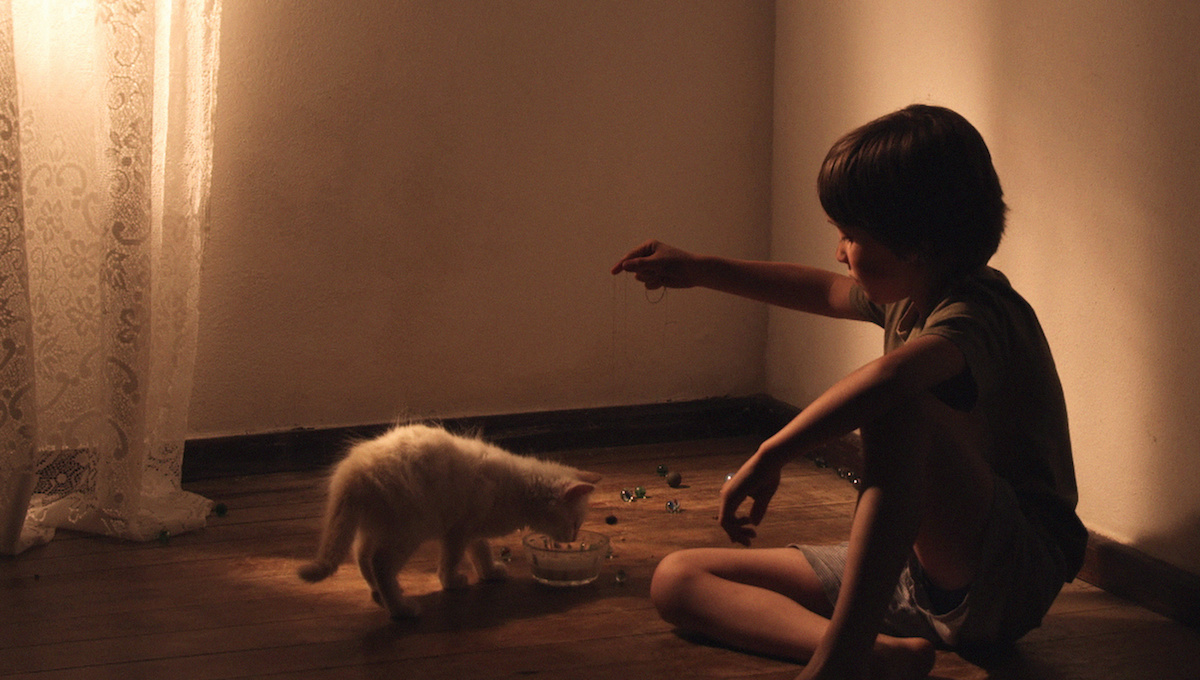 DE MADRUGADA (AT DAWN), INÊS DE LIMA TORRES (PORTUGAL)[/caption]
Fourteen short films from Argentina, Belgium, Croatia, Czech Republic, France, Germany, Israel, Mexico, Portugal, Russia, Spain and the USA will compete in the International Film Students Meeting, at the 65th edition of the San Sebastian Festival.
The event also includes masterclasses from filmmakers who will present their films in San Sebastian, such as Todd Haynes and Christine Vachon (Wonderstruck in Pearls), Raymond Depardon and Claudine Nougaret (12 jours / 12 Days in Zabaltegi-Tabakalera), José Luis Torres Leiva (El sueño de Ana / Ana’s Dream in Zabaltegi-Tabakalera), Marine Francen (Le Semeur / The Sower in New Directors) and Nobuhiro Suwa (Le lion est mort ce soir / The Lion Sleeps Tonight in the Official Selection). The Chilean filmmaker will also chair the Jury of the XVI Film Students Meeting.
DE MADRUGADA (AT DAWN), INÊS DE LIMA TORRES (PORTUGAL)[/caption]
Fourteen short films from Argentina, Belgium, Croatia, Czech Republic, France, Germany, Israel, Mexico, Portugal, Russia, Spain and the USA will compete in the International Film Students Meeting, at the 65th edition of the San Sebastian Festival.
The event also includes masterclasses from filmmakers who will present their films in San Sebastian, such as Todd Haynes and Christine Vachon (Wonderstruck in Pearls), Raymond Depardon and Claudine Nougaret (12 jours / 12 Days in Zabaltegi-Tabakalera), José Luis Torres Leiva (El sueño de Ana / Ana’s Dream in Zabaltegi-Tabakalera), Marine Francen (Le Semeur / The Sower in New Directors) and Nobuhiro Suwa (Le lion est mort ce soir / The Lion Sleeps Tonight in the Official Selection). The Chilean filmmaker will also chair the Jury of the XVI Film Students Meeting.
2017 International Film Students Meeting Short Films
13+ NIKICA ZDUNIĆ (CROATIA) Academy of Dramatic Arts (Croatia) Janka is on the verge of puberty. One day she goes to dance practice with her friend Zorana. While Zorana is preoccupied with topics such as kissing, new clothes, and parties, Janka is trying to retain her childish innocence for as long as possible. But she can’t escape the inevitable changes every girl has to undergo. 212 BOAZ FRANKEL (ISRAEL) The Sam Spiegel Film and TV School- Jerusalem (JSFS) (Israel) Another nearly-ordinary winter day in the life of 64-year-old Doron, director of a municipal home for the aged: the rain is pouring, someone nabbed his reserved parking spot, and Bela Schorr, occupant of Room 212, passed away that morning. DE MADRUGADA (AT DAWN) INÊS DE LIMA TORRES (PORTUGAL) Escola Superior de Teatro e Cinema (Portugal) In the hot month of August, Alice and her siblings go to their grandmother’s summer house. As the days go by, the house becomes a hive of slow straying bodies, as Alice becomes more and more ingrained in her grandmother’s colonial past. DEUX ÉGARÉS SONT MORTS / TWO YOUTHS DIED TOMMASO USBERTI (FRANCE) La Fémis (France) In a wild landscape Vera and Matteo live their first date of love. The girl’s father surprises them and assaults the boy. At the end of a fierce fight Matteo knocks down man. Vera asks the boy to take her to dance. Matteo, shaken, runs away. FIND FIX FINISH SYLVAIN CRUIZIAT, MILA ZHLUKTENKO (GERMANY) Hochschule für Fernsehen und Film München (University for Television and Film Munich) (Germany) “In Afghanistan, I saw a couple making love on a roof”: we know very little of the day-to-day work of the pilots carrying out “targeted assassinations” with military drones. Three Americans agreed to testify in voiceover about their experience, which is paradoxically one of intimacy and cruelty, over aerial images that they could have filmed themselves, to “Find, Fix, Finish” FIORA MARTINA JUNCADELLA, MARTÍN VILELA (ARGENTINA) Programa de Cine de la Universidad Torcuato Di Tella (Argentina) Fiora and Martina are preparing lunch. The situation is a staging of the real ties that bind them. As they eat, Fiora comes back over a past occurrence. Martina wants to know more and decides to question her. HEIMAT / HOMELAND SAM PEETERS (BELGIUM) Royal Institute for Theatre, Cinema and Sound (Belgium) Right-wing populism is spreading through Western Europe like wildfire. It is most popular in quiet, white neighbourhoods where people are shielded from different cultures and lifestyles. In this unscripted documentary, Sam Peeters portrays an ironic caricature of life in the Flemish suburbs, which reflects the current European zeitgeist. L’HOME LLOP / THE WOLFMAN LLUÍS SELLARÈS (SPAIN) ESCAC (Spain) Nico is half of the couple who stays at home while Mar is working, looking out the window the vastness of the forest and seeking for new ways to procrastinate. MICROCASTILLO (MICROCASTLE) ALEJANDRA VILLALBA GARCÍA (MEXICO) Escuela Superior de Cine (ESCINE) (Mexico) A typical family is being watched in their own home. The father, an accomplice to the situation, obliges the other members of the family group to participate in the dynamic. The mother tries to escape with her daughters, but to no avail. THE JUNGLE KNOWS YOU BETTER THAN YOU DO JUANITA ONZAGA (BELGIUM – COLOMBIA) LUCA School of Arts (Belgium) Colombia is a land of ghosts. Two siblings roam these mystical landscapes in search of their dead father’s spirit. Their journey takes them from Bogota to the Colombian jungle, through realms of thought and deep into their haunted dreams. Here they will find some answers and attract unexpected company. VĚZENÍ / IMPRISONED DAMIÁN VONDRÁSEK (CZECH REPUBLIC) FAMU – Film and TV School of the Academy of Performing Arts in Prague (Czech Republic) An offer of a job as a prison educator could help unemployed teacher Jakub resolve a difficult family situation. His father-in-law exacerbates his already low self-confidence, and the man most certainly imagined a different kind of son-in-law. The claustrophobic feelings Jakub experiences at the prison, however, lead him to a single question: Does he want to control others the rest of his life or be controlled by them? WANDERVOGEL MINA FITZPATRICK (USA) Northwestern University (USA) Dan Daily lives in the middle of the Texas desert where, in 2009, he opened a retreat for children who had killed their parents. Wandervogel starts when two documentary-makers arrive at Dailey’s house to shoot a film and find him dead. YA OSTAYUS / I’M STAYING GRIGORY KOLOMYTSEV (RUSSIA) Russian State University of Cinematography (VGIK) (Russia) Filatov comes back home after a lengthy absence to bury his brother. He should pick up his brother’s body from the neighboring village and bring it home. ZEIT DER UNRUHE / NEWS 23/06/2016 ELSA ROSENGREN (GERMANY) Deutsche Film- und Fernsehakademie Berlin (DFFB) (Germany) It’s the 23rd of June 2016. In the UK, a critical referendum is well underway, and across the Atlantic, an ominous American presidential campaign is gathering force. In Sweden, news broadcasting is carrying on as usual. In Germany, however, an identical, yet distorted, news broadcast is simultaneously being constructed by the citizens themselves.
-
World Premiere of THE CHARMER to Open New Directors of San Sebastian International Film Festival
[caption id="attachment_24122" align="aligncenter" width="1200"]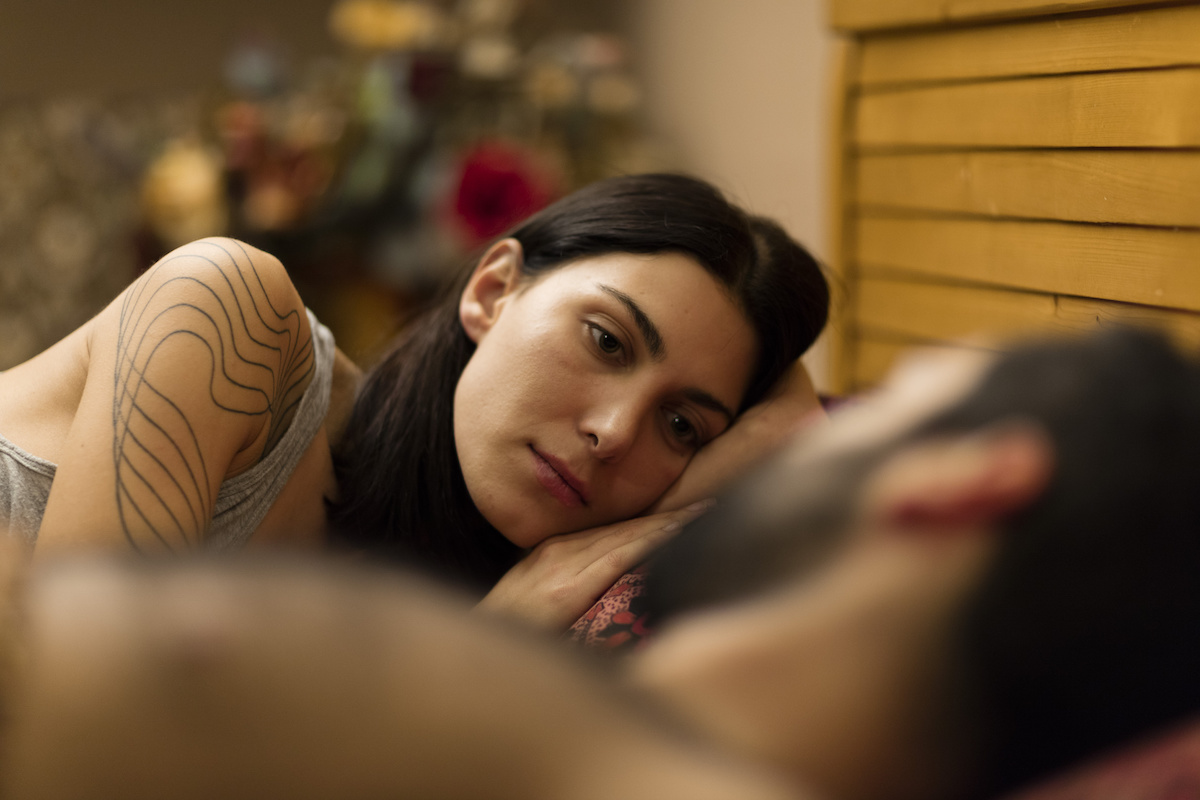 THE CHARMER (CHARMØREN ) MILAD ALAMI[/caption]
The world premiere of The Charmer (Charmøren) by Iranian director Milad Alami, will open the New Directors section of the San Sebastian International Film Festival. The Charmer, his first feature, stars a young Iranian desperately trying to meet women who can secure his stay in Denmark.
Other films added to the lineup include Daniel Kokotajlo (Manchester, UK), first feature film, Apostasy that follows a family of Jehovah’s Witnesses; and Village Rockstars, the second feature from Rima Das (Assam, India) starring a 10 year-old girl desperate to own a guitar.
These three films join the list of thirteen films already announced from Argentina, Belgium, Colombia, Chile, China, France, the Philippines, South Korea, Spain, Sweden, Switzerland and Taiwan, and will compete for the New Directors-Kutxabank Award. The films in this section are also candidates for the EROSKI Youth Award, voted by a jury of a maximum of 300 students between the ages of 18 and 25 years.
CHARMØREN / THE CHARMER
MILAD ALAMI (DENMARK)
Cast: Ardalan Esmaili, Soho Rezanejad, Susan Taslimi, Lars Brygmann
OPENING NIGHT FILM
Charmøren / The Charmer is an intense psychological drama about Esmail, a young Iranian man who is desperately trying to meet women who can secure his stay in Denmark. As time runs out, he falls in love and his past catches up with him. The film deals with themes of race, class, and the struggle for a better life.
APOSTASY
DANIEL KOKOTAJLO (UK)
Cast: Siobhan Finneran, Molly Wright, Sacha Parkinson, Robert Emms
As devout Jehovah’s Witnesses, sisters Alex and Luisa and their mother, Ivanna, are united in The Truth. Alex looks up to her confident older sister, while striving to follow in Ivanna’s footsteps as a ‘good Witness’. But when Luisa starts to question the advice of the Elders, she makes a life-altering transgression that threatens to expel her from the congregation. Unless Ivanna and Alex can persuade her to return, they must shun her completely. This challenge becomes more painful when their family is faced with another heartbreaking test of faith. Written and directed by Daniel Kokotajlo, a former Jehovah’s Witness, Apostasy provides rare insight into the complex nature of faith, family, duty and love.
VILLAGE ROCKSTARS
RIMA DAS (INDIA)
Cast: Bhanita Das, Basanti Das
Ten year-old Dhunu lives in a remote village in Assam, India, amidst raging deprivation. She is a free spirit, while her widowed mother struggles daily to put food on the table and raise her children. But this doesn’t prevent her from having dreams, like owning a guitar for the tiny band she wants to put together with some local boys, the ‘Village Rockstars’. Dhunu considers herself to be as capable as boys her age. When the boys eventually relinquish their dream, Dhunu refuses to give up on her ambition to own a guitar.
THE CHARMER (CHARMØREN ) MILAD ALAMI[/caption]
The world premiere of The Charmer (Charmøren) by Iranian director Milad Alami, will open the New Directors section of the San Sebastian International Film Festival. The Charmer, his first feature, stars a young Iranian desperately trying to meet women who can secure his stay in Denmark.
Other films added to the lineup include Daniel Kokotajlo (Manchester, UK), first feature film, Apostasy that follows a family of Jehovah’s Witnesses; and Village Rockstars, the second feature from Rima Das (Assam, India) starring a 10 year-old girl desperate to own a guitar.
These three films join the list of thirteen films already announced from Argentina, Belgium, Colombia, Chile, China, France, the Philippines, South Korea, Spain, Sweden, Switzerland and Taiwan, and will compete for the New Directors-Kutxabank Award. The films in this section are also candidates for the EROSKI Youth Award, voted by a jury of a maximum of 300 students between the ages of 18 and 25 years.
CHARMØREN / THE CHARMER
MILAD ALAMI (DENMARK)
Cast: Ardalan Esmaili, Soho Rezanejad, Susan Taslimi, Lars Brygmann
OPENING NIGHT FILM
Charmøren / The Charmer is an intense psychological drama about Esmail, a young Iranian man who is desperately trying to meet women who can secure his stay in Denmark. As time runs out, he falls in love and his past catches up with him. The film deals with themes of race, class, and the struggle for a better life.
APOSTASY
DANIEL KOKOTAJLO (UK)
Cast: Siobhan Finneran, Molly Wright, Sacha Parkinson, Robert Emms
As devout Jehovah’s Witnesses, sisters Alex and Luisa and their mother, Ivanna, are united in The Truth. Alex looks up to her confident older sister, while striving to follow in Ivanna’s footsteps as a ‘good Witness’. But when Luisa starts to question the advice of the Elders, she makes a life-altering transgression that threatens to expel her from the congregation. Unless Ivanna and Alex can persuade her to return, they must shun her completely. This challenge becomes more painful when their family is faced with another heartbreaking test of faith. Written and directed by Daniel Kokotajlo, a former Jehovah’s Witness, Apostasy provides rare insight into the complex nature of faith, family, duty and love.
VILLAGE ROCKSTARS
RIMA DAS (INDIA)
Cast: Bhanita Das, Basanti Das
Ten year-old Dhunu lives in a remote village in Assam, India, amidst raging deprivation. She is a free spirit, while her widowed mother struggles daily to put food on the table and raise her children. But this doesn’t prevent her from having dreams, like owning a guitar for the tiny band she wants to put together with some local boys, the ‘Village Rockstars’. Dhunu considers herself to be as capable as boys her age. When the boys eventually relinquish their dream, Dhunu refuses to give up on her ambition to own a guitar.
-
10 New Films from Darren Aronofsky, Sean Baker and More Complete San Sebastian Festival Pearls Lineup
[caption id="attachment_24073" align="aligncenter" width="1200"] Mother!, starring Jennifer Lawrence, Javier Bardem[/caption]
Ten new films including the latest from Darren Aronofsky, Sean Baker, Michael Haneke, Martin McDonagh, will complete the Pearls section of the 2017 San Sebastian Festival. All will compete for the City of Donostia / San Sebastian Audience Awards.
Mother!, starring Jennifer Lawrence, Javier Bardem and Michelle Pfeiffer, is the latest film from Darren Aronofsky (New York, 1969), the maker of Pi (1998), Best Director Award at Sundance; the cult movie Requiem for a Dream (2000); The Wrestler (2008), Golden Lion in Venice; and Black Swan, Academy Award for Best Actress (Natalie Portman). His latest production is a psychological thriller that will compete at the coming Venice Festival.
The Florida Project was one of the most applauded films at the last Cannes Festival, where it participated in the Directors’ Fortnight. Here, Sean Baker (Summit, United States, 1971) tells us about the summer holidays spent by a six year-old girl and her friends, while the adults around them struggle through hard times, after presenting at Sundance 2015 Tangerine, his fourth feature and the first to be completely shot with an iPhone, which harvested around twenty awards.
The author of Marius et Jeannette / Marius and Jeanette (1997), Best Actress César for Ariane Ascaride; Marie-Jo et ses 2 amours / Marie-Jo and Her Two Lovers (2002), which competed at Cannes; and Les neiges du Kilimandjaro / The Snows of Kilimanjaro (2012), selected for Un Certain Regard, congregates his regular accomplices on the cast of La villa / The House by the Sea. Robert Guédiguian (Marseille, France, 1953) brings a tale of three siblings who reunite at their father’s house in a small cove near Marseille at the height of winter, and which will compete in Venice. In 1998 Guédiguian won the Special Jury Prize for À la place du Coeur / Where the Heart Is in San Sebastian, to which he returned in 2004 with Mon père est ingenieur / My Father is an Engineer.
Michael Haneke (Munich, Germany, 1942), one of the essential directors of today’s cinema, will present Happy End. The author of Funny Games (1997), La pianiste / The Piano Teacher (2001), Das Weisse Band /The White Ribbon (2009) and Amour / Love (2012) has been acclaimed throughout his career with around a hundred awards coming from festivals and international accolades. Happy End, his snapshot from the life of a bourgeois European family, was selected for the Cannes Official Selection.
Hirokazu Koreeda (Tokyo, 1962), who has competed four times for the Golden Shell -Wandafuru raifu / After Life (1998), Hana yori mo naho / Hana (2006), Aruitemo, aruitemo / Still Walking (2008) and Kiseki / I Wish (2011), winner of the Best Screenplay Award – has won San Sebastian’s Audience Award twice: in 2013 with Soshite chichi ni naru / Like Father Like Son and in 2015 with Umimachi Diary / Our Little Sister. In Sando-me no satsujin / The Third Murder, to compete at Venice, he follows a lawyer who doubts his client’s guilt.
Xavier Legrand, whose short Avant que de tout perdre won the César, four awards at Clermont-Ferrand and landed an Academy Award nomination, debuts in feature films with the story of a son of divorced parents with his shared custody. Jusqu’à la garde / Custody has been selected for the official selection in Venice.
Martin McDonagh (Camberwell, United Kingdom, 1970) won, with Six Shooter (2004), the Academy Award for Best Live Action Short Film. His first feature film, In Bruges (2008), won the BAFTA for Best Original Screenplay and an Oscar nomination in the same category, and his second, Seven Psychopaths (2012) received the Audience Award in Toronto’s Midnight Madness section. In Three Billboards Outside Ebbing, Missouri, to compete at Venice, he narrates the confrontation between a woman (Frances McDormand), whose daughter was murdered months ago without the culprit being arrested, and the local police, headed by two officers played by Woody Harrelson and Sam Rockwell.
After placing his camera in a Danish regiment in Afghanistan (Armadillo) and shooting an episode of the series True Detective, Janus Metz (Denmark, 1974) presents Borg/McEnroe. The film, to open Toronto Festival, recreates the 1980 Wimbledon final between the Swedish and North American tennis players.
Lynne Ramsay (Glasgow, United Kingdom,1969) competed at Cannes with her previous film We Need to Talk About Kevin (2011), winner of Best Director at the British Independent Film Awards and Best European Actress Award (Tilda Swinton). You Were Never Really Here, written and directed by the Scottish filmmaker, was acknowledged with the Best Screenplay and Best Actor (Joaquin Phoenix) Awards at the last Cannes Festival.
Paolo Virzì (Livorno, Italy, 1964) is one of today’s most important Italian directors. Some of his most remarkable films are Il capitale umano / Human Capital (2013), winner of the David di Donatello Awards for Best Screenplay, Director and Actress, and his penultimate work, La pazza gioia / Like Crazy (2016), winner of the David for Best Film and, once again, Best Director and Best Actress. The Leisure Seeker, starring Helen Mirren and Donald Sutherland, is his first film shot in the USA and will compete at Cannes.
These titles join the others already announced: Teströl és lékekröl / On Body and Soul by Ilkidó Eneydi; Nelyubov / Loveless by Andrey Zvyagintsev; 120 battements par minute (120 BPM) / 120 Beats Per Minute, by Robin Campillo; Wonderstruck, by Todd Haynes; The Big Sick, by Michael Showalter; Call Me By Your Name, by Luca Guadagnino; and Loving Pablo, by Fernando León de Aranoa, which will close the section out of competition.
The City of Donostia / San Sebastian Audience Award is split into two accolades: the Best Film Award, with 50,000 euros, and the Best European Film, with 20,000 euros.
BORG/MCENROE
JANUS METZ (SWEDEN – DENMARK – FINLAND)
Cast: Shia LaBeouf, Sverrir Gudnason, Stellan Skarsgård, Tuva Novotny
Biopic about the rivalry between two of world tennis’s biggest icons: the imperturbable Björn Borg and the temperamental North American John McEnroe, through their legendary confrontation at Wimbledon 1980. Two sportsmen completely different from one another who became legends and the price they had to pay for it. Fire and ice on the court.
HAPPY END
MICHAEL HANEKE (FRANCE – AUSTRIA – GERMANY)
Cast: Isabelle Huppert, Jean-Louis Trintignant, Mathieu Kassovitz
All around us, the world, and we, in its midst, blind. A snapshot from the life of a bourgeois European family.
JUSQU’À LA GARDE / CUSTODY
XAVIER LEGRAND (FRANCE)
Cast: Denis Ménochet, Léa Drucker, Thomas Gioria, Mathilde Auneveux, Saadia Bentaïeb, Sophie Pincemaille, Emilie Incerti-Formentini
Myriam and Antoine are divorced. She asks for exclusive guardianship to protect her young son from her violent husband, but the judge decides to award both spouses shared custody. The victim of a jealous father, in the endeavour to protect his abused mother, Julien will do everything he can to stop the worst from happening.
LA VILLA / THE HOUSE BY THE SEA
ROBERT GUÉDIGUIAN (FRANCE)
Cast: Ariane Ascaride, Jean-Pierre Darroussin, Gérard Meylan, Anaïs Demoustier, Robinson Stevenin
In a little cove near Marseille, at the height of winter, Angèle, Joseph and Armand return to their elderly father’s home. Angèle is an actress living in Paris and Joseph has just fallen in love with a girl half his age. Armand is the only one who had stayed behind in Marseille to run his father’s small restaurant. It’s time for them to weigh up what they have inherited of their patriarch’s ideals and the community spirit he created in this magical place around a restaurant for workers. But the arrival of a group of boat people will change their reflections…
MOTHER!
DARREN ARONOFSKY (USA)
Cast: Jennifer Lawrence, Javier Bardem, Michelle Pfeiffer, Ed Harris
A couple’s relationship is tested when uninvited guests arrive at their home, disrupting their tranquil existence. A riveting psychological thriller about love, devotion and sacrifice.
SANDO-ME NO SATSUJIN / THE THIRD MURDER
HIROKAZU KOREEDA (JAPAN)
Cast: Kasaharu Fukuyama, Kôji Yakuso, Suzu Hirose
Attorney Shigemori takes on the defence of murder-robbery suspect Misumi who served jail time for another murder 30 years ago. Shigemori’s chances of winning the case seem low – his client freely admits his guilt, despite facing the death penalty if he is convicted. But as he digs deeper into the case and hears the testimonies of Mishumi and his family, Shigemori begins to doubt whether his client is the murderer after all.
THE FLORIDA PROJECT
SEAN BAKER (USA)
Cast: Willem Dafoe, Brooklynn Prince, Valeria Cotto, Bria Vinaite, Caleb Landry Jones
The Florida Project tells the story of Moonee, a precocious six-year-old and her ragtag group of friends whose summer break is filled with childhood wonder, possibility and a sense of adventure, while the adults around them struggle with hard times. All over the United States, cheap motels have become the last refuge for those unable to secure a permanent home. These invisible destitute people are increasingly greater in number, and 41% are families who struggle every day to keep a roof over their heads. This story is set in the suburbs of Orlando, holiday capital par excellence, home to “the most magical place on earth”. All along the road wending through the land of theme parks and resorts, the cheap hotels that in their day attracted tourists, exploiting the mysticism of Disney, now house homeless families. Moonee and her mother Halley, 22, live in one of these places: the Magic Castle Motel.
THE LEISURE SEEKER
PAOLO VIRZÌ (ITALY )
Cast: Helen Mirren, Donald Sutherland
Ella and John are fleeing the suffocating care of their doctors and grown children. He is distracted but strong. She is frail but sharp. The journey aboard their faithful old camper takes them from Boston to Key West in the USA. Sharing moments of exhilaration and anguish, they recapture their passion for life and their love for others, seeing differently and with perspective the things they’ve left behind. And this means that the way they see each other too will change during their adventure.
THREE BILLBOARDS OUTSIDE EBBING, MISSOURI
MARTIN MCDONAGH (UK)
Cast: Frances McDormand, Woody Harrelson, Sam Rockwell, Peter Dinklage, Abbie Cornish, Lucas Hedges, Caleb Landry Jones
After months have passed without a culprit in her daughter’s murder case, Mildred Hayes makes a bold move, painting three signs leading into her town with a controversial message directed at William Willoughby, the town’s revered chief of police. When his second-in-command officer, Dixon, an immature mother’s boy with a penchant for violence, gets involved, the battle between Mildred and Ebbing’s law enforcement is only exacerbated.
YOU WERE NEVER REALLY HERE
LYNNE RAMSAY (USA – FRANCE)
Cast: Joaquin Phoenix. Ekaterina Samsonov, Alessandro Nivola, Alex Manette, John Doman, Judith Roberts
A missing teenage girl. A brutal and tormented enforcer on a rescue mission. Corrupt power and vengeance unleash a storm of violence that may lead to his awakening.
Mother!, starring Jennifer Lawrence, Javier Bardem[/caption]
Ten new films including the latest from Darren Aronofsky, Sean Baker, Michael Haneke, Martin McDonagh, will complete the Pearls section of the 2017 San Sebastian Festival. All will compete for the City of Donostia / San Sebastian Audience Awards.
Mother!, starring Jennifer Lawrence, Javier Bardem and Michelle Pfeiffer, is the latest film from Darren Aronofsky (New York, 1969), the maker of Pi (1998), Best Director Award at Sundance; the cult movie Requiem for a Dream (2000); The Wrestler (2008), Golden Lion in Venice; and Black Swan, Academy Award for Best Actress (Natalie Portman). His latest production is a psychological thriller that will compete at the coming Venice Festival.
The Florida Project was one of the most applauded films at the last Cannes Festival, where it participated in the Directors’ Fortnight. Here, Sean Baker (Summit, United States, 1971) tells us about the summer holidays spent by a six year-old girl and her friends, while the adults around them struggle through hard times, after presenting at Sundance 2015 Tangerine, his fourth feature and the first to be completely shot with an iPhone, which harvested around twenty awards.
The author of Marius et Jeannette / Marius and Jeanette (1997), Best Actress César for Ariane Ascaride; Marie-Jo et ses 2 amours / Marie-Jo and Her Two Lovers (2002), which competed at Cannes; and Les neiges du Kilimandjaro / The Snows of Kilimanjaro (2012), selected for Un Certain Regard, congregates his regular accomplices on the cast of La villa / The House by the Sea. Robert Guédiguian (Marseille, France, 1953) brings a tale of three siblings who reunite at their father’s house in a small cove near Marseille at the height of winter, and which will compete in Venice. In 1998 Guédiguian won the Special Jury Prize for À la place du Coeur / Where the Heart Is in San Sebastian, to which he returned in 2004 with Mon père est ingenieur / My Father is an Engineer.
Michael Haneke (Munich, Germany, 1942), one of the essential directors of today’s cinema, will present Happy End. The author of Funny Games (1997), La pianiste / The Piano Teacher (2001), Das Weisse Band /The White Ribbon (2009) and Amour / Love (2012) has been acclaimed throughout his career with around a hundred awards coming from festivals and international accolades. Happy End, his snapshot from the life of a bourgeois European family, was selected for the Cannes Official Selection.
Hirokazu Koreeda (Tokyo, 1962), who has competed four times for the Golden Shell -Wandafuru raifu / After Life (1998), Hana yori mo naho / Hana (2006), Aruitemo, aruitemo / Still Walking (2008) and Kiseki / I Wish (2011), winner of the Best Screenplay Award – has won San Sebastian’s Audience Award twice: in 2013 with Soshite chichi ni naru / Like Father Like Son and in 2015 with Umimachi Diary / Our Little Sister. In Sando-me no satsujin / The Third Murder, to compete at Venice, he follows a lawyer who doubts his client’s guilt.
Xavier Legrand, whose short Avant que de tout perdre won the César, four awards at Clermont-Ferrand and landed an Academy Award nomination, debuts in feature films with the story of a son of divorced parents with his shared custody. Jusqu’à la garde / Custody has been selected for the official selection in Venice.
Martin McDonagh (Camberwell, United Kingdom, 1970) won, with Six Shooter (2004), the Academy Award for Best Live Action Short Film. His first feature film, In Bruges (2008), won the BAFTA for Best Original Screenplay and an Oscar nomination in the same category, and his second, Seven Psychopaths (2012) received the Audience Award in Toronto’s Midnight Madness section. In Three Billboards Outside Ebbing, Missouri, to compete at Venice, he narrates the confrontation between a woman (Frances McDormand), whose daughter was murdered months ago without the culprit being arrested, and the local police, headed by two officers played by Woody Harrelson and Sam Rockwell.
After placing his camera in a Danish regiment in Afghanistan (Armadillo) and shooting an episode of the series True Detective, Janus Metz (Denmark, 1974) presents Borg/McEnroe. The film, to open Toronto Festival, recreates the 1980 Wimbledon final between the Swedish and North American tennis players.
Lynne Ramsay (Glasgow, United Kingdom,1969) competed at Cannes with her previous film We Need to Talk About Kevin (2011), winner of Best Director at the British Independent Film Awards and Best European Actress Award (Tilda Swinton). You Were Never Really Here, written and directed by the Scottish filmmaker, was acknowledged with the Best Screenplay and Best Actor (Joaquin Phoenix) Awards at the last Cannes Festival.
Paolo Virzì (Livorno, Italy, 1964) is one of today’s most important Italian directors. Some of his most remarkable films are Il capitale umano / Human Capital (2013), winner of the David di Donatello Awards for Best Screenplay, Director and Actress, and his penultimate work, La pazza gioia / Like Crazy (2016), winner of the David for Best Film and, once again, Best Director and Best Actress. The Leisure Seeker, starring Helen Mirren and Donald Sutherland, is his first film shot in the USA and will compete at Cannes.
These titles join the others already announced: Teströl és lékekröl / On Body and Soul by Ilkidó Eneydi; Nelyubov / Loveless by Andrey Zvyagintsev; 120 battements par minute (120 BPM) / 120 Beats Per Minute, by Robin Campillo; Wonderstruck, by Todd Haynes; The Big Sick, by Michael Showalter; Call Me By Your Name, by Luca Guadagnino; and Loving Pablo, by Fernando León de Aranoa, which will close the section out of competition.
The City of Donostia / San Sebastian Audience Award is split into two accolades: the Best Film Award, with 50,000 euros, and the Best European Film, with 20,000 euros.
BORG/MCENROE
JANUS METZ (SWEDEN – DENMARK – FINLAND)
Cast: Shia LaBeouf, Sverrir Gudnason, Stellan Skarsgård, Tuva Novotny
Biopic about the rivalry between two of world tennis’s biggest icons: the imperturbable Björn Borg and the temperamental North American John McEnroe, through their legendary confrontation at Wimbledon 1980. Two sportsmen completely different from one another who became legends and the price they had to pay for it. Fire and ice on the court.
HAPPY END
MICHAEL HANEKE (FRANCE – AUSTRIA – GERMANY)
Cast: Isabelle Huppert, Jean-Louis Trintignant, Mathieu Kassovitz
All around us, the world, and we, in its midst, blind. A snapshot from the life of a bourgeois European family.
JUSQU’À LA GARDE / CUSTODY
XAVIER LEGRAND (FRANCE)
Cast: Denis Ménochet, Léa Drucker, Thomas Gioria, Mathilde Auneveux, Saadia Bentaïeb, Sophie Pincemaille, Emilie Incerti-Formentini
Myriam and Antoine are divorced. She asks for exclusive guardianship to protect her young son from her violent husband, but the judge decides to award both spouses shared custody. The victim of a jealous father, in the endeavour to protect his abused mother, Julien will do everything he can to stop the worst from happening.
LA VILLA / THE HOUSE BY THE SEA
ROBERT GUÉDIGUIAN (FRANCE)
Cast: Ariane Ascaride, Jean-Pierre Darroussin, Gérard Meylan, Anaïs Demoustier, Robinson Stevenin
In a little cove near Marseille, at the height of winter, Angèle, Joseph and Armand return to their elderly father’s home. Angèle is an actress living in Paris and Joseph has just fallen in love with a girl half his age. Armand is the only one who had stayed behind in Marseille to run his father’s small restaurant. It’s time for them to weigh up what they have inherited of their patriarch’s ideals and the community spirit he created in this magical place around a restaurant for workers. But the arrival of a group of boat people will change their reflections…
MOTHER!
DARREN ARONOFSKY (USA)
Cast: Jennifer Lawrence, Javier Bardem, Michelle Pfeiffer, Ed Harris
A couple’s relationship is tested when uninvited guests arrive at their home, disrupting their tranquil existence. A riveting psychological thriller about love, devotion and sacrifice.
SANDO-ME NO SATSUJIN / THE THIRD MURDER
HIROKAZU KOREEDA (JAPAN)
Cast: Kasaharu Fukuyama, Kôji Yakuso, Suzu Hirose
Attorney Shigemori takes on the defence of murder-robbery suspect Misumi who served jail time for another murder 30 years ago. Shigemori’s chances of winning the case seem low – his client freely admits his guilt, despite facing the death penalty if he is convicted. But as he digs deeper into the case and hears the testimonies of Mishumi and his family, Shigemori begins to doubt whether his client is the murderer after all.
THE FLORIDA PROJECT
SEAN BAKER (USA)
Cast: Willem Dafoe, Brooklynn Prince, Valeria Cotto, Bria Vinaite, Caleb Landry Jones
The Florida Project tells the story of Moonee, a precocious six-year-old and her ragtag group of friends whose summer break is filled with childhood wonder, possibility and a sense of adventure, while the adults around them struggle with hard times. All over the United States, cheap motels have become the last refuge for those unable to secure a permanent home. These invisible destitute people are increasingly greater in number, and 41% are families who struggle every day to keep a roof over their heads. This story is set in the suburbs of Orlando, holiday capital par excellence, home to “the most magical place on earth”. All along the road wending through the land of theme parks and resorts, the cheap hotels that in their day attracted tourists, exploiting the mysticism of Disney, now house homeless families. Moonee and her mother Halley, 22, live in one of these places: the Magic Castle Motel.
THE LEISURE SEEKER
PAOLO VIRZÌ (ITALY )
Cast: Helen Mirren, Donald Sutherland
Ella and John are fleeing the suffocating care of their doctors and grown children. He is distracted but strong. She is frail but sharp. The journey aboard their faithful old camper takes them from Boston to Key West in the USA. Sharing moments of exhilaration and anguish, they recapture their passion for life and their love for others, seeing differently and with perspective the things they’ve left behind. And this means that the way they see each other too will change during their adventure.
THREE BILLBOARDS OUTSIDE EBBING, MISSOURI
MARTIN MCDONAGH (UK)
Cast: Frances McDormand, Woody Harrelson, Sam Rockwell, Peter Dinklage, Abbie Cornish, Lucas Hedges, Caleb Landry Jones
After months have passed without a culprit in her daughter’s murder case, Mildred Hayes makes a bold move, painting three signs leading into her town with a controversial message directed at William Willoughby, the town’s revered chief of police. When his second-in-command officer, Dixon, an immature mother’s boy with a penchant for violence, gets involved, the battle between Mildred and Ebbing’s law enforcement is only exacerbated.
YOU WERE NEVER REALLY HERE
LYNNE RAMSAY (USA – FRANCE)
Cast: Joaquin Phoenix. Ekaterina Samsonov, Alessandro Nivola, Alex Manette, John Doman, Judith Roberts
A missing teenage girl. A brutal and tormented enforcer on a rescue mission. Corrupt power and vengeance unleash a storm of violence that may lead to his awakening.
-
Frederick Wiseman, Hong Sang-soo and More to Compete for Zabaltegi-Tabakalera Award at San Sebastian
[caption id="attachment_24039" align="aligncenter" width="1200"]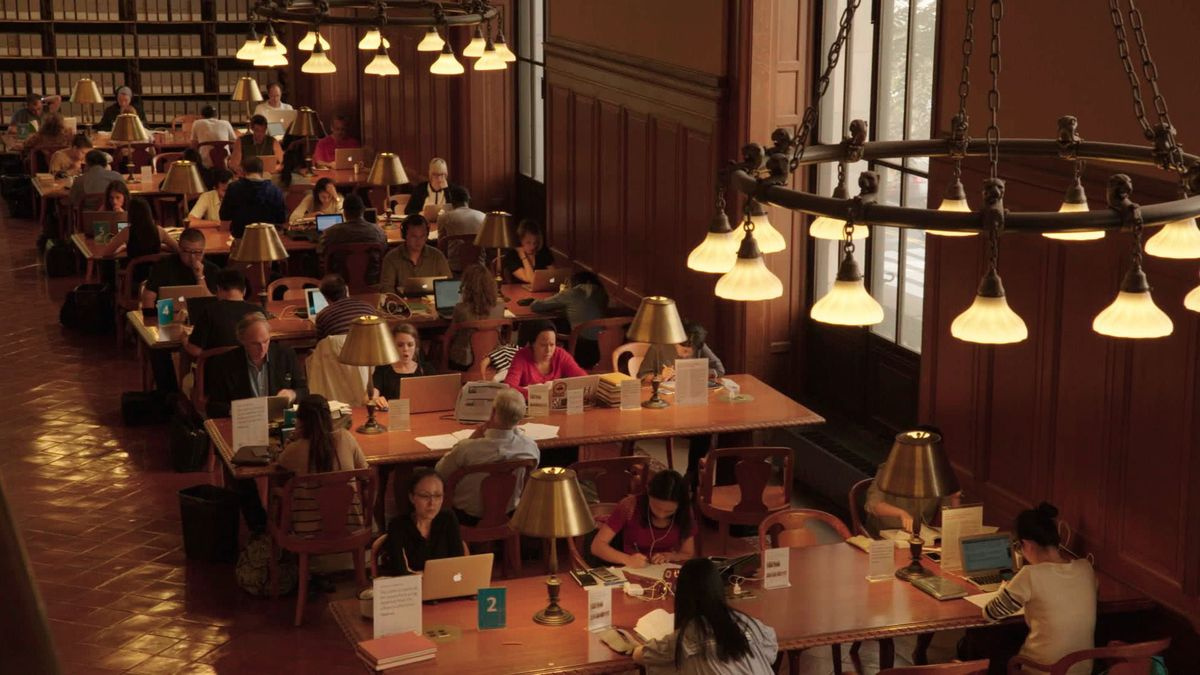 Ex Libris – New York Public Library[/caption]
The latest films from Manuel Abramovich, Frederick Wiseman, Hong Sang-soo, Raymond Depardon, Damien Manivel and more will compete in the Zabaltegi-Tabakalera section of this year’s 2017 San Sebastian International Film Festival. Ruben Östlund’s The Square will open the Zabaltegi-Tabakalera section.
Frederick Wiseman (Boston, USA, 1930), acclaimed with an Honorary Academy Award for his career in 2016, is an extraordinary moviemaker, known for his sharp portraits of American society, professional spheres and public institutions. Among those belonging to this latter sphere is his film Ex Libris: New York Public Library, which takes viewers behind the scenes of one of the world’s greatest institutions of learning. The film, number 45 in his career, will compete in the Official Selection at Venice. In 2011, in Zabaltegi-Specials, Wiseman presented Crazy Horse, an exploration of the legendary Parisian cabaret.
Raymond Depardon (Villefranche-sur-Saône, France, 1942), prestigious French photographer and filmmaker, co-founder of the Gamma agency and photographer for Magnum, has landed the César for Best Documentary twice, for Reporters (1981) and for Délits Flagrants (1994). In 12 jours / 12 Days, special screening at the Cannes Festival, Depardon gains access to hearings before a judge of people admitted to mental health centres in France, whose fates will be decided after 12 very important days when they will be assessed taking account of their medical background, the doctor’s recommendation and the judge’s decision.
Hong Sang-soo (Seoul, 1960) has developed a singular cinematic language and aesthetic over the 17 films he has written and directed, making him South Korea’s most international moviemaker. Last year, in San Sebastian, he won the Silver Shell for Best Director with Dangsinjasingwa dangsinui geot / Yourself and Yours. In Geu-hu / The Day After, a contender in the Cannes Official Selection, he narrates the first day in her job of a woman whose predecessor had been having an affair with her boss.
Manuel Abramovich (Buenos Aires, 1987), whose short film La reina (2013) garnered dozens of awards, now presents his second feature after his debut, Solar (2016), presented at the BAFICI. In Soldado, screened as part of the Generation section at the Berlinale, Abramovich looks at the function of the Argentine Army more than three decades after the end of the dictatorship through the eyes of a young man who decides to enlist.
The artist and filmmaker Filipa César (Porto, Portugal, 1975), who participated in the research projects Living Archive and Visionary Archive, looks in Spell Reel at the film and audio material found in the Guinea Bissau of 2001. The footage bears witness to the birth of Guinean cinema as part of the decolonizing vision of Amílcar Cabral, assassinated in 1973. Digitized in Berlin, screened and commented live, this material, presented at the Berlinale Forum, prompts debates, stories and predictions.
From the beginning of his career, the works of contemporary artist Clément Cogitore (Colmar, France, 1983) have been acclaimed at festivals worldwide: his first short, Chroniques (2006), won a special mention at the Festival Entrevues Belfort; Visités (2007) and Archipel (2011) were part of the official selection at Locarno; and Bielutine. Dans le jardin du temps (2011) was presented at the Cannes Directors’ Fortnight. The 49 minutes of Braguino are set in the Siberian forest.
Damien Manivel (Brest, France, 1981), author of Un jeune poète (special mention at Locarno 2014) and Le parc (Cannes 2016), and Kohei Igarashi (Shizuoka, Japan, 1983), helmer of Voice of Rain That Comes at Night (Seoul 2008) and Hold Your Breath Like a Lover (Locarno 2013), direct La nuit où j’ai nagè / The Night I Swam, a co-production between France and Japan selected for the Orizzonti section of the Venice Festival.
Having presented at the Cannes Critics’ Week his first film, Poslednata lineika na Sofia / Sofia’s Last Ambulance (2012), Ilian Metev (Bulgaria, 1981) won more than 40 awards, including Best Documentary at the Karlovy Vary Festival. With his second feature, ¾, following a family’s last summer together, he recently obtained the Golden Leopard in Cineasti del Presente at the Locarno Festival.
Other films announced in recent weeks include: L’amant d’un jour / Lover for a Day by Philippe Garrel; Tesnota / Closeness, the debut from Kantemir Balagov; Saura(s), directed by Félix Viscarret as part of the Cineastas contados series; the first work as a director from Gustavo Salmerón, Muchos hijos, un mono y un castillo / Lots of Kids, a Monkey and a Castle; No intenso agora / In the Intense Now, by the Brazilian director João Moreira Salles; and the world premiere of Vergüenza, the Movistar+ series written and directed by Juan Cavestany and Álvaro Fernández Armero.
With respect to short films, as well as the already announced Plágan / Plague (Koldo Almandoz) and Plus Ultra (Samuel M. Delgado and Helena Girón) are El sueño de Ana by the Chilean director José Luis Torres Leiva, author of Obreras saliendo de la fábrica, El cielo, la tierra y la lluvia and El viento sabe que vuelvo a casa / The Winds Know That I’m Coming Back Home, screened last year for this section; Gwendolyn Green, by Tamyka Smith, selected in 2015 as a part of the first edition of the Ikusmira Berriak programme; Calipatria by Gerhard Treml and Leo Calice, selected in 2016 as part of the Ikusmira Berriak programme and winner of the REC Post-Production Award; Flores, winner of the FCSH Award / Nova New Talent Award – Short Film at the IndieLisboa in 2017, directed by Jorge Jácome; and Sram / Shame, by Petar Krumov, which addresses the dilemma of a young boy obliged to choose between his mother and his girlfriend when embarrassment comes between them.
Ex Libris – New York Public Library[/caption]
The latest films from Manuel Abramovich, Frederick Wiseman, Hong Sang-soo, Raymond Depardon, Damien Manivel and more will compete in the Zabaltegi-Tabakalera section of this year’s 2017 San Sebastian International Film Festival. Ruben Östlund’s The Square will open the Zabaltegi-Tabakalera section.
Frederick Wiseman (Boston, USA, 1930), acclaimed with an Honorary Academy Award for his career in 2016, is an extraordinary moviemaker, known for his sharp portraits of American society, professional spheres and public institutions. Among those belonging to this latter sphere is his film Ex Libris: New York Public Library, which takes viewers behind the scenes of one of the world’s greatest institutions of learning. The film, number 45 in his career, will compete in the Official Selection at Venice. In 2011, in Zabaltegi-Specials, Wiseman presented Crazy Horse, an exploration of the legendary Parisian cabaret.
Raymond Depardon (Villefranche-sur-Saône, France, 1942), prestigious French photographer and filmmaker, co-founder of the Gamma agency and photographer for Magnum, has landed the César for Best Documentary twice, for Reporters (1981) and for Délits Flagrants (1994). In 12 jours / 12 Days, special screening at the Cannes Festival, Depardon gains access to hearings before a judge of people admitted to mental health centres in France, whose fates will be decided after 12 very important days when they will be assessed taking account of their medical background, the doctor’s recommendation and the judge’s decision.
Hong Sang-soo (Seoul, 1960) has developed a singular cinematic language and aesthetic over the 17 films he has written and directed, making him South Korea’s most international moviemaker. Last year, in San Sebastian, he won the Silver Shell for Best Director with Dangsinjasingwa dangsinui geot / Yourself and Yours. In Geu-hu / The Day After, a contender in the Cannes Official Selection, he narrates the first day in her job of a woman whose predecessor had been having an affair with her boss.
Manuel Abramovich (Buenos Aires, 1987), whose short film La reina (2013) garnered dozens of awards, now presents his second feature after his debut, Solar (2016), presented at the BAFICI. In Soldado, screened as part of the Generation section at the Berlinale, Abramovich looks at the function of the Argentine Army more than three decades after the end of the dictatorship through the eyes of a young man who decides to enlist.
The artist and filmmaker Filipa César (Porto, Portugal, 1975), who participated in the research projects Living Archive and Visionary Archive, looks in Spell Reel at the film and audio material found in the Guinea Bissau of 2001. The footage bears witness to the birth of Guinean cinema as part of the decolonizing vision of Amílcar Cabral, assassinated in 1973. Digitized in Berlin, screened and commented live, this material, presented at the Berlinale Forum, prompts debates, stories and predictions.
From the beginning of his career, the works of contemporary artist Clément Cogitore (Colmar, France, 1983) have been acclaimed at festivals worldwide: his first short, Chroniques (2006), won a special mention at the Festival Entrevues Belfort; Visités (2007) and Archipel (2011) were part of the official selection at Locarno; and Bielutine. Dans le jardin du temps (2011) was presented at the Cannes Directors’ Fortnight. The 49 minutes of Braguino are set in the Siberian forest.
Damien Manivel (Brest, France, 1981), author of Un jeune poète (special mention at Locarno 2014) and Le parc (Cannes 2016), and Kohei Igarashi (Shizuoka, Japan, 1983), helmer of Voice of Rain That Comes at Night (Seoul 2008) and Hold Your Breath Like a Lover (Locarno 2013), direct La nuit où j’ai nagè / The Night I Swam, a co-production between France and Japan selected for the Orizzonti section of the Venice Festival.
Having presented at the Cannes Critics’ Week his first film, Poslednata lineika na Sofia / Sofia’s Last Ambulance (2012), Ilian Metev (Bulgaria, 1981) won more than 40 awards, including Best Documentary at the Karlovy Vary Festival. With his second feature, ¾, following a family’s last summer together, he recently obtained the Golden Leopard in Cineasti del Presente at the Locarno Festival.
Other films announced in recent weeks include: L’amant d’un jour / Lover for a Day by Philippe Garrel; Tesnota / Closeness, the debut from Kantemir Balagov; Saura(s), directed by Félix Viscarret as part of the Cineastas contados series; the first work as a director from Gustavo Salmerón, Muchos hijos, un mono y un castillo / Lots of Kids, a Monkey and a Castle; No intenso agora / In the Intense Now, by the Brazilian director João Moreira Salles; and the world premiere of Vergüenza, the Movistar+ series written and directed by Juan Cavestany and Álvaro Fernández Armero.
With respect to short films, as well as the already announced Plágan / Plague (Koldo Almandoz) and Plus Ultra (Samuel M. Delgado and Helena Girón) are El sueño de Ana by the Chilean director José Luis Torres Leiva, author of Obreras saliendo de la fábrica, El cielo, la tierra y la lluvia and El viento sabe que vuelvo a casa / The Winds Know That I’m Coming Back Home, screened last year for this section; Gwendolyn Green, by Tamyka Smith, selected in 2015 as a part of the first edition of the Ikusmira Berriak programme; Calipatria by Gerhard Treml and Leo Calice, selected in 2016 as part of the Ikusmira Berriak programme and winner of the REC Post-Production Award; Flores, winner of the FCSH Award / Nova New Talent Award – Short Film at the IndieLisboa in 2017, directed by Jorge Jácome; and Sram / Shame, by Petar Krumov, which addresses the dilemma of a young boy obliged to choose between his mother and his girlfriend when embarrassment comes between them.
2017 San Sebastian International Film Festival Zabaltegi-Tabakalera
12 JOURS / 12 DAYS RAYMOND DEPARDON (FRANCE) Every year in France, 92,000 people are placed under psychiatric care without their consent. By law, the hospital has 12 days to bring each patient before a judge. Based on medical records and a doctor’s recommendations, a crucial decision has to be made – will the patient stay or leave? 12 days after which lives can change forever. Granted access to these hearings for the first time, celebrated filmmaker/photographer Raymond Depardon captures these extraordinary encounters between justice and psychiatry. Astonishing, enlightening – a film that gives a voice to those who have previously been voiceless. 3/4 ILIAN METEV (GERMANY – BULGARIA) Cast: Mila Mihova, Nikolay Mashalov, Todor Velchev, Simona Genkova Young pianist Mila prepares for an audition abroad. Her brother Niki distracts her with his unwanted talent for the absurd. Their astrophysicist father Todor seems incapable of dealing with his children’s anxieties. A portrait of a family during their last summer together. BRAGUINO CLÉMENT COGITORE (FRANCE) In the middle of the Siberian taiga, 450 miles from the nearest village, live two families: the Braguines and the Kilines. Not a single road leads there. A long trip on the Ienissei River, first by boat, then by helicopter, is the only way to reach Braguino. Self-sufficient, both families live there according to their own rules and principles. In the middle of the village: a barrier. The two families refuse to speak. In the river sits an island, where another community is being built: that of the children. Free, unpredictable, wild. Stemming from the fear of the other, that of wild beasts, and the joy procured by the immensity of the forest, unravels a cruel tale in which tensions and fear give shape to the geography of an ancestral conflict. CALIPATRIA Short film GERHARD TREML, LEO CALICE (AUSTRIA) Cast: Gerhard Treml, Leo Calice Ikusmira Berriak II Convicted of murder, Sergio Cassilas (48) lives in solitary confinement. One hour a day he works in Calipatria’s desert prison garden. With the help of a guard he smuggles a truckload of earth from the landscape of his favourite movie into its grounds. While working there, Sergio reveals the secret meaning of the soil for his life sentence in prison. Based on a real life story, the film documents Sergio’s slow walk across the prison’s empty courtyard. The camera’s static gaze follows him into the distant garden. While the vision stays imprisoned, Sergio’s story leads beyond the prison walls into the iconic riverscapes of the Rio Grande and Alaska’s uncharted Yukon territories, tightly connected to American myths of wilderness, lucky strikes, self-made men and the promise of land and liberty for all. EL SUEÑO DE ANA Short film JOSÉ LUIS TORRES LEIVA (CHILE) Cast: Amparo Noguera, Julieta Figueroa Ana tells us about a dream she had with her partner, recently deceased. El sueño de Ana is the epilogue of the coming feature film project currently being prepared by José Luis Torres Leiva, entitled Vendrá la muerte y tendrá tus ojos (Death Will Come and It Will Have Your Eyes), about death, love and the start of a new phase. EX LIBRIS: NEW YORK PUBLIC LIBRARY FREDERICK WISEMAN (USA) Ex Libris: The New York Public Library takes viewers behind the scenes of one of the world’s greatest institutions of learning. The film examines how this legendary establishment has continued to go about its regular activities while adapting to the digital revolution. Ex Libris: The New York Public Library explains how libraries inform and educate in many ways: books, concerts, conferences, classes and much more. This library strives to inspire the study of advanced knowledge and to strengthen the community. FLORES Short film JORGE JÁCOME (PORTUGAL) Cast: André Andrade, Pedro Rosa, Gabriel Desplanque, Jorge Jácome When a natural crisis occurs, the entire population of the Azores is forced to evacuate due to an uncontrolled plague of hydrangeas, a common flower in the islands. Two young soldiers, impassioned by the beauty of the landscape, guide us through the tales of sadness of those forced to leave and the inherent desire to resist and stay on the islands. The filmic wandering becomes a nostalgic and political reflection on territorial belonging and identity, and the roles we assume in the places we come from. GEU-HU / THE DAY AFTER HONG SANG-SOO (SOUTH KOREA) Cast: Kwon Hae-hyo, Kim Min-hee, Kim Sae-byuk, Cho Yun-hee Areum is about to tackle her first day at work. Bongwan, her boss, had been having an affair with the woman Areum is replacing. Their relationship has just ended. This day, like all the others, Bongwan leaves his family home for work long before dawn. He can’t stop thinking about the woman who has left. That same day, Bongwan’s wife finds a love letter. She turns up at the office without warning and mistakes Areum for the woman she was hired to substitute. GWENDOLYN GREEN Short film TAMYKA SMITH SMITH (USA) Cast: Roberta Maxwell, Dominic Rains Ikusmira Berriak I Inspired by true events, this is the story of Gwendolyn Green, an elderly, widowed woman living out her days alone, inside a gated Palm Springs residence, as if she were stuck in another era. As Gwendolyn’s lack of social graces and isolation start to close in on her, she picks up the telephone and dials 911 in search of human connection. Gwendolyn creates a special bond with the responding officer, finding in him the care and connection to the modern world she craves. LA NUIT OÙ J’AI NAGÉ / THE NIGHT I SWAM DAMIEN MANIVEL, KOHEI IGARASHI (FRANCE – JAPAN) Cast: Takara Kogawa, Keiki Kogawa, Takashi Kogawa, Chisato Kogawa Snow covered mountains in Japan. Every night, a fisherman makes his way to the market in town. His 6 year old son is awoken by his departure and finds it impossible to fall back to sleep. In the sleeping household, the young boy draws a picture he then slips into his satchel. On his way to school, still drowsy, he strays off the path and wanders into the snow… SOLDADO (SOLDIER) MANUEL ABRAMOVICH (ARGENTINA) Cast: Juan González A young man decides to join the army. He becomes the drummer in the military band, and his everyday life is now a combination of military training and music. What does the Argentine Army do these days, more than thirty years after the dictatorship? What does it mean to be a soldier in a country without wars? SPELL REEL FILIPA CÉSAR (FRANCE) In 2011, an archive of film and audio material re-emerged in Bissau. On the verge of complete ruination, the footage testifies to the birth of Guinean cinema as part of the decolonising vision of Amílcar Cabral, the liberation leader assassinated in 1973. In collaboration with the Guinean filmmakers Sana na N’Hada and Flora Gomes, and many allies, Filipa César imagines a journey where the fragile matter from the past operates as a visionary prism of shrapnel to look through. Digitised in Berlin, screened and live commented, the archive convokes debates, storytelling, and forecasts. From isolated villages in Guinea-Bissau to European capitals, the silent reels are now the place from where people search for antidotes for a world in crisis. SRAM / SHAME Short film PETAR KRUMOV (BULGARIA) Cast: Zdravko Moskov, Monika Asparhuhova, Emiliya Panova Macho is a poor boy who skips school to work on a construction site. The only ray of light for him is his girlfriend, Donna. But she’s ashamed of his mother, who works as the janitor at their school. Forced to choose between his mother and his love, Macho finds his own way out of the situation.
-
Films from Rory Kennedy and Jennifer Peedom Among San Sebastian International Film Festival Savage Cinema Lineup
[caption id="attachment_23978" align="aligncenter" width="1200"]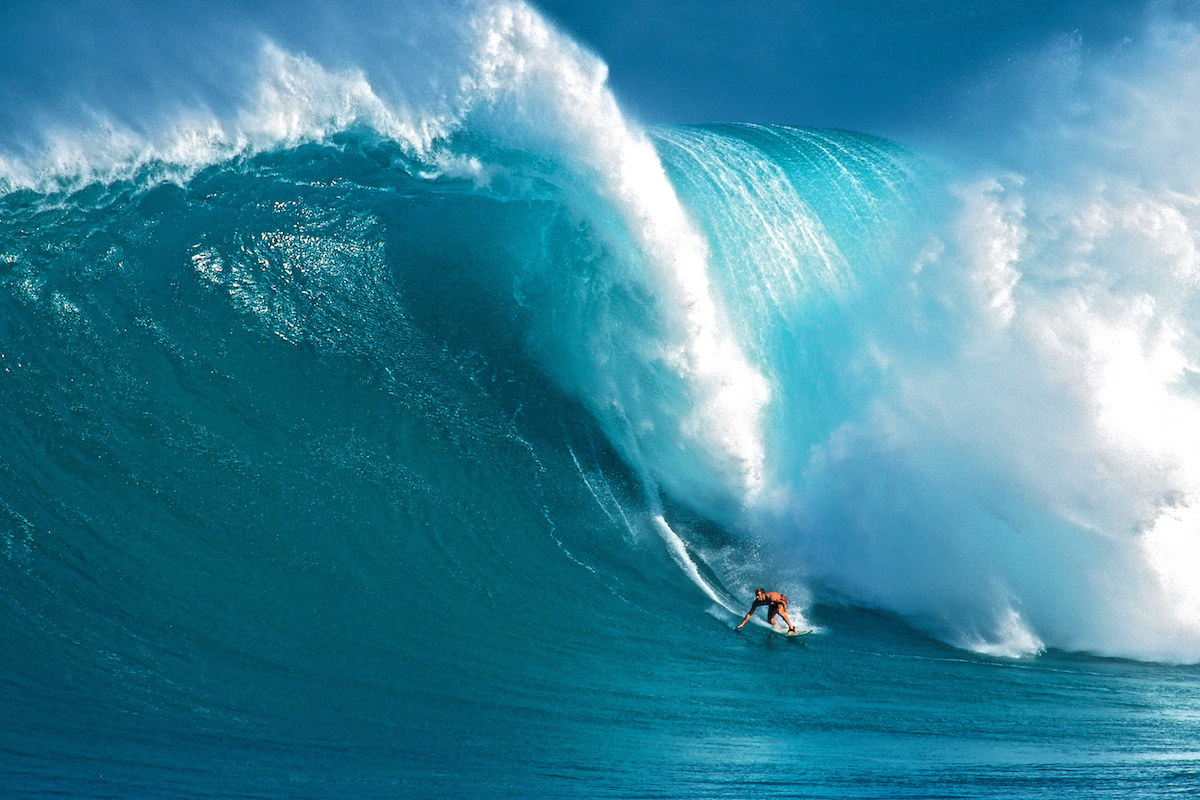 TAKE EVERY WAVE: THE LIFE OF LAIRD HAMILTON[/caption]
The latest films from filmmakers Rory Kennedy and Jennifer Peedom are among six films rounding up the fifth edition of Savage Cinema at the San Sebastian International Film Festival. Savage Cinema is a non-competitive section in collaboration with Red Bull Media House, which specializes in sports and adventure films.
Peedom, BAFTA Best Documentary nominee for Sherpa in 2016, presents Mountain, a poetical film honoring the beauty of summits underlied with narration of Willem Dafoe and a special soundtrack, that will see its premiere in San Sebastian in collaboration with the Bilbao Mendi Film Festival. An ambitious project which, with Tout là-haut / To the Top, first fictional movie to appear in Savage Cinema, starring Bérénice Bejo and directed by Serge Hazanavicius, opens the section to new genres.
The search for paradise, a recurring theme in the Savage Cinema program, returns with Secrets of Desert Point, one of the few adventures of the 20th Century still to be told. Ira Opper, pioneer producer and distributor of action sports content, recovers images recorded by Bill Heick, lending shape to that savage surf discovery which has remained secret for 40 years.
Under an Arctic Sky, by photographer Chris Burkard, represents new forms of exploration, where imagination and technology are key to finding new nirvanas, this time in the freezing coastline of Iceland.
The final two films are biographical movies about exceptional lives. Take Every Wave (Sundance 2017) is a biopic signed by Rory Kennedy, director of Ghosts of Abu Ghraib (winner of an Emmy in 2007) and Last Days in Vietnam (nominated for a Best Documentary Feature Academy Award in 2015), documenting one of the few surfers to enter popular American imaginary Laird Hamilton. While the sport is developing, there are new icons evolving, one of them being Kai Lenny, multiple World Champion, whose progression and connectivity with the ocean is portrayed in Paradigm Lost.
TAKE EVERY WAVE: THE LIFE OF LAIRD HAMILTON[/caption]
The latest films from filmmakers Rory Kennedy and Jennifer Peedom are among six films rounding up the fifth edition of Savage Cinema at the San Sebastian International Film Festival. Savage Cinema is a non-competitive section in collaboration with Red Bull Media House, which specializes in sports and adventure films.
Peedom, BAFTA Best Documentary nominee for Sherpa in 2016, presents Mountain, a poetical film honoring the beauty of summits underlied with narration of Willem Dafoe and a special soundtrack, that will see its premiere in San Sebastian in collaboration with the Bilbao Mendi Film Festival. An ambitious project which, with Tout là-haut / To the Top, first fictional movie to appear in Savage Cinema, starring Bérénice Bejo and directed by Serge Hazanavicius, opens the section to new genres.
The search for paradise, a recurring theme in the Savage Cinema program, returns with Secrets of Desert Point, one of the few adventures of the 20th Century still to be told. Ira Opper, pioneer producer and distributor of action sports content, recovers images recorded by Bill Heick, lending shape to that savage surf discovery which has remained secret for 40 years.
Under an Arctic Sky, by photographer Chris Burkard, represents new forms of exploration, where imagination and technology are key to finding new nirvanas, this time in the freezing coastline of Iceland.
The final two films are biographical movies about exceptional lives. Take Every Wave (Sundance 2017) is a biopic signed by Rory Kennedy, director of Ghosts of Abu Ghraib (winner of an Emmy in 2007) and Last Days in Vietnam (nominated for a Best Documentary Feature Academy Award in 2015), documenting one of the few surfers to enter popular American imaginary Laird Hamilton. While the sport is developing, there are new icons evolving, one of them being Kai Lenny, multiple World Champion, whose progression and connectivity with the ocean is portrayed in Paradigm Lost.
2017 San Sebastian International Film Festival Savage Cinema
MOUNTAIN JENNIFER PEEDOM (AUSTRALIA) A unique cinematic and musical collaboration between the Australian Chamber Orchestra and BAFTA-nominated director Jennifer Peedom, Mountain is a dazzling exploration of our obsession with mountains. Only three centuries ago, climbing a mountain would have been considered close to lunacy. The idea scarcely existed that wild landscapes might hold any sort of attraction. Peaks were places of peril, not beauty. Why, then, are we now drawn to mountains in our millions? Mountain shows us the spellbinding force of high places – and their ongoing power to shape our lives and our dreams. PARADIGM LOST JOHN DECESARE (USA) For Kai Lenny, the ocean is a playground as long as you are having fun. Kai is continually challenging the notion of what a SURFER is, from riding huge waves to open ocean swells, on any means conceivable. Whether testing himself competitively or sharing the stoke of riding with friends, there are only waves and endless possibilities that come with a mind wide open. SECRETS OF DESERT POINT IRA OPPER (USA) In the early eighties, while sailing in crude leaky boats off remote Lombok island in Indo, young California surfer Bill Heick and his friends stumbled across the perfect wave. As treacherous as it was beautiful, this motley crew of modern-day surf argonauts named it ‘Desert Point’. These pioneers kept their treasure off the map for more than a decade and made it their life’s mission to surf uncrowded Desert Point at the highest level possible…no matter the cost. Join us for a journey on one of the last great dirtbag adventures of the 20th Century. One passed through three generations. And learning that if want to keep paradise, you need to stand up for it. TAKE EVERY WAVE: THE LIFE OF LAIRD HAMILTON RORY KENNEDY (USA) An in-depth uncompromising portrait of a living surf legend, Take Every Wave examines the life of an extraordinary individual fuelled by fear, ambition and challenge. This rip-roaring account of his life gives us a rare and intimate glimpse into what drives an elite athlete to follow the rules or break them; revealing how he changed the face of the sport, the legacy he built, and the price an athlete pays for greatness. TOUT LÀ-HAUT / TO THE TOP SERGE HAZANAVICIUS (FRANCE) Scott, a young gifted snowboarder, has one dream: to be number one. He wants to do what no one has ever done: climb mount Everest, and ride the ultimate descent down the Hornbein Couloir. Once in Chamonix, the riders Mecca, he crosses paths with Pierrick, a free-ride veteran turned mountain guide. Scott knows that this is the encounter that could take him to the top. UNDER AN ARCTIC SKY CHRIS BURKARD (ICELAND) The film follows six surfers along with adventure photographer Chris Burkard and filmmaker Ben Weiland as they seek out unknown swell in the remote fjords of Iceland’s Hornstrandir Nature Reserve. Chartering a boat, they depart from Isafjordur on the cusp of the largest storm to make landfall in twenty-five years. With the knowledge that storms bring legendary swell the crew are optimistic, but face failure when the storm forces them back to shore. Making the decision to carry the expedition on by road they experience the brutality of Iceland’s winter and begin to question if searching out the unknown is worth risking their lives for. Despite setbacks the team pushes on and finds that uncertainty is the best ingredient for discovering the unimaginable.
-
Four Special Screenings Added to 2017 San Sebastian Festival’s Official Selection
[caption id="attachment_23890" align="aligncenter" width="1200"]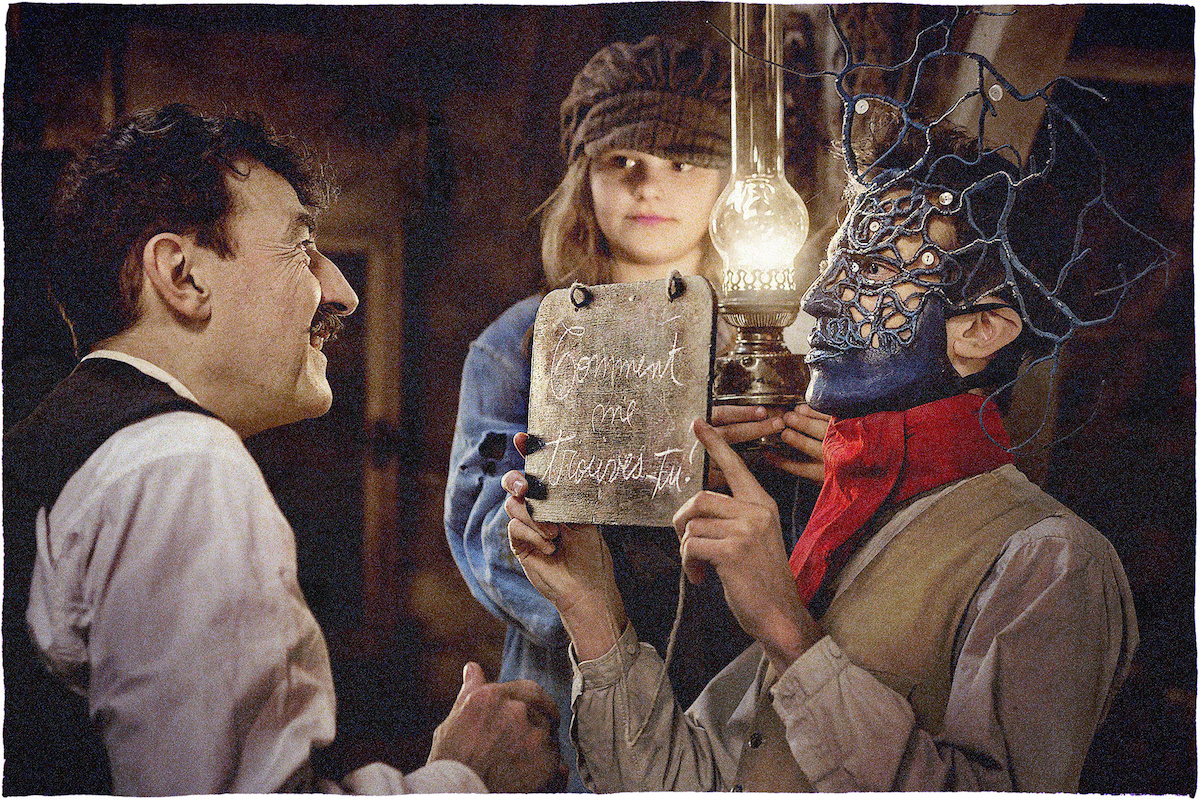 SEE YOU UP THERE[/caption]
The latest film from the producers of Kimi no Na Wa / Your Name, an adaptation of the Prix Goncourt 2013 and a 3D exploration of underwater treasures with the voice of Arnold Schwarzenegger join Fernando Franco’s Morir to complete the four special screenings in the Official Selection at the 2017 San Sebastian Festival. With these, the festival has now announced 18 of the Official Selection titles.
AU REVOIR LÀ-HAUT / SEE YOU UP THERE
ALBERT DUPONTEL (FRANCE)
November 1919. Two survivors of the trenches set up a scam based on war memorials. One is a brilliant illustrator, the other an unassuming accountant. In the France of the Roaring Twenties, their operation becomes as dangerous as it is spectacular… Adaptation of Pierre Lemaitre’s novel The Big Swindle, winner of the Prix Goncourt.
MORIR (DYING)
FERNANDO FRANCO (SPAIN)
The lives of Luis and Marta are abruptly paralysed. Lies, guilt and fear put the couple’s stability and love to the test.
UCHIAGE HANABI, SHITA KARA MIRUKA? YOKO KARA MIRUKA? / FIREWORKS, SHOULD WE SEE IT FROM THE SIDE OR THE BOTTOM?
AKIYUKI SHINBO, NOBUYUKI TAKEUCHI (JAPAN)
Summer break in a town by the sea. / One day before a firework festival, / classmates excitedly discuss whether / “fireworks are round or flat when they’re viewed from the side”. / Their classmate Nazuna, who Norimichi has a crush on, / is lost in her own thoughts after learning that / her mother, who is getting remarried, / is making her transfer schools. / “Let’s elope”. / Nazuna asks Norimichi to run away with her but gets caught by her mother, / who drags her home. Norimichi can’t do anything but watch helplessly. “If I had…” / Norimichi, frustrated with himself for not helping Nazuna, / throws a mysterious ball Nazuna found on the beach. / Then suddenly, time gets rewound to the moment / before Nazuna is forced to go home… / What does fate have in store for Nazuna and Norimichi / at the end of the day that keeps repeating itself? / When fireworks light up the sky, a miracle of love occurs.
WONDERS OF THE SEA 3D
JEAN-MICHEL COUSTEAU, JEAN-JACQUES MANTELLO (UK – FRANCE)
Shot in 3D over three years in locations ranging from Fiji to the Bahamas, the film takes us underwater on a thrilling submarine voyage beneath the seas that cover 71% of our planet’s surface. Spectacular documentary produced and narrated by Arnold Schwarzenegger, mythical star of The Terminator and Total Recall. A film with the mission to raise awareness on the treasures of the sea and the need to preserve them. Co-directed by the son of the emblematic pioneer of scientific dissemination Jacques-Yves Cousteau.
SEE YOU UP THERE[/caption]
The latest film from the producers of Kimi no Na Wa / Your Name, an adaptation of the Prix Goncourt 2013 and a 3D exploration of underwater treasures with the voice of Arnold Schwarzenegger join Fernando Franco’s Morir to complete the four special screenings in the Official Selection at the 2017 San Sebastian Festival. With these, the festival has now announced 18 of the Official Selection titles.
AU REVOIR LÀ-HAUT / SEE YOU UP THERE
ALBERT DUPONTEL (FRANCE)
November 1919. Two survivors of the trenches set up a scam based on war memorials. One is a brilliant illustrator, the other an unassuming accountant. In the France of the Roaring Twenties, their operation becomes as dangerous as it is spectacular… Adaptation of Pierre Lemaitre’s novel The Big Swindle, winner of the Prix Goncourt.
MORIR (DYING)
FERNANDO FRANCO (SPAIN)
The lives of Luis and Marta are abruptly paralysed. Lies, guilt and fear put the couple’s stability and love to the test.
UCHIAGE HANABI, SHITA KARA MIRUKA? YOKO KARA MIRUKA? / FIREWORKS, SHOULD WE SEE IT FROM THE SIDE OR THE BOTTOM?
AKIYUKI SHINBO, NOBUYUKI TAKEUCHI (JAPAN)
Summer break in a town by the sea. / One day before a firework festival, / classmates excitedly discuss whether / “fireworks are round or flat when they’re viewed from the side”. / Their classmate Nazuna, who Norimichi has a crush on, / is lost in her own thoughts after learning that / her mother, who is getting remarried, / is making her transfer schools. / “Let’s elope”. / Nazuna asks Norimichi to run away with her but gets caught by her mother, / who drags her home. Norimichi can’t do anything but watch helplessly. “If I had…” / Norimichi, frustrated with himself for not helping Nazuna, / throws a mysterious ball Nazuna found on the beach. / Then suddenly, time gets rewound to the moment / before Nazuna is forced to go home… / What does fate have in store for Nazuna and Norimichi / at the end of the day that keeps repeating itself? / When fireworks light up the sky, a miracle of love occurs.
WONDERS OF THE SEA 3D
JEAN-MICHEL COUSTEAU, JEAN-JACQUES MANTELLO (UK – FRANCE)
Shot in 3D over three years in locations ranging from Fiji to the Bahamas, the film takes us underwater on a thrilling submarine voyage beneath the seas that cover 71% of our planet’s surface. Spectacular documentary produced and narrated by Arnold Schwarzenegger, mythical star of The Terminator and Total Recall. A film with the mission to raise awareness on the treasures of the sea and the need to preserve them. Co-directed by the son of the emblematic pioneer of scientific dissemination Jacques-Yves Cousteau.
-
European Premiere of THE WIFE Starring Glenn Close to Close San Sebastian Festival

Glenn Close (with Jonathan Pryce) in The Wife The European premiere of The Wife directed by Björn Runge and starring Glenn Close and Jonathan Pryce, will close the 65th edition of the San Sebastian Festival.
-
12 Latino Films to Screen in 2017 San Sebastian International Film Festival Horizontes Latinos Program
[caption id="attachment_23830" align="aligncenter" width="1200"]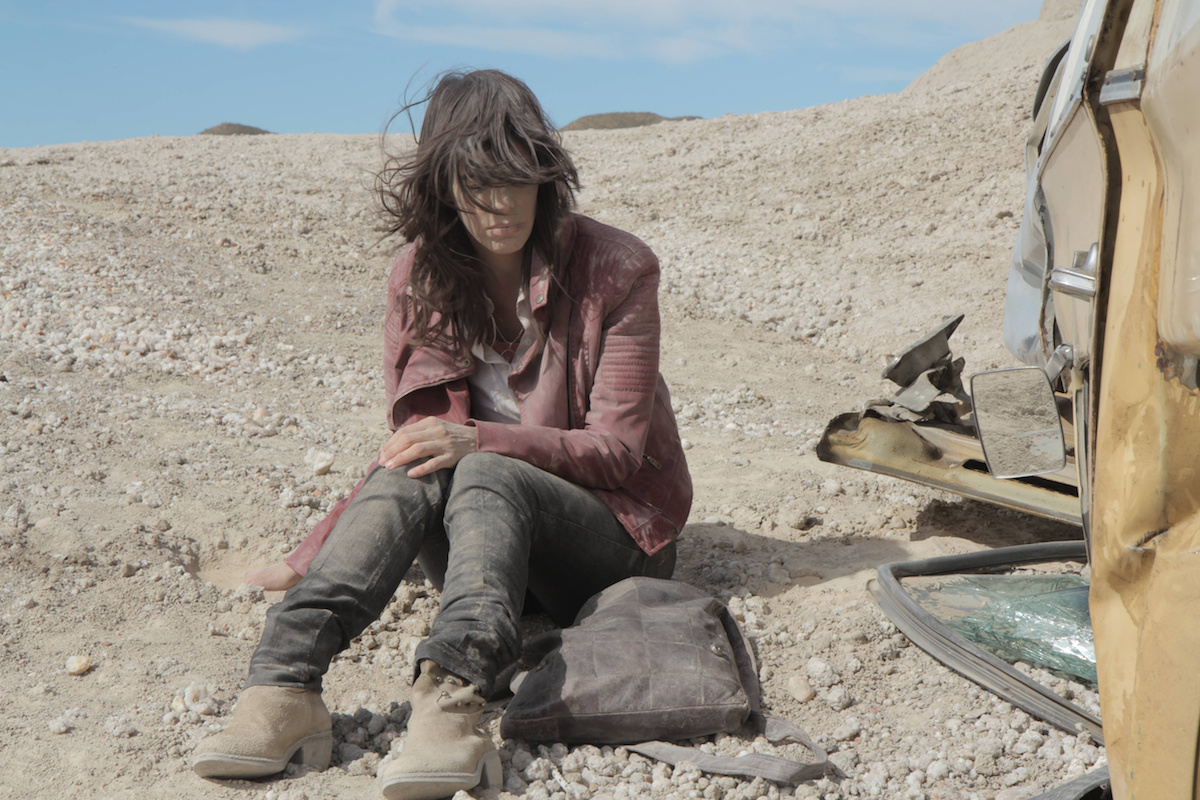 TO THE DESERT[/caption]
Twelve films produced in Argentina, Brazil, Chile, Costa Rica, the Dominican Republic, Mexico, Uruguay and Venezuela, make up the Horizontes Latinos section of the 2017 San Sebastian International Film Festival.
The Horizontes Latinos section is a selection of feature films not yet screened in Spain, produced totally or partially in Latin America, directed by filmmakers of Latin origin or which have as their setting or subject matter Latino communities in the rest of the world. Half of the titles in the section are first or second works.
Among the films is premiere of the winner of the two Films in Progress 30 awards in San Sebastian, La educación del Rey (Rey’s Education), first feature film from Santiago Esteves (Mendoza, Argentina, 1983), who has written and directed short films including Los crímenes (Best Iberoamerican Short Film and Critics’ Award at Huesca 2011) and has worked as an editor for Pablo Trapero, Mariano Llinás or Juan Villegas.
Another of the selected first films is La novia del desierto (The Desert Bride) by directors Cecilia Atán (Buenos Aires, 1978) and Valeria Pivato (Buenos Aires, 1973), which, having landed the Films in Progress Toulouse Award, was premiered in Un Certain Regard at the Cannes Festival and has just won the Jury Award for Best Debut Feature at the Lima Film Festival. The documentary by Atán, Madres de Plaza de Mayo, la historia (2016), was nominated for the Emmy Awards, and Pivato, who has worked with directors including Juan José Campanella, Walter Salles or Pablo Trapero, won the Patagonik International Screenwriters Competition with his Project Antes y después… y después otra vez.
Temporada de caza (Hunting Season, Films in Progress 31) is the first feature film by Natalia Garagiola (Buenos Aires, 1982), who will compete in Venice at the International Critics’ Week, an independent section organised by the Italian Union of Film Critics. One of Garagiola’s shorts, Yeguas y Cotorras (2012), was selected for the Critic’s Week at Cannes.
Gustavo Rondón (Caracas, 1977) has written, helmed and produced numerous shorts later screened at festivals such as Tribeca, Biarritz, Toulouse and Havana. The most recent, Nostalgia (2012) was selected to compete in Berlin. La familia (Films in Progress 30), which was screened at the Cannes Critics’ Week and has just won Jury Award for Best Film at Lima Film Festival, brings his feature directorial debut.
The filmography of Alexandra Latishev (San José, Costa Rica) contains the prizewinning short Irene (2014) and the documentary Los volátiles, winner of the Best Documentary Feature Film and Audience Awards at the Costa Rica Festival. Medea (Films in Progress 30), which competed at the BAFICI (Buenos Aires International Independent Film Festival), marks her debut in feature films.
After numerous experiences in the non-fictional field, in 2013 Marcela Said (Santiago de Chile, 1972) directed her first feature-length fiction, El verano de los peces voladores, Films in Progress Toulouse Award in 2013 which had its premiere at the Cannes Directors’ Fortnight. Horizontes Latinos will see the screening of her second film, Los perros (Films in Progress 31), after its presentation at the Cannes Critics’ Week.
Las olas (The Waves, Films in Progress, 30) is the third feature film from the director, screenwriter, actor and singer Adrián Biniez (Remedios de Escalada, Argentina, 1974), whose debut, Gigante (2009) won the Grand Jury Prize, the Alfred Bauer Award – in recognition of a film that “opens new perspectives on cinematic art” – and the Best First Feature Award at the Berlinale, as well as the Horizontes Award in San Sebastian.
Michel Franco (Mexico City, 1979) landed a special mention in San Sebastian with Después de Lucía (After Lucía, 2012), Best Feature Film in Un Certain Regard at Cannes. As a moviemaker he also won the Best Screenplay Award at Cannes for Chronic (2015). He also has a long and outstanding background as a producer: in 2015 he won the Best First Feature Award in Berlin for 600 millas (600 Miles,Gabriel Ripstein) plus the Golden Lion in Venice and a Special Mention in San Sebastian for Desde allá (From Afar, Lorenzo Vigas), both selected for Horizontes Latinos. Now he returns to the Festival as a director with Las hijas de Abril (April’s Daughters), having won the Jury Prize at Un Certain Regard.
Sebastián Lelio (Mendoza, Argentina, 1974) has a trajectory closely related to San Sebastian. His first film, La Sagrada Familia, competed in Horizontes Latinos in 2005 after its screening in Films in Progress. His fourth feature, Gloria, won the Films in Progress Award in San Sebastian in 2012. His latest film, Una mujer fantástica (A Fantastic Woman), Silver Bear for Best Screenplay at the Berlinale, will open the section.
Affonso Uchôa (Contagem, Brazil) and João Dumans (Belo Horizonte, Brazil) jointly wrote A vizinhança do tigre / The Hidden Tiger (2014). Here they repeat their collaboration as the directors of Arábia /Araby, selected for the Rotterdam Festival official competition and winner of a special mention at the BAFICI. Uchôa is the director of Mulher à tarde / Afternoon Woman (2010) and wrote with Marília Rocha A cidade onde envelheço / Where I Grow Old (2016), selected for Films in Progress Toulouse in 2015 and for Zabaltegi-Tabakalera last year.
Al desierto (To the Desert) is the new feature film by Ulises Rosell (Buenos Aires, 1970), after the award-winning Sofacama / Sofabed (2006) and El etnógrafo / The Ethnographer (2012). Rosell wrote and directed this story of a kidnapping and hike across the Patagonia desert to premier in San Sebastian.
Lastly, Cocote, which has just won the Signs of Life section Award at the Locarno Festival, is the third film from the Dominican director Nelson Carlo de los Santos Arias (Santo Domingo, 1985), who in 2015 shot Santa Teresa y otras historias,a radical adaptation of Roberto Bolaño’s novel 2666, screened in Toronto and winner of awards in Marseille and Mar del Plata.
All twelve feature films compete for the Horizontes Award and its 35,000 euros. The six first and second films in the selection (La educación de Rey, La familia, Medea, Arábia, La novia del desierto and Temporada de caza) are also contenders for the EROSKI Youth Award.
TO THE DESERT[/caption]
Twelve films produced in Argentina, Brazil, Chile, Costa Rica, the Dominican Republic, Mexico, Uruguay and Venezuela, make up the Horizontes Latinos section of the 2017 San Sebastian International Film Festival.
The Horizontes Latinos section is a selection of feature films not yet screened in Spain, produced totally or partially in Latin America, directed by filmmakers of Latin origin or which have as their setting or subject matter Latino communities in the rest of the world. Half of the titles in the section are first or second works.
Among the films is premiere of the winner of the two Films in Progress 30 awards in San Sebastian, La educación del Rey (Rey’s Education), first feature film from Santiago Esteves (Mendoza, Argentina, 1983), who has written and directed short films including Los crímenes (Best Iberoamerican Short Film and Critics’ Award at Huesca 2011) and has worked as an editor for Pablo Trapero, Mariano Llinás or Juan Villegas.
Another of the selected first films is La novia del desierto (The Desert Bride) by directors Cecilia Atán (Buenos Aires, 1978) and Valeria Pivato (Buenos Aires, 1973), which, having landed the Films in Progress Toulouse Award, was premiered in Un Certain Regard at the Cannes Festival and has just won the Jury Award for Best Debut Feature at the Lima Film Festival. The documentary by Atán, Madres de Plaza de Mayo, la historia (2016), was nominated for the Emmy Awards, and Pivato, who has worked with directors including Juan José Campanella, Walter Salles or Pablo Trapero, won the Patagonik International Screenwriters Competition with his Project Antes y después… y después otra vez.
Temporada de caza (Hunting Season, Films in Progress 31) is the first feature film by Natalia Garagiola (Buenos Aires, 1982), who will compete in Venice at the International Critics’ Week, an independent section organised by the Italian Union of Film Critics. One of Garagiola’s shorts, Yeguas y Cotorras (2012), was selected for the Critic’s Week at Cannes.
Gustavo Rondón (Caracas, 1977) has written, helmed and produced numerous shorts later screened at festivals such as Tribeca, Biarritz, Toulouse and Havana. The most recent, Nostalgia (2012) was selected to compete in Berlin. La familia (Films in Progress 30), which was screened at the Cannes Critics’ Week and has just won Jury Award for Best Film at Lima Film Festival, brings his feature directorial debut.
The filmography of Alexandra Latishev (San José, Costa Rica) contains the prizewinning short Irene (2014) and the documentary Los volátiles, winner of the Best Documentary Feature Film and Audience Awards at the Costa Rica Festival. Medea (Films in Progress 30), which competed at the BAFICI (Buenos Aires International Independent Film Festival), marks her debut in feature films.
After numerous experiences in the non-fictional field, in 2013 Marcela Said (Santiago de Chile, 1972) directed her first feature-length fiction, El verano de los peces voladores, Films in Progress Toulouse Award in 2013 which had its premiere at the Cannes Directors’ Fortnight. Horizontes Latinos will see the screening of her second film, Los perros (Films in Progress 31), after its presentation at the Cannes Critics’ Week.
Las olas (The Waves, Films in Progress, 30) is the third feature film from the director, screenwriter, actor and singer Adrián Biniez (Remedios de Escalada, Argentina, 1974), whose debut, Gigante (2009) won the Grand Jury Prize, the Alfred Bauer Award – in recognition of a film that “opens new perspectives on cinematic art” – and the Best First Feature Award at the Berlinale, as well as the Horizontes Award in San Sebastian.
Michel Franco (Mexico City, 1979) landed a special mention in San Sebastian with Después de Lucía (After Lucía, 2012), Best Feature Film in Un Certain Regard at Cannes. As a moviemaker he also won the Best Screenplay Award at Cannes for Chronic (2015). He also has a long and outstanding background as a producer: in 2015 he won the Best First Feature Award in Berlin for 600 millas (600 Miles,Gabriel Ripstein) plus the Golden Lion in Venice and a Special Mention in San Sebastian for Desde allá (From Afar, Lorenzo Vigas), both selected for Horizontes Latinos. Now he returns to the Festival as a director with Las hijas de Abril (April’s Daughters), having won the Jury Prize at Un Certain Regard.
Sebastián Lelio (Mendoza, Argentina, 1974) has a trajectory closely related to San Sebastian. His first film, La Sagrada Familia, competed in Horizontes Latinos in 2005 after its screening in Films in Progress. His fourth feature, Gloria, won the Films in Progress Award in San Sebastian in 2012. His latest film, Una mujer fantástica (A Fantastic Woman), Silver Bear for Best Screenplay at the Berlinale, will open the section.
Affonso Uchôa (Contagem, Brazil) and João Dumans (Belo Horizonte, Brazil) jointly wrote A vizinhança do tigre / The Hidden Tiger (2014). Here they repeat their collaboration as the directors of Arábia /Araby, selected for the Rotterdam Festival official competition and winner of a special mention at the BAFICI. Uchôa is the director of Mulher à tarde / Afternoon Woman (2010) and wrote with Marília Rocha A cidade onde envelheço / Where I Grow Old (2016), selected for Films in Progress Toulouse in 2015 and for Zabaltegi-Tabakalera last year.
Al desierto (To the Desert) is the new feature film by Ulises Rosell (Buenos Aires, 1970), after the award-winning Sofacama / Sofabed (2006) and El etnógrafo / The Ethnographer (2012). Rosell wrote and directed this story of a kidnapping and hike across the Patagonia desert to premier in San Sebastian.
Lastly, Cocote, which has just won the Signs of Life section Award at the Locarno Festival, is the third film from the Dominican director Nelson Carlo de los Santos Arias (Santo Domingo, 1985), who in 2015 shot Santa Teresa y otras historias,a radical adaptation of Roberto Bolaño’s novel 2666, screened in Toronto and winner of awards in Marseille and Mar del Plata.
All twelve feature films compete for the Horizontes Award and its 35,000 euros. The six first and second films in the selection (La educación de Rey, La familia, Medea, Arábia, La novia del desierto and Temporada de caza) are also contenders for the EROSKI Youth Award.
2017 San Sebastian International Film Festival Horizontes Latinos Program
UNA MUJER FANTÁSTICA (A FANTASTIC WOMAN) SEBASTIÁN LELIO (CHILE- GERMANY – SPAIN – USA) Cast: Daniela Vega, Francisco Reyes, Luis Gnecco, Paulina García, Néstor Cantillana, Alonso Torres, Cristián Chaparro, Senén Arancibia OPENING FILM (IN COMPETITION) Marina is a young waitress and wannabe singer; Orlando owns a printing company. Together they plan their future. When Orlando dies suddenly, Marina has to stand up to his family and society to show them what she truly is: a complex, strong, forthright and… fantastic woman. Teddy Award and Silver Bear for Best Screenplay at the Berlinale 2017. AL DESIERTO (TO THE DESERT) ULISES ROSELL (ARGENTINA – CHILE) Cast: Valentina Bassi, Jorge Sesán, José María Marcos, Germán De Silva, Gastón Salgado Driven by the insecurity of her working situation, Julia, an employee at the Comodoro Rivadavia (Argentina) casino, gives in to the temptations of Gwynfor, a laconic man of Welsh descent, who promises her an administrative job with the oil company he works for. By the time she realises her mistake they are already well into the desert as they set out on an arduous hike across the Patagonia plain. Hunting, sheltering in caves and abandoned buildings, with no way out in the middle of infinite distances, the difficult coexistence will change as the days pass. In a pickup truck, on horseback, guided by trackers, superintendent Hermes Prieto is hot on their heels, convinced of finding some kind of trace in the midst of the desert. ARÁBIA / ARABY AFFONSO UCHÔA, JOÃO DUMANS (BRAZIL) Cast: Aristides de Sousa, Murilo Caliari, Glaucia Vandeveld, Renato Novaes, Adriano Araújo, Renan Rovida, Wederson Neguinho, Renata Cabral Young André lives in an industrial neighbourhood in Ouro Preto, Minas Gerais, near an old aluminium factory. Once a week, his aunt Márcia, a voluntary nurse at the community hospital, visits himself and his younger brother to help them with the household chores while their mother is away. One day, one of the factory workers, Cristiano, a foreigner with a stormy background in the neighbourhood, suffers an accident at the factory. Márcia gives him first aid right in front of the factory, and asks André to go to Cristiano’s house to get his documents and some clothes. Entering the house, André comes across a mysterious notebook… COCOTE NELSON CARLO DE LOS SANTOS ARIAS (DOMINICAN REPUBLIC – ARGENTINA – GERMANY – QATAR) Cast: Vicente Santos, Judith Rodríguez, Yuberbi de la Rosa, Pedro Sierra, Isabel Spencer, José Miguel Fernander Alberto, an evangelical gardener, returns to his hometown for the funeral of his father, murdered by an influential man. To mourn the dead man, he is forced to participate in religious celebrations that go against both his will and his beliefs. LA EDUCACIÓN DEL REY (REY’S EDUCATION) SANTIAGO ESTEVES (ARGENTINA – SPAIN) Cast: Germán De Silva, Matías Encinas, Jorge Prado, Mario Jara, Martín Arrojo, Elena Schnell, Marcelo Lacerna, Esteban Lamothe Films in Progress 30 Bolting from his first ever heist, Reynaldo Galíndez, alias ‘Rey’, lands in the patio of the house inhabited by Carlos Vargas, a retired security guard. Vargas offers a deal: the young boy will repair the damage to his home in return for not being handed over to the police. The lessons given to the teenager by the former guard develop into a relationship not unlike the old legends of educating a king (for the “Rey” of his name, meaning “king”). But the agreement will start to fall apart when the loose ends of the robbery Reynaldo had been involved in start closing in around them. Films in Progress Industry Award and CAACI / Ibermedia TV Films in Progress Award in 2016. LA FAMILIA GUSTAVO RONDÓN CÓRDOVA (VENEZUELA – CHILE – NORWAY) Cast: Giovanny Garcia, Reggie Reyes Films in Progress 30 Twelve year-old Pedro roams the streets with his friends in the violent urban atmosphere of a working-class district of Caracas. When Pedro seriously injures another boy in a fight, his single father, Andrés, decides that they must make a run for it and hide. Although Andrés will realise that as a father he is incapable of controlling his son, the situation will bring them closer than they have ever been. LA NOVIA DEL DESIERTO ( THE DESERT BRIDE) CECILIA ATÁN, VALERIA PIVATO (ARGENTINA – CHILE) Cast: Paulina García, Claudio Rissi Films in Progress 31 Teresa (54) has worked for decades as a live-in maid in Buenos Aires. When the family sells the house, she is forced to take a job in a distant town. Though not particularly comfortable with the idea, she embarks on a journey through the desert. During her first stop in the land of the miracle-producing ‘Difunta Correa’ saint, she loses her bag with all her belongings. This incident leads her to cross paths with a travelling salesman, the only person who can help her. What seemed like the end of her world will prove to be her salvation. LAS HIJAS DE ABRIL (APRIL’S DAUGHTERS) MICHEL FRANCO (MEXICO) Cast: Emma Suárez, Ana Valeria Becerril, Hernán Mendoza, Joanna Larequi, Enrique Arrizon, Iván Cortés, Giovanna Zacarías, José Ángel García, Tony Dalton Valeria is 17 and pregnant. She lives in Puerto Vallarta with her step-sister Clara. Valeria doesn’t want April – the mother they haven’t seen for some time – to find out about her pregnancy. However Clara, compelled by financial difficulties and the responsibilities of having a baby in the house, decides to call her. Abril arrives with the intention of helping her daughters, but we soon understand why Valeria would have preferred her to stay away. LAS OLAS (THE WAVES) ADRIÁN BINIEZ (URUGUAY – ARGENTINA) Cast: Alfonso Tort, Julieta Zylberberg, Fabiana Charlo, Victoria Jorge, Ilana Hojman Films in Progress 30 Alfonso leaves work and heads for the beach. He dives into the sea and starts swimming. He surfaces on a beach where he and his family had been on holiday five years earlier. This is the start of a fantastic voyage through the different holidays and resorts he has visited during his lifetime: as a boy with his parents, on a mysterious island with his ex-wife, as a teenager with his friends, with Malaysian pirates and when camping in the same place with two different girlfriends in two consecutive years. LOS PERROS MARCELA SAID (CHILE – FRANCE) Cast: Antonia Zegers, Alfredo Castro, Rafael Spregelburd, Alejandro Sieveking Films in Progress 31 Mariana (42) belongs to the Chilean upper class; she spends her days managing an art gallery and learning how to ride a horse. Her riding instructor, Juan, 20 years her senior, is an ex-cavalry officer known as El Coronel, under investigation for human rights abuses committed during the Chilean dictatorship. When Mariana embarks on a romance with her mysterious teacher, she finds herself caught up in a complex situation from which she is loathe to escape on discovering her father’s close relationship with the man being investigated. MEDEA ALEXANDRA LATISHEV (COSTA RICA – ARGENTINA – CHILE) Cast: Liliana Biamonte, Javier Montenegro, Eric Calderón Films in Progress 30 María José’s life swings back and forth between the monotony of classes at the university, her eternally distant parents, rugby training and dares with her gay friend. Emotionally disconnected from her environment, when she meets Javier she tries to start a relationship with him. But none of her efforts to live a ‘normal’ life succeed. She harbours a secret that nobody notices: she’s a few months into her pregnancy. TEMPORADA DE CAZA (HUNTING SEASON ) NATALIA GARAGIOLA (ARGENTINA) Cast: Lautaro Bettoni, Germán Palacios, Boy Olmi, Rita Pauls Films in Progress 31 Nahuel is a teenager with an innate violent conduct. After his mother dies, he travels to Patagonia in Southern Argentina, where he encounters his biological father, who he hasn’t seen for more than a decade. Ernesto is a respected hunting guide who lives in the mountains with his second wife and daughters. The reunion is not an easy one, pride and resentment prevail in both father and son. They stubbornly resist any possible contact with one another. However, as the weeks go by and winter settles in, Nahuel starts giving in. Initial hostility gives place to curiosity, both towards his father’s universe of hunting and the life of a group of teenagers that he meets in the area. On his side, Ernesto’s roughness gives in to the undeniable love he has for his son…
-
6 Films in Films in Progress 32 at 2017 San Sebastian International Film Festival
[caption id="attachment_23805" align="aligncenter" width="1200"]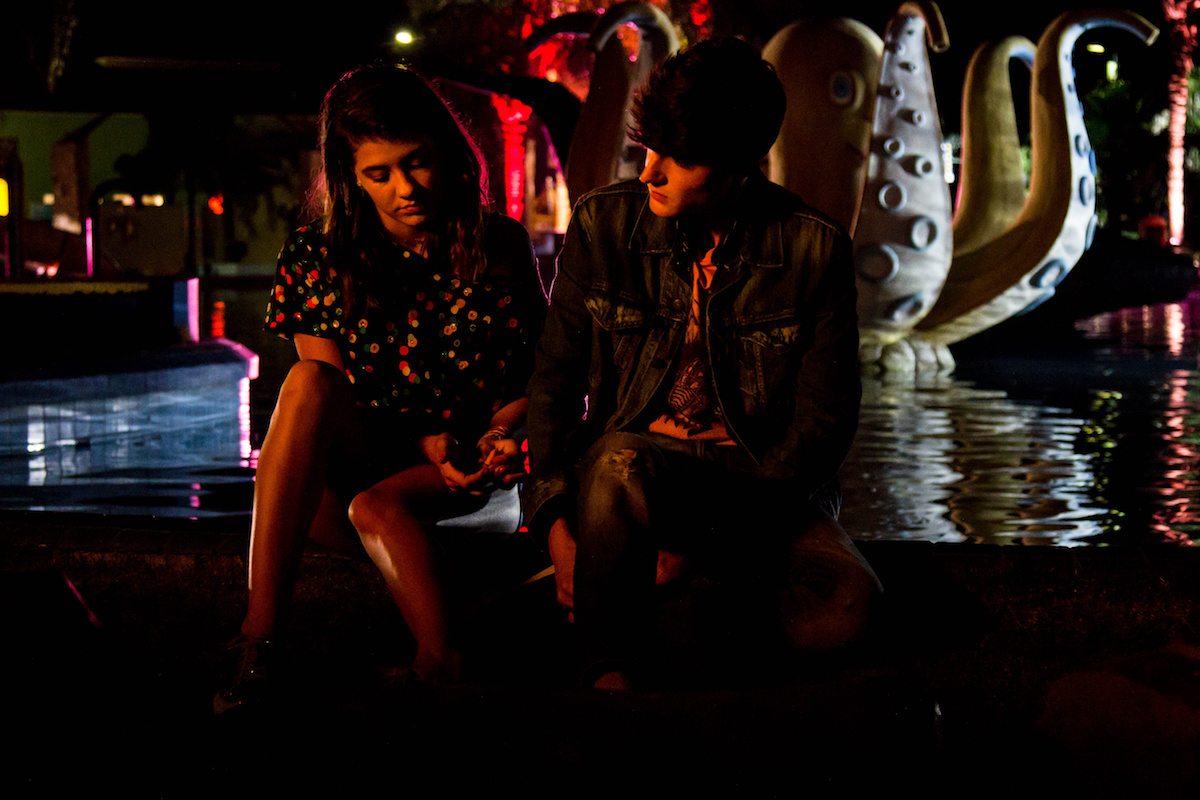 FERRUGEM / HUST[/caption]
Six films have been selected for Films in Progress 32 at 2017 San Sebastian International Film Festival: Agosto by Armando Capó (Costa Rica – Cuba – France); Ferrugem / Hust by Aly Muritiba (Brazil), Kairos, by Nicolás Buenaventura (France – Colombia), Familia sumergida (Immersed Family) by María Alche (Argentina – Brazil – Germany), Niña errante (Wandering Girl) by Rubén Mendoza (Colombia – France) and Rodantes (Wanderers) by Leandro Lara (Brazil – USA).
Some of the directors presenting their works in Films in Progress have already participated in San Sebastian, such as Armando Capó, whose project Agosto (August) was selected for the III Europe-Latin America Co-Production Forum where it won the EGEDA Award for Best Project, and Aly Muritiba, selected for the I Co-Production Forum with his project Para minha amada morta / To my Beloved (formerly O homen que matou a minha amada morta / To my Beloved Dead), which went on to participate in Films in Progress 26 and later in Horizontes Latinos 2015. Muritiba also revisited the Forum in 2016 with his project Barba ensopada de sangue / Blood-Drenched Beard.
Films in Progress is the program of subsidies to Latin American cinema which, held twice yearly, is organized jointly by the San Sebastian Festival and Cinélatino, Rencontres de Toulouse. Created in 2002, the event has become a platform for the international launch of new talents and a mandatory meeting place for the Latin American audiovisual industry.
In total, eight of the films presented at past editions in San Sebastian and Toulouse will be screened in New Directors and Horizontes Latinos. Two of the films which participated in Films in Progress 31 in Toulouse, La novia del desierto (The Desert Bride), by first-time directors Cecilia Atán and Valeria Pivato, and Los Perros, second feature from Marcela Said, were selected respectively for Un Certain Regard and the Critics’ Week at the last Festival de Cannes. Furthermore, La familia, first work by Gustavo Rondón, screened at Films in Progress 30, also participated in this last section.
As well as those already mentioned, Medea by Alexandra Latishev, Las olas (The Waves) by Adrián Biniez and La Educación del Rey (Rey’s Education) by Santiago Esteves, winner of the Industry Award, participated in the last edition of Films in Progress at San Sebastian; and Temporada de caza (Hunting Season) by Natalia Garagiola – Films in Progress Toulouse 2017 – will participate in Horizontes Latinos. Princesita (Princess) by Marialy Rivas, selected for Films in Progress in 2015, will compete in the New Directors section.
FERRUGEM / HUST[/caption]
Six films have been selected for Films in Progress 32 at 2017 San Sebastian International Film Festival: Agosto by Armando Capó (Costa Rica – Cuba – France); Ferrugem / Hust by Aly Muritiba (Brazil), Kairos, by Nicolás Buenaventura (France – Colombia), Familia sumergida (Immersed Family) by María Alche (Argentina – Brazil – Germany), Niña errante (Wandering Girl) by Rubén Mendoza (Colombia – France) and Rodantes (Wanderers) by Leandro Lara (Brazil – USA).
Some of the directors presenting their works in Films in Progress have already participated in San Sebastian, such as Armando Capó, whose project Agosto (August) was selected for the III Europe-Latin America Co-Production Forum where it won the EGEDA Award for Best Project, and Aly Muritiba, selected for the I Co-Production Forum with his project Para minha amada morta / To my Beloved (formerly O homen que matou a minha amada morta / To my Beloved Dead), which went on to participate in Films in Progress 26 and later in Horizontes Latinos 2015. Muritiba also revisited the Forum in 2016 with his project Barba ensopada de sangue / Blood-Drenched Beard.
Films in Progress is the program of subsidies to Latin American cinema which, held twice yearly, is organized jointly by the San Sebastian Festival and Cinélatino, Rencontres de Toulouse. Created in 2002, the event has become a platform for the international launch of new talents and a mandatory meeting place for the Latin American audiovisual industry.
In total, eight of the films presented at past editions in San Sebastian and Toulouse will be screened in New Directors and Horizontes Latinos. Two of the films which participated in Films in Progress 31 in Toulouse, La novia del desierto (The Desert Bride), by first-time directors Cecilia Atán and Valeria Pivato, and Los Perros, second feature from Marcela Said, were selected respectively for Un Certain Regard and the Critics’ Week at the last Festival de Cannes. Furthermore, La familia, first work by Gustavo Rondón, screened at Films in Progress 30, also participated in this last section.
As well as those already mentioned, Medea by Alexandra Latishev, Las olas (The Waves) by Adrián Biniez and La Educación del Rey (Rey’s Education) by Santiago Esteves, winner of the Industry Award, participated in the last edition of Films in Progress at San Sebastian; and Temporada de caza (Hunting Season) by Natalia Garagiola – Films in Progress Toulouse 2017 – will participate in Horizontes Latinos. Princesita (Princess) by Marialy Rivas, selected for Films in Progress in 2015, will compete in the New Directors section.
2017 San Sebastian International Film Festival Films in Progress 32
AGOSTO (AUGUST) ARMANDO CAPÓ RAMOS (COSTA RICA – CUBA – FRANCE) August, 1994, Cuba. Carlos (aged 14) was expecting a normal summer, but the country is thrown into chaos: the government policies change and thousands of Cubans take to the sea, hoping to escape. Friends leave, families separate, emotions are experienced for the first time. Nothing will be as it was before. FAMILIA SUMERGIDA (IMMERSED FAMILY) MARÍA ALCHÉ (ARGENTINA – BRAZIL – GERMANY) Marcela’s world becomes strange and fragile when her sister Rina dies. She feels lost in her own home and the connections with her close family circle are disjointed. One day her daughter’s young friend Nacho arrives at the house when his business trip is cancelled, and together they share conversations and strolls. Marcela is summoned to a meeting by a distant relation, while in her home she has discussions with members of her family who are in another dimension. FERRUGEM / HUST ALY MURITIBA (BRAZIL) Tati and Renet were already trading pics, videos and music by their cell phones, and on the last school trip they started making eye contact. However, what could have been the beginning of a love story becomes the end. KAIROS NICOLÁS BUENAVENTURA (FRANCE – COLOMBIA) Cali, Colombia. Amaranto, 60, was made redundant from his job as a cashier in a bank several years ago, yet he continues to come to his former workplace to perform menial tasks. The day an armoured van has to urgently deliver an important amount of cash, Amaranto is presented with the opportunity to commit a robbery as simple as it is extraordinary. NIÑA ERRANTE (WANDERING GIRL) RUBÉN MENDOZA (COLOMBIA – FRANCE) Angela is 12 and has 3 step-sisters approaching their thirties; the four meet for the first time when summoned for the death of a charismatic waster: their daddy. Angela has never lived with anyone other than her daddy and has no recollection of her mummy. Her sisters will leave her on the other side of the country with an aunt to prevent the social services from taking her in. On this voyage of mourning, particularly while sharing a room in a rundown roadside hotel, Angela, whose body is starting to wake up, recognises in each of her sisters their feminity, their sensuality, the mysteries of pleasure and pain, the body, misfortune and the challenge of being a woman on these roads. RODANTES (WANDERERS) LEANDRO LARA (BRAZIL – USA) Rodantes chronicles the lives of three characters: Tatiane, a young woman who leaves São Paulo in an attempt to rebuild her life after an unresolved past; Odair, a young man in the midst of sexual discoveries who takes risks when he leaves his parental home; and Henry, a Haitian immigrant who, after the death of his wife, struggles to survive with his two young children amid the progress and poverty of Brazil. They occasionally meet in the state of Rondônia, in the middle of chaos, with no other involvement than their condition of wanderers.
-
The Joseph Losey Retrospective at San Sebastian Film Festival to Showcase ALL of His Feature Films
 The 65th edition of the San Sebastian Film Festival will honor Joseph Losey with a retrospective of his 32 feature films and 6 short films.
In the seventies, Joseph Losey represented the greatest expression of auteur or art-house cinema with works like The Servant (1963), King and Country (1964), Accident (1967) and The Go-Between (1971), all of which, with the exception of the second, were written by the playwright Harold Pinter. But before becoming a leading figure of European independent film, Losey endured a complicated situation like so many others affected by the reprisals of the Hollywood witch hunt from 1947 onwards. His work is divided into three periods: his early period in North American film until the early fifties, the prestige he achieved in the UK of the sixties and seventies and a later, more itinerant stage when he worked for Italian, French and Spanish production.
Born in La Crosse, Wisconsin, in 1909, Losey turned his steps towards written and broadcast journalism, later moving into theatre. His openly left-wing beliefs led him to work on several mises en scène with Bertold Brecht and to spend a period in the former Soviet Union studying new theatre concepts. In the late thirties he started to direct short films with Metro Goldwyn Mayer, making his feature debut in 1948 with The Boy with Green Hair, a parable against war, totalitarianism and intransigence towards difference, produced by RKO. Although he did succeed in making a number of low-cost films noirs of undisguised social slant – The Lawless (1950), The Prowler (1951) and The Big Night (1951), all three penned by screenwriters blacklisted by the Un-American Activities Commission, Daniel Mainwaring, Daltun Trumbo and Ring Lardner Jr – and even a remake of Fritz Lang’s famous M in 1951, his name appeared on the blacklist for the tone of his early films and he was accused of belonging to the North American Communist Party.
When called to testify, he was in Italy shooting Stranger on the Prowl / Imbarco a mezzanotte (1952). He decided not to return to the United States and settled in Britain. He released said film under the pseudonym Andrea Forzano and trade union issues prevented his name from featuring on the first two movies made in his country of adoption: in The Sleeping Tiger (1954), first collaboration with one of his actors fetiche, Dirk Bogarde, he is credited as Victor Hanbury and, in The Intimate Stranger (1956), as Joseph Walton.
Losey took up his place in British cinema at a time of change. These were not only the days of rising Free Cinema, a trend he had no part in even if some of his earlier films made in the sixties did have a certain realistic and social angle, but also of the horror movie makers Hammer Film Productions, for which Losey started X The Unknown (1956), before he was ousted from the shooting and replaced by Leslie Norman, later directing The Damned (1962); these were Losey’s only inroads to the sci-fi domain.
Following a timid attempt at integration to the great British film industry with The Gypsy and the Gentleman (1958), a Rank production headlining Melina Mercouri, his work attracted outstanding interest from the mystery movie Blind Date (1959) and the prison drama The Criminal (1961), the beginning of his collaboration with the other actor with whom he would enjoy close understanding, Stanley Baker. Until the mid-seventies, Losey alternated highly personal films reflecting on relations of power (between both men and institutional bodies) constructed around mises en scène packed with symbols (his particular use of spectacular images), with what at first glance seemed to be more commercial titles served up by the big stars of the moment and taking their inspiration from works of enormous popularity or unquestionable literary prestige.
To this first group belonged the film that best defines his work, The Servant, with Pinter’s acerbic writing and the acting duel between Bogarde and James Fox, Accident (Grand Prix du Jury at the Cannes Festival), The Go-Between (Palme d’Or at Cannes) and the anti-war King and Country, played out in the British trenches of the First World War during a summary trial for desertion. The second group includes works like Eve (1962), adaptation of a novel by James Hadley Chase, starring Jeanne Moreau and which was the first of many films consecrated by Losey to female characters who irradiate a strange fascination; Modesty Blaise (1966), iconoclastic version of Peter O’Donnell and Jim Holdaway’s spy-fi comic strip featuring Monica Vitti; Boom (1968), a piece by Tennessee Williams dished up by the explosive couple Elizabeth Taylor & Richard Burton; Secret Ceremony (1968), a psychological and claustrophobic drama once again starring Elizabeth Taylor, with Robert Mitchum and Mia Farrow; A Doll’s House (1973), based on Henrik Ibsen’s piece and with Jane Fonda, David Warner and Trevor Howard, and A Romantic Englishwoman (1975), another of his defining movies, an intense and evil triangular game written by Tom Stoppard and performed by Glenda Jackson, Michael Caine and Helmut Berger.
During this prolific period, Losey made hugely abstract works including Figures in a Landscape (1970), following the flight of two prisoners pursued by a mysterious helicopter (with a screenplay written by actor Robert Shaw, its leading man alongside Malcolm McDowell; the film competed in San Sebastian) and Mr. Klein (1976), with Alain Delon in the part of an unsavoury character accused of being a Jew during the Nazi occupation in France (winner of the César for Best Film). But he also shot films of obvious political accent such as L’assassinio di Trotsky / The Assassination of Trotsky (1972), with Delon as Ramón Mercader and Burton in the role of Leon Trotsky, and Les routes du Sud (1978), continuation of La guerre est finie (1966) by Alain Resnais, once again written by Jorge Semprún and with Yves Montand repeating his role of Spanish exile in constant ideological conflict.
Losey returned to Brecht many years later with a cinema adaptation of Galileo (1974), based on the English translation by Charles Laughton and starring Topol, hugely popular at the time for his leading part in Fiddler on the Roof (1971). He also made the filmed opera Don Giovanni (1979) with Ruggero Raimondi and, in France, La Truite (1982) with Isabelle Huppert in the part of yet another of the director’s complex female characters. His last film was Steaming (1985) which, like the one before it, was never screened in Spain. This is a work of theatrical roots starring Vanessa Redgrave and Sarah Miles and set in London Turkish baths as they fight its closure on ladies day. Losey never saw the final cut of the film; he passed away in June 1984, almost a year before its presentation at Cannes.
Losey’s relationship with the San Sebastian Festival was always complicated owing to the Franco dictatorship. In addition to Figures in a Landscape, the Festival screened The Sleeping Tiger, Boom and, in the informative section, The Go-Between.The Romantic Englishman was also selected, but the director and Glenda Jackson refused to come to the event in protest against the death sentences recently signed by Franco.
The retrospective is organised jointly with the Filmoteca Española, and has the collaboration of the San Telmo Museum (San Sebastián), the Filmoteca Vasca and CulturArts-IVAC (Valencia). The cycle is complemented by the publication of a book about the director coordinated by Quim Casas in which different Spanish and British authors have participated.
After its screening in San Sebastian, the retrospective will run at the Filmoteca Española in Madrid.
The 65th edition of the San Sebastian Film Festival will honor Joseph Losey with a retrospective of his 32 feature films and 6 short films.
In the seventies, Joseph Losey represented the greatest expression of auteur or art-house cinema with works like The Servant (1963), King and Country (1964), Accident (1967) and The Go-Between (1971), all of which, with the exception of the second, were written by the playwright Harold Pinter. But before becoming a leading figure of European independent film, Losey endured a complicated situation like so many others affected by the reprisals of the Hollywood witch hunt from 1947 onwards. His work is divided into three periods: his early period in North American film until the early fifties, the prestige he achieved in the UK of the sixties and seventies and a later, more itinerant stage when he worked for Italian, French and Spanish production.
Born in La Crosse, Wisconsin, in 1909, Losey turned his steps towards written and broadcast journalism, later moving into theatre. His openly left-wing beliefs led him to work on several mises en scène with Bertold Brecht and to spend a period in the former Soviet Union studying new theatre concepts. In the late thirties he started to direct short films with Metro Goldwyn Mayer, making his feature debut in 1948 with The Boy with Green Hair, a parable against war, totalitarianism and intransigence towards difference, produced by RKO. Although he did succeed in making a number of low-cost films noirs of undisguised social slant – The Lawless (1950), The Prowler (1951) and The Big Night (1951), all three penned by screenwriters blacklisted by the Un-American Activities Commission, Daniel Mainwaring, Daltun Trumbo and Ring Lardner Jr – and even a remake of Fritz Lang’s famous M in 1951, his name appeared on the blacklist for the tone of his early films and he was accused of belonging to the North American Communist Party.
When called to testify, he was in Italy shooting Stranger on the Prowl / Imbarco a mezzanotte (1952). He decided not to return to the United States and settled in Britain. He released said film under the pseudonym Andrea Forzano and trade union issues prevented his name from featuring on the first two movies made in his country of adoption: in The Sleeping Tiger (1954), first collaboration with one of his actors fetiche, Dirk Bogarde, he is credited as Victor Hanbury and, in The Intimate Stranger (1956), as Joseph Walton.
Losey took up his place in British cinema at a time of change. These were not only the days of rising Free Cinema, a trend he had no part in even if some of his earlier films made in the sixties did have a certain realistic and social angle, but also of the horror movie makers Hammer Film Productions, for which Losey started X The Unknown (1956), before he was ousted from the shooting and replaced by Leslie Norman, later directing The Damned (1962); these were Losey’s only inroads to the sci-fi domain.
Following a timid attempt at integration to the great British film industry with The Gypsy and the Gentleman (1958), a Rank production headlining Melina Mercouri, his work attracted outstanding interest from the mystery movie Blind Date (1959) and the prison drama The Criminal (1961), the beginning of his collaboration with the other actor with whom he would enjoy close understanding, Stanley Baker. Until the mid-seventies, Losey alternated highly personal films reflecting on relations of power (between both men and institutional bodies) constructed around mises en scène packed with symbols (his particular use of spectacular images), with what at first glance seemed to be more commercial titles served up by the big stars of the moment and taking their inspiration from works of enormous popularity or unquestionable literary prestige.
To this first group belonged the film that best defines his work, The Servant, with Pinter’s acerbic writing and the acting duel between Bogarde and James Fox, Accident (Grand Prix du Jury at the Cannes Festival), The Go-Between (Palme d’Or at Cannes) and the anti-war King and Country, played out in the British trenches of the First World War during a summary trial for desertion. The second group includes works like Eve (1962), adaptation of a novel by James Hadley Chase, starring Jeanne Moreau and which was the first of many films consecrated by Losey to female characters who irradiate a strange fascination; Modesty Blaise (1966), iconoclastic version of Peter O’Donnell and Jim Holdaway’s spy-fi comic strip featuring Monica Vitti; Boom (1968), a piece by Tennessee Williams dished up by the explosive couple Elizabeth Taylor & Richard Burton; Secret Ceremony (1968), a psychological and claustrophobic drama once again starring Elizabeth Taylor, with Robert Mitchum and Mia Farrow; A Doll’s House (1973), based on Henrik Ibsen’s piece and with Jane Fonda, David Warner and Trevor Howard, and A Romantic Englishwoman (1975), another of his defining movies, an intense and evil triangular game written by Tom Stoppard and performed by Glenda Jackson, Michael Caine and Helmut Berger.
During this prolific period, Losey made hugely abstract works including Figures in a Landscape (1970), following the flight of two prisoners pursued by a mysterious helicopter (with a screenplay written by actor Robert Shaw, its leading man alongside Malcolm McDowell; the film competed in San Sebastian) and Mr. Klein (1976), with Alain Delon in the part of an unsavoury character accused of being a Jew during the Nazi occupation in France (winner of the César for Best Film). But he also shot films of obvious political accent such as L’assassinio di Trotsky / The Assassination of Trotsky (1972), with Delon as Ramón Mercader and Burton in the role of Leon Trotsky, and Les routes du Sud (1978), continuation of La guerre est finie (1966) by Alain Resnais, once again written by Jorge Semprún and with Yves Montand repeating his role of Spanish exile in constant ideological conflict.
Losey returned to Brecht many years later with a cinema adaptation of Galileo (1974), based on the English translation by Charles Laughton and starring Topol, hugely popular at the time for his leading part in Fiddler on the Roof (1971). He also made the filmed opera Don Giovanni (1979) with Ruggero Raimondi and, in France, La Truite (1982) with Isabelle Huppert in the part of yet another of the director’s complex female characters. His last film was Steaming (1985) which, like the one before it, was never screened in Spain. This is a work of theatrical roots starring Vanessa Redgrave and Sarah Miles and set in London Turkish baths as they fight its closure on ladies day. Losey never saw the final cut of the film; he passed away in June 1984, almost a year before its presentation at Cannes.
Losey’s relationship with the San Sebastian Festival was always complicated owing to the Franco dictatorship. In addition to Figures in a Landscape, the Festival screened The Sleeping Tiger, Boom and, in the informative section, The Go-Between.The Romantic Englishman was also selected, but the director and Glenda Jackson refused to come to the event in protest against the death sentences recently signed by Franco.
The retrospective is organised jointly with the Filmoteca Española, and has the collaboration of the San Telmo Museum (San Sebastián), the Filmoteca Vasca and CulturArts-IVAC (Valencia). The cycle is complemented by the publication of a book about the director coordinated by Quim Casas in which different Spanish and British authors have participated.
After its screening in San Sebastian, the retrospective will run at the Filmoteca Española in Madrid.