Tribeca Film Festival

  • The Five-Year Engagement Starring Emily Blunt and Jason Segel to Open 2012 Tribeca Film Festival

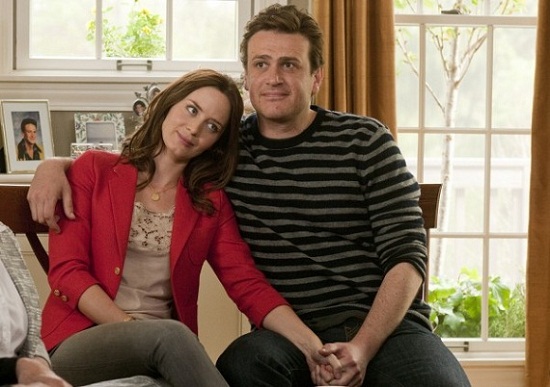
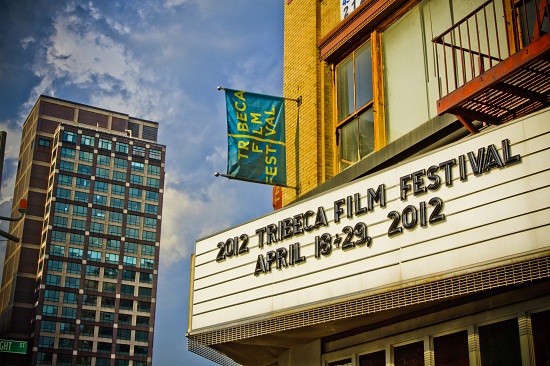
    The Tribeca Film Festival (TFF) today announced that The Five-Year Engagement will open the 2012 Tribeca Film Festival. Director/writer/producer Nicholas Stoller and writer/star Jason Segel of Forgetting Sarah Marshall reteam for the irreverent comedy, which also stars Emily Blunt, Rhys Ifans, Chris Pratt and Alison Brie. The premiere will take place on Wednesday, April 18, and the Festival will run through April 29.

    Beginning where most romantic comedies end, The Five-Year Engagement looks at what happens when an engaged couple, Segel and Blunt, keeps getting tripped up on the long walk down the aisle. The film, also produced by Judd Apatow (Knocked Up, The 40-Year-Old Virgin) and Rodney Rothman (Get Him to the Greek), was written by Segel and Stoller.  It opens on April 27.

    The 2012 Tribeca Film Festival will announce its feature film lineup on March 6 and 8, 2012.

    Read more


  • Tribeca Film Festival Gets New Artistic Director

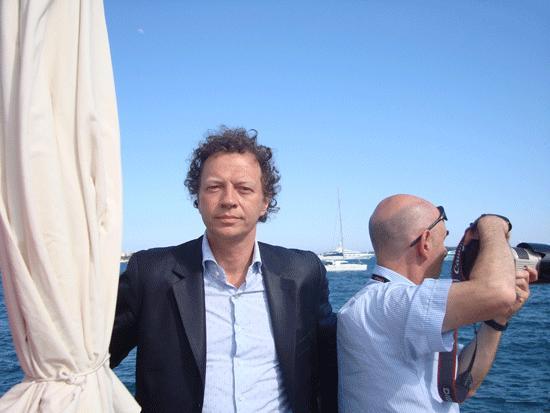
    Frederic Boyer, who most recently ran the Directors’ Fortnight at the Cannes Film Festival, has been named the new Artistic Director of Tribeca Film Festival.

    Boyer said, “I could not be more honored and excited to begin this new chapter at Tribeca. This Festival has matured and developed so impressively from its origins, but there are many more frontiers to explore while keeping the core focus on discovering new voices in filmmaking. I am grateful to Jane, Geoff, Nancy and the entire team for giving me the opportunity to help lead that exploration through the medium of film.”

    Other changes to the executive structure include the promotion of Genna Terranova, former Senior Programmer, to Director of Programming.

    The 11th annual Tribeca Film Festival will be held April 18-29, 2012, in New York City.

    Read more


  • Tribeca Film Festival Announces 2012 Dates

    The Tribeca Film Festival announced that the 11th annual Tribeca Film Festival will be held April 18 – April 29, 2012 in New York City.

    For filmmakers, deadlines to submit U.S. and International films for the 2012 Tribeca Film Festival are as follows:

    September 19, 2011 – SUBMISSIONS OPEN

    October 28, 2011 –      EARLY DEADLINE, FEATURES & SHORTS

    December 2, 2011 –    OFFICIAL DEADLINE, ALL FEATURES AND SHORTS

    January 11, 2012 –      LATE DEADLINE, AVAILABLE TO FEATURE LENGTH FILMS ONLY

    In addition, the Tribeca Film Institute, the year round nonprofit arts organization, announced submissions are now open for Tribeca All Access (TAA), TFI Documentary Fund, Latin America Media Arts Fund and the TFI Sloan Filmmaker Fund.

    Read more


  • 10th Annual Tribeca Film Festival Announces Attendance Numbers

    The 2011 Tribeca Film Festival (TFF) numbers are in, and they reveal that more than 430,000 people attended screenings, panels, talks and free community events – including the opening night world premiere of Cameron Crowe’s The Union, the Tribeca Drive-In series, Street Fair and Family Festival, Tribeca/ESPN Sports Day, Tribeca Disruptive Innovation awards, and NYFest – during  the Festival’s 10th edition.

    Of all the 2011 Tribeca Film Festival Facts, Figures and anecdotes, the most interesting – On the day that World Narrative Competition entry Jesus Henry Christ had its world premiere, star Toni Collette gave birth to a healthy baby boy. The audience made a short video to congratulate the star and new mom.

    Read more


  • The Audience Votes “Give Up Tomorrow” Best Film of 2011 Tribeca Film Festival

    And the votes are in. The 10th annual Tribeca Film Festival (TFF) announced the documentary film ‘Give Up Tomorrow’ as the winner of the Heineken Audience Award. The film’s director, Michael Collins, will receive a cash prize of $25,000.

    Give Up Tomorrow which also received a Special Jury Mention in the World Documentary Competition at this year’s TFF reportedly played to rapturous response and standing ovations.  The film was also supported by the Tribeca Film Institute’s Gucci Tribeca Documentary Fund, and the filmmaker is an alumnus of the Tribeca Film Institute’s Tribeca All Access program.

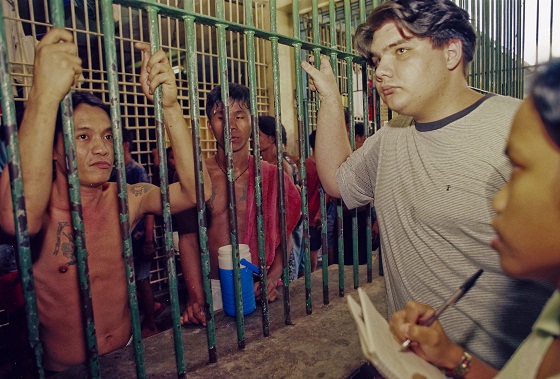
    The film tells the story of culinary student Paco Larrañaga, who, at 19 years old in 1997, was arrested for the kidnap, rape, and murder of two sisters on the provincial island of Cebu in the Philippines. Despite demonstrable evidence of his innocence, including 40 eyewitnesses and photographs placing him hundreds of miles from the scene, Paco’s legal ordeal was only just beginning. Dubbed the Philippines’ “trial of the century,” Paco’s ordeal became a galvanizing focal point in a far-reaching exposé of gross miscarriage of justice at the highest levels.

    Following the case and its aftermath for more than a decade, the film traces Paco’s story from the ethnic and class tensions at its roots, through a distracting thread of tabloid sensationalism, and ultimately to appeals and interventions from foreign governments and NGOs as the injustice of Paco’s situation becomes ever more stark and undeniable.

    “From the first standing ovation of Give Up Tomorrow at its premiere at the Festival it was clear that audiences were passionate about the portrayal of Paco Larrañaga’s unjust incarceration. We hope that the film will raise awareness of Paco’s plight and lead to his freedom,” said Nancy Schafer, Executive Director of the Tribeca Film Festival. “This film is remarkably well crafted and I hope this award brings it the additional visibility it deserves.”

    “Tribeca was there from the beginning. They really gave us the introduction to the film world,” said director Michael Collins. “This award gives us so much hope. Now I know that the film is going to be seen by a broader audience and I’m incredibly grateful.”

    Give Up Tomorrow will have its final screenings on Sunday, May 1 at 12 noon and 9 p.m. at Clearview Cinemas Chelsea, as will the rest of the films that won awards at the 2011 Tribeca Film Festival. Specific times for the other films are available on the Festival website.


    Read more


  • 2011 Tribeca Film Festival: One on One with director Eva Mulvad of The Good Life

    [caption id="attachment_1252" align="alignnone" width="373"] The Good Life (Det lette liv)[/caption]

    The Good Life premiered at the 2011 Tribeca Film Festival. Directed by Eva Mulvad, the film documents “How do you cope with being broke after having lived a life of luxury and privilege? This is the fundamental question facing spoiled Anne Mette and her mother, a once-rich family now living off a small pension and struggling to adapt to their new situation in a coastal Portuguese hamlet. A Grey Gardens for the current financial era, The Good Life is a character study at turns touching and frustrating, but ultimately poignant.

    Interview with director Eva Mulvad of “The Good Life”


    VIMOOZ: What brought you to make this documentary?
    EM: I did Enemies of Happiness (a documentary following the first Afghan woman to enter parliament), and it was very successful, and I thought I would use that space of success to create another film. I was interested in having a novel and complex charcater rather than a topic-driven or journalistic subject. I heard a radio piece about Mette and Anne Beckmann, and I was drawn into their universe– they had a unique, royal way of speaking. I contacted the woman who did the radio piece and she introduced me to them.

    VIMOOZ: Were they on board right away to make the film or did they take some persuading?
    EM: It only took five minutes to persuade them– they were on board right away. They are more open in a decadent way, rather than being protective like some wealthy people can be. They also understood that there would be not so beautiful parts in the film about them. There are difficult things that they deal with in the film, especially the daughter.

    VIMOOZ: How long did the film take to make?
    EM: Three years altogether. It was three months of shooting– visiting from Copenhagen to shoot in Portugal.

    VIMOOZ: How was this production experience different from other documentaries you’ve made?
    EM: This production was different in terms of getting into their rhythm. When you go abroad to shoot, it’s a lot of work, but with them, they don’t work, so I had to negotiate with them and deal with my own impatience. Most people in modern society are used to efficiency– work before pleasure, but for them it’s the other way around. These women challenge the mentality of work in our society, so it was a challenge.

    VIMOOZ: Did you enjoy shooting in Portugal? Was it interesting to film in the Beckmann villa (where they used to live)?
    EM: Portugal is beautiful, and the people are friendly and very educated. It was a pleasure, especially since I was coming from Afghanistan. But it was tough to be with them. It’s difficult to be with people who are stuck in a situation, and it’s hard to help them, since Portugal also has a lot of unemployment.
    Yes, we went to the villa, which is now offices, and it was very interesting to see it.

    VIMOOZ: Were you trying to make a certain statement with this film about the economic state of Europe and much of the world, or were you simply exploring these individuals?
    EM: Money and economics are interesting aspects of their story– these women reflect on a broader perspective in Europe and here in the US. We were all born into a wealthy life and society, and we took it for granted. And that’s what happened to them. You can look at the film as a simple moral of taking the present for granted, and not feeling entitled to have wealth.
    VIMOOZ: Is this your first time having a film at Tribeca? How do you feel being here?
    EM: Yes, and it’s so nice to be here– both the festival and the city. It’s all so interesting, and there are so many people to meet.

    VIMOOZ: How has the film been received in Europe?
    EM: It’s in the theatres; it’s done incredibly well, which is unusual for a documentary film. It’s a one of a kind story, people get drawn to it because of the unique characters. And people can take different things from it, which was my ambition. It can meet you on different levels: money, family, upbringing, etc.

    VIMOOZ: What other festivals has it been to/ which is it going to?
    EM: It was at the IDFA (International Documentary Film Festival) in Amsterdam, and at Copenhagen Docs. It’s going to San Francisco, Tel Aviv, London, all over.

    VIMOOZ: Any new projects?
    EM: I just finished two projects, but I’m on maternity leave, so I’ll start something new in August.

    [caption id="attachment_1253" align="alignnone" width="560"]Director Eva Mulvad[/caption]

    Read more


  • One-One with the Filmmakers & Stars of taut legal drama “Puncture”

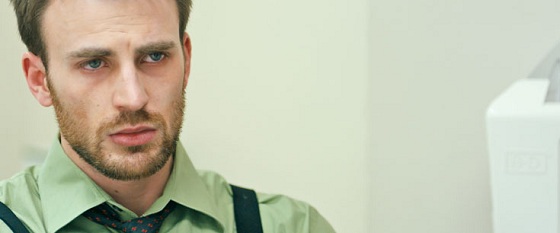
    The film “Puncture” is a smart, wonderfully grown-up and wound tight courtroom drama-slash-political thriller, driven in part by a tour de force performance from Chris Evans playing hot-shot and hot-headed, drug-addled attorney Mark Weiss. The film also boasts the steady, balancing hand of co-director and co-star Mark Kassan. Mark co-directs with his brother Adam. (They formerly brought the unusual and beautifully well-acted “Bernard and Doris,” starring Susan Sarandon, to HBO recently.)

    I sat down with Chris Evans, the brothers Kassan, and the lovely Vinessa Shaw, who plays the film’s heart beat and literal face of the movie’s subject- the terrifying fact that front-care and ER healthcare workers were once infected by AIDs and Hepatitis C on a daily basis  by accidental needle stabs. When an engineer develops a non-reusable needle that is literally “accident-proof,” the movie heats up as law partners Paul Danziger (Mark Kassan) and Mike Weiss (Chris Evans) take on the case to battle the largest manufacturer of plastic needles in the world. Billed as a “David & Goliath legal drama,” the film world premiered at the 2011 Tribeca Film Festival.


    VIMOOZ: Mark and Adam, how did the script come to you both?

    Mark: Paul Danziger (one of the real-life lawyers)  sent it to us. We had done this movie “Bernard and Doris,” also about a true story,  and it was kind of a complicated story, and we made it independently, and Adam and I wanted to take the currency from that, and find something that we really believed in, and that we could own, both from a production and a creative standpoint. The character was amazing, and it was a great window into an issue that we cared about. And then it took a year to get the script right.

    Adam: We had Chris Lopada, who is a friend of ours (whom they’d worked with before), who is a great, unsentimental writer, work on the script for about a year. And then we meet with Chris Evans, and convinced him to do it….

    Chris: They just got me drunk!

    Adam: Yeah! (laughs)…And then we got Vinessa (Shaw) attached. We got so lucky with this cast.

    VIMOOZ: Chris, How important is it to you to do films like this, that have such an important social message?

    Chris: Well, the social message is like the icing on the cake. For me, it’s a bit more about the selfish motivation. On bigger movies, it’s such a different feeling, you shoot at almost like a snail’s pace. On this, the pace was incredible, we would knock out giant scenes, 6, 7 8 pages a day. And you go home, and you’re not sitting in you’re trailer all day, so you can say, you know, “I was an actor today.” I got my hands dirty. And it just felt so…satisfying.

    VIMOOZ: This was such a great role for you, Chris:

    Chris: Well, it was really the directors. They have to spoon feed the story to the audience. I mean, I’ve read some great scripts, and they come out terrible. But they created the pace, the tempo. Acting is a very small piece in the movie puzzle. At the end of the day, the actors could take your performance and make it great, or make it terrible.

    Mark: I remember one scene specifically, the withdrawal scene, and Adam and I had a different about that, about what that would be like. And Chris was like, “Well, I called a bunch of people that have been through this. Was it opiate withdrawals, or this type, or that type of withdrawals?” and he read us off a list of what people’s experiences were. So we were like, well, that’s true. It could be that way. So Chris made the scene, and took it to a much more interesting level than we would have imagined. Because he really based it in reality.

    VIMOOZ: How does it work for you two,  Adam and Mark, working together as co-directors?

    Mark: Well, we had to sit in front of a DGA panel before we did the movie to get a co-directing credit. They are very strict about giving co-directing credits. A lot of times split it up, like one takes camera, but we didn’t. It’s very organic, and we worked together, and put it together as best we can. And we dealt with decisions as they came up.

    Adam: And we’re different, and so if one of us responded more to another person (actor) we were like, great, talk to them. And we have the same creative tastes. We like 98-percent of the same things.

    Chris: They share the same brain, they really do. I was nervous at first. Now I’m like, I only have to go back to one director? It was great, from the rehearsal process, to the shooting itself….It just made me feel so safe. It was great, it was a fantastic experience.

    Vinessa: It’s like they were mom and dad. They may have differing opinions, but share the same core purpose and meaning. Some of the scenes I was in with Mark in them, and then Adam would take over a little bit. Mark was really soft in his approach,  and would come close and talk, and Adam was straight forward and blunt, which also helped me. Both of their styles really helped me.

    VIMOOZ: Adam’s character does a lot of drugs in this movie!

    Chris: Mike’s an amazingly dynamic charismatic person (to play). He’s a functioning drug addict who also just crushes at his job, he does it so well. From what I learned, a lot of people didn’t know that Mike Weiss was such a heavy drug addict. People I talked to say, you know, he had an ego, he could be a little bit crass at times, but he was just brilliant.

    Adam: We love movies like “Requiem For A Dream,” but, in some films, it’s almost like (it can be)  drug porn, and we didn’t want to do that. We wanted it to be, okay, it’s here, it’s in his life, he does drugs, it kind of creeps up you, how much he’s (using the drugs). Rather than showcasing it. We made it so you never see a needle actually going in.

    Chris: I think the less you show, the more it’s, I don’t know, more interesting.

    VIMOOZ: Do you see the film as a real advocacy tool?

    Adam: We try to be careful. I mean, it’s a movie first, it’s about entertainment. But, we connected to it, and just by having this conversation about it. We’ve spent a lot of time in hospitals over the past year and  a half, and these needles are all over the place (the non-sticking, “good” needles) because of that case. And they still need to be in a lot more. And overseas, it’s a huge thing. It’s just not talked about. You hear about HIV and hepatitis spread in Africa by unprotected sex, but not that people are getting them from reused needles. The hope  is, in small part, it can start a conversation, maybe get people to do something.

    Mark: It’s also worth mentioning that Paul Danziger, you know, after he had seen the movie, he’ll say, “are people curious about the needle, about the issue?” and we’ll say, “Yes, they are very committed to the issue.”  It is their hope that there will be foundations (springing up for this) and it will have a global effect.

    Vinessa: I have two friends that are nurses. Both of them told me they had been stuck by needles multiple times (in their careers.) It’s commonplace, and it’s very dangerous.

    Adam: You have this injury that you can prevent. Frontline health care workers are rarely spoken about. They’re such an important part of the healthcare industry.

    Mark:  We are so focused on the “macro,” The bills, the healthcare issues.  But-you hope this just sheds a little bit of a window and some light on these conversations that take place, that affect so many people’s livelihoods.

    VIMOOZ: Your character is kind of the lynchpin of the film, as you’re representing the face of the issue:

    Vinessa:  It was actually just talking with Adam, and realizing that she really was the catalyst and heart of the film.

    Mark: You needed to fall in love with Vinessa’s character, and then you had to make her look sick. She was a victim, but the hope was that she wasn’t (made to look) victimized. Vinessa really made that happen.

    Adam: We were worried she would be way too gorgeous!

    Mark: It’s really hard to explain how amazing it was to have this cast. We didn’t have a weak link. Every single person who came in, from Roxanne Hope to Tess Harper, these amazing professionals. I mean, we felt honored. We couldn’t believe they showed up. I’m a theatre geek, and we had Kate Burton for a day! And nobody treated like an independent film. They came to play. We just lucked out.

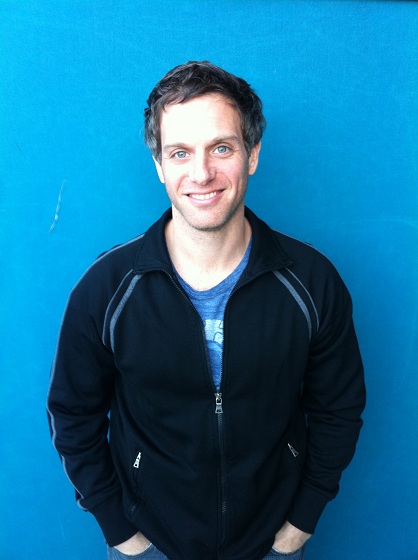
    [caption id="attachment_1249" align="alignnone" width="418"]Director: Adam Kassen[/caption]
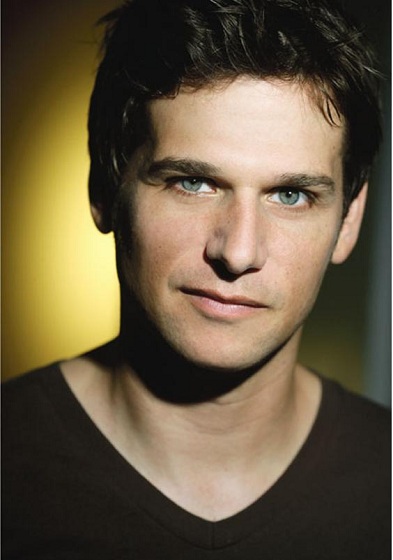
    [caption id="attachment_1250" align="alignnone" width="393"]Director: Mark Kassen [/caption]
    Read more


  • 2011 Tribeca Film Festival Winners; She Monkeys, Bombay Beach Win Top Jury Awards

    [caption id="attachment_1245" align="alignnone" width="560"]Pamela and Benny Parrish in Bombay Beach[/caption]

    The 10th annual Tribeca Film Festival announced the winners of its competition categories tonight at a ceremony hosted at the W Union Square in New York City. The Festival runs through May 1, 2011 including screenings of all winning films.

    Following are the 2011 winners:


    World NARRATIVE COMPETITION CATEGORIES:

    The Founders Award for Best Narrative Feature – She Monkeys (Apflickorna), directed by Lisa Aschan, written by Josefine Adolfsson and Lisa Aschan (Sweden).

    Best Actor in a Narrative Feature Film – Ramadhan “Shami” Bizimana as Yvan in Grey Matter (Matière Grise), directed and written by Kivu Ruhorahoza (Rwanda, Australia).


    Best Actress in a Narrative Feature Film – Carice van Houten as Ingrid Jonker in Black Butterflies, directed by Paula van der Oest, written by Greg Latter (Germany, Netherlands, South Africa).

    Best Cinematography in a Narrative Feature Film – Luisa Tillinger, Artificial Paradises (Paraisos Artificiales) (Mexico).

    Best Screenplay for a Narrative Feature Film – Jannicke Systad Jabobsen, Turn Me On, Goddammit (Få meg på, for faen) (Norway).

    BEST NEW NARRATIVE DIRECTOR:

    Best New Narrative Director – Park Jungbum, writer and director of Journals of Musan (Musan Il-gi) (South Korea).

    Special Jury Mention – Kivu Ruhorahoza, writer and director of Grey Matter (Matière  Grise).


    World DOCUMENTARY COMPETITION CATEGORIES:

    Best Documentary Feature – Bombay Beach, directed by Alma Har’el (USA, Israel).

    Best Editing in a Documentary Feature – Purcell Carson, Semper Fi: Always Faithful (USA).


    BEST NEW DOCUMENTARY DIRECTOR COMPETITION:

    Best New Documentary Director – Pablo Croce for Like Water, (USA).

    Special Jury Mention – Michael Collins, director of Give Up Tomorrow (UK, USA).

    Short Film Competition Categories:

    Best Narrative Short – Man and Boy, directed by David Leon and Marcus McSweeney, written by David Leon and Rashid Rasaq (UK).

    Special Jury Mention – The Terms, written and directed by Jason LaMotte (UK)

    Best Documentary Short – Incident in New Baghdad, written and directed by James Spione (US).

    Special Jury Mention – Guru, written and directed by Jonathan VanBallenberghe (USA).


    Student Visionary Award – Rooms, written and directed by Joanna Jurewicz (USA).

    Special Jury Mention: Eva – Working Title, written and directed by Dor Fadlon (Israel)


    TRIBECA (ONLINE) FILM FESTIVAL CATEGORIES:
    The 2011 Tribeca (Online) Film Festival winners were voted on by visitors to tribecafilm.com.


    Tribeca (Online) Film Festival Best Feature Film: Donor Unknown, directed and written by Jerry Rothwell (UK).

    Tribeca (Online) Film Festival Best Short Film: Dungeon Master, directed by Shiloh & Rider Strong (UK).


    Read more


  • Tribeca Film Festival: One-on-One with “Treatment” Co-Directors and Star Steven Schardt and Sean Nelson

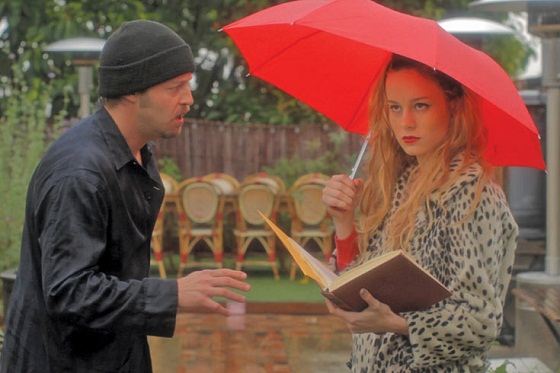
    What if you are a struggling screenwriter that needs a real break? What if your favorite A-list star just checked into rehab, and you decide all you need to do to pitch him your movie is get yourself duly check-in there? Sean Nelson and Steven Schardt co-direct Treatment, this sweetly wry and generationally pitch-perfect tale of friendship, creative delusion and celebrity obsession. Starring Josh Leonard, Sean Nelson, Ross Partridge, Jessica Makinson and Brie Larson, from a script conceived by Schardt and written by Nelson, Vimooz.com had the luck to sit down the film’s two directors (and writer/star!) – Steven Schardt and Sean Nelson. You can see the film at the 2011 Tribeca Film Festival this week on Friday, April 29th at the AMC Loews Village at 4 pm.

    Vimooz.com: Was Leonard based on anyone you know personally, or a type? How did the script come about?

    Steven Schardt: You know, I was finishing up this script that I was working on about Werner Erhard, the founder of EST.(Which now exists as the Landmark Forum today)  He was a fantastic, very charismatic figure, but he essentially sold….nothing. You would just go, get locked in a room with 250 strangers for a weekend. It was highly controlled. You would just go, pay, and get this experience. And I was a little tired of working on this script, and I went to the gym. I picked up “People” magazine, and there was Brittany Spears on the cover.

    I had met Sean (Nelson, a star of “Treatment” who plays Leonard) working on some of Lynn Shelton’s movies, and he was down shooting “The Freebie” with Katie Duplass, and he stayed with me for two weeks. And I was, again, taken up by writing another script. I told Sean about the idea. The executive producers had purchased a hotel in West Hollywood that they were renovating, and I was staying in a little bungalow there. Sean and I stayed there, and pretty much hung out every day, and we had a pretty good treatment by the end of it.

    Then we just kept working on it two or three months before shooting began, and I had approached Josh (Leonard) at Sundance, and said “I have something for you,” and Josh signed on. When we were in pre-production in Los Angeles, Sean started writing sides for audition, they were just hilarious.  We had attempted to do it as a  total improv, and there was a lot of improv in the final film, but the sides that he was writing were just so good. He just kept writing four or five weeks before production

    Vimooz.com: Did he love it off the bat?

    SS: Yeah, I think the idea was very clear, you know, you ‘re really able to see a movie happening that way.

    Vimooz.com: At what point did Brie Larson get attached?

    SS: She got attached about a month before we started shooting. Josh had worked with her, and she came over to read, and she was great. She often gets cast in youngish roles this was something were (the character) of Frannie has a kind of native intelligence.

    Vimooz.com: How much improv did you use? Your actors really know comedy well…

    SS: We had an incredibly ambitious schedule, eighteen days of shooting, we would basically come in, set up a scene, and in that time-have a slight rehearsal, there were some script changes, we would improvise some things, and we would get what was on-script, as well. The best day, my favorite day on the shoot, was with (musician) Robyn Hitchcock…

    Vimooz.com: He was fantastic…

    SS: We had asked him to play the “professional Brit,” you know, someone who can con you and make their way through, and be charming in some way, just because they have a British accent. You know, like he’s one of these “guys” that Leonard has, because he thinks that’s really cool. But (Robyn’s character) probably just came to LA to be a bass player for the Doors or something, and it never panned out, so he just stuck around Hollywood. There is so much material that did not even make it in (with Robyn Hitchcock) We kept shooting. We had a camera where we can only shoot twelve-minute takes at a time, and we just kept shooting these twelve minute takes! And Robyn is such a skilled improviser. We talked a lot on the phone about the role, He was very interested, and thinking up new ideas to do…There are just boundless takes. There’s hours of it! So I’m really looking forward to the DVD extras.

    Vimooz.com:  What films did you reference personally and for the actors on this film?

    SS: I think tonally, “Withnail and I.” We wanted it to feel slack and funny and wry. But I think we ended with something a little broader in the beginning, but when he just take the turn, it gets darker.

    Vimooz.com: It was a bold choice.

    SS: Yes, if it was remade as a studio movie, it would definitely go the other way.

    Vimooz.com: You also play with celebrity obsession, of course…

    SS: Ross (Ross Partridge, who plays hilariously self-absorbed movie star Gregg D in the film ) was amazing. When we were talking about his role on the phone, we were talking about he was preparing. And he was doing so much work, taping (himself in character,) sending them to me.

    Vimooz.com: You had a small budget. What did you shoot with?

    SS: We shot with a Canon 7D. And we had two cameras running, which we had learned from being on Lynn’s sets. I’m normally working as a producer (He produced “Humpday,”the MTV web series “$5 Cover”, “The Oregonian,” and “Sister, Sister” -with Mark Duplass and Emily Blunt), so it’s just so great to be here at Tribeca as a director.


    Interview with “Treatment’s’ Sean Nelson:


    Vimooz.com:  Can you tell us how you developed the script with Steve?


    Sean Nelson:  It’s funny, because Steven had originally asked if I wanted to be in this movie he was going to make with Josh Leonard. And I said yes, right away. The idea was-screenwriter checks into rehab to pitch movie to movie star.

    We were at the Independent Spirit Awards when Steven told me about it (Sean had just starred in Lynn Shelton’s “My Effortless Brilliance” and Steve was there with “Hump Day.”) And I asked him if he wanted help fleshing it out, and he said yes. So, back in Seattle, we got down to it pretty quickly, and worked pretty hard on it for awhile. My impulse as a writer was to diminish my role, because I didn’t want it to be like I was writing myself a part. For the longest time we’d just call the characters Josh and Sean, because I couldn’t think of any others! At the eleventh hour, we just used our last names. But there is a lot of the Nelson character that is based on me and my sort of complicated friendships that I have with the guys I’ve been friends with in my life. There always is an element of competition, and there always is an element of power struggle. I do not now, or did ever have a trust fund, but we thought it would be really funny…in this sort of fantasy situation, where you have this, “Boom, I have it!” (The $10 grand Leonard needs to check into rehab) It was just the shortest distance, so we could get the sort of farce elements of the film going. It’s not reality based, exactly. I was talking to my oldest friend about the differences between Nelson and myself. I would never have stood up to Leonard, I stand up for myself when it’s important, but I’m shy of that kind of direct confrontation.

    Vimooz.com: How did you meet Lynn Shelton? What is your acting & writing background?

    SN: Well, when I was younger, I wanted to be an actor. And I got into NYU, the Tisch School of the Arts, studying at Playwrights Horizons. And I just had this sort of sense that I had made this huge mistake by specializing so early, because I sensed that I wasn’t ready to do it. And I saw a couple of films around that time, that made me think, “There’s nothing in this training that I’m starting to get, or going to get, that’s going to make me ready, or able, to do the kind of work I’m seeing that’s blowing my mind. I’m thinking primarily of, well, River Phoenix in “My Own Private Idaho,” that came out two weeks into my first term at NYU, and I just thought, “I could never reveal myself that way.” Talent aside, there was something else about it, he (River) was so very bold in that performance. The idea that this character was so vulnerable, that every time conflict arises, he falls asleep! I loved it. I love the Shakespeare stuff in it. What I saw was this sense that I didn’t know how to be young. I never felt that I was a part of a generation, or my classmates , I just didn’t ever get it, at all. Rock-n-roll, it seemed forbidding, because it was “cool.” I moved to Seattle very much to learn how to be young, and it was great for me. The fact that there was eighteen and nineteen-year old kids my age, renting their own apartments, working at minimum-wage jobs. They were having fun! But I thought that dropping out of college was volunteering for homelessness, because that’s what I’d always been told. And I was really scared, at first. But they were like, “This is how we live!”  

    The other end of the spectrum was “Barton Fink,” which came out around the same time. It was so controlled, so cerebral, yet so funny. The mastery of it! On a writing level, on an acting level, and on a filmmaking level. Again, it was so forbidding. It was like, “You’re never going to do that! You’re never going to get to that!” Certainly not this way. (Being at NYU.) So, I wound up becoming a musician (as front man of the Seattle band Harvey Danger) for almost fifteen years. Almost accidentally. I moved to Seattle, got in band, and I had never done that before. But it just made a lot more sense to me, somehow, then pursuing the life of an actor, which I still don’t quite have the nerve to pursue, really! Lynn knew my music, and I had a radio show at KEXP in Seattle, and I’m somewhat visible there (in Seattle), so she knew about me. And she just sort of had me on the brain. And she asked me to help her with the music for her first film, “We Go Way Back,” as a kind of de-facto music supervisor. But we worked on the music for that, but I was there when she and Michelle were editing it, and she asked for my thoughts, and my notes, and I gave her my thoughts and notes about certain things, and they were meaningful to her. Which I was very flattered by. And, so, we just kind of became…really good friends. When it came time for her to do another movie, she wanted to do it much differently than she had done “We Go Way Back,” and she’d been inspired by Joe Swanberg and Mark Duplass, and the way they make these movies that are really cheap, low-budget, tiny crew, with a small cast, and improvised. She then asked me to be the sort of fixed point around which she made this movie- which became “My Effortless Brilliance.” Which was, truly, one of the greatest experiences of my life, if not THE great one. Because I’d been a performer all my life, and a big part of it, to be discovered. Really, you are waiting for people to see you. And to have someone say, not only do I want YOU to be in it, but I want it to be about you, and I want you to create the character with me. It’s just, like, an absolute dream. It couldn’t have been the more perfect thing to say to me! (laughs). I will always be incredibly grateful to Lynn, and we’re really good friends. It was just a peak experience for me.

    Vimooz.com: Well what about now? Would you like to professionally pursue acting?

    SN: I would love to. I love doing it. I’ve been in about six or seven movies in the last couple of years They’re all small, they get seen at festivals. Most all have gotten released. But all of them have come from directors who know me, or know of me, and call me and ask me to do it.

    Vimooz.com: I don’t think that’s cheating! It’s a huge compliment.

    SN: Yeah! It’s the best way to do it. I feel like I have a little niche that I know how to do. I could probably do a lot more than that. I do have a little training, and I have a lot more ambition in that way. But, the truth of the matter is, I don’t know how to do it. I have remained willfully ignorant of that stuff- getting an agent, going to auditions, all of that.

    Vimooz.com: I think that’s going to change after people see “Treatment!” Thank you both so much, and congratulations on “Treatment!”

    [caption id="attachment_1235" align="alignnone" width="560"]Steven Schardt and Sean Nelson[/caption]

    Read more


  • Tribeca Film Festival: One on One with Mateo Gil, director of western, “Blackthorn”

    Director: Mateo Gil

    The Tribeca Film Festival’s lineup describes Mateo Gil’s blazing new western, “Blackthorn” as about “…the final years in the life of legendary bandit Butch Cassidy, which are shrouded in mystery, from his rumored death in a Bolivian military standoff, to his escape from South America to die quietly on a Nevada ranch the 1930s. In Mateo Gil’s intimate and adventurous Western, a re-imagined and aged Butch Cassidy (Sam Shepard) is living under the assumed name James Blackthorn, in a secluded village in Bolivia, 20 years after his disappearance in 1908. Surviving humbly off the land, and finding occasional comforts with a local woman, Yana (Magaly Solier, The Milk of Sorrow), he longs to end his personal exile and return to the US to see his family. Reluctantly joining forces with a Spanish mine robber (Eduardo Noriega) who promises him a cut of the loot, Blackthorn sets out on one final adventure… and discovers he’s not the only one harboring a deep secret.”  Stephen Rea also gives a sensational performance as an ex-Pinkerton cop, who never quite got over having never brought Butch and Sundance to custody.

    Read more


  • The Weinstein Company picks up 2011 Tribeca Film Festival documentary THE BULLY PROJECT

    The Weinstein Company (TWC) announced today that it has acquired THE BULLY PROJECT, the new documentary from Emmy and Sundance award-winning filmmaker Lee Hirsch (AMANDLA! A REVOLUTION IN FOUR PART HARMONY) that premiered at the 2011 Tribeca Film Festival on Saturday, April 23.

    Read more


  • Filmmaker Alma Har’el discusses her gorgeous and groundbreaking new documentary “Bombay Beach”

    Beirut Frontman Zach Condon, Filmmaker Alam Har’el, and Bombay Beach heart and star Benny. PHOTO BY Kristianna Smith

    I met with the amazing, charismatic and riveting documentary director Alma Har’el, to discuss her first film, the documentary “Bombay Beach,” which is shaping up to be the surprise runaway hit of the Tribeca Film Festival. Shot on a $600 consumer camcorder (using 35 mm lenses), Har’el discusses her background in photography, music videos,  video/concert imagery, and PSAs, how she secured three Bob Dylan songs, and her obsessive love for the band Beirut, whose music comprises most of her magical soundtrack.

    Read more