Interviews

  • Filmmakers Pasqual Gutierrez and Ben Mullinkosson Discuss “Serious People” | Interview

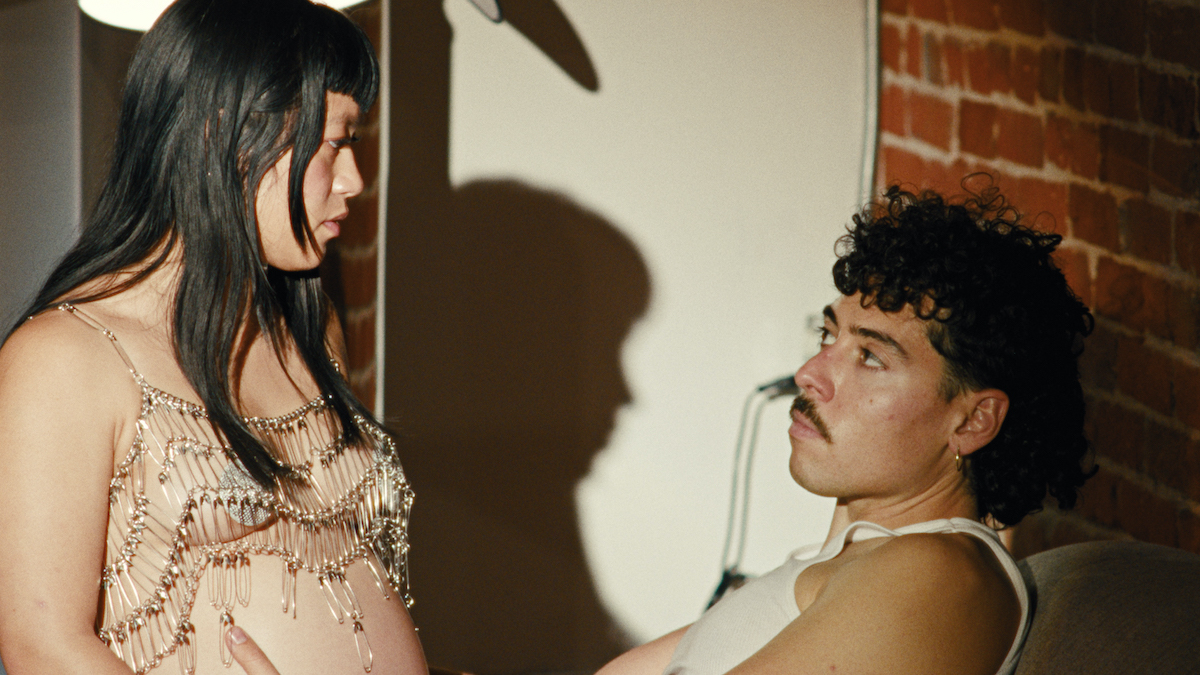
    Christine Yuan and Pasqual Gutierrez inSerious People
    Christine Yuan and Pasqual Gutierrez in Serious People (Tribeca Films, Memory)

    Take it easy. Chill out. Relax. You get told a lot of things throughout your life. Day to day, you go by worrying about what you do in the present and if you’ll even get a chance at the future you want. The stress sometimes gets too much to bear. At one point, you stop and ask yourself the question: am I taking myself too seriously?

    Read more


  • Boston Shorts Fest: How 3 Student Filmmakers Produced Their First Film Festival

    Boston Shorts Fest
    Credit to Weiye Li & Boston Shorts Fest

    Three Emerson College students had an idea to start a film festival as a way to showcase student filmmakers around the Boston area. When coronavirus forced everyone into quarantine, they had a choice to either let their months of prepping go in vain or to find a way to make it happen; they chose the latter. Boston Shorts Fest is a fully student-owned virtual film festival that premiered July 10th and will available to screen until July 17th, with all funds going to support racial justice.

    Read more


  • Interview: Paul Hildebrandt Talks About His Documentary FIGHT FOR SPACE

    Fight For Space “If you have ever looked up at the night sky and wondered what is out there, this is the film for you.” Director Paul Hildebrandt puts into perspective the danger and detachment of America’s growing apathy for astronomy in his documentary Fight for Space. Though the Space Race inspired several generations to chase space and seek careers in science and technology, we’ve seen a steady decline in educational pursuit of space exploration in recent years. Fight for Space urges viewers to reawaken the sense of wonder and discovery and includes interviews with big names such as Bill Nye and Apollo 13 astronaut Jim Lovell who share Hildebrandt’s vision for the future of the final frontier. We sat down with Paul, who’s love for astronomy, fascination with science fiction and concern for future generations galvanized this push to reinvest money and minds into space education. What was your main motivation for making the documentary? As an aspiring science fiction writer and soon-to-be father in 2012, I began to think of both how little the future seemed to be offering the next generation in terms of space flight. With the Space Shuttle just having been retired, and the Constellation program canceled, things were not looking up. I dropped the pen on trying to write a science fiction movie, believing that the Star Trek future would never exist until we figure out how to get out of low earth orbit. I had the idea to do a documentary on these issues as a way of bringing attention to them, and off we went. Have you always been interested in Astronomy or is it something you came to later in life? For as long as I can remember I’ve always been interested in space. Through both practical astronomy and science fiction. I’ve always wondered what could be out there. Why do you think we lost interest in space education? Interest in space education and space flight in general has had a bumpy road. In the 60s we were in a cold war with the Soviet Union and this spurred science education further than it had ever been before. Ever since then the focus has been mostly on earth bound problems which seem to resurface and repeat themselves constantly. Today space gets a few headlines and tv specials when NASA or SpaceX announces something, but we haven’t seen any of this come to be yet. To reignite interest in space we need to actually do something, not just talk about. Pulling back from the Moon and ending that program was I believe, a huge mistake and the ultimate answer to your question. How long did it take to shoot? Did you run into any challenges while making it? The film took about 4 years and change to make and it was incredibly challenging for me, both personally and professionally. NASA for example, did not want any part of the project because the question of “Why haven’t we gone back to the Moon?” Was too negative for their PR. I was given great help in finding footage and acquiring information but completely restricted from visiting any NASA facility or interviewing any NASA personnel officially. So a film that was originally going to be a film looking at how NASA was going to do all these great things in the future turned into more of a tragedy about why we stopped going and how messed up things are today. I learned a lot making this film and I’m excited to take these lessons into my next film, producing it quicker and more efficiently. Can you tell our readers why they should see Fight for Space and what you want the audience to take away from the film? Fight for Space is a film about the great things that we have done, and what we can do if we put our heads together and just do it. I’d like the audience to take away from this film all of the benefits that can be gained by doing space exploration and to see how badly it’s been messed up over the years. If you have ever looked up at the night sky and wondered what is out there, this is the film for you. Can you give tips to any prospective Documentary film makers and what did you learn while making Fight for Space? First, film making is collaborative, you can’t do everything yourself as much as you want to try. With that said it’s also important to follow your heart and make the film how you want to make it. Be expressive with your style of film making. I learned more making Fight for Space than I ever did in any film class or formal training. Trial and error in both film making, dealing with people both close and far, public relations, technical requirements, archival research, the list is endless. I think the greatest way to learn how to make a movie is to make one. You can’t be told how to do it. What’s next step for both you and the doc? For the doc, I hope to continue showing it around the country and various festivals and then finally get it on some streaming services so everyone can see it as soon as possible. As for me, after I wind down from this it’s off to make more documentaries, maybe about space, maybe not. Taking what I’ve learned and doing it better than I did last time, that’s what it’s about. https://www.youtube.com/watch?v=e58zMy9kvuU

    Read more


  • Julie Sokolow Talks WOMAN ON FIRE, Her Documentary on NYC’s First Openly Transgendered Firefighter

    [caption id="attachment_18351" align="aligncenter" width="1000"]Woman On Fire Woman On Fire[/caption] In addition to the grueling physical and emotional strength it takes to be a firefighter, Brooke Guinan bore the weight of judgment and the weight of hormonal changes to carry out both her desire to be a firefighter and her destiny to transition from male to female.  Woman On Fire documents the life and struggles Guinan went through to fulfill both sides of who she was meant to be. The documentary takes a powerful look at the path of transitioning your gender in an overwhelmingly macho profession. We interviewed the director Julie Sokolow to discuss the trials, tribulations, and triumphs of making the film and the message it gets across. This is such an important and moving topic, can you briefly describe what Women on Fire is about? Woman on Fire tells the story of Brooke Guinan, the first openly transgender firefighter in NYC. She’s also a third generation firefighter whose father and grandfather served in the FDNY. We follow Brooke as she emerges as a national role model – working against all odds to come out as transgender in an old-school, conservative workplace all while recruiting and training women and LGBTQ people for one of the most traditional jobs in the world. What was your main motivation for making the documentary? In 2014, an empowering photograph of Brooke went viral. She’s standing tall with her hands on her hips in a shirt that reads, “So Trans So What”. I thought, wow, she is the future. Her story sparked my imagination of a society in which we work peacefully alongside trans individuals in all sorts of professions. Brooke’s father George is a respected lieutenant with 35 years on the job. He’s also Republican, devoutly Christian, and very accepting of Brooke. To me, their relationship embodied the polarized political forces in America today. I wanted to explore that and celebrate Brooke’s unique life and family. How long did it take to shoot? Did you run into any challenges while making it? The film took about a year and a half to shoot. I was simultaneously editing while shooting towards the end. Brooke’s life was so dynamic, I didn’t want to leave anything out of the edit. She was busy working at FDNY headquarters and volunteering with the United Women Firefighters, all while buying a house with her partner Jim and considering marriage. So the film is all of these things – part family history, part love story, part expose. Can you tell our readers why they should see Woman on Fire and what you want the audience to take away from the film? You should see Woman on Fire because it is authentic, funny, sweet, and inspiring – just like Brooke. Brooke and I became great friends through the making of this film. I hope our friendship is contagious to audiences and people leave the theater with a sense of kindness for the trans people they encounter in their own lives. Can you give tips to any prospective Documentary filmmakers?/What did you learn while making Woman on Fire? One of the coolest parts of making this film was getting really close with Brooke and her family. I would stay at their house for weeks at a time while filming. I know that’s not possible for every documentary, but I really liked the intimacy. It wasn’t just me filming for a couple of hours and then running back home to my own life. Brooke became part of my life and I became part of hers. I think that helped me tell a better story. So I guess the advice is to be immersed and invested in the stories you tell as best you can. What’s the next step for both you and the doc? Woman on Fire premieres at DOC NYC on November 15th, followed by an encore screening on November 17th. After that, we’ll play more festivals, tour around, and try to share Brooke’s story as much as we can. The story is a beacon of hope in these tough times so I can’t wait for people to be able to see it and get inspired by Brooke the way she inspired me.  

    Read more


  • Director Michael Galinsky Talks About ALL THE RAGE ( SAVED BY DR. SARNO)

    [caption id="attachment_18275" align="aligncenter" width="1000"]All the Rage ( Saved by Dr. Sarno) All the Rage ( Saved by Dr. Sarno)[/caption] In a world where instant gratification and quick fixes are king, alternative approaches to healing are commonly dismissed. Director Michael Galinsky explores the world of psychosomatic pain in All the Rage ( Saved by Dr. Sarno) by documenting both the teachings of Dr. Sarno as well as the Galinsky’s own experiences of applying Dr. Sarno’s theories to his immobilizing back pain. The documentary boasts big names whose lives have been changed by Dr. Sarno, like Howard Stern and Larry David, and is a refreshing angle on a medical innovation. Rather than relying on the more clinical approach of talking heads and client confessions, watching the director himself go on this journey gives a point of view that isn’t often shown in medical documentaries and is a key factor in successfully persuading the audience on something that could be a very hard sell. All the Rage ( Saved by Dr. Sarno) is world premiering at the DOC NYC 2016. We interviewed Director Michael Galinsky to give us more insight on All the Rage. Can you briefly tell the readers what All the Rage is about?  All The Rage began as a film about Dr. John Sarno and his mind body approach to back pain.  We came to the story because of a personal connection to it.  Michael’s father read Dr. Sarno’s book “Healing Back Pain” in the 80’s and healed from years of chronic whiplash pain.  Later Michael’s brother went to see Dr. Sarno when he had such bad hand problems that he could not type or drive.  Michael read the book at that point and banished his own recurrent back pain for a decade.  When it came roaring back and he was slammed to the floor in incredible pain, he went to see Dr Sarno as well, and thus began a 12 year odyssey to make this film.  Over the course of filming it became an increasingly personal story. What was your main motivation for making the documentary?  We at Rumur knew that Dr. Sarno had a powerful story that needed to be told.  We have made four other feature docs about characters who are fighting for what they believe in against great odds.  We originally tried making this film as a verite documentary, but quickly found it difficult.  In fact, it ended up getting put on hold for many years because we couldn’t raise any funding and we weren’t convinced that we knew how to make it.  When Michael’s back problems flared up again in 2011, we were more determined than ever to finish the film.  The good news was that the culture had shifted dramatically in the time that the project was on hold.  People were much more open to the idea that many health problems had a psychosomatic connection.  That made it much more exciting to work on it.  That process has only ramped up over the last 5 years. Being that psychosomatic pain is so often dismissed, were you at all reluctant to make a film about it?  We weren’t reluctant to make, but we did find it hard to fund, and hard to conceptualize. The idea that pain has a psychosomatic basis was widely dismissed as unscientific a dozen years ago.  Both doctors and patients found it hard to wrap their minds around the idea that back pain might have an emotional cause.  Because of that reality, we needed to be very deliberate about how we told the story.  Now the idea is much more accepted and there is a flood of research supporting this idea. How long did it take to shoot? Did you run into any challenges while making it? In our first 3 years of trying to get the film off the ground, we shot only 6 hours of tape.  By contrast we shot nearly 300 hours on another doc that we were working on at the same time.  The first challenge was funding.  We applied for dozens of grants, many of them multiple times, but the ideas at the heart of the film didn’t connect.  While Dr. Sarno’s ideas are controversial with the mainstream, he does have a large and dedicated following thanks to the success of his best-selling books on back pain.  Hundreds of people have said his books changed their lives.  That way, we were able to raise funding via kickstarter once we restarted the film. At that point, the only way we could think of a film was in terms of direct cinema.  We had no interest in doing talking head interviews.  At the same time, there wasn’t much action we could follow.  Dr. Sarno would not introduce us to patients and we couldn’t find anyone to follow, so we were kind of stuck.  Eventually, we made it more personal as we went along, using Michael’s story as a way to give the audience a character to relate to.  We were thenable to make use of the footage we had shot and we ended up interviewing a number of people because it was a complex story that needed many voices. Can you tell our readers why they should see All the Rage and what you want the audience to take away from the film?  All The Rage won’t provide people with an easy answer to their problems, but it will give them a way to view their lives, and their emotions, in a more open way that should put them on a pathway towards healing. We were very conscious of making a film that honors Dr. Sarno’s legacy without making a film that was just for people who are already fans of his work.  We also didn’t want to make a film that was essentially his book in a shortened form, but instead a film that would inspire people to do their own work in coming to understand the ideas.  Almost everyone we have shown the film to so far has asked, “Can I show this to my brother/father/friend”.  Most people have also said, “This will help so many people!”  Last week we saw that a well know comedian cancelled a show due to back pain.  We sent him a link that night and in the morning we got a message that said, “Fabulous Film!, Finish it! I’ll promote it!”  That same day we heard from another comedian who had just read the book and echoed the sentiments above.  The goal was to make a film that drove home the idea that our minds and bodies are intimately connected.  I think we accomplished that. What would you say to nonbelievers in psychosomatic pain? How can a friend or family member convince a nonbeliever with chronic pain to get this kind of help?   As Dr. Sarno points out, you can’t convince anyone of anything.  For this reason, we tried to make a film that wouldn’t feel like we were trying to convince them.  However we did want to show, to illustrate that connection.  By the end of the film it can’t be ignored. Can you give tips to any prospective Documentary filmmakers?What did you learn while making All the Rage? Making films takes time.  There’s always a way around no.  This morning on the way to NY we ran into a friend who works at the airport.  We met her when she inquired about our camera bag last year.  Turned out that she was interested in film.  A couple of weeks later she started to shoot a documentary about a transgender co-worker who was becoming a major advocate for transgender rights.  We started to help her shoot and conceptualize the film.  There’s been a learning curve there for sure, but she showed us something she shot earlier this week just before the election.  It’s going to be a several year shoot and she is coming to understand what needs to get shot and what she can let go.  It was awesome to see how much she’s learned- which leads to you learn by doing! What’s next step for both you and the doc?  We hope that the film changes the conversation about health care. We have a half dozen films in the fire- but we know we are going to spend the next year getting this film out. All the Rage World Premiered at DOC NYC 2016 and will screen again on Tuesday,  November 15, 2016, 9:45 PM at the IFC Center. For tickets and more information click here.

    Read more


  • Director Madeleine Gavin Discusses Her New Film CITY OF JOY Premiering at DOC NYC

    [caption id="attachment_18245" align="aligncenter" width="1000"] City of Joy City of Joy[/caption] In what might be one of the most important and uplifting documentaries premiering at DOC NYC, City of Joy follows a community for women survivors of violence in the Eastern Democratic Republic of Congo. The documentary displays how these women triumph over abuse and join forces to revolutionize their community. The doc is equally stirring as it is inspirational, and encourages a catalyst for change at every turn. As a fantastic reassurance of what women can do when the work together, this is one documentary not to be missed. We sat down with the director Madeleine Gavin, to tell us more about this film. Can you tell us what City of joy is all about?  City of Joy takes place in Eastern Democratic Republic of Congo, an area often referred to as “the worst place in the world to be a woman.”  The film follows the first class of women who enter a leadership center in Bukavu, in Eastern DRC for a 9-month leadership training.  It also focuses on the founders of this center, three activists who imagined this revolutionary place where women who have suffered horrific rape and abuse can learn to lead others and work toward changing their country, in spite of all they have endured. What was your motivation for making a documentary about women survivors of violence in the Eastern Democratic Republic of Congo? When did you first become aware of these women?   What motivated me to want to make this film began a few years before this leadership center, City of Joy (from which the film gets its title) opened.  At the time, I was creating web pieces that tracked some of the work Eve Ensler (author of The Vagina Monologues) and V-Day (the movement she founded) were doing to end violence against women and girls around the world. I remember the first piece I did about the Democratic Republic of Congo.  I had known about the genocide in Rwanda but, at the time had only a vague knowledge of the DRC and the violence occurring there since the mid 1990’s.  As I began to learn more about was going on, the torture, the devastation to women’s families, to their communities, their children, their bodies, I was shaken to the core.  Having a young daughter myself, it was impossible to imagine how these women could envision a life with meaning after being through what they had or witnessing their children go through such atrocities.  And yet there was a resilience and insistence on hope in these women that was palpable.  To say that it was awe-inspiring is really an understatement but it was this awe I felt in the face of the incomprehensible strength of these women that initially motivated me to want to make this film. Once City of Joy opened and we began shooting and following the first class of women there, my commitment to this project became even stronger.  I knew of Co-Founder Eve Ensler’s work and her dedication to ending violence against women but getting to know Co-Founder Christine Schuler-Deschryver and seeing the work of Co-Founder Dr. Denis Mukwege, left an indelible mark on me.  Risking their own personal safety, the founders of City of Joy – as well as many others who teach and work there – have a fierce devotion to the women of Congo and to the country they dearly love.  I felt I needed to tell the story of this devotion, this dedication to hope in a world where so much hopelessness surrounded them. How long did it take to film and what did you find to be most challenging part of making it? We shot on and off for a little over four years.  There were many challenges in the making of this film.  There were times when, because of the logistics of shooting in Congo and issues related to access and security, I had to reimagine what I had wanted to shoot, mid-shoot.  This was often difficult because material I dearly wanted might become impossible to shoot.  But one of the most challenging things overall I would say was trying to find the balance between the devastation of what these women had suffered and the incredible force of hope and joy that they embodied.  I didn’t want audiences to go numb in the watching of this film and to shut down and stop listening.  So I grappled a lot with the shifting tones.  In the shooting, there was of course wrenching, heart-breaking emotion.  But there was also a huge amount of humor, irreverence and joy.  It was really important to me that audiences experienced the powerful and often incomprehensible array of emotions I myself experienced in Congo. In a sentence or two, tell our readers why they should see the City of Joy I think audiences should see City of Joy because there is so much they can learn from the individuals in it and because our worlds are connected and we need to take action to care about others the way these women care about each other.  I myself feel like I learned a lot about the meaning of the word “joy” from the women of Congo, a very important word that the graduates of City of Joy are taking along with their courage and strength, into their work in villages all over Congo. It is an incredibly important topic, particularly now. I think people will get a lot out of your message. What specifically do you want the audience to take away from City of Joy? I hope that audiences will be moved by the individuals in this film, by their strength, their courage and their dedication to each other and to changing their country. I also hope people will be outraged by what the women have suffered and that they will begin to understand how connected our world is, that we can’t separate corporate greed from violence in villages that we could never even find on a map. I really hope people will leave the theatre with the belief that change is possible and that we all have a huge role in that. If these women at City of Joy can move beyond experiences that would paralyze many, then I really hope audiences will actively join their fight. Can you give tips to any prospective Documentary film makers? What did you learn while making the film? I learned so much from the people in the film, first and foremost.  But in terms of filmmaking itself, I definitely learned to be even more flexible with narrative, sometimes intentionally and sometimes out of necessity.  I really wanted this film to have its own particular style of story-telling, to be an experience for an audience rather than information.  I grappled a lot with this and, whether I was fully successful or not, I learned an enormous amount about pushing boundaries of narrative.  Regarding tips for others, I would only say that trying to be true to the specificity of what you want to explore in a film is so important.  Being open to criticism and new ideas is equally important.  Doing something that goes against the central core of your film, however, is often worth fighting against.  Of course trying to figure out the sweet spot of where that line falls can be difficult but is also key. What’s next step for both you and the doc?  City of Joy is the first film I have directed.  Before this I have worked primarily as an editor in both documentary and narrative.  I love both forms and tend to go back and forth between them.  Right now I am working with Rebecca Cammisa (WHICH WAY HOME) on her new film for HBO about radioactive waste that was illegally dumped in downtown St. Louis.  I am also developing a new project that I hope to direct. City of Joy premieres tonight at 7:00 PM at  SVA Theatre For more information and to buy tickets click here.

    Read more


  • Director Ryan Jones Talks Aboout SCOTT’S PIZZA TOURS, a Documentary You’ll Want To Devour

    [caption id="attachment_18236" align="aligncenter" width="1000"]Scott’s Pizza Tours Scott’s Pizza Tours[/caption] After what some might call a post-apocalyptic week, Scott’s Pizza Tours might just be the documentary to remind you that you can have fun again. The documentary follows the life of Scott Wiener, pizza enthusiast and New York’s slice-spirit guide, letting you in on the secrets of New York’s unparalleled pies. We interviewed director Ryan Jones to tell us more about the film and why this is the doc you’ll be craving. Scott’s Pizza Tours makes its world premiere at 2016 DOC NYC. This isn’t what one might call a tradition subject for a documentary, when did you first become aware of Scott Wiener and what was your motivation to choose him as your subject?  I had known Scott for a few years through my wife, but I hadn’t had the chance to go on his pizza tour. I knew the depth of his knowledge, and his personality, so I had mentioned to my co-director, Shawn Willis, the idea of doing a doc about Scott, but it was kind of on the back-burner. Then I went on a tour and I was blown away. I called Shawn from the tour and said, “We need to do this movie immediately.” He is a true showman on the tour, and I knew that would translate on-screen. Plus, he’s talking about the most popular food in the world! We felt that it was a great combination of food doc and personal profile of this quirky pizza lover who has taken his passion and turned it into a successful business. What do you hope the audience takes away from seeing Scott’s Pizza Tours?  We hope that the audience comes away with a better idea of the history and science of this food that everyone loves so much, but more importantly, we hope that Scott’s story inspires people to see what can be created from their own passions. In a brief summary, can you tell our readers why they should see this documentary?  This is a movie about pizza, and Scott Weiner, a really lovely human being, who wants to tell you all about it. There are no skeletons in the closet, no dark secret life; it’s just a funny, uplifting story, and it’s the perfect escape from the post-election depression we’re all feeling. That is an excellent sales point! So what’s next for you and the doc?  We’ve just re-cut the movie into a short, so we’re re-submitting to some other festivals that passed on the movie before. Next, we’re hoping to do a documentary about the rise and fall of Gawker. Can you give tips to any prospective Documentary filmmakers? The great thing about making a documentary is that you don’t have to have all the best gear, a huge production team, or a bunch of industry connections. All you need is a good story well told. Production quality can be forgiven, and the film will find its way to the public, so long as you tell an engaging story. So my advice is to just go for it. Don’t wait for the stars to align; just start shooting by any means necessary.  Did you run into any roadblocks trying to get Scott’s Pizza Tours made?  Our only roadblock was trying to hold a camera with one hand and eat a slice of pizza with the other.
    Scott’s Pizza Tours makes its world premiere on Friday, November 11 at 5:30pm at IFC Center and screens again on November 14th at 12:45. You can get more information and buy tickets here.

    Read more


  • EXCLUSIVE: Spotlighting THE LURE With Exclusive Clip and Interview with Tomas Leach

    [caption id="attachment_18212" align="aligncenter" width="691"]The Lure Official Poster The Lure[/caption] Though stories of treasure hunts are often reserved for the fiction genre, director Tomas Leach is captivating audiences by documenting the hunt for eccentric millionaire Forrest Fenn’s buried treasure in The Lure. Fenn was an art dealer who in 2010 decided to bury his fortune in the Rocky Mountains, leaving only a cryptic poem as a treasure map.  The Lure follows dedicated treasure seekers on their expedition to find the fortune as well as documenting the history of the hunt and interviewing Forrest himself about his motivations and the effects the hunt has had on his life. In addition to the sense of adventure so rarely found in real life, the doc’s scenery throughout the tranquil and transcendent Rocky’s make the audience feel that the true reward can be found in your surroundings. The Lure will be making it’s world premiere at DOC NYC.  VIMOOZ was fortunate enough to get  an exclusive first clip as well as interview Tomas Leach himself. When did you first become aware of Forrest Fenn and the treasure hunt?  I read a small article about Forrest and his treasure and it sparked something inside me that got me excited to find out more. There’s something mysterious and magical about a hidden treasure that sets the mind racing. Once I started to research more and spent time with the searchers, I realized the story had a depth and cinematic beauty to it that I really wanted to make a film about. [caption id="attachment_18216" align="aligncenter" width="1000"]Tomas Leach Shooting THE LURE Tomas Leach Shooting THE LURE[/caption] Now that you’ve done the documentary. Do you know where the treasure is?  As soon as I flew out there, I knew that even starting to think of where the treasure is would lead to me lost in the Rockies, with a massive beard and a gleam in my eye. How long did it take to shoot and what was the hardest part about making it? We made several trips to film over 2 years and then took another year to edit and finish the film. Every film has challenges and this was no different. From a practical viewpoint, the Rockies are vast and untamed. And in terms of the story, I wanted to weave together multiple narratives and make it a richer film than just a wacky treasure chase. Can you tell our readers why they should see The Lure and what you want the audience to take away from the film?  I think the film taps into something universal and magical about people searching. Whether it’s for gold, happiness, great stories or whatever it may be, we are all on the search for something to make us feel more complete. The Lure is an entertaining and I hope touching tale about that and more, all set in a visually powerful and mysterious part of the world. the lure The feeling of magic definitely looms throughout the film! Can you give tips to any prospective Documentary film makers? What did you learn while making In No Great Hurry? The most important thing for me is always to fall completely into the story. Don’t make something you don’t want to live and breathe for years. Get people around you that you trust and get feedback even on the early idea. And don’t forget that film is a visual medium. If you can’t communicate through images, it’s failing. What’s next step for both you and the doc?  I have a few feature doc ideas that I developing at the moment, but I’ve also written a narrative feature that I’d like to make next year. As for The Lure, I’m excited to get it in front of audiences at the world premiere this weekend and stay tuned for next steps!
    The Lure will World Premiere at DOC NYC  on Sunday,  November 13, 2016, at 7:45 PM at Cinepolis Chelsea and screens again on Tuesday November 15, 2016, 3:00 PM at the IFC Center. Click here for tickets and additional information!

    Read more


  • French actress Sabine Azéma to Preside Over Caméra d’or Jury at 2015 Cannes Film Festival

    French actress Sabine Azéma to Preside Over Caméra d’or Jury at 2015 Cannes Film Festival Following in the footsteps of Bong Joon-Ho, Gael García Bernal, Carlos Diegues and Nicole Garcia, French actress Sabine Azéma will preside over the Caméra d’or Jury at this year’s 2015 Cannes Film Festival.  She will be accompanied by the director Delphine Gleize, the actor Melvil Poupaud, Claude Garnier representing the AFC (French Association for Cinematographers), Didier Huck, representing the FICAM (Federation of Cinema, Audiovisual and Multimedia Industries), Yann Gonzalez, representing the SRF (Society of Film Directors) and Bernard Payen, representing the SFCC (French Union of Cinema Critique). The Caméra d’or, created in 1978, is awarded to the best first film presented in the Official Selection (In Competition, Out of Competition and Un Certain Regard), during La Semaine de la Critique or the Directors’ Fortnight, which represents a total of 26 films in 2015. The Caméra d’or boosts a film-maker’s career by offering him exemplary visibility and international opportunities. Jim Jarmusch, Mira Nair, Naomi Kawase, Bahman Ghobadi and Steve McQueen were awarded this in the past. In 2014, the award went to the French film Party Girl, presented in the Official Selection, Un Certain Regard. The Caméra d’or 2015 will be awarded by the Jury President during the Awards Ceremony on Sunday May 24th. Sabine Azéma stood out in the theatre acting the parts of leading lady before playing the daughter of Louis de Funès in La Valse des toréadors (1974). She received many proposals after this role and thus began her cinema career. As early as 1985, she won her first César for her role in Bertrand Tavernier’s Un dimanche à la campagne (A Sunday in the Country), presented in Competition at the Festival de Cannes. In 1989, Tavernier gave her another major part in La Vie et rien d’autre (Life and Nothing But). Her career took a decisive turn when she met Alain Resnais. Their collaboration has lasted for nearly three decades, with the film-maker enabling the actress to reveal the various sides to her talent: she was the tragic heroine in L’Amour à mort (Love unto Death) (1984), then in Mélo (Melo) (1986) for which she was awarded a César for Best Actress. She then went on to interpret very different characters, in Smoking / No Smoking (1993), On connaît la chanson (Same Old Song) (1997), Pas sur la bouche (Not on the Lips) (2003), Cœurs (Private Fears in Public Places) (2006) or Les Herbes folles (Wild Grass) (2009) and Vous n’avez encore rien vu (You Ain’t Seen Nothing Yet) (2012), both selected in Competition at the Festival de Cannes. Alain Resnais’ muse, she has also starred in films directed by Doillon, Mocky, Blier, Etienne Chatiliez who made her a popular actress with Le Bonheur est dans le pré (1995). Sabine Azéma’s acting literally ignites the screen and inspires young directors: Le Mystère de la chambre jaune (The Mystery of the Yellow Room) by Denis Podalydès, L’Ami de Fred Astaire (Let’s Dance) by Noémie Lvovsky, Peindre ou faire l’amour (To Paint or Make Love) and Le Voyage aux Pyrénées by the Larrieu brothers.

    Read more


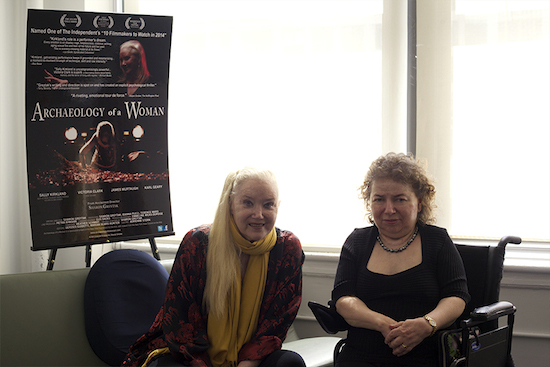
  • Director Sharon Greytak and Actress Sally Kirkland Talk About Their Film ARCHAEOLOGY OF A WOMAN Now Playing in Theaters

     sharon-greytak-sally-kirkland-archaeology-of-a-woman1

    Award-winning indie filmmaker Sharon Greytak’s ARCHAEOLOGY OF A WOMAN, starring Oscar nominated/Golden Globe winner Sally Kirkland is playing at Village East Cinema Sept. 12-18.   ARCHAEOLOGY OF A WOMAN, is described as a gripping drama of a woman’s fierce determination to save her mind from spiraling into delusion as she attempts to keep a chilling secret from her past buried. 

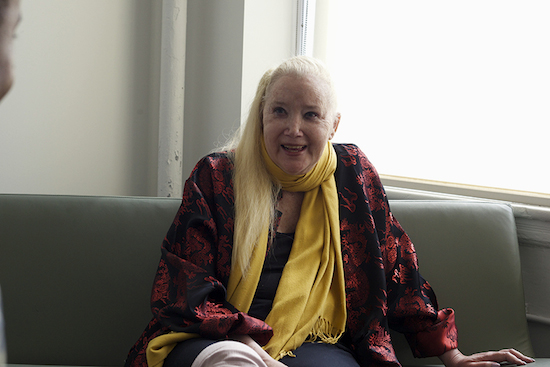
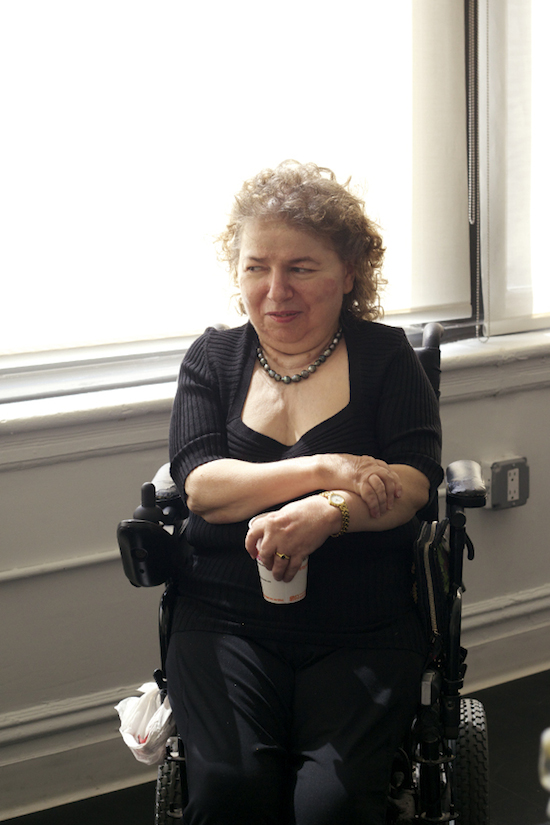
    We recently sat down with director Sharon Greytak, one of the only disabled filmmakers directing, writing and producing from a motorized wheelchair, and Sally Kirkland, sporting a bandaged knee, the result of knee surgery. Earlier this year Sally fell, breaking her leg in two places while attending the Studio City Film Festival to receive an award for Best Actress.

    VIMOOZ: The film took a while to be released, why did it take so long?

    Sharon Greytak: That’s a great first question. 

    Sally Kirkland: Well you did 2 edits

    Sharon Greytak: Yes. I did the initial edit and then I decided to do a bit more editing. I describe the process as being like a rose, and you want to remove anything that takes away from the beauty of it. So I simplified a couple of things – I sort of pruned away a few things that I thought would make it stronger.
     sally-kirkland-archaeology-of-a-woman1

    VIMOOZ: Now Sally, we have to ask about the topless scene. How did you react when you read that in the script?

    Sally Kirkland: I liked it. A little bit of history you may not know, I was the first nude actress in American theater in 1968 with Terrence McNally’s Sweet Eros.  I’ve been nude in so many films you can’t believe it. I loved that she did that because it got me a chance to show people about dementia and the Alzheimer – people who don’t know where they are, or what they are doing.

    Here she is, putting her bra in the refrigerator; it is such a classic piece of writing to demonstrate the pathetic stage of Margaret.

    I felt great, to answer your question.

    VIMOOZ: Is there anything you will not do in a film?

    Sally Kirkland: Ah no.
    sharon-greytak-archaeology-of-a-woman1

    VIMOOZ: The story is very original. Where did you get the idea?

    Sharon Greytak: It stemmed from my experience with my own mother who was starting to have some issues of confusion and some really early signs of dementia. 

    In many movies, you always see a character that’s in the late stages of Alzheimer, spiraling downhill.  The audience is superior and watching this poor character – it is so sad and a tearjerker.   You never see a character that is functioning socially, but is having these terrible moments in the early stages of dementia. And I thought, how do you show a character like that?  Where they are fiercely independent, they are very verbal, and they are use to running their own lives.  And they are certainly not going to give in and say OK this is it.  That is the character that I wanted to portray.

    VIMOOZ: Tony-winner Victoria Clark plays Sally’s daughter and the resemblance is amazing.  How were you able to make that connection with casting?

    Sally Kirkland: A lot of people say that.

    Sharon Greytak: I went for the best talent – the best actress I can get. I worked with a casting director who helped me. I went from an isolated writer one day to having managers and agents calling setting up meeting the next.

    VIMOOZ: Sally, You’ve been in the business a very long time.

    Sally Kirkland: Since 1960

    VIMOOZ:  Do you stay up to date with all the latest stuff like social media?     

    Sally Kirkland: I’m a Facebook freak. I was on the plane the other day Facebooking everybody.  And I have friends coming in town for a movie premiere and I’m literally chatting away with them on the plane.

    VIMOOZ: What about Twitter and Instagram?

    Sally Kirkland: I use Twitter, but not as much as Facebook.  I do not know how to do Instagram yet. 

    VIMOOZ: What about you Sharon?

    Sharon Greytak:  I do. Of course

    Sally Kirkland: You have to. Well, you have to tell the story.

    Sharon Greytak: You do.

    Sally Kirkland: Ok. So I get the call from my agent, and he says, “I have this fabulous role for you. “ And it was Friday, and I said, “great, when can I see it?”  He replied, “I’ll send it with a messenger.” The messenger came and I read it in an hour and 20 minutes or something and I thought, “Oh my God, I have to do this role”

    But it’s Friday now, and all the offices are closed, so I couldn’t think what to do with my patience, my energy and determination. And so I went to Facebook and I looked up Sharon Greytak and there she was. She didn’t have a picture but she had a page and I requested her to be my friend. 

    But I didn’t mention the film because I thought that might be overboard. But I just wanted to get my foot in the door. So then what happened?

    Sharon Greytak: I had no idea she had the script.  And when the breakdowns went out, I thought it was funny, all of a sudden my IMDB rating skyrocketed.    On Facebook, everyone was friending me left and right. I was telling friends that this was hysterical. I found this humorous. And I’m going through the list and I see Sally Kirkland. And I was like, “Really, Sally Kirkland?” So I accepted. And the weekend goes by and Monday I get a call saying, be at your phone on Tuesday, Sally Kirkland will call you.   I had no idea she had the script all weekend.  And on Tuesday she called and we talked on the phone for 3 hours.

    Sally Kirkland: It was an hour.

    Sharon Greytak:  It was 3 hours.

    Sally Kirkland: We talked for 3 hours? I want you to put that on record.

    VIMOOZ: It’s on record.

    Sally Kirkland: So yes, I was by my phone, and 7:30 she called. And we talked about the script, the character.  It was so gratifying that somebody outside of myself got the character and understood what I was writing.  And she was so smart about it.

    And we exchanged some personal stories, and it was a done deal.  This is it. I don’t want to see anyone else.

    VIMOOZ: I’m glad we ask that question.

    VIMOOZ: What are 2 things we don’t know about Sally Kirkland.

    Sharon Greytak: Should I step outside the room?

    Sally Kirkland: I’m deaf in my left ear. I have tinnitus in my right ear. And I’m in love with Michael Fassbender.

    VIMOOZ: What about you Sharon?

    Sharon Greytak: Oh no.  I’m a director, you don’t get that stuff from me.

    VIMOOZ: That counts as one, two more to go.

    Sharon Greytak: My eyes are 2 different colors.

    VIMOOZ:  What colors? 

    Sharon Greytak:  I think one is green and one is blue, which is the same as David Bowie.  There you go.


    Credits: Photography by Tazaca Simpson

    Read more


  • Filmmakers Raz Cunningham and Mel Hardy Talk About Their New Indie Comedy “Wander My Friends”

    Wander My Friends

    For indie filmmakers, getting your first feature film made is already a hurdle that oftentimes can seem insurmountable. But if you manage to run the gauntlet that is raising funds, finding the right cast, and shooting and editing the whole thing, how do you get people to actually see your pride and joy? Asking someone to click on a short YouTube video is easy, but convincing people to watch a much longer film – especially if they have to go to a theater – is tougher.

    The filmmakers behind the indie comedy Wander My Friends are well on their way to overcoming that hurdle too. The movie recently had its first screening at the SENE Festival in Providence, Rhode Island to an overwhelming positive response. Written and directed by Raz Cunningham and produced by Mel Hardy (who also co-developed the story with Cunningham and star Josh Krebs), Wander My Friends is about three creators of a successful indie comic book who find themselves concerned that they will have to choose between making money from their creation and maintaining their artistic vision. In a lot of ways, it speaks to all creative types who have dreams of success but at the same time fear about losing control of their work.

    After hearing that the film had been successfully funded on Kickstarter in 2012 and raised additional money on Slated (a film financing community), I spoke to Raz Cunningham and Mel Hardy about Wander My Friends about how they went about turning their dreams into their first full-length film as writer/director and producer.

    Can you tell me about your previous work experience in film?

    RAZ: I started working in film and TV right out of high school. I grew up in Rhode Island and at the time I knew I had to live in an area where I could not just get my feet wet but jump right into the pool. I applied to colleges in New York and eventually attended Marymount Manhattan College. Freshmen weren’t supposed to have internships, but through a very happy accident involving me working in a candle store in 30 Rock, I ended up meeting a Saturday Night Live cast member who recommended me to the internship program at NBC. I reached a deal with my college allowing me to start my time with NBC. I was there for several years and eventually just moved from Television to Film. I started as an assistant to a few great producers, including Scott Macaulay and Robin O’Hara, and eventually started getting work on other films as a Production Manager and Line Producer.

    Although I wanted to write and direct films, I continually got steady work Line Producing and Production Managing and my bills needed to be paid so I just kept right on doing it. While I was still working within the field I wanted to be in, it just wasn’t as truly fulfilling as I had hoped. Eventually I started making my own shorts and just kept continually writing in my free time. After meeting and working regularly with Mel, we both decided enough is enough when it came to our time being slaves to the logistical side of film just went to work making Wander My Friends.

    MEL: I was always interested in film. My dad took care of me when I was little and we used to watch movies all the time; not just stuff meant for kids, but movies aimed at adults too. A lot of classics, or just movies he liked and thought I would appreciate. When I was in 6th grade I had a teacher who let me make video book reports (this was unusual at the time) and I was completely thrilled. I even made up my own production company for them, which has since become my official company and still uses the logo I made when I was 12. I started studying film first at Ithaca College while I was still in high school, and then as an undergrad at Clark University. I went straight from graduating to my first film job, and never stopped since. Most of my work has been in the art or wardrobe departments, and now I do a lot of work professionally as a Production Designer. But I love producing, and that’s the ultimate goal for me.

    wander my friends

    Can you give me a brief description of the film?

    RAZ:Wander My Friends tells the story of how creative people can struggle to maintain their integrity while still making a living. Roland Vanver, Nate Park and Asher Ackerman are Editor, Artist and Writer of a popular indie comic “Wanderers”. Eventually a bigger company offers a buyout of their smaller company.

    MEL: Hilarity ensues when the three can barely handle each other, let alone pitch meetings with straight-laced businessmen.

    Where did the concept of the movie come from?

    RAZ: Actor Josh Krebs and I had come up with these three characters almost 5 years ago. Over each draft their careers changes because we just couldn’t find anything that worked with their personalities. It was only when we partnered up with Mel that we came to the realization that each of their personalities was strongly suited to the functioning members of a creative team, and due to my own personal frustrations with the storytelling of the comic (and indie film) industry, we just settled on them being comic book creators.

    MEL: A lot of my background is in improv comedy, which is something Josh Krebs also shares. Once I got involved, the three of us threw around a lot of jokes and started shaping what was originally a (somewhat) more serious script into a comedy. But the core themes and the core characters have remained mostly the same from the version that Raz and Josh brought to me.

     You were successful in funding the movie in two ways: first on Kickstarter in 2012 and more recently on Slated. What were some of the challenges of fundraising, and do you have any advice for other filmmakers who are hoping to raise money for their projects?

    RAZ: The best advice I can give to anyone raising money for a film is to know exactly what kind of project you have, know how to tell the story well, and always, ALWAYS know your audience. When you know your audience you can communicate directly with them. If possible, talk to another filmmaker, whether successful or not, just someone who has experience that can share their budgetary successes and failures with you. This will help you identify your own weaknesses and only make your pitch that much stronger.

    MEL: My advice would have to be transparency, definitely. One of the blessings of being able to crowdfund a feature film is to be able to offer your audience a window into the process of making a movie – and one that they’ve chosen to be a part of by offering their own hard-earned money. Any time I had the ability to share footage or stills with donors, I did. It was not only a nice way of getting additional investors interested and involved, but it’s also great to be able to show people “See what we were able to do thanks to you? I hope you’re as proud as we are.”

    Aside from acquiring the funding, what has been the most challenging part of the production process?

    RAZ: Post-production has been particularly challenging. We had some issues with music, scheduling conflicts with composers, and also some minor editing challenges from the technical side of things, but eventually we overcame them. It really helps if you have a clear plan for post-production during pre-production, and while we did, sometimes unforeseen events happen and schedules change. You have to make sure you account for that. Always have a backup. A “Plan B.” Always.

    MEL: As this production’s Plan B, I’m going to have to agree with post-production challenges. It’s hard to anticipate personnel turnover, and we had a solid plan during pre-production that just fell through. I’m lucky that I’m not only an experienced editor, but also probably insane and was more than willing to do whatever it took to see this project to completion. But not every film will have somebody like me working on it, and knowing what to do if anyone or anything falls through is crucial, especially on indies.

     How did you assemble the cast for the film?

    RAZ: The casting process for Wander My Friends was really intense. Auditioning can sometimes be the worst way to cast a film, but it’s the best process we have so we all still do it. Fortunately one of the leads had helped contribute to the script, so that was locked up, but when it came to casting the role of Nate Park, Mel and I wanted someone who wasn’t just a great actor, but someone who was unique. Someone who could portray modesty alongside a sense of confidence. Nate Park has a lot of confidence, the only problem with that is he doesn’t know it. He has almost no concept of it. He likes what he likes, he does what he does. Mel had worked with actor Milo MacPhail on an improv team and once I met him, he immediately blew me away with just his physicality. Once I saw he could truly act, I was even more impressed, but after watching him play a scene or two opposite Josh Krebs, I knew he was exactly right. Josh is an amazing actor and sometimes it can be difficult for other young actors to keep up, but Milo kept pace.

    We put the rest of the cast through a number of rigorous, sometimes rather unorthodox auditions, because I believe that no matter how good an actor is, they have to be able to remain in character no matter their environment, physical or emotional. We auditioned actress Laura Menzie in a car while driving with actor Josh Krebs. I wasn’t actually able to see their audition as I was driving, but I didn’t want to see it. I wanted to listen and see if they could keep my attention while driving. Sure it was a safety risk but it was worth it. Laura and Josh have a great chemistry in their scenes. I have no regrets.

    MEL: When I read the finished script, I immediately told Raz that I knew the perfect Nate, and I’m glad that when he met Milo he agreed. I also had a lot of actor friends in the Boston area who I recommended for supporting roles, but everyone had to audition. It was a long process to knit the whole cast together, but the cast we got was amazing so I’m glad.

    You recently had the premiere screening of Wander My Friends at the SENE Festival in Providence. What was the response like?

    RAZ: The response to the film was beyond anything I could have honestly imagined. I expected only family and friends to show up and give us the obligatory “good job” and “I’m so happy for you” compliments. We had well over 100 people for the screening, most of whom we didn’t know. They were not friends or family of cast and crew. They had seen the trailer and a clip of it on the news and were curious so they came to check it out. Those of us who worked on the project that were able to attend the screening of the film had a lot of these strangers come up to us and introduce themselves after. It’s important to me that comedies have fun with themselves but also have an equal amount of heart, and after the screening I knew we hit the mark.

    During the screening I sat in the very back of the theater and watched the audience while the audience watched the film. Every single one of our intended jokes, and some unintended, landed. The laughs I heard that night reaffirmed everything we had hoped and planned. Mel and I knew we were doing something right. 

    MEL: The response was overwhelmingly positive. I’m still getting calls and emails from people who just want to tell me how much they enjoyed it.

    When I was finishing up post-production on the film, there was a period of time when I became frustrated and a little jaded. Things weren’t coming together the way I wanted them too. But once I had the finished cut and I watched it alone in my apartment, I found myself laughing again at scenes I had laughed at when we filmed them. And at the screening, the audience was basically laughing non-stop. They even missed some jokes because they were laughing so hard at others. That’s an incredibly rewarding feeling. 

    What’s next for Wander My Friends and both of you as filmmakers?

    RAZ: We’re hoping to get Wander My Friends into a few more film festivals and attain the right distribution path for the project. I’d like to see it at least end up on Netflix. I’m producing and co-writing a project based on the true story of a grandfather seeking the right to be a part of his young grandson’s life. Additionally, Mel and I have already started development on our next project together with L.A.-based producer Mike Santoro. It’s an improvised mockumentary that follows the making of a doomed feature film. We’re hoping that not only is it successful, but that it also functions as a launch for a series based on the same characters. We’re really looking forward to 2014.

    MEL: Ultimately we want Wander My Friends to be seen, and we’ll do whatever we can to that end. All I’ve ever wanted to do is keep making movies, and that’s what the future holds. We’ve proven that we can make a feature with almost nothing, and we’re looking forward to using that to show people what we’re capable of.

    Check out the trailer for Wander My Friends on Vimeo:

    For more information on Wander My Friends, see the links below:

    Facebook | Twitter

    Read more


  • Talking Revolution, Politics in Egypt and Global Uprising with The Square’s Director-Jehane Noujaim

    Jehane Noujaim director of THE SQUARE

     THE SQUARE, a riveting documentary nominated for an Oscar this year, actually takes the audience into the turbulent, vibrant center of the Egyptian Revolution. THE SQUARE, directed by Jehane Noujaim, is an astonishing document of Egypt’s uprising, and a remarkable exercise in the power of witness.

    The film begins in 2011 with the very first protests in the streets of Cairo and in Tahrir Square, and focuses on three unlikely comrades in arms: Khalid Abdalla is an Egyptian movie star, famous both in the US and abroad (he starred in such films as The Kite Runner), who gave up his busy actor’s life in London to join in the Revolution, becoming its unofficial spokesperson in the process; Ahmed Hassan -a smiling, self-deprecating young man- filled with both committed enthusiasm and undisguised joy at being a part of something much larger than himself; and Magdy Ashour , who is both conflicted by and compelled by the Revolution: A man who is “with” the Muslim Brotherhood, only to flip sides in 2011 and siding with those in Tahrir Square. His journey, as he mustmake decisions based on both his faith and the financial care of his family, only highlight the extraordinary complexities which currently plague so muchofMiddle Eastern politics today.

     These truly gripping portraits, along with those of fellow activists Ragia, a human rights lawyer, Ramy Essam, who becomes a popular folksinger throughout the course of the film, and is also badly arrested and brutally beaten during the course of the film;  and Aida, a young woman with a sharply keen sense of  which way the political is blowing, searingly round out what is truly an unprecedented look into what makes a country decide they have simply had enough. Raw, funny and often edge-of-your seat intense and immediate,  The Square is a spectacular, must-see document. We are right in the fray with the Egyptian protestors, through the ousting of both Mubarak and Morsi –Egyptian men and women of all ages, religious and social differences- putting it all aside in the struggle for freedom and a democratic state. We are seeing not political talking heads nor extreme Muslim Brotherhood members-but a courageous group, which by the end of the film has amassed into literally millions, of  brave activists.

    At the stormy center of the film and the Revolution itself were Noujaim and her tiny crew, risking their lives and often the film’s footage itself, (they slept right alongside their subjects right in Tahrir Square, tear gas and all). Charming and confident, born in Cairo and Harvard-educated,Noujaim has already won the TED Prize (in 2006) and directed such documentaries Control Room and Startup.com.I had the great pleasure of sitting down to speak with her a week before the Oscars:

     FM: I just have to ask you: How did you all (your crew) keep yourselves safe during these often-violent protests at Tahrir Square? (both armies and police became considerably more agressive as regimes changed and the demonstrations continued). You are so brave.

    Director Jehane Noujaim: Oh, I don’t think I’m brave. I mean, I may make films about heroes, but, honestly, we learned so much from them. It’s kind of like when you’re standing with people that are putting everything that they have on the line, to fight for what they believe in-they could be arrested, and they could be facing years in prison, you just, I don’t know…You just learn a great deal from them, and there’s a fearlessness that develops. You know, you’re identifying , at least, I do-I end up identifying with and to live the life of- the people I’m filming. And that’s’ why I get so close to them. We were all sleeping in the Square, with the tear gas (being thrown), taking the same kinds of risks. Although, of course, not as much, as I have an American passport, I have people that…If I’m imprisoned, I know that there’s going to be articles written about me, which, in a way, puts me in a much safer situation. I mean, you would think so, anyway. I do have a friend, an Al-Jazeera journalist, who has been in prison for two months now.

     FM: So you felt some level of safety?

     Director Jehane Noujaim: I would say there’s never 100% safety: For yourself, for your crew, for your characters, for your footage…But you can take precautions, and the precautions that I took were, the minute that I knew I had filmed something incredible, I’d immediately take out the video card, go back to the office, and download it. And we’d continue copying drives, and make sure that the drives were in different places, and then any time someone would leave the country, we would send the drives out.So, there was this kind of process. In terms of our personal safety, everyone on the team has at one time been tear gassed, been shot at, jailed…So, there was no such thing as hiring anyone to come onto this project. We all met in the Square. The film came out of The Square. But that’s also the only way that it could have happened, because, as I said, there’s no way I would have asked that of anyone, or taken on that kind of responsibility.(My crew) also felt that they were filming something that is not only a ‘film.’ We were filming this moment in history. People were filming as witnesses, and much of the footage has been used now at news stations, when newscasters were not there on the front lines. Or, it has been used in a court case, as well. This is where the camera really became the weapon…

     FM: I love Ahmed’s line, “If you have a camera, you can have a revolution.”

     Jehane Noujaim: A quarter of the film is his! A quarter of the film is his footage. That section where you really feel like you are about to be shot by the police or the army? All his.

     FM: What have some of the international reactions been like to hear?

     Jehane Noujaim: What has been amazing to see since releasing this online, if you go to #TheSquare (on Twitter), you see people requiting some of the lines, and translating them into many languages. And it’s amazing, because it’s young people seeing even lines in the film that didn’t even stick out for me; but when I see all of this reposting, people are seeing so much of this film in themselves, and their own struggles, which is really exciting to see. Ahmed’s line, “We’re not looking for a leader, as much as we’re looking for a conscious?” That line has been translated into Chinese, Portugese, Spanish, Ukranian…We had a screening of The Square in the Ukraine two weeks ago.

     FM: You’re kidding?! Wow.

     Jehane Noujaim: No, no, no, I’m serious! The protestors organized it, translated the film…Here, I’ll show you pictures.(She handily takes out her phone.) It was amazing. A friend of ours who we were working with-Stuart- he has these traveling, big blow-up screens, he showed the film, and he had to escape afterward! The authorities said, (in a mock rough voice) ‘There is a forbidden movie being shown, and there is an American Spy here showing it.” So, Stuart had to leave, but the protestors continued to show it, and they had Skype sessions with Ahmed! So, it was amazing…Now, the protestors in Venezuela want to do the same thing. There’s this interconnectedness that is happening in the world right now…

    the square documentary

     FM: You spoke on Piers Morgan last night about ‘bearing witness….’ How is Ahmed doing now?

     Jehane Noujaim: He’s good! He is such a strong soul. I had called him because I was sad about a friend of mine being in jail, and he totally cheered me up! The youth have so much hope there. He said: ‘You know, you just don’t understand! There are people that are showing this film in coffee shops downtown, there are Facebook pages where a thousand people have signed up different events!” He said, Jehane, it’s like a football game… That people are talking about issues that have been silenced on the local news there…And so, to be able to see it, and talk about it, is so incredible. And he goes, ‘Send me more pictures of the screening in Mexico on the Plaza!” and “Send me more photos of the Ukraine,” and on and on, because that’s what motivates him, to know that regardless of the ups and downs that he’s going through in Egypt, that this is a global struggle-people trying to change their relationship with the government. And that it’s not just a lonely struggle.

    the square

    Her thoughts on the American perspective of this struggle in Egypt:

    Jehane Noujaim: We come from a country (The U.S.)which just has this legacy of people power, and marches being able to change things, mad how depressing it must have been- because it wasn’t covered anywhere. Imagine how hard it must have been- in the midst of all of that. Now, everything is changing…We have social media, and (the authorities) can no longer act with impunity. It is a different world now.

    Stream The Square right now on Netflix  this week before the Oscars, where Jehane Noujaim may very well pick up that little gold trophy for Best Documentary Feature.


    Read more