Interviews

  • The Enigmatic Director Godfrey Reggio and his producer Jon Kane Talk About Their Amazing New Film “Visitors”

    by Francesca McCaffery

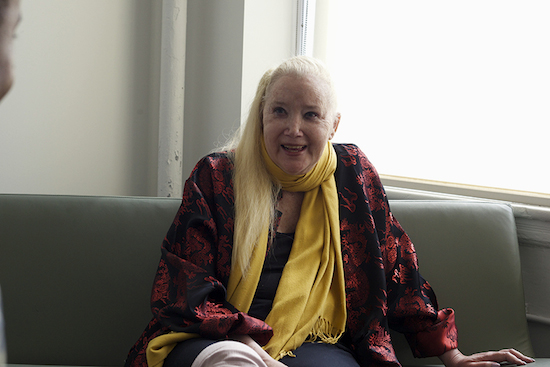
    Godfrey Reggio Godfrey Reggio

    It is so amazing to come across and be exposed to an artist who is not only a true original, but one who seems to be operating from a truly higher conscious. The director Godfrey Reggio certainly qualifies as one of those rare artists who seem to aim high, as in, the collective third eye, or, the global consciousness. Although he insists that art should have no purpose,  his powerful, devastating and poetically gorgeous Qatsi trilogy of films, which he is most well-known for, and which includes  KOYAANISQATSI, POWAQQATSI, and NAQOYQATSI, beg to differ. Scored by Phillip Glass and filling the screen with image after image of various stages of global community, searing beauty,  eco-devastation,  commerce and industry- assaulting us with the most vivid, the most poignant global imagery.

    VISITORS

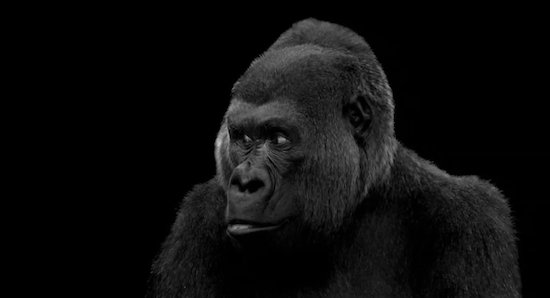
     His new film, VISITORS, is a complete departure from this style: We are greeted, as soon as we sit down, with still, slow faces of people, (and the wisest gorilla you have ever laid eyes upon), and we move on to close-ups of hands “playing” with invisible computer and digital devices, large groups walking, watching something (sports? porn?)  and reacting in lush slo-mo, in cuts that last several minutes at a time. Oh, and did we mention it’s all shot in back-and-white?

    The film is beyond wonderful, and you leave the theatre feeling centered and clear, your senses bright, your body lightened. That is how powerful an experience the film is, and, defying all current film-making convention, has under 80 cuts total.

    I had both the pleasure and great honor to sit down with Mr. Reggio and his whip-smart producer Jon Kane, and we spoke about his early day as a monk with the Christian Brothers, the future of our society, reaction to Visitors, and working with his crew on Visitors.

    I am so fascinated by your early journey. Before you became a filmmaker, you were a monk for many years. Can you tell us a bit about this?

    I was actually a Christian Brother. Christian Brothers don’t live in monasteries, they live in community. I was like a male nun! If you look at in military terms- we were the lowest on the totem pole, we were the foot soldiers, but we did the real fighting. We weren’t like the bishops, you know, the generals, or the super generals, like the Pope! The Jesuits, who are like the Colonels, or the Lieutenants…We were a very humble order, but a very important order, for me. It was the first order of monks who were not priests. As you know, the further you get away from the founder’s spirit, and this order was founded in 1681, in that measure, you lose the spirit of the founder, and it becomes vestigial, and bureaucratized.  When you have monks that are priests, and monks that are not priests, than the monks who are not priests become subservient to the ones who are- that should never be.  Our mission was to teach them  (the poor) to live in community in a religious way.  So, when I joined the brothers, very few brothers taught the poor, because of the rationale, “How are we going to pay for ourselves?” So, being young and zealous brother, my Che Guevara was Pope John XXIII, brilliant guy, someone that didn’t even want to be the Pope, which impressed me even more! He said, “Accept nothing, and question everything, even the structure of the Church.” This was like marching orders to my young and zealous energy.  Of course, I then had final vows at that time, I was a “monk for life,” and the Order asked me to leave! So it was a shock for me. It’s like getting out of prison, but at least in prison, they give you a suit, a little pocket money to get out! And there- I got nothin’! (laughs) But if I may say this, ‘I’m not a brother, a brother is me. ‘ All my proclivities are owned in that tradition.

    (Producer Jon Kane walks into the room and sits down.) How did you two meet?

    Jon Kane:  We met originally, before Naqoyqatsi. Godfrey was trying to raise money for the film. (“Forever!” Godfrey smiles.)  There was an article written in the NY Times by a friend of mine, Ty Burr, and I was a successful director of TV commercials at the time, so he asked me for a quote on the influence of  Koyaanisqatsi on me, and on commercial filmmaking, generally. So, I gave him a quote, Godfrey read it, Steven Soderberg read it, and we all kind of came together, and Godfrey asked me to join him on the journey to make  Naqoyqatsi.. So, I left my profession, for two years, and joined his monastery (laughs).

    GR: Jon is beyond capable, and really brilliant at technology. They are other people who may be more brilliant or capable technologically, but it’s his sensibility I responded to. I feel that he’s a misplaced person in the commercial world, that his real love is art, is expression, making, doing… The only requirement I had was….well….he had an extremely commercial company, and he had to give it up come and work with me. He had a wife, kids, and I paid him a pittance! 

    VISITORS

    Tell us about your new film VISITORS.

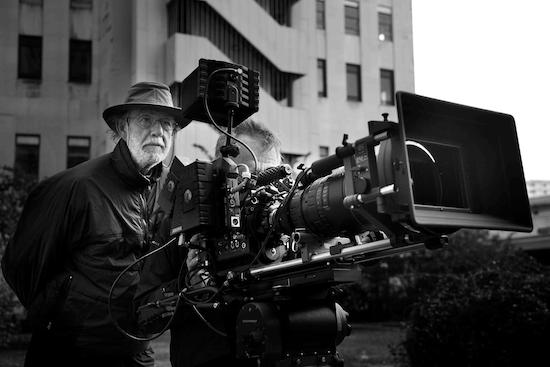
    GR: 74 images in 87 minutes and 33 seconds!  (The form followed the idea of) ….the moving still.  What that meant depended upon what the photography would reveal. The portraits in the very beginning of the film- there were six portraits, beginning with the woman with very intense eyes, and ending with this gorgeous old black woman… (He gestures to the very long conference table the three of us are sitting at one end of)  Take this table (he gestures all he way down to the other end)  if the portrait person is sitting in that chair, and the camera is here (he gestures near us)-now, the simple way to do it would be to use a zoom lens, but it doesn’t have the same effect.  So, the camera is on a dolly track, and the Assistant Camera person has to rack focus as it’s tracking, so, it’s very demanding. I asked for the shot to be slow. The DP, Graham, flipped out! (He laughs.) He said, “Godfrey, you can’t even get a machine to do that! You want us to something that’s not human!” And we had a beautiful grip there, Danny, and he says….

    JK: It was the slowest dolly move in history!

    GR: One person could never do it. But this Danny, he had his assistant held the wheels, and just went imperceptibly slow…So that already, in the photography, indicated that the moving still was what we were trying to get at…

    JK:  Also, one of his instructions to me was that every shot in the film had to be its own movie- with a beginning, middle and end. We don’t have coverage in this movie. There are no edits in the traditional sense, where you start wide, and cut to a detail. No shot relies on the other shot for its power,  or its meaning. Each shot is its own, contained thing.

    visitor-gorilla

    How did this process work with the gorilla?

    JK: We shot her over six days, for a variety of reasons. To try and get this gorilla at the Bronx Zoo, shooting with a 3000 mm lens, through glass, (the gorilla was in its natural environment) and we knew we wanted to capture the full face of this gorilla, and make it live with these portraits. The idea at first was just to get the gorilla looking in the camera, which was hard enough! Finally, we got a long take of the gorilla, where a variety of things happened- the blinks, the head moves. So, we did get the gorilla looking in the camera. That said, those two shoots took two animators six months to realize them in the form they are in now, for a variety of reasons.

     GR: Let me add something. Had we seen the gorilla, say if she was in Uganda, or the Bronx Zoo spent thirty million to make it look like Africa, than we would be looking at a “gorilla.” But if you take the background out of the gorilla, and put in the “black”-ground, then the gorilla is looking at you. So, when Jon said it to them six months, think of the hairs of the gorilla, you can’t just cut an oval out!

    JK: The color correction, the timing of the blinks, the breathing of the body…

    GR: Everything….It’s the real gorilla, of course, but we had to take her out of the background.  This beautiful animal is looking at another animal- you and me.

     VISITORS

    What has the reaction to the film been so far?

    GR:  Well, one, I’m surprised that we have such a passionate and extremely (hard-working)  distributor. There was a much larger company that wanted to bid on it and get it, but we would have been like a salami in their shop. But this one is a new one,  (Cinedigm) Susan Margolin, who is the co-President, and Emily Rothschild, who just had a baby on my daughter’s birthday- and Laura and Jeff, I mean, these people are like gold. And they don’t have ten other films to deal with. They  have a lot of other stuff going on, but it’s in another dimension., They’ve  really gone to the wall. I’ve had so many pre-screenings of films for press. I can’t organize that! But  we had 25 screenings, coast-to-coast. And with Steven (Soderberg) coming on board, everybody knows that dude! He calls someone, and they pay attention. He truly lives the film, and his commitment  is to do everything  possible to make sure it gets a shot- being “in the ring, ” so it can be seen. So, that’s blowing my mind, What the reaction is, it’s hard to say…

    JK: We’ve had hugely positive response, and reviews… When we screened it a Toronto Film Festival, people stayed for the entire thing. Steven said, “More people walked out of Magic Mike than this one!”

    Godfrey, how do you really feel about technology?

    GR:  It depends on which personality you’re talking to! No, but I have a clear point of view. On the one hand, I think it’s one of the most misunderstood subjects on the planet. Two, I think we face a danger that is unspeakable, unsayable, even- it’s the vivid unknown. All we know about technology is from the people that make it, and all they want to do is sell it.  So, we have no real point of view about it: Technology is not something we use, it’s something we live- it’s ubiquitous as the air we breathe in the natural environment, and in fact, it has replaced the natural environment as our host of life. It is now the environment that we live in- the great acceleration, the effect of human on the world we live in.  It’s all human-made, although humans aren’t driving it anymore: We think we’re in charge, but we’ve created a Frankenstein- not Hollywood’s version, but Mary Shelly’s version- something that has a life of its own, that’s autonomous. Its determinance has us along for the ride. So, we’re like strapped in, and we’re on for the ride. I guess I’m saying that it’s not the effect of technology on the way we live, it’s that technology IS what we live.

    GO SEE VISITORS THIS WEEK!

    http://youtu.be/RhQIxcAbMHQ

    Read more


  • Interview with Andrew Matthews, Co-Director of ZERO CHARISMA

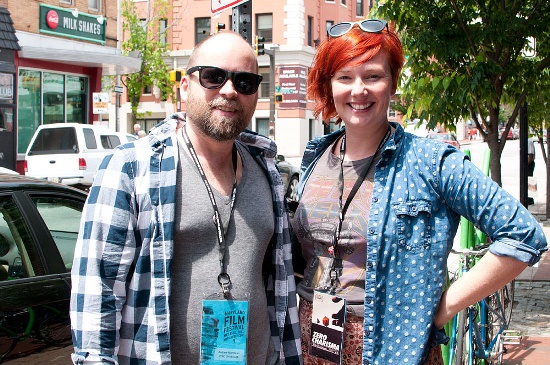
    ZERO CHARISMA directors Andrew Matthews and Katie Graham outside of the Charles Theater at 2013 Maryland Film FestivalZERO CHARISMA directors Andrew Matthews and Katie Graham outside of the Charles Theater at 2013 Maryland Film Festival

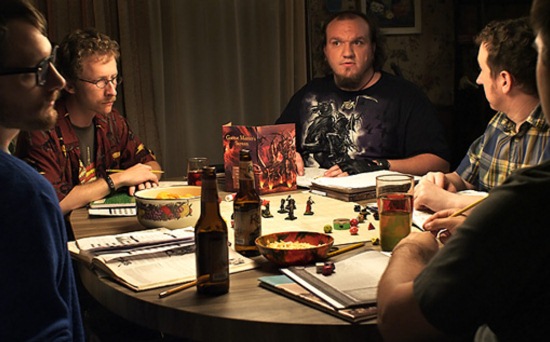
    It’s easy to make a comedy that makes fun of its protagonist by making him or her a caricature of stereotypes.  In ZERO CHARISMA, a comedy about an obnoxious RPG-playing nerd who acts like a child, writer/co-directed Andrew Matthews and co-director Katie Graham could have easily used their main character, Scott (Sam Eidson), as a punching bag because he is such an easy target.  However, what I admire most about the film is that Matthews and Graham delved into Scott’s background to reveal the reasons behind his demanding attitude and exactly why he feels so out-of-place in the world around him.  Scott’s role as as the all-powerful game master comes into question when cool “hipster” nerd Miles (Garrett Graham) joins the game and Scott’s estranged mother (Cyndi Williams) returns to his life.  Because of this, Zero Charisma is one of my favorite types of films: a comedy that has enough human drama to make it easy to relate to because of its real-life similarities.

    After reviewing the film, I had the opportunity to interview Andrew Matthews regarding writing and directing this film, which is his first feature.  He provided plenty of insight into a film that must have been a labor of love for most of the creators involved, including how he and Katie Graham raised money for the film through crowdfunding, a route many indie filmmakers have recently successfully explored.

    VIMOOZ: How familiar are you with the traditional roleplaying game subculture, and what made you want to make a film about Scott and the way his RPG fantasy world and reality collide?

    Andrew Matthews: I have been playing RPGs for a long time–probably started in about 5th grade.  It’s always been a very creative outlet and a comfortable environment for me, and the variety of types of people that play it (and reasons for playing) makes it a good backdrop for a movie about clashing personalities.

    zero charisma

    VIMOOZ: One of the reasons why the film works so well is that Sam Eidson is perfect for the role of Scott. Can you tell me about how you cast him in the role?

    Andrew Matthews: We saw Sam in a few small roles in Austin-made indies and we thought he was funny so we approached him about helping us make a 4-minute teaser trailer to kick off our crowdfunding campaign.  We ran around town for four days shooting bits and pieces of the script (none of which is in the final film) and the resulting teaser seemed to be a hit with people, and we knew Sam had a lot to do with that.  So we offered him the role.  Even though he’d never had a lead role in a feature before, we felt like he was so right for the part, such a committed actor, and had just the right kind of vulnerability to take on a character that on paper is so domineering and aggressive.

    VIMOOZ: Why do you feel it was important for Scott to be physically intimidating in addition to his already demanding attitude?

    Andrew Matthews: Everything about Scott’s exterior, from his physicality to his wardrobe and choice of music says “badass,” but his behavior, as you start to get to know him just screams insecurities.  It’s also fun to cast someone into “geeky” things who’s not the stereotypically skinny nerd.  There are all types of people who play this game.

    VIMOOZ: When I first started watching the film I thought it was funny, but I initially felt it was kind of taking shots at easy targets (i.e. like “Comic Book Guy” jokes on The Simpsons).  However, it soon became obvious to me that this wasn’t the case because Scott wasn’t just a stereotype and his persona hid deeply-rooted personal issues. Was it difficult to avoid portraying Scott as just a geeky stereotype, and did you do anything consciously to ensure you avoided that?

    Andrew Matthews: The kind of comedy that we love plays upon audience’s perceptions and expectations before subverting them.  We wanted the audience to first recognize the character as a type they probably see in real life.  Once they’ve accepted the “type” we’re going for, then we want them to start thinking about him in a way they haven’t before.  That means you do have to do a bit of a balancing act between using stereotypes and subverting them.   Ultimately, we want the audience to have empathy for the character, which means showing his inner turmoil and at least some hints at why he behaves the way he does.

    VIMOOZ: Garrett Graham’s character Miles obviously represents the “neo-nerd hipster” (to quote from the press notes) type of person which has become much more “acceptable” to the mainstream than the more traditional “nerd” type that Scott and his friends represent. What were some key things you wanted to portray in the conflict between Miles’ world and Scott’s world?

    Andrew Matthews: Geek culture has long been a place of refuge and camaraderie for people who for whatever reason feel like outsiders.  It’s understandable that when aspects of that culture become socially acceptable, there might be resentment towards those who might not be such fans if it came with a social cost.  At the same time, how can the loss of stigma for one’s pastimes be a bad thing?  The aim was not to portray Miles as a bad guy, but rather someone who passion for “nerdy” things doesn’t run quite so deep.  Someone who likes to sample these hobbies, but hasn’t invested the time and sacrifices that Scott has, and someone who is still aware of social intricacies and perhaps divides his friends up based on those criteria.

    VIMOOZ: Did the film change at all from its initial concept to the finish film? If so, what?

    Andrew Matthews: Sure, but probably no more than most films change as things go from concept to execution and more collaborators come on board.  I believe in the early development, Miles was more of a villain, but we thought the story would be more interesting if his motives were a little more ambiguous–and Scott’s problems more internal.

    VIMOOZ: Both of you have worked on films before, but you both directed for the first time and this was also the first narrative feature either of you worked on. What were some challenges you had to overcome in your new roles?

    Andrew Matthews: Being at the wheel of a ship is very scary, especially when so many people are working for so little, you really feel like you have an obligation to deliver something special so everyone feels like their time and talent (and money) was well invested.  The buck stops with you, as it were.  Also, making a narrative was more intimidating for us.  When you’re working on documentaries, the characters are real people, so you don’t have to worry that the audience won’t find them credible.  But with Zero Charisma, we were creating a character from scratch–and a pretty extreme one as well.  Making him believable and memorable was so important to us.  The whole thing would fall apart if that didn’t work.

    VIMOOZ: You used Indiegogo to raise some money to put finishing touches on the film before South by Southwest. Can you talk about your experience with crowdfunding and offer any advice to other filmmakers who are considering to crowdfund their projects?

    Andrew Matthews: Our main IndieGoGo campaign actually occurred two years ago, to raise initial funds.  It was a successful campaign, not only in the money it raised, but the awareness it gave the film.  We has several articles written and hundreds of people anticipating the film’s release–and we hadn’t made it yet!  That was an anxious place to be, but the film would never have gotten off the ground if not for those original donors.

    VIMOOZ: If you created your own fantasy RPG alter ego like Scott, what would yours be like?

    Andrew Matthews:: I’m always the GM.

    VIMOOZ: What were the most important things you learned about filmmaking from directing your first narrative feature that you will take with you as you go forward in your career?

    Andrew Matthews: I’ve heard this many times before but it doesn’t hit home until you live through it:  trust yourself.  Take advice because it makes sense to you, not because the person giving it is somehow more experienced.  We had a lot of great support and counsel throughout the process, but we also heard a lot of discouragement that turned out to be totally wrong.  Besides, what’s the point of making an independent film if you’re not going to do things your way?

    Read more


  • “I WANT MY NAME BACK” Director Roger Paradiso Speaks on the Journey of the Sugar Hill Gang Rap Documentary

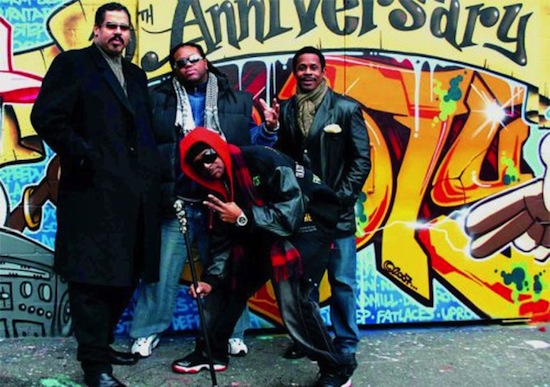
    I Want My Name Back Documentary - Sugar Hill Gang

    Starring hip hop icons and pioneers, Wonder Mike and Master Gee I WANT MY NAME BACK highlights the rise and fall, road to redemption of these former members of the legendary Sugar Hill Gang. After releasing arguably the greatest Rap single and changing the face of Hip Hop history, they were the victim of identity theft as well copyright and trademark violations as a result of what is still today the highest selling song in the genre that so many have grown to love and support today. Achieving platinum status on all of their first three albums as a collective, one would assume that their legacy would have been solidified, both in theory and in financial reward. 30 years removed from the creation of Rappers Delight the duo have fought long and hard for their intellectual property and acknowledgement. The reality of their story is disheartening, yet very necessary in the education of artists and fans alike. Their battle against former label Sugar Hill Records, as well as the background to their rise, as documented by critically acclaimed director Roger Paradiso in conjunction with One Village Entertainment, a division of Image Entertainment, and part of Robert Johnson’s RLJ Entertainment is available via Video on Demand, as well as many other leading digital outlets including iTunes, Sony, Amazon and features the likes of Grandmaster Caz (The Cold Crush Brothers), Melle Mel (Grandmaster Flash), and Vinnie and Treach (Naughty by Nature).

    Director Roger Paradiso - I Want My Name Back Director Roger Paradiso – I Want My Name Back

    I had the opportunity to sit down with the eyes behind the feature film, and get acquainted with not only the production process, as well as his resume, and what ultimately drew him to the project as a whole; well accredited for his work with many a great actor and actress on blockbuster cinematography, this project admittedly was compelling in a different manner. Challenges abound, the fortitude to bring their story to the big screen is beyond admirable. Find out more, in our exclusive interview with Director Roger Paradiso.

    VIMOOZ: What was the unique element of Wonder Mike and Master Gee’s story which in your mind made it screen-worthy?

    Roger Paradiso: The issue of Identity theft was appealing to me, as well as the authenticity of their thirty-year friendship. Those things coupled with the courage to persevere and keep the fight going for ownership of their names was compelling, and I felt that it was a screen-worthy story.

    VIMOOZ: In the production process what were some of the road blocks that you faced?

    Roger: One of the biggest challenges was that we absolutely could not get the Robinson Family to participate in any way, which ultimately we accepted. In addition, there was also a lack of photographs and video on them. The thing you have to remember is that at their peak, they were pre-MTV and I dont think Sugar HIll Records was into promoting individual artists; Not to mention, of course we had no money.

    VIMOOZ: Do you feel that any of their story was unfortunately compromised in the final cuts?

    Roger: No. I am a DGA member and had final cut. We were lucky, no one from distribution tried to interfere.They were supportive of the story and thus far I guess you can say we got some pretty good reviews on our 20 city Festival Tour so we knew the film worked with audiences.

    VIMOOZ: Were you a fan of Sugar Hill Gang?

    Roger: Personally, I was more of a classic rock fan. However, I had heard of them, but I never dreamed of making a film with them. Also I never could have imagined what their story was and how important it is for artists of all disciplinesto see this film. It is certainly imperative that all fans of music and the arts see the film. It is a story that should appeal to everyone who isconcerned about the preservation and sanctity of Identity and the continuing fight for human rights.

    VIMOOZ: Years from now when you look back on the experience as a whole, what will you relish most about working these two gentleman, who are Rap Icons?

    Roger: I feel the bond between Mike and Guy will last forever. As artists we must trust and support each other through all the obstacles and distractions that life brings. It’s quite a journey and the making of this film was full of obstacles and distractions, but we stuck together and got through it. I also know that as a result of our work great friendships will continue with Josh Green and Milton Maldonado as well as Peter Waggoner and Sean Smith. We were a Band of Brothers. The crew and cast were great.

    VIMOOZ: In the past you have worked with some tremendously talented individuals such as Robert DeNiro, Val Kilmer, Pierce Brosnan, and the late Tupac Shakur; tell us about that:

    Roger: We all got along and had a good time and were honest with each other. I think that when making a movie years ago you tried to have fun to cut back on some of the tensions. I still try to work that way, but the business has become very corporate. But they were all great guys and artists. Hey what about the women? Ive worked with some very successful actresses whom were not mentioned; the likes of Kim Bassinger, Dolly Parton, Fran McDormand, Mira Sorvino, Renee Russo, Cher, many others including the day players and the crew. We had a good time and made some very good movies.

    As for “I Want My Name Back” I want peope to know that the film is currently available on DVD at Amazon.com and Walmart.com. and all digital platforms like iTunes, Sony, Amazon plus VOD on all major systems around the country.

    VIMOOZ: What are your feelings about the feedback that the film has received thus far?

    Roger: Well Josh and I saw the evolving film business change drastically for Indies and we basically made the film festival circuit our theatrical release. The festival people are some of the nicest people in the business and we had a blast. Every stop was great, from the Toronto Film Festival to DOC NYC, on to Slamdance. Internationally, we were a big hit in Finland and Australia. Audiences really got the movie.

    VIMOOZ: When you set out on a directing a project, what is your blueprint process; furthermore, what are your expectations; ultimately what do you want the audience to get out of the final product?

    Roger: The film experience is all about an original story about people that enlightens and hopefully entertains. You do the best you can do to tell the truth about the human condition whether it is a comedy, tragedy or somewhere in between. We’ve been telling stories forever. And will continue! That’s why I’m never worried about the formats. Content over format is what I believe in. People should be empowered by technology to tell their stories and not intimidated by technology.

    VIMOOZ: Are there any projects forthcoming in calendar years ’13 and ’14 that we should be looking out for ?

    Roger: I’m doing a film based on a novel by Jack Engelhard called “Days of the Bitter End” Not sure that will be the title of the movie. But I hope it is a different journey for audiences and that they enjoy the trip. It’s about some artists and the early sixties in Greenwich Village.

    http://youtu.be/L-W1muPO8rg

    Read more


  • Actress Jan Broberg Talks About Starring in MANIAC with Elijah Woods, and Living Her Real-Life MANIAC Experience

    Jan Broberg in MANIACJan Broberg in MANIAC

    A victim, twice over, Jan Broberg has emerged as a spokewoman for resiliency and the importance of letting life’s experience serve as a motivation and teaching tool rather than a deterrent. The unfortunate victim of abduction and subsequent brainwashing as a child on two different occasions, Broberg has experienced redemption and solace thereafter.On seperate occasions, which spans a period of four years in total, Jan Broberg was the victim of a kidnapping, where she was restrained in the back of a mobile home, held down and brainwashed by continuous recordings of a monstrouous voice. Hard to explain, even more harder to imagine or survive for that matter. Jan Broberg has emerged victorious in her quest to put that horror behind her, and encourage others that they too can persevere. Playing the role of Rita, also a victim of Frank Zito, played by lead actor Elijah Wood in the filmMANIAC, Broberg has once again been given a platform for the war against what some would consider demons, while she considers it a muse. In this candid interview with the actress, learn about her life, her times of tragedy, as well as redemption and vow to be an example for others who have overcome or are seeking the knowledge to do so.

    VIMOOZ: Have you ever been drawn to a film in such a personal manner before?

    Jan Broberg: You know drawn to it in a personal manner, I can say that I haven’t watched many horror films so the genre was not my first choice. I’ve always loved suspense, but I do love the psycho-thriller genre, and I always hoped to be in one. In this film, it is the first time I have been drawn to the correlation with my personal experiences. While in production, I was thinking about the fear that I went through and I revisited the fear and the loneliness that resulted. You know, feelings are REAL but to be able to access them and the advantage of knowing that I am safe, and I can come back was great. In the past I’ve had roles where I was emmotional; I played a mom whose child had died, and that was challenging but not to this degree in a movie where the fear was this intense.

    VIMOOZ: You have been very candid in sharing your tragedy. I can’t help but to recognize a similarity between reality, and film in the case of the role that you play as Rita. With that being the case, were there any moments of unease while in production?

    Jan: Everybody was so supportive because of the process. The objective is being technically sound, and as always in any producion safety is paramount. Everybody involved was very sensitive to the casts need of an environment where we felt safe, and were able to go to unsafe places in action without worry. I didnt even feel…(pause) like when Elijah is holding my head under the water, thats REAL. As an actor / actress you have to completely imagine yourself in that moment, and the object is to eliminate feelings, but the scenes where the special effects take over you kind of get to take off. In Maniac, the greatest feeling I had was was during the drowning scene and even in that Elijah, the director, the support team were there; There was a lot of rehearsal time, learning SAFETY signals and techniques. As you watch the film, you see me struggling, fighting back and that intensified everything. With my background, being in desperate circumstances I have always come back and I felt safe enough to completely go crazy (laughs)

    VIMOOZ: Was it your idea to perform your own stunts; is that a norm for you?

    Jan: It was an exciting and challenging proposition by the crew. In the script it detailed several scenes of violence and stages of killing that would take place, and they asked would I be comfortable performing. I Absolutely desired to perform all the scenes myself. Practice, preparation was my priority. There was no option! i think they would have allowed me to, if I rejected seeing as though I never had done it before. I was gamed. I practiced at my parents home, funny as it may sound, with my nephews who were visiting from Arizona. They assisted and I got to see how long I could endure. Its one thing to hold my breath but the difference was that I was being held/fighting. It was a process. In other scenes gadgets are made: there’s a process of building prosthetics and all of that. All of that stuff happens over weeks before filming and gives you a chance at preparation. I was a little taken aback at first because I didnt know all the stages but I knew I would be killed. I also knew there would be brief nudity from the back. The torture I found out about as I got in depth with the role, it was a litle jolting; being scalped (giggles) I wondered ‘What would that be like?’

    VIMOOZ: How much of an inspiration has your story been for your career choice. It is undertandable that it motivates you in a general sense that you have emerged as a survivor and spokeperson, but what I am asking is how much a of role did it play in your decision to pursue an acting career?

    Jan: Interestingly enough I was already into acting prior to being kidnapped. When I was about 6 years old I was in a musical at Idaho State University, back in my home state; my neighbor had children and they ended up being the lead in “Sound of Music”. It was my first play and afterwards I was taken by theater and I had done a number of plays before the first kidnapping . I Already had the bug you could say. Post-trauma all of those emmotions that developed, I gained the ability to go to deeper places in my role playing than maybe other people can. There is a reality and naturalness that comes to character when you have experiences.. I did alot of self-help, I have counselors., advisors, family, a great support system. My ordeal was 4 years long and I didn’t talk to people; no one knows what I was going through. I was fortunate to have a great community of supprters.and after taking a while, when I oepned up it was very therapeutic. Throughout, I used acting as a means of healing. The fear of what could happen actually saved my life. I was being terrorized by a man that abducted me and brainwashed me. On stage I could express this rage / terror, I was able to tell the feelings through the roles I was getting. The ability to go to places I was not allowed to by this man who held me hostage was overwhelmingly useful. Because of it, theater will forever hold a special place in my heart. Had it not been for that, I more than likely would have committed suicide. I was depresed, and the commitment to theater camp gave me something to take my mind off of things. Most importantly, I never went through with it because I couldnt leave my cast. LOL I have always been advocate of what theater does for us. “Art has a huge role to play in our lives as people.” Couldn’t leave my team !

    VIMOOZ: You are published correct, “Stolen Innocence” tell us about that

    Jan: My mother took a 90 page, FBI file, notes, diaries, journal entries, and all as well as interviews of each other putting together a story. It started as a family history, a way of filling me in on what I had missed while I was gone. My mother wrote what happened on my parents’ end and I told details of what happened on mine. It was a cathartic journey; as she wrote, people who heard what we had encouraged us to print. We ended up being contacted by Justice Charles Gill, who was in attendance at a conference where I was a key note speaker. That acually happened to be the first time that I told my story in that kind of a setting, now its become second nature. When he approached us we discussed how well versed he was in criminal justice as a result of 30 years on the bench and in practice, he was very familiar with pedophilia and special victim circumstances. He remarked that my story, our story, encompassed everything that he had seen and known to be true. He also encouraged us to share it and with that we began to get some editing done, and turned a 800 page manuscript into about a 300 page book. The amazing part is that all of it is true. So well received that the second edition is under works, and in it my mother shares with you many of the updates and the aftermath resulting from how documented the story is. Alot of things have happened. I’ll tell you one occurence where the man who kidnapped me showed up at a speaking engagement of mine with a van and a gun in efforts to terrorize me some more. At that point it grew even more, and I was interviewed by Diane Sawyer for Good Morning America. But yes the book will unveil many of the current events. Stay Tuned !

    VIMOOZ: And i understand a documentary is in the works ?

    Jan: A documentary is definitely in the works. I want and need for all of this to inspire people to live the life that they love. There is a way out and my books, documentary will show that.

    VIMOOZ: Maniac opened in theaters June 21st, playing locally @ the IFC Center and available on VOD; how does it feel ?

    Jan: I am really excited. Hopefully this film will be one of those soon to be classics, with a buzz abroad; one that people embrace and do the background on so they have empathy for Elijah Wood’s character. The cinematography is beautiful. I loved my role; Rita is very complex; she makes fun of the very people who have made her rich. For me, people who aren’t really confident in themselves result to putting others down. That was a point of reference for me, that RIta has a story. ‘There is a sadness behind the bitch that I play.’ The depth in her story is intriguing. I hope my work and relation to the role comes across to the audience. Her past, Her terror, the disappointment. She has everything except maybe LOVE. For that people should have empathy for her. I am excited the world gets to experience MANIAC and all its crevices. We all relate to being afraid, its part of human nature. This kind of scary in the film, can and should be scary to everyone. The movie is very relatable. It has the potential to be a cult classic

    VIMOOZ: Well aside from MANIAC, you have recently wrapped up work in IRON MAN 3, and we spoke about the forthcoming documentary are there any other projects to announce or anything that you want to leave the readers with?

    Jen: More than anything we want the people to know and understand my amazing story and let that help to inform others, and maybe educate people on the warning signs and ways to protect children. My parents have always been transparent in admission of some of the mistakes they made, and I have been forthcoming about the effects of the brainwashing and abduction; especially when considering that it can come from a person that is close to you; your family, a family member or friend; some one whom has already had the time to groom you as a victim. Our hope is to educate about prevention. Secondly, the goal is to inspire others who need to heal. WE want them to know that experiences or tragedies do not have to define the rest of your life. Let my story, and recovery serve as a piece to the puzzle and know that you are not alone. In my own way, I feel like this work, the book, the documentary; this message is a way of Paying IT FORWARD.

    Read more


  • First Time Feature Directors Rodrigo Ojeda-Beck and Robert Machoian Indie Film FORTY YEARS FROM YESTERDAY

    Forty Years From Yesterday 

    Rodrigo Ojeda-Beck and Robert Machoian’s feature film debut FORTY YEARS FROM YESTERDAY premiered on Sunday at the 203 Los Angeles Film Festival.  Starring Bruce Graham, Suzette Graham, Robert Eddington, Wyatt Eddington, Matt Valdez, Chelsea Word, Elizabeth Overton and Rebekah Mott, the film follows Bruce, a quietly spiritual man with three grown daughters, returns home from his morning jog to discover Suzette, his beloved wife of forty years, has passed away. The film then goes on to capture moments with each family member as they grieve. FORTY YEARS FROM YESTERDAY screens again on Saturday at the festival.

    VIMOOZ: First, congratulations on being an official selection in the 2013 LA Film Festival … and the World Premiere.

    Forty Years From Yesterday

    VIMOOZ: Tell us about the film – the story?

    The story is about a husband, who has been married for 40 years and comes home to find that his wife has died. From that point we observe as he deals with the idea, as well as see how the process of death works technically as well.

    VIMOOZ: Is this a “sad” film?

    Is it a “sad” film. I guess so. The point wasn’t to be sad, because to us the film is about love, and sometimes the way we recognize the value of things is to remove the thing, in this case his wife. And the removal brings to light the appreciation, or in this case, we come to understand how much he loved her.

    Forty Years From Yesterday

    VIMOOZ:Who are the actors in the film?

    The actors are co-director Robert Machoian’s parent’s and siblings, as well as the local mortician in town.

    VIMOOZ: Did they have to audition?

    No not really, we were interested in the idea of casting the people who would be the people involved, or will be involved in the event when my mother actual does die. And were interested in that would bring another type of performance to light.

    VIMOOZ: This film has had quite a journey, first a short, now a feature. Was the transition hard?

    It wasn’t as hard as we thought it’d be. When we make shorts we don’t think of ever making them into features. We want them to exist as they are, without further expectations then just being a great short film. But WAITING ROOM which is the short, a year after we shot it and had it on the festival circuit, it seemed to be asking for more, so we explored it, and I think what we came found was even deeper then the short.

    VIMOOZ: Robert, you are credited as the writer for the film, what was the inspiration?

    My aunt was the inspiration for the film. I was on a bus with her once, she had taken care of both her parents until they died. They died years a part from each other, so it was long time of her caring for her parents. I wanted to understand what that was like for her. Though the film is very different from what she shared, it made me really think about death in a very different way, and that way brought out this film.

    VIMOOZ: What does the title of the film mean?

    The title of the film is in direct relationship to my parents, they have been together for forty years, they are both very much in love with each other as there son it seems to me like it’s still fresh. They aren’t the older couples you see bicker, but then are so much in love. They are like the thing Hollywood romances are trying to capture, that twinkle. So I thought all this time has gone by as if it were yesterday. So pretty simple and straight forward FORTY YEARS FROM YESTERDAY

    VIMOOZ: What’s up next for the film?

    Well we have our international premiere coming very soon, we can’t announce it yet because they haven’t, but we are very excited for that, and then it will live on the festival circuit for the next year, and hopefully find a home with a distributor.

    Directors Rodrigo Ojeda-Beck and Robert MachoianDirectors Rodrigo Ojeda-Beck and Robert Machoian

    VIMOOZ: What’s up next for you?

    We start production on our next feature titled THE LATCHKEY KIDS in July. It’s a film about a sister and her four brothers. We are very excited to shoot it, and think it’s gonna be something pretty wonderful.

    http://youtu.be/1SbzJi6RVzI

    Read more


  • Karl Jacob Talks About Writing, Producing, Starring in and Directing His New Indie Film “POLLYWOGS”

    pollywogs

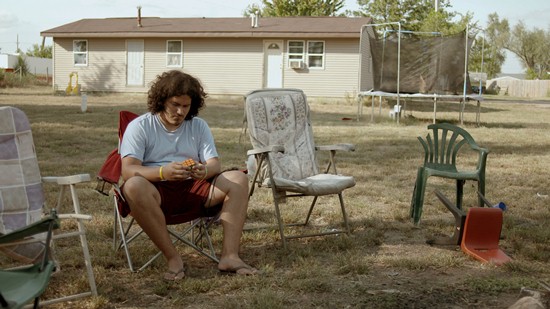
    The new indepedent film POLLYWOGS premiered just recently at the still running 2013 LA Film Festival where it was described as offering an equally amusing and insightful look at directionless thirty-somethings lurching towards adulthood. The film is directed by first-time feature director Karl Jacob (who also wrote the screenplay, produced and starred) and T. Arthur Cottam. In the film Dylan–who’s played by Karl Jacob–retreats to Minnesota for a family reunion featuring firearms, heavy metal and unwelcome questions. Amongst the throng of relatives, he discovers Sarah, the childhood crush he hasn’t seen since her family decamped to a religious compound. Could she prove to be the perpetually heartbroken Dylan’s salvation or will their emotional scars fail to align?

    We were fortunate to catch up with the talented Karl Jacobs and fired off a few questions about his new film.

    VIMOOZ: First, congratulations on POLLYWOGS being an official selection in the 2013 LA Film Festival … and the World Premiere on Friday.

    Karl Jacob: Thanks. We are excited to be premiering it here at LAFF, they have been taking really good care of us, and the audiences have been amazing. Both of our screenings were sold out shows!

    VIMOOZ: Tell us about POLLYWOGS – the story?

    Karl Jacob: The story is about a man coming home to Minnesota after a bitter breakup to seek support from his family during a reunion. While he is there he runs into his childhood best friend and first love who he has not seen for 18 years since her family moved to a religious compound. It’s really a story of confronting your past in order to move ahead.

    pollywogs

    VIMOOZ: Why did you set the film in Minnesota and not say Brooklyn or California?

    Karl Jacob: Northern Minnesota is where I was born and raised, and I am interested in focusing my story worlds to exist inside of the culture there. It’s a world I know a lot about, and find very fascinating. It’s also a culture that I haven’t really seen showcased much in cinema. There was also a practical decision for this as I cast my entire family in the film and we shot it at our family cabin. As filmmakers it’s always a huge boost to production value when you can get amazing locations and willing actors for free.

    VIMOOZ: What films have you directed before?

    Karl Jacob: This is my directorial debut, aside from some small music videos. I have directed some theater and taught many acting classes. I have also acted professionally for 15 years. I produced a feature film in 2011 called Happy New Year.

    VIMOOZ: You wrote the film, what was the inspiration? Was it based on experience?

    Karl Jacob: I think every work of fiction pulls from experiences that we have in our own lives, and so does Pollywogs. The film was definitely inspired by a breakup, and the relection afterward is what lead to the finished product. Conversations with friends and family, working with T. on the structure along with workshoping the film with the actors over the course of 6 months got us to what you see on the screen. While shooting we stuck to a firm story structure, but all of the dialogue is improvised, which is why the actors all have an “Additional Material” credit. Everyone brought something to the table, it was hyper colaborative.

    Karl Jacob as Dylan Stares in Pollywogs Karl Jacob as Dylan Stares in Pollywogs

    VIMOOZ: And you also acted in the film, what was more difficult, the acting or the directing?

    Karl Jacob: Well, to be honest it kind of blurred at a certain point. We were all so well rehearsed and talked so much about the story and the vision that I was able to really rely on everyone coming with their A-game. This made it much more comfortable to both act and direct. We had an amazing team and I really could not have done it without their diligence and professionalism. It was also a fun and unique experience to guide the scene as a director through my performance while I was acting in it.

    VIMOOZ: What’s up next for POLLYWOGS, the film?

    Karl Jacob: Up next we have a screening in Duluth, MN, near where we shot the movie. It is on it’s way to a few more festivals as well. The complete list will be announced on Pollywogsmovie.com soon. Signing up for our region-based mailing list on the website will get you announcements for when it is coming to a theater near you. It will be on VOD in soon as well.

    VIMOOZ: What’s up next for you?

    Karl Jacob: I have a documentary that I will be shooting in the fall about 2 men and their journey into the Colorado Rockies to seek out and kill an elk with a Bow. I also have a episodic series in development.

    http://youtu.be/XTumZoAoRNY

    Read more


  • Interview with Tamar Halpern and Chris Quilty, Documentary LLYN FOULKES ONE MAN BAND to Premiere at LA Film Festival

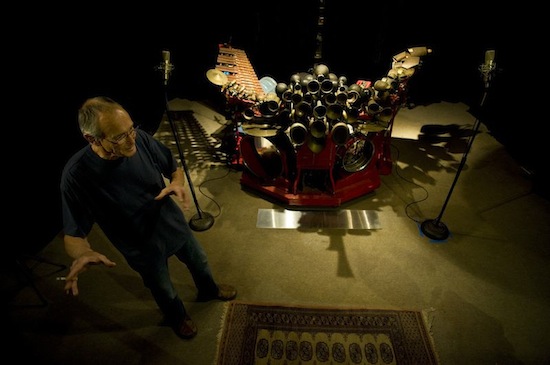
     LLYN FOULKES ONE MAN BAND

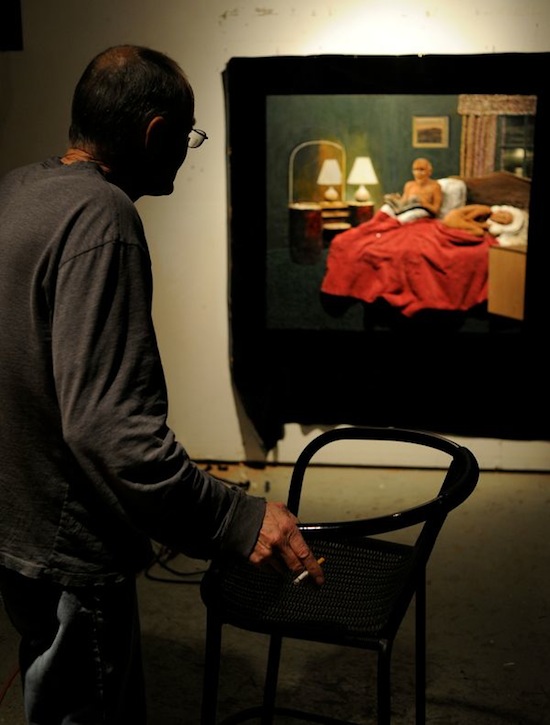
    LLYN FOULKES ONE MAN BAND, a feature documentary about artist and one-man-band musician Llyn Foulkes, will have its World Premiere at the 2013 LA Film Festival on Thursday, June 20. Directed and produced by first-time documentary filmmakers, Tamar Halpern and Chris Quilty, the documentary chronicles 7 years of Llyn Foulkes’s life from ages 70 to 77. During the seven years chronicled in the film, artist and musician Llyn Foulkes creates, destroys, and recreates a pair of large-scale, three-dimensional paintings, one that costs him his marriage, while trying to keep afloat in the fickle art market. 

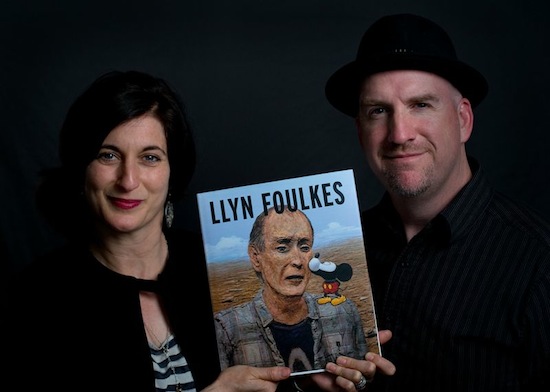
    We caught up with filmmakers, Tamar Halpern and Chris Quilty at the LA Film Festival getting ready for their big World Premiere.

    VIMOOZ: First, congratulations on LLYN FOULKES ONE MAN BAND being an official selection in the 2013 LA Film Festival … Are you nervous, excited by the upcoming premiere

    Tamar Halpern: We are thrilled to be included and cannot wait to share this film as we worked on it for eight years.

    VIMOOZ: Tell us about the film – the story?

    TH- We followed the painter and musician Llyn Foulkes from age 70, when the art world seemed to have forgotten about him, till age 77 when he was at last rediscovered. Llyn works alone – without the aid of assistants – which is incredibly rare in contemporary art, and he plays The Machine, a one man band contraption he built by hand which has the effect. His fame as an artist seemed promising in the 1960’s when he won several awards here and abroad, sold paintings to major museums and had one man shows at the top galleries and museums. What happened over the next forty years, Llyn’s work and influence was shown with less frequency as his contemporaries shot to fame. Undeterred, Llyn kept making his art even when no one was paying attention to his efforts.

    Chris Quilty – This film is specifically a portrait of a fascinating and aging artist who really takes his sweet old time with his work, but there’s also a more universal story here. It’s also a film about growing old, and the great struggle for relevance in the world. It’s about obsession, perfection, and letting go.

    LLYN FOULKES ONE MAN BAND

    VIMOOZ: How did you first find out about Llyn Foulkes?

    TH- Llyn was my neighbor in the nineties down at the Brewery, an artist complex in downtown LA which was formerly a Pabst Blue Ribbon Brewery. I cast him in my feature film “Your Name Here” as a musician who give advice to his teenage grandson about the music industry, warning him that sometimes it’s easier to be a one man band than deal with the problems that arise among band mates. Llyn drew from his personal experience of playing in rock bands in the sixties and seventies, culminating in his appearance on The Tonight Show and a record deal with A and M. Llyn walked away from it all to become a one man band. This theme of walking away when things are going well seems to relate to his art career as well, evident in the first fame he had in the sixties when he was known for his beautiful, meditative rock paintings. Major museums here and abroad bought them and Llyn was a sudden hit in the art world. Instead of continuing with the newly lauded rock paintings, Llyn said he was losing his soul and instead started painting bloody heads – a series of macabre faces gouged out and beaten.

    CQ- I was doing sound for Tamar on one of her films back in 2004. Llyn had a small acting part. I was immediately charmed by his music and fascinating character, and thought to myself, “someone’s got to do a doc on this guy!”

    VIMOOZ: Was it difficult convincing him to participate?

    TH- Not at all. Llyn has been ready to share his fifty year perspective on the ups and downs of the art scene and when I approached him, he didn’t hesitate. He was angry at the art world but also blamed himself for his lack of success, which makes him a very sympathetic character. He is at turns hilarious, charming, angry and verbose – but always forthcoming. There was not a single performance in the film as everything he said, he said with uncensored honesty.

    CQ- Llyn is one of the most open people I’ve ever met. He loves to talk, and loves it even more if a camera is rolling. So he was game from day one. That’s not to say we didn’t have some issues as the years went by. During deadline crunch times when he was so into his work, we would often have to convince him to let us shoot. Occasionally we just backed off, but mostly he relented and invited us into his world. Because we had basically no crew, just the two of us and a camera, we could work “fly on the wall” style, which Llyn appreciated very much.

    VIMOOZ: How long did filming take?

    TH- We filmed off and on for over seven years until the ending revealed itself to us. It was the beginning of his rediscovery, but more important than that, it was a time he openly reflected on life, aging and happiness. Since this film isn’t just about an artist and musician- it’s also about a husband, ex husband, father and human – we allowed the narrative to encompass all aspects of Llyn, as complex and entertaining as they are.

    CQ- Our film took over 8 years to complete, but we could have made a different film and finished it much sooner. The “ending” kept changing, so we kept filming. Llyn says in the film about his work, “it’s never done until they take it away from me.” This could also be true for Tamar and me. We had to stop and let someone take it away from us.

    VIMOOZ: How was it working with Llyn Foulkes – was it difficult? Did you ever feel like quitting at some point?

    TH- There was never talk of quitting. If anything, this project fed our soul and fueled us through other jobs that were challenging. Chris worked thirteen hour days as a Hollywood sound man and Tamar wrote copy and directed commercials until she landed the feature Jeremy Fink and the Meaning of Life, a children’s film she adapted and directed. Through all of it, Tamar and Chris always had this beautiful gem of a film waiting for us and it made all the difference.

    CQ-  We never felt like quitting, but we would sort of drop it for a while and let it percolate for stretches of time. In fact, the nature of this extremely long shoot was that we had the luxury to let things go for a while, and then come back and see what’s new and how our story has developed.

    Co-Directors Tamar Halpern and Chris QuiltyCo-Directors Tamar Halpern and Chris Quilty

    VIMOOZ: Tell us about you, what films have you done before?

    TH– I’m a narrative writer and director so this is my first documentary. My film before this, Jeremy Fink and the Meaning of Life, starred Mira Sorvino, Joe Pantoliano and Michael Urie with music by Edie Brickell, and was based on a book by New York Times bestselling author Wendy Mass.

    CQ- My day job is “Hollywood sound man.” I’ve been in production sound for over 16 years, with many television and film credits. Although I’ve been a shutterbug for years, I basically learned to direct and shoot and edit on this film. But I wouldn’t call myself a cameraman, director, editor or even a sound man. I prefer the term “film maker.”

    VIMOOZ: Have you worked together before as co-directors? Will you work together again?

    TH- This was a first for us. I’d do it again in a minute.

    CQ- Tamar was actually my “boss” a few times in the past when I did sound for several of her narrative films. But this doc was the first time for us as co-directors/producers. We often have different opinions on things and different styles of working, which I believe led us to a better film. We never really talked about our work flow or individual responsibilities on this film. It would just  sort of fall into place organically. I’d be happy to work with Tamar again in any capacity.

    VIMOOZ: What’s up next for the film?

    TH- We are hoping to find our NY premiere and then an international premiere. As Llyn’s work becomes more known in France, Italy and Germany, we hope people will be excited to learn more about his odd iconoclast with volumes of talent. We’ve found that the film appeals beyond the art world because the message is universal – to keep following your passion even if no one is watching.

    VIMOOZ: What’s up next for you?

    TH- Tamar has just adapted Wendy Mass’s first book “A Mango Shaped Space”, a coming of age story about a thirteen year old girl with synesthesia. The book has been translated into seven languages including Chinese and has the most fan base of any of Wendy’s books domestically and internationally. It turns out more people have synesthesia than previously thought and those who don’t are fascinated. The film will be live action with animated elements to illustrate how the main character “sees sound and music”.

    CQ- There’s a few doc ideas we’re kicking around, but one thing’s for sure, the next one wont take us 8 years to make.

    http://youtu.be/O3aGdoNP7xU

    Read more


  • Molly Green and James Leffler Talk About Their New Indie Romantic Comedy “FOREV” at LA Film Festival

    forev

    The new indie romantic comedy “FOREV” co-written and co-directed by Molly Green and James Leffler is already receiving earning critics praises after the world premiere on Saturday night at the 2013 LA Film Festival.  The film is described as a romantic comedy about impulsive marriages.  In the film, Pete and Sophie are somewhere on the edge of the desert when he works up the nerve to propose. The hitch being: Their whirlwind road trip from L.A. to Phoenix is the closest these neighbors have ever come to going on a date. Nevertheless, fueled by their respective fears of intimacy and low-grade self-loathing, they run with the idea, much to the annoyance of Pete’s sister Jess, who’s along for the latter half of the ride.

    We got the opportunity to interview co-directors Molly Green and James Leffler at the LA Film Festival to find out more about their new film.

    Molly Green and James LefflerMolly and James Photo Credit: Jennifer Nies

    VIMOOZ: First, congratulations on FOREV being an official selection in the 2013 LA Film Festival … and the World Premiere on Saturday.
    Thank you! We’re thrilled to be at LAFF, and couldn’t be happier with how the premiere went. The theater was packed with people, and then they actually laughed, which was a huge relief. Everyone at the festival has been awesome – we’re having a blast.

    VIMOOZ: We read some early reviews and they are very, very good. Are you surprised?
    We’re still surprised that we’re in a position to be reviewed! So far it seems like most of the things people are taking away from the movie line up with what we intended, which of course is a director’s dream. We haven’t read a really rough one yet, so we’re kind of waiting for the hammer to fall. Then we’ll just pretend we don’t read reviews.

    VIMOOZ: Tell us about FOREV – the story?
    FOREV is a romantic comedy about two neighbors who decide they’re going to get married, then realize they probably should’ve started dating first. And that realization becomes increasingly obvious when they get stuck in the middle of the desert.

    forev

    VIMOOZ: Who are the three main actors in the film?
    Noël Wells and Matt Mider play the fiancés, and Amanda Bauer plays Matt’s sister. We’d worked with all of them before, and they were closely involved in the writing process too. They’ve been so integral to the project from the very beginning, and we hope that shows up onscreen.

    VIMOOZ: In addition to co-directing, you also co-wrote the film, what was the inspiration?
    We knew we wanted to make a movie with Matt and Noël, and landed on the engagement while thinking of situations that could work well with their dynamic. We were 25, the age when you start seeing all of those elegant wedding announcements come in from people you’ve done keg stands with in college, now in grown-up clothes posing in front of some foliage or whatever. Looking around our dumpy apartments we thought, “Wait, how is that guy suddenly an adult?” So the idea that marriage can seem like a shortcut to adulthood was our jumping-off point. Once we brought Amanda into the fold it really rounded out the character dynamic, and the story started to take shape.

    VIMOOZ: Co-directing and co-writing, that could be very complicated. Was it?
    Actually, not really. We worked so closely throughout writing and pre-production that by the time we got on set we were completely in sync. We’d usually have the same answers to any questions that came up, and that came from doing a ton of prep to get on the same page. We’re still working on our duets, though.

    VIMOOZ: Have you worked much together before?
    Totally. We’ve been directing music videos and writing together for about 5 years now. We met in college at the University of Texas, and started collaborating the first day we were both in Los Angeles. At this point we basically share a brain.

    VIMOOZ: Do you get asked the question about “relationship” as in “is there or is there not“ a relationship between you two?
    Man, people love to ask that question! We’re not dating (and probably wouldn’t have survived making a feature if we were), but people definitely ask that all the time. Noël and Matt get it, too, and none of us have been able to find the perfect sassy answer to that question yet.

    forev

    VIMOOZ: What’s up next for the film?
    We’ve got two more screenings at LAFF – Wednesday, 6/19 at 9:50PM and our just-announced, just-added final showing on Friday 6/21 at 9:50PM – and they should be a lot of fun. We hope to do as long of a festival run as we can, and see what happens along the way.

    VIMOOZ: What’s up next for you?
    Aside from finally catching up on some sleep? We’re always writing. We have a few projects we’re excited to start focusing on, and think it could be cool to try some TV stuff too. But our eye is on the next feature, for sure.

    http://youtu.be/bO3Ws3AKaa4

    Read more


  • Interview with Director Aaron Douglas Johnston on His New Indie Film “MY SISTER’S QUINCEANERA”

    My Sisters Quinceanera

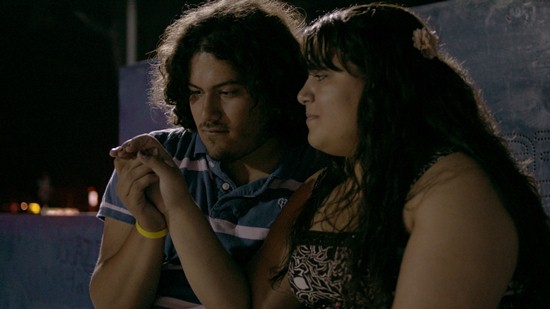
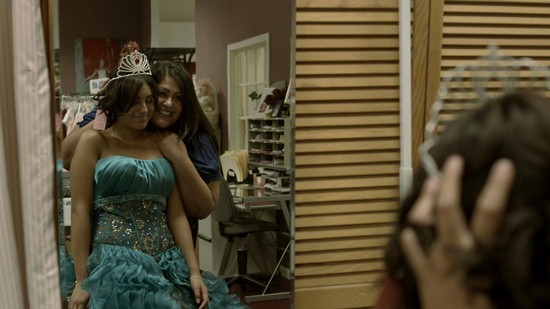
    The independent film “MY SISTER’S QUINCEANERA” about a Latino family in Iowa, is playing at the LA Film Festival where it had its North American premiere on Saturday night. Starring Silas Garcia, Samantha Rae Garcia, Becky Garcia, Tanner McCulley, Nicole Streat, Elizabeth Agapito and Josefina Garcia, MY SISTER’S QUINCEANERA follows teenage Silas who is considered the man of the house, but he wears that responsibility lightly, searching for more from his life than the small town mischief he gets into with his best friend., The film is written, produced and directed by Aaron Douglas Johnston who is also from the Midwest but now resides in Netherlands. We got the chance to catch up with Aaron Douglas Johnston at the LA Film Festival to find out more about his new film.

     VIMOOZ: First, congratulations on MY SISTER’S QUINCEANERA being an official selection in the 2013 LA Film Festival … and the North American Premiere..

    Aaron Douglas Johnston: Thank you!  It’s a great honor to be here at the LA Film Festival.  It’s the first time the film has shown in North America, so it’s wonderful to see and hear the audience react to the film.

    My Sisters Quinceanera

    VIMOOZ: Tell us about MY SISTER’S QUINCEANERA – the story?

    Aaron Douglas Johnston: The film and its story are the result of an intensive workshop in acting and filmmaking that I gave to Mexican-American residents in my hometown of Muscatine, Iowa.  I developed the story while working with the workshop participants, who are also the actors in the film.  It was a wonderful and rewarding process that created ongoing friendships, great actors, and a film we’re all proud of.  MY SISTER’S QUINCEAÑERA follows one Midwestern Latino family as they prepare for a quinceañera.  As the eldest of six, big brother Silas is constantly helping his single mom and taking care of his siblings.  He has become the involuntary man of the house, but he dreams of leaving his hometown to pursue his own dreams.  Family relationships as well as love interest Nicole make the choice a difficult one.  Surrounded by family, friends and potential love, he struggles with the question: Should he leave or should he stay?

    VIMOOZ: You are credited as the writer for the film, what inspired you to come up with the story?

    Aaron Douglas Johnston: The workshop participants and actors inspired me to write this story.  I started the workshop with no pre-conceived notions of what the film should be about.  During the course of the workshop and through the various assignments and acting improvisations that I gave, I was drawn to several recurring topics: the importance and craziness surrounding the quinceañera, the warmth and love of a large Latino family, and the heart-wrenching dilemma for a son/sibling to decide whether to continue helping to provide for his family or to leave his family behind in order to pursue his own dreams (of higher education in Silas’ case).  The richness, love, and at times constrictive nature of family relationships, combined with the beautiful small Midwestern town landscape, inspired me to tell this story.

    VIMOOZ:  Is there a large Latino community in Iowa?

    Aaron Douglas Johnston: Like much of Eastern Iowa, my hometown of Muscatine has a significant Latino population, about 10 to 15%.  Latinos have long been a part of Iowa.  Through the workshop and the film, I was anxious to explore my hometown, and the workshop became a wonderful way to both get to know the Latino community of Muscatine and to tell an authentic story dear to all of us who collaborated on this film.

    My Sisters Quinceanera

    VIMOOZ:  How did you find the actors?

    Aaron Douglas Johnston: All of the actors attended the acting and filmmaking workshop.  They had never acted before, but they became not only comfortable but also professional and quite skilled in front of the camera.  It was a great experience working with them.

    VIMOOZ:  Most people may not know that you graduated summa cum laude in International Studies – so will you incorporate this international perspective to all your films?

    Aaron Douglas Johnston: I’ve always been fascinated by various cultures, countries, and languages.  Before I became a filmmaker, I studied sociology at graduate school, and I’ve lived in several different countries.  I now live permanently in Amsterdam.  I’m drawn to stories where various cultures mix, mesh, and/or collide in interesting and dramatic ways as well as to stories about insider/outsider themes.  These types of stories often mesh with an international perspective so this perspective does find its way into all of my films in one way or another.

    My Sisters Quinceanera

    VIMOOZ: What’s up next for the film?

    Aaron Douglas Johnston: The film will screen at multiple film festivals this year, and we’re currently working on distribution deals to get the film out there so people can see it.

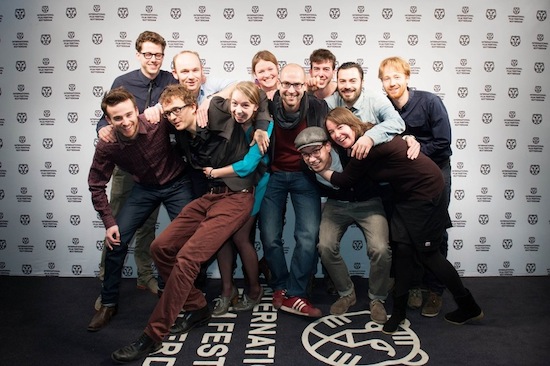
    Aaron Douglas Johnston (center wearing grey scarf) with crew at WorldPremiere IFFRotterdam 2013Aaron Douglas Johnston (center wearing grey scarf) with crew at WorldPremiere IFFRotterdam 2013

    VIMOOZ: What’s up next for you?

    Aaron Douglas Johnston: I’d love to make another film in Iowa, as my own hometown continues to inspire me. I’m also currently developing several projects in the Netherlands. [ Pictured above: Aaron Douglas Johnston (center wearing grey scarf) with crew at WorldPremiere IFFRotterdam 2013 ]

    http://youtu.be/YdSMWQEtPJ4

    Read more


  • Nicole Gomez Fisher Talks About her Sold Out Film SLEEPING WITH THE FISHES at 2013 Brooklyn Film Festival

    Nicole Gomez Fisher is the writer and director of SLEEPING WITH THE FISHES, an official selection of the 2013 Brooklyn Film Festival.  SLEEPING WITH THE FISHES which had its World Premiere at the festival last weekend, continues to screen to sold out audiences for all of the film’s time slots. SLEEPING WITH THE FISHES is a comedy which captures one girl’s journey of self-discovery and the dynamics of her zany family. The film features an incredible Latino cast of established and rising talent including Gina Rodriguez and Ana Ortiz. 

    We caught up with the super talented actress, writer, director, Nicole Gomez Fisher at the 2013 Brooklyn Film Festival to find out all there is to know about the hot ticket at the festival and what she is up to next.

    VIMOOZ: First, congratulations on SLEEPING WITH THE FISHES being an official selection in the 2013 Brooklyn Film Festival … and the World Premiere. How does it feel doing all this in your hometown Brooklyn?

    Nicole Gomez Fisher: It’s exhilarating! The whole process has been so overwhelming, that having the support of friends and family close by only helps get you through. Nothing like home!

    VIMOOZ: Tell us about SLEEPING WITH THE FISHES – the story?

    Nicole Gomez Fisher: SLEEPING WITH THE FISHES is about Alexis Fish’s (GINA RODRIGUEZ) journey back home to where it all went wrong, to face her uber-judegmental mother and reveal to her family that her perfect life with the perfect husband wasn’t so perfect after all. It’s a coming-of-age later in life comedy which captures Alexis’ roller coaster world as she tries to pick up the pieces of her life and put them back together under the critical eye of her Madre.

    VIMOOZ: Is the film set in Brooklyn?

    Nicole Gomez Fisher: Yes it is. They say write what you know…I say shoot where you know. It would stink to have to Mapquest your way around your shoot, especially for your crew and talent! That’s a sure way to lose a team! Brooklyn is amazing! It’s where my heart is. I wouldn’t have shot it anywhere else.

    VIMOOZ: You also wrote the film, what was your inspiration?

    Nicole Gomez Fisher: My family. The characters are all loosely based on my family and I wanted to write a mother/daughter story that came from a voice not heard very often in Hollywood. I enjoy films that have the perfect blend of humor and heart and I felt that this story embodied both.

    VIMOOZ: You have a very impressive writing resume. Was writing for a film different from your prior writing experiences?

    Nicole Gomez FisherWriting for film versus any other medium, for me, is quite daunting at first. It’s like building a tower of the unknown. Structure is so important and without that set in place, moving forward is futile. I’m great with story and character development, but again, without structure, you’re just flying blind. But once you manage to reach the top, it’s the most rewarding feeling ever.

    VIMOOZ: You also have a lot of acting credits and experience. Are you done with acting?

    Nicole Gomez Fisher: I prefer being behind the scenes, but if someone offered me a role that required kissing Ryan Gosling…I wouldn’t pass on it. Seriously, I’d jump back on that pony if the right opportunity presented itself.

    VIMOOZ: The film is sold out at the festival, how will unlucky film lovers get to the see the film? What’s up next for SLEEPING WITH THE FISHES?

    Nicole Gomez Fisher: We are screening again in August at the San Francisco Jewish Film Festival and after that, we are hoping to either screen at the Hamptons Film Festival or Woodstock, but we have to get accepted first! The goal is to sell the film so that those “unlucky film lovers” can have the opportunity to see it on the big screen in multiple cities!

    VIMOOZ: What’s up next for you?

    Nicole Gomez FisherI recently completed my second feature, an action comedy entitled Good Egg about an egg donor that gets stalked by her recipient and I was just offered to adapt The Yankee Princess by Jennie Paul.

    Read more


  • Sarah Friedland Talks About her Vibrant New Documentary RINK at Brooklyn Film Festival

    New York filmmaker Sarah Friedland took a trip across the Hudson to make a documentary about the Branch Brook Park Roller Rink, located in Newark, New Jersey, one of the few remaining urban rinks of its kind. Now, one might think how interesting can a documentary about a roller rink be, but Sarah digs way deep, and after almost five years of hard work, she emerged with “RINK” a film thats tells more than a story about a roller rink, but a space transformed and its symbolic representation to those who use it. In the documentary “RINK,” two main characters emerge: Bonesaw, a tough talking, tattooed member of the Garden State Roller Derby Team; and Graylen, a deeply spiritual, Gospel Night skater. On the surface these two characters are different, both ideologically and in their social and racial backgrounds. However, the film reveals a shared past of violence and drug abuse from which the rink provides a much needed refuge. 

    We caught up with director Sarah Friedland at the 2013 Brooklyn Film Festival where she is screening RINK, to learn more about the film, and find out how did a New Yorker end up making a documentary about a roller rink in Newark, New Jersey.

    VIMOOZ: First, congratulations on RINK being an official selection in the 2013 Brooklyn Film Festival … this is the NY premiere – are you ready for the NY audience?

    Sarah Friedland: I am extremely excited to be part of BFF.  My first feature, “Thing With No Name”, premiered at BFF in 2009 and we had  great festival experience then.  The Rink is a film about Newark but New York City is my home, so I am thrilled to show it to the NYC audience.  

    VIMOOZ: How was the World Premiere screening at the NJ International Film Festival?

    Friedland: The NJIFF screening went very well.  We had a very receptive and large audience of folks from all over New Jersey.  It was great to be a part of a New Jersey festival and share the film with Newarkers and folks from the rink.

    VIMOOZ: Tell us about RINK – the story? 

    Friedland: The film is about Branch Brook Park Roller Rink in Newark New Jersey- one of the last remaining roller rinks in the tri-state area.  We use the rink as a microcosm for the city of Newark and, in doing so, the film dips into many facets of Newark’s rich history, including: urban renewal, the rebellion of 1967, and the current gentrification of downtown Newark. We follow two main characters: Bonesaw, a tough talking, tattooed member of the Garden State Roller Derby Team; and Gralen, a deeply spiritual, Gospel Night skater.  These two folks appear very different on the outside but have a shared past of violence and drug abuse from which the rink provides a refuge.  In many ways, their stories parallel that of Newark, which is often labeled as violent and crime ridden, while all of its good parts are ignored. The film also sees the rink as an endangered space of urban recreation.  There used to be hundreds of roller rinks in the tri-state area, now there is one.  So Branch Brook is a very important place, not just for Newark, but for the entire skating community, which has recently lost many key rinks to real-estate speculation and gentrification.

    VIMOOZ: Where are you from? 

    Friedland: I am from Hastings-on-Hudson New York, but I have lived in New York City for the last fifteen years.  When I was little growing up in Hastings, we used to skate in the basement of the high school.  It was something I looked forward to every week.  Most people seem to have some connection to skating from there childhood, even if they don’t skate anymore, and that is one of the great things about this film- we enter it from a point of nostalgia.


    VIMOOZ: How did you find out about the rink in New jersey?

    Friedland: My co-producer, Ryan Joseph, was living in Newark at the time and was the staff photographer for the Garden State Roller Derby team who practice at the rink. We originally thought that we would make a film about them, but when we spent time in the rink, it became clear that the space itself was so interesting and that the film should reflect Branch Brook as a whole.  

    VIMOOZ: How long did it take to shoot the documentary?

    Friedland: We shot for about three and a half years and edited for a year and a half.  It took us so long because we made a big effort to get to know the people we were following and make sure everyone was comfortable before starting to shoot. It’s very important to both Ryan and I that we have a certain level of intimacy with the folks in the film before pulling out the camera.  Ryan knew Bonesaw from working with the derby girls but I met Gralen after doing a series of pre-interviews with other Gospel Night skaters.  So that was a new relationship.  He and his family were really gracious with their time and let us into their lives openly. It was also a complicated film to put together because it was ricky to weave Newark in as a character.  We started editing and then realized we needed to shoot more to flesh out a few things, so it was a back and forth.

    VIMOOZ: What’s up next for RINK? 

    Friedland: We received a small grant from my union, I am an Assistant Adjunct Professor at John Jay College, to take the film on tour to roller rinks around the country.  I am currently contacting rinks and planning where to take the film.  We will actually be showing the film inside the roller rinks to create a more visceral response between the viewer and the space. If anyone out there knows any rinks that might be interested, send them my way!

    VIMOOZ: What’s up next for you?

    Friedland: This year I co-founded Perinspire, a production company with my long term film partner Esy Casey.  We are finishing a film called Jeepney, which she directed and I am co-producing.  The film is about the most popular form of transportation in the Philippines  beautiful, blinged out buses called Jeepneys.  These fascinating  handmade and designed vehicles have their origins in US military jeeps that were left in the Philippines after World War II.  The film speaks about Filipino history and culture through the Jeepney.  It will come out sometime this fall.  I have also been working as an editor on two feature docs: tentatively titled “Camp Kinderland” by Katie Halper, which is about a political, Jewish summer camp; and “Kate Bornstein is a Queer and Pleasant Danger” by Sam Feder, which is about the amazing gender theorist and performance artist Kate Bornsteim.  Both of those films are slated to come out this year.  After that, I will take a nap.

    Read more


  • Director Dan Eberle Talks About His New Film, CUT TO BLACK at the Brooklyn Film Festival

    Director Dan Eberle returns to the Brooklyn Film Festival for a second time, this time around with his new film “CUT TO BLACK” in which he again plays multiple roles – actor, director, writer, and producer. Eberle, who also lives in Brooklyn, New York was featured in the 2008 festival with his film, the critically acclaimed action thriller “THE LOCAL.” In his latest film CUT TO BLACK  which is shot in lavish black and white tones, and set against stark, gritty urban modernity, Eberle, plays Bill Ivers, a disgraced ex-cop, hired by a wealthy former friend to rid his estranged daughter Jessica of a stalker. We caught up with the super talented Eberle at the Brooklyn Film Festival to talk about CUT TO BLACK.

    VIMOOZ: First, congratulations on CUT TO BLACK being an official selection in the 2013 Brooklyn Film Festival again … which time is better, the first or second time?

    Dan Eberle: We were in the Brooklyn Film Festival in 2008 with an earlier feature called ‘The Local’. It it was a great experience for us, but it was definitely a looser, scrappier event back then. The Brooklyn Film Festival has come a long way in the intervening years. They now have their own swanky venue, indieScreen, the movie theater/lounge in Williamsburg–that alone gives the event a cool, nightclub-like experience. The theater itself is a great sounding room and excellent projection. As a filmmaker, you really couldn’t ask for a better screening venue. I’ve always liked the diversity in the film selections at the BFF. Marco and his crew are fearless in their programming! They are also among only a few established festivals that still program gritty crime films like ours–right along side introspective character pieces, documentaries, and international films. It really is about the quality of the films, and nothing else.

    VIMOOZ: Tell us about CUT TO BLACK – the story?

    Eberle: ‘CUT TO BLACK’ is about a depressed ex-cop named Bill, who is hired by a wealthily former friend to run off a peeping tom who is terrorizing his estranged daughter, Jessica. In the course of Bill’s investigation, he learns the stalker is the least of Jessica’s problems. As the stakes get considerably higher for everyone involved, Bill pins the sum of his life’s worth to the resolution of Jessica’s increasingly intractable situation.

    VIMOOZ: Your film is stylistically different, was there a reason behind that/any influences?

    Eberle: In some ways, ‘CUT TO BLACK’ is a throwback to classic film noir. We lean on some familiar character archetypes and setups, but that’s really just a point of departure. ‘CUT TO BLACK’ is deliberately mired in anachronism. Its a modern story, shot in Black and White, with high contrast lighting. There are present-day affectations like cell phones and new cars, but much of the architecture of Brooklyn is very old world. The characters listen to a mix of traditional jazz, but the score is overtly electronic. Because of these elemental contradictions, the overall experience of the film is transporting. ‘CUT TO BLACK’ becomes a world of its own.

    VIMOOZ: You write, produce, direct and star in all your films – what do you not do?

    Eberle: I may do all those things, but I do none of them alone. Every part of the filmmaking process is a collaboration of one kind or another. Even though I didn’t have a co-writer on ‘CUT TO BLACK’, many of the clever ideas in the script came from other people, both in and out of the production. For example, another filmmaker friend of mine, Jonathan Jacobson, actually suggested the one-way mirror at the strip club where Jessica works. He came up with the ‘confessional’ idea and I ran with it. I’d go on about how that idea actually became an integral story element, but I don’t want to get into spoiler territory! My co-producer, Danielle Primiceri, designed all of Jessica’s elaborate costumes for the dance sequences and Gayle Madeira choreographed all of Jillaine’s dances. Those scenes are some of the most striking imagery in the film. Obviously no part of the film would have worked without the executional brilliance of our director of photography, James Parsons, who I’ve collaborated with going back to my first full-fledge feature ‘Jail City’. James once said that he likes working on independent films because, out of necessity, the vocational boundaries are softer. Everyone is seemingly working in every department, pitching in where help is needed, or where a creative solution is required. For this reason, working in independent film is not for everyone. I’ve learned the hard way that you just can’t be rigid. The words ‘its-not-my-job’ have no place on an indie set. 

    VIMOOZ: I read that you worked as a jazz musician? Do you still play jazz?

    Eberle: I do, but not professionally. For now.

    VIMOOZ: What’s up next for CUT TO BLACK?

    Eberle: We’re thinking about what festivals we can do next before a theatrical run. We are planning a US release in the Fall or Winter of this year. 

    VIMOOZ: What’s up next for you?

    Eberle: I’ve got a new project called ‘The Interventionist’ that is right on the cusp of a greenlight, but we’re still ironing out some business there. It’s about an unconventional evangelical minister who performs Christian interventions. He comes to the big bad city to find a secular friend who has disappeared while working under his auspices. It’s not a comedy. 

    Read more