Film Reviews

  • THE BETTER ANGELS Explores The Childhood of Abraham Lincoln

    the better angels 1

    Many recent Hollywood blockbusters have taken well-known fictional characters and depicted their earliest adventures in prequels or origin films. With THE BETTER ANGELS, it appears that the origin film trend has now encompassed historical figures because the film portrays the childhood of Abraham Lincoln. THE BETTER ANGELS is the debut film from writer/director A.J. Edwards, a collaborator of Terrence Malick who worked in various roles on The New World, The Tree of Life, and To the Wonder (Malick also serves as a producer of THE BETTER ANGELS).

    Considering that Lincoln is generally regarded as the greatest U.S. President THE BETTER ANGELS isn’t the first film to depict the earlier years of Lincoln. John Ford directed Henry Ford in Young Mr. Lincoln in 1939, though films about Lincoln’s origins stretch back at least as far as the 1913 silent short From Rail Splitter to President. Thankfully, THE BETTER ANGELS doesn’t do anything as hokey as other origin films and portray sequences like young Lincoln putting on his first stovepipe hat. In fact, if you miss the opening narration you might not even realize that this film is about young Abe Lincoln at all and think it is about no particular boy growing up in the nineteenth century (and is perhaps why the title was changed from the metaphoric Green Blade Rising to THE BETTER ANGELS, a famous phrase from Lincoln’s first inaugural speech). There’s a certain beauty in that subtly, but it also robs the film of the historical impact it probably should have considering its subject.

    THE BETTER ANGELS begins in 1817, shortly after young Abe Lincoln and his family moved to Indiana as recounted by his older cousin, Dennis (Cameron Mitchell Williams), who also serves as the film’s narrator. The film depicts several major events in young Abe’s life, including the loss of his mother (Diane Kruger), learning to accept his stepmother (Brit Marling), his first encounter with slavery, and the little formal education he had as child from a devoted teacher, Mr. Crawford (Wes Bentley). Most of all, THE BETTER ANGELS is about the relationship between young Abe and his father, Tom (Jason Clarke), a strong-willed man who somewhat disapproves his son’s preference of studying over working.

    the better angels 2

    There is much to THE BETTER ANGELS which is serene and peaceful, and the influence of Malick is obvious, particularly with the film’s ethereal tone partially provided by the black and white cinematography. The absence of color from this film is a curious choice and I’m not sure it services the movie to be in black and white. There are many beautiful landscapes and excellent shots of nature that would’ve looked stunning in color instead of the crystal-clear digital-looking black and white. I’m curious why Edwards decided to film it in black and white because from a narrative standpoint it did not seem necessary.

    Which leads to the most significant issue of THE BETTER ANGELS – the equally colorless narrative. Lincoln is a fascinating historical figure, and his early years should be particularly interesting material for a film. But similar to Malick’s own work, this film mostly depicts Lincoln’s childhood in an understated way outside of the few significant happenings, like the death of his mother. Because of that, it’s not a particularly engaging film. Even the most patient Malick fans might fight it difficult to stay invested in a film that is largely about boys farming and getting into trouble. It doesn’t help that the conflict between Abe and his father is equally understated, which makes the film’s central narrative difficult to grasp.

    Patient history buffs will likely enjoy THE BETTER ANGELS because of its exploration of Lincoln’s early years, but most others might find the film too slow-moving for their taste.

    Film Review Rating 3 out of 5 : See it … It’s Good

    THE BETTER ANGELS opens in select theaters nationwide on Friday, November 7.

    http://youtu.be/IS-5G5X9BFE

    Read more


  • MANHATTAN ROMANCE Written & Directed by Tom O’Brien

    manhattan romance

    Towards the end of MANHATTAN ROMANCE, Danny (Tom O’Brien, who also wrote, directed, and produced this movie) is presenting a documentary he created about New York relationships at a film festival. When an audience member asks Danny why his film lacks a resolution, Danny gives a semi-annoyed response about how life doesn’t have clean resolutions so there is no reason why films should have them either. There’s nothing wrong with that sentiment – plenty of great movies end unresolved – but when an actor/writer/producer/director expresses that shortly before the credits in his own film, it sounds like a preemptive defense of his lack of confidence in the ending of his own movie.

    MANHATTAN ROMANCE is about Danny, an everyman who works as a television commercial editor as he toils on his documentary about love. However, that is just background detail because Danny’s real conflicts are within his own love life. He’s sexually frustrated because Theresa, the new age hippie girl he’s sort of seeing (played by recent Ed Burns favorite Caitlin FitzGerald) shows little interest in having sex with him, and his down-to-earth, peppy best friend Carla (Katherine Waterston) – with whom he gets along so well you’d suspect they are dating – is a lesbian. Or at least she is now, because she used to date guys. Anyway, right now she is in a relationship with the cold and calculating political strategist Emmy (Gabby Hoffman). MANHATTAN ROMANCE follows Danny as he attempts to navigate the rough waters of his love life, or, in truth, his lack thereof.

    Of course, Danny lives in a city inhabited by eight million people, but as far as Danny is concerned there are only two women worth dating in the entire city. Even when Danny attends his cousin’s wedding and his relatives express that there are many eligible single women there, Danny totally ignores the opportunity. While I certainly know how it is to be completely infatuated with one woman (or, like Danny, two women) at a time, the fact that Danny only considers two unattainable women as worthy of his time shows the limit of the narrative’s scope. Also, since Danny gets bent out of shape any time either of these women don’t act the way he wants them to act reveals that he in no way, shape, or form should be directing a documentary about love – which, to be honest, looks increasingly like an excuse just to invade the personal lives of these two women as the film goes on.

    O’Brien is an auteur actor/writer/producer/director who made his feature writing/directing debut with 2012’s Fairhaven, which was featured at that year’s Tribeca Film Festival. He returned to Tribeca this year as an actor in the well-regarded Alex of Venice. I have no doubt that O’Brien envisions himself in the mold of Woody Allen – whom his character namechecks early in this film – but one thing that Allen’s films always have are engaging characters. The only character of emotional substance in MANHATTAN ROMANCE is Carla, and much of that is due to Waterston’s enthusiastic portrayal of the character. Theresa is little more than a caricature of an extreme new age girl (and FitzGerald could offer so much more than that), and Danny is essentially a lovelorn sap who is frustrated about the lack of control in his love life. In other words, you’ve seen these characters in plenty of other movies before.

    Because of that, much of MANHATTAN ROMANCE is as generic as its title. It even features a few musical interludes of montage of shots of the cityscape like just about any other New York-set romantic comedy. If O’Brien wanted to achieve something unique with MANHATTAN ROMANCE, he didn’t get there. It marks the work of an auteur still learning his craft, and hopefully O’Brien’s next film will feature more characters in line with Waterston’s Carla instead of thin characters like Danny.

    RATING 2 out of 5 : See it … At Your Own Risk

    MANHATTAN ROMANCE will screen at the Big Apple Film Festival on Wednesday, November 5 at 8:30 PM and Sunday, November 9 at 8:00 PM.

    Read more


  • FUGLY! Starring John Leguizamo & Rosie Perez

    Fugly

    The tagline for FUGLY! – co-written and starring John Leguizamo – declares it “An Anti-Romantic Comedy.” However, that’s like putting a sign on a duck that says “this is not a duck” and expecting people to think it’s another animal. FUGLY! might not be melodramatic, but it’s as much of a romantic comedy as Garden State, 500 Days of Summer, or any other movie involving a male protagonist pining over a girl whom he thinks is the cure-all to his imperfections despite she being imperfect herself.

    Jesse Sanchez (John Leguizamo) grows up an ugly kid in 1970s Queens, New York and attains confidence by being funny. When he gets to college, he enrolls in the drama program and meets Lara (Radha Mitchell), and the two have a one-night stand that lands them in trouble with the police and Lara’s father. Though parted, Sanchez spends the next two decades trying to recreate the love he felt on that one perfect night. Even though Sanchez’s acting career takes off and he gains a degree of fame, a tumultuous marriage to an actress named Zowie (Rosie Perez), issues with his mother (Olga Merediz) and brother Ray (Yul Vazquez), and his own feelings of inadequacy plague him. Only the advice of his grandfather (a very funny Tomas Milian) and thoughts of Lara seem to get Sanchez to look on the bright side of his successful life.

    FUGLY! – co-written and starring John Leguizamo

    Much of FUGLY! reflects Leguizamo’s own life and career, but not enough to call the film autobiographical or semi-autobiographical. Like Leguizamo, Sanchez is an actor who came to prominence playing stereotypical Latino roles (gangsters and drug dealers) and later achieved notoriety with his one-man shows (the poster for Sanchez’s show “Freak” is essentially the poster for Leguizamo’s 2002 one-man show Sexaholix done in a different style). What’s odd about FUGLY! is that Leguizamo’s characters acts like twenty or thirty-something YouTube blogger throughout the film… except both Leguizamo and the Sanchez character are actually fifty years old. While Leguizamo certainly doesn’t look fifty, it still is a bit awkward seeing him play a character that is so much younger maturity-wise. That’s not to say middle-aged people can’t be immature, but you don’t often see fifty year olds making video blogs about their love lives and threatening to commit suicide.

    FUGLY! also features animation by Bill Plympton, which contributes to FUGLY! being too gimmicky for its own good. These animated bits – and other imagery that pops up like GIFs on an internet site – are more distracting than they are clever or enjoyable. Yes, Woody Allen worked in a short animated sequence into the paragon of romantic comedies, Annie Hall, but that doesn’t mean it works in this movie. I’m also of the mind that after thirty-seven years directors should stop trying to remake Annie Hall in their own images.

    Leguizamo’s one-man shows are hilarious and full of truth in every way that FUGLY! isn’t. Despite being somewhat based on Leguizamo’s own life, FUGLY! was directed by Alfredo De Villa – whose best-known film, 2008’s Nothing Like the Holidays, starred Leguizamo – and was co-written by first-time screenwriter Kathy DeMarco. I don’t know what went wrong in the mix here, but I strongly recommend tracking down recordings of Leguizamo’s one-man shows and watching those instead of FUGLY! for a better taste of what Leguizamo can do with his own material.

    RATING 2 out of 5 : See it … At Your Own Risk

    FUGLY! opens Friday, November 7 in New York at AMC Empire 25, with additional cities to follow. It debuts on Movies on Demand and VOD Release on Tuesday, November 25.

    http://youtu.be/6a0tRAasSsI

    Read more


  • “Pelican Dreams” The Entertaining DocuDrama

    pelican dreams

    Nature documentaries don’t often warrant reviewing since their purpose is primarily to educate, not entertain. But many nature documentaries like Pelican Dreams often combine traditional nature photography with purposeful narratives that inject personality into the art form.

    Pelican Dreams focuses on a young California Brown Pelican that was discovered wandering in traffic on the Golden Gate Bridge. When she is taken to a nature sanctuary to find out what is wrong with her she is underweight and appears to be confused. This inspires documentarian Judy Irving (who previously directed another avian documentary, 2003’s The Wild Parrots of Telegraph Hill) to learn about the life of these pelicans and why “G.G.” (the name she gives the pelican for where she was discovered) ended up on the bridge.

    She first begins by learning about the mating habits and adolescence of these pelicans at an island offshore of California where they breed. Irving contemplates their emotions, like how scary it must be to first learn to fly. In fact, one of the more unexpected aspects of Pelican Dreams is how the narrative style is far more personal than most documentaries. Irving reflects on her personal connection with pelicans, including her dreams about flying, and why they have such an impact on her. Later, she even introduces her husband, Mark Bittner (who also worked on this documentary) to an injured pelican named Morro, a bird that was cared for Bill and Dani Nicholson, who rehabilitate pelicans in their own backyard. It’s not a common technique of most nature documentaries to exhibit such a personal connection, but it adds a unique element to the film. It might not be an approach that is appreciated by those who prefer a less engaged narrator in nature documentaries, but it’s certainly not overbearing.

    Much of the second half of the documentary is about the impact humans have on pelicans today, most notably from the pesticide DDT before it was banned. While brown pelicans were taken off the endangered species list in 2009, they have begun to cause the usual problems with overpopulation in human-settled areas and compete with other species (including humans) for food. Some problems are unavoidable – one of pelicans’ main foods is anchovies, which humans fish in large numbers – and Irving steers clear of common problems of environmental documentaries by not overly shaming humanity or attempting to push an agenda that is unrealistic. In other words, this isn’t a documentary that shakes its finger at humanity, especially since so much of the documentary focuses on the compassionate humans like the Nicholsons and veterinarian Monte Merrick who care for injured pelicans (and it’s worth noting that some of the pelicans’ issues might even be the result of overpopulation directly because of the conservation efforts).

    Being a nature documentary, Pelican Dreams is filled with excellent camerawork of pelicans in flight – particularly the beautiful final shots – which I always thought were strange-looking animals. However, while watching this documentary I learned to appreciate the unique gawky, but graceful, movements of these birds. I never thought I would think that about pelicans, so on that level alone Irving accomplished what she set out to do with this documentary.

    Film Review Rating 3 out of 5 : See it … It’s Good

    Pelican Dreams will open at the Lincoln Plaza Cinemas and at the Angelika Film Center in New York, and at the Royal, Playhouse 7,  and Town Center in Los Angeles on November 7.

    Read more


  • Compelling Drama “Diplomatie” (Diplomacy)

    "Diplomatie" (Diplomacy)

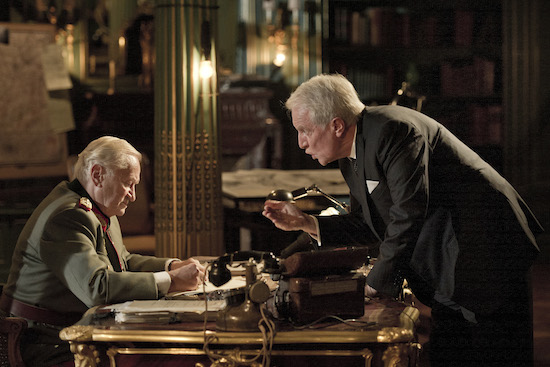
    In late August 1944, the Allies were advancing on German-occupied Paris. General von Choltitz (Niels Arestrup) the military governor of Paris (a position he held less than three weeks before the events of the film begin) is given orders to destroy Paris and abandon the city. He enlists a French engineer named Jacques Lanvin (Jean-Marc Roulot) to develop a plan to destroy Paris. Lanvin proposes blowing up the city’s many bridges to cause the Seine to flood, which would destroy the Notre Dame Cathedral, the Louvre, and the Opera. The remaining city monuments – including the Eiffel Tower, the Arc de Triomphe, and Parliament – would be destroyed by explosives. Ironically, Choltitz points out to Lanvin that Paris is Hitler’s favorite city. “So why destroy it?” Lanvin asks. Choltitz responds, “Hitler wanted Berlin to be as beautiful as Paris, and bigger. Now, four years later, Berlin is in ruins, while Paris is as glorious as ever, see? It’s unbearable for him.”

    Swedish diplomat Raoul Nordling (André Dussollier) – who was born and raised in Paris – sneaks into Cholititz’s headquarters and tries to persuade him from destroying the city. Though Choltitz at first dismisses Nordling’s efforts as futile, by appealing to Choltitz’s better nature and his deep-seeded doubts that Germany can win Nordling begins to get through to Coltitz. However, Nordling soon learns that Coltitz fears for something greater than his own life if he does not fulfill the Fuhrer’s orders to destroy Paris are not fulfilled.

    Diplomacy is adapted for the screen from the play by Cyril Gely and the film’s director, Volker Schlöndorff. The stage origins of Diplomacy are obvious – most of the narrative is a two-man show between Choltitz and Nordling, and both actors convey the intense emotion of the weight of history as the debate over the city’s future lies in the balance. Naturally, viewers know that Paris and its monuments remain until this day, but Schlöndorff (who has been directing films for more than half a century) focuses on the dramatic proceedings that led Paris to safety. Like most great play adaptations, the power of the film is in its dialogue. What the film adds that the play would lack on stage is the beautiful shots of Paris’ monuments and the evocative score composed by Jörg Lemberg.

    What Diplomacy primarily offers is two great European actors (both Arestrup and Dussollier are three-time César Award winners) sparing in one of the most monumental decisions in modern European history. Anyone who has an appreciation for history or for effective dramatic  acting will be enthralled by the performances by both men. Of course, if an 84 minute play adaptation based on historical events in German isn’t your thing, you might want to overlook Diplomacy. Despite its wartime setting there are no battles depicted – or any action, for that matter – nor any semblance of romance except for Nordling’s love for Paris. Yet all the ingredients for compelling drama are here – making Diplomacy an excellent film for both history and theater buffs.

    Review Rating: 4 out of 5 : See it …… It’s Very Good

    Diplomacy opens in New York City on Wednesday, October 15 and Los Angeles on Friday, November 7.

     http://youtu.be/rO6jcH5khvE


    Credits

    Directed by Volker Schlöndorff
    Written by Cyril Gély, Volker Schlöndorff,
    based on the play by Cyril Gély
    Cinematography Michel Amathieu

    Cast

    André Dussollier (Consul Raoul Nordling)
    Niels Arestrup (General Dietrich von Choltitz)
    Burghart Klaußner (Major Ebernach)
    Robert Stadlober (Leutnant Bressensdorf)
    Charlie Nelson (Concierge)
    Jean-Marc Roulot (Jacques Lanvin)
    Stefan Wilkening (Unteroffizier Mayer)
    Thomas Arnold (Oberleutnant Hegger)
    Lucas Prisor (SS-Officer, Obersturmführer)
    Attila Borlan (SS-Officer)

    Film Info

    2014
    84 mins
    Color
    France/Germany
    In French and German
    DCP
    Aspect ratio: 2.35:1
    Rating: Not Rated

    Read more


  • Bill Murray, Melissa McCarthy Stars in Indie Movie ST. VINCENT

    indie movie St. Vincent

    I will see just about any movie that stars Bill Murray not only because he’s one of my all-time favorite actors, but also because Murray has a tendency to pick great projects to star in. The new indie movie St. Vincent has received a lot of praise in the lead-up to its release based on Murray’s performance, and it’s all warranted. Though Murray has spent the last decade mostly starring in little-seen indie films and Wes Anderson movies, St. Vincent will remind general audiences just how great of an actor he is.

    Vin (Bill Murray) is a Brooklyn-born, politically incorrect man on the cusp of seventy with a thick New York accent. He smokes and drinks too much, gambles with money he doesn’t have, eats all bad food, and has a weekly appointment with a Daka (Naomi Watts with a comically thick accent), a stripper/prostitute who is pregnant with a baby that may or may not be Vin’s. On the surface he seems to be little more than a nasty drunk who is looking to put himself into a grave as soon as possible. He wakes up from a drunken stupor to find out that single mother Maggie (Melissa McCarthy) and her son Oliver (Jaeden Lieberher) have moved next door. Though their initial meeting is less than cordial, Vin inadvertently ends up the precocious boy’s after-school babysitter. Oliver and Vin bond as the old man teaches Oliver his wicked ways, but he also reveals his softer side to the kid, like when he makes his weekly visits to a nursing home.

    One of the great revelations of the film is McCarthy, who (for once) isn’t playing “Melissa McCarthy” in this film. McCarthy has been typecast in her big screen roles since her breakthrough performance in 2011’s Bridesmaids, and I am sure she had to pass up yet another Identity Thief/The Heat/Tammy type comedy to this movie. Her character in this film is a supporting one, but there is a lot of depth to Maggie. As Vin points out, she’s woefully unprepared to be a mother since she never questions where Vin takes her son or how they spend their time together. She is also miserable from how her ex-husband treated her and defines her life by letting everyone know how miserable she is (including Oliver’s teacher, a priest played by the hilarious Chris O’Dowd).

    Of course, the real star here is Murray, who can make an audience laugh by the way he walks around in a bank. While his character is purely a stock one (the “cranky old man with a heart of gold” type), what makes St. Vincent unique is that it isn’t one of those movies where Vin is a bad person who is miraculously changed by the presence of Oliver in his life. Vin always was a good person, just one who doesn’t feel the need to broadcast his good deeds – in other words, he does kind things because he wants to, not because he wants other people to know (shocking concept, right?). An interesting contrast between Oliver’s two “parental” figures in the film that isn’t really explored is how Vin plays his cards close to the vest (more than once he expresses that other characters don’t really know him) while Maggie broadcasts her misery to the world. Nobody’s perfect, and St. Vincent has no intention to present its characters in any other way.

    Writer/director Theodore Melfi has never directed a feature before (he’s directed short films and producers several indie films, but none of this size), and parts of his inexperience show in how mainstream the film is – in a lot of ways it’s Murray’s most mainstream role since his Lost in Translation breakthrough. However, that’s not completely a knock against the film. Is St. Vincent melodramatic? Absolutely. Is it predictable? No question. It might not be a completely original story and the film might not be particularly unique that doesn’t mean it’s not a really enjoyable movie.

    Review Rating: 4 out of 5 : See it …… It’s Very Good

    http://youtu.be/r5BVn-eyAxA

    Directed by: Theodore Melfi
    Written by: Theodore Melfi
    Cast: Bill Murray, Melissa McCarthy, Naomi Watts,Chris O’Dowd, Terrence Howard

    Read more


  • The Little Tin Man is a “Warmhearted Film”

    the little tin man movie

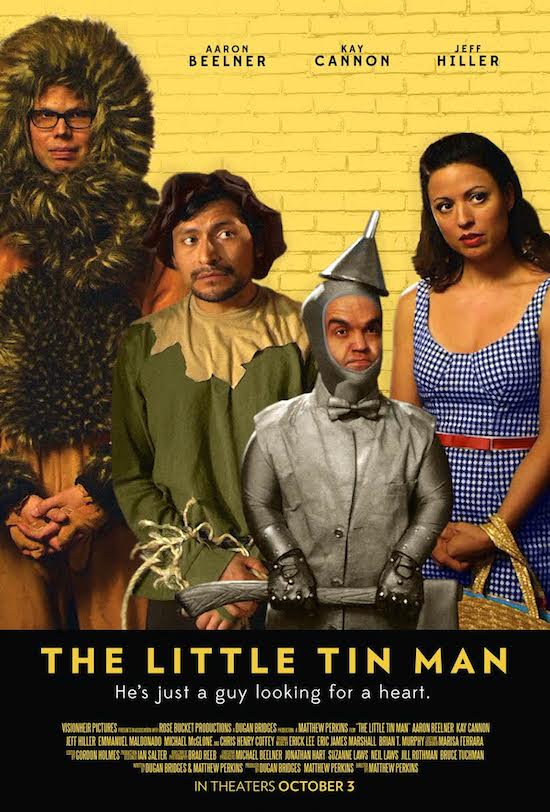
    Herman (Aaron Beelner) is a dwarf actor who only gets gigs playing elves in Christmas commercials. In his day job, Herman works alongside his brother Gregg (Jeff Hiller) at an upscale New York City restaurant owned by their mother. However, when their mother dies she leaves the restaurant to Gregg – the only thing she gives to Herman is a directive that he must start taking his acting career more seriously. Frustrated by being cut out of his mother’s will and tired of playing roles that are solely defined by his stature, Herman is less than enthused when his agent calls him with news that has gotten Herman an audition for the role of the Mayor of Munchkinville in Martin Scorsese’s remake of the Wizard of Oz. Herman is convinced by his friend Miller (Kay Cannon), who is also a struggling actor and a waitress at the restaurant, to go on the audition but ask to read for the Tin Man instead. Because Herman wants to transcend stereotypes – and because he harbors an unrequited crush on Miller – Herman decides to go for it. What follows is Herman’s journey towards gaining respect as an actor for his talent rather than his size.

    The film itself seems to be against Herman, as evidenced by its calliope-heavy soundtrack that recalls circus music and an opening song that makes every “bigger man” and “little person” pun you can think of. Naturally, there are plenty of characters who are disrespectful and condescending toward Herman, so it isn’t a surprise when Herman becomes irritable with others, which Beelner plays off very well. Director Matthew Perkins effectively establishes how tough it can be to live at Herman’s size, demonstrating his real-life issues like trying to reach things on high supermarket shelves, and, from a more emotional standpoint, finding love.

    As interested as I was in Herman’s struggle, I was pulled out of the film a bit by some of the over-the-top supporting characters. Some of these smaller roles are played by actors who are really hamming it up (Eddie Dunn, who plays Herman’s agent Tyrone Valentine, really lays it on thick). The one exception is seeing Ed Burns favorite Michael McGlone show up in a small role as a lawyer, essentially reprising his slick character from the GEICO commercials he stars in, which was hilarious. It’s almost as if Perkins and co-writer Dugan Bridges weren’t confident with the material and thought the zaniness needed to be amped up. But instead of creating supporting characters, they’ve created supporting caricatures — but the story of The Little Tin Man is interesting enough so the film really doesn’t need these caricatures.

    I was waiting for a scene that really proved that Herman (the character, not actor Aaron Beelner) is a great actor, but it never really comes. It would’ve been an excellent addition to let audiences know what we’re missing out on when talented actors are denied roles based on the way they look. It’s particularly interesting to view The Little Tin Man in light of the recent career accomplishments of Emmy and Golden Globe award-winner Peter Dinklage (he’d be at home in just about any role in any Scorsese movie). I’m not sure if that informed the film in any way, but the real-life circumstances relate to the narrative.

    The Little Tin Man is a warmhearted film about an actor who tries his hardest to improve his place in the world despite his physical limitations. Even if some of the sillier supporting characters distract from that, it still fits the definition of an inspiring, character-driven comedy gem. If there’s hope for Herman, there’s hope for all of us.

    Film Review Rating 3 out of 5 : See it … It’s Good

    http://youtu.be/sZmwJ-RE_eM

    The Little Tin Man opens in NYC on October 3rd at Williamsburg Cinema in Brooklyn

    Read more


  • FISHING WITHOUT NETS Tackles Somali Pirates

    1fishing without nets

    Filmmaker Cutter Hodierne was awarded the Directing Award at the 2014 Sundance Film Festival for Fishing Without Nets. Though Hodierne is a first-time feature filmmaker, it was actually his second award-winning trip to Sundance – in 2012, a short version of Fishing Without Nets was awarded the Grand Jury Prize in Short Filmmaking. The earlier short is worth noting because the feature length version of Fishing Without Nets, which is about Somali pirates, inevitably draws comparisons to last year’s major studio release Captain Phillips, directed by Paul Greengrass. While Hodierne isn’t quite as successful, his film embarks on a story that is more difficult to tell because it is from the perspective of the hijackers rather than those who are hijacked.

    Fishing Without Nets is a story about what a desperate man will do to provide a better life for his family. The man in this case is Abdi (Abdikani Muktar Manur), a poor young Somali fisherman whose only way to improve the lives of his wife and son is to go on a raid with pirates who capture ships and hold he crew for ransom. Though Abdi is hesitant, his friend China Boy (Abdiwali Farrah) knows that Abdi knows how to sail the fishing lanes because he is a fisherman, and he pressures Abdi to come with him on a raid. After telling himself “A man is not a man until he can feed his children. Only death can stop me from feeding mine,” Abdi decides to join up with the pirates after using all his money to send his wife and child out of the country, where he hopes to join them once he receives his payment for the raid.

    The older pirate leaders remark about how impressionable and easy to manipulate the young recruits are, and Hodierne reveals this by showing the young pirates taking photos of themselves as they pose with the rifles before the raid. It establishes that these pirates seem to think that they’re engaging in a game and not an act of terrorism. Ironically for a fisherman, Abdi admits how fearful he is of drowning. However, it’s clear that he is not just talking about the ocean, but also of drowning in a life of lawlessness.

    The ship raiding scenes are similar to those in Captain Phillips, except that these pirates are more successful at taking over the ship. The presentation is also wildly different – there is less disorientating camerawork and the score is far more subdued (in fact, there are few music cues in the entire film). Because of that, it is sometimes hard to forget that you’re not watching a documentary.

    After the ship is captured, Abdi’s group is put in charge of a French hostage named Victor (Reda Kateb). Though Abdi and Victor don’t speak the same language, they began to understand each other and Abdi feels growing sympathy for his captive. When the ransom doesn’t come as quickly as they hope, the pirates become increasingly desperate. The situation soon spirals out of control, and Abdi discovers even his wife and son are not safe, especially when other pirates become suspicious of Abdi’s friendliness with their French prisoner.

    However, it’s worth noting that although this film attempts to humanize Somali pirates by portraying ship raids from their perspective, Abdi is the only pirate in the film who is depicted sympathetically. While all of the other young pirates are portrayed as being desperate for money and little more than muscle for their older bosses, they are still only in on the raid for the money. As a result, the film doesn’t so much humanize the Somali pirates as a whole but humanizes Abdi as an exception to the other money-hungry, khat-chewing, gun-toting pirates.  It’s almost a throwback to the old American Westerns in which all of Native Americans were portrayed as bloodthirsty savages save for one “noble savage” whom was meant to transcend the stereotype. Unfortunately, not much can be dispelled when one noble figure is depicted among a group made up of stereotypes. For example, the scenes between Abdi and Victor reveal how compassionate Abdi is, but the other pirates have no room for that.

    Because of that and the film’s borderline deus ex machina ending (or is it? It’s hard to tell considering the final shot) that also manages to leave several narrative thread dangling, Fishing Without Nets is not quite the tour de force that its Sundance awards suggest. It still offers an engaging story about a desperate man and is a tightly-directed film – particularly for a first-time filmmaker – yet I have no doubt that Hodierne will transcend these rookie narrative mistakes in his next film.

    Film Review Rating 3 out of 5 : See it … It’s Good

    Fishing Without Nets opens in Los Angeles on September 26, New York City on October 3, and VOD on October 21.

    http://youtu.be/wRr0VA_HFaE 


    FISHING WITHOUT NETS

    WINNER OF THE 2014 SUNDANCE US DRAMATIC DIRECTING AWARD

    Opening in LA September 26, 2014
    Opening in NY October 3, 2014
    Available nationwide on Digital HD & VOD October 28, 2014

    Director:
    Cutter Hodierne

    Story by:
    Cutter Hodierne, John Hibey, David Burkman, Sam Cohan

    Producers:
    Raphael Swann, John Hibey, Cutter Hodierne, Brian Glazen, Ben Freedman, Stephanie Pinola, Victor Shapiro

    Executive Producers:
    Eddy Moretti, Shane Smith, Rupert Wyatt, Joe Laconte

     Principal Cast:
    Abdikani Muktar, Abdi Siad, Abduwhali Faarah, Abdikhadir Hassan, Reda Kateb, Idil Ibrahim

    Read more


  • Sally Kirkland Stars in ARCHAEOLOGY OF A WOMAN Directed by Sharon Greytak

    Archaeology Of A Woman starring Sally Kirkland and Victoria Clarke

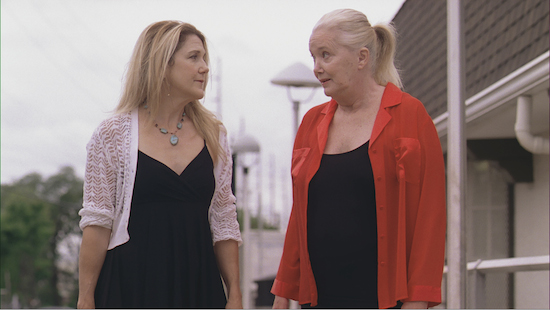
    Archaeology Of A Woman, written and directed by renowned indie film director Sharon Greytak, is an intense drama that explores the life of a woman beset by the early stages of dementia. The film stars Oscar nominated/Golden Globe winner Sally Kirkland and Tony-winner Victoria Clark.  

    Archaeology Of A Woman received two Gold Remi Awards at Worldfest-Houston including Lifetime Achievement for Sally Kirkland and Outstanding Independent Films. It was honored with a CINE Golden Eagle Award, and was also an official selection of the Woodstock Film Festival.
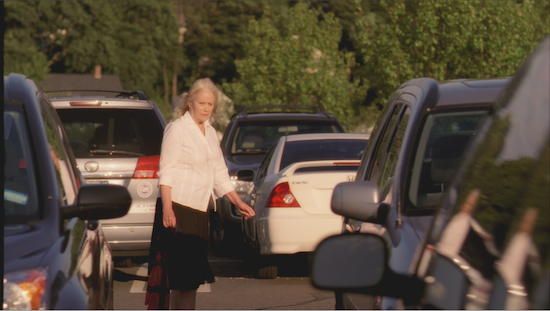
    Archaeology Of A Woman starring Sally Kirkland

    Margaret, played superbly and convincingly by Sally Kirkland, is suffering from the early stages of dementia. This is quite evident immediately as the film begins with Margaret at a mall parking lot, where she frantically searches for her car.  She meanders through the sea of cars, totally perplexed at the absence of her means of transport.  Police officers, standing on the sideline, observe her frantic behavior.  The officers approach and offer their assistance.  She is certain she left her mode of transport somewhere in the parking lot, which she emphatically communicates to them.  Eventually, they convince her to accompany them, and they transport her home.  On arrival, the officers spot her car in the driveway.  It is at this juncture that Margaret’s daughter is contacted.  The officers inform the daughter of her mother’s confusion regarding the whereabouts of her vehicle.  Her reaction is one of genuine concern for her mother’s well-being.
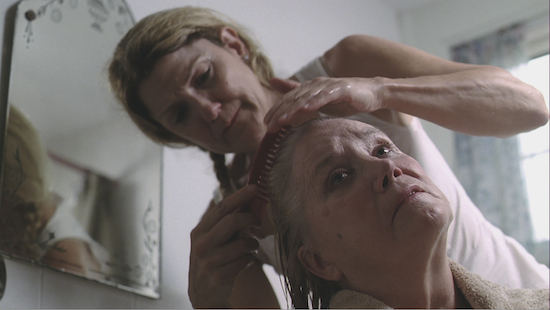
    archaeology of a woman Victoria Clark and Sally Kirkland

    Her daughter, Kate, played by the talented Victoria Clarke, is an aspiring chef who resides in the city. She is forced to travel to the suburbs on numerous occasions to deal with her mother’s escapades.   Kate helplessly observes the decline of her mother’s mental acuity. Margaret’s deteriorating health may result in the loss of her home and independent lifestyle.  In her heyday, Margaret (Sally Kirkland) worked as a  newspaper writer.  As a writer, her life was a series of unending words, but today, her life is a series of unending images.
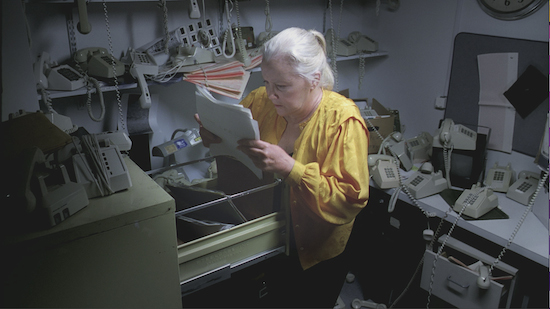
    archaeology of a woman sally kirkland

    As the story unfolds, we are taken on a ride, a ride into the characters mind.  Here, in the recesses of her mind lies the key to unlocking the door to the past. The images on the television have awakened in her a sense of loss, regret and guilt. The guilt is linked to a murder which occurred 30 years ago. We learn of this crime through Margaret’s flashbacks and the news reels that are sporadically humming on the television.  Throughout the film, Margaret tries to communicate her recollection of this crime to Kate. However, Kate thinks her mother isn’t lucid, and doesn’t believe that her mother is somehow entangled in a 30-year- old macabre crime.
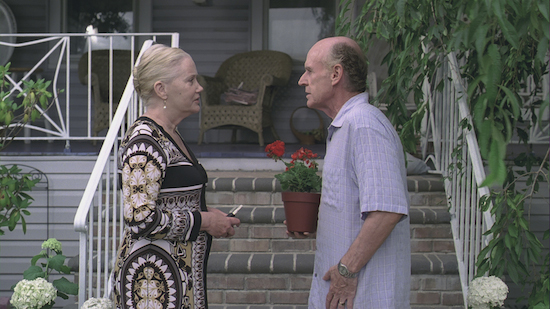
    archaeology of a woman Sally Kirkland and James Murtaugh

     Margaret, is the bridge between the past and the present.  She is the link between people and events.  She believes her existence is being threatened and she is being pursued by a police officer.  Is he the officer from her past?   As the character moves through the house she has flashbacks.   Are her recollections accurate? How can we trust the mind of a person plagued with dementia.   She walks into the kitchen, opens the refrigerator, and gently lays her shirt in this locale. How can we trust her mind? Does this murder represent a love she tried to squash by burying it in her subconscious?

    Although the film ending did not live up to my full expectations, considering the amazing and unique storyline that was developed, it is an ingenious exploration of dementia and the effects on a person’s psyche.  It is an original and complex film. The film examines a kaleidoscope of emotions and experiences that are intertwined and interwoven.

    Archaeology Of A Woman is playing at the Village East Cinema, September 12 – 18, 2014. 

    About The Stars:

    Fiercely independent, Oscar-nominated/Golden Globe-winning actress Sally Kirkland is a veteran of over 111 films and 30 years in TV and theatre. It was the film “Anna” directed by Yurek Bogayevicz that brought Kirkland her Oscar nomination, Golden Globe win, the Independent Spirit Award and the Los Angeles Film Critics Circle Award. Kirkland’s first role was in the 1964 Andy Warhol film “13 Most Beautiful Women.” This led to the still controversial film “Coming Apart,” where she starred with Rip Torn, followed by “The Sting” co-starring Robert Redford and Paul Newman, and “The Way We Were” with Barbra Streisand. She starred in “Revenge” with Kevin Costner, “Best of the Best” with Eric Roberts and James Earl Jones, “Cold Feet” with Tom Waits and Keith Carradine, “JFK” with Kevin Costner, “Cheatin Hearts” with James Brolin and Kris Kristofferson, “Ed TV” with Matthew McConnaughey and “Bruce Almighty” with Jim Carrey.

    Broadway star Victoria Clark received the Tony Award, Drama Desk Award and Outer Critics Circle Awards, as well as a Drama League honor for her luminous portrayal in the critically acclaimed Craig Lucas musical “The Light in the Piazza” on Broadway. Clark has also starred on Broadway in “The Snow Geese” and Rodgers + Hammerstein’s “Cinderella,” the Los Angeles revival of “Follies” and starred on Broadway in “Sister Act,” both receiving Tony nominations. She portrayed the role of Gabrielle York in Lincoln Center’s heralded production of “When the Rain Stops Falling,” for which she received a Drama Desk Award Nomination. She also starred opposite Nathan Gunn in the staged production of “The Grapes of Wrath.” Clark was also among the featured performers in “Stephen Sondheim: The Birthday Concert” held at Lincoln Center’s Alice Tully Hall and televised on PBS. Her selected film credits include “Cradle Will Rock” (Tim Robbins, dir.) and “The Happening” (M. Night Shyamalan, dir.).

    About the Filmmaker:

    Sharon Greytak has written, produced and directed feature-length fiction films, documentaries and experimental shorts. Greytak’s films include the award-winning international documentary “Losing It,” exploring quality of life issues and physical disability shot on three continents.  For “Losing It,” she was the recipient of a Soros/Sundance Documentary Fund grant. Her critically acclaimed narrative feature films include “The Love Lesson,” the story of an unconventional adoption arrangement between two women and their HIV positive heterosexual son, and the award-winning “Hearing Voices,” exploring a model’s private and public identities. Earlier films include the seminal documentary “Weirded Out and Blown Away” and experimental films “Some Pleasure on the Level of the Source” and “Czechoslovakian Woman.”

    In 2012, the UCLA/Sundance Collection acquired three of Greytak’s feature films for their archives. Her work has screened at The Museum of Modern Art, Film Society of Lincoln Center, Village East Cinema, REDCAT Theater, George Eastman House, Margaret Mead Film Festival, Museum of Fine Arts Boston, Laemmle Theatres, American Cinemateque at the Egyptian Theatre Hollywood, Film de Femmes Cretail France and numerous international film festivals.

    She is the recipient of two CINE Awards, the 2012 Burton Blatt Insitute Prize for Leadership in the Arts “for her entire body of work and its importance to the international arts community,” and awards from Athens International Film Festival, Chicago International Film Festival, DoubleTake and Black Maria film festivals. She was a participant in the American Film Institute’s Directing Workshop for Women, and received fellowships and grants from the New York State Council on the Arts, New York Foundation for the Arts, Soros Documentary Fund, the Jerome Foundation, the American Film Institute and ArtsLink CEC International Partners. She is also a Yaddo and MacDowell Fellow. Her films are in the collection of MoMA, UCLA/Sundance Collection, the New Museum of Contemporary Art New York and the Open Society Archive Budapest.

    Credits:

    Director/Writer/Producer: Sharon Greytak
    Producers: Idanna Pucci, Terence Ward
    Line Producer: Petra Ahmann
    Cinematographer: Gus Sacks
    Editors: Ulysses Guidotti, Marian Sears Hunter
    Composer: Heather Schmidt
    Casting: Adrienne Stern
    Production Design: Emmeline Wilks-Dupoise

    Social Media:

    Facebook: https://www.facebook.com/archaeologyofawoman
    Twitter: https://twitter.com/ArchofaWoman  


    Read more


  • Review of Great New Doc: “Finding Vivian Maier”

    by Francesca McCaffery

    Finding Vivian Maier

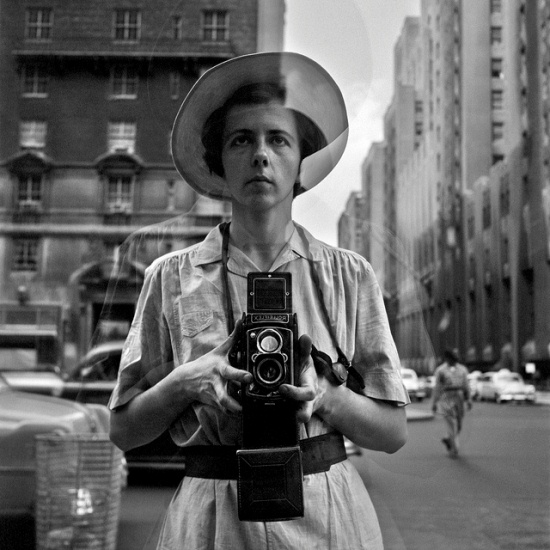
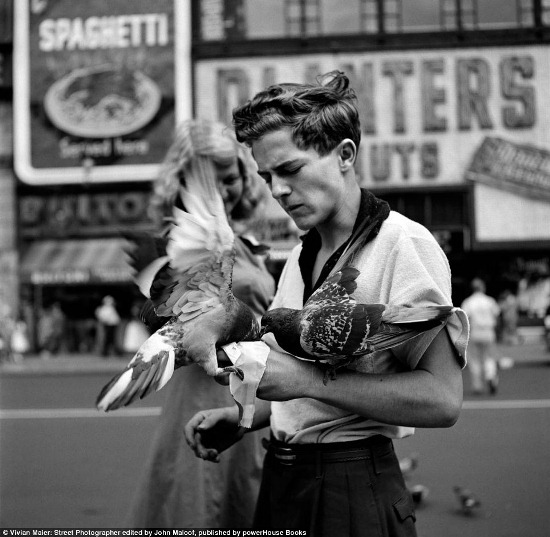
     John Maloof and his brother were raised working at outdoor flea markets and swap meets with their father…From a very  early age, John Maloof could spot a deal. When working on a book about the history of Chicago, he attended an Auction at a small auctioneer’s store, sitting quietly in the back, and bidded a mere $780 for a box containing over 25,000 negatives shot by an unknown, female photographer. A savvy veteran of these auctions, and now a real estate agent and local historian, he was looking for photos and negatives of old-time Chicago, he was hoping to get a little lucky. He ended up purchasing, for even less money, tens of thousands of more negs and rolls of film, as well as most of her rmaining personal possessions from storage, from another buyer. All of these images had been taken by a woman named Vivian Maier.

     As his life and work on the Chicago book took over, Maloof ended up simply  stashing away the old boxes in a closet for a long while. Dusting them off one day, hunting again for some random,  still images of Chicago, he began to discover some of the most insightful, gorgeous and timely images of street photography he had ever seen. Entranced by the glorious, black and white stills, and in possession of a sophisticated artistic instinct and taste,  he then set about to find out, exactly, just who this Vivian Maeir woman  really was.

    Through meticulous research of the items and letters of hers that he had also purchased, he began the tremendous process of discovery: Maloof first started his search online, finding absolutely nothing. Being a self-proclaimed “obsessive kind of person,” Maloof tracked down a family that knew Maier well- who had in fact, had employed her. As their nanny.

     During this same period, Maloof also begun further scanning several of the thousands of negatives he had (there were much, much fewer printed images of paper- and those were mostly damaged) and started sending them to art historians and museums, to see if he could somehow arrange a show, or gallery representation or opening.

     He was, much to his great disappointment, systematically turned down by the art world. Maloof then set upon his newfound mission to bring Maier’s incredible photographs to the world on his own. Through actual live interviews with Maier’s now fully grown “charges,” we learn that the adults who employed her did not realize she was a serious photographer, but the children certainly did: They were dragged around to “bad” sections of town, docks, poor areas, were Maier somehow had the quiet charisma to elicit the most beguiling self-portraits from total and complete strangers. (The close-up portraits are especially, staggeringly impressive and moving.)

     Maeir also lived and worked as a nanny in New York City, and this is where her photography comes into a thrilling, full, mature bloom: There are images of  ecstatic children, bums, glorious street scenes of all stripe, decaying urban landscapes and building fronts, tired businessmen, well-dressed dames, cops: All injected with incredible, dry bits of humor, gorgeous composition and highly intuitive, natural lighting. There is also her incredible ability to capture the explicit poignancy and miracle of the moment- the true gift of any street photographer.

    Finding Vivian Maier

     Naturally, as more of Maier’s now grown  “children” are candidly interviewed by Maloof (and his co-director and co-writer, Charlie Siskel) we realize there was a sad, haunting darkness in her a nature, and an obvious trauma from her past, that had prevented her from fully connecting with her art, and with other people, in general. As she aged, she also grew increasingly eccentric, and some of the charge’s tales turn increasingly disturbing. (Interestingly, though, it was three former young boys she cared for, who as grown men, took it upon themselves to rent her an apartment , supporting her after she retired.)

    Finding Vivian Maier

     The interviews do make up the bulk of the film, as it always amazing to us to pick apart what composes the interior life of someone life- the ultimate in coulda-woulda- shoulda scenarios…But there is just enough of her work shown, in essence, to whet your appetite for more investigation into the actual images and her work, itself.

    I have heard much controversy over Maloof appropriating these images and reaping the financial benefit…(Well before this film’s notoriety, he had made her a “star” already on the internet and print media with his incredible discovery) But honestly- I have to completely disagree: This “mission’ of John Maloof’s, may, in fact, eventually leave him a very wealthy man, (Maier’s prints are on sale and being collected by celebrities and collectors world-wide) but the extraordinary richness of Vivian Maier’s work, one can safely say, would not be known to us without his dedication and obsessive nature. Vivian Maier’s work is probably on par with that of  Diane Arbus and Robert Frank. Hopefully, she will be soon accepted by the art establishment just as she is by the mainstream media. This is a wonderful, inspiring film, especially if your inner-artist is dying to make a splash on the canvas, screen or page. One is left with the feeling that a person truly owes it to the world to show it what you’ve got- and that’s no mean feat for a small, wonderful film like this. Go see it- it opens March 28th in selected cities.

    Read more


  • Lars von Trier’s “Nymphomaniac Vol 2”-No Gain from Her Pain

    By Francesca McCaffery

    Lars von Trier’s Nymphomaniac: Vol 2 review

    Lars von Trier’s Nymphomaniac: Vol 2, picks right up where Nymphomaniac, Vol 1 left off: the Young Joe (Stacy Martin) is in the midst of her relationship with her once long lost true love, Jerôme (Shia LaBeouf). (Here is my review on Vol 1 here.)

    The problem is, the sexually rapacious Joe had, in her own words, “Lost all feeling in my cunt.” Her genuine fillings for Jerome have left her unable to enjoy sexual intercourse with Jerôme. They keep trying unsuccessfully to get Joe off, until finally, an exhausted Jerôme declares that she’s like a wild animal, and well, he needs some “help with the feeding.”

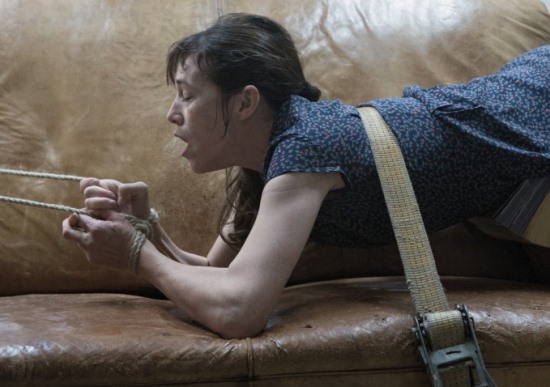
    Permitting her to seek out others so she may seek the satisfaction she so craves, the young Joe suddenly, in the next scene, morphs into the 50-year old Joe (Charlotte Gainsbourg, who has been narrating since Volume 1) now sleepily pushing a baby stroller through a park, an infant boy asleep inside.  The scenes also cut back to the present, with Joe talking and hashing over incredible and risqué life story to Seligman (Stellan Skarsgard), whom we also learn some very interesting, though none too surprising, personal information about.

     Von Trier is indicating, in no small way, that Joe is not into, or going to, change: This is who she is, for better or worse. And it doesn’t take her long, through some strange word-of-mouth that I cannot fathom, for her to find the sadomasochistic K. K has a basement sort of office, where women wait sometimes for hours on end just to be (very) badly ministered by him. And this is no 50 Shades of Grey light BDSM, no sir: This is brutal, if not for the raw nature of the emotions, or lack thereof, on display. (K is also played by none other by Jamie Bell, of Billy Elliot fame, adding to the delicious weirdness and sterility of it all.)  When an almost near fatal occurrence happens when she is off to one of her appointments with K, Jerôme threatens to leave with her son, never seeing her again, if she continues.

    From here, the film veers into a strange, almost hallucinatory silly sort of strata, wherein Joe takes on a completely different, and rather criminal, profession, and decades seem to pass before our eyes: At first, I thought this ridiculous, but really, I feel von Trier was hoping to show that it really did not matter what the hell Joe did for a living: Her self-loathing was seeping into every, single aspect of her life, now even her “career.”. L (Willem Dafoe-always a pleasure to see) plays her new, shifty-eyed boss. She even meets and starts an affair with a teenage girl (Mia Goth- startling-looking and a lovely, natural actress) she is ordered by L to “recruit.” This also struck me, at first, as ludicrous, until you realize that she is experiencing love for the second time around, finally and strangely, in a maternal sense.

    I am not going to give more away, because this film definitely needs to be experienced without forethought or preconception: All I will say is, I thought this second piece to the grand Volume 1 was an enormous let-down, until- I was on the train going home from the screening. The last scene of the film came back to me then, I realized, I felt it all at once. This is what will happen to you if you cannot connect, he seems to be suggesting: Intimacy itself will feel like the ultimate invasion, preventing you from EVER having a substantial relationship. Joe not only hates herself, but everyone else around her.

    Nymphomaniac, (both brilliant films togther)  is about an individual carving something out of an endless need, never finding fulfillment, never even coming close to it, and-in the end- literally ending what could be the only chance for a true emotional connection.

     “Fill all my holes” is a phrase desperately whispered by Joe in both films. Just as the line “The secret ingredient to sex is love” is spoken in Vol 1 by one of Joe’s childhood friends, without any irony at all, so, as well, is this one: Joe is begging others to do for her what she cannot. This is not a cultural critique, but a beautiful, astonishing and brutal character study of addiction and pain, one that just may teach you a thing or two about yourself. As I said in my review of Volume 1: Forget all the sex, if it’s “real,” CGI’d, or not. Just go and see Nymphomaniac Vol 2 for the way it will shake you to your very core.  

    Read more


  • TEENAGE: Matt Wolf’s Documentary Brings the History of Growing Up to Life

    teenage matt-wolf

     TEENAGE, the new documentary film written and directed by Matt Wolf (Wild Combination: A Portrait of Arthur Russell) is based on the book Teenager, by Jon Savage, and uses both found footage and lush, fake Super 8 recreations to illustrate how adolescents came into being, as both a social and actualized concept, in the early-to-mid twentieth century.

    Opening in 1904, when children of very young ages were used as literal slave laborers during as the capitalist tidal wave of the Industrial Revolution slammed American shores. (72 hours per week!) Wolf has gotten his hands his hands on some truly amazing footage, but Savage’s thesis is a global one- and we learn how the world’s children literally, WWI and, more broadly and concretely, after WWII, began to get their artistic, creative, expressionistic, intellectual and Dionysian groove on as they blossom into teenagers. It is obvious that free time, the ability to lead healthier, longer lives, and standardized education was the catalyst for this new-found freedom, as young teens began to individuate from their parents and families-forming their own tribes, flocks and groups for the very first time. From Flappers to the “Freak Parties” of London, and later, post-war, as teenagers really began to question their place in the world, after the great tragedies they witnessed as children in WW II.

     Wolf has made a truly enjoyable, visually delightful and informative film- casting actors as the real-life teens- whose diary-like entries guide us through the various narrative jumps from country-to-country, time-period to time-period.  The approach is novel, and again, the film is very carefully wrought and informative: It’s a great start to Wolf’s emerging and engaging style, though, and it will be exciting to see which subject he tackles next. Actors such as Jena Malone and Ben Whipshaw participate, and Jason Schwartzman is an Executive Producer.

    Opens March 14th in select cities.

    http://youtu.be/n8bNqD9YhkM


    Read more