Film Reviews

  • The Naked Emotions are more Raw than the Rampant Sex Scenes in Lars Von Trier’s Nymphomaniac-Vol 1

    By Francesca McCaffery With his latest film NYMPHOMANIAC, bad boy and cinematic provocateur Lars von Trier has found a way to communicate through film that is rarely felt, even in literature : Whether you agree with what is being portrayed onscreen, or not, you still have the feeling of being spoken to in the most profound of ways- both cerebrally and viscerally- the sheer ride that only  the most dazzling, life-changing novel can offer. NYMPHOMANIAC, VOL 1, is one of two films, (Vol 2 being released in the US in April ) both released in their uncut, European versions. The film stars Charlotte Gainsbourg as Joe, who meets lonely bachelor Seligman (Stellan Skarsgård) only after he finds her lying, curled up, bloody and beaten, in his courtyard as he goes out to get his daily cup of coffee and rugalach. As Seligman begins to tend to her, much like a kindly Grandma (hot tea, fresh PJs, warm bed) , Joe starts recounting her tales as a sexually voracious young woman, as Seligman patiently listens. Offering both counsel and repartee to her increasingly more self-loathsome stories. In flashback we see the young Joe (waifish newcomer Stacy Martin), colt-like and doe-eyed, just how much power she has over men, “simply by smiling at them.” (It doesn’t hurt, either, that she looks like she just wandered straight out of a Marc Jacobs ad.)  Time flips around, and we observe Joe as a little girl- as she learns to masturbate on a wet bathroom floor, hang on ropes “endlessly” in gym, and become fascinated with the way her own body operates, and, as Joe bluntly says, “my cunt.” Her father (Cristian Slater- a fine, simple performance) is a kind doctor who teaches her about the history about the lovely ash trees in the forest on their daily walks,  and  her mother, a dirty blonde domestic ice queen (Connie Nielsen), is a “cold bitch.” Aside from seeing that her Mother is unsatisfied and distracted by domesticity, it  is hard to deduce from Joe’s upbringing that her extreme sexual behavior is the “result” of anything.-except for a truly lousy first time, which she herself orchestrated completely. As Joe hits adolescence, forms an actual “club” of like-minded, self-worshiping teen girls who throw away the concept of love and monogamy (they are allowed to have sex with any individual man only once) like sexy anarchists, and proceed to sleep around with whomever they wish, whenever they want. Joe is always firmly in control of her choices, as are her friends, even after her best friend is the first to go down, fervently whispering to her that the “secret ingredient to sex is love!” (Yes, this phrase is uttered several times throughout the film.) Joe picks her men, randomly decides who to continue seeing as it becomes increasingly harder for her to juggle her myriad stable lovers (fat, tall, leonine, lovely, tender, old, young, ugly, married, single, gorgeous-she has no obvious type or  preference.) She is having sex to have sex, and we see Joe is screwing a lot. The action goes back and forth, present to past, and Seligman, kind and non-judging of Joe’s extreme behavior,  likens the way Joe and her friend start out their “hunt” of men to fuck on a  first train ride outing wearing there “Come Fuck Me” clothes  like carefully baiting the lure in fly-fishing. As Joe grows older, and is forced to get a boring job (medical school was too rough for her overly-sensitive self, she tells us in voice-over) she meets and finds herself falling in love with Jerome (Shia La Boeuf) who has also appeared in the beginning of the film (I won’t spoil it for you.) As she chastises herself for feeling this way, sentimental and woozy with actual desire, her number of lovers increases, until, like saying banana over and over and over again, the act seems, even to the viewer, to distinctly and abruptly lose all of its meaning and purpose. As an audience, we are almost bored with the way the sex depicted, which is a fantastic achievement of the director’s. It has been said that von Trier cast actual porn stars to perform the actual live sex scenes in these films, and then digitized the actor’s “heads” onto their bodies, accordingly. As this wasn’t stated in the official press notes, I cannot say for certain, but this, along with the rest of the brilliant, peek-a-boo press campaign,  only serves to elevate the pain underneath the action.. As we watch, and cannot be sure who is actually really doing what,  the actors themselves become as desexualized as the acts portrayed themselves. We can begin to really focus upon the story…Or…is there one, after all? Did Joe simply make a choice, a careless selection, not to care, destroying hearts, families and feelings along the way as she tears through the lives of her often unnamed lovers? Uma Thurman is simply devastating as “Mrs. H,” a wife of one of Joe’s “lovers” (only known as “H”) who has left his family after Joe, desperate to shake him off, tells him that she can’t be with him unless she all of him. The plan backfires completely as Mr. H returns, suitcase in hand, and Mrs. H, creeps up to Joe’s “bohemian” flat towing her three tiny young boys, beautifully beginning to unravel in the span of five minutes. (Seriously- Thurman is so good in this film.) As Joe begins to realize the devastating internal results of her seemingly unconscious actions, and we are left with a scintillating preview of Volume 2 as the credits role, one is left pondering many questions, barely remembering the actual sex acts and displays of promiscuity. It is almost as if, like the sex acts depicted themselves, von Trier is also asking us to look at our own personal “stories,” and the great, often unnecessary weight we put on them. This director is not a light-hearted guy. Films like Breaking the Waves and Antichrist deal with a world that will dole out random, tragic events like a farmer throwing seeds onto an endless, muddy field. His most recent film, the stunningly gorgeous  MELANCHOLIA, (which he made after a bout of severe depression) was far more considered, asking us to question our own personal fate in terms of the majesty and self-containment of the entire universe. As Seligman far too easily and almost primly  repackages Joe’s recountings as merely  accounts of  severe “addiction,” von Trier is not asking us to consider why the need to be so distracted so intently is quietly eating away at our society and culture; he is asking us to consider the ‘addict,’ if you will,  and why their own story is any different from choosing to live a life more guided by compassion, kindness and self-esteem. “We are all waiting for permission to die, anyway,” Joe informs Seligman. She has the last and final say, and everyone is going down with her ship-everyone who chooses to be on board, that is. The director is no moralist, here, though: He has made a film about a woman who has elevated her own sickness to a sole and profound Identity, and asks us to question what we live by, how we define ourselves, and where we stand. By the way, Gainsbourg, as you probably can imagine, is simply wonderful , and we hear in her lilting, tarnished voice a woman so purely hating and so desperately hating herself, but looking for no redemption, no resolution, and no forgiveness, either, whatsoever. Sensationalism aside, please forget the actual hysteria and promise of “unheralded,” explicit sex scenes in the film itself, and go for the way it makes you feel, think and analyze your own place in the world.  This film makes you work , and von Trier perhaps has almost had to  resort to utilizing depictions of graphic sex as the gateway drug to shock us right back into our heads and hearts.  Maybe he is saving his moral judgment for  us-the audience-as viewers…That we, much like Joe, need to be tricked into seeing and feeling and interpreting something, anything,  intimate and profound without being completely and utterly scared.

    Read more


  • Film Review: LENNY COOKE

    lenny cooke documentary review

    Arguably the most disappointing story I can relate to basketball wise, that of Lenny Cooke, is one marred by bad decision, misguidance, and maybe what I would call serendipity.  The fortunate mistake in it all is the example that his experience has and can be for generations to come. A legendary NYC hardcourt story, at one time Lenny Cooke was defined by his talent level and beyond anything else the potential of what he could do for others.  Knowing him personally, I can remember the attention he garnered walking into the room let alone putting the ball in the basket.  Such a charismatic individual, admittedly so his goal was to appease never to self-reflect.

    The LENNY COOKE documentary highlights it all from when the goings were good to the reality that has become the life of a person whose objectives never materialized.  The Best Player In America, now honest working man doing his best provide for his family.  The friendships or so they would seem at the time have not lasted, and if they have they are now only a shell of what they once were. The young man who had everything handed to him no longer exists, the lights are no longer shining bright and at a moment notice his face forgotten.  Lenny Cooke is and forever will be a legend, in the minds and hearts of those who know, as well as those who always understood.

    ‘Lenny Cooke’ takes us down the journey to demise, pointing out the fork in the road marking good and bad choices, most notably entering the draft at the behest of fake supporters, with the most enabling ways. Captured through it all, what he took for granted. Watch as a pivotal match up between he and Lebron James, the outcome forever changing the opinions of so many as to how good Lenny Cooke really was.  His attempt to rebound, his stints in every league you can think of and ultimate submission to the reality that the dream has deferred. If you have never heard the story, let it become real, inspirational.

    From high school to high school, comfort zone to comfort zone, complacent with never having developed a work ethic until it was too late, for basketball that is. June 26th 2002 his highest high became his greatest low.

    In the purest sense, ‘Lenny Cooke’ is a mirror: for us the audience, and the one he has become for himself candidly denouncing his foul ways and negligence; his disrespect for an opportunity that millions desire. ‘Lenny Cooke’  is the definition of a maturation process that over the 12 years of which this film has been shot only begins to chip at,  the story of Lenny Cooke.

    http://youtu.be/XHRqKQ3hj-M


    A Documentary by Josh and Benny Safdie
    Executive Produced by Chicago Bull Joakim Noah


    OFFICIAL SELECTION, 2013 TRIBECA FILM FESTIVAL
    OFFICIAL SELECTION, 2013 VENICE FILM FESTIVAL

    Opening theatrically on December 6th, 2013 in New York, roll out to follow


    Read more


  • Film Review: GARIFUNA IN PERIL-The Movie

    garifuna in peril

    GARIFUNA IN PERIL, written, produced and directed by Ali Allie and Ruben Reyes, is a film that chronicles the history of a people.  It explores the culture, language, and history, surrounding an indigenous group of people called the Garifuna.  Who are the Garifuna?

    The Garifuna are descendants of Carib, Arawak, and West African people. The British colonizers referred to the Garifunas as Black Caribs.  At first the Garifunas called the island of St.Vincent home, but disease, horrific treatment by their captors and the trip across the seas, claimed the lives of many of the Garifuna people.  Today, an estimated 600,000 Garifuna populate a number of areas; Honduras, Belize, Guatemala and Nicaragua. 

    It was a day like any other day, when the Indians piled onto a boat.  They were filled with hope. They traveled from their homeland to new lands. What luck! They had hit the jackpot. They found lush and fertile land, which they inhabited for approximately 1,400 years.  For 1,400 years the Indians inhabited the mountainous and fertile islands of the Caribbean.  They had sailed the seas and finally settled in the Greater Antilles. Both the Arawak and Carib Indians migrated from South America. The Arawaks were a peaceful people, while the Caribs were rebellious and aggressive. As a result of the differences in temperaments, the Caribs easily overcame and conquered the Arawaks.   Soon, the colonizers arrived bearing gifts and diseases. Life as the Indians knew it changed.

    Eventually, the ships transporting slaves from the African continent arrived. Intermarriage occurred between the slaves and the local Carib-Arawaks.  The Garifuna people were born.

    The film, GARIFUNA IN PERIL, has the tone of a reality show.  So, I kept asking myself: Is this a reality show? A good reality show.

    garifuna in peril-2

    GARIFUNA IN PERIL, follows Garifuna teacher, Ricardo, who is diligently trying to teach the dying Garifuna language, and culture to old and young alike. The elder Garifuna people, residing in Honduras, speak the Garifuna language.  However, the young people are less familiar with the language and the culture. The question posed by the youth: “Why do I have to speak the language?” “How will it help me in today’s world?”

    Will this Garifuna man succeed in his noble mission to preserve a language and culture?

    garifuna in peril-1

    Ricardo is also working with his brother to raise funds to build a school for his people in his hometown.   Unfortunately, the project hits a roadblock, due to his brother’s greed and selfishness.  Soon, Ricardo finds himself face to face with the local council members; his brother is accused of selling the Garifuna land to developers.

    The filmmakers, Ali Allie and Ruben Reyes, use a technique which gives the movie a realistic feel. It is effectively paced, and skillfully examines the differences in ideologies of the older versus the younger Garifuna generation. The film transitions from the historical tale relayed on stage by young people to present day occurrences, and draws parallels: tourism vs. the locals or indigenous people in Honduras; communal land vs. individually owned land; drab buildings vs. plush landscapes and oceanic views. Ali Allie and Ruben Reyes effectively weave a tapestry that transcends the tale and deals with land ownership, economics, and numerous issues that are relevant to us today.

    A must see…

    http://youtu.be/NQs5m9haasM

    garifuna in peril-poster

    GARIFUNA IN PERIL
    Written, Produced and Directed by
    Alí Allié and Ruben Reyes

    Year of Production: 2012
    Countries of Production: USA/Honduras
    Running Time: 99 minutes
    Languages: 55% Garífuna, 30% English, 15% Spanish
    Subtitled in: English (Spanish subtitled version available)
    Additional Writing: William Flores
    Associate Producers: Dudley Augustine, Ben Flores, Jorge Garifuna
    Actors: Ruben Reyes, Julian Castillo, Gloria Garnett, Jessica Alvarez, E.J. Mejia, Jr., Luis Martinez, Aubrey Wakeling, Arleny Escobar
    Cinematographer: Alí Allié
    Editors: Alí Allié, Ruben Reyes, Milton Guity, Katherine Cumpa, Marya Murphy
    Music: Emilio Nuñez & Labaña Maraza, Aziatic, Punta Cartel, Ala Suazo, Rene Crisanto y La Runi Hati, Bodoma, Isabel Flores, Garifuna Records, Bootsy Rankin, Julito Timbalito, Bill Cayetano, Georgette Lambey, Glen Garcia, Nuru, Luisito Martinez, Yanyman, Ruben Reyes

    Read more


  • Film Review: CUT TO BLACK

    CUT TO BLACK

    CUT TO BLACK, the latest film from Brooklyn-based writer/director/star Dan Eberle, is an Audience Award-winning film from this year’s Brooklyn Film Festival that is one of those films that shouldn’t be unnoticed by larger audiences because of its nearly hypnotic, somewhat dream-like imagery and narrative.

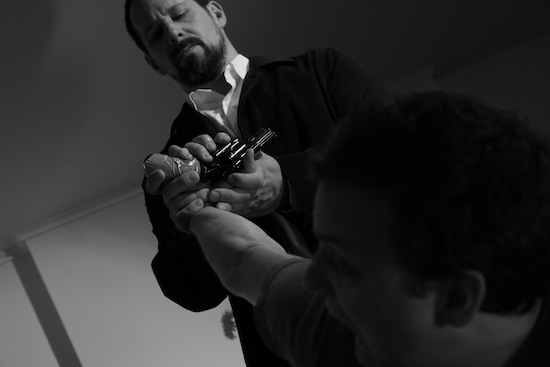
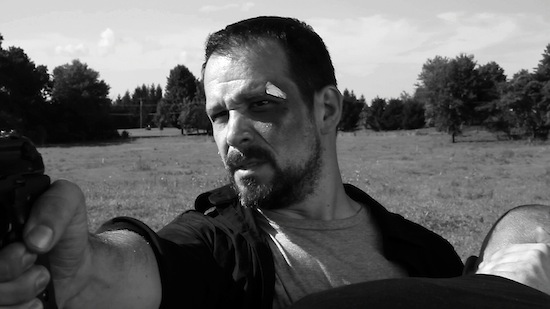
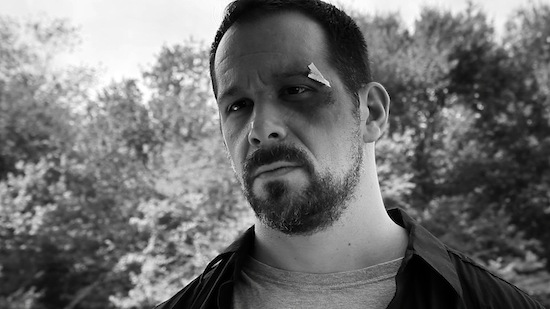
    So much of the plot of Cut to Black is familiar, though not in a way that makes the film itself pedestrian or a series of well-worn plot points.  Curiously, it both adheres to and contradicts expectations.  Bill (Eberle) is an ex-New York cop who has been left penniless and emotionally broken from his actions on a case that is only referred to as “the interborough case,” which got him thrown off the force.  One of the few details we’re told about the case is that Bill took the fall for John Lord (James Alba), a powerful political figure. In addition, Bill’s recurring nosebleeds also point to a potentially serious health problem.  However, a former colleague from the force, Gunther (Beau Allulli), approaches Bill with a request: Lord will pay Bill a large sum of money to investigate a problem his estranged daughter Jessica (Jilliane Gill) has with a stalker.  Despite his hesitations, Bill takes the offer, and upon meeting Jessica he begins to realize that the stalker is the least of her worries. Jessica’s boyfriend Duane (Joe Stipek) is involved in some bad business himself, and her estranged father discovering more about her than she wants him to know adds to her dilemmas.

    CUT TO BLACK

    Cut to Black is shot in black and white, which is likely a nod to its noir elements, but unlike traditional noir films (or even more recent noir-inspired films like Road to Perdition, Sin City, and Drive), the cinematography is shot in high contrast and avoids an overabundance of shadow.  Much of the film takes place during the day, and scenes that take place at night are mostly interior, lending the film a relatively flat lightning style.  Perhaps that serves as a reflection of the New York City of the present day, when much of the grime that made the streets dangerous (even in a creatively delightful way) has been scrubbed by reform politicians and multibillion dollar corporations.  Though Cut to Black’s story is reminiscent of Taxi Driver’s, Travis Bickle’s grit-ridden New York seems to belong to another world.  Yet Cut to Black’s New York has just as many seedy problems – one just has to look a little harder to find them (despite this, in the New York of Cut to Black it seems that locking the door to one’s apartment is uncommon!) The soundtrack is uncharacteristically jazz, adding to the juxtaposed atmosphere of Cut to Black’s New York.  As Eberle said in his interview with VIMOOZ, “Because of these elemental contradictions, the overall experience of the film is transporting. ‘CUT TO BLACK’ becomes a world of its own.”

    Reflecting real-life crimes, not all of the pieces of the crimes in Cut to Black fit together logically.  In fact, viewers might find it jarring for a film to follow a private investigator without the convoluted plot twists audiences have come to expect from crime procedural films and television shows.  Not everything can be chalked up to delicately planned elements of an overarching antagonist’s master plan.  Jessica’s life isn’t simply plagued by a stalker, her life is a sum of a series of self-destructive decisions stemming from her estranged relationship with her powerful father.  In that sense, the fact that the mysteries don’t fit together adds to the intrigue.

    CUT TO BLACK

    Like many noir protagonists, Bill is far from a “hero” though it’s clear that he seeks redemption for his past.  He speaks in a “hush-harsh” voice, and though only in his thirties his visual appearance and body language are weathered. Jessica is his “damsel in distress,” yet they have such a tenuous personal connection that it seems he only becomes her “white hat” because he had no other cause to champion as his health declines and his life falls apart.

    The film’s final third is untraditional in the sense that it raises far more questions than it answers. Bill needs a large sum of money and is able to procure it from the very people whom he brought down in the infamous “interborough case,” including an otherwise beautiful woman covered in sores. Though this borders on a “deux ex machine” resolution, it doesn’t bother me because it’s more intriguing than it is convenient. Like the mystery, Bill’s past is deeper and far darker than we could have possibly expected.

    Cut to Black immediately demand a second viewing, not to review the clues (as with other mystery films), but to gain a better understanding of Bill’s action now that one understands more about his past. It won’t answer every question, nor should it, which is the mark of a storyteller whom is confident in his material.

    http://youtu.be/GLHZY0_LN6k

    Read more


  • Film Review: BETTIE PAGE REVEALS ALL

    BETTIE PAGE REVEALS ALL  A film by Mark Mori

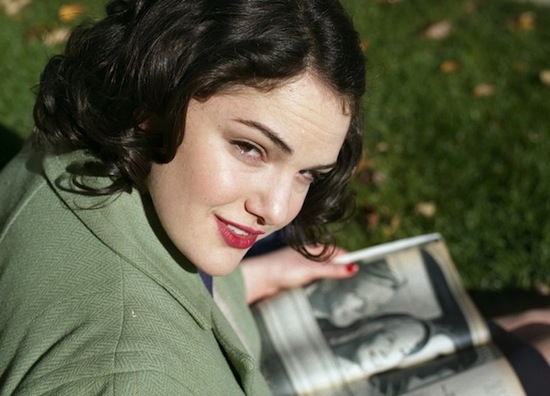
    Even if you don’t think you know who Bettie Page is, you know her.  What do I mean by that?  At some point of your life you have seen references to Bettie Page, the most popular pin-up model of the 1950s.  That is because her style and persona has been a constant source of inspiration for decades by nearly every facet of pop culture.  For example, just in the last few months pop star Katy Perry heavily referenced Page’s famed “Jungle Bettie” photo shoot in her artwork and video for her hit single “Roar.”  It’s only one of hundreds of reference to Page’s famed pin-up photography that you probably encounter every year, a phenomenon that continues today (Bettie Page is one of the highest-earning deceased celebrities).  In the new documentary Bettie Page Reveals All, the pin-up legend herself narrates her life story, revealing once and for all what the woman behind those photos was like and what happened to her after disappearing from modeling seemingly overnight in 1957.  It’s an absorbing look at the life of an iconic woman, one many of us know little about beyond her photos.  While this is the first film documentary that Mark Mori has directed since 1991’s Building Bombs (which was nominated for the Best Documentary Feature Oscar in 1991) and writer Doug Miller is film newcomer, the pair have created a loving in-depth portrait of Page with this documentary.

    Of course, Bettie passed away in 2008 (the documentary opens with scenes from her funeral), but the narration was recorded several years before her death and covers her entire life from her troubled childhood, her early days as a model, becoming an icon, and ultimately what happened to her after she retired from modeling after only seven years as a model.  Though elderly Bettie’s voice is sometimes difficult to understand, her voice is filled with nothing but joy about her pin-up days.

    BETTIE PAGE REVEALS ALL  A film by Mark Mori

    Naturally, the most interesting parts of the documentary are the ones that focus on her pin-up modeling, but the additional focus on the controversy surrounding her later bondage photos and films and the mysteries surrounding her disappearance from the public eye – Page made few public appearance after retiring in 1957 – makes this documentary so unique.  It’s also wonderful to hear Page speak with bewildered amazement about her return to popularity in the 1980s and the rediscovery of her existence in the early 1990s.

    The narrative is also expanded with interviews with admirers like Dita Von Teese, friends like Hugh Hefner, and many of Page’s former photographers.  The interviews with the photographers are particularly interesting because they go into detail about the composition of their shots.  To them, they weren’t simply taking pin-up photos of a bikini-clad (or even nude) Page, they were creating art.  It’s hard to argue against them — decades later, Page’s beauty is still remarkable because she was the definition of photogenic. The fact that Page talks so happily about those years makes it clear that she was born to be a pin-up icon.

    Fans of Page will undoubtedly enjoy Bettie Page Reveals All and because it’s told in her own voice even diehards will likely learn something about her that they didn’t know.  There are probably many photos and rare clips from Page’s burlesque movies in the documentary that even devoted fans of Page haven’t seen. However, people who know little about Page and her remarkable career will get the most out of this documentary.  If nothing else, it’s impossible not to enjoy one of the most beautiful women of the twentieth century posing in various states of undress relishing in her contribution to the sexual revolution, even if she didn’t realize it yet.

    Rating: 4 out of 5 : See it …… It’s Very Good

     http://youtu.be/shvYNVlHMm8


    OPENING in NYC 11/22 at the Village East Theater

    11/29
    Nuart Theater – LA
    Regal Westpark – Irvine

    12/6
    Chicago, San Francisco
    Berkeley, San Jose
    San Diego, Columbus
    Palm Desert, Portland
    Nashville, Las Vegas
    Santa Barbara, Tucson
    Phoenix, San Rafael
    Hartford, Fort Lauderdale
    Broookline, Minneapolis
    Asbury Park, Richmond

    12/13
    Albuquerque, Salt Lake City
    Washington DC

    12/25 – Atlanta
    1/3 – Seattle
    1/17 – Ft. Worth
    1/31 – Rochester
    2/7 – Lafayette


    Read more


  • Film Review: MUSICWOOD

    musicwood documentary film

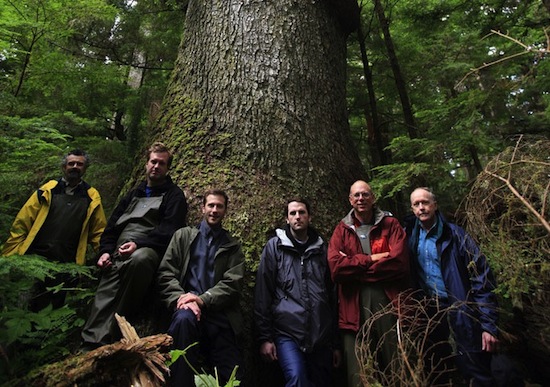
    What makes a Gibson or Martin acoustic guitar a better instrument (and thus more expensive) than a no-name guitar that you could buy for $50?  It’s the wood.  Premium acoustic guitars are made from four types of wood that come from across the world.  For three of the best U.S. guitar makers – Gibson, Martin, and Taylor – the soundboard (i.e., the “top” or front of the guitar) is made from a type of Sitka Spruce from Alaska’ Tongass National Forest via a Native American-owned logging corporation, Sealaska. Until several years ago, as far as the owners of these guitars companies were concerned they would continue to get their spruce from the Tongass National Forest for as long as guitars would be made.

    That is, until Greenpeace alerted these three companies to a troubling fact: The hundreds of years old trees that they use for their guitars are being lumbered by Sealaska by clear-cutting the land that they own, which means cutting down every single tree in a given area.  This leaves huge swaths of areas filled with nothing but mud and stumps.  Worse, Sealaska is lumbering at such a rapid rate that the trees that the guitar industry counts on will be virtually decimated in just a few decades.  Even though the guitar industry uses only a tiny fraction of the trees that are cut down – less than 200 a year (the rest are mainly shipped to Asia for pulping and construction), Greenpeace representatives hope that the American guitar makers can help them appeal to Sealaska to become Forest Stewardship Council certified, meaning that their methods are environmentally sustainable.

    MUSICWOOD, which is named after the coalition Greenpeace forms with the guitar makers, takes a look at these complex issues that is just as much about the economy as it is about the environment.  Based on stereotype alone (especially if you’re old enough to remember those “Keep America Beautiful” ads with a crying Iron Eyes Cody), one would probably assume Greenpace and Native Americans would be on the same “side” on environmental issues.  However, for the Sealaska Corporation there is no equitable industry in the area, so the entire livelihood of the area depends on logging.  The corporation is concerned that if it scales back its logging it could be economically devastating for an area that already suffers from economic problems. The guitar companies sit as a kind of middle ground, obviously wanting to still use the wood but concerned that over-lumbering will destroy the supply for future generations of musicians. Cut in between are clips of musicians that talk about their connection to their instruments and play a bit, including an absolutely jaw-dropping performance by a guitarist named Kaki King.

    This isn’t a documentary that wraps up everything with a bow because these complex factors are further complicated by other environmental and legal issues.  But it certainly does its job of bringing to light an issue that every guitar player should be concerned about.  It’s a well-made documentary from first time feature-length documentary director Maxine Trump that weighs the views of all the sides fairly, at least for the most part (you’d expect it to be hard to have sympathy for loggers who are destroying an entire ecosystem at an alarming rate, but their economic concerns and historical treatment makes their point of view understandable).  At only 80 minutes there is plenty of room to expand with new developments should they happen, and those that feel the documentary is nonetheless too open-ended could find out more on the website provided at the end.

    From a technical standpoint, Musicwood would play just as well on television than a movie theater, and perhaps it might be even better on television because the video quality is at points fuzzy.  Actually that’s the biggest shame regarding the documentary because some of the nature shots of the Alaskan wilderness would look even more stunning in HD quality.  When so much of the documentary’s message relies on the beauty of the area, it’s important to make sure that beauty is portrayed as best as possible. But that doesn’t prevent the message from being heard.

    Rating: 4 out of 5 : See it …… It’s Very Good

    MUSICWOOD opens in NYC on November 1, 2013, at the Quad Cinema. The film will also have limited screenings in markets around the country including Seattle and Chicago (dates/times available here:http://musicwoodthefilm.com/screenings/)

    http://youtu.be/RzgN7M6m5Yc

    Read more


  • Film Review: THE OTHER SIDE OF THE MOUNTAIN

     THE OTHER SIDE OF THE MOUNTAIN

    On paper, the behind the scenes story being pushed about this joint North Korean-U.S. production is extraordinary: THE OTHER SIDE OF THE MOUNTAIN is a film that took six years to make and was a historical first-ever collaboration between North Korea and a U.S. film company.  The film was actually shot in North Korea with a North Korean cast and crew and was written and produced by Joon Bai, who was born in North Korea but immigrated to the United States in 1959, and starting in the late 1990s has made dozens of humanitarian trips to North Korea.  He decided to make this film to spread his message of the suffering people of North Korea and their hopes for reunification.

    So while there’s no denying that his heart is the right place, I’m not sure how much of this film is really of Bai’s vision.  That’s because there is little in this film that isn’t melodramatic propaganda straight from the North Korean government via director Hak Jang.  It doesn’t even attempt to be subtle with seemingly dozens of scenes of crying, dying, and suffering women and children to pull at the heartstrings.

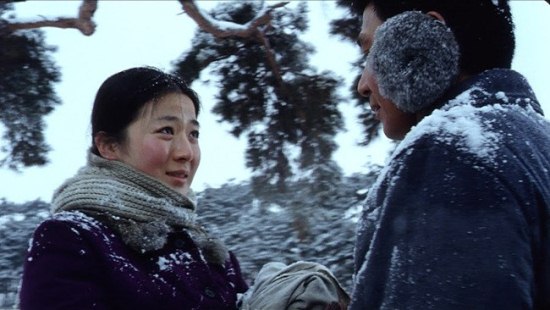
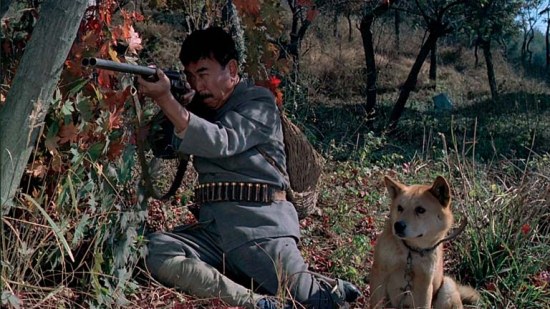
    An opening title card tells the audience that this film is based on “true events,” which then fades into the movie’s framing sequence set in 1980 about a young man of Korean descent trying to figure out the details of his recently-deceased father’s life in North Korea.  An old acquaintance of his father tells the story: Il Gyu (Ryung Min Kim) is a young man in Seoul, South Korea at the start of the Korean War, and on his way to school he is picked up by South Korean soldiers and forced into the army. During his first battle in North Korea, he sees the horror of battle and tears off his uniform.  After being wounded, an old man and his daughter, Son Ah (Hyang Suk Kim) come across him and, thinking that he is a North Korean soldier, he is mistakenly rescued from the battlefield and nursed back to health.  While in Son Ah’s care Il Gyu falls in love with her, but his nationality and Son Ah’s dedication to being a nurse are only the first obstacles that will come between them.

    From a technical standpoint the film is archaic.  While I understand the limitations of the production, the visual quality is so poor that it looks like a 1980s television movie.  You would have a hard time convincing anyone this film was released in 2012.  Scenes that take place in the 1970s are full of anachronisms like far more recent models of cars and computers, and there is even a sign for a medical conference that says “1992.”  There are also structural problems, including two ill-fitting musical interlude 35 minutes into the film. 12 minutes later, there is a brief respite from the falling-in-love frolicking of our two leads to flashback to Gyu’s father giving a stirring speech against Japanese imperialism. The film’s dialogue (or at least the English subtitles) often sounds like it is taken straight from propaganda posters: “Let’s not live as shields for American bullets.” “Why do people whose faces are different from ours bring so much tragedy upon us?” “We must be strong so our children do not fear the sound of the enemy’s bombings. Our nation with its 30 million people must stand and fight for the reunification of our divided land. So all of us, together, can rise as one glorious nation.” I know Bai is a novice writer, but I certainly don’t think those lines came from him. But perhaps his fingerprints are still on the love story, which is pure melodrama.  Son Ah is beautiful, virtuous, courageous, and selfless to the point of self-ruination.  Il Gyu throws his best lines at her (like “I’m jealous of this mountain wind… it steals away your scent.”) but he just can’t crack her noble exterior.   Finally, though the score is credited to a North Korean musician, it is so reminiscent of Ennio Morricone’s theme from Cinema Paradiso that they are lucky that sanctions will probably prevent him from prosecuting.

     THE OTHER SIDE OF THE MOUNTAIN

    Though The Other Side of the Wind is making the festival circuit in America (and even won a few awards), you’d be hard pressed to find many Americans who would be sympathetic to the portrayal of the United States.  Without exaggeration, every fifteen minutes during the Korean War scenes, the U.S. military are causing some terrible atrocity to move the narrative forward – bombing villages, destroying sacred temples, or setting masses of innocent women on fire (the last with absolutely no explanation). Even after the war, when one character is diagnosed with a deadly disease I expected the Americans to get blamed for that, too. When people say that mainstream American films like Zero Dark Thirty or Captain Phillips are propaganda, they’ve really never seen anything like this, especially since the film ends with a three minute sequence of the cast and crew singing a song advocating for Korean reunification.

    Yet with all that in mind, I can’t help but recommend The Other Side of the Wind to those that will either be entertained by its sometimes-absurd aspects or will marvel that a film like this even got made in the first place considering the circumstances in North Korea.  Despite only being released last year, it is in a lot of ways an instant historical curiosity.  If you’re a student of international film you will undoubtedly appreciate the sentiment even if you can’t appreciate the cloying narrative or the outdated production values.  As I said above, Bai’s heart was obviously in the right place, even if it seems the North Korean government did its best to remove his heart from this film.

    THE OTHER SIDE OF THE MOUNTAIN (Korea USA 2012, 102″)

    Directed by In Hak Jang, screenwriter and producer Joon Bai

    Now playing as part of the 2013 Korean American Film Festival New York (KAFFNY), October 24-26, 2013, at Village East Cinema

    KAFFNY venue: Village East Cinema (189 2nd Avenue, New York, NY 10003)

    Read more


  • Film Review: THE PRIME MINISTERS

    THE PRIME MINISTERS, a documentary film by Richard Trank

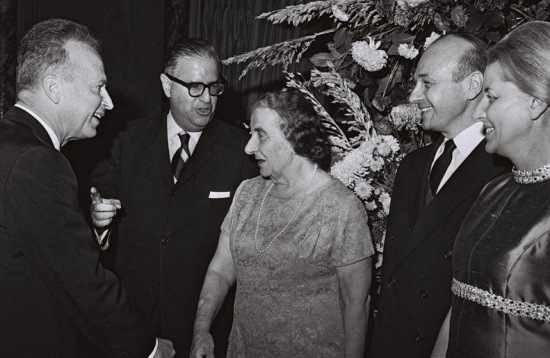
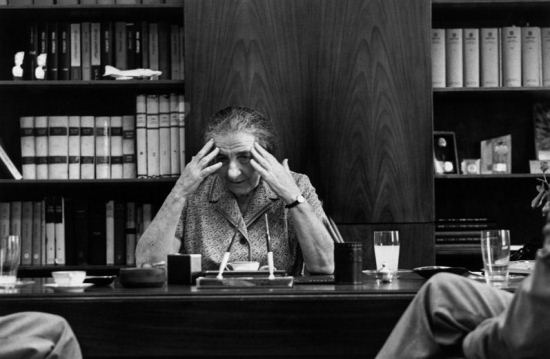
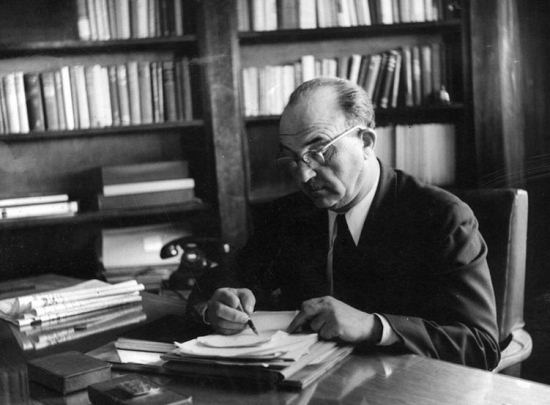
    THE PRIME MINISTERS documentary directed by Richard Trank is based on the eponymous best-selling book, The Prime Minister, written by Ambassador Yehuda Avner.  Yehuda Avner, who served as a chief aide, English language note-taker and speechwriter to former prime ministers Levi Eshkol, Golda Meir, Yitzhak Rabin, Menachem Begin, and Shimon Peres, takes the audience into this powerful office, with never before seen and heard details on major historical events such as the Six-Day War, the development of Israel’s close strategic relationship with the United States, the fight against terrorism, the Yom Kippur War and its aftermath. 

    The twist here is an interesting one, with narration by Hollywood superstars Sandra Bullock, Michael Douglas, Christoph Waltz, and Leonard Nimoy – they assume the personas of the political leaders. They morph into these political leaders and become voices from the past. 

    Yehuda Avner’s journey into the political arena which began by happenstance introduced him to a new world, and a ring side seat to major events.  Levi Eshkol, the third prime minister of Israel, was faced with the difficult task of staving off war and Avner accompanied him to America where he met with President Johnson.  During Prime Minister Levi Eshkol’s reign, Yitzhak Rabin assumed office as Ambassador for Israel.  Avner describes him as a person with an ‘analytical mind’. Yitzhak Rabin eventually became the fifth prime minister of Israel.

    THE PRIME MINISTERS, a documentary film by Richard Trank

    Golda Meir was the fourth prime minister of Israel. In her early life, she came face to face with anti-Semitism and this impacted her choices in life. Golda strived for positive change in the lives of the Jewish community.  She was a force to be reckoned with; very strong leader. Her message was straightforward and candid. Her time as Israeli prime minister was fraught with war and political unrest.

    In addition to the use of Hollywood stars as narrators, director Richard Trank also uses a myriad of techniques that serve to hold the audience. He shuttles from black and white to color picture presentation. The background music is forceful but not overpowering. He utilizes stills (photographs) to reinforce the message, to make the story more engaging. The images are riveting and powerful; pictures of war ravaged areas, fighter pilots preparing for takeoff, presidents huddling in deep discussion of impending warfare and possible arms race.

    THE PRIME MINISTERS, a documentary film by Richard Trank

    THE PRIME MINISTERS documentary film is definitely an exploration of strong leaders who left an indelible mark not only on Israel but on humanity.  

    THE PRIME MINISTERS, a documentary film by Richard Trank, produced by Rabbi Marvin Hier open at the Quad Cinema in NYC on Friday, October 18, and at The Royal in Los Angeles and Town Center in Encino on Wednesday, November 6. A national release will follow.

    http://youtu.be/BhSO8N-kuwo

    Read more


  • Review: ZERO CHARISMA

     Zero Charisma

    So much conflict comes out of the struggle for power, even regarding the smallest stakes possible.  ZERO CHARISMA is a film about struggles regarding what might seem like small stakes to an outside viewer, but to the characters involved it is literally an epic struggle between a “hero” and his nemesis.

    Zero Charisma is about Scott (Sam Eidson), an overweight, pasty-white thirty-something Texan whose life revolves around his weekly role-playing game sessions with his friends.  As the writer of the game the group has played weekly for years and the gamemaster, Scott is fueled by the power he holds over his friends, which is held in place by his friends’ timid natures and Scott’s proneness of nerd rage when someone displays even a hint of an attitude that he finds disagreeable.  For instance, when one of his friends, Kenny (Jeff Fenter) explains that his wife is pressuring him to stop playing, Scott is furious.  Kenny says to Scott, “I don’t think you’d understand. You’ve never even had a girlfriend.”  Scott, completely unconvincingly, answers angrily, “Yeah, because I don’t like to be tied down! How many times to I have to say that?”  The only thing that rings true of that answer is that Scott is obsessed with controlling his little corner of the universe, even if it means he still lives with his grandmother (Anne Gee Byrd) and works at Donut Taco II because he was fired from his job at the local game shop (it’s only temporary, he insists).  After all, at least he has control of the game.

    Once Kenny leaves the game Scott and his friends need to find a replacement, and soon Miles (Garrett Graham) joins the group.  However, unlike Scott and his friends Miles is a hipper, cooler “nerd” who immediately wins over Scott’s crew… all except for Scott, who instantly feels threatened.  Scott’s fellow players, stuck with him for so long, are relieved to meet someone who makes being geeky seem socially acceptable.  As this is going on, Scott’s life at home also begins to unravel, with his estranged mother (Cyndi Williams) returning to the fold and revealing exactly why Scott has so many pent-up personality issues.

    When I first started watching Zero Charisma I thought it was funny, but felt it was punching an easy target.  Edison’s Scott is the epitome of the nerd stereotype that was already ancient by the time Comic Book Guy joined the cast of The Simpsons and also resembles (physically and emotionally) a grown-up Eric Cartman.  But gradually directors Katie Graham and Andrew Matthews (Matthews also wrote the screenplay) fold back the layers of Scott and reveal the psychological issues that have kept him in a state of arrested development.  Scott is so obsessed with controlling his game because it’s literally the only thing in his life that he has control over.  So once he sees that he’s losing that, his mental unraveling is understandable and, in many ways, suspenseful.  After all, Scott is already convinced everyone is out to ruin his life and has a short temper – what will hold him back when his life (no matter how “pathetic”) actually does begin to fall apart?

    Most of the talent involved with Zero Charisma are working on their first feature film (this is the first time both Graham and Matthews have directed a film), and in some ways it has a rough rookie edge to it.  Some of that is endearing because it lends to how socially awkward the lead characters are, particularly Scott, but it would be hard to not enjoy Zero Charisma as a kind of twisted, realistic take on the quirky, nerdy archetype Napoleon Dynamite character that has been seen in indie movies so many times in recent years.  With that in mind, even a handful of rookie hiccups can’t distract from what is probably the most honest film about nerd stereotypes I’ve seen.

    The beauty of Zero Charisma is its exploration of the role our imagination plays in the way we perceive the world around us.  For Scott, every conflict is a war between good and evil on a medieval battlefield, with his handsome warrior alter ego always on the side of good.  Audiences might find that laughable, but that perception isn’t far off from the way most of us see ourselves in our struggles against the conflicts in our own lives.  By making Scott so stereotypical, the filmmakers and Eidson reveal how deceiving that stereotype really can be.

     Rating: 4 out of 5 : See it …… It’s Very Good

    http://youtu.be/2Bun5bJ2nVE

    Opens in

    New York: Cinema Village – Opens October 11
    Chicago: Facets Cinematheque – Opens October 18
    San Francisco: Roxie Theater – Opens October 18
    Phoenix: Film Bar – Opens October 18
    San Jose: Camera 2 – Opens October 18
    Portland: Hollywood Theatre – Opens October 25
    Houston: Alamo Drafthouse, Vintage Park – Opens October 25
    Columbus: Gateway Film Center – Opens November 4
    Santa Fe: Jean Cocteau Cinema – Opens November 8
    Albuquerque: Guild Cinema – Opens November 29

    Directors: Katie Graham, Andrew Matthews
    Writers: Andrew Matthews
    Producers: Thomas Fernandes, Ezra Venetos
    Featuring:  Sam Eidson, Garrett Graham, Brock England

    Synopsis:
    As the strict Game Master of a fantasy role-playing game, Scott (Sam Eidson) leads his friends in a weekly quest through mysterious lands from the safety of his grandmother’s kitchen. But his mastery of his own domain starts to slip — along with everything else in his life — when neo-nerd hipster Miles (Garrett Graham) joins the game, winning over the group with his confident charm and dethroning Scott with an unexpected coup. Caught in delusions of grandeur, Scott must roll the dice and risk everything to expose Miles as the fraud he believes him to be. A darkly comedic fable of epic proportions, Zero Charisma is an ode to nerds from every realm.

    Festivals:
    2013 SXSW Film Festival
    2013 Newport Beach International Film Festival
    2013 Fantasia International Film Festival
    2013 Maryland Film Festival
    2013 South Side Film Festival

    Winner of:
    Audience Award, Narrative Spotlight category  – 2013 SXSW Film Festival

    Read more


  • REVIEW: BabyGirl

    BabyGirl

    Growing pains may easily be one of the things that mostly all human beings can relate to. I can speak for myself assuredly when I say that life’s lessons come in all shape, sizes, and consequence.  For Lead actress Yainis Ynoa, better known as Lena AKA “Babygirl” it seems like they come all too frequently.  Already dealing with. being a 16-year-old latina in the Bronx which comes with many an obstacle economically, and socially there are expectations of her; her complex homelife is a constant theme throughout the film, documenting a relationship that seems like she is the parent most of the time.  Their bond is undying, of course, but their relation to each other is awkward at times, as you witness the responsibilities of the home and in guiding each other too often fall in the lap of Babygirl. 

    At times she is a crutch, others a confidant, and at the most important moments she is her mothers conscience. Lena has taken on the burden of holding the fort down as some would say as Lucy struggles with her demons, and promiscuosity.  Falling head over heels for whom she believed would be Mr. Right has quickly turned into another heartache.  When learning that Mr Right, Victor, secretly covets the company of her daughter not her, Lucy loses it in a reaction that almost costs the two (mother and daughter) their relationship

    Outside is no relief for the Lena; as an after thought, her closest friends like Daishan are really jealous, instead of suppportive. Judgemental in time when what Lena needs is consolation; her intrigue with a neighborhood sweetheart named Xavier who innocently wants nothing more than to share moments of puppy love, a stark contrast to the creepish desires of Victor.  What was overwhelming at first, becomes a place of comfort for Lena as she quickly learns what trying to grow up too fast can amount to.  

    From backstab to backlash, tribulation, to exhilaration ( a first kiss, or first alcoholic beverage at a time when she does not even know how to order except from the kids menu ) follow the maturation of Lena AKA Babygirl in this very candid portrayal of what unfortunately is the life of boriqua teenager in the mean streets of Fordham Heights.

    BABYGIRL a film by Macdara Vallely NOW PLAYING thru October 10 New York’s QUAD CINEMA

    http://youtu.be/ohaKTlsbP1E

    WRITTEN AND DIRECTED BY: Macdara Vallely
    PRODUCERS: David Collins; Gigi Dement; R. Paul Miller    
    EXECUTIVE PRODUCERS: Felix Werner; Kathrin Werner
    CINEMATOGRAPHER: Jarin Blaschke       
    FILM EDITOR: Nathan Nugent
    CAST: Yainis Ynoa, Rosa Arredondo, Flaco Navaja, Joshua Rivera, Gleendilys Inoa

    SYNOPSIS: Set in the Bronx, BABYGIRL is about Lena (Yainis Ynoa), a fifteen-year old Nuyorican girl, who has watched her heart-broken single-mom (Rosa Arredondo) fall in love with one man after another.  When Victor (Flaco Navaja), the latest boyfriend, starts hitting on Lena, she sets out to expose him.   But the plan backfires, and Lena finds herself trapped in an impossible love-triangle.  The only way out is for her to stand up and confront some bitter home truths. BABYGIRL is the second feature by Irish director, Macdara Valley, who moved to Bronx, New York seven years ago. 


    WINNER:  PANAVISION’S INDEPENDENT SPIRIT AWARD
    Santa Barbara Intl. Film Festival Award – BEST FEATURE 2013
    Jameson Dublin Intl. Film Festival – BEST IRISH FEATURE 
    Tribeca Film Festival 2012 – OFFICIAL SELECTION   

    Read more


  • Review: MUSCLE SHOALS

    MUSCLE SHOALS

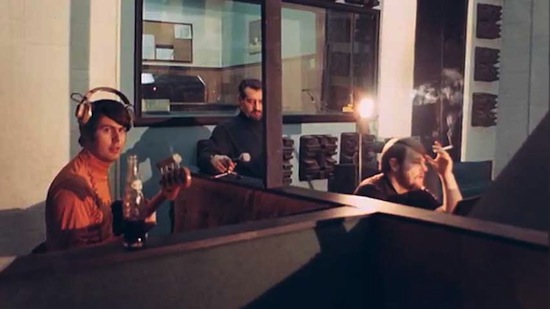
    As a huge music fan who nevertheless can’t play a note, I always enjoy watching documentaries about behind the scenes details about the music business and how the greatest records of all time were recorded.  While there are hundreds of music documentaries, many are fairly pedestrian and focus on household names who have sold millions of records and whose stories are already well-known.  The stars of MUSCLE SHOALS, a documentary about two prolific recording studios in Muscle Shoals, Alabama, certainly have had that “sold millions of records” part down since the 1960s, but their lives have been anything but open books.

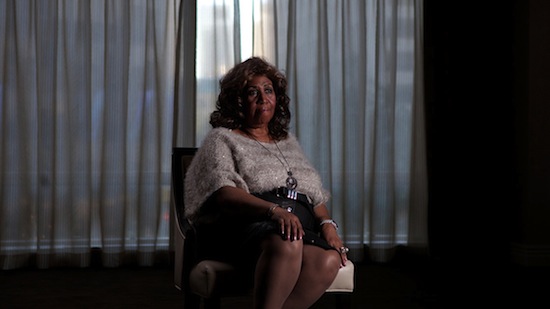
    If you ever wondered what Lynyrd Skynyrd’s Ronnie Van Zant meant by the lines “In Muscle Shoals they got the Swampers/And they’ve been known to pick a song or two” in Sweet Home Alabama, the documentary MUSCLE SHOALS has the answer.  The town of Muscle Shoals, Alabama became a somewhat unlikely major hub of soul, R&B and rock music beginning in the early 1960s with FAME Studios, which was founded by native Rick Hall.  Hall is a seemingly ancient producer who overcame a life full of tragedy to turn his town into a recoding juggernaut.  The list of world-famous musicians who recorded major hit songs in Muscle Shoals is nearly endless, with many of them commenting on their work in the town in the documentary, including Aretha Franklin, Percy Sledge, Wilson Pickett, Gregg Allman, and The Rolling Stones’ Keith Richards and Mick Jagger.

     Aretha Franklin in Muscle Shoals

    So what’s the reason why an out-of-the-way studio became such a mecca for great music?  The documentary offers many explanations about the environment, but the true reason is that the house musicians for FAME Studios developed a powerful sound that has been impossible to find anywhere else in the decades since.  It’s the kind of music that gives you chills if you sit down and really absorb it.  The documentary goes into depth about these musicians, particularly because the group of white guys behind the instruments seem to be the furthest thing from “soul” musicians on the planet.

    Because of this, the documentary serves as a spectacular journey through American R&B and soul music of the 1960s and 1970s.  Naturally the documentary focuses on the hey-day of Muscle Shoals, and there’s little said about the records made here since aside from recent footage of Alicia Keys recording a Bob Dylan song that Dylan originally recorded here (and oddly U2’s Bono appears numerous times in the documentary though he never recorded music here).  However, it’s an incredible ride. In particular, I’m impressed by the participation of world-famous musicians as “talking heads” – Keith Richards, one of my all-time idols, is particularly hysterical as usual – rather than relying on “music journalists” to tell second-hand stories as so many documentaries do.

    The only aspect of worry is that first-time director Greg “Freddy” Camalier has set an extremely high bar for himself.  I don’t know how he’ll ever be able to follow up this supremely entertaining and informative documentary with his next film.  However, after seeing Muscle Shoals I know I’ll be in line to see what he does next.

    Review Rating: 4 out of 5 : See it …… It’s Very Good

    http://youtu.be/mmM–aUROQc

    Read more


  • REVIEW: The Rugby Player

    The Rugby Player

    Documenting the years of transition which encompass his growth from awkward teen to daringly rebellious yet entertaining young man, Mark Bingham left the greatest momento to be appreciated for years to come, real life footage.  Always one to keep a video camera in tow he and his friends bonded over pranks, and slams, on the way to becoming productive members of society. However malicious they could be, there was always an angelic aura to the outcome, that being the leadership quality and authentic manner in which Mark Bingham lived his life.  The product of what many would call a broken home, Mark was not in the need of anything, the least bit-love; adored by his aunts and uncles whom always took active roles in his life Mark was like any other youth, exploring life on life terms.

    A love of rugby for its forceful yet athletic way of play when he entered the latter years of high school career Mark devoted his time to being the consummate teammate. Landing a place at the University of Cal, Mark took his talents and personality to Berkley, aligning himself with other stellar young men. The son of Alice Holgan, Mark acquired his mothers leadership qualities and steadfast opinion never known as one to waver or talk out of both sides of his mouth.  A champion for the LGBT community, Mark found a way to stay true to himself; however apprehensive he was at first, he chose right over wrong. A captain in his fraternity house, he left his peers stunned by the revelation.  Eventual embrace and support the way that he has always known carries THE RUGBY PLAYER.  A tremendous capture of a life worth having been lived, the catastrophe of Flight 93 ,and the carnage / losses of lives and so much more that marks the infamous day, Sept 11th 2001.

    The irony that exists in THE RUGBY PLAYER is amazing, beginning with his mothers career of flight attending; never in a million years would one expect this form of an outcome. Admirable as all is the foresight of Mark to for all intents and purposes deliver an autobiography of this magnitude.


    THE RUGBY PLAYER (2013) Documentary

    TRT: 80min | Color | 5.1 Surround | Unrated | English
    Director/Producer: Scott Gracheff
    Producer: Holly Million
    Director of Photography/Producer: Chris Million
    Editor: Manuel Adrian Tsingaris
    Content Advisor: Todd Sarner


    HBO© Audience Award for Best Documentary – Miami Gay & Lesbian Film Festival 2013
    Audience Award for Best Documentary – Connecticut Gay & Lesbian Film Festival 2013
    Celebration of Courage Award – Kansas City LGBT Film Festival 2013
    “Honorable Mention” Audience Award category – Philadelphia QFest 2013

    Read more