• Zach Braff’s WISH I WAS HERE, Class of 94’s CLERKS, HOOP DREAMS Added to 2014 Sundance Film Fest

     WISH I WAS HERE directed by Zach BraffWISH I WAS HERE directed by Zach Braff

    WISH I WAS HERE directed by Zach Braff, CLERKS directed by Kevin Smith, and HOOP DREAMS directed by Steve James have been added to the 2014 Sundance Film Festival.  Wish I Was Here will screen in the Premieres section, Clerks and Hoop Dreams will screen in the From the Collection program. Both Clerks and Hoop Dreams premiered at the 1994 Festival, which will be the subject of “Class of ’94,” a Power of Story panel at the Egyptian Theatre on Friday, January 24. The 2014 Festival will be January 16 to 26, 2014, in Park City, Salt Lake City, Ogden and Sundance, Utah.

    WISH I WAS HERE / U.S.A. (Director: Zach Braff, Screenwriters: Zach Braff, Adam Braff) — Aidan Bloom, a 35-year-old struggling actor, father, and husband, is still trying to find purpose in his life. In coming to terms with the death of his father, Aidan and his family unite to discover how to turn the page onto the next chapter. Cast: Zach Braff, Kate Hudson, Mandy Patinkin, Josh Gad, Ashley Greene, Joey King. World Premiere

    FROM THE COLLECTION

    CLERKS / U.S.A. (Director and screenwriter: Kevin Smith) – One wild day in the life of a pair of overworked counter jockeys whose razor-sharp wit and on-the-job antics give a whole new meaning to customer service! Cast: Brian O’Halloran, Jeff Anderson, Marilyn Ghigliotti, Jason Mewes, Lisa Spoonauer.

    Clerks premiered at the 1994 Sundance Film Festival. A newly struck print of Clerks, created by Miramax Films to commemorate the film’s 20th anniversary, will screen on Friday, January 24 at 11:59 p.m. at the Egyptian Theatre in Park City. Director Kevin Smith is expected to introduce the film and participate in the Q&A.

    HOOP DREAMS / U.S.A. (Director: Steve James) – Filmed over five years, with unprecedented access, Hoop Dreams, directed by Steve James, chronicles the lives of Arthur Agee and William Gates, two inner-city teenagers from Chicago. Through their skills on the basketball court they struggle to escape their surroundings and realize their dreams of making it to the NBA. It won the Audience Award for Best Documentary at the 1994 Sundance Film Festival. Despite its length (171 minutes) and unlikely commercial prospects, it received high critical and popular acclaim, became an Academy Award nominee for Best Film Editing and was added to the Library of Congress’ National Film Registry in 2005

    Read more


  • Oscilloscope Lab Grabs 95 Seconds Short Film TIM AND SUSAN HAVE MATCHING HANDGUNS

    tim and susan have matching handguns 

    Joe Callander’s 95 seconds short film TIM AND SUSAN HAVE MATCHING HANDGUNS, scheduled to have its world premiere at the 2014 Sundance Film Festival, has been snagged for U.S. release by Oscilloscope Laboratories. TIM AND SUSAN HAVE MATCHING HANDGUNS is described as a romantic tale of love, life, and the right to bear arms.

    About the acquisition, O-Scope’s Dan Berger and David Laub said, “TIM AND SUSAN is a remarkably assured, economical, and entertaining film. Joe’s deft filmmaking and Tim and Susan’s undeniable connection will warm the cockles of your heart. We’re gonna figure out a way to put this film in front of your faces.”

    Filmmaker Joe Callander said, “I’ve been watching Oscilloscope films for years and it’s quite the unexpected honor to be working with them on this short. My first film was two minutes long, this one is 95 seconds. I’m hoping that if this trend continues, one day I’ll just wake up, sneeze, and everything will become pure light.”

    TIM AND SUSAN was produced by Dave Munson and Saddleback Leather, purveyors of fine leather goods and fine films. Joe Callander is Saddleback Leather’s filmmaker in residence.

    Read more


  • 12 YEARS A SLAVE, THE SPECTACULAR NOW, THE KINGS OF SUMMER Among Winners of 2013 Phoenix Film Critics Awards

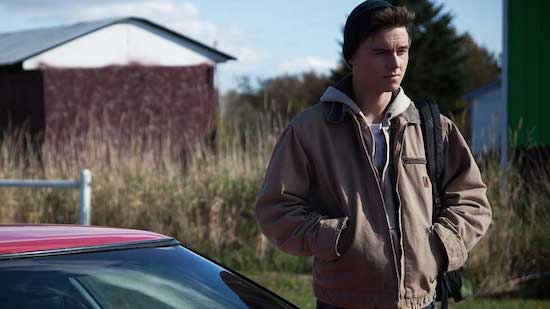
    THE KINGS OF SUMMERTHE KINGS OF SUMMER

    The Phoenix Film Critics awarded “12 YEARS A SLAVE” with the Best Picture of the year award, along with the awards for Best Supporting Actress for Lupita Nyong’o, and Best Adapted Screenplay.  “BLUE IS THE WARMEST COLOR” won the award for Best Foreign Language Film  and “20 FEET FROM STARDOM” won the award for BestDocumentary. In a notable nod to indie films, “THE KINGS OF SUMMER” and “THE SPECTACULAR NOW” tie for the award for the The Overlooked Film of the Year.

    BEST PICTURE

    “12 Years a Slave”

    TOP TEN FILMS OF 2013 (in alphabetical order)

    “12 Years a Slave”

    “American Hustle”

    “Captain Phillips”

    “Dallas Buyers Club”

    “Gravity”

    “Mud”

    “Nebraska”

    “Philomena”

    “Saving Mr. Banks”

    “Short Term 12”

    BEST DIRECTOR

    Alfonso Cuaron, “Gravity”

    BEST ACTOR IN A LEADING ROLE

    Matthew McConaughey, “Dallas Buyers Club”

    BEST ACTRESS IN A LEADING ROLE

    Cate Blanchett, “Blue Jasmine”

    BEST ACTOR IN A SUPPORTING ROLE

    Jared Leto, “Dallas Buyers Club”

    BEST ACTRESS IN A SUPPORTING ROLE

    Lupita Nyong’o, “12 Years a Slave”

    BEST ENSEMBLE ACTING

    “American Hustle”

    BEST SCREENPLAY – ORIGINAL

    “Nebraska”

    BEST SCREENPLAY – ADAPTATION

    “12 Years a Slave”

    BEST LIVE ACTION FAMILY FILM (Rated G or PG)

    “Oz, The Great and Powerful”

    THE OVERLOOKED FILM OF THE YEAR

    (TIE)

    “The Kings of Summer”

    And

    “The Spectacular Now”

    BEST ANIMATED FILM

    “Frozen”

    BEST FOREIGN LANGUAGE FILM

    “Blue is the Warmest Color”

    BEST DOCUMENTARY

    “20 Feet from Stardom”

    BEST ORIGINAL SONG

    Let It Go, “Frozen”

    BEST ORIGINAL SCORE

    “Frozen”

    BEST CINEMATOGRAPHY

    “Gravity”

    BEST FILM EDITING

    “Gravity”

    BEST PRODUCTION DESIGN

    “Gravity”

    BEST COSTUME DESIGN

    “The Great Gatsby”

    BEST VISUAL EFFECTS

    “Gravity”

    BEST STUNTS

    “Fast & Furious 6”

    BREAKTHROUGH PERFORMANCE ON CAMERA

    Oscar Isaac, “Inside Llewyn Davis”

    BREAKTHROUGH PERFORMANCE BEHIND THE CAMERA

    Lake Bell, “In a World…”

    BEST PERFORMANCE BY A YOUTH IN A LEAD OR SUPPORTING ROLE – MALE

    Tye Sheridan, “Mud”

    BEST PERFORMANCE BY A YOUTH IN A LEAD OR SUPPORTING ROLE – FEMALE

    Sophie Nelisse, “The Book Thief”

    Read more


  • ROGER AND ME, PULP FICTION Among 25 Films Added to National Film Registry of the Library of Congress

    ROGER AND MEROGER AND ME

    The Librarian of Congress announced  the annual selection of 25 motion pictures to join the National Film Registry of the Library of Congress. Spanning the period 1919-2002, the films named to the registry include Hollywood classics, documentaries, silent films, independent and experimental motion pictures. In addition to movie classics such as “MARY POPPINS,” and “THE QUIET MAN,” along with Quentin Tarantino’s “PULP FICTION,” the 2013 registry list includes documentaries “ROGER AND ME,” Michael Moore’s advocacy film about the human effects of the failing auto industry; “CICERO MARCH,” the confrontation between blacks and whites on the streets of an Illinois town in 1966; “DECASIA,” which was created from scraps of decades-old, decomposing film; and female filmmaker Lee Dick’s “MEN AND DUST.”

    2013 National Film Registry

    Bless Their Little Hearts (1984)
    Part of the vibrant New Wave of independent African-American filmmakers to emerge in the 1970s and 1980s, Billy Woodberry became a key figure in the movement known as the L.A. Rebellion. Woodberry crafted his UCLA thesis film, “Bless Their Little Hearts,” which was theatrically released in 1984. The film features a script and cinematography by Charles Burnett. This spare, emotionally resonant portrait of family life during times of struggle blends grinding, daily-life sadness with scenes of deft humor. Jim Ridley of the “Village Voice” aptly summed up the film’s understated-but- real virtues: “Its poetry lies in the exaltation of ordinary detail.”

    Brandy in the Wilderness (1969)
    This introspective “contrived diary” film by Stanton Kaye features vignettes from the relationship of a real-life couple, in this case the director and his girlfriend. An evocative 1960s time capsule—reminiscent of Jim McBride’s “David Holzman’s Diary”—this simulated autobiography, as in many experimental films, often blurs the lines between reality and illusion, moving in non-linear arcs through the ever-evolving and unpredictable interactions of relationships, time and place. As Paul Schrader notes, “it is probably quite impossible (and useless) to make a distinction between the point at which the film reflects their lives, and the point at which their lives reflect the film.” “Brandy in the Wilderness” remains a little-known yet key work of American indie filmmaking.

    Cicero March (1966)
    During the summer of 1966, the Chicago Freedom Movement, led by Dr. Martin Luther King, Jr., targeted Chicago in a drive to end de facto segregation in northern cities and ensure better housing, education and job opportunities for African Americans. After violent rioting and a month of demonstrations, the city reached an agreement with King, in part to avoid a threatened march for open housing in the neighboring all-white town of Cicero, Ill., the scene of a riot 15 years earlier when a black couple tried to move into an apartment there. King called off further demonstrations, but other activists marched in Cicero on Sept. 4, an event preserved on film in this eight-minute, cinema-vérité-styled documentary. Using lightweight, handheld equipment, the Chicago-based Film Group, Inc. filmmakers situated themselves in the midst of confrontations and captured for posterity the viciousness of northern reactions to civil-rights reforms.

    Daughter of Dawn (1920)
    A fascinating example of the daringly unexpected topics and scope showcased by the best regional, independent filmmaking during the silent era, “Daughter of Dawn” features an all-Native-American cast of Comanches and Kiowas. Although it offers a fictional love-story narrative, the film presents a priceless record of Native-American customs, traditions and artifacts of the time. The Oklahoma Historical Society recently rediscovered and restored this film with a grant from the National Film Preservation Foundation.

    Decasia (2002)
    Errol Morris, the director of such highly acclaimed documentary features as “The Thin Blue Line,” “Fast, Cheap and Out of Control” and “Mr. Death,” is noted to have sat drop-jawed watching “Decasia” and stammering, “This may be the greatest movie ever made.” Created from scraps of decades-old decomposing “found film,” “Decasia” hypnotizes and teases with images that fade and transform themselves right before the viewer’s eyes. Culling footage from archives across the country, filmmaker Bill Morrison collected nitrate film stock on the very brink of disappearance and distilled it into a new art form capable of provoking “transports of sublime reverie amid pangs of wistful sorrow,” according to New York Times writer Lawrence Weschler. Morrison wedded images to the discordant music of composer Michael Gordon—a founding member of the Bang on a Can Collective—into a fusion of sight and sound that Weschler called “ravishingly, achingly beautiful.”

    Ella Cinders (1926)
    With her trendsetting Dutch bob haircut and short skirts, Colleen Moore brought insouciance and innocence to the flapper image, character and aesthetic. By 1926, however, when she appeared in “Ella Cinders,” Moore’s interpretation of the flapper had been eclipsed by the more overtly sexual version popularized by Clara Bow or Joan Crawford. In “Ella Cinders,” Ella (Colleen Moore) wins a beauty contest sponsored by a movie magazine and is awarded a studio contract. New York Times reviewer Mordaunt Hall observed that the film was “filled with those wild incidents which are seldom heard of in ordinary society,” and noted “Miss Moore is energetic and vivacious.” The film is an archetype of 1920s comedy, featuring a star whose air of emancipation inspired her generation.

    Forbidden Planet (1956)
    Directed by Fred M. Wilcox, MGM’s “Forbidden Planet” is one of the seminal science-fiction films of the 1950s, a genre that found itself revitalized and empowered after World War II and within America’s newly created post-nuclear age. Loosely based upon William Shakespeare’s “The Tempest,” “Forbidden Planet” is both sci-fi saga and allegory, a timely parable about the dangers of unlimited power and unrestrained technology. Since its production, the movie has proved inspirational to generations of speculative fiction visionaries, including Gene Roddenberry. Along with its literary influence, highly influential special effects and visual style, the film also pushed the boundaries of cinematic science fiction. For the first time, all action happened intergalatically (not on Earth) and humans are depicted as space travelers, regularly jetting off to the far reaches of the cosmos. Additionally, “Forbidden Planet” is remembered for its innovative score—or lack thereof. No music exists on the film’s soundtrack; instead, all ambient sounds are “electronic tonalities” created by Louis and Bebe Barren. Walter Pidgeon, Leslie Nielsen, Anne Francis and, in his debut, Robbie the Robot make up the film’s cast.

    Gilda (1946)
    With the end of World War II came a dark edge in the American psyche and a change in the films it produced. Film noir defined the 1940s and “Gilda” defined the Hollywood glamorization of film noir—long on sex appeal but short on substance. Director Charles Vidor capitalizes on the voyeuristic and sadomasochistic angles of film noir—and who better to fetishize than Rita Hayworth, poured into a strapless black satin evening gown and elbow-length gloves, sashaying to “Put the Blame on Mame.” George Macready and Glenn Ford round out the tempestuous triangle, but “Gilda” was and, more than 65 years later, still is all about Hayworth.

    The Hole (1962)
    With “The Hole,” legendary animators John and Faith Hubley created an “observation,” as the opening title credits state, a chilling Academy Award-winning meditation on the possibility of an accidental nuclear catastrophe. Jazz great Dizzy Gillespie and actor George Mathews improvised a lively dialogue that the Hubleys and their animators used as the voices of two New York construction workers laboring under Third Avenue. Earlier in his career, while he worked as an animator in the Disney studios, John Hubley viewed a highly stylized Russian animated film—brought to his attention by Frank Lloyd Wright—that radically influenced his ideas about the possibilities of animation. With his new vision realized in this film, the Hubleys ominously, yet humorously, commented on the fears of nuclear devastation ever-present in cold war American culture during the year that the Cuban Missile crisis unfolded.

    Judgment at Nuremberg (1961)
    Selecting as its focus the “Justices Trial” of the post-World War II Nuremberg war crimes tribunal, rather than the more publicized trials of major Nazi war criminals, “Judgment at Nuremberg” broadened its scope beyond the condemnation of German perpetrators to interrogate the concept of justice within any modern society. Conceived by screenwriter Abby Mann during the period of McCarthyism, the film argues passionately that those responsible for administering justice also have the duty to ensure that human-rights norms are preserved even if they conflict with national imperatives. Mann’s screenplay, originally produced as a Playhouse 90 teleplay, makes “the value of a single human being” the defining societal value that legal systems must respect. “Judgment at Nuremberg” startled audiences by including in the midst of its narrative seven minutes of film footage documenting concentration camp victims, thus using motion-picture evidence to make its point both in the courtroom and in movie theaters. Mann and actor Maximilian Schell received Academy Awards and the film boasted fine performances from its all-star cast.

    King of Jazz (1930)
    A sparkling example of a musical in the earliest days of two-color Technicolor, “The King of Jazz” is a fanciful revue of short skits, sight gags and musical numbers, all with orchestra leader Paul Whiteman—the self-proclaimed “King of Jazz” — at the center. Directed by John Murray Anderson and an uncredited Paul Fejos, it attempted to deliver “something for everyone” from a Walter Lantz cartoon for children to scantily-clad leggy dancers and contortionists for the male audience to the crooning of heartthrob Bing Crosby in his earliest screen appearance. “King of Jazz” also featured an opulent production number of George Gershwin’s “Rhapsody in Blue.”

    The Lunch Date (1989)
    Adam Davidson’s 10-minute Columbia University student film examines the partial erosion of haughty self-confidence when stranded outside one’s personal comfort zone. A woman has a slice-of-life, train-station chance encounter with a homeless man, and stumbles through several off-key reactions when they share a salad she believes is hers. Winner of a 1990 Student Academy Award, “The Lunch Date” stands out as a simple, yet effective, parable on the vicissitudes and pervasiveness of perception, race and stereotypes.

    The Magnificent Seven (1960)
    The popularity of this Western, based on Akira Kurosawa’s “Seven Samurai” (1954), has continued to grow since its release due in part to its role as a springboard for several young actors on the verge of successful careers: Steve McQueen, Charles Bronson, James Coburn, Robert Vaughn and Horst Buchholz. The film also gave a new twist to the career of Yul Brynner. Brynner bought the rights to Kurosawa’s original story and hand-picked John Sturges as its director. Sturges had earned a reputation as a solid director of Westerns such as “Bad Day at Black Rock” (1955) and “Gunfight at the O.K. Corral” (1957). Transporting the action from Japan to Mexico, where it was filmed on location, the story portrays a gang of paid gunslingers hired by farmers to rout the bandits pillaging their town. Contributing to the film’s popular appeal through the decades is Elmer Bernstein’s vibrant score, which would go on to become the theme music for Marlboro cigarette commercials from 1962 until cigarette advertising on television was banned in 1971.

    Martha Graham Early Dance Films (1931-1944)
    (“Heretic,” 1931; “Frontier,” 1936; “Lamentation,” 1943; “Appalachian Spring,” 1944)
    Universally acknowledged as the preeminent figure in the development of modern dance and one of the most important artists of the 20th century, Martha Graham formed her own dance company in 1926. It became the longest continuously operating school of dance in America. With her company’s creation, Graham codified her revolutionary new dance language soon to be dubbed the “Graham Technique.” Her innovations would go on to influence generations of future dancers and choreographers, including Twyla Tharp and Merce Cunningham. This quartet of films, all silent and all starring Graham herself, document four of the artist’s most important early works. They are “Heretic,” with Graham as an outcast denounced by Puritans; “Frontier,” a solo piece celebrating western expansion and the American spirit; “Lamentation,” a solo piece about death and mourning; and “Appalachian Spring,” a multi-character dance drama, the lyrical beauty of which is retained even without the aid of Aaron Copland’s famous and beloved music.

    Mary Poppins (1964)
    Alleged to be Walt Disney’s personal favorite from all of his many classic films, “Mary Poppins” is based upon a book by P.L. Travers. With Travers’ original tale as a framework, screenwriters Bill Walsh and Don DaGradi, with the aid of songwriters the Sherman Brothers (Richard M. and Robert B.), fashioned an original movie musical about a most unusual nanny. Weaving together a witty script, an inventive visual style and a slate of classic songs (including “A Spoonful of Sugar” and “Chim Chim Cher-ee”), “Mary Poppins” is a film that has enchanted generations. Equal parts innocent fun and savvy sophistication, the artistic and commercial success of the film solidified Disney’s knack for big-screen, non-cartoon storytelling and invention. With its seamless integration of animation with live action, the film prefigured thousands of later digital and CGI-aided effects. With its pitch-perfect cast, including Julie Andrews, Dick Van Dyke, Jane Darwell, Glynis Johns and Ed Wynn, “Mary Poppins” has remained a “supercalifragilisticexpialidocious” achievement.

    Men and Dust (1940)
    Produced and directed by Lee Dick—a woman pioneer in the field of documentary filmmaking—and written and shot by her husband Sheldon, this labor advocacy film is about diseases plaguing miners in Kansas, Missouri and Oklahoma. Sponsored by the Tri-State Survey Committee, “Men and Dust” is a stylistically innovative documentary and a valuable ecological record of landscapes radically transformed by extractive industry.

    Midnight (1939)
    Claudette Colbert, Don Ameche and John Barrymore light up the screen in this Mitchell Leisen romantic comedy. Liesen is often described as a “studio contract” director—a craftsman with no particular aesthetic vision or social agenda who is efficient, consistent, controlled, with occasional flashes of panache. Leisen’s strength lay in his timing. He claimed he established the pace of a scene by varying the tone and cadence of his voice as he called “ready…right…action!” This technique served to give the actors a proper “beat” for the individual shot. In addition to Leisen’s timing, “Midnight” also boasts a screenplay by the dynamic duo of Billy Wilder and Charles Brackett. Hilarity ensues when penniless showgirl Colbert impersonates a Hungarian countess, aided by the aristocratic Barrymore, until, despite her best efforts, she falls for a lowly taxi driver (Ameche) —all this amidst a Continental sumptuousness abundant in Paramount pictures of that era. The staggering number of exceptional films released in 1939 has caused this little gem to be overlooked. However, in its day, the New York Times called “Midnight” “one of the liveliest, gayest, wittiest and naughtiest comedies of a long hard season.” Reportedly unhappy with Leisen’s script changes, Wilder found the motivation to assert more creative control by becoming a director himself.

    Notes on the Port of St. Francis (1951)
    When Frank Stauffacher introduced the Art in Cinema film series at the San Francisco Museum of Art in 1947, he was on his way to becoming a significant influence on a generation of West Coast filmmakers. Through the series, he cultivated his knowledge of San Francisco surrealist films of the 1940s as well as the “city symphonies” produced by European filmmakers in the 1920s and 1930s. “Notes on the Port of St. Francis” is the natural progression of Stauffacher’s appreciation for the abstract synthesis of film and place. Impressionistic and evocative, the film is shaped by the director’s organization of iconic imagery, such as seascapes and city scenes, and by the juxtaposition of these visuals and the soundtrack comprised both of music and narration by Vincent Price of excerpts from Robert Louis Stevenson’s 1882 essay on San Francisco. Independent film scholar Scott MacDonald speculated that the “notes” in the film’s title may refer to “both the informality of his visuals and his care with sound that may have been a subtle way of connecting his film with the European city symphonies of the twenties.” Throughout the film, Macdonald observed, Stauffacher echoes Stevenson’s theme of the “City of Contrasts” by shooting from both San Francisco Bay and from the hills.

    Pulp Fiction (1994)
    By turns utterly derivative and audaciously original, Quentin Tarantino’s mordantly wicked Möbius strip of a movie influenced a generation of filmmakers and stands as a milestone in the evolution of independent cinema in the United States, making it one of the few films on the National Film Registry as notable for its lasting impact on the film industry as its considerable artistic merits. Directed by Tarantino from his profane and poetic script, “Pulp Fiction” is a beautifully composed tour-de-force, combining narrative elements of hardboiled crime novels and film noir with the bright widescreen visuals of Sergio Leone. The impact is profound and unforgettable.

    The Quiet Man (1952)
    Never one to shy away from sentiment, director John Ford used “The Quiet Man” with unadulterated adulation to pay tribute to his Irish heritage and the grandeur of the Emerald Isle. With her red hair ablaze against the enveloping lush green landscapes, Maureen O’Hara embodies the mystique of Ireland, as John Wayne personifies the indefatigable American searching for his ancestral roots, with Victor Young’s jovial score punctuating their escapades. The film and the locale are populated with characters bordering on caricature. Sly, whiskey-loving matchmaker Michaleen O’Flynn (Barry Fitzgerald), the burly town bully Will Danaher (Victor McLaglen) and the put-upon but patient Widow Tillane (Mildred Natwick) are the most vivid. Beautifully photographed in rich, saturated Technicolor by Winton C. Hoch, with picturesque art direction by Frank Hotaling, “The Quiet Man” has become a perennial St. Patrick’s Day television favorite.

    The Right Stuff (1983)
    At three hours and 13 minutes, Philip Kaufman’s adaptation of Tom Wolfe’s novel is an epic right out of the Golden Age of Hollywood, but thanks to its assortment of characters and human drama, it rarely drags. Director/screenwriter Kaufman ambitiously attempts to boldly go where few epics had gone before as he recounts the nascent Space Age. He takes elements of the traditional Western, mashes them up with sophisticated satire and peppers the concoction with the occasional subversive joke. As a result, Kaufman (inspired by Wolfe) creates his own history, debunking a few myths as he creates new ones. At its heart, “The Right Stuff” is a tribute to the space program’s role in generating national pride and an indictment of media-fed hero worship. Remarkable aerial sequences (created before the advent of CGI) and spot-on editing team up to deliver a movie that pushes the envelope.

    Roger & Me (1989)
    After decades of product ascendancy, American automakers began facing stiff commercial and design challenges in the late 1970s and 1980s from foreign automakers, especially the Japanese. Michael Moore’s controversial documentary chronicles the human toll and hemorrhaging of jobs caused by these upheavals, in this case the firing of 30,000 autoworkers by General Motors in Moore’s hometown of Flint, Michigan. As a narrative structure, Moore uses a comic device sometimes found in political campaign commercials, weaving a message around trying to find the person responsible for a wrong, in this case General Motors Chairman Roger Smith. “Roger & Me” is take-no-prisoners, advocacy documentary filmmaking, and Moore makes no apologies for his brazen, in-your-face style—he would argue the situation demands it. The themes of unfairness, inequality and the unrealized attainment of the American Dream resonate to this day, while the consequences of ferocious auto-sector competition continue, playing a key long-term role in the city of Detroit’s recent filing for bankruptcy protection.

    A Virtuous Vamp (1919)
    Employing a title suggested by Irving Berlin, screenwriter Anita Loos, working with husband John Emerson, crafted this charming spoof on romance in the workplace that catapulted Constance Talmadge, the object of Berlin’s unrequited affection, into stardom. During the silent era, women screenwriters, directors and producers often modified and poked fun at stereotypes of women that male filmmakers had drawn in harsher tones. The smiles of Loos’ “virtuous vamp”—as embodied by Talmadge—lead to havoc in the office, but are not life-threatening, as were the hypnotizing stares of Theda Bara’s iconic caricature that defined an earlier era. In this satire of male frailties, the knowing innocence of Loos’ character captured the imagination of poet Vachel Lindsay, who deemed the film “a gem” and called Talmadge “a new sweetheart for America.”

    Who’s Afraid of Virginia Woolf? (1966)
    Edward Albee’s 1962 stage triumph made a successful transfer to the screen in this adaption written by Ernest Lehman. The story of two warring couples and their alcohol-soaked evening of anger and exposed resentments stunned audiences with its frank, code-busting language and depictions of middle-class malaise-cum-rage. Elizabeth Taylor and Richard Burton—who were both Academy Award nominees for their work (with Taylor winning)—each achieved career high-points in their respective roles as Martha and George, an older couple who share their explosive evening opposite a younger husband and wife, portrayed by George Segal and Sandy Dennis. “Woolf’s” claustrophobic staging and stark black-and-white cinematography, created by Haskell Wexler, echoed its characters’ rawness and emotionalism. Mike Nichols began his auspicious screen directing career with this film, in which he was already examining the absurdities and brutality of modern life, themes that would become two of his career hallmarks.

    Wild Boys of the Road (1933)
    Historians estimate that more than 250,000 American teens were living on the road at the height of the Great Depression, criss-crossing the country risking life, limb and incarceration while hopping freight trains. William Wellman’s “Wild Boys of the Road” portrays these young adults as determined kids matching wits and strength in numbers with railroad detectives as they shuttle from city to city unable to find work. Wellman’s “Wild Bill” persona is most evident in the action-packed train sequences. Strong performances by the young actors, particularly Frankie Darrow, round out this exemplary model of the gritty “social conscience” dramas popularized by Warner Bros. in the early 1930s.

    Read more


  • INSIDE LLEWYN DAVIS, THE ACT OF KILLING, A TOUCH OF SIN Among Winners of Toronto Film Critics 2013 Awards


    A TOUCH OF SINA TOUCH OF SIN
    Joel and Ethan Coen’s “INSIDE LLEWYN DAVIS”, won two top prizes at the 2013 awards of the Toronto Film Critics Association. “INSIDE LLEWYN DAVIS” was named Best Picture, with Oscar Isaac winning the Best Actor prize. The 2013 BMO Allan King Documentary Award went to “THE ACT OF KILLING” by director Joshua Oppenheimer and “A TOUCH OF SIN” was named the year’s Best Foreign-Language Film. 

    The full list of Toronto Film Critics Association Awards winners and runners-up:

    BEST PICTURE
               “Inside Llewyn Davis” (Mongrel Media)
    Runners-up
               “Her” (Warner Bros.)
               “12 Years a Slave” (Fox Searchlight)

    BEST ACTOR
               Oscar Isaac, “Inside Llewyn Davis”
    Runners-up
               Chiwetel Ejiofor, “12 Years a Slave”
               Matthew McConaughey, “Dallas Buyers Club”

    BEST ACTRESS
               Cate Blanchett, “Blue Jasmine”
    Runners-up
               Julie Delpy, “Before Midnight”
               Greta Gerwig, “Frances Ha”

    BEST SUPPORTING ACTOR            Jared Leto, “Dallas Buyers Club”
    Runners-up
               Michael Fassbender, “12 Years a Slave”
               James Franco, “Spring Breakers”

    BEST SUPPORTING ACTRESS
               Jennifer Lawrence, “American Hustle”
    Runners-up
               Lupita Nyong’o, “12 Years a Slave”
               June Squibb, “Nebraska”

    BEST DIRECTOR
               Alfonso Cuarón, “Gravity”
    Runners-up
               Joel Coen & Ethan Coen, “Inside Llewyn Davis”
               Steve McQueen, “12 Years a Slave”

    BEST SCREENPLAY, ADAPTED OR ORIGINAL
               Spike Jonze, “Her”
    Runners-up
               Richard Linklater, Ethan Hawke & Julie Delpy, “Before Midnight”
               Joel Coen & Ethan Coen, “Inside Llewyn Davis”

    BEST FIRST FEATURE
               “Neighboring Sounds”, directed by Kleber Mendonça Filho
    Runners-up
               “Fruitvale Station”, directed by Ryan Coogler
               “In a World …”, directed by Lake Bell

    BEST ANIMATED FEATURE
               “The Wind Rises” (Touchstone Pictures)
    Runners-up
               “The Croods” (20th Century Fox)
               “Frozen” (Walt Disney Pictures)

    BEST FOREIGN-LANGUAGE FILM
               “A Touch of Sin” (Films We Like)
    Runners-up
               “Blue Is the Warmest Color” (Mongrel Media)
               “The Hunt” (Mongrel Media)

    BMO ALLAN KING DOCUMENTARY AWARD
               “The Act of Killing” (Films We Like)
    Runners-up
               “Leviathan” (Films We Like)
               “Tim’s Vermeer” (Mongrel Media)

    ROGERS BEST CANADIAN FILM AWARD FINALISTS
    “The Dirties” (Phase 4 Films)
    “Gabrielle” (Entertainment One)
    “Watermark” (Mongrel Media)


    Read more


  • SHORT TERM 12, FRUITVALE STATION, THE ACT OF KILLING Among 2013 Austin Film Critics Award Winners

     SHORT TERM 12SHORT TERM 12

    The Austin Film Critics Association announced its 2013 awards, with Spike Jonze’s “HER” winning Best Film as well as two other awards, and leading the group’s Top Ten list. Steve McQueen’s historical drama “12 YEARS A SLAVE” won three awards: Chiwetel Ejiofor for Best Actor, Lupita Nyong’o for Best Supporting Actress, and Best Adapted Screenplay by John Ridley. Short Term 12, made the Top Ten list along with Actress Brie Larson receiving honors in two categories: Best Actress, for “SHORT TERM 12,” and the Robert R. “Bobby” McCurdy Memorial Breakthrough Artist Award, for her roles in “SHORT TERM 12,” “THE SPECTACULAR NOW,” and “DON JON.” Best Supporting Actor went to Jared Leto for “DALLAS BUYERS CLUB.” The Austin Film Award, for movies shot locally or by Austin-based filmmakers, went to “BEFORE MIDNIGHT” this year.  Other winners include “THE ACT OF KILLING” for Best Documentary, “FRUITVALE STATION” for Best First Film, and “BLUE IS THE WARMEST COLOR” for Best Foreign Language Film.

    The full list of winners, plus the AFCA Top Ten Films of 2013 list, is included below. 

    Best Film: Her (Spike Jonze)
    Best Director: Alfonso Cuaron, Gravity
    Best Actor: Chiwetel Ejiofor, 12 Years a Slave
    Best Actress: Brie Larson, Short Term 12
    Best Supporting Actor: Jared Leto, Dallas Buyers Club
    Best Supporting Actress: Lupita Nyong’o, 12 Years a Slave
    Best Original Screenplay: Spike Jonze, Her
    Best Adapted Screenplay: John Ridley, 12 Years a Slave
    Best Cinematography: Emmanuel Lubezki, Gravity
    Best Score: Arcade Fire, Her
    Best Foreign Language Film: Blue is the Warmest Color (Abdellatif Kechiche)
    Best Documentary: The Act of Killing (Joshua Oppenheimer)
    Best Animated Film: Frozen (Chris Buck, Jennifer Lee)
    Best First Film: Fruitvale Station (Ryan Coogler)
    Breakthrough Artist: Brie Larson, Short Term 12
    Best Austin Film: Before Midnight (Richard Linklater)
    Special Honorary Award: Scarlett Johansson, for her outstanding voice performance in Her

    AFCA 2013 Top Ten Films:

    1. Her
    2. 12 Years a Slave
    3. Gravity
    4. The Wolf of Wall Street
    5. Inside Llewyn Davis
    6. Short Term 12
    7. Mud
    8. Before Midnight
    9. Dallas Buyers Club
    10. Captain Phillips


    Read more


  • 12 YEARS A SLAVE, FRUITVALE STATION, AMERICAN PROMISE, MOTHER OF GEORGE Among Winners of 2013 African-American Film Critics Association Awards

     MOTHER OF GEORGEMOTHER OF GEORGE

    The African-American Film Critics Association (AAFCA) named 12 YEARS A SLAVE as the Best Picture of 2013.  The Fox Searchlight film also earned Best Director, Best Screenplay and Best Newcomer honors for Steve McQueen, John Ridley and Lupita Nyong’o. Other 2013 AAFCA Award winners include FRUITVALE STATION, for Best Independent Film, MOTHER OF GEORGE, for Best World Cinema and AMERICAN PROMISE, from Joe Brewster and Michèle Stephenson for Best Documentary. The organization, which represents the leading African-American film critics nationwide, will formally present its awards during a private ceremony on Friday, January 31, 2014 in Hollywood, CA.  

    The African-American Film Critics Association’s Top Ten Films of 2013 are as follows in order of distinction:

    1. 12 Years a Slave

    2. Lee Daniels: The Butler

    3. Mandela: Long Walk to Freedom

    4. American Hustle

    5. Gravity

    6. Fruitvale Station

    7.  Dallas Buyers Club

    8. Saving Mr. Banks

    9. Out of the Furnace

    10. 42


    Best Actor                               Forest Whitaker, LEE DANIELS: THE BUTLER (TWC)

    Best Actress                            Sandra Bullock, GRAVITY (Warner Bros.)

    Best Supporting Actress         Oprah Winfrey, LEE DANIELS: THE BUTLER (TWC)

    Best Supporting Actor            Jared Leto, DALLAS BUYERS CLUB (Focus Features)

    Best World Cinema                MOTHER OF GEORGE (Oscilloscope Laboratories)

    Breakout Performance            Lupita Nyong’o, 12 YEARS A SLAVE (Fox Searchlight)

    Best Director                           Steve McQueen, 12 YEARS A SLAVE (Fox Searchlight)

    Best Screenplay                      John Ridley, 12 YEARS A SLAVE (Fox Searchlight)

    Best Music                              Raphael Sadiq, BLACK NATIVITY (RCA Inspirational)

    Best Independent Film           FRUITVALE STATION (TWC)

    Best Animation                       FROZEN (Walt Disney Pictures)

    Best Documentary                  AMERICAN PROMISE (Rada Film Group)


    Read more


  • Argentinian Box-Office Hit FOOSBALL to U.S. Premiere at 2014 Miami International Film Festival | Watch TRAILER

    FOOSBALL (METEGOL)

    The 31st Miami International Film Festival (MIFF), taking place runs March 7 to 16, 2014, will host the U.S. premiere of Oscar-winning director Juan José Campanella’s latest film FOOSBALL (METEGOL), a Spanish-Argentine produced animated film that has broken the Argentinian 2013 box-office record for the highest grossing film premiere in Argentina. 

    FOOSBALL (METEGOL)

    The film is Argentine director Juan José Campanella’s follow-up to his Academy Award-winning film The Secret in Their Eyes (2009); the latter marking only the second time in history that a Latin American country has won the Best Foreign Language Film category.  Foosball  broke Argentine box office records grossing 4.3 million pesos (US$774,000) during its opening weekend on July 19, 2013 in Argentina. The film has been touted as the most expensive Argentine film production to date, as well as the most expensive Latin American animated feature in history, with a budget of $21 million.

    Foosball tells the story of young Amadeo, an introverted outsider obsessed with table soccer (or foosball, as the film’s title references) as he tries to save the local stadium from demolition by his long-time rival. Helping Amadeo are his foosball team figures that are magically brought to life, especially El Capi, the optimistic and overconfident leader.

    http://youtu.be/WUHfUv9jmuY

    Read more


  • ALL ME: THE LIFE & TIMES OF WINFRED REMBERT Wins Audience Award at 2013 Hamptons Take 2 Documentary Film Festival | Watch TRAILER

     ALL ME: THE LIFE & TIMES OF WINFRED REMBERT

    The film ALL ME: THE LIFE & TIMES OF WINFRED REMBERT directed by Vivian Ducat, was voted the winner of the 2013 Brown Harris Stevens Audience Award of the sixth annual Hamptons Take 2 Documentary Film Festival which ran December 6,7,8 at Bay Street Theatre in Sag Harbor, New York. This poignant film chronicles the journey of Winfred Rembert, an African American artist, who earlier in his life served seven years on a chain gang in Georgia where he learned how to tool on leather canvases. His intimate reminiscences depict the injustice of life in the Jim Crow south. Now in his sixties, Rembert has developed a following among collectors and more recently had a retospective of his art at a prestigious Madison Avenue gallery.

    http://youtu.be/2u9vEGmrjJ4

    Read more


  • 12 YEARS A SLAVE, 20 FEET FROM STARDOM, THE HUNT Among 2013 Houston Film Critics Winners


    20 FEET FROM STARDOM20 FEET FROM STARDOM

    The Houston Film Critics Society selected “12 YEARS A SLAVE” as the Best Film of 2013.  12 YEARS A SLAVE also received awards for Best Supporting Actress for Lupita Nyong’o, Best Actor for Chiwetel Ejiofor, and Best Screenplay. 20 FEET FROM STARDOM received the award for Best Documentary and the award for Best Foreign Language Film went to THE HUNT.

    Best Picture: “12 YEARS A SLAVE


    Best Director: Alfonso Cuaròn, “GRAVITY”

    Best Actor: Chiwetel Ejiofor, “12 YEARS A SLAVE”

    Best Actress: Sandra Bullock, “GRAVITY”

    Best Supporting Actor: Jared Leto, “DALLAS BUYERS CLUB”

    Best Supporting Actress: Lupita Nyong’o, “12 YEARS A SLAVE”

    Best Screenplay: “12 YEARS A SLAVE”

    Best Animated Film: “FROZEN”

    Best Cinematography: “GRAVITY”

    Best Documentary: “20 FEET FROM STARDOM”

    Best Foreign Language Film: “THE HUNT”

    Best Original Score: “GRAVITY”

    Best Original Song: “Please Mr. Kennedy” from “INSIDE LLEWYN DAVIS”


    Read more


  • 12 YEARS A SLAVE Sweeps Boston Online Film Critics Awards; Wins 7 Awards Incl. Best Film of 2013

    12 YEARS A SLAVE12 YEARS A SLAVE

    The Boston Online Film Critics Association really love 12 YEARS A SLAVE, awarding the film Best Picture of 2013, in addition to Best Director for Steve McQueen, Best Actor for Chiwetel Ejiofor, Best Supporting Actress for Lupita Nyong’o, Best Editing, Best Original Score, and Best Ensemble. The award for Best Foreign Language Film went to BLUE IS THE WARMEST COLOR, and Best Documentary went to THE ACT OF KILLING.

    THE 2013 Boston Online Film Critics Association Awards

    Best Picture: 12 YEARS A SLAVE

    Best Director: Steve McQueen, 12 YEARS A SLAVE

    Best Actress: Cate Blanchett, BLUE JASMINE

    Best Supporting Actor: Jared Leto, DALLAS BUYERS CLUB 

    Best Actor: Chiwetel Ejiofor, 12 YEARS A SLAVE

    Best Supporting Actress: Lupita Nyong’o, 12 YEARS A SLAVE 

    Best Screenplay: BEFORE MIDNIGHT

    Best Foreign Language Film: BLUE IS THE WARMEST COLOR

    Best Documentary: THE ACT OF KILLING

    Best Animated Film: THE WIND RISES and FROZEN (tie) 

    Best Cinematography: INSIDE LLEWYN DAVIS

    Best Editing: 12 YEARS A SLAVE

    Best Original Score: 12 YEARS A SLAVE

    Best Ensemble: 12 YEARS A SLAVE

    The Ten Best Films of the Year:

    1. 12 YEARS A SLAVE
    2. INSIDE LLEWYN DAVIS
    3. THE WOLF OF WALL STREET
    4. GRAVITY
    5. BEFORE MIDNIGHT
    6. THE SPECTACULAR NOW
    7. BLUE IS THE WARMEST COLOR
    8. SPRING BREAKERS
    9. THE WORLD’S END
    10. FRUITVALE STATION


    Read more


  • WATCH Trailer for Mitt Romney Documentary to Premiere on Netflix

     Mitt Romney documentary MITT

    Netflix has released the trailer for the Mitt Romney documentary, “MITT,” scheduled to premiere exclusively online on Friday, January 24, 2014. The Netflix original documentary,  provides an intimate, rarely seen, behind-the-scenes look at a candidate running for the presidency.

    From director Greg Whiteley (“New York Doll,” “Resolved”) and executive producer Seth Gordon (“Undefeated,” “The King of Kong”), “Mitt,” which will make its feature debut at the 2014 Sundance Film Festival as the Salt Lake City Gala on Friday, January 17th, follows Romney’s presidential aspirations beginning Christmas 2006 to his initial run to become the Republican nominee in 2008 and through his Presidential concession speech in 2012. Given unprecedented access by Mitt and his family, Whiteley travels alongside the campaign through interactions with potential voters, preparations for the debates, personal moments with his family, and concluding with final presidential election night results.“It feels like a full circle moment to premiere this movie at Sundance,” said filmmaker, Greg Whiteley. “I first met and filmed the Romney family in Park City in 2006 as they gathered to discuss whether Mitt should run for President. Over the next 7 years I couldn’t believe I was filming inside rooms and situations I had no business being in. Now that I’ve finished I couldn’t be more pleased to share this experience with audiences around the world through Netflix.”

    http://youtu.be/rLHxbemvpxY


    Read more