• Cinema Eye Honors Announces 2012 Heterodox Nominees

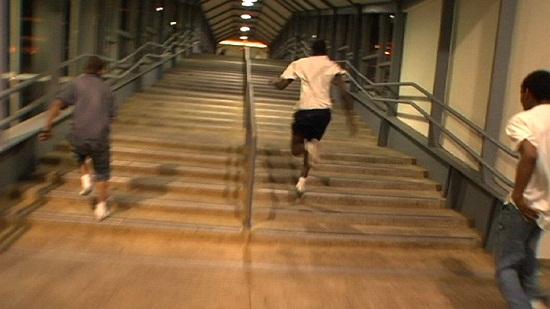
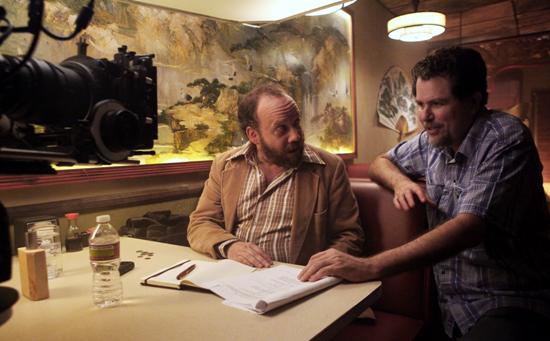
    [caption id="attachment_2144" align="alignnone"]Snow on tha Bluff[/caption]

    The Cinema Eye Honors for Nonfiction Filmmaking today announced the five nominees for its second annual Cinema Eye Heterodox Award, sponsored by Filmmaker Magazine. The 2012 Heterodox Award will be presented at the Cinema Eye Honors for Nonfiction Filmmaking on January 11 at the Museum of the Moving Image in Astoria, Queens, New York.

    The Cinema Eye Heterodox Award honors a narrative film that imaginatively incorporates nonfiction strategies, content and/or modes of production. These films illuminate the formal possibilities of nonfiction filmmaking while raising provocative questions about on-going documentary orthodoxy and the perceived boundaries between narrative and nonfiction filmmaking. Last year’s inaugural Heterodox Award went to Matt Porterfield’s Putty Hill.

    “As more and more nonfiction films integrate artistic fictional devices and narrative structures, and fiction films take on elements seen in documentary storytelling – the importance of artist-led conversation grows,” said Cinema Eye Honors Co-Chair Esther Robinson. “In its second year, the Heterodox Award continues to be an exciting and important home to this discussion, contributing to a rich and important cross-genre dialogue.”

    The five films nominated for the second Heterodox Award are: Mike Mills’ BEGINNERS, Ivan Fund and Santiago Loza’s THE LIPS, Lech Majewski’s THE MILL AND THE CROSS, Sergei Loznitsa’s MY JOY, and Damon Russell’s SNOW ON THA BLUFF.

    The Cinema Eye Honors nominations committee made its recommendations for nominations based on a list of eligible films that met the general criteria for the Cinema Eye Honors including two extra festivals that program narrative films. Finalists were then selected jointly by the committee and the writers and editors of Filmmaker Magazine.

    “In a year when the reality of our social, political and economic situation dawned on 99% percent of us, filmmakers made their own reckoning,” said Filmmaker Magazine Editor-in-Chief Scott Macaulay. “This year’s Heterodox honorees are bracing, lovely, radical and troubling – fiction features for which the purely invented is not enough.”

    Inspired by their subjects — which include people, countrysides, and even a painting — the filmmakers selected for this year’s Heterodox Award let these subjects’ realities bleed into their films, creating fascinating dramas in which the world outside is given a voice and documentary tactics are skillfully deployed in the pursuit of dramatic truth.

    The jury selecting the winner of the 2012 Heterodox Award consists of: Natalia Almada (Director: EL VELADOR – 2011 Cannes Film Festival; EL GENERAL – 2009 Sundance Film Festival Documentary Directing Award), Sandi Dubowski (Director /Producer: TREMBLING BEFORE G-D – 2001 Teddy Award for Best Documentary at Berlin Film Festival; JIHAD FOR LOVE), Shannon Kennedy (Editor, The Trials of Darryl Hunt; A Walk Into the Sea: Danny Williams and the Warhol Factory – 2007 Teddy Award for Best Documentary at Berlin Film Festival), Alrick Brown (Director/Writer: Kinyarwanda – 2011 Sundance Film Festival World Cinema Dramatic Audience Award Winner), and Kimberly Reed (Director: PRODIGAL SONS – Winner, FIPRESCI Prize at Thessaloniki Documentary Film Festival).

    The Five Nominees:

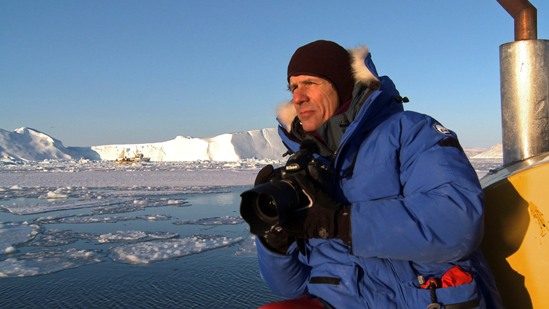
    [caption id="attachment_785" align="alignnone"]Beginners[/caption]

    Beginners: Drawing from autobiographical elements, including his relationship to his dying father, Mike Mills has made a sensitive, insightful, and whimsically funny ode to romance and reinvention. Starring Ewen McGregor, Melanie Laurent and Christopher Plummer, Beginners mixes drama with not only humor but also brief documentary essays that examine everything from art to the history of California gay culture.

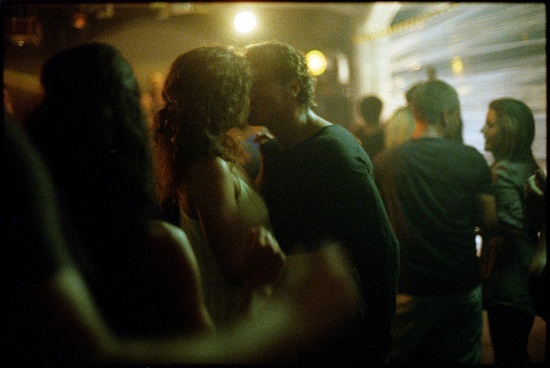
    [caption id="attachment_2145" align="alignnone"]The Lips[/caption]

    The Lips: Ivan Fund and Santiago Loza’s Argentine picture, “The Lips” (“Los Labios”), a subtle and challenging mix of documentary and narrative filmmaking, follows three women who deeply inhabit their cinematic roles as social workers interacting with members of an impoverished rural Argentine community. Facing desperate poverty that threatens to overwhelm even the greatest reserves of calm, humor, and empathy, the trio moves into makeshift living quarters and records data on the needs of the community, while still taking time for an occasional night out.

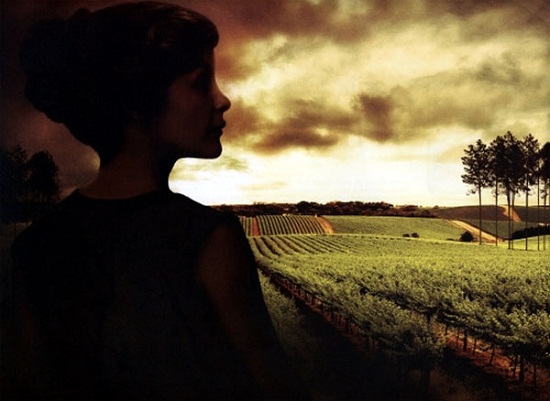
    [caption id="attachment_1998" align="alignnone"]The Mill and the Cross[/caption]

    The Mill and the Cross: Lech Majewski’s The Mill and the Cross is an epic restaging of and journey into Pieter Bruegel’s celebrated 1564 painting, “Way to Calvary.” Rutger Hauer stars as Bruegel, Michael York is his art collector friend, and Charlotte Rampling is the inspiration for his Virgin Mary. Majewski explores not only the rich iconography of this work but, using digital technology to make his picture a dialogue with not only the past but the nature of creativity itself.

    [caption id="attachment_2146" align="alignnone"]My Joy[/caption]

    My Joy: Ukranian documentary director Sergei Loznitsa made his debut drama with My Joy, a harshly riveting journey through the countryside of contemporary Russia. Following a truck driver as he makes his various deliveries, Loznitsa draws upon his own experience shooting and traveling through the Russian provinces in this bold and terrifying film.

    Snow on tha Bluff: As authentic a document of the life of a young, black, crack-dealing single parent as you will ever see, Damon Russell’s “Snow on tha Bluff” audaciously mixes footage from the camcorder of the film’s real-life inspiration with dramatic scenes to create a sometimes indecipherable mixture of real life and fiction, documentary authenticity and cultural mythmaking.

    Read more


  • 20 More Films Added to 2012 Berlin International Film Festival

    [caption id="attachment_2142" align="alignnone"]Death For Sale by Faouzi Bensaïdi[/caption]

    20 films have been confirmed for the Panorama section of the 2012 Berlin International Film Festival. The Panorama section with its Main Programme, Panorama Special and Panorama Dokumente series will screen some 50 films in all.

    Two works by European directors are opening the Panorama Special:

    Tony Gatlif is returning to Panorama with Indignados. Inspired by Stéphane Hessel’s bestseller “Time for Outrage!” this French film allows viewers, in both enacted scenes and real situations, to see the recent protests of our times through the eyes of an illegal woman immigrant. She experiences the Occupy movement, the poverty of those who share her fate, and the dissatisfaction of a young generation of European society in revolt. Previously, Gatlif presented in Panorama his films Rue du départ in 1987 and Swing in 2002.

    As in her second feature film, Ono (Stranger), which screened in Panorama in 2005, Polish director Malgoska Szumowska once again radically probes gender relations. With Juliette Binoche in the lead, Elles leaves much room for contemplation and in a masterly fashion reveals the underlying longing that apparently every notion of relationship, and especially that of the nuclear family, attempts to conceal.

    Alongside renowned names such as Hou Hsiao-Hsien (who with 10+10 is presenting a survey of works from Taiwan by ten well-known and ten new directors), Volker Schlöndorff, Cao Hamburger, Pen-ek Ratanaruang and Teona Strugar Mitevska, this year’s feature films include new works by Ira Sachs, Kirsten Sheridan and Srdjan Dragojevic as well as by newly discovered filmmakers such as Umut Dag from Austria, Helena Klotz from France, Faouzi Bensiada from Morocco and Ngoc Dang Vu from Vietnam.


    Feature films to date:

    10+10 by Hou Hsiao-hsien, Wang Toon, Wu Nien-Jen, Sylvia Chang, Chen Guo-Fu, Wei Te-Sheng, Chung Meng-Hung, Chang Tso-Chi, Arvin Chen, Yang Ya-Che and others, Taiwan

    Death For Sale by Faouzi Bensaïdi, France
    With Fehd Benchemsi, Fouad Labiad, Mouhcine Malzi, Imane Elmechrafi, Faouzi Bensaïdi

    Die Wand (The Wall) by Julian Roman Pölsler, Austria/Germany
    With Martina Gedeck

    Dollhouse by Kirsten Sheridan, Ireland
    With Seana Kerslake, Jonny Ward, Ciaran McCabe, Kate Brennan, Shane Curry

    Elles by Malgoska Szumowska, France/Poland/Germany
    With Juliette Binoche, Anais Demoustier, Joanna Kulig

    Fon Tok Kuen Fah (Headshot) by Pen-Ek Ratanaruang, Thailand/France
    With Nopachai Jayanama, Sirin Horwang, Chanokporn Sayoungkul, Apisit Opasaimlikit, Krerkkiat Punpiputt

    From Seoul To Varanasi by Kyuhwan Jeon, Republic of Korea
    With Donghwan Yoon, Wonjung Chio

    Hot boy noi loan – cau chuyen ve thang cuoi, co gai diem va con vit (Lost In Paradise) by Vu Ngoc Dang, Vietnam
    With Luong Manh Hai, Ho Vinh Khoa, Linh Son, Phuong Thanh, Hieu Hien

    Indignados by Tony Gatlif, France
    With Isabel Vendrell Cortès

    Keep The Lights On by Ira Sachs, USA
    With Thure Lindhardt, Zachary Booth, Julianne Nicholson, Souleymane Sy Savane, Paprika Steen

    Kuma by Umut Dag, Austria
    With Nihal Koldas, Begüm Akkaya, Vedat Erincin, Murathan Muslu, Alev Irmak

    La mer à l’aube (Calm At Sea) by Volker Schlöndorff, France/Germany
    With Léo Paul Salmain, Ulrich Matthes, Martin Loizillon, Jacob Matschenz, André Jung, Harald Schrott, Thomas Arnold, Christopher Buchholz

    L’âge atomique by Héléna Klotz, France
    With Eliott Paquet, Dominik Wojcik

    Leave It On The Floor by Sheldon Larry, USA/Canada
    With Ephraim Sykes, Miss Barbie-Q, Phillip Evelyn, Andre Myers, James Alsop

    Mei-wei (My Way) by Kang Je-kyu, Republic of Korea
    With Jang Dong-gun, Odagiri Joe, Fan Bingbing

    Mommy Is Coming by Cheryl Dunye, Germany
    With Esther Maria Ufer, Maggie Tapert, Ignacio Rivera

    Parada (The Parade) by Srdjan Dragojevic, Serbia/Republic of Croatia/ Macedonia/Slovenia
    With Nikola Kojo, Milos Samolov, Hristina Popovic, Goran Jevtic, Toni Mihailovski

    The Woman Who Brushed Off Her Tears by Teona Strugar Mitevska, Macedonia/Germany/Slovenia/Belgium
    With Victoria Abril, Labina Mitevska, Jean Marie Galey, Arben Bajraktaraj

    Wilaya by Pedro Pérez Rosado, Spain
    With Nadhira Mohamed, Memona Mohamed, Aziza Brahim, Ainina Sidameg, Ahmed Molud

    Xingu by Cao Hamburger, Brazil
    With João Miguel, Felipe Camargo, Caio Blat, Maria Flor

    Read more


  • The Artist, The Descendant Among Nominees for 23rd Annual Producers Guild Awards

    [caption id="attachment_795" align="alignnone"]MIDNIGHT IN PARIS[/caption]

    The Artist, The Descendant, and Midnight In Paris were among the nominees for the 23rd Annual Producers Guild Awards announced today by the Producers Guild of America (PGA).

    All 2012 Producers Guild Award winners will be announced on January 21, 2012 at the Beverly Hilton Hotel. The Producers Guild will also award special honors to Leslie Moonves (Milestone Award), Steven Spielberg (David O. Selznick Achievement Award in Theatrical Motion Pictures), Don Mischer (Norman Lear Achievement Award in Television), Stan Lee (Vanguard Award), and IN THE LAND OF BLOOD AND HONEY (The Stanley Kramer Award). The 2012 Producers Guild Awards co-chairs are Paula Wagner and Michael Manheim.

    The theatrical motion picture nominees are:

    Darryl F. Zanuck Award for Outstanding Producer of Theatrical Motion Pictures:

    THE ARTIST
    Producer: Thomas Langmann

    BRIDESMAIDS
    Producers: Judd Apatow, Barry Mendel, Clayton Townsend

    THE DESCENDANTS
    Producers: Jim Burke, Alexander Payne, Jim Taylor

    THE GIRL WITH THE DRAGON TATTOO
    Producers: Ceán Chaffin, Scott Rudin

    THE HELP
    Producers: Michael Barnathan, Chris Columbus, Brunson Green

    HUGO
    Producers: Graham King, Martin Scorsese

    THE IDES OF MARCH
    Producers: George Clooney, Grant Heslov, Brian Oliver

    MIDNIGHT IN PARIS
    Producers: Letty Aronson, Stephen Tenenbaum

    MONEYBALL
    Producers: Michael De Luca, Rachael Horovitz, Brad Pitt

    WAR HORSE
    Producers: Kathleen Kennedy, Steven Spielberg

    The Producers Guild Award for Outstanding Producer of Animated Theatrical Motion Pictures:

    THE ADVENTURES OF TINTIN
    Producers: Peter Jackson, Kathleen Kennedy, Steven Spielberg

    CARS 2
    Producer: Denise Ream

    KUNG FU PANDA 2
    Producer: Melissa Cobb

    PUSS IN BOOTS
    Producers: Joe M. Aguilar, Latifa Ouaou

    RANGO
    Producers: John B. Carls, Gore Verbinski 


    The television nominees are:

    The David L. Wolper Award for Outstanding Producer of Long-Form Television:


    “Cinema Verite” (HBO)

    Producers: Zanne Devine, Karyn McCarthy

    “Downton Abbey” (Masterpiece) (PBS)
    Producers: Julian Fellowes, Nigel Marchant, Gareth Neame

    “The Kennedys” (ReelzChannel) Producers: Jon Cassar, Jonathan Koch, Stephen Kronish, Steve Michaels, Michael Prupas, Jamie Paul Rock, Joel Surnow

    “Mildred Pierce” (HBO)
    Producers: Todd Haynes, Pamela Koffler, Ilene S. Landress, Christine Vachon

    “Too Big To Fail” (HBO)
    Producers: Carol Fenelon, Jeffrey Levine, Paula Weinstein

    *The Long-Form Television category encompasses both movies of the week and mini-series.

    In December 2011, the Producers Guild of America announced the Documentary Theatrical Motion Picture, Television Series and Non-Fiction Television Nominations; the following list includes complete producer credits.

    The Producers Guild Award for Outstanding Producer of Documentary Theatrical Motion Pictures:

    BEATS, RHYMES & LIFE: THE TRAVELS OF A TRIBE CALLED QUEST
    Producers: Michael Rapaport, Edward Parks (*additional producers eligibility pending arbitration completion)

    BILL CUNNINGHAM NEW YORK
    Producer: Philip Gefter

    PROJECT NIM
    Producer: Simon Chinn

    SENNA
    Producer: James Gay-Rees

    THE UNION
    Producers: Cameron Crowe, Michelle Panek

    The Danny Thomas Award for Outstanding Producer of Episodic Television, Comedy:

    “30 Rock” (NBC)
    Producers: Robert Carlock, Tina Fey, Marci Klein, Jerry Kupfer, Lorne Michaels, David Miner, Jeff Richmond, John Riggi, Don Scardino

    “The Big Bang Theory” (CBS)
    Producers: Chuck Lorre, Steve Molaro, Faye Oshima, Bill Prady

    “Glee” (FOX)
    Producers: Ian Brennan, Dante Di Loreto, Brad Falchuk, Ryan Murphy, Kenneth Silverstein

    “Modern Family” (ABC)
    Producers: Paul Corrigan, Abraham Higginbotham, Steven Levitan, Christopher Lloyd, Jeff Morton, Jeffrey Richman, Dan O’Shannon, Brad Walsh, Bill Wrubel, Danny Zuker

    “Parks and Recreation” (NBC)
    Producers: Greg Daniels, Dan Goor, Howard Klein, Amy Poehler, Morgan Sackett, Michael Schur

    The Norman Felton Award for Outstanding Producer of Episodic Television, Drama:

    “Boardwalk Empire” (HBO)
    Producers: Eugene Kelly, Howard Korder, Stephen Levinson, Martin Scorsese, Rudd Simmons, Tim Van Patten, Terence Winter

    “Dexter” (Showtime)
    Producers: Sara Colleton, John Goldwyn, Chip Johannessen, Robert Lloyd Lewis

    “Game of Thrones” (HBO)
    Producers: David Benioff, Frank Doelger, Mark Huffam, Carolyn Strauss, D.B. Weiss

    “The Good Wife” (CBS)
    Producers: Brooke Kennedy, Michelle King, Robert King, Ridley Scott, Tony Scott, David W. Zucker

    “Mad Men” (AMC)
    Producers: Jonathan Abrahams, Scott Hornbacher, Andre Jacquemetton, Maria Jacquemetton, Blake McCormick, Dwayne Shattuck, Dahvi Waller, Matthew Weiner

    The Producers Guild Award for Outstanding Producer of Live Entertainment & Talk Television:

    “The Colbert Report” (Comedy Central)
    Producers: Meredith Bennett, Stephen T. Colbert, Richard Dahm, Tanya Michnevich Bracco, Tom Purcell, Jon Stewart (*additional producers eligibility pending arbitration completion)

    “The Ellen DeGeneres Show” (Syndicated)
    Producers: Mary Connelly, Ellen DeGeneres, Melissa Geiger Schrift, Ed Glavin, Andy Lassner, Kevin A. Leman II, Jonathan Norman, Derek Westervelt

    “Real Time with Bill Maher” (HBO)
    Producers: Scott Carter, Sheila Griffiths, Marc Gurvitz, Dean Johnsen, Bill Maher, Billy Martin

    “Saturday Night Live” (NBC)
    Producers: Ken Aymong, Steve Higgins, Erik Kenward, Lorne Michaels, John Mulaney

    “The 64th Annual Tony Awards” (CBS)
    Producers: Ricky Kirshner, Glenn Weiss

    The Producers Guild Award for Outstanding Producer of Competition Television:

    “The Amazing Race” (CBS)
    Producers: Jerry Bruckheimer, Elise Doganieri, Jonathan Littman, Bertram van Munster, Mark Vertullo

    “American Idol” (FOX)
    Producers: Charles Boyd, Cecile Frot-Coutaz, Simon Fuller, Patrick Lynn, Nigel Lythgoe, Megan Michaels, Ken Warwick

    “Dancing with the Stars” (ABC)
    Producers: Ashley Edens Shaffer, Conrad Green, Joe Sungkur, Rob Wade

    “Project Runway” (Lifetime)
    Producers: Jane Cha Cutler, Desiree Gruber, Tim Gunn, Heidi Klum, Jonathan Murray, Sara Rea, Colleen Sands

    “Top Chef” (Bravo)
    Producers: Daniel Cutforth, Casey Kriley, Jane Lipsitz, Dan Murphy, Nan Strait

    The Producers Guild Award for Outstanding Producer of Non-Fiction Television:

    “30 for 30” (ESPN)
    Producers: John Dahl, Connor Schell, Bill Simmons

    “American Masters” (PBS)
    Producers: Susan Lacy, Julie Sacks

    “Anthony Bourdain: No Reservations” (Travel Channel)
    Producers: Christopher Collins, Julie Lei, Lydia Tenaglia, Tom Vitale

    “Deadliest Catch” (Discovery Channel)
    Producers: Thom Beers, Jeff Conroy, John Gray, Sheila McCormack, Ethan Prochnik, Bill Pruitt, Matt Renner

    “Undercover Boss” (CBS)
    Producers: Chris Carlson, Susan Hoenig, Eli Holzman, Sandi Johnson, Stephen Lambert, Allison Schermerhorn

    **Below are new categories for the 2012 Producers Guild Awards; three television categories and one web category. As such, these programs were not vetted for producer eligibility this year but winners in these categories will be announced at the official ceremony on January 21st:

    News Programs:

    “Anderson Cooper 360” (CNN)

    “BBC World News America” (BBC)

    “NBC News with Brian Williams” (NBC)

    “The Rachel Maddow Show” (MSNBC)

    “60 Minutes” (CBS)

    Sports Programs: (*There was a tie, which is why there are six nominees.)

    “Monday Night Football” (ESPN)

    “Real Sports with Bryant Gumbel” (HBO)

    “Sports Center” (ESPN)

    “30 for 30” (ESPN)

    “2010 FIFA World Cup” (ABC / ESPN / ESPN2)

    “U.S. Open Tennis Championship” (CBS / ESPN2 / Tennis Channel)

    Children’s Programs:

    “Dora the Explorer” (Nickelodeon)

    “iCarly” (Nickelodeon)

    “Phineas and Ferb” (Disney Channel)

    “Sesame Street” (PBS)

    “SpongeBob Squarepants” (Nickelodeon)

    Web Series:

    “Ask a Ninja” (blip.tv)

    “The Guild” (WatchTheGuild.com)

    “Parks and Recreation Presents: ‘April & Andy’s Road Trip’” (NBC.com)

    “30 Rock Presents Jack Donaghy, Executive Superhero” (NBC.com)

    “Web Therapy” (LStudio.com)


    Read more


  • 56 Films To Screen at 2012 Derby City Film Festival

    [caption id="attachment_2139" align="alignnone"]Wid Winner and the Slipstream[/caption]

    56 films have been selected to screen during the three day Derby City Film Festival held February 17th – 19th, 2012. The lineup includes 24 International films representing 16 countries as well as 8 World Premieres, 5 US Premieres, and 28 KY Premieres. Eight films were produced in the Bluegrass State and another 5 have ties to Kentucky.

    Opening night includes two feature films shot in Kentucky. At 7:00 PM on February 17th  “Wid Winner and the Slipstream” will open the fest. “Winner”, which was directed by Kentucky native Alex O Gaynor, tells the story of two men who embark on a cross-country journey to face the past, change the future, and collect enough used-auto parts to build a time machine. The 8:00 PM film, “Sam Steele and the Crystal Chalice” is from New Albany filmmaker Tom Whitus and was shot in Downtown Louisville. The film stars Jacob Hays, Kevin Sorbo, Katherine McNamara & Dee Wallace. “Crystal Chalice” is the sequel to “Sam Steel and the Jr. Detective Agency” which screened at DCFF in 2010. The final film on Friday is the suspense film “Johnny’s Gone” from writer and actress LaDon Drummond. “Johnny’s Gone” tells the story of the unsettling but heartfelt relationship between Sarah and a two year-old she calls Johnny. Sarah hides a dark secret that will take them on a road trip across five states from California to Louisiana.

    A full slate of workshops, panels, shorts, docs, and features also happen all day Saturday. Highlights include the world premieres of the feature films “Frames” & “Blind Turn”, Producer and Louisville native John Paul Rice’s latest film “Mother’s Red Dress”, the road trip documentary “Bailout”, four short film groups, and 2 International features, “Znikniecie” and “Meherjaan”. Saturday afternoon there will also be a Filmmaker Symposium and Awards Presentation at Clifton’s Pizza from 5:00 PM – 7:30 PM.

    Saturday night features 3 more films with Kentucky roots. Louisville natives, and Ballard High graduates, Scooter Downey & Sean Elliot bring the feature “It’s in the Blood” to their hometown. Featuring Lance Henriksen, Elliot & Rose Sirna, “Blood”  tells the tale of a father and son who become stranded in the wild and must confront the horrors of their past to escape with their lives.  However, this wilderness is not what it seems, and as they deteriorate, so to does their concept of reality: horrifying creatures, ghostly apparitions, is it all in their heads, or could the truth be far more terrible? “It’s in the Blood” screens at 8:00 PM with the short film “Endless”.

    At 10:00 PM on Saturday audiences will receive a double treat from Louisville filmmakers. First Kristofer Rommel premieres the short “Wireface: In the Beginning” starring Josh Loren, Cindy Maples & Joe Chrysler. “Wireface…” is a prequel film which details the slow decent into madness that turns a loving family man into the serial killer known as “Wireface”. Following the short is Matt Niehoff & Brian Cunningham’s feature film “Overtime”, which was shot in Louisville and features Al Snow, John Wells & Sebrina Siegel. “Overtime” follows two hitmen who find themselves caught up in a conspiracy they never imagined which includes alien zombies. Both films are included on one ticket.

    Sunday February 19th features, among other films; the World Premiere of “Smells Like Community Spirit” from Cincinnati filmmaker Isaac Stambaugh, the controversial documentary “Israel vs. Israel” and “Legendary: When Baseball Came to the Bluegrass” from Lexington filmmaker Michael Crisp.

    The closing film of the festival will be the Edward Furlong film “Below Zero”, which will screen at 6:00 PM on Sunday. “Zero” follows screenwriter Jack “The Hack” (Furlong) who, facing writer’s block and a crucial deadline, decides to remove himself from all distractions by locking himself in the freezer of an abandoned slaughterhouse, where fiction and reality blur. Inspired by true events, method writer Signe Olynyk’s BELOW ZERO is a twisty story within a story, within a real-life story. The film also stars Kristin Booth and Michael Berryman. “Zero” was directed by Justin Thomas Ostensen who’s film “By the Wayside” screened at the inaugural DCFF in 2008.

    The following includes the full list of selected films for the 2012 Derby City Film Festival. Country and premiere status in ( ).

    US Features:
    Below Zero (KY Premiere)
    Blind Turn (World Premiere)
    Frames (World Premiere)
    It’s in the Blood (KY Premiere)
    Johnny’s Gone (KY Premiere)
    Mother’s Red Dress (KY Premiere)
    Overtime
    Sam Steel and the Crystal Chalice (KY Premiere)
    Smells Like Community Spirit (World Premiere)
    Wid Winner and the Slipstream

    International Features
    Meherjaan (Bangladesh)
    Znikniecie (Poland – US Premiere)

    Documentary Features
    Bailout (USA – KY Premiere)
    Israel vs. Israel (Israel – KY Premiere)
    Legendary: When Baseball Came to the Bluegrass (USA)
    The Book of Vaudeville (Canada – US Premiere)

    US Shorts
    20th Century Man (World Premiere)
    A Finger, Two Dots Then Me (KY Premiere)
    Ambiguous Figure (KY Premiere)
    Bizarnival: Tuxedos in the Attic
    Blue Highway (KY Premiere)
    Easy Street (KY Premiere)
    Grounded (World Premiere)
    Just for Today (World Premiere)
    Love’s Got My Goat (KY Premiere)
    Penny
    Please Try Again (World Premiere)
    The Eater (KY Premiere)
    The Scream of the Screaming Screamer! (World Premiere)
    Wireface: In The Beginning… (World Premiere)

    International Shorts
    108.1 FM Radio (Italy – KY Premiere)
    A Fable About Beauty (Canada – KY Premiere)
    Air (UK – KY Premiere)
    Donkey (UK – KY Premiere)
    Employee of the Month (Switzerland – KY Premiere)
    Endless (UK – KY Premiere)
    Protect the Nation (South Africa/Germany)
    The Anchor (UK – KY Premiere)
    The Unicorn (New Zealand – KY Premiere)
    Tocaia para Tuco Valente (Brazil – US Premiere)

    Student Shorts
    Balls (USA – KY Premiere)
    Closed (Australia – KY Premiere)
    GoldenBox (USA)
    Live Outside the Box (Taiwan – KY Premiere)
    Look to the Cookie (USA)
    Made in China (USA – World Premiere)
    My Avatar (USA/Singapore – KY Premiere)
    Normal People (Poland – KY Premiere)
    The Birds Upstairs (USA)
    Thin Air (USA – World Premiere)
    Will & The Worry Dolls (UK – US Premiere)
    Wonderland (Kuwait – KUY Premiere)
    Workers Leaving the Factory (Germany – KY Premiere)

    Documentary Shorts
    As Time Goes By (Germany – KY Premiere)
    Hey Rube! (Canada – KY Premiere)
    Holding the Line (Libya/UK – US Premiere)

    Read more


  • Meryl Streep to be honored at 62nd Berlin International Film Festival

    [caption id="attachment_2137" align="alignnone"]Meryl Streep as Maragret Thatcher in The Iron Lady[/caption]

    Actress Meryl Streep will be awarded an Honorary Golden Bear at the 62nd Berlin International Film Festival.

    “We are delighted to be able to award the Honorary Golden Bear to such a terrific artist and world star. Meryl Streep is a brilliant, versatile performer who moves with ease between dramatic and comedic roles,” says Berlinale Director Dieter Kosslick.

    On February 14, 2012, Meryl Streep will be awarded the Honorary Golden Bear for Lifetime Achievement at a screening of her latest film The Iron Lady at the Berlinale Palast in Berlin. In The Iron Lady she portrays Great Britain’s former Prime Minister Margaret Thatcher. The film imagines how Margaret, at the end of her life, might look back through fragmented memories to weigh-up the personal cost of her decisions. The film is not so much about politics as about power and the loss of power.

    Meryl Streep has been invited to the Berlin International Film Festival several times: in 1999, she was awarded the Berlinale Camera; and in 2003, Julianne Moore, Nicole Kidman and she shared a Silver Bear for their performances in The Hours. In 2006, she could again be seen in the Berlinale Competition in Robert Altman’s ensemble comedy A Prairie Home Companion.

    During the Berlinale’s Homage series for Meryl Streep, audiences will have the opportunity to see the following films:

    Kramer vs. Kramer (1979)
    By Robert Benton
    With Meryl Streep, Dustin Hoffman, Justin Henry

    Sophie’s Choice (1982, Oscar for Best Actress in a Leading Role)
    By Alan J. Pakula
    With Meryl Streep, Kevin Kline, Peter MacNicol, Günther Maria Halmer

    Out of Africa (1985)
    By Sidney Pollack
    With Meryl Streep, Robert Redford, Klaus Maria Brandauer

    The Bridges of Madison County (1995)
    By Clint Eastwood
    With Meryl Streep, Clint Eastwood, Victor Slezak

    A Prairie Home Companion (2006)
    By Robert Altman
    With Meryl Streep, Woody Harrelson, Kevin Kline, John C. Reilly

    The Iron Lady (Great Britain 2011)
    By Phyllida Lloyd
    With Meryl Streep, Jim Broadbent, Olivia Coman, Roger Allam

    Read more


  • The Iron Lady Ruled The Box Office

    [caption id="attachment_2135" align="alignnone"]Meryl Streep and Jim Broadbent in The Iron Lady[/caption]

    “Mission: Impossible – Ghost Protocol” starring Tom Cruise topped the box-office for a second week with estimated $31.25 million in ticket sales, and a per-ticket-average of $9,045, but it was Weinstein Company’s debut of “The Iron Lady” that ruled the box-office. Starring Meryl Streep as Margaret Thatcher, “The Iron Lady” grossed an estimated $221,752 in ticket sales from just only 4 theaters, for a per-theater average of a whopping $55,438.

    Other films opening to impressive numbers include the acclaimed Iranian film “A Separation,” which grossed $66,598 gross from 3 screens for a per-ticket average of $22,199, and Dee Rees’s “Pariah” grossing $49,695, from 4 screens for a theater average of $12,424.

    1 Mission: Impossible – Ghost Protocol – $31,250,000
    2 Sherlock Holmes: A Game of Shadows – $22,095,000
    3 Alvin and the Chipmunks: Chipwrecked – $18,250,000
    4 War Horse – $16,940,000
    5 The Girl with the Dragon Tattoo – $16,300,000
    6 We Bought a Zoo – $14,300,000
    7 The Adventures of Tintin – $12,000,000
    8 New Year’s Eve – $6,741,000
    9 The Darkest Hour – $4,300,000
    10 The Descendants – $3,650,000

    Read more


  • Venice International Film Festival Names New Directors

    [caption id="attachment_2133" align="alignnone"]David Chipperfield was named Director of the Architecture Sector[/caption]

    The new Board of La Biennale di Venezia, the organization behind the Venice International Film Festival, chaired by Paolo Baratta and composed of Giorgio Orsoni (Vice-President), Luca Zaia, Francesca Zaccariotto and Emmanuele Francesco Maria Emanuele, met for the first time on 27th December 2011 in the Biennale offices at Ca’ Giustinian and appointed the Directors of the Architecture and Cinema sectors.

    David Chipperfield was named Director of the Architecture Sector with the specific responsibility of curating the 13th International Architecture Exhibition, which will be held in Venice, at the institutional venues of Giardini and Arsenale, from August 29th to November 25th 2012 (preview on August 27th-28th).

    Alberto Barbera was named Director of the Cinema Sector for a four-year term. The 69th Venice International Film Festival will be held at the Lido di Venezia from August 29th to September 8th 2012.

    Read more


  • Oscar Nomination Ballots Mailed to 5,783 Academy Voters

    Nomination ballots for the 84th Academy Awards® were mailed today to the 5,783 voting members of the Academy of Motion Picture Arts and Sciences.

    Completed ballots must be returned to PricewaterhouseCoopers by 5 p.m. PT on Friday, January 13, 2012. Ballots received after the deadline will not be counted.

    Nomination and final Awards ballots are tabulated by PricewaterhouseCoopers to ensure that all aspects of the balloting process are conducted with fairness and accuracy.

    Prior to mailing, the PricewaterhouseCoopers staff administers a thorough verification process to ensure that there are no duplicate ballots and that none are missing. In addition to being counted and sorted, the ballots are numbered to guarantee that each one is addressed to the appropriate Academy voter.

    The 84th Academy Awards nominations will be announced live on Tuesday, January 24, 2012, at 5:30 a.m. PT in the Academy’s Samuel Goldwyn Theater.

    Academy Awards for outstanding film achievements of 2011 will be presented on Sunday, February 26, 2012, at the Kodak Theatre at Hollywood & Highland Center®, and televised live by the ABC Television Network. The Oscar presentation also will be televised live in more than 225 countries worldwide.

    Read more


  • Official Poster for 84th Academy Awards

    The Academy of Motion Picture Arts and Sciences unveiled the poster for the 84th Academy Awards®. The art features the iconic Oscar statuette alongside memorable images from eight films spanning eight decades: “Gone with the Wind” (1939), “Casablanca” (1943), “Giant” (1956), “The Sound of Music” (1965), “The Godfather” (1972), “Driving Miss Daisy” (1989), “Forrest Gump” (1994) and “Gladiator” (2000). All the films featured on the poster won the Academy Award® for Best Picture, except “Giant,” for which George Stevens won the Oscar for Directing.

    Supported by the tagline “Celebrate the movies in all of us,” the design is meant to evoke the emotional connections we all have with the movies. “Whether it’s a first date or a holiday gathering with friends or family, movies are a big part of our memory,” said Academy President Tom Sherak. “The Academy Awards not only honor the excellence of these movies, but also celebrate what they mean to us as a culture and to each of us individually.”

    The artwork was created by award-winning graphic designer Anthony Goldschmidt, and Mark and Karen Crawford of the design firm Blood&Chocolate.

    The 84th Academy Awards nominations will be announced live on Tuesday, January 24, 2012, and the Academy Awards for outstanding film achievements of 2011 will be presented on Sunday, February 26, 2012.

    Read more


  • Robert Rodriguez’s El Mariachi On List of 25 Films Added to National Film Registry of the Library of Congress

    [caption id="attachment_2127" align="alignnone"]El Mariachi [/caption]

    Librarian of Congress James H. Billington this week released the list of 25 films selected “to be preserved as cultural, artistic and historical treasures in the National Film Registry of the Library of Congress.” Spanning the period 1912-1994, the films named to the registry include Hollywood classics, documentaries, animation, home movies, avant-garde shorts and experimental motion pictures. This year’s selections bring the number of films in the registry to 575.

    Under the terms of the National Film Preservation Act, each year the Librarian of Congress names 25 films to the National Film Registry that are “culturally, historically or aesthetically” significant.

    In other news about the registry, “These Amazing Shadows,” a documentary about the National Film Registry, will air nationally on the award-winning PBS series “Independent Lens” on Thursday, Dec. 29, at 10 p.m (check local listings). Written and directed by Paul Mariano and Kurt Norton, this critically acclaimed documentary has also been released on DVD and Blu-ray.

    Films Selected to the 2011 National Film Registry

    Allures (1961)
    Bambi (1942)
    The Big Heat (1953)
    A Computer Animated Hand (1972)
    Crisis: Behind A Presidential Commitment (1963)
    The Cry of the Children (1912)
    A Cure for Pokeritis (1912)
    El Mariachi (1992)
    Faces (1968)
    Fake Fruit Factory (1986)
    Forrest Gump (1994)
    Growing Up Female (1971)
    Hester Street (1975)
    I, an Actress (1977)
    The Iron Horse (1924)
    The Kid (1921)
    The Lost Weekend (1945)
    The Negro Soldier (1944)
    Nicholas Brothers Family Home Movies (1930s-40s)
    Norma Rae (1979)
    Porgy and Bess (1959)
    The Silence of the Lambs (1991)
    Stand and Deliver (1988)
    Twentieth Century (1934)
    War of the Worlds (1953)


    2011 National Film Registry

    Allures (1961)
    Called the master of “cosmic cinema,” Jordan Belson excelled in creating abstract imagery with a spiritual dimension that featured dazzling displays of color, light, and ever-moving patterns and objects. Trained as a painter and profoundly influenced by the artist and theorist Wassily Kandinsky, Belson collaborated in the late 1950s with electronic music composer Henry Jacobs to create elaborate sound and light shows in the San Francisco Morrison Planetarium, an experience that informed his subsequent films. The film, Belson has stated, “was probably the space-iest film that had been done until then. It creates a feeling of moving into the void.” Inspired by Eastern spiritual thought, “Allures” (which took a year and a half to make) is, Belson suggests, a “mathematically precise” work intended to express the process of becoming that the philosopher Teilhard de Chardin has named “cosmogenesis.”

    Bambi (1942)
    One of Walt Disney’s timeless classics (and his own personal favorite), this animated coming-of-age tale of a wide-eyed fawn’s life in the forest has enchanted generations since its debut nearly 70 years ago. Filled with iconic characters and moments, the film features beautiful images that were the result of extensive nature studies by Disney’s animators. Its realistic characters capture human and animal qualities in the time-honored tradition of folklore and fable, which enhance the movie’s resonating, emotional power. Treasured as one of film’s most heart-rending stories of parental love, “Bambi” also has come to be recognized for its eloquent message of nature conservation.

    The Big Heat (1953)
    One of the great post-war noir films, “The Big Heat” stars Glenn Ford, Lee Marvin and Gloria Graham. Set in a fictional American town, “The Big Heat” tells the story of a tough cop (Ford) who takes on a local crime syndicate, exposing tensions within his own corrupt police department as well as insecurities and hypocrisies of domestic life in the 1950s. Filled with atmosphere, fascinating female characters, and a jolting—yet not gratuitous—degree of violence, “The Big Heat,” through its subtly expressive technique and resistance to formulaic denouement, manages to be both stylized and brutally realistic, a signature of its director Fritz Lang.

    A Computer Animated Hand (1972)
    Ed Catmull, co-founder of Pixar Animation Studios, renowned for its CGI (computer generated image) animated films, created a program for digitally animating a human hand in 1972 as a graduate student project, one of the earliest examples of 3D computer animation. The one-minute film displays the hand turning, opening and closing, pointing at the viewer, and flexing its fingers, ending with a shot that seemingly travels up inside the hand. In creating the film, which was incorporated into the 1976 film “Futureworld,” Catmull worked out concepts that become the foundation for computer graphics that followed.

    Crisis: Behind a Presidential Commitment (1963)
    Robert Drew was a pioneer of American cinema-verite (a style of documentary filmmaking that strives to record unfolding events non-intrusively). In 1963, he gathered together a stellar group of filmmakers, including D. A. Pennebaker, Richard Leacock, Gregory Shuker, James Lipscomb, and Patricia Powell, to capture on film the dramatic unfolding of an ideological crisis, one that revealed political decision-making at the highest levels. The result, “Crisis: Behind a Presidential Commitment,” focuses on Gov. George Wallace’s attempt to prevent two African-American students from enrolling in the University of Alabama—his infamous “stand in the schoolhouse door” confrontation—and the response of President John F. Kennedy. The filmmakers observe the crisis evolve by following a number of participants, including Attorney General Robert F. Kennedy, Gov. Wallace and the two students, Vivian Malone and James Hood. The film also shows deliberations between the president and his staff that led to a peaceful resolution, a decision by the president to deliver a major address on civil rights and a commitment by Wallace to continue his battle in subsequent national election campaigns. The film has proven to be a uniquely revealing complement to written histories of the period, providing viewers the rare opportunity to witness historical events from an insider’s perspective.

    The Cry of the Children (1912)
    Recognized as a key work that both reflected and contributed to the pre-World War I child labor reform movement, the two-reel silent melodrama “The Cry of the Children” takes its title and fatalistic, uncompromising tone of hopelessness from the 1842 poem by Elizabeth Barrett Browning. “The Cry of the Children” was part of a wave of “social problem” films released during the 1910s on such subjects as drugs and alcohol, white slavery, immigrants and women’s suffrage. Some were sensationalist attempts to exploit lurid topics, while others, like “The Cry of the Children,” were realistic exposés that championed social reform and demanded change. Shot partially in a working textile factory, “The Cry of the Children” was recognized by an influential critic of the time as “The boldest, most timely and most effective appeal for the stamping out of the cruelest of all social abuses.”

    A Cure for Pokeritis (1912)
    Largely forgotten today, actor John Bunny merits significant historical importance as the American film industry’s earliest comic superstar. A stage actor prior to the start of his film career, Bunny starred in over 150 Vitagraph Company productions from 1910 until his death in 1915. Many of his films (affectionately known as “Bunnygraphs”) were gentle “domestic” comedies, in which he portrayed a henpecked husband alongside co-star Flora Finch. “A Cure for Pokeritis” exemplifies the genre, as Finch conspires with similarly displeased wives to break up their husbands’ weekly poker game. When Bunny died in 1915, a New York Times editorial noted that “Thousands who had never heard him speak…recognized him as the living symbol of wholesome merriment.” The paper presciently commented on the importance of preserving motion pictures and sound recordings for future generations: “His loss will be felt all over the country, and the films, which preserve his humorous personality in action, may in time have a new value. It is a subject worthy of reflection, the value of a perfect record of a departed singer’s voice, of the photographic films perpetuating the drolleries of a comedian who developed such extraordinary capacity for acting before the camera.”

    El Mariachi (1992)
    Directed, edited, co-produced, and written in two weeks by Robert Rodriguez for $7,000 while a film student at the University of Texas, “El Mariachi” proved a favorite on the film festival circuit. After Columbia Pictures picked it up for distribution, the film helped usher in the independent movie boom of the early 1990s. “El Mariachi” is an energetic, highly entertaining tale of an itinerant musician, portrayed by co-producer and Rodriguez crony Carlos Gallardo, who arrives at a Mexican border town during a drug war and is mistaken for a hit man who recently escaped from prison. The story, as film historian Charles Ramirez Berg has suggested, plays with expectations common to two popular exploitation genres—the narcotraficante film, a Mexican police genre, and the transnational warrior-action film, itself rooted in Hollywood Westerns. Rodriguez’s success derived from invigorating these genres with creative variants despite the constraints of a shoestring budget. Rodriguez has gone on to direct films for major studios, becoming, in Berg’s estimation, “arguably the most successful Latino director ever to work in Hollywood.”

    Faces (1968)
    Writer-director John Cassavetes described “Faces,” considered by many to be his first mature work, as “a barrage of attack on contemporary middle-class America.” The film depicts a married couple, “safe in their suburban home, narrow in their thinking,” he wrote, who experience a break up that “releases them from the conformity of their existence, forces them into a different context, when all barriers are down.” An example of cinematic excess, “Faces” places its viewers inside intense lengthy scenes to allow them to discover within its relentless confrontations emotions and relations of power between men and women that rarely emerge in more conventionally structured films. In provoking remarkable performances by Lynn Carlin, John Marley and Gena Rowlands, Cassavetes has created a style of independent filmmaking that has inspired filmmakers around the world.

    Fake Fruit Factory (1986)
    An expressive, sympathetic look at the everyday lives of young Mexican women who create ornamental papier maché fruits and vegetables, “Fake Fruit Factory” exemplifies filmmaker Chick Strand’s unique style that deftly blends documentary, avant-garde and ethnographic techniques. After studying anthropology and ethnographic film at the University of California, Strand, who helped noted independent filmmaker Bruce Baillie create the independent film distribution cooperative Canyon Cinema, taught filmmaking for 24 years at Occidental College. She developed a collagist process to create her films, shooting footage of people she encountered over several decades of annual summer stays in Mexico and then editing together individual films. In “Fake Fruit Factory,” Strand employs a moving camera at close range to create colorfully vivid images often verging on abstraction, while her soundtrack picks up snatches of conversation to evoke, in her words, “the spirit of the people.” “I want to know,” Strand wrote, “really what it is like to be a breathing, talking, moving, emotional, relating individual in the society.”

    Forrest Gump (1994)
    As “Forrest Gump,” Tom Hanks portrays an earnest, guileless “everyman” whose open-heartedness and sense of the unexpected unwittingly draws him into some of the most iconic events of the 1960s and 1970s. A smash hit, “Forrest Gump” has been honored for its technological innovations (the digital insertion of Gump seamlessly into vintage archival footage), its resonance within the culture that has elevated Gump (and what he represents in terms of American innocence) to the status of folk hero, and its attempt to engage both playfully and seriously with contentious aspects of the era’s traumatic history. The film received six Academy Awards, including Best Picture.

    Growing Up Female (1971)
    Among the first films to emerge from the women’s liberation movement, “Growing Up Female” is a documentary portrait of America on the brink of profound change in its attitudes toward women. Filmed in spring 1970 by Ohio college students Julia Reichert and Jim Klein, “Growing Up Female” focuses on six girls and women aged 4 to 34 and the home, school, work and advertising environments that have impacted their identities. Through open-ended interviews and lyrical documentation of their surroundings, the film strived, in Reichert’s words, to “give women a new lens through which to see their own lives.” Widely distributed to libraries, universities, churches and youth groups, the film launched a cooperative of female filmmakers that bypassed traditional distribution mechanisms to get its message communicated.

    Hester Street (1975)
    Joan Micklin Silver’s first feature-length film, “Hester Street,” was an adaption of preeminent Yiddish author Abraham Cahan’s 1896 well-received first novel “Yekl: A Tale of the New York Ghetto.” In the 1975 film, the writer-director brought to the screen a portrait of Eastern European Jewish life in America that historians have praised for its accuracy of detail and sensitivity to the challenges immigrants faced during their acculturation process. Shot in black-and-white and partly in Yiddish with English subtitles, the independent production, financed with money raised by the filmmaker’s husband, was shunned by Hollywood until it established a reputation at the Cannes Film Festival and in European markets. “Hester Street” focuses on stresses that occur when a “greenhorn” wife, played by Carol Kane (nominated for an Academy Award for her portrayal), and her young son arrive in New York to join her Americanized husband. Silver, one of the first women directors of American features to emerge during the women’s liberation movement, shifted the story’s emphasis from the husband, as in the novel, to the wife. Historian Joyce Antler has written admiringly, “In indicating the hardships experienced by women and their resiliency, as well as the deep strains assimilation posed to masculinity, ‘Hester Street’ touches on a fundamental cultural challenge confronting immigrants.”

    I, an Actress (1977)
    Underground filmmaker George Kuchar and his twin brother Mike began making 8mm films as 12-year-old kids in the Bronx, often on their family’s apartment rooftop. Before his death in 2011, George created over 200 outlandish low-budget films filled with absurdist melodrama, crazed dialogue and plots, and affection for Hollywood film conventions and genres. A professor at the San Francisco Art Institute, Kuchar documented his directing techniques in the hilarious “I, an Actress” as he encourages an acting student to embellish a melodramatic monologue with increasingly excessive gestures and emotions. Like most of Kuchar’s films, “I, an Actress” embodies a “camp” sensibility, defined by the cultural critic Susan Sontag as deriving from an aesthetics that valorizes not beauty but “love of the unnatural: of artifice and exaggeration.” Filmmaker John Waters has cited the Kuchars as “my first inspiration” and credited them with giving him “the self-confidence to believe in my own tawdry vision.”

    The Iron Horse (1924)
    John Ford’s epic Western “The Iron Horse” established his reputation as one of Hollywood’s most accomplished directors. Intended by Fox studios to rival Paramount’s 1923 epic “The Covered Wagon,” Ford’s film employed more than 5,000 extras, advertised authenticity in its attention to realistic detail, and provided him with the opportunity to create iconic visual images of the Old West, inspired by such master painters as Frederic Remington and Charles M. Russell. A tale of national unity achieved after the Civil War through the construction of the transcontinental railroad, “The Iron Horse” celebrated the contributions of Irish, Italian and Chinese immigrants although the number of immigrants allowed to enter the country legally was severely restricted at the time of its production. A classic silent film, “The Iron Horse” introduced to American and world audiences a reverential, elegiac mythology that has influenced many subsequent Westerns.

    The Kid (1921)
    Charles Chaplin’s first full-length feature, the silent classic “The Kid,” is an artful melding of touching drama, social commentary and inventive comedy. The tale of a foundling (Jackie Coogan, soon to be a major child star) taken in by the Little Tramp, “The Kid” represents a high point in Chaplin’s evolving cinematic style, proving he could sustain his artistry beyond the length of his usual short subjects and could deftly elicit a variety of emotions from his audiences by skillfully blending slapstick and pathos.

    The Lost Weekend (1945)
    A landmark social-problem film, “The Lost Weekend” provided audiences of 1945 with an uncompromising look at the devastating effects of alcoholism. Directed by Billy Wilder and co-written by Wilder and Charles Brackett, the film melded an expressionistic film-noir style with documentary realism to immerse viewers in the harrowing experiences of an aspiring New York writer willing to do almost anything for a drink. Despite opposition from his studio, the Hays Office and the liquor industry, Wilder created a film ranked as one of the best of the decade that won Academy Awards for Best Picture, Direction, Screenplay and Actor (Ray Milland), and established him as one of America’s leading filmmakers.

    The Negro Soldier (1944)
    Produced by Frank Capra’s renowned World War II U.S. Army filming unit, “The Negro Soldier” showcased the contributions of blacks to American society and their heroism in the nation’s wars, portraying them in a dignified, realistic, and far less stereotypical manner than they had been depicted in previous Hollywood films. Considered by film historian Thomas Cripps as “a watershed in the use of film to promote racial tolerance,” “The Negro Soldier” was produced in reaction to instances of discrimination against African-Americans stationed in the South. Written by Carlton Moss, a young black writer for radio and the Federal Theatre Project, directed by Stuart Heisler, and scored by Dmitri Tiomkin, the film highlights the role of the church in the black community and charts the progress of a black soldier through basic training and officer’s candidate school before he enters into combat. It became mandatory viewing for all soldiers in American replacement centers from spring 1944 until the war’s end.

    Nicholas Brothers Family Home Movies (1930s-1940s)
    Fayard and Harold Nicholas, renowned for their innovative and exuberant dance routines, began in vaudeville in the late 1920s before headlining at the Cotton Club in Harlem, starring on Broadway and performing in Hollywood films. Fred Astaire is reported to have called their dance sequence in “Stormy Weather” (1943) the greatest movie musical number he had ever seen. Their home movies capture a golden age of show business—with extraordinary footage of Broadway, Harlem and Hollywood—and also document the middle-class African-American life of that era, images made rare by the considerable cost of home-movie equipment during the Great Depression. Highlights include the only footage shot inside the Cotton Club, the only footage of famous Broadway shows like “Babes in Arms,” home movies of an all African-American regiment during World War II, films of street life in Harlem in the 1930s, and the family’s cross-country tour in 1934.

    Norma Rae (1979)
    Highlighted by Sally Field’s Oscar-winning performance, “Norma Rae” is the tale of an unlikely activist. A poorly-educated single mother, Norma Rae Webster works at a Southern textile mill where her attempt to improve working conditions through unionization, though undermined by her factory bosses, ultimately succeeds after her courageous stand on the factory floor wins the support of her co-workers. The film is less a polemical pro-union statement than a treatise about maturation, personal willpower, fairness and the empowerment of women. Directed by Martin Ritt, “Norma Rae” was based on the real-life efforts of Crystal Lee Sutton to unionize the J. P. Stevens Mills in Roanoke Rapids, N.C., which finally agreed to allow union representation one year after the film’s release.

    Porgy and Bess (1959)
    Composer George Gershwin considered his masterpiece “Porgy and Bess” to be a “folk opera.” Gershwin’s score reflected traditional songs he encountered in visits to Charleston, S.C., and in Gullah revival meetings he attended on nearby James Island. Controversy has stalked the production history of the opera that Gershwin created with DuBose Heyward, who had written the original novel and play (with his wife Dorothy) and penned lyrics with Gershwin’s brother Ira. The lavish film version was produced in the late 1950s as the civil rights movement gained momentum and a number of African-American actors turned down roles they considered demeaning. Harry Belafonte, who refused the part of Porgy, explained, “in this period of our social development, I doubt that it is healthy to expose certain images of the Negro. In a period of calm, perhaps this picture could be viewed historically.” Dissension also resulted when producer Samuel Goldwyn dismissed Rouben Mamoulian, who had directed the play and musical on Broadway, and replaced him with Otto Preminger. Produced in Todd-AO, a state-of-the-art widescreen and stereophonic sound recording process, with an all-star cast that included Sidney Poitier, Dorothy Dandridge, Sammy Davis, Jr., Pearl Bailey and Diahann Carroll, “Porgy and Bess,” now considered an “overlooked masterpiece” by one contemporary scholar, rarely has been screened in the ensuing years.

    The Silence of the Lambs (1991)
    Jodie Foster, Sir Anthony Hopkins and director Jonathan Demme won accolades for this chilling thriller based upon a book by Thomas Harris. Foster plays rookie FBI agent Clarice Starling who must tap into the disturbed mind of imprisoned cannibalistic serial killer Hannibal Lecter in order to aid her search for a murderer and torturer still at large. A film whose violence is as much psychological as graphic, “Silence of the Lambs”—winner of Academy Awards for Best Picture, Director, Actor, Actress and Adapted Screenplay—has been celebrated for its superb lead performances, its blending of crime and horror genres, and its taut direction that brought to the screen one of film’s greatest villains and some of its most memorable imagery.

    Stand and Deliver (1988)
    Based on a true story, “Stand and Deliver” stars Edward James Olmos in an Oscar-nominated performance as crusading educator Jaime Escalante. A math teacher in East Los Angeles, Ca., Escalante inspired his underprivileged students to undertake an intensive program in calculus, achieve high test scores, and improve their sense of self-worth. Co-produced by Olmos and directed by Cuban-born Ramón Menéndez, “Stand and Deliver” became one of the most popular of a new wave of narrative feature films produced in the 1980s by Latino filmmakers. The film celebrates in a direct, approachable, and impactful way, values of self-betterment through hard work and power through knowledge.

    Twentieth Century (1934)
    A satire on the theatrical milieu and its oversized egos, “Twentieth Century” marked the first of director Howard Hawks’ frenetic comedies that had leading actors of the day “make damn fools of themselves.” In Hawks’ words, the genre became affectionately known as “screwball comedy.” Hawks had writers Ben Hecht and Charles MacArthur, who penned the original play, craft dialogue scenes in which lines overlapped as in ordinary conversations, but still remained understandable, a style he continued in later films. This sophisticated farce about the tempestuous romance of an egocentric impresario and the star he creates did not fare well on its release, but has come to be recognized as one of the era’s finest film comedies, one that gave John Barrymore his last great film role and Carole Lombard her first.

    War of the Worlds (1953)
    Released at the height of cold-war hysteria, producer George Pal’s lavishly-designed take on H. G. Wells’ 1898 novel of alien invasion was provocatively transplanted from Victorian England to a mid-20th-century Southern California small town in this 1953 film version. Capitalizing on the apocalyptic paranoia of the atomic age, Barré Lyndon’s screenplay wryly replaces Wells’ original commentary on the British class system with religious metaphor. Directed by Byron Haskin, formerly a special effects cameraman, the critically and commercially successful film chronicles an apparent meteor crash discovered by a local scientist (Gene Barry) that turns out to be a Martian spacecraft. Gordon Jennings, who died shortly before the film’s release, avoided stereotypical flying saucer-style creations in his Academy Award-winning special effects described by reviewers as soul-chilling, hackle-raising and not for the faint of heart.


    Read more


  • Take Shelter and Attack The Block Among 2011 Austin Film Critics Awards

    [caption id="attachment_2125" align="alignnone" width="550"]Best Foreign Language Film: I Saw the Devil, South Korea[/caption]

    The Austin Film Critics Association announced its 2011 awards, with Martin Scorsese’s HUGO, winning Best Film. and the hyper-stylized crime thriller DRIVE taking home three awards, including Best Director for  Nicolas Winding Refn, Best Adapted Screenplay for  writer Hossein Amini, and Best Supporting Actor for Albert Brooks. It was also named the second best film of the year in the AFCA’s overall Top 10 List.

    Michael Shannon was named Best Actor, while Jessica Chastain received Best Supporting Actress for their performances in TAKE SHELTER. Austinite Jeff Nichols was also awarded Best Austin Film for his direction and conception of the film, hailed at film festivals this year from Sundance to Cannes to Toronto .

    Tilda Swinton was named Best Actress for her portrayal as a mother struggling with her first-born child’s madness and murder in WE NEED TO TALK ABOUT KEVIN, while Woody Allen was awarded Best Original Screenplay for MIDNIGHT IN PARIS and Emmanuel Lubezki won his 2nd AFCA Award for Best Cinematography, this time for the Austin-made THE TREE OF LIFE.

    The British film ATTACK THE BLOCK, which premiered at Austin’s own South by Southwest Film Festival, was awarded two prizes. Joe Cornish, who wrote and directed the alien invasion sci-fi/comedy, won Best First Film while composer Steven Price received Best Original Score.

    Jee-woon Kim’s South Korean revenge thriller I SAW THE DEVIL (Akmareul boatda) won Best Foreign Language Film, while the Formula One Racing biography SENNA took home Best Documentary. RANGO, which features the voice-work of Johnny Depp and was directed by Gore Verbinski in a non-live action debut, was named Best Animated Film.

    For her incredibly diverse and complex work in 2011, the AFCA also awarded Jessica Chastain its Robert R. “Bobby” McCurdy Memorial Breakthrough Artist Award. Ms. Chastain appeared in six films in 2011, including TAKE SHELTER, THE TREE OF LIFE, THE HELP, THE DEBT, CORIOLANUS and TEXAS KILLING FIELDS. The award is now named after Bobby McCurdy, a founding and much-loved member of the AFCA who passed away suddenly during voting last year; McCurdy’s enthusiasm for film made the Breakthrough Artist Award his favorite award to discuss and forecast as part of the AFCA voting process.


    Best Film:
    Hugo

    Best Director:
    Nicolas Winding Refn, Drive

    Best Actor:
    Michael Shannon, Take Shelter

    Best Actress:
    Tilda Swinton, We Need to Talk About Kevin

    Best Supporting Actor:
    Albert Brooks, Drive

    Best Supporting Actress:
    Jessica Chastain, Take Shelter

    Best Original Screenplay:
    Midnight in Paris, Woody Allen

    Best Adapted Screenplay:
    Drive, Hossein Amini

    Best Cinematography:
    The Tree of Life, Emmanuel Lubezki

    Best Original Score:
    Attack the Block, Steven Price

    Best Foreign Language Film:
    I Saw the Devil, South Korea [dir: Jee-woon Kim]

    Best Documentary:
    Senna [dir: Asif Kapadia]

    Best Animated Feature:
    Rango [dir: Gore Verbinski]

    Robert R. “Bobby” McCurdy Memorial Breakthrough Artist Award:
    Jessica Chastain, Take Shelter/The Tree of Life/The Help/The Debt/Coriolanus/Texas Killing Fields

    Best First Film:
    Attack the Block [dir: Joe Cornish]

    Austin Film Award:
    Take Shelter [dir: Jeff Nichols]

    Top 10 Films:
    1. Hugo
    2. Drive
    3. Take Shelter
    4. Midnight in Paris
    5. Attack the Block
    6. The Artist
    7. Martha Marcy May Marlene
    8. I Saw the Devil
    9. 13 Assassins
    10. Melancholia

    Read more


  • Variety Will Honor actress Charlize Theron and 10 Directors to Watch at Palm Springs International Film Festival

    [caption id="attachment_2123" align="alignnone"]Charlize Theron in Young Adult[/caption]

    Variety will present actress Charlize Theron with the Indie Impact Award, at the 2012 Palm Springs International Film Festival (PSIFF). The Indie Impact Award celebrates a performer and filmmaker for her outstanding contributions to the art and business of cinema.

    “Charlize Theron continues to make an impact by committing herself to films that exemplify the best in independent cinema,” stated Variety Executive Editor Steven Gaydos.  “She notably won an Academy Award, Golden Globe Award, SAG Award and Independent Spirit Award for the independent film ‘Monster,’ and contributed unforgettable performances to films such as ‘The Burning Plain,’ ‘In the Valley of Elah’ and ‘North Country.’  Her recent acclaimed work in ‘Young Adult,’ for which she was recently nominated for a Golden Globe® Award, demonstrates Theron’s characteristic edge and verve.”

    Previous recipients of the Indie Impact Award include Philip Seymour Hoffman and Mark Wahlberg.

    “Young Adult” will also be honored the evening before at the Palm Springs International Film Festival’s Awards Gala with the prestigious Vanguard Award, recognizing its outstanding creative ensemble.

    Variety will also honor its “10 Directors to Watch” spotlighting the most exciting new talents in the fields of directing, writing, producing, acting, cinematography and comedy.   This year’s “10 Directors to Watch” include: Zal Batmanglij (“Sound of My Voice”); Valerie Donzelli (“Declaration of War”); Gareth Evans (“The Raid”); Philippe Falardeau (“Monsieur Lazhar”); Mike “Mouse” McCoy & Scott Waugh (“Act of Valor”); Gerardo Naranjo (“Miss Bala”); Matt Piedmont (“Casa de mi Padre”); Michael Roskam (“Bullhead”); Lynn Shelton (“Your Sister’s Sister”); and Benh Zeitlin (“Beasts of the Southern Wild”).  “Sound of My Voice,” “Declaration of War,” “Monsieur Lazhar,” “Miss Bala” and “Bullhead” will be shown at the Palm Springs International Film Festival.

    Past “10 Directors to Watch” honorees have included Ben Affleck (“Gone Baby Gone”), Wes Anderson (“Bottle Rocket”), Scott Cooper (“Crazy Heart”), Marc Webb (“500 Days of Summer”), Catherine Hardwicke (“Thirteen”) and Christopher Nolan (“Memento”), among others.

    Read more