
 Annapurna Pictures has released the official trailer for If Beale Street Could Talk, Academy Award-winning writer/director Barry Jenkins’ first film since the Best Picture Oscar-winning Moonlight. If Beale Street Could Talk is his adaptation of James Baldwin’s novel – the first English-language feature film based on the work of the author, to whom the movie is dedicated. The film starring KiKi Layne, Stephan James, Regina King, Colman Domingo, Teyonah Parris, Brian Tyree Henry, Michael Beach, Ed Skrein, Diego Luna, Dave Franco, and Pedro Pascal opens in select theaters on November 30.
Set in early-1970s Harlem, If Beale Street Could Talk is a timeless and moving love story of both a couple’s unbreakable bond and the African-American family’s empowering embrace, as told through the eyes of 19-year-old Tish Rivers (screen newcomer KiKi Layne). A daughter and wife-to-be, Tish vividly recalls the passion, respect and trust that have connected her and her artist fiancé Alonzo Hunt, who goes by the nickname Fonny (Stephan James). Friends since childhood, the devoted couple dream of a future together but their plans are derailed when Fonny is arrested for a crime he did not commit.
Through the unique intimacy and power of cinema, If Beale Street Could Talk honors the author’s prescient words and imagery, charting the emotional currents navigated in an unforgiving and racially biased world as the filmmaker poetically crosses time frames to show how love and humanity endure.
Annapurna Pictures has released the official trailer for If Beale Street Could Talk, Academy Award-winning writer/director Barry Jenkins’ first film since the Best Picture Oscar-winning Moonlight. If Beale Street Could Talk is his adaptation of James Baldwin’s novel – the first English-language feature film based on the work of the author, to whom the movie is dedicated. The film starring KiKi Layne, Stephan James, Regina King, Colman Domingo, Teyonah Parris, Brian Tyree Henry, Michael Beach, Ed Skrein, Diego Luna, Dave Franco, and Pedro Pascal opens in select theaters on November 30.
Set in early-1970s Harlem, If Beale Street Could Talk is a timeless and moving love story of both a couple’s unbreakable bond and the African-American family’s empowering embrace, as told through the eyes of 19-year-old Tish Rivers (screen newcomer KiKi Layne). A daughter and wife-to-be, Tish vividly recalls the passion, respect and trust that have connected her and her artist fiancé Alonzo Hunt, who goes by the nickname Fonny (Stephan James). Friends since childhood, the devoted couple dream of a future together but their plans are derailed when Fonny is arrested for a crime he did not commit.
Through the unique intimacy and power of cinema, If Beale Street Could Talk honors the author’s prescient words and imagery, charting the emotional currents navigated in an unforgiving and racially biased world as the filmmaker poetically crosses time frames to show how love and humanity endure.
If Beale Street Could Talk
-
Watch Beautiful Trailer + Poster for Barry Jenkins’ IF BEALE STREET COULD TALK
Annapurna Pictures has released the official trailer for If Beale Street Could Talk, Academy Award-winning writer/director Barry Jenkins’ first film since the Best Picture Oscar-winning Moonlight. If Beale Street Could Talk is his adaptation of James Baldwin’s novel – the first English-language feature film based on the work of the author, to whom the movie is dedicated. The film starring KiKi Layne, Stephan James, Regina King, Colman Domingo, Teyonah Parris, Brian Tyree Henry, Michael Beach, Ed Skrein, Diego Luna, Dave Franco, and Pedro Pascal opens in select theaters on November 30.
Set in early-1970s Harlem, If Beale Street Could Talk is a timeless and moving love story of both a couple’s unbreakable bond and the African-American family’s empowering embrace, as told through the eyes of 19-year-old Tish Rivers (screen newcomer KiKi Layne). A daughter and wife-to-be, Tish vividly recalls the passion, respect and trust that have connected her and her artist fiancé Alonzo Hunt, who goes by the nickname Fonny (Stephan James). Friends since childhood, the devoted couple dream of a future together but their plans are derailed when Fonny is arrested for a crime he did not commit.
Through the unique intimacy and power of cinema, If Beale Street Could Talk honors the author’s prescient words and imagery, charting the emotional currents navigated in an unforgiving and racially biased world as the filmmaker poetically crosses time frames to show how love and humanity endure.
-
2018 Toronto International Film Festival Awards – GREEN BOOK Wins People’s Choice Award
[caption id="attachment_31408" align="aligncenter" width="1200"]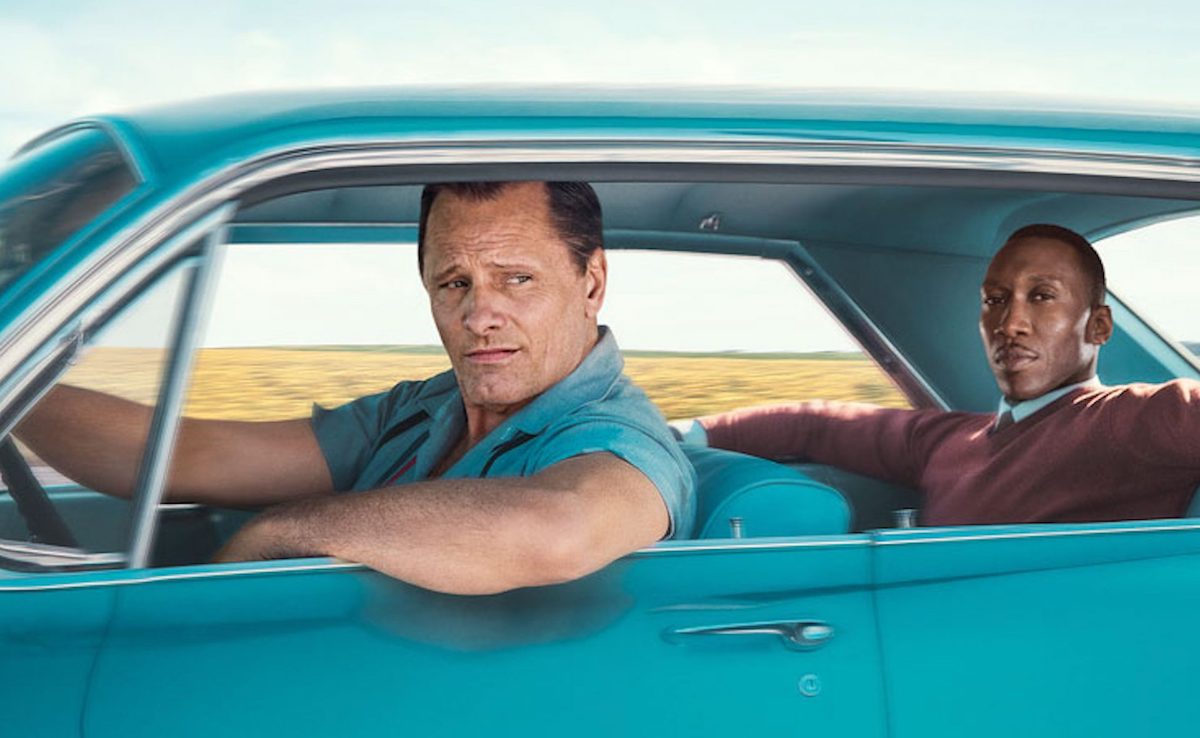 Green Book[/caption]
The Toronto International Film Festival announced its award winners at the closing ceremony with the People’s Choice Award and $15,000 cash prize going to Peter Farrelly for Green Book. The first runner-up is Barry Jenkins’ If Beale Street Could Talk, and the second runner-up is Alfonso Cuarón’s ROMA.
Green Book[/caption]
The Toronto International Film Festival announced its award winners at the closing ceremony with the People’s Choice Award and $15,000 cash prize going to Peter Farrelly for Green Book. The first runner-up is Barry Jenkins’ If Beale Street Could Talk, and the second runner-up is Alfonso Cuarón’s ROMA.
2018 Toronto International Film Festival Award Winners
IWC SHORT CUTS AWARD FOR BEST SHORT FILM
The IWC Short Cuts Award for Best Canadian Short Film goes to Meryam Joobeur’s Brotherhood. The jury remarked, “The film was masterfully executed, layered with bold ideas, rich textures, and nuanced character observations played by an unforgettable cast.” “The film successfully explored complex personal and political themes with compassion for its characters. By employing the intimate prism of a Tunisian family, the film was evidently made with a sense of maturity that points to a bright future from Meryam Joobeur.” The award offers a $10,000 cash prize, made possible by IWC Schaffhausen. The jury awarded an honorable mention to Jérémy Comte’s Fauve for its confident visual storytelling and moving performances from the child actors. The short-film awards were selected by a jury comprised of Claire Diao, Molly McGlynn, and Michael Pearce.IWC SHORT CUTS AWARD FOR BEST SHORT FILM
The IWC Short Cuts Award for Best Short Film goes to Sandhya Suri’s The Field. The jury noted, “The film is striking for its aesthetic lyricism, tender performances, and powerful emotional impact.” “It’s a unique and refreshing glimpse into female desire set in rural India that demonstrated a scope greater than its short format.” The award offers a $10,000 cash prize, made possible by IWC Schaffhausen. The jury gave honorable mentions to Anette Sidor’s Fuck You, for its acutely observed study of teenage sexuality, and to Emma de Swaef and Marc James Roels’s This Magnificent Cake!, for the spectacular level of animation and the surreal humour it uses to explore its complex colonial subject matter. The short-film awards were selected by a jury comprised of Claire Diao, Molly McGlynn, and Michael Pearce.CITY OF TORONTO AWARD FOR BEST CANADIAN FIRST FEATURE FILM
The City of Toronto Award for Best Canadian First Feature Film goes to Katherine Jerkovic’s Roads in February (Les routes en février). The jury remarked it was selected, “For its warm portrayal of a young woman trying to reconnect with her distant heritage after her father’s untimely death, and for the way the film demonstrates how genuine human connections best develop between two individuals when they stand on common ground.” This award carries a cash prize of $15,000, made possible by the City of Toronto. The Canadian awards were selected by a jury comprised of Mathieu Denis, Ali Özgentürk, and Michelle Shephard.CANADA GOOSE® AWARD FOR BEST CANADIAN FEATURE FILM
The Canada Goose® Award for Best Canadian Feature Film goes to Sébastien Pilote’s The Fireflies Are Gone (La disparition des lucioles). The jury said it was chosen, “For its true-to-life depiction of a young woman’s quest to find meaning and hope in a world that has constantly disappointed her.” This award carries a cash prize of $30,000 and a custom award, sponsored by Canada Goose®. The Canadian awards were selected by a jury comprised of Mathieu Denis, Ali Özgentürk, and Michelle Shephard.THE PRIZES OF THE INTERNATIONAL FEDERATION OF FILM CRITICS (FIPRESCI PRIZES)
The Prize of the International Federation of Film Critics (FIPRESCI) for the Discovery programme is awarded to Carmel Winters for Float Like a Butterfly, which the jury called “a pastoral and traditional bucolic film, capturing the familiar angst and anxiety a young adult woman undergoes in order to have her say in the scheme of things in a predominately male-driven patriarchal society.” “Through her spectacular and deft narrative, nuanced understanding of the dilemmas women face, and a pitch-perfect performance by Hazel Doupe, this film is a triumph of free spirit.” Honorable mention goes to Laura Luchetti’s Twin Flower. The Prize of the International Federation of Film Critics (FIPRESCI) for Special Presentations is awarded to Guy Nattiv for Skin, which the jury called “a gripping study of a group of extremists and the choices available to them. It’s raw yet intelligently paced, with stunning performances, especially by a near-unrecognizable Vera Farmiga.” honorable mention goes to Louis Garrel’s A Faithful Man.NETPAC AWARD
As selected by a jury from the Network for the Promotion of Asian Pacific Cinema for the seventh consecutive year, the NETPAC Award for World or International Asian Film Premiere in the Discovery and Contemporary World Cinema sections goes to Ash Mayfair’s The Third Wife. The jury remarked, ”Ash Mayfair’s debut feature The Third Wife signaled the emergence of a young female director-writer whose aesthetic sensibilities, cinematic language, and extraordinary ability to illuminate the past for contemporary audiences augur well for the future of Vietnamese and world cinema.” The jury gave honorable mention to Bai Xue’s The Crossing. The jury said, “Bai Xue’s storytelling in her debut film The Crossing shattered cinematic boundaries to create an original visual language that propelled her protagonist’s emotional crossing into adulthood as she crossed the physical boundaries of Hong Kong into mainland China.” EURIMAGES’ AUDENTIA AWARD The Festival and the Council of Europe’s Eurimages Fund present the third Audentia Award for Best Female Director to Aäläm-Wärqe Davidian’s Fig Tree. “Fig Tree is a stunning and illuminating debut,” the jury remarked. “Based on her own experiences, Ethiopian-Israeli writer-director Aäläm-Wärqe Davidian takes us on an unsentimental journey and shows us the tragic effects of civil war on ordinary people. Confidently directed with grit and compassion, Fig Tree is a beautifully rendered, big-hearted story about a Jewish teenage girl’s attempt to save those she loves, but it’s also an intimate coming-of-age story of self-discovery and female empowerment.” This award carries a €30,000 cash prize. Awarding an honorable mention to Camilla Strøm Henriksen’s Phoenix, the jury said: “Phoenix is a courageous debut from Norwegian director Camilla Strøm Henriksen. A visually arresting and emotionally nuanced film, Phoenix focuses on a young teen who assumes an enormous burden of responsibility in the face of her mother’s mental illness and her father’s absence. With a seamless blend of stark realism and cinematic magic realism, Henriksen’s story subtly, yet powerfully, unfolds from the perspective of her mature young protagonist.”TORONTO PLATFORM PRIZE PRESENTED BY AIR FRANCE
This is the fourth year for Platform, the Festival’s juried program that champions directors’ cinema from around the world. The Festival welcomed an international jury comprised of award-winning filmmakers Mira Nair, Béla Tarr, and Lee Chang-dong, who unanimously awarded the Toronto Platform Prize Presented by Air France to Wi Ding Ho’s Cities of Last Things. The jury said, “This is a deeply moving drama from a director who shows great skill in his ability to weave together multiple genres with social and political critique, while telling a story that remains intimately human at its core. For us, this film has a spirit that always feels beautifully close to real life.” “Over the course of the Festival, we’ve had the privilege of watching 12 films that left us excited with the feeling that the future of directors’ cinema is in such capable hands. The great joy of being on the Platform Jury has been participating in a competition celebrating emerging visions that are bold, daring, innovative, and sometimes even challenging. The great difficulty, however, has been selecting only one director to win the Toronto Platform Prize. After much contemplation and thorough discussion, we all agreed together upon one prize winner and one honorable mention.” Awarding an honorable mention to Emir Baigazin’s The River, the jury said: “We were completely absorbed by the singular world this film creates through precise and meticulous craft, breathtaking visuals, and a boldly patient yet engrossing observational style.” The Toronto Platform Prize offers a custom award and a $25,000 cash prize, made possible by Air France.GROLSCH PEOPLE’S CHOICE AWARDS
This year marked the 41st year that Toronto audiences were able to cast a ballot for their favorite Festival film for the Grolsch People’s Choice Award. This year’s award goes to Peter Farrelly for Green Book. The award offers a $15,000 cash prize and custom award, sponsored by Grolsch. The first runner-up is Barry Jenkins’ If Beale Street Could Talk. The second runner-up is Alfonso Cuarón’s ROMA. The Grolsch People’s Choice Midnight Madness Award goes to Vasan Bala’s The Man Who Feels No Pain. The first runner-up is David Gordon Green’s Halloween. The second runner-up is Sam Levinson’s Assassination Nation. The Grolsch People’s Choice Documentary Award goes to Free Solo, directed by E. Chai Vasarhelyi and Jimmy Chin. The first runner-up is Tom Donahue’s This Changes Everything. The second runner-up is John Chester’s The Biggest Little Farm.
-
Mill Valley Film Festival Announces Full Lineup, Opens with U.S. Premieres of A PRIVATE WAR and GREEN BOOK
[caption id="attachment_31408" align="aligncenter" width="1200"] Green Book[/caption]
The Mill Valley Film Festival (MVFF) will showcase a diverse lineup of 204 films with 45% of all film directed by women, for the 41st edition of the festival, from October 4 to 14, 2018. The Festival will open with a double header – the U.S. Premiere of A Private War, starring Rosamund Pike, and Green Book starring Mahershala Ali.
Opening Night – U.S. Premieres of A PRIVATE WAR and GREEN BOOK
Opening night kicks off Thursday, October 4 with the U.S. Premiere of Aviron Pictures’ A Private War, starring Rosamund Pike as Marie Colvin, one of the most celebrated war correspondents of our era, and Universal Pictures’ Green Book, a sharply observed drama, inspired by real-life events, featuring Mahershala Ali as a classically trained Black jazz piano prodigy Dr. Don Shirley on a 1962 concert tour of the American South. Director Matthew Heineman and Rosamund Pike will be in attendance for A Private War and Oscar® winner Mahershala Ali and director Peter Farrelly for Green Book. Centerpiece Presentation – ROMA MVFFs 2018 Centerpiece presentation, ROMA, is the most personal project to date from Academy Award®-winning director and writer Alfonso Cuarón (Children of Men, Gravity). ROMA follows Cleo (Yalitza Aparicio), a young domestic worker for a family in the middle-class neighborhood of Roma in Mexico City. Delivering an artful love letter to the women who raised him, Cuarón draws on his own childhood to create a vivid and emotional portrait of domestic strife and social hierarchy amidst political turmoil of the 1970s. Attending will be director/writer Alfonso Cuarón.Closing Night – IF BEALE STREET COULD TALK
MVFF41 will close with the Bay Area premiere of IF BEALE STREET COULD TALK, Barry Jenkins’ much anticipated follow up to his Oscar winning MOONLIGHT (MVFF39). Jenkins will be present for the screening. The film, based on James Baldwin’s novel of the same name, was adapted by Jenkins’, and follows a pregnant African-American who sets out to clear her fiance’s name after he is falsely imprisoned. The Closing Night Party following the film will be held at Elks Lodge in San Rafael.Spotlights
MVFF41 will bestow a number of Spotlights throughout the Festival including: honoring rising star Amandla Stenberg for her work in The Hate U Give; Joel Edgerton for his work directing and co-starring in Boy Erased; Karyn Kusama for her directorial effort Destroyer; esteemed actor Richard E. Grant for his performance in Can You Ever Forgive Me?; acclaimed actress Maggie Gyllenhaal for The Kindergarten Teacher; and acknowledge Paul Dano and Carey Mulligan for their creative collaboration on Wildlife.Tribute – Pawel Pawlikowski
Academy Award winning Polish director Pawel Pawlikowski (Ida) will receive a special Tribute from the Festival to celebrate his latest film Cold War, a star-crossed romance set during 1950s Cold War in Poland. Pawlikowski will be present for the awards presentation and an onstage conversation following the film.Special Presentation – BEAUTIFUL BOY
The Festival will present a Special Presentation screening of Beautiful Boy with Academy Award nominated actor Timothée Chalamet (Call Me By Your Name), Academy Award Nominated actress Amy Ryan (Gone Baby Gone), and Academy Award nominated Belgian director Felix van Groeningen (The Broken Circle Breakdown).Behind the Screens – Panels | Master Classes | Workshops
The Festival will present another strong slate of Panels, Master Classes, and Workshops to supplement the outstanding film programming and to continue the discussion for Festival attendees. They include: back for a second year, the Mind The Gap Summit will again feature an extraordinary lineup of thought leaders and creatives in film and tech for a full day intensive to help work and share ideas as the Festival advocates gender equity in film; the annual State of the Industry panel will feature leaders of the independent film world to talk about the current pulse of the independent film community; the From Scene to Screen For Teens workshop, facilitated by Tom Franco and Iris Torres, will allow teenage participants the chance to workshop scenes from Gerrard Conley’s memoir Boy Erased; the Crowdfunding to Build Independence workshop teaches filmmakers the essentials for engaging their audience at every stage of their project; Tom Schlesinger will facilitate the workshop The Heroine’s Journey Onscreen Dramedy, a dive into utilizing the Heroine’s Journey for storytelling; the Medical Marijuana panel, following a screening of Weed the People will focus on the medical uses of marijuana and the many benefits to utilizing cannabis to treat a host of ailments; 420: Welcome The Waldos will illuminate the story behind the origins of the term 420; and finally, Graphic Novel Writing for Teens, is a hands-on workshop following the screening of the film Virus Tropical, and will introduce students to the work of several cartoonists and guide them through the process.MVFF Music
MVFF Music returns for a fourth year with a diverse series of concerts at the Sweetwater Music Hall. Nine nights of live music include performances by artists featured in MVFF films, as well as local, national, and international musicians. Musicians include: Freddy Jones Band, Jarvis Cocker introducing Jarv is…, Holly Near with Tammy Hall and Jan Martinelli, Michael Franti, Black Zeppelin, the Oakland Interfaith Gospel Choir, Half Pint, and Honus Honus.¡VIVA EL CINE!
MVFF’s ¡Viva El Cine! Initiative showcases prize-winning Spanish Language and Latin American films that seek to engage and embrace our Spanish speaking and loving audiences. Highlights in this section include: Alfonso Cuarón’s Roma from Mexico, Birds of Passage from Columbia, El Ángel from Argentina, Richard Levien’s Collisions featuring Mexican American characters, Ernesto from Cuba, Too Late to Die Young from Chile, and The Silence of Others from Spain.Active Cinema
Once again the MVFF’s Active Cinema initiative will showcase film’s power to inspire people to take action to create positive change. Screenings throughout the Festival support the grassroots activism of the filmmakers and engage with the work of the special guests, co-presenters and partners. Highlights include: Charm City in association with Ritter Center; From Baghdad to the Bay in association with the international Rescue Committee, Horizons Foundation, LGBT Asylum Project and Human Rights Watch; Harvest Season in association with La Luz Center; Stay Human in association with Do It For The Love; Time For Ilhan in association with Marin County Young Democrats; Who Killed Lt. Van Dorn? In association with Investigative Reporting Program at the Graduate School of Journalism, UC Berkeley and the Center for Investigative Reporting; Wild DaZe in association with Wildlife Works; and the Active Cinema Hike, a free networking in nature event.Mind The Gap Award – Stacy L. Smith
Mind The Gap, MVFF’s gender equity initiative, amplifies and champions work by women filmmakers, who are changing the narrative that shapes the culture. The Festival is committed to programming 50/50 by 2020 – 50% women directors across all Festival sections by 2020. As part of Mind The Gap this year, the Festival will give Stacy L. Smith the Mind the Gap Award for Visionary Leadership. Smith is a visionary leader in the movement towards gender equity in the film industry. She is an associate professor at USC Annenberg and Founder and Director of the USC Annenberg Inclusion Initiative, the leading think tank globally studying issues of inequality in entertainment. Smith will receive the Mind the Gap Award during the Mind the Gap Summit on Saturday, October 6 where she will also present some of her most recent work.Focus | Black Is
MVFF’s Focus Black Is will showcase emotionally and socially resonant films that explore what it means to be Black in the contemporary world. Films in this Focus include: the co-opening night film Green Book; The Hate U Give; the Closing Night film If Beale Street Could Talk; Little Woods; Long Time Coming: A 1955 Baseball Story; and Obey.Focus | Teens & 20’s
The Festival’s Focus Teens & 20’s, is a focus on young adult films about that defining – and sometimes challenging – post-adolescent/pre-adult time of life. Films in this Focus include: the short program 5@5 The Way It Is; Angst; the Special Presentation Beautiful Boy; Ben is Back; The Hate U Give; Rafiki; The Silent Revolution; Too Late to Die Young; and Virus Tropical.Focus | Queer-ish
Diverse stories of queer representation found in a wide, genre-twisting array of films will be showcased in the Festival’s Focus Queer-ish. Films in this Focus include: Alifu The Prince/ss; El Ángel; Border; Joel Edgerton’s Spotlight presentation film Boy Erased; Richard E. Grant’s Spotlight presentation film Can You Ever Forgive Me?; The Favorite; From Baghdad to the Bay; Holly Near: Singing For Our Lives; The Parting Glass; and Rafiki.Focus | Animation Nation
An assemblage of gorgeous, entertaining, and occasionally kooky animation fiction and non-fiction films from around the globe highlight the Focus Animation Nation. Films in this Focus include: the short program 5@5 Circle Game; The Big Bad Fox and Other Tales; Chris The Swiss; Coco; Seder-Masochism; A Ton O’Toons; Virus Tropical; and Zootopia.
-
NY Film Festival Announces Special Events + Premiere of Barry Jenkins’s IF BEALE STREET COULD TALK
[caption id="attachment_31277" align="aligncenter" width="1200"]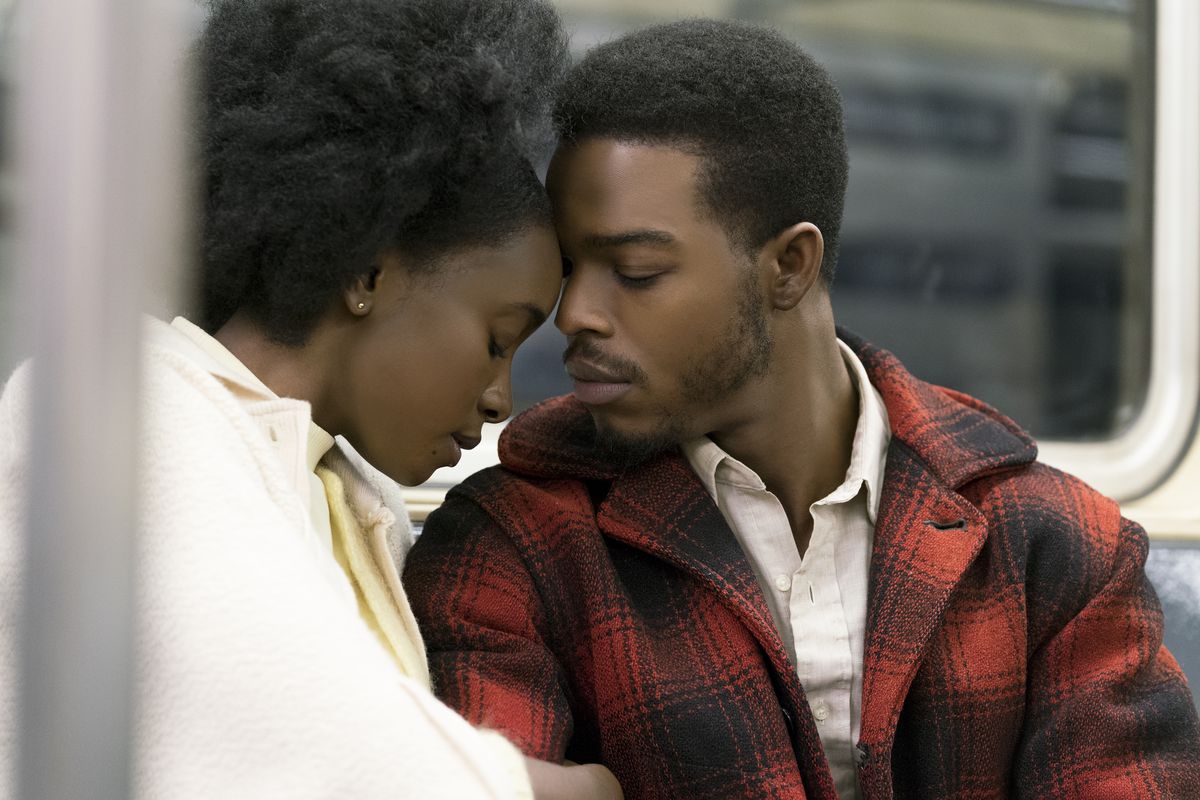 If Beale Street Could Talk[/caption]
The Special Events section for the 56th New York Film will feature the U.S. premiere of If Beale Street Could Talk will at the world famous Apollo Theater, the first time that the festival will present a screening at the historic theater. The film was largely shot in New York City, including many Harlem locations. In celebration of the vibrant community and their support of the film, Annapurna, the Film Society of Lincoln Center, and the Apollo Theater will work together to present a host of outreach programs. Local students as well as Harlem residents will be among the first audiences invited to see the James Baldwin adaptation, in the neighborhood that is home to its characters. The film will also screen on the Lincoln Center campus during the festival.
Writer-director Barry Jenkins said, “It’s been an honor working with the estate to bring this piece of James Baldwin’s legacy to the screen. From the birthplace of Baldwin to the streets and homes within which we made this film, the honor is doubly felt in the NYFF’s generous offer to widen its borders for our U.S. premiere: up on 125th Street, in the community Jimmy forever knew as HOME.”
The Festival will screen Orson Welles’s long-awaited The Other Side of the Wind, finally completed by his collaborators this year, which follows the last night in the life of a legendary Hollywood filmmaker as he completes his final film. Wind will screen alongside Morgan Neville’s in-depth documentary They’ll Love Me When I’m Dead, which uncovers the fascinating story behind Welles’s last completed film, 50 years in the making.
Rex Ingram’s World War I epic The Four Horsemen of the Apocalypse (1921), the breakout film for iconic silent actor Rudolph Valentino, will screen on a beautiful 35mm print from Martin Scorsese’s collection, accompanied by the North American premiere of a new live score written and performed by a five-piece orchestra led by Matthew Nolan.
The sixth annual Film Comment Presents selections are Ali Abbasi’s genre-friendly fantasy-drama Border, which won Cannes’ Un Certain Regard award, and The Wild Pear Tree, an intimate portrait of a promising but adrift young literary graduate from Turkish Palme d’Or winner Nuri Bilge Ceylan (Once Upon a Time in Anatolia, NYFF49). In previous years, Film Comment has championed films such as Sergei Loznitsa’s A Gentle Creature, Terence Davies’s A Quiet Passion, Steve McQueen’s 12 Years a Slave, and László Nemes’s Son of Saul. The magazine will also host three live events: a roundtable discussion with a trio of NYFF filmmakers about their experiences as movie lovers and creators, a dialogue on representation in cinema, and a critical wrap report of the festival’s highs and lows. All three will also be recorded for the weekly Film Comment Podcast.
The Four Horsemen of the Apocalypse
Dir. Rex Ingram, USA, 1921, 132m, 35mm
Rex Ingram’s adaptation of the famous novel by Vicente Blasco Ibáñez gave us one of cinema’s greatest antiwar films and catapulted actor Rudolph Valentino into history as one of the first screen idols. The Four Horsemen of the Apocalypse is a devastating epic centered around a divided Argentine family fighting on opposite sides during World War I. Famously remembered for the cool, sensual, and powerful tango sequence lead by Valentino, the film endures for Ingram’s meticulous attention to mise en scène—beautiful and macabre compositions alike—and the nuanced performances from a cast including Alice Terry and Josef Swickard. The Film Society is pleased to present the North American premiere of a live score written and performed by Matthew Nolan (electric guitar/electronics), Seán Mac Erlaine (reeds/electronics/vocal), Adrian Crowley (Mellotron/vocal), Kevin Murphy (cello/vocal), and Barry Adamson (bass guitar/percussion/synths/
If Beale Street Could Talk[/caption]
The Special Events section for the 56th New York Film will feature the U.S. premiere of If Beale Street Could Talk will at the world famous Apollo Theater, the first time that the festival will present a screening at the historic theater. The film was largely shot in New York City, including many Harlem locations. In celebration of the vibrant community and their support of the film, Annapurna, the Film Society of Lincoln Center, and the Apollo Theater will work together to present a host of outreach programs. Local students as well as Harlem residents will be among the first audiences invited to see the James Baldwin adaptation, in the neighborhood that is home to its characters. The film will also screen on the Lincoln Center campus during the festival.
Writer-director Barry Jenkins said, “It’s been an honor working with the estate to bring this piece of James Baldwin’s legacy to the screen. From the birthplace of Baldwin to the streets and homes within which we made this film, the honor is doubly felt in the NYFF’s generous offer to widen its borders for our U.S. premiere: up on 125th Street, in the community Jimmy forever knew as HOME.”
The Festival will screen Orson Welles’s long-awaited The Other Side of the Wind, finally completed by his collaborators this year, which follows the last night in the life of a legendary Hollywood filmmaker as he completes his final film. Wind will screen alongside Morgan Neville’s in-depth documentary They’ll Love Me When I’m Dead, which uncovers the fascinating story behind Welles’s last completed film, 50 years in the making.
Rex Ingram’s World War I epic The Four Horsemen of the Apocalypse (1921), the breakout film for iconic silent actor Rudolph Valentino, will screen on a beautiful 35mm print from Martin Scorsese’s collection, accompanied by the North American premiere of a new live score written and performed by a five-piece orchestra led by Matthew Nolan.
The sixth annual Film Comment Presents selections are Ali Abbasi’s genre-friendly fantasy-drama Border, which won Cannes’ Un Certain Regard award, and The Wild Pear Tree, an intimate portrait of a promising but adrift young literary graduate from Turkish Palme d’Or winner Nuri Bilge Ceylan (Once Upon a Time in Anatolia, NYFF49). In previous years, Film Comment has championed films such as Sergei Loznitsa’s A Gentle Creature, Terence Davies’s A Quiet Passion, Steve McQueen’s 12 Years a Slave, and László Nemes’s Son of Saul. The magazine will also host three live events: a roundtable discussion with a trio of NYFF filmmakers about their experiences as movie lovers and creators, a dialogue on representation in cinema, and a critical wrap report of the festival’s highs and lows. All three will also be recorded for the weekly Film Comment Podcast.
The Four Horsemen of the Apocalypse
Dir. Rex Ingram, USA, 1921, 132m, 35mm
Rex Ingram’s adaptation of the famous novel by Vicente Blasco Ibáñez gave us one of cinema’s greatest antiwar films and catapulted actor Rudolph Valentino into history as one of the first screen idols. The Four Horsemen of the Apocalypse is a devastating epic centered around a divided Argentine family fighting on opposite sides during World War I. Famously remembered for the cool, sensual, and powerful tango sequence lead by Valentino, the film endures for Ingram’s meticulous attention to mise en scène—beautiful and macabre compositions alike—and the nuanced performances from a cast including Alice Terry and Josef Swickard. The Film Society is pleased to present the North American premiere of a live score written and performed by Matthew Nolan (electric guitar/electronics), Seán Mac Erlaine (reeds/electronics/vocal), Adrian Crowley (Mellotron/vocal), Kevin Murphy (cello/vocal), and Barry Adamson (bass guitar/percussion/synths/vocal). The score was commissioned by and premiered at the St. Patrick’s Festival Dublin in March 2018. Supported by Culture Ireland. Special 35mm print courtesy of Martin Scorsese from the M.S. Collection at the George Eastman Museum. The Other Side of the Wind Dir. Orson Welles, USA, 2018, 122m Cinema lovers around the world have been waiting to see this legendary movie for more than 40 years. Orson Welles started shooting in 1970 with a precarious funding scheme, an ever-mutating script, and the lead role of Jake Hannaford, an old-guard macho Hollywood director at the end of his tether, yet to be cast. When he died fifteen years later, the film was not only unfinished but in legal limbo. Almost 50 years after Welles started shooting, The Other Side of the Wind has finally been completed by Welles’s collaborators. The film features a collection of actors as eclectic as the cast of Touch of Evil, including John Huston as Hannaford, Peter Bogdanovich, Oja Kodar, Edmund O’Brien, Susan Strasberg, Lilli Palmer, Paul Stewart, Mercedes McCambridge, Cameron Mitchell, Paul Mazursky, Henry Jaglom, Claude Chabrol, and, in a movie-stealing performance as Hannaford’s right-hand man, Welles’s old collaborator Norman Foster. A Netflix release. They’ll Love Me When I’m Dead Dir. Morgan Neville, USA, 2018, 98m The story of the making of The Other Side of the Wind is as engrossing and rich in character and incident, and perhaps even more epic in scale, than the film itself. Morgan Neville’s documentary complements and deepens the experience of Welles’s film by placing it within the context of his life and career, setting the scene and the particular mood of Hollywood in the early 1970s, and chronicling every last creative, legal, financial, and behavioral twist and turn on the circuitous road from the first set-up to the first official screening almost 50 years later. The title, of course, comes from none other than Welles himself. A Netflix release. FILM COMMENT AT NYFF
Film Comment Presents:
Border Dir. Ali Abbasi, Sweden/Denmark, 2018, 108m Scandinavian mythology makes for a visceral fantastical drama on the mystery of identity in this adaptation of a story by Let the Right One In writer John Ajvide Lindqvist. Ali Abbasi’s twisty Cannes award-winner (Un Certain Regard, 2018) centers on a customs inspector, Tina, who possesses the ability to sniff out contraband and moral corruption. Her findings lead her into a criminal investigation, but the heart of Border lies with Tina, who tires of her deadbeat roommate and experiences a full-bodied awakening like little else seen on screen. Grounding it all is Eva Melander’s outstanding, minutely sensitive performance, the true north for Abbasi’s genre-driven momentum. A NEON release. The Wild Pear Tree Dir. Nuri Bilge Ceylan, Turkey, 2018, 188m The gorgeous backdrop of rolling country and idyllic farmland are cold comfort to the frustrated hero of The Wild Pear Tree. Turkish auteur Nuri Bilge Ceylan (Once Upon a Time in Anatolia) captures the wrenching struggles of a bright literary graduate, Sinan (Aydın Doğu Demirko), who is trying to take flight in a world he can’t entirely accept. Ceylan revives a deeply humanist cinema of ideas in tracking Sinan’s path through the more urgent questions of youth, romance, religious orthodoxy, and shaking off the burdens of your family—without ennobling the all-too-human Sinan. Often shooting in unbroken takes, Ceylan compellingly “renders the frustrations of this young man as so much misplaced passion” (Kent Jones, Film Comment). A Cinema Guild release.Film Comment Live:
The Cinema of Experience At this year’s NYFF, filmmakers are rising to the challenge of representing diverse experiences at a pivotal time in our nation’s history. Our guests will discuss how cinematic technique is used to reflect such experiences and what is different about the latest generation of storytelling. Filmmakers Chat For the third year, Film Comment gives you the rare chance to see some of today’s most important filmmakers in dialogue with each other. A selection of directors whose films are screening at this edition of NYFF will talk together in a discussion moderated by Film Comment editor-in-chief Nicolas Rapold. Festival Wrap In what is becoming an annual tradition, Film Comment contributing critics and editors gather for the festival’s last weekend and talk about the films they’ve seen, discussing—or arguing about—the selections in the lineup, from Main Slate and beyond.
-
Films From Barry Jenkins, Alex Ross Perry, Claire Denis among Main Slate of 56th NY Film Festival
[caption id="attachment_31277" align="aligncenter" width="1200"] If Beale Street Could Talk[/caption]
The Film Society of Lincoln Center today announced the 30 films for the Main Slate of the 56th New York Film Festival taking place September 28 to October 14, 2018.
This year’s Main Slate showcases films from 22 different countries, including new titles from celebrated auteurs, extraordinary work from directors making their first NYFF bows, and captivating features that wowed audiences at international festivals. Five films in the festival were honored at Cannes, including Hirokazu Kore-eda’s Palme d’Or–winner Shoplifters; Jean-Luc Godard’s The Image Book, awarded a Special Palme d’Or; Cold War, which took home the Best Director prize for Paweł Pawlikowski; and Alice Rohrwacher’s Happy as Lazzaro and Jafar Panahi’s 3 Faces, which shared the Best Screenplay award. Returning to the festival for the third consecutive year is Hong Sangsoo with two new films, joined by his fellow NYFF54 filmmakers Olivier Assayas and Barry Jenkins. Frederick Wiseman makes his 10th appearance at the festival, while other returning filmmakers include Joel & Ethan Coen, Alex Ross Perry, Claire Denis, Ulrich Köhler, Lee Chang-dong, Jia Zhangke, and Christian Petzold. Making both their directorial and NYFF debuts are Paul Dano and Richard Billingham, and Louis Garrel makes his first NYFF showing as a director. Other filmmakers new to the festival include Dominga Sotomayor, Christophe Honoré, Tamara Jenkins, Mariano Llinás, and Ying Liang, as well as Bi Gan and Ryûsuke Hamaguchi, both alumni of New Directors/New Films 2016.
The NYFF56 Opening Night is Yorgos Lanthimos’s The Favourite, Alfonso Cuarón’s ROMA is Centerpiece, and Julian Schnabel’s At Eternity’s Gate will close the festival.
NYFF Director and Selection Committee Chair Kent Jones said, “Francis Ford Coppola said that the cinema would become a real art form only when the tools of moviemaking became as inexpensive as paints, brushes, and canvases. That has come to pass, but at the same time it’s become increasingly tough to do serious work that is beholden to nothing but the filmmaker’s need to express these emotions in this form in moving images and sound. So if I were pressed to choose one word to describe the films in this year’s Main Slate, it would be: bravery. These films were made all over the globe, by young filmmakers like Dominga Sotomayor and masters like Fred Wiseman, by artists of vastly different sensibilities from Claire Denis to the Coen Brothers, Jafar Panahi to Jean-Luc Godard. And the unifying thread is their bravery, the bravery needed to fight past the urge to commercialized smoothness and mediocrity that is always assuming new forms. That’s what makes every single title in this year’s Main Slate so precious, and so vital.”
The 56th New York Film Festival Main Slate
Opening Night
The Favourite
Dir. Yorgos Lanthimos, Ireland/UK/USA, 2018, 121m
In Yorgos Lanthimos’s wildly intricate and very darkly funny new film, Sarah Churchill, the Duchess of Marlborough (Rachel Weisz), and her servant Abigail Hill (Emma Stone) engage in a sexually charged fight to the death for the body and soul of Queen Anne (Olivia Colman) at the height of the War of the Spanish Succession. This trio of truly brilliant performances is the dynamo that powers Lanthimos’s top-to-bottom reimagining of the costume epic, in which the visual pageantry of court life in 18th-century England becomes not just a lushly appointed backdrop but an ironically heightened counterpoint to the primal conflict unreeling behind closed doors. A Fox Searchlight Pictures release.
Centerpiece
ROMA
Dir. Alfonso Cuarón, Mexico/USA, 2018, 135m
In Alfonso Cuarón’s autobiographically inspired film, set in Mexico City in the early ’70s, we are placed within the physical and emotional terrain of a middle-class family whose center is quietly and unassumingly held by its beloved live-in nanny and housekeeper (Yalitza Aparicio). The cast is uniformly magnificent, but the real star of ROMA is the world itself, fully present and vibrantly alive, from sudden life-changing events to the slightest shifts in mood and atmosphere. Cuarón tells us an epic story of everyday life while also gently sweeping us into a vast cinematic experience, in which time and space breathe and majestically unfold. Shot in breathtaking black and white and featuring a sound design that represents something new in the medium, ROMA is a truly visionary work. A Netflix release.
Closing Night
At Eternity’s Gate
Dir. Julian Schnabel, USA/France, 2018, 106m
North American Premiere
Julian Schnabel’s ravishingly tactile and luminous new film takes a fresh look at the last days of Vincent van Gogh, and in the process revivifies our sense of the artist as a living, feeling human being. Schnabel; his co-writers Jean-Claude Carrière and Louise Kugelberg, also the film’s editor; and cinematographer Benoît Delhomme strip everything down to essentials, fusing the sensual, the emotional, and the spiritual. And the pulsing heart of At Eternity’s Gate is Willem Dafoe’s shattering performance: his Vincent is at once lucid, mad, brilliant, helpless, defeated, and, finally, triumphant. With Oscar Isaac as Gauguin, Rupert Friend as Theo, Mathieu Amalric as Dr. Gachet, Emmanuelle Seigner as Madame Ginoux, and Mads Mikkelsen as The Priest. A CBS Films release.
3 Faces
Dir. Jafar Panahi, Iran, 2018, 100m
U.S. Premiere
Iranian director Jafar Panahi’s fourth completed feature since he was officially banned from filmmaking is one of his very best. Panahi begins with a smartphone video shot by a young woman (Marziyeh Rezaei) who announces to the camera that her parents have forbidden her from realizing her dream of acting and then, by all appearances, takes her own life. The recipient of the video, Behnaz Jafari, as herself, asks Panahi, as himself, to drive her to the woman’s tiny home village near the Turkish border to investigate. From there, 3 Faces builds in narrative, thematic, and visual intricacy to put forth a grand expression of community and solidarity under the eye of oppression.
Asako I & II
Dir. Ryûsuke Hamaguchi, Japan/France, 2018, 119m
U.S. Premiere
A truly original Vertigo riff, based on a novel by Tomoka Shibasaki, Asako I & II is an enchanting, unnerving paean to the notion of love as a trance state. Asako (Erika Karata) and Baku (Masahiro Higashide) share an intense, all-consuming romance—but one day the moody Baku ups and vanishes. Two years later, having moved from Osaka to Tokyo, Asako meets Baku’s exact double. Ryûsuke Hamaguchi, who gained plenty of attention for 2015’s five-hour-plus Happy Hour, has returned with a beguiling and mysterious film that traces the trajectory of a love—or, to be accurate, two loves—found, lost, displaced, and regained. A Grasshopper Film release.
Ash Is Purest White
Dir. Jia Zhangke, China, 2018, 142m
U.S. Premiere
Jia Zhangke’s extraordinary body of work has doubled as a record of 21st-century China and its warp-speed transformations. A tragicomedy in the fullest sense, Ash Is Purest White is at once his funniest and saddest film, portraying the passage of time through narrative ellipses and, like his Mountains May Depart (NYFF53), a three-part structure. Despite its jianghu—criminal underworld—setting, Ash is less a gangster movie than a melodrama, beginning by following Qiao and her mobster boyfriend Bin as they stake out their turf against rivals and upstarts in 2001 postindustrial Datong before expanding out into an epic narrative of how abstract forces shape individual lives. As the formidable, quick-witted Qiao, a never better Zhao Tao has fashioned a heroine for the ages. A Cohen Media Group release.
The Ballad of Buster Scruggs
Dir. Joel Coen & Ethan Coen, USA, 2018, 128m
North American Premiere
Here’s something new from the Coen Brothers—an anthology of short films based on a fictional book of “western tales,” featuring Tim Blake Nelson as a murderous, white-hatted singing cowboy; James Franco as a bad luck bank-robber; Liam Neeson as the impresario of a traveling medicine show with increasingly diminishing returns; Tom Waits as a die-hard gold prospector; Zoe Kazan and Bill Heck as two shy people who almost come together on the wagon trail; and Tyne Daly, Saul Rubinek, Brendan Gleeson, Chelcie Ross, and Jonjo O’Neill as a motley crew on a stagecoach to nowhere. Each story is distinct, but unified by the thematic thread of mortality. As a whole movie experience, Buster Scruggs is wildly entertaining, and, like all Coen films, endlessly surprising. An Annapurna Production and Netflix release.
Burning
Dir. Lee Chang-dong, South Korea, 2018, 148m
Expanded from Haruki Murakami’s short story “Barn Burning,” the sixth feature from Korean master Lee Chang-dong, known best in the U.S. for such searing, emotional dramas as Secret Sunshine (NYFF45) and Poetry (NYFF48), begins by tracing a romantic triangle of sorts: Jongsu (Yoo Ah-in), an aspiring writer, becomes involved with a woman he knew from childhood, Haemi (Jun Jong-seo), who is about to embark on a trip to Africa. She returns some weeks later with a fellow Korean, the Gatsby-esque Ben (Steven Yeun), who has a mysterious source of income and a very unusual hobby. A tense, haunting multiple-character study, the film accumulates a series of unanswered questions and unspoken motivations to conjure a totalizing mood of uncertainty and quietly bends the contours of the thriller genre to brilliant effect. A Well Go USA release.
Cold War
Dir. Paweł Pawlikowski, Poland, 2018, 90m
Academy Award–winner Paweł Pawlikowski follows up his box-office sensation Ida with this bittersweet, exquisitely crafted tale of an impossible love. Set between the late 1940s and early 1960s, Cold War is, as the title implies, a Soviet-era drama, but it stringently and inventively avoids the clichés of many a classical-minded World War II art film, tracking the tempestuous love between pianist (Tomasz Kot) and singer (Joanna Kulig) as they navigate the realities of living in both Poland and Paris, in and outside of the Iron Curtain. Shot in crisp black-and-white and set to a bewitching jazzy score, Pawlikowski’s evocative film consummately depicts an uncompromising passion caught up in the gears of history. An Amazon Studios release.
A Faithful Man / L’Homme fidèle
Dir. Louis Garrel, France, 2018, 75m
U.S. Premiere
Nine years after she left him for his best friend, journalist Abel (Louis Garrel) gets back together with his recently widowed old flame Marianne (Laetitia Casta). It seems to be a beautiful new beginning, but soon the hapless Abel finds himself embroiled in all sorts of dramas: the come-ons of a wily jeune femme (Lily-Rose Depp), the machinations of Marianne’s morbid young son, and some unsavory questions about what exactly happened to his girlfriend’s first husband. Shifting points of view as nimbly as its players switch partners, the sophomore feature from actor/director Louis Garrel—co-written with the legendary Jean-Claude Carrière—is at once a beguiling bedroom farce and a slippery inquiry into truth, subjectivity, and the elusive nature of romantic attraction.
A Family Tour
Dir. Ying Liang, Taiwan/Hong Kong/Singapore/Malaysia, 2018, 107m
U.S. Premiere
Since his 2012 feature When Night Falls, a stinging critique of state power that the Chinese authorities attempted to suppress, the director Ying Liang has been forced to live in exile in Hong Kong. His return to feature filmmaking is a characteristically precise and powerful work, and, as inspired by his own precarious situation and based on a reunion with his in-laws, an autobiographical one. The film follows a Hong Kong–exiled director (Gong Zhe) as she travels to a film festival in Taiwan with her husband and toddler, while her ailing mother (Nai An) vacations there separately with a tour group. To avoid attracting attention, the family shadows the tour’s sightseeing itinerary, visiting each other during photo stops and mealtimes. An empathetic snapshot of a mother-daughter relationship, this brave, poised film is also a deeply moving testament to the inseparability of the personal and the political.
La Flor
Dir. Mariano Llinás, Argentina, 2018, 807m
North American Premiere
A decade in the making, Mariano Llinás’s follow-up to his 2008 cult classic Extraordinary Stories is an unrepeatable labor of love and madness that redefines the concept of binge viewing. The director himself appears at the start to preview the six disparate episodes that await, each starring the same four remarkable actresses: Elisa Carricajo, Valeria Correa, Pilar Gamboa, and Laura Paredes. Overflowing with nested subplots and whiplash digressions, La Flor shape-shifts from a B-movie to a musical to a spy thriller to a category-defying metafiction—all of them without endings—to a remake of a very well-known French classic and, finally, to an enigmatic period piece that lacks a beginning (granted, all notions of beginnings and endings become fuzzy after 14 hours). An adventure in scale and duration, La Flor is a marvelously entertaining exploration of the possibilities of fiction that lands somewhere close to its outer limits.
Grass
Dir. Hong Sangsoo, South Korea, 2018, 66m
U.S. Premiere
Sitting in a café, typing on a laptop, Areum (Kim Min-hee) eavesdrops on three dramatic situations unfolding in her general vicinity: a young woman bound for Europe and a male friend who erupt in vitriolic accusations, a washed-up actor trying to sweet-talk his way into staying with an old friend, and a narcissistic actor-director (Jung Jin-young) trying to rope a young writer into his next project. Playing out largely in long-take two-shots, these conversations create a kind of never-ending theatrical performance, with Areum as the anchor. With its raw emotions and seeming formal simplicity masking a complex episodic approach, Grass finds Korean master Hong Sangsoo setting up a fascinating narrative problem for himself and solving it as only he can. A Cinema Guild release.
Happy as Lazzaro / Lazzaro felice
Dir. Alice Rohrwacher, Italy, 2018, 128m
North American Premiere
In the transfiguring and transfixing third feature from Alice Rohrwacher (The Wonders, NYFF52), we find ourselves amid a throng of tobacco farmers living in a state of extreme deprivation on an estate known as Inviolata, with wide-eyed teenager Lazzaro (nonprofessional discovery Adriano Tardiolo) emerging as a focal point. Although this all seems to be taking place in the past (as implied by the warm grain of Hélène Louvart’s 16mm cinematography), a stunning mid-movie leap vaults the narrative squarely into the present day and into the realm of parable. In a fable touching on perennial class struggle with Christian overtones, Rohrwacher summons the spirit of Pasolini, while also nodding to Ermanno Olmi and Visconti. A Netflix release.
Her Smell
Dir. Alex Ross Perry, USA, 2018, 134m
U.S. Premiere
The latest from Alex Ross Perry (Listen Up Philip, NYFF52) traces the psychology of an unforgettable woman under the influence. Becky Something (Elisabeth Moss, in a powerhouse performance), the influential lead singer of a popular ’90s alt-rock outfit, struggles with her demons as friends, family, and bandmates alike behold her unraveling through a prism of horror, empathy, and resentment. Perry tracks Becky’s self-destruction—and potential creative redemption—through snaking long takes (arguably some of DP Sean Price Williams’s finest work) in claustrophobic backstage hallways, garishly lit dressing rooms, and recording studios, and the film’s ensemble cast (including Cara Delevingne, Ashley Benson, Amber Heard, Virginia Madsen, Dan Stevens, and Eric Stoltz) is impeccable in support of Moss’s rattling trip to the brink.
High Life
Dir. Claire Denis, Germany/France/USA/UK/Poland, 2018, 110m
U.S. Premiere
Claire Denis’s latest film is set aboard a spacecraft piloted by death row prisoners on a decades-long suicide mission to enter and harness the power of a black hole. But as is always the case with this filmmaker, the actual structure seems to evolve organically through moods and uncanny spells, and the closest juxtapositions of violence and intimacy. High Life features some of the most unsettling passages Denis has ever filmed, as well as moments of the greatest delicacy and tenderness. With Robert Pattinson, Juliette Binoche, André Benjamin, and Mia Goth.
Hotel by the River
Dir. Hong Sangsoo, South Korea, 2018, 96m
U.S. Premiere
Two tales intersect at a riverside hotel: an elderly poet (Ki Joo-bong), invited to stay there for free by the owner, summons his two estranged sons, sensing his life drawing to a close; and a young woman (Kim Min-hee) nursing a recently broken heart is visited by a friend who tries to console her. At times these threads overlap, at others they run tantalizingly close to each other. Using a stark black-and-white palette and handheld cinematography (with frequent DP Kim Hyung-ku), Hong crafts an affecting examination of family, mortality, and the ways in which we attempt to heal wounds old and fresh.
If Beale Street Could Talk
Dir. Barry Jenkins, USA, 2018
U.S. Premiere
Barry Jenkins’s follow-up to his Oscar-winning Moonlight is a carefully wrought adaptation of James Baldwin’s penultimate novel, set in Harlem in the early 1970s. Fonny (Stephan James) and Tish (KiKi Layne) are childhood friends who fall in love as young adults. Tish becomes pregnant, and Fonny suffers a fate tragically common to young African-American men: he is arrested and convicted for a crime he didn’t commit. Jenkins’s deeply soulful film stays focused on the emotional currents between parents and children, couples and friends, all of whom spend their lives repairing and reinforcing the precious but fraying bonds of family and community in an unforgiving racist world. With Regina King, Colman Domingo, Teyonah Parris, Aunjanue Ellis, and Michael Beach. An Annapurna Pictures release.
The Image Book / Le Livre d’image
Dir. Jean-Luc Godard, Switzerland, 2018, 90m
U.S. Premiere
Jean-Luc Godard’s “late period” probably began with 2001’s In Praise of Love, and since then he has been formulating and enacting a path toward an ending: the ending of individual films, the ending of engagement with cinema, and, now that he’s 87, the possible ending of his own existence. With The Image Book all barriers between the artist, his art, and his audience have dissolved. The film is structured in chapters and predominantly comprised of pre-existing images, many of which will be familiar from Godard’s previous work. The relationship between image and sound is, as always, intensely physical and sometimes jaw-dropping. And…isn’t it enough to say, simply, that this is the work of a master? And that you have to see it? A Kino Lorber release.
In My Room
Dir. Ulrich Köhler, Germany, 2018, 119m
U.S. Premiere
The fourth feature from German director Ulrich Köhler (Sleeping Sickness, NYFF49) takes a disarmingly realistic and restrained approach to a fantastical premise: the eternally popular fantasy of the last man on earth. Sad-sack, 40ish TV cameraman Armin (Hans Löw) has been summoned home by his father to help tend to his terminally ill grandmother, but awakens one morning to find the world around him entirely depopulated. Eventually, the film introduces a fellow survivor, an Eve (Elena Radonicich) to complicate the apparent contentment of its Adam. In My Room is a film of meticulous details and sly, subtle ironies, crafted by the skills, temperament, and philosophical inquiry of an emerging master. A Grasshopper Film release.
Long Day’s Journey Into Night
Dir. Bi Gan, China/France, 2018, 133m
U.S. Premiere
As proven by his knockout debut, Kaili Blues, Bi Gan is preoccupied with film’s potential to both materialize mental space and convey physical sensation. His cinematic ambitions are further crystallized, to say the least, in Long Day’s Journey Into Night, a noir-tinged film about a solitary man (Huang Jue) haunted by loss and regret, told in two parts: the first an achronological mosaic, the second a nocturnal dream. Again centering around his native province of Guizhou in southwest China, the director has created a film like nothing you’ve seen before, especially in the second half’s hour-long, gravity-defying 3D sequence shot, which plunges its protagonist—and us—through a labyrinthine cityscape.
Monrovia, Indiana
Dir. Frederick Wiseman, USA, 2018, 143m
U.S. Premiere
Every new film from Frederick Wiseman, now 88 years old, seems more vigorous and acute than the last. His subject here is Monrovia, Indiana; population 1063, as of 2017; located deep in the American heartland. Wiseman alights on key activities: talk among friends over coffee at the diner, packaging meat at the supermarket, trucks loading with corn, expansion debates at town planning commission meetings, and, most intriguingly, a funeral. Monrovia, Indiana is a tough, piercing look at the rhythm and texture of life as it is lived in a wide swathe of this country. A Zipporah Films release.
Non-Fiction / Doubles vies
Dir. Olivier Assayas, France, 2018, 106m
Set within the world of publishing, Olivier Assayas’s new film finds two hopelessly intertwined couples—Guillaume Canet’s troubled book executive and Juliette Binoche’s weary actress; Vincent Macaigne’s boorish novelist and Nora Hamzawi’s straight-and-balanced political operative—obsessed with the state of things, and how (or when) it will (or might) change. Is print dying? Has blogging replaced writing? Is fiction over? But the divide between what these characters—and their friends, and their enemies, and everyone in between—talk about and what is actually happening between them, moment by moment, is what gives Non-Fiction its very particular charm, humor, and lifelike stabs of emotion. A Sundance Selects release.
Private Life
Dir. Tamara Jenkins, USA, 2017, 123m
In Tamara Jenkins’s first film in ten years, Kathryn Hahn and Paul Giamatti are achingly real as Rachel and Richard, a middle-aged New York couple caught in the desperation, frustration, and exhaustion of trying to have a child, whether by fertility treatments or adoption or surrogate motherhood. They find a willing partner in Sadie (the formidable Kayli Carter), Richard’s niece by marriage, who happily agrees to donate her eggs, and the three of them build their own little outcast family in the process. Private Life is a wonder, by turns hilarious and harrowing (sometimes at once), and a very carefully observed portrait of middle-class Bohemian Manhattanites. With John Carroll Lynch and Molly Shannon. A Netflix release.
RAY & LIZ
Dir. Richard Billingham, UK, 2018, 107m
U.S. Premiere
English photographer and visual artist Richard Billingham’s first feature is grounded in the visual and emotional textures of his family portraits, particularly those of his deeply dysfunctional parents, whose names give the film its title. Billingham builds astonishing and unflinching scenes with his principal actors—Ella Smith as Liz, Justin Salinger as Ray, Patrick Romer as the older Ray, Tony Way and Sam Gittins as neighbors, and Joshua Millard-Lloyd as the youngest child—that play out second by second as if by some new form of direct transmission from the artist’s memory bank. There is not a single second of this electrifying debut that doesn’t feel 100% rooted in personal experience.
Shoplifters
Dir. Hirokazu Kore-eda, Japan, 2018, 121m
Hirokazu Kore-eda’s Cannes Palme d’Or winner is a heartrending glimpse into an often invisible segment of Japanese society: those struggling to stay afloat in the face of crushing poverty. On the the margins of Tokyo, a most unusual “family”—a collection of societal castoffs united by their shared outsiderhood and fierce loyalty to one another—survives by petty stealing and grifting. When they welcome into their fold a young girl who’s been abused by her parents, they risk exposing themselves to the authorities and upending their tenuous, below-the-radar existence. The director’s latest masterful, richly observed human drama makes the quietly radical case that it is love—not blood—that defines a family. A Magnolia Pictures release.
Sorry Angel
Dir. Christophe Honoré, France, 2018, 132m
North American Premiere
The ever-unpredictable Christophe Honoré (Love Songs) returns with perhaps his most personal, emotionally rich work yet. At once an intimate chronicle of a romance and a sprawling portrait of gay life in early 1990s France, Sorry Angel follows the intertwining journeys of Jacques (Pierre Deladonchamps), a worldly, HIV-positive Parisian writer confronting his own mortality, and Arthur (Vincent Lacoste), a curious, carefree university student just beginning to live. Brought together by chance, the men find themselves navigating a casual fling that gradually deepens into a tender, transformative bond. Graced with vivid, complex characters and inspired flights of cinematic imagination, this is a vibrant, life-affirming celebration of love, friendship, and human connection. Released by Strand Releasing.
Too Late to Die Young
Dir. Dominga Sotomayor, Chile/Brazil/Argentina/Netherlands/Qatar, 2018, 110m U.S. Premiere The year 1990 was when Chile transitioned to democracy, but all of that seems a world away for 16-year-old Sofia, who lives far off the grid in a mountain enclave of artists and bohemians. Too Late to Die Young takes place during the hot, languorous days between Christmas and New Year’s Day, when the troubling realities of the adult world—and the elemental forces of nature—begin to intrude on her teenage idyll. Shot in dreamily diaphanous, sun-splashed images and set to period-perfect pop, the second feature from one of Latin American cinema’s most artful and distinctive voices is at once nostalgic and piercing, a portrait of a young woman—and a country—on the cusp of exhilarating and terrifying change. Transit Dir. Christian Petzold, Germany/France, 2018, 101m U.S. Premiere In Christian Petzold’s brilliant and haunting adaptation of German novelist Anna Seghers’s 1942 book Transit Visa, a hollowed-out European refugee (Franz Rogowski), who has escaped from two concentration camps, arrives in Marseille assuming the identity of a dead novelist whose papers he is carrying. There he enters the arid, threadbare world of the refugee community, and becomes enmeshed in the lives of a desperate young mother and son, and a mysterious woman named Marie (Paula Beer). Transit is a film told in two tenses: 1940 and right now, historic past and immediate present, like two translucent panes held up to the light and mysteriously contrasting and blending. Wildlife Dir. Paul Dano, USA, 2018, 104m In the impressive directorial debut from actor Paul Dano (There Will Be Blood), a carefully wrought adaptation of Richard Ford’s 1990 novel, a family comes apart one loosely stitched seam at a time. We are in the lonely expanses of the American west in the mid-’60s. An affable man (Jake Gyllenhaal), down on his luck, runs off to fight the wildfires raging in the mountains. His wife (Carey Mulligan) strikes out blindly in search of security and finds herself running amok. It is left to their young adolescent son Joe (Ed Oxenbould) to hold the center. Co-written by Zoe Kazan, Wildlife is made with a sensitivity and at a level of craft that are increasingly rare in movies. An IFC Films release.
-
2018 Toronto International Film Festival Reveals First Wave of Films
[caption id="attachment_31044" align="aligncenter" width="1200"]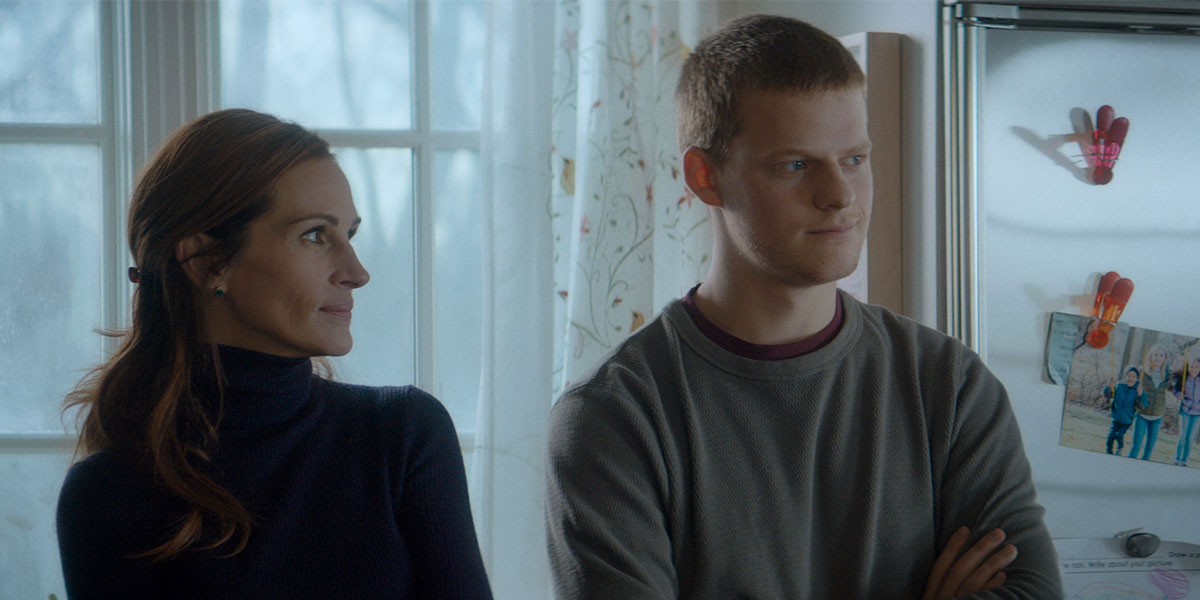 Ben is Back[/caption]
The Toronto International Film Festival today unveiled the first round of films premiering in the Gala and Special Presentation programs of the upcoming 43rd edition. Of the 17 Galas and 30 Special Presentations, today’s announcement includes 13 features directed by women.
“We have an exceptional selection of films this year that will excite Festival audiences from all walks of life,” said Handling. “Today’s lineup showcases beloved auteurs alongside fresh voices in filmmaking, including numerous female powerhouses. The sweeping range in cinematic storytelling from around the world is a testament to the uniqueness of the films that are being made.”
“Every September we invite the whole film world to Toronto, one of the most diverse, movie-mad cities in the world. I’m thrilled that we’ve been able to put together a lineup of Galas and Special Presentations that reflects Toronto’s spirit of inclusive, passionate engagement with film. We can’t wait to unveil these films for our audience.”
The 43rd Toronto International Film Festival runs from September 6 to 16, 2018.
Ben is Back[/caption]
The Toronto International Film Festival today unveiled the first round of films premiering in the Gala and Special Presentation programs of the upcoming 43rd edition. Of the 17 Galas and 30 Special Presentations, today’s announcement includes 13 features directed by women.
“We have an exceptional selection of films this year that will excite Festival audiences from all walks of life,” said Handling. “Today’s lineup showcases beloved auteurs alongside fresh voices in filmmaking, including numerous female powerhouses. The sweeping range in cinematic storytelling from around the world is a testament to the uniqueness of the films that are being made.”
“Every September we invite the whole film world to Toronto, one of the most diverse, movie-mad cities in the world. I’m thrilled that we’ve been able to put together a lineup of Galas and Special Presentations that reflects Toronto’s spirit of inclusive, passionate engagement with film. We can’t wait to unveil these films for our audience.”
The 43rd Toronto International Film Festival runs from September 6 to 16, 2018.
GALAS 2018
Beautiful Boy Felix van Groeningen, USA World Premiere Everybody Knows Asghar Farhadi, Spain/France/Italy North American Premiere First Man Damien Chazelle, USA Canadian Premiere Galveston Mélanie Laurent, USA Canadian Premiere The Hate U Give George Tillman, Jr., USA World Premiere Hidden Man Jiang Wen, China International Premiere High Life Claire Denis, Germany/France/Poland/United Kingdom World Premiere Husband Material Anurag Kashyap, India World Premiere The Kindergarten Teacher Sara Colangelo, USA Canadian Premiere The Land of Steady Habits Nicole Holofcener, USA World Premiere Life Itself Dan Fogelman, USA World Premiere The Public Emilio Estevez, USA World Premiere Red Joan Sir Trevor Nunn, United Kingdom World Premiere Shadow Zhang Yimou, China North American Premiere A Star is Born Bradley Cooper, USA North American Premiere What They Had Elizabeth Chomko, USA International Premiere Widows Steve McQueen, United Kingdom/USA World PremiereSPECIAL PRESENTATIONS 2018
Ben is Back Peter Hedges, USA World Premiere Burning Lee Chang-dong, South Korea North American Premiere Can You Ever Forgive Me? Marielle Heller, USA International Premiere Capernaum Nadine Labaki, Lebanon North American Premiere Cold War Paweł Pawlikowski, Poland/United Kingdom/France Canadian Premiere Colette Wash Westmoreland, United Kingdom Canadian Premiere Dogman Matteo Garrone, Italy/France Canadian Premiere The Front Runner Jason Reitman, USA International Premiere Giant Little Ones Keith Behrman, Canada World Premiere Giant Little Ones (Les filles du soleil) Eva Husson, France International Premiere Hotel Mumbai Anthony Maras, Australia World Premiere The Hummingbird Project Kim Nguyen, Canada World Premiere If Beale Street Could Talk Barry Jenkins, USA World Premiere Manto Nandita Das, India North American Premiere Maya Mia Hansen-Løve, France World Premiere Monsters and Men Reinaldo Marcus Green, USA Canadian Premiere Special Presentations Opening Film MOUTHPIECE Patricia Rozema, Canada World Premiere Non-Fiction Olivier Assayas, France Canadian Premiere The Old Man & The Gun David Lowery, USA International Premiere Papi Chulo John Butler, Ireland World Premiere Roma Alfonso Cuarón, Mexico/USA Canadian Premiere Special Presentations Closing Film Shoplifters Hirokazu Kore-eda, Japan Canadian Premiere The Sisters Brothers Jacques Audiard, USA/France/Romania/Spain North American Premiere Sunset László Nemes, Hungary/France North American Premiere Through Black Spruce Don McKellar, Canada World Premiere The Wedding Guest Michael Winterbottom, United Kingdom World Premiere The Weekend Stella Meghie, USA World Premiere Where Hands Touch Amma Asante, United Kingdom World Premiere White Boy Rick Yann Demange, USA International Premiere Wildlife Paul Dano, USA Canadian Premiere