
The World premiere of Tornado, Scottish director John Maclean’s survival thriller will open the 21st Glasgow Film Festival 2025 (GFF25) taking place from 26 February to 9 March 2025.

The World premiere of Tornado, Scottish director John Maclean’s survival thriller will open the 21st Glasgow Film Festival 2025 (GFF25) taking place from 26 February to 9 March 2025.
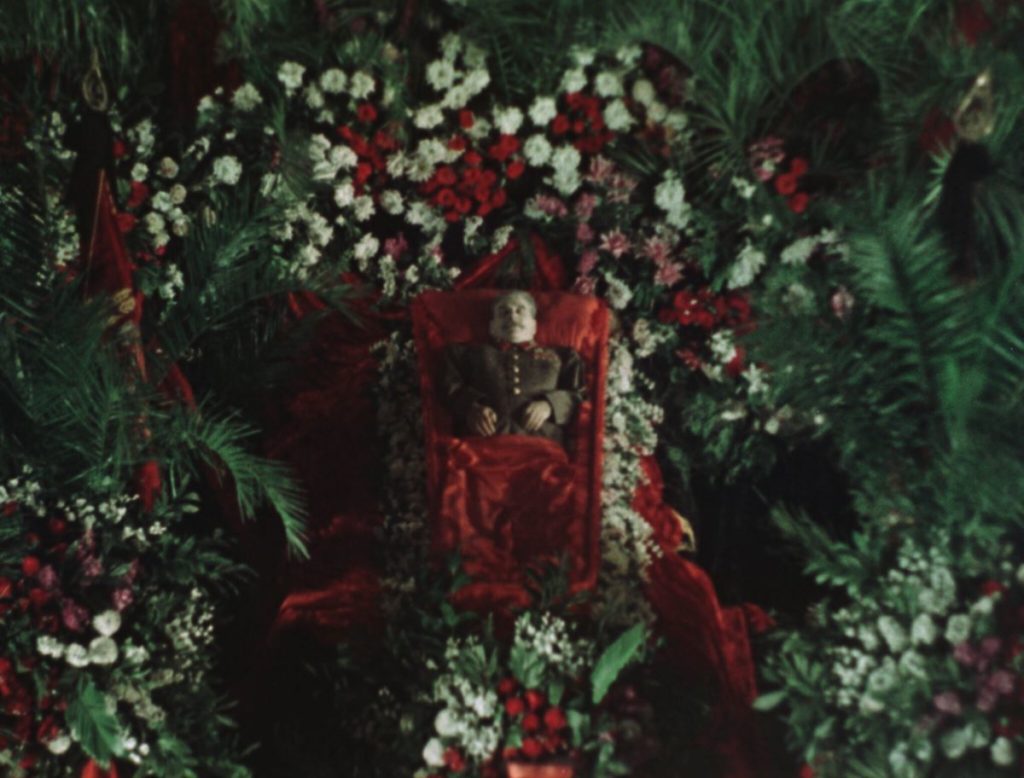
Bong Joon Ho’s Parasite took the top spot among films released in 2019 in Film Comment’s annual end-of-year survey. Of the films that screened at festivals worldwide but have not announced stateside distribution, Sergei Loznitsa’s State Funeral, Eloy Enciso Cachafeiro’s Endless Night, and Kiyoshi Kurosawa’s To the Ends of the Earth received the top rankings.

Traverse City Film Festival released the 2019 program marking the 15th Anniversary Year with a “Cinema Saves The World” theme, and featuring over 200 films and events. The Festival opens with BRITTANY RUNS A MARATHON; AFTER THE WEDDING as Centerpiece; and closes with BLINDED BY THE LIGHT.
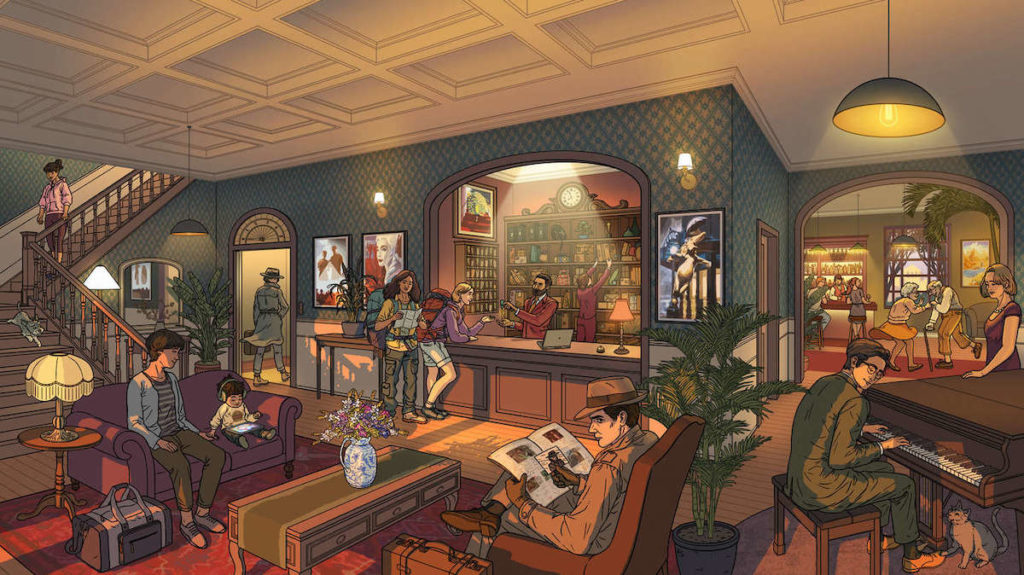
New Zealand International Film Festival revealed the poster and the first five films from the 2019 program, which will screen in Auckland from July 18, and in Wellington from July 26..
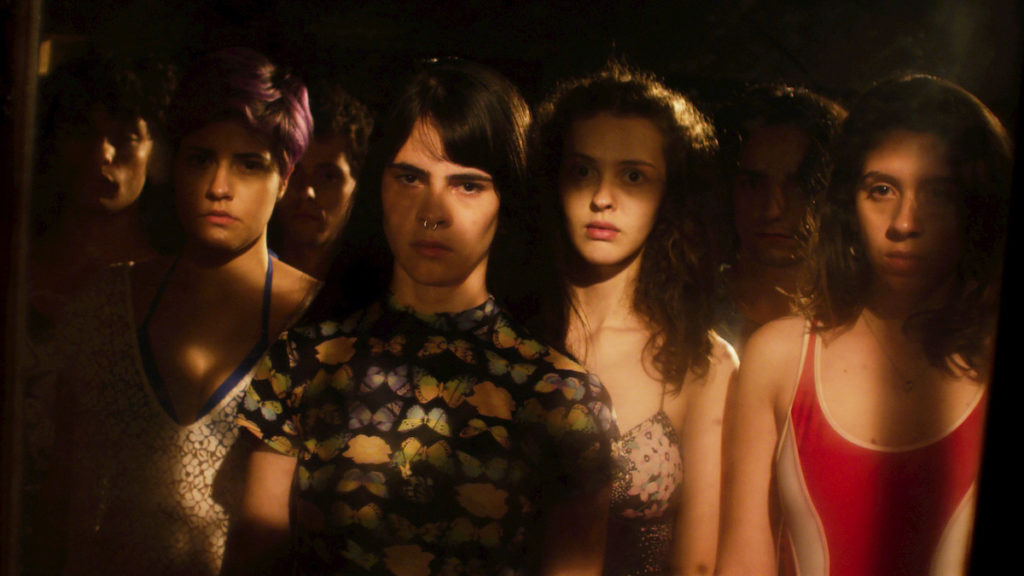
International Film Festival Rotterdam (IFFR) revealed the complete selection of 47 feature films from all over the world in its Bright Future section, the festival’s home for upcoming filmmakers with their own style and vision. All feature film debuts that have their world or international premiere in Bright Future are selected for the Bright Future Competition and vie for a €10,000 award.

The 30th annual Palm Springs International Film Festival (PSIFF) will open with All is True directed by Kenneth Branagh on Friday, January 4, and close with Ladies in Black, directed by Bruce Beresford on Sunday, January 13. The Festival will screen 223 films from 78 countries, with a focus on cinema from France, India and Mexico, Premieres, Talking Pictures, Book to Screen, Special Presentations, FLOS: Foreign Language Oscar Submissions, Gay!La, Local Spotlight, Modern Masters, True Stories, World Cinema Now, a 30-film retrospective of selections from past festivals and more.
In All is True, Kenneth Branagh, Judi Dench and Ian McKellen star in Branagh’s intimate, revelatory portrait of William Shakespeare in the last act of his life. His career over, he returns to his home in Stratford-upon-Avon to encounter old ghosts, old loves, and his resentful family. Branagh is expected to attend.
Ladies in Black, set in Sydney in 1959, Oscar®-nominated writer/director Bruce Beresford takes us back to the heyday of glamorous upscale department stores, when a concierge met you at the door and clerks wore gloves. The film from Lumila Films stars Julia Ormond, Angourie Rice, Rachael Taylor, Ryan Corr, Shane Jacobson and Alison McGirr. Beresford, Ormond, Taylor and McGirr are expected to attend.
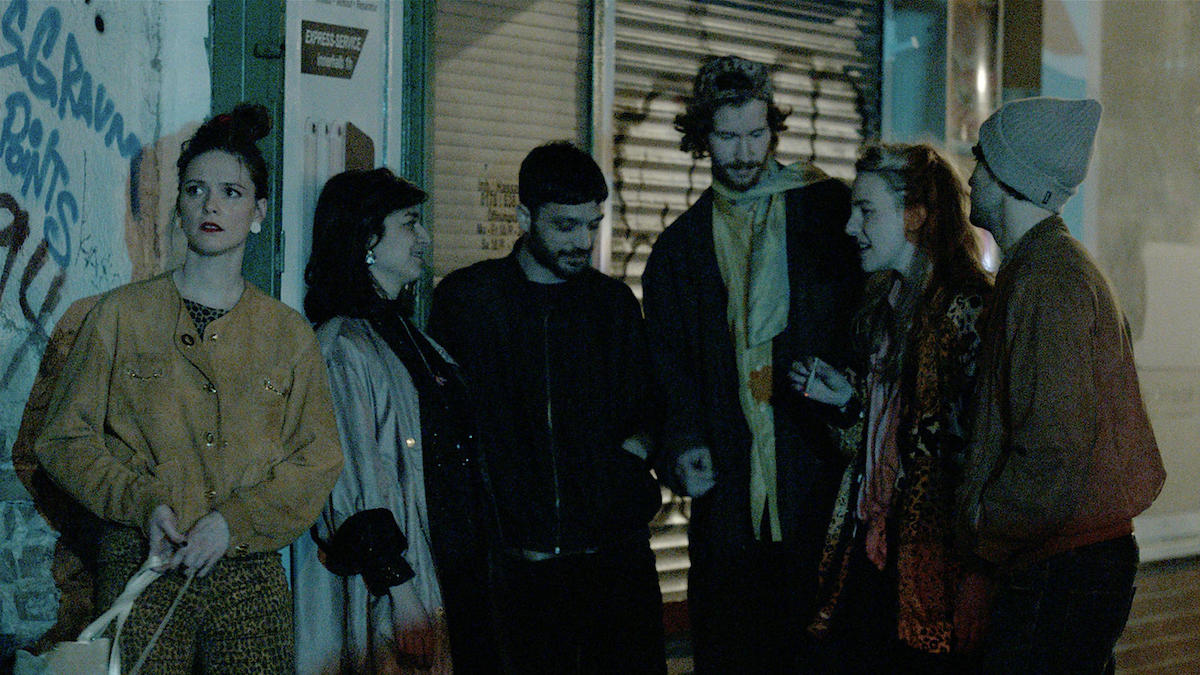 Thirty (Dreissig) by Simona Kostova[/caption]
International Film Festival Rotterdam (IFFR) revealed the first films for in the 2019 Bright Future program that spotlights upcoming filmmakers with their own style and vision. The Bright Future section comprises features, mid-lengths and shorts, and includes the feature film debuts competing for the Bright Future Award worth €10,000.
Among the films selected so far are the world premieres of Viktor van der Valk’s neo-noir Nocturne (the Netherlands); Argentinian actress Romina Paula’s directing debut De nuevo otra vez; Ico Costa’s debut feature Alva (from the producers of Djon África, which was in IFFR 2018’s Tiger Competition); and Dreissig by Berlin-based filmmaker Simona Kostova. The international premiere of Fabiana, Brunna Laboissière’s portrait of a transgender truck driver, also screens in the Bright Future Competition.
In addition to feature films, IFFR’s Bright Future section devotes plenty of space to mid-length and short films. Titles confirmed for Bright Future Mid-length include Derrière les volets by Messaline Raverdy and the world premiere of L’inconnu de Collegno by Maïder Fortuné. Stefano Canapa’s The Sound Drifts and Lawrence Abu Hamdan’s Walled Unwalled will both world premiere in Bright Future Short.
The full Bright Future line-up will consist of approximately 50 feature films. The eight films in Tiger Competition, which is also part of the Bright Future section, will be announced early January 2019.
Thirty (Dreissig) by Simona Kostova[/caption]
International Film Festival Rotterdam (IFFR) revealed the first films for in the 2019 Bright Future program that spotlights upcoming filmmakers with their own style and vision. The Bright Future section comprises features, mid-lengths and shorts, and includes the feature film debuts competing for the Bright Future Award worth €10,000.
Among the films selected so far are the world premieres of Viktor van der Valk’s neo-noir Nocturne (the Netherlands); Argentinian actress Romina Paula’s directing debut De nuevo otra vez; Ico Costa’s debut feature Alva (from the producers of Djon África, which was in IFFR 2018’s Tiger Competition); and Dreissig by Berlin-based filmmaker Simona Kostova. The international premiere of Fabiana, Brunna Laboissière’s portrait of a transgender truck driver, also screens in the Bright Future Competition.
In addition to feature films, IFFR’s Bright Future section devotes plenty of space to mid-length and short films. Titles confirmed for Bright Future Mid-length include Derrière les volets by Messaline Raverdy and the world premiere of L’inconnu de Collegno by Maïder Fortuné. Stefano Canapa’s The Sound Drifts and Lawrence Abu Hamdan’s Walled Unwalled will both world premiere in Bright Future Short.
The full Bright Future line-up will consist of approximately 50 feature films. The eight films in Tiger Competition, which is also part of the Bright Future section, will be announced early January 2019.
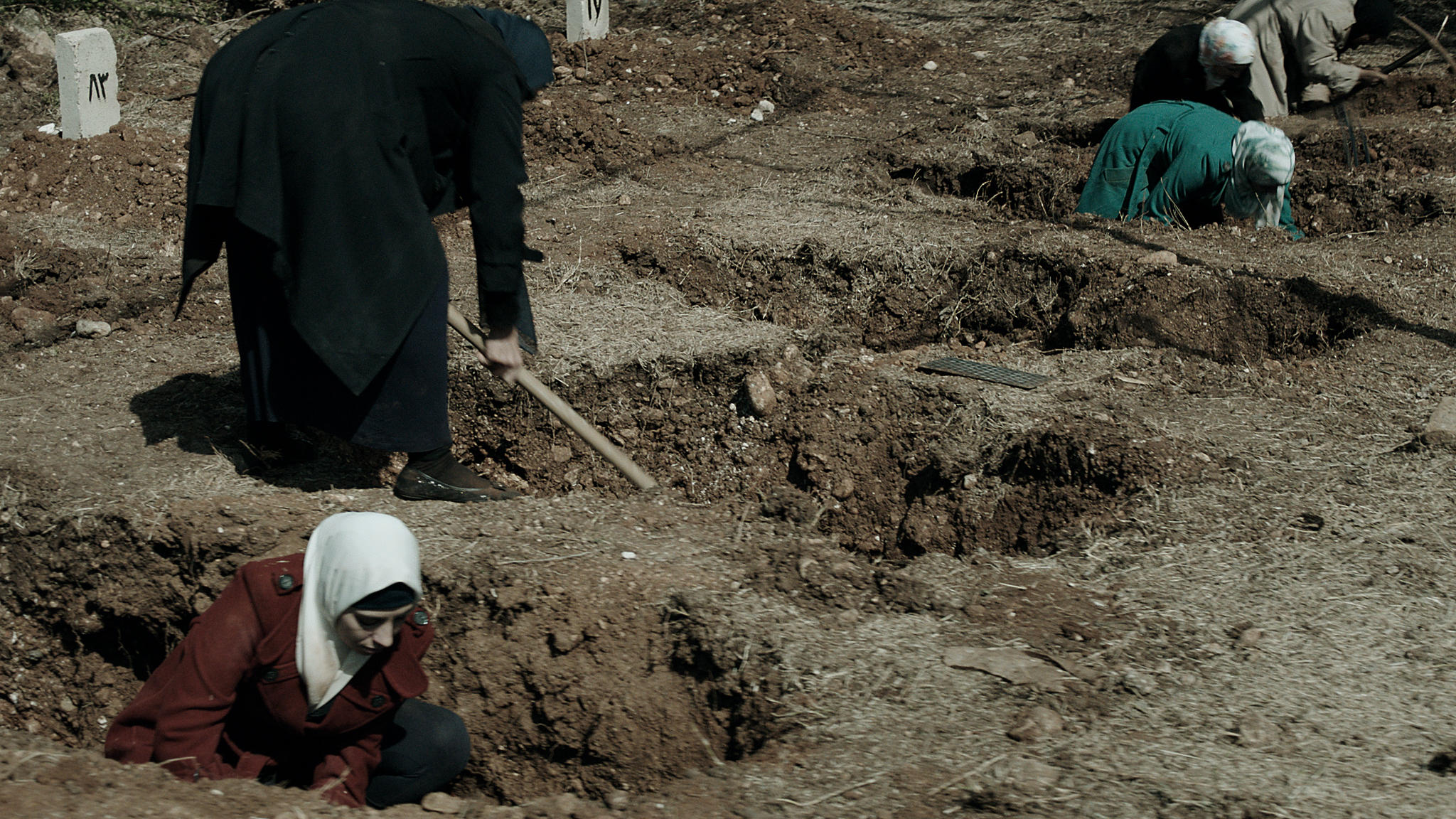 The Day I Lost My Shadow[/caption]
As the 48th edition of International Film Festival Rotterdam (IFFR) fast approaches, the festival is announcing the first 26 confirmed titles, including new films by Claire Denis, Jia Zhangke and Garin Nugroho. IFFR 2019 will take place from January23 to February 3, 2019.
The confirmed titles include the world premiere of Simona Kostova’s Dreissig and the international premiere of Fabienne Godet’s Nos vies formidables. Other filmmakers on the selection list so far are Nadine Labaki with her new film Capernaum and Khalik Allah with his Black Mother, a piercing reflection on Jamaican identity which won the Yellow Robin Award at Curaçao IFFR in April 2018. BNK48: Girls Don’t Cry, a European premiere, is a remarkable documentary feature by Nawapol Thamrongrattanarit chronicling the intense lives of a group of pop singers living together in Bangkok. And with I diari di Angela – Noi due cineasti Yervant Gianikian has created a moving portrait of his partner in cinema Angela Ricci Lucchi, who passed away in 2018.
Three of the films selected so far received support from IFFR’s Hubert Bals Fund (HBF) in previous years: The Day I Lost My Shadow by Soudade Kaadan and Rafiki by Wanuri Kahiu in 2016, The Load by Ognjen Glavonić in 2013.
IFFR celebrates film art from all over the world and presents its program within four sections, each with its own distinct character: Bright Future (including the Tiger Competition and the Ammodo Tiger Short Competition), Voices, Deep Focus and Perspectives. Short films are strongly represented throughout all sections.
Festival director Bero Beyer: “We’re delighted to present an appealing and rich first selection of titles to screen at our upcoming festival. There are names we’ve seen before in Rotterdam, and ones that are brand new. Together they exemplify the type of bold and daring cinema we like to celebrate at IFFR.”
The Day I Lost My Shadow[/caption]
As the 48th edition of International Film Festival Rotterdam (IFFR) fast approaches, the festival is announcing the first 26 confirmed titles, including new films by Claire Denis, Jia Zhangke and Garin Nugroho. IFFR 2019 will take place from January23 to February 3, 2019.
The confirmed titles include the world premiere of Simona Kostova’s Dreissig and the international premiere of Fabienne Godet’s Nos vies formidables. Other filmmakers on the selection list so far are Nadine Labaki with her new film Capernaum and Khalik Allah with his Black Mother, a piercing reflection on Jamaican identity which won the Yellow Robin Award at Curaçao IFFR in April 2018. BNK48: Girls Don’t Cry, a European premiere, is a remarkable documentary feature by Nawapol Thamrongrattanarit chronicling the intense lives of a group of pop singers living together in Bangkok. And with I diari di Angela – Noi due cineasti Yervant Gianikian has created a moving portrait of his partner in cinema Angela Ricci Lucchi, who passed away in 2018.
Three of the films selected so far received support from IFFR’s Hubert Bals Fund (HBF) in previous years: The Day I Lost My Shadow by Soudade Kaadan and Rafiki by Wanuri Kahiu in 2016, The Load by Ognjen Glavonić in 2013.
IFFR celebrates film art from all over the world and presents its program within four sections, each with its own distinct character: Bright Future (including the Tiger Competition and the Ammodo Tiger Short Competition), Voices, Deep Focus and Perspectives. Short films are strongly represented throughout all sections.
Festival director Bero Beyer: “We’re delighted to present an appealing and rich first selection of titles to screen at our upcoming festival. There are names we’ve seen before in Rotterdam, and ones that are brand new. Together they exemplify the type of bold and daring cinema we like to celebrate at IFFR.”
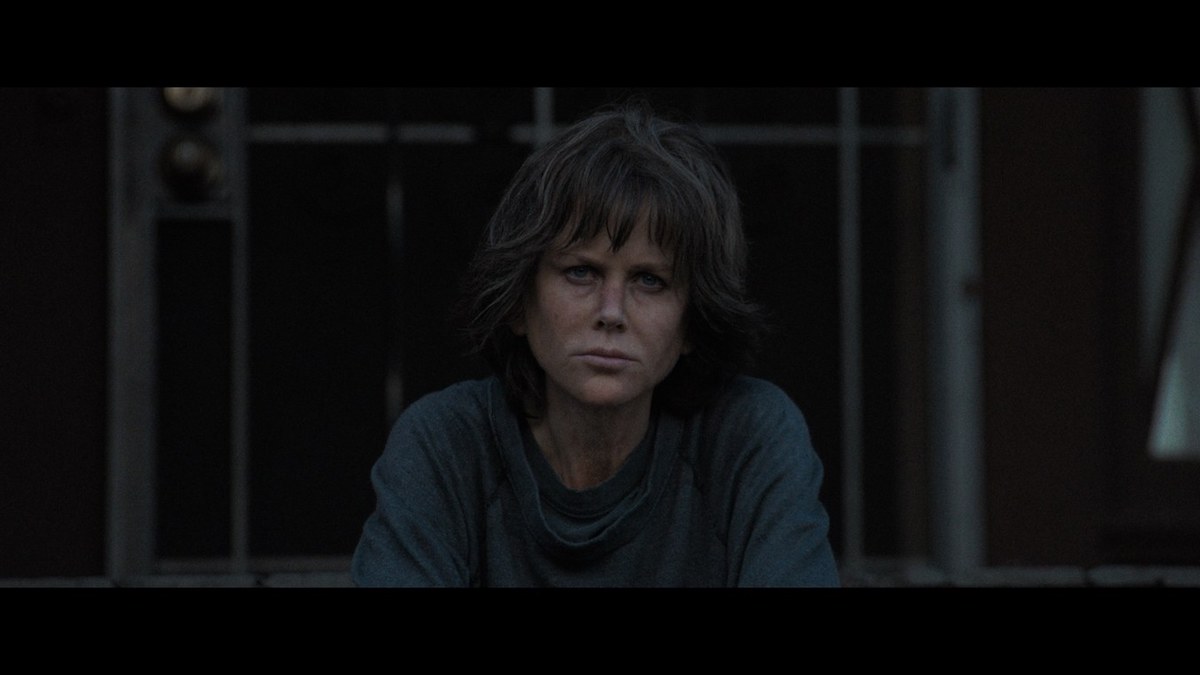 DESTROYER Starring Nicole Kidman[/caption]
The 27th Whitaker St. Louis International Film Festival (SLIFF) will run November 1 to 11, and screen 413 films: 88 narrative features, 77 documentary features, and 248 shorts. The fest also will feature 14 special-event programs, including the closing-night awards presentation.
The festival will kick off on Thursday, November 1, with the local premiere of “Destroyer,” directed by former St. Louisan Karyn Kusama, who will attend the screening.
SLIFF will present the usual array of fest buzz films and Oscar contenders, including “3 Faces,” “Ash Is Purest White,” “Ben Is Back,” “Boy Erased,” “Capernaum,” “The Captain,” “The Chaperone,” “Cold War,” “Destroyer,” “Diane,” “Dogman,” “Everybody Knows,” “The Front Runner,” “Green Book,” “If Beale Street Could Talk,” “The Image Book,” “Little Woods,” “Long Day’s Journey Into Night,” “Mapplethorpe,” “Non-Fiction,” “Shoplifters,” “Support the Girls,” “Transit,” “Vox Lux,” “Widows,” “Wildlife,” and “Zama.”
The festival will honor seven significant film figures with the annual awards: Joe Edwards and John Goodman with Lifetime Achievement Awards; Jason Reitman with a Contemporary Cinema Award
Jim Finn, Jane Gillooly, and Karyn Kusama with Charles Guggenheim Cinema St. Louis Awards; and Melanie Mayron with a Women in Film Award.
As part of the fest’s ongoing response to the Ferguson uprising, SLIFF again will feature a major stream of programming entitled Race in America: The Black Experience and offer a third edition of Mean Streets: Viewing the Divided City Through the Lens of Film and Television, which addresses the persistent issue of segregation.
DESTROYER Starring Nicole Kidman[/caption]
The 27th Whitaker St. Louis International Film Festival (SLIFF) will run November 1 to 11, and screen 413 films: 88 narrative features, 77 documentary features, and 248 shorts. The fest also will feature 14 special-event programs, including the closing-night awards presentation.
The festival will kick off on Thursday, November 1, with the local premiere of “Destroyer,” directed by former St. Louisan Karyn Kusama, who will attend the screening.
SLIFF will present the usual array of fest buzz films and Oscar contenders, including “3 Faces,” “Ash Is Purest White,” “Ben Is Back,” “Boy Erased,” “Capernaum,” “The Captain,” “The Chaperone,” “Cold War,” “Destroyer,” “Diane,” “Dogman,” “Everybody Knows,” “The Front Runner,” “Green Book,” “If Beale Street Could Talk,” “The Image Book,” “Little Woods,” “Long Day’s Journey Into Night,” “Mapplethorpe,” “Non-Fiction,” “Shoplifters,” “Support the Girls,” “Transit,” “Vox Lux,” “Widows,” “Wildlife,” and “Zama.”
The festival will honor seven significant film figures with the annual awards: Joe Edwards and John Goodman with Lifetime Achievement Awards; Jason Reitman with a Contemporary Cinema Award
Jim Finn, Jane Gillooly, and Karyn Kusama with Charles Guggenheim Cinema St. Louis Awards; and Melanie Mayron with a Women in Film Award.
As part of the fest’s ongoing response to the Ferguson uprising, SLIFF again will feature a major stream of programming entitled Race in America: The Black Experience and offer a third edition of Mean Streets: Viewing the Divided City Through the Lens of Film and Television, which addresses the persistent issue of segregation.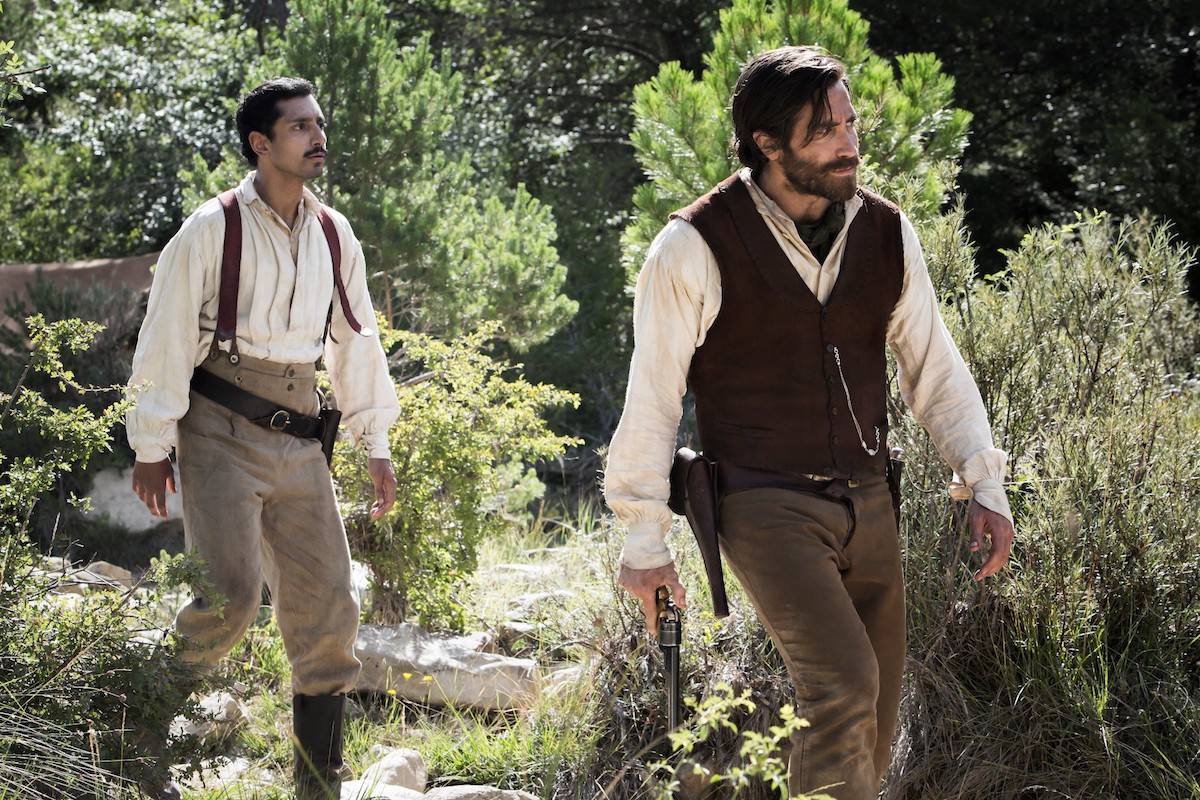 The western Canadian premiere for a tale of the Wild West, The Sisters Brothers, directed by Jacques Audiard, with an all-star cast of John C. Reilly, Joaquin Phoenix, Riz Ahmed and Jake Gyllenhaal, will open the Calgary International Film Festival on Wednesday, September 19.
Set during the Gold Rush of 1851, a pair of notorious, deadly assassins hunt an idealistic prospector who has discovered a chemical formula that reveals hidden gold. The Sisters Brothers bicker, fight and drink their way through a series of peculiar and perilous misadventures, while wrestling with their violent calling and dark past.
“Based on the bestselling, award-winning novel by Canadian author Patrick deWitt, and directed by the winner of the Cannes Palme d’Or for 2015’s Dheepan, The Sisters Brothers is an instant Western classic,” said Stephen Schroeder, Executive Director of the Calgary International Film Festival. “It’s a darkly comic odyssey through the absurdity, grit and melancholy of the American frontier, rich with dreamlike visions, human tenderness and inevitable bursts of violence.”
https://www.youtube.com/watch?v=3OwvqKwTKmE
The 19th Annual Calgary International Film Festival has 178 films in its full lineup, including all shorts, features, and collaboration screenings. This year the festival enjoyed a record-breaking 1912 paid submissions, compared with 1598 last year. 32 films have a first-time feature director. Approximately 30% of all booked features are Canadian (32 out of 103 total features). 56 films at the festival have a female director.
Here are some more films (not yet previously announced):
OF FATHERS AND SONS directed by Tala Derki
I’LL TAKE YOUR DEAD directed by Chad Archibald
LONG DAY’S JOURNEY INTO NIGHT directed by Bi Gan
THE SISTERS BROTHERS directed by Jacques Audiard
WE, THE DEAD (AQÉRAT) directed by Edmund Yeo
THE WOMAN WHO LOVES GIRAFFES directed by Alison Reid
The western Canadian premiere for a tale of the Wild West, The Sisters Brothers, directed by Jacques Audiard, with an all-star cast of John C. Reilly, Joaquin Phoenix, Riz Ahmed and Jake Gyllenhaal, will open the Calgary International Film Festival on Wednesday, September 19.
Set during the Gold Rush of 1851, a pair of notorious, deadly assassins hunt an idealistic prospector who has discovered a chemical formula that reveals hidden gold. The Sisters Brothers bicker, fight and drink their way through a series of peculiar and perilous misadventures, while wrestling with their violent calling and dark past.
“Based on the bestselling, award-winning novel by Canadian author Patrick deWitt, and directed by the winner of the Cannes Palme d’Or for 2015’s Dheepan, The Sisters Brothers is an instant Western classic,” said Stephen Schroeder, Executive Director of the Calgary International Film Festival. “It’s a darkly comic odyssey through the absurdity, grit and melancholy of the American frontier, rich with dreamlike visions, human tenderness and inevitable bursts of violence.”
https://www.youtube.com/watch?v=3OwvqKwTKmE
The 19th Annual Calgary International Film Festival has 178 films in its full lineup, including all shorts, features, and collaboration screenings. This year the festival enjoyed a record-breaking 1912 paid submissions, compared with 1598 last year. 32 films have a first-time feature director. Approximately 30% of all booked features are Canadian (32 out of 103 total features). 56 films at the festival have a female director.
Here are some more films (not yet previously announced):
OF FATHERS AND SONS directed by Tala Derki
I’LL TAKE YOUR DEAD directed by Chad Archibald
LONG DAY’S JOURNEY INTO NIGHT directed by Bi Gan
THE SISTERS BROTHERS directed by Jacques Audiard
WE, THE DEAD (AQÉRAT) directed by Edmund Yeo
THE WOMAN WHO LOVES GIRAFFES directed by Alison Reid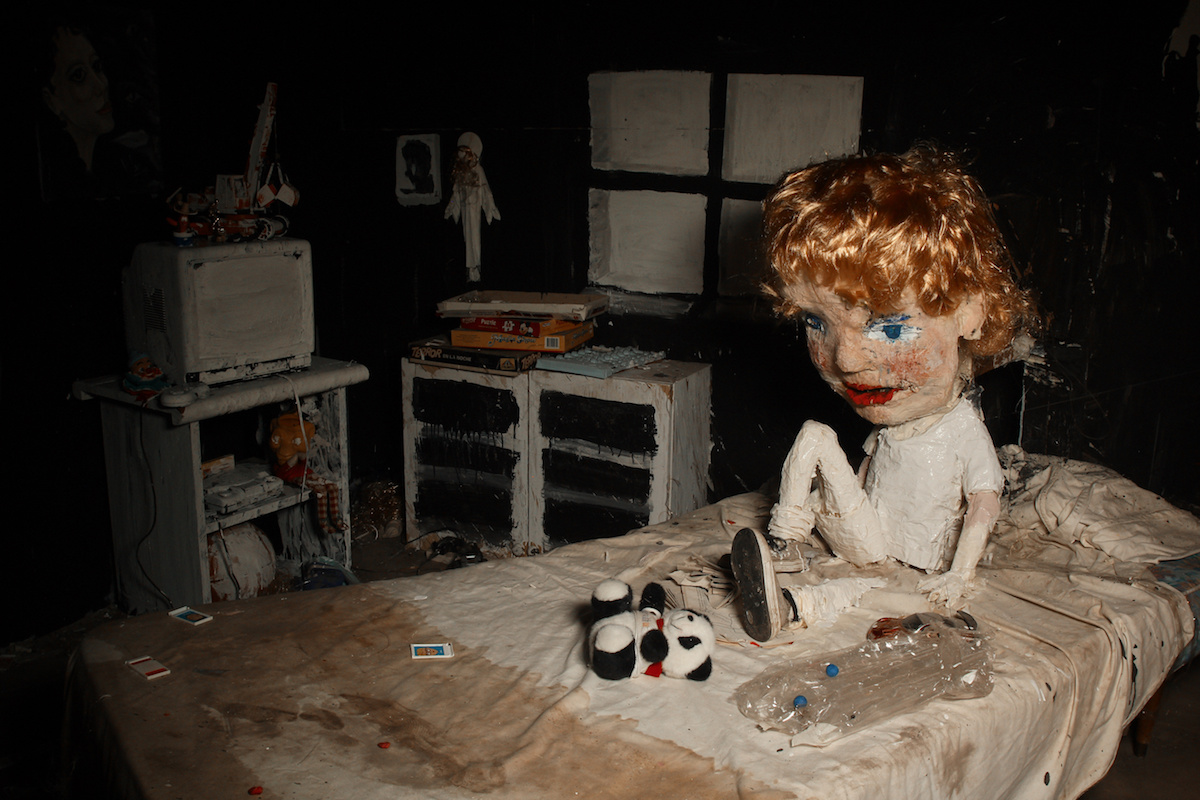 La casa lobo (The Wolf House)[/caption]
Nine new films join the Zabaltegi-Tabakalera competition at the 66th San Sebastian Film Festival’s most open competitive section bringing the number of films competing for the Zabaltegi-Tabakalera Award to 18.
Zabaltegi-Tabakalera will include the presentation of Kraben Rahu / Manta Ray, following its showing at Venice and Toronto. The first work by Phuttiphong Aroonpheng (Bangkok, 1976) brings the story of a fisherman who rescues a wounded, unconscious man from the forest and develops an unspoken connection with him.
The second feature film Di qiu zui hou de ye wan / Long Day’s Journey into Night, by Bi Gan (Kaili, China, 1989), after his award-winning debut, Kaili Blues, premiered in Un Certain Regard. The film narrates a man’s return to the town of his birth in search of a woman.
The animated stop-motion feature film La casa lobo (The Wolf House), by Cristobal León (Santiago de Chile, 1980) and Joaquín Cociña (Concepción, Chile, 1980), has been selected for international festivals including the Berlinale and Annecy, and has received several mentions and distinctions. The debut from León and Cociña tells the tale of a young girl who takes refuge in a house in Southern Chile on escaping from a Germany colony.
Sophia Antipolis, second feature from the director of Mercuriales, Virgil Vernier (Paris, 1976) premiered at Locarno in the Cineasti del Presente section. The French actor and filmmaker analyses a community in a strange territory between the Mediterranean, the forest and the mountain.
Joining the already-announced Los que desean (Those Who Desire, Elena López Riera) and 592 metroz goiti (Above 592 metres, Maddi Barber), are the short films De Natura, by Lucile Hadzihalilovic (Lyon, 1961), winner in 2004 of the New Directors award for her first film, Innocence, and who returned to San Sebastian’s Official Selection in 2015 with her second film, Evolution, winner of the Jury Special Prize; The Men Behind the Wall, by Inés Moldavsky (Buenos Aires, 1987), premiered at Berlin, about a woman living in Israel and the men she contacts in the West Bank using Tinder; and Sobre cosas que me han pasado, by José Luis Torres Leiva (Chile, 1975), his third participation in the section following El viento sabe que vuelvo a casa (The Winds Know that I’m Coming Back Home, 2016) and El sueño de Ana (2017). The short film Song for the Jungle by Jean-Gabriel Périot, shot in Calais, where thousands of migrants wait to go to England will also be screened. The first feature by Périot (Bellac, France, 1974), Una jeunesse allemande / A German Youth, opened the Panorama section of the Berlinale and was selected for Zabaltegi, and the second, Natsu no hikari – Lumières d’été / Summer Lights, competed in the New Directors section in 2016.
These additions bring the number of films competing for the Zabaltegi-Tabakalera Award to 18, including the productions Coincoin et les z’Inhumains / Coincoin and the Extra-humans (Bruno Dumont), Las hijas del fuego (The Daughters of Fire, Albertina Carri), Le livre d’image / The Image Book (Jean-Luc Godard), Da xiang xi di er zuo / An Elephant Sitting Still (Hu Bo), Belmonte (Federico Veiroj), Trote (Trot, Xacio Baño) and Teatro de guerra (Theatre of War, Lola Arias).
BERGMAN — ETT AR, ETT LIV / BERGMAN – A YEAR IN A LIFE
JANE MAGNUSSON (SWEDEN)
A documentary about Ingmar Bergman focussing on a hugely important year in his career, 1957, when he directed the masterpieces Det sjunde inseglet (The Seventh Seal) and Smultronstället (Wild Strawberries). However, more than simply looking at Bergman’s artistic facet, it addresses his private life like never before, particularly his stormy sentimental relationship with women, including several of the actresses he worked with.
DE NATURA
Short film
LUCILE HADZIHALILOVIC (ROMANIA)
Cast: Mihaela Manta, Maria Manta
De Natura is an improvised poem, a peaceful and cheerful walk of two little girls in the middle of the nature, away from the eyes of grown-ups. But then, the joy starts disappearing gradually, the reverie becomes nostalgia, while at the edge of the road, among the summer’s putrescence fruits, some faint faces appear. The cycle of life does not lessen the magic of the world, whether it is lit by the moon or by the sun.
DI QIU ZUI HOU DE YE WAN / LONG DAY’S JOURNEY INTO NIGHT
BI GAN (CHINA)
Cast: Sylvia Chang, Yongzhong Chen, Jue Huang
Luo Hongwu returns to Kaili, the city of his birth, from which he fled years back. He sets out to find the woman he loved, and has never been able to forget. She told him her name was Wan Quiwen…
KRABEN RAHU / MANTA RAY
PHUTTIPHONG AROONPHENG (THAILAND – FRANCE)
Cast: Wanlop Rungkamjad, Aphisit Hama, Rasmee Wayrana
Near a coastal village of Thailand, by the sea where thousands of Rohingya refugees have drowned, a local fisherman finds an injured man lying unconscious in the forest. He rescues the stranger, who doesn’t speak a word, offers him his friendship and names him Thongchai. But when the fisherman suddenly disappears at sea, Thongchai slowly begins to take over his friend’s life – his house, his job and his ex-wife…
LA CASA LOBO (THE WOLF HOUSE)
CRISTÓBAL LEÓN, JOAQUÍN COCIÑA (CHILE)
Young Maria seeks shelter in a big house after escaping from a sect of religious fanatics in Chile. There she is taken in by two pigs, its only inhabitants. Like in a dream, the universe of the house reacts to Maria’s feelings. The animals slowly morph into humans and the house into a nightmarish world. Inspired in the Colonia Dignidad case, La casa lobo (The Wolf House) seems to be an animated fairy tale produced by the sect leader to indoctrinate his followers.
THE MEN BEHIND THE WALL
Short film
INÉS MOLDAVSKY (ISRAEL)
Tinder. Woman seeks men. Man seeks women. Everything would be so simple if she weren’t in Israel and the guys nearby weren’t in the West Bank. Israeli filmmaker Ines Moldavsky sets out to meet up with the men that she is forbidden by law to see. She crosses the border into the West Bank to experience the personally unfamiliar physical space. The conversations revolve around virtual phone calls and physical encounters. Violence resonates in the search for a violation of boundaries.
SOBRE COSAS QUE ME HAN PASADO
Short film
JOSÉ LUIS TORRES LEIVA (CHILE)
Cast: Claudio Riveros
Sobre cosas que me han pasado is based on the book by author Marcelo Matthey, narrating his own life in a style reminiscent of school compositions. His constant strolls through streets, houses and beaches are recorded in notes of what he saw, felt or thought during these wanderings or moments, but almost only recalling the processes, the timeline in which things occur and come to mind, the trail of associations coming one after the other, like the steps of a person walking along a street. Immediate impressions, fleeting moments normally lost in time and which are captured in the images and sounds of this short film.
SONG FOR THE JUNGLE
Short film
JEAN-GABRIEL PÉRIOT (FRANCE)
Calais a few weeks before its clearing: The Jungle is a place where thousands of migrants live and wait to go to England, or just for somebody to take care of them. They wander in this abandoned place, hoping to survive our indifference.
SOPHIA ANTIPOLIS
VIRGIL VERNIER (FRANCE)
Cast: Dewi Kunetz, Sandra Poitoux, Hugues Njiba-Mukuna, Bruck, Lilith Grasmug
Sophia Antipolis: a technopole on the French Riviera, a place where dreams should come true. But fear and despair lurk beneath the surface. Under a deceitful sun, five lives map out the haunting story of a young woman: Sophia.
La casa lobo (The Wolf House)[/caption]
Nine new films join the Zabaltegi-Tabakalera competition at the 66th San Sebastian Film Festival’s most open competitive section bringing the number of films competing for the Zabaltegi-Tabakalera Award to 18.
Zabaltegi-Tabakalera will include the presentation of Kraben Rahu / Manta Ray, following its showing at Venice and Toronto. The first work by Phuttiphong Aroonpheng (Bangkok, 1976) brings the story of a fisherman who rescues a wounded, unconscious man from the forest and develops an unspoken connection with him.
The second feature film Di qiu zui hou de ye wan / Long Day’s Journey into Night, by Bi Gan (Kaili, China, 1989), after his award-winning debut, Kaili Blues, premiered in Un Certain Regard. The film narrates a man’s return to the town of his birth in search of a woman.
The animated stop-motion feature film La casa lobo (The Wolf House), by Cristobal León (Santiago de Chile, 1980) and Joaquín Cociña (Concepción, Chile, 1980), has been selected for international festivals including the Berlinale and Annecy, and has received several mentions and distinctions. The debut from León and Cociña tells the tale of a young girl who takes refuge in a house in Southern Chile on escaping from a Germany colony.
Sophia Antipolis, second feature from the director of Mercuriales, Virgil Vernier (Paris, 1976) premiered at Locarno in the Cineasti del Presente section. The French actor and filmmaker analyses a community in a strange territory between the Mediterranean, the forest and the mountain.
Joining the already-announced Los que desean (Those Who Desire, Elena López Riera) and 592 metroz goiti (Above 592 metres, Maddi Barber), are the short films De Natura, by Lucile Hadzihalilovic (Lyon, 1961), winner in 2004 of the New Directors award for her first film, Innocence, and who returned to San Sebastian’s Official Selection in 2015 with her second film, Evolution, winner of the Jury Special Prize; The Men Behind the Wall, by Inés Moldavsky (Buenos Aires, 1987), premiered at Berlin, about a woman living in Israel and the men she contacts in the West Bank using Tinder; and Sobre cosas que me han pasado, by José Luis Torres Leiva (Chile, 1975), his third participation in the section following El viento sabe que vuelvo a casa (The Winds Know that I’m Coming Back Home, 2016) and El sueño de Ana (2017). The short film Song for the Jungle by Jean-Gabriel Périot, shot in Calais, where thousands of migrants wait to go to England will also be screened. The first feature by Périot (Bellac, France, 1974), Una jeunesse allemande / A German Youth, opened the Panorama section of the Berlinale and was selected for Zabaltegi, and the second, Natsu no hikari – Lumières d’été / Summer Lights, competed in the New Directors section in 2016.
These additions bring the number of films competing for the Zabaltegi-Tabakalera Award to 18, including the productions Coincoin et les z’Inhumains / Coincoin and the Extra-humans (Bruno Dumont), Las hijas del fuego (The Daughters of Fire, Albertina Carri), Le livre d’image / The Image Book (Jean-Luc Godard), Da xiang xi di er zuo / An Elephant Sitting Still (Hu Bo), Belmonte (Federico Veiroj), Trote (Trot, Xacio Baño) and Teatro de guerra (Theatre of War, Lola Arias).
BERGMAN — ETT AR, ETT LIV / BERGMAN – A YEAR IN A LIFE
JANE MAGNUSSON (SWEDEN)
A documentary about Ingmar Bergman focussing on a hugely important year in his career, 1957, when he directed the masterpieces Det sjunde inseglet (The Seventh Seal) and Smultronstället (Wild Strawberries). However, more than simply looking at Bergman’s artistic facet, it addresses his private life like never before, particularly his stormy sentimental relationship with women, including several of the actresses he worked with.
DE NATURA
Short film
LUCILE HADZIHALILOVIC (ROMANIA)
Cast: Mihaela Manta, Maria Manta
De Natura is an improvised poem, a peaceful and cheerful walk of two little girls in the middle of the nature, away from the eyes of grown-ups. But then, the joy starts disappearing gradually, the reverie becomes nostalgia, while at the edge of the road, among the summer’s putrescence fruits, some faint faces appear. The cycle of life does not lessen the magic of the world, whether it is lit by the moon or by the sun.
DI QIU ZUI HOU DE YE WAN / LONG DAY’S JOURNEY INTO NIGHT
BI GAN (CHINA)
Cast: Sylvia Chang, Yongzhong Chen, Jue Huang
Luo Hongwu returns to Kaili, the city of his birth, from which he fled years back. He sets out to find the woman he loved, and has never been able to forget. She told him her name was Wan Quiwen…
KRABEN RAHU / MANTA RAY
PHUTTIPHONG AROONPHENG (THAILAND – FRANCE)
Cast: Wanlop Rungkamjad, Aphisit Hama, Rasmee Wayrana
Near a coastal village of Thailand, by the sea where thousands of Rohingya refugees have drowned, a local fisherman finds an injured man lying unconscious in the forest. He rescues the stranger, who doesn’t speak a word, offers him his friendship and names him Thongchai. But when the fisherman suddenly disappears at sea, Thongchai slowly begins to take over his friend’s life – his house, his job and his ex-wife…
LA CASA LOBO (THE WOLF HOUSE)
CRISTÓBAL LEÓN, JOAQUÍN COCIÑA (CHILE)
Young Maria seeks shelter in a big house after escaping from a sect of religious fanatics in Chile. There she is taken in by two pigs, its only inhabitants. Like in a dream, the universe of the house reacts to Maria’s feelings. The animals slowly morph into humans and the house into a nightmarish world. Inspired in the Colonia Dignidad case, La casa lobo (The Wolf House) seems to be an animated fairy tale produced by the sect leader to indoctrinate his followers.
THE MEN BEHIND THE WALL
Short film
INÉS MOLDAVSKY (ISRAEL)
Tinder. Woman seeks men. Man seeks women. Everything would be so simple if she weren’t in Israel and the guys nearby weren’t in the West Bank. Israeli filmmaker Ines Moldavsky sets out to meet up with the men that she is forbidden by law to see. She crosses the border into the West Bank to experience the personally unfamiliar physical space. The conversations revolve around virtual phone calls and physical encounters. Violence resonates in the search for a violation of boundaries.
SOBRE COSAS QUE ME HAN PASADO
Short film
JOSÉ LUIS TORRES LEIVA (CHILE)
Cast: Claudio Riveros
Sobre cosas que me han pasado is based on the book by author Marcelo Matthey, narrating his own life in a style reminiscent of school compositions. His constant strolls through streets, houses and beaches are recorded in notes of what he saw, felt or thought during these wanderings or moments, but almost only recalling the processes, the timeline in which things occur and come to mind, the trail of associations coming one after the other, like the steps of a person walking along a street. Immediate impressions, fleeting moments normally lost in time and which are captured in the images and sounds of this short film.
SONG FOR THE JUNGLE
Short film
JEAN-GABRIEL PÉRIOT (FRANCE)
Calais a few weeks before its clearing: The Jungle is a place where thousands of migrants live and wait to go to England, or just for somebody to take care of them. They wander in this abandoned place, hoping to survive our indifference.
SOPHIA ANTIPOLIS
VIRGIL VERNIER (FRANCE)
Cast: Dewi Kunetz, Sandra Poitoux, Hugues Njiba-Mukuna, Bruck, Lilith Grasmug
Sophia Antipolis: a technopole on the French Riviera, a place where dreams should come true. But fear and despair lurk beneath the surface. Under a deceitful sun, five lives map out the haunting story of a young woman: Sophia. What You Gonna Do When the World’s on Fire?[/caption]
The Toronto International Film Festival unveiled the 18th edition of it’s Wavelengths program showing adventurous and carefully curated lineup of shorts and feature films from around the world. This year’s selection of 43 films, comprises 4 programs of experimental short films, 2 curated pairings, and 10 features, each contributing to an exciting, diverse lineup of moving-image art.
Wavelengths ’18 offers trenchant reflections on home, memory, and a world in flux through artistic narratives produced by a mix of emerging talent and contemporary masters and working across a variety of inventive styles. Fiction highlights include Bi Gan’s dazzling and mysterious Long Day’s Journey Into Night, a dreamy neo-noir about memories, passion, and the malleability of time that received critical acclaim at Cannes; the beautiful and intimate RAY & LIZ, the searing debut feature by Richard Billingham, Turner Prize–nominated photographer-turned-filmmaker, inspired by his family and his own Thatcher-era childhood memories; and Mariano Llinás’ epic 14-hour drama La Flor — the longest film in Argentine history — which took nearly a decade to produce and which explores the possibilities of cinematic narrative through impressive and ingenious experiments in acting and genre.
Wavelengths will showcase several astonishing and sure-to-be landmark documentaries, including master Chinese filmmaker Wang Bing’s powerful Dead Souls, a momentous, eight-hour documentary that offers sobering testimonials of experiences in China’s forced re-education camps in the 1950s; the World Premiere of the stunningly shot The Stone Speakers by Igor Drljača, a compelling documentary about faith, tourism, shifting industries, and competing historical narratives in Bosnia and Herzegovina; the provocative and powerful What You Gonna Do When the World’s on Fire? by the returning Roberto Minervini, a fiery portrayal of Black life in the American South; the gripping found-footage film The Trial by Festival mainstay Sergei Loznitsa, which assembles original material from a show trial conducted under Stalin’s Soviet government in 1930s Moscow; and the elegant, moving Erased,___Ascent of the Invisible by Ghassan Halwani, a personal-essay film by the animator of The Lebanese Rocket Society (Wavelengths 2012) inspired by the distorted image of a mysterious man thought to have disappeared many years ago in Beirut. Andrea Bussmann’s solo debut, Fausto, and Jodie Mack’s The Grand Bizarre are two of this year’s most exhilarating cinematic experiments; they defy categorization as they meld documentary inquiry with inspired audio-visual expressions, ranging from the mythical to the musical.
Short-film highlights include new works by Apichatpong Weerasethakul, Abraaj Group Art Prize winner Lawrence Abu Hamdan, Nathaniel Dorsky, Mary Helena Clark, Laida Lertxundi, Ben Rivers, Kevin Jerome Everson, Laura Huertas Millán, and more. The programme also features the World Premiere of artist-filmmaker Beatrice Gibson’s I Hope I’m Loud When I’m Dead, a KW Production Series co-commission with Mercer Union (Toronto), Camden Arts Centre (London), and Bergen Kunsthall (Bergen), which is supported by the Julia Stoschek Foundation and Outset Germany_Switzerland and which features appearances by poets Eileen Myles and CAConrad.
Wavelengths will also present a number of historical restorations and rediscoveries. This year’s archival selections include the previously unseen 1986 Summer (1986), by Japanese avant-garde titan Toshio Matsumoto; Lisa Baumgardner’s punchy Girl Pack (1981), recently restored by the Museum of Modern Art in New York; and the fascinating and idiosyncratic portrait film Alice (1974), directed by Austrian painter and filmmaker Maria Lassnig as part of her Soul Sisters series.
The 43rd Toronto International Film Festival runs from September 6 to 16, 2018.
What You Gonna Do When the World’s on Fire?[/caption]
The Toronto International Film Festival unveiled the 18th edition of it’s Wavelengths program showing adventurous and carefully curated lineup of shorts and feature films from around the world. This year’s selection of 43 films, comprises 4 programs of experimental short films, 2 curated pairings, and 10 features, each contributing to an exciting, diverse lineup of moving-image art.
Wavelengths ’18 offers trenchant reflections on home, memory, and a world in flux through artistic narratives produced by a mix of emerging talent and contemporary masters and working across a variety of inventive styles. Fiction highlights include Bi Gan’s dazzling and mysterious Long Day’s Journey Into Night, a dreamy neo-noir about memories, passion, and the malleability of time that received critical acclaim at Cannes; the beautiful and intimate RAY & LIZ, the searing debut feature by Richard Billingham, Turner Prize–nominated photographer-turned-filmmaker, inspired by his family and his own Thatcher-era childhood memories; and Mariano Llinás’ epic 14-hour drama La Flor — the longest film in Argentine history — which took nearly a decade to produce and which explores the possibilities of cinematic narrative through impressive and ingenious experiments in acting and genre.
Wavelengths will showcase several astonishing and sure-to-be landmark documentaries, including master Chinese filmmaker Wang Bing’s powerful Dead Souls, a momentous, eight-hour documentary that offers sobering testimonials of experiences in China’s forced re-education camps in the 1950s; the World Premiere of the stunningly shot The Stone Speakers by Igor Drljača, a compelling documentary about faith, tourism, shifting industries, and competing historical narratives in Bosnia and Herzegovina; the provocative and powerful What You Gonna Do When the World’s on Fire? by the returning Roberto Minervini, a fiery portrayal of Black life in the American South; the gripping found-footage film The Trial by Festival mainstay Sergei Loznitsa, which assembles original material from a show trial conducted under Stalin’s Soviet government in 1930s Moscow; and the elegant, moving Erased,___Ascent of the Invisible by Ghassan Halwani, a personal-essay film by the animator of The Lebanese Rocket Society (Wavelengths 2012) inspired by the distorted image of a mysterious man thought to have disappeared many years ago in Beirut. Andrea Bussmann’s solo debut, Fausto, and Jodie Mack’s The Grand Bizarre are two of this year’s most exhilarating cinematic experiments; they defy categorization as they meld documentary inquiry with inspired audio-visual expressions, ranging from the mythical to the musical.
Short-film highlights include new works by Apichatpong Weerasethakul, Abraaj Group Art Prize winner Lawrence Abu Hamdan, Nathaniel Dorsky, Mary Helena Clark, Laida Lertxundi, Ben Rivers, Kevin Jerome Everson, Laura Huertas Millán, and more. The programme also features the World Premiere of artist-filmmaker Beatrice Gibson’s I Hope I’m Loud When I’m Dead, a KW Production Series co-commission with Mercer Union (Toronto), Camden Arts Centre (London), and Bergen Kunsthall (Bergen), which is supported by the Julia Stoschek Foundation and Outset Germany_Switzerland and which features appearances by poets Eileen Myles and CAConrad.
Wavelengths will also present a number of historical restorations and rediscoveries. This year’s archival selections include the previously unseen 1986 Summer (1986), by Japanese avant-garde titan Toshio Matsumoto; Lisa Baumgardner’s punchy Girl Pack (1981), recently restored by the Museum of Modern Art in New York; and the fascinating and idiosyncratic portrait film Alice (1974), directed by Austrian painter and filmmaker Maria Lassnig as part of her Soul Sisters series.
The 43rd Toronto International Film Festival runs from September 6 to 16, 2018.