
 Don’t Worry, He Won’t Get Far on Foot[/caption]
This year’s 44th edition of the Seattle International Film Festival revealed today the complete lineup of 433 films, plus guests and events for the 25-day Festival that runs May 17 to June 10, 2018. Opening night kicks off Thursday, May 17 with The Bookshop from acclaimed Spanish filmmaker Isabel Coixet (Learning to Drive, Elegy), distributed by Greenwich Entertainment. The film is set in a seaside village in England where a grieving widow (Emily Mortimer) pursues her lifelong dream of opening a bookshop. She introduces the townsfolk to the world’s best literature and stirs a cultural awakening, but her efforts are ruthlessly opposed by a powerful local (Patricia Clarkson) causing a reclusive resident (Bill Nighy) to join the fight to keep the bookshop open. The film is based on the bestselling novel by Penelope Fitzgerald.
The annual Centerpiece Gala, Sorry to Bother You, pulls no punches in its portrayal of racial dynamics in the workplace. This new film ushers in an utterly original and wildly creative new voice on the film scene from debut director and musician Boots Riley. Director Boots Riley is scheduled to attend the Seattle premiere to take place Saturday, June 2, at 5:30 PM, at the SIFF Cinema Egyptian.
The Seattle premiere of Ethan Hawke’s Blaze will also screen at the historic SIFF Cinema Egyptian as SIFF honors Mr. Hawke’s work with the Award for Outstanding Achievement in Cinema. In addition to the award presentation and screening, the acclaimed actor is slated for an on-stage interview at the Friday, June 8 event.
Also scheduled is An Afternoon with Melanie Lynskey, where the Festival pays tribute to this celebrated actress. The iconic scene-stealing actress makes her way to SIFF on Sunday, May 27 for the Seattle premiere of Northwest Filmmaker Megan Griffiths’ film Sadie with an onstage discussion following the film.
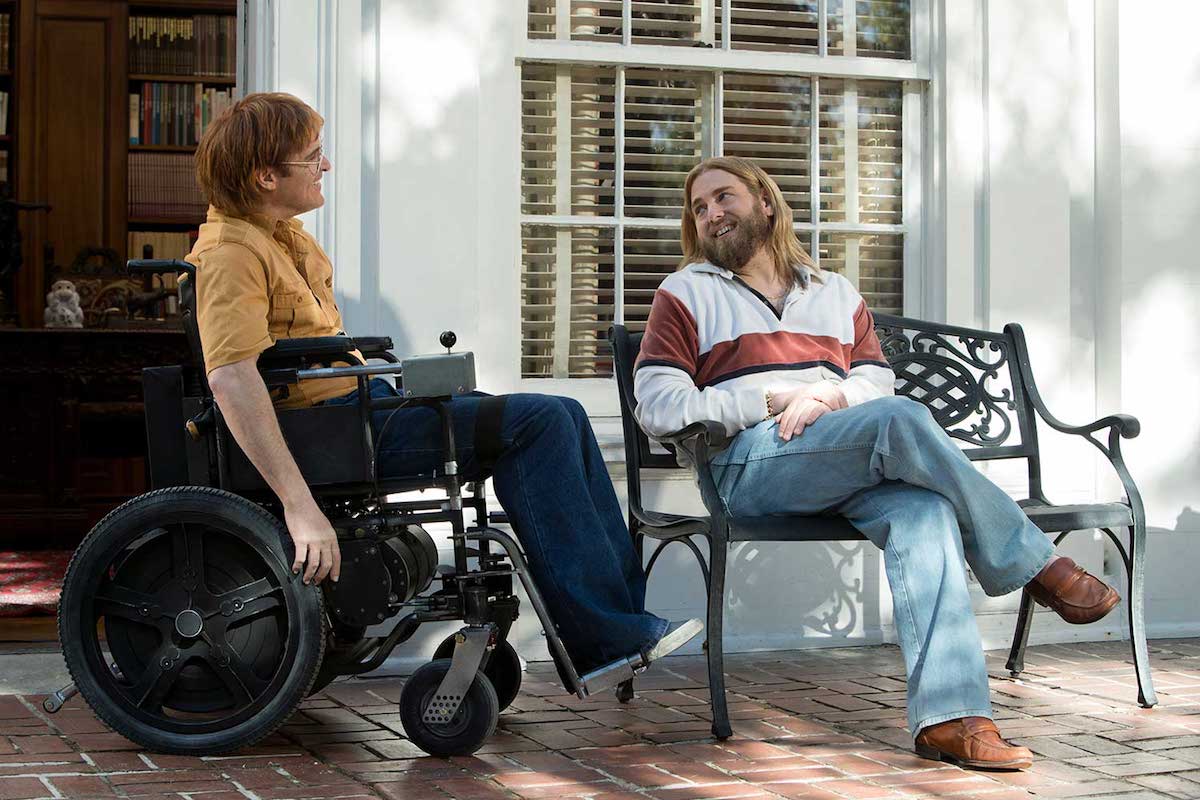
Seattle favorite, Gus Van Sant’s Don’t Worry, He Won’t Get Far on Foot, closes SIFF 2018 with a bang! Starring Joaquin Phoenix in a transformative performance as Portland cartoonist John Callahan who, after a car accident leaves him disabled, uses his sardonic humor and brutal honesty to battle with a lifetime of addiction.
“Sifting through over 4,000 film submissions each year, finding just 240 features is somewhat of a treasure hunt,” said SIFF Artistic Director Beth Barrett. “We’re looking for dynamic, diverse stories. This year, we’re overjoyed to share that over 43-percent of the feature films are female directed. We’re thrilled to jump into the 44th Festival and share these voices from around the globe with over 150,000 film enthusiasts in Seattle over the course of 25 days.”
Don’t Worry, He Won’t Get Far on Foot[/caption]
This year’s 44th edition of the Seattle International Film Festival revealed today the complete lineup of 433 films, plus guests and events for the 25-day Festival that runs May 17 to June 10, 2018. Opening night kicks off Thursday, May 17 with The Bookshop from acclaimed Spanish filmmaker Isabel Coixet (Learning to Drive, Elegy), distributed by Greenwich Entertainment. The film is set in a seaside village in England where a grieving widow (Emily Mortimer) pursues her lifelong dream of opening a bookshop. She introduces the townsfolk to the world’s best literature and stirs a cultural awakening, but her efforts are ruthlessly opposed by a powerful local (Patricia Clarkson) causing a reclusive resident (Bill Nighy) to join the fight to keep the bookshop open. The film is based on the bestselling novel by Penelope Fitzgerald.
The annual Centerpiece Gala, Sorry to Bother You, pulls no punches in its portrayal of racial dynamics in the workplace. This new film ushers in an utterly original and wildly creative new voice on the film scene from debut director and musician Boots Riley. Director Boots Riley is scheduled to attend the Seattle premiere to take place Saturday, June 2, at 5:30 PM, at the SIFF Cinema Egyptian.
The Seattle premiere of Ethan Hawke’s Blaze will also screen at the historic SIFF Cinema Egyptian as SIFF honors Mr. Hawke’s work with the Award for Outstanding Achievement in Cinema. In addition to the award presentation and screening, the acclaimed actor is slated for an on-stage interview at the Friday, June 8 event.
Also scheduled is An Afternoon with Melanie Lynskey, where the Festival pays tribute to this celebrated actress. The iconic scene-stealing actress makes her way to SIFF on Sunday, May 27 for the Seattle premiere of Northwest Filmmaker Megan Griffiths’ film Sadie with an onstage discussion following the film.
Seattle favorite, Gus Van Sant’s Don’t Worry, He Won’t Get Far on Foot, closes SIFF 2018 with a bang! Starring Joaquin Phoenix in a transformative performance as Portland cartoonist John Callahan who, after a car accident leaves him disabled, uses his sardonic humor and brutal honesty to battle with a lifetime of addiction.
“Sifting through over 4,000 film submissions each year, finding just 240 features is somewhat of a treasure hunt,” said SIFF Artistic Director Beth Barrett. “We’re looking for dynamic, diverse stories. This year, we’re overjoyed to share that over 43-percent of the feature films are female directed. We’re thrilled to jump into the 44th Festival and share these voices from around the globe with over 150,000 film enthusiasts in Seattle over the course of 25 days.”
Maki’la
-
Seattle International Film Festival Announces 2018 Lineup of Over 400 Films
[caption id="attachment_28016" align="aligncenter" width="1200"] Don’t Worry, He Won’t Get Far on Foot[/caption]
This year’s 44th edition of the Seattle International Film Festival revealed today the complete lineup of 433 films, plus guests and events for the 25-day Festival that runs May 17 to June 10, 2018. Opening night kicks off Thursday, May 17 with The Bookshop from acclaimed Spanish filmmaker Isabel Coixet (Learning to Drive, Elegy), distributed by Greenwich Entertainment. The film is set in a seaside village in England where a grieving widow (Emily Mortimer) pursues her lifelong dream of opening a bookshop. She introduces the townsfolk to the world’s best literature and stirs a cultural awakening, but her efforts are ruthlessly opposed by a powerful local (Patricia Clarkson) causing a reclusive resident (Bill Nighy) to join the fight to keep the bookshop open. The film is based on the bestselling novel by Penelope Fitzgerald.
The annual Centerpiece Gala, Sorry to Bother You, pulls no punches in its portrayal of racial dynamics in the workplace. This new film ushers in an utterly original and wildly creative new voice on the film scene from debut director and musician Boots Riley. Director Boots Riley is scheduled to attend the Seattle premiere to take place Saturday, June 2, at 5:30 PM, at the SIFF Cinema Egyptian.
The Seattle premiere of Ethan Hawke’s Blaze will also screen at the historic SIFF Cinema Egyptian as SIFF honors Mr. Hawke’s work with the Award for Outstanding Achievement in Cinema. In addition to the award presentation and screening, the acclaimed actor is slated for an on-stage interview at the Friday, June 8 event.
Also scheduled is An Afternoon with Melanie Lynskey, where the Festival pays tribute to this celebrated actress. The iconic scene-stealing actress makes her way to SIFF on Sunday, May 27 for the Seattle premiere of Northwest Filmmaker Megan Griffiths’ film Sadie with an onstage discussion following the film.
Seattle favorite, Gus Van Sant’s Don’t Worry, He Won’t Get Far on Foot, closes SIFF 2018 with a bang! Starring Joaquin Phoenix in a transformative performance as Portland cartoonist John Callahan who, after a car accident leaves him disabled, uses his sardonic humor and brutal honesty to battle with a lifetime of addiction.
“Sifting through over 4,000 film submissions each year, finding just 240 features is somewhat of a treasure hunt,” said SIFF Artistic Director Beth Barrett. “We’re looking for dynamic, diverse stories. This year, we’re overjoyed to share that over 43-percent of the feature films are female directed. We’re thrilled to jump into the 44th Festival and share these voices from around the globe with over 150,000 film enthusiasts in Seattle over the course of 25 days.”
-
25th New York African Film Festival to Commemorate Nelson Mandela’s 100th Birthday + to Open with Apolline Traoré’s ‘BORDERS’
[caption id="attachment_28123" align="aligncenter" width="1200"]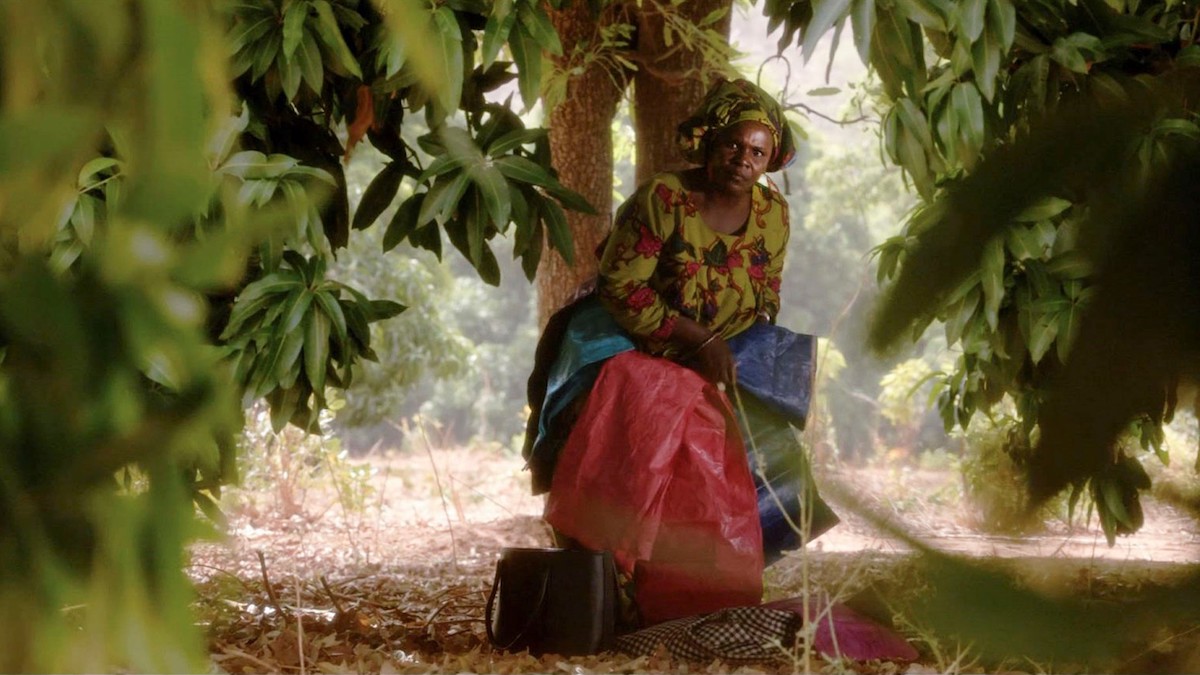 Borders[/caption]
Under the theme “25 Years of the New York African Film Festival,” this year’s New York African Film Festival will pay homage to the pioneers of African cinema along with commemorating the 100th birthday of the venerated South African freedom fighter and national leader Nelson Mandela, with a crop of films from his native land. The month-long festival brings 66 films from 25 countries to FSLC, the Brooklyn Academy of Music’s BAMcinématek, and Maysles Cinema in Harlem.
Opening Night will spotlight Apolline Traoré’s award-winning film, Borders, which speaks to migration as well as to African women’s struggles, in a timely echo of the #MeToo movement. The film follows four women as they travel from Mali to Nigeria, supporting each other while battling sexism and corruption. The film won three prizes at FESPACO, including the Paul Robeson Prize for the best film by a director from the African diaspora. Borders will screen with a short film dedicated to the memory of Burkinabé director Idrissa Ouedraogo, who passed away in February and was a mentor to Traoré.
French director Berni Goldblat’s Wallay will have its New York premiere as the festival’s Centerpiece film on Friday, May 18. The coming-of-age tale follows Ady, a young troublemaker sent from France to his single father’s homeland of Burkina Faso for the summer. There, the teen finds new challenges as he navigates a different world.
The festival tips a hat to key figures in the history of African film with the U.S. premieres of Abderrhamane Sissako: Beyond Territories, Valérie Osouf’s intimate portrait of the acclaimed director of Bamako and the Oscar-nominated Timbuktu; a 2017 version of the 1983 classic Selbe: One Among Many, by Safi Faye, the first sub-Saharan woman to direct a theatrically released film, now restored to its original Wolof language; and Mohamed Challouf’s Tahar Cheriaa: Under the Shadow of the Baobab, which documents the career of the founder of the Carthage Film Festival, Africa’s first film festival. The festival will include the 1989 documentary short Parlons Grand-mère by the late Senegalese director Djibril Diop Mambéty.
Other highlights include films from a new wave of African directors, including Machérie Ekwa Bahango of the Democratic Republic of the Congo and Jeferson De of Brazil. The festival kicks off with a town hall meeting on Sunday, May 13, at the Film Society of Lincoln Center’s Amphitheater. Titled “Activism & Art: Personal Journeys,” it will bring together storytellers of various mediums to discuss how their art informs their activism.
“Falling,” a free digital and interactive art exhibition exploring youth activism in Southern Africa, will run during the FSLC segment at the Elinor Bunin Munroe Film Center Amphitheater.
The NYAFF heads to the Brooklyn Academy of Music (BAMcinématek) Thursday, May 24, through Monday, May 28, as a part of BAM’s popular dance and music festival DanceAfrica. It closes with a series of classic and contemporary narratives and documentaries at Maysles Cinema in Harlem running Thursday, June 7, through Sunday, June 10.
Borders[/caption]
Under the theme “25 Years of the New York African Film Festival,” this year’s New York African Film Festival will pay homage to the pioneers of African cinema along with commemorating the 100th birthday of the venerated South African freedom fighter and national leader Nelson Mandela, with a crop of films from his native land. The month-long festival brings 66 films from 25 countries to FSLC, the Brooklyn Academy of Music’s BAMcinématek, and Maysles Cinema in Harlem.
Opening Night will spotlight Apolline Traoré’s award-winning film, Borders, which speaks to migration as well as to African women’s struggles, in a timely echo of the #MeToo movement. The film follows four women as they travel from Mali to Nigeria, supporting each other while battling sexism and corruption. The film won three prizes at FESPACO, including the Paul Robeson Prize for the best film by a director from the African diaspora. Borders will screen with a short film dedicated to the memory of Burkinabé director Idrissa Ouedraogo, who passed away in February and was a mentor to Traoré.
French director Berni Goldblat’s Wallay will have its New York premiere as the festival’s Centerpiece film on Friday, May 18. The coming-of-age tale follows Ady, a young troublemaker sent from France to his single father’s homeland of Burkina Faso for the summer. There, the teen finds new challenges as he navigates a different world.
The festival tips a hat to key figures in the history of African film with the U.S. premieres of Abderrhamane Sissako: Beyond Territories, Valérie Osouf’s intimate portrait of the acclaimed director of Bamako and the Oscar-nominated Timbuktu; a 2017 version of the 1983 classic Selbe: One Among Many, by Safi Faye, the first sub-Saharan woman to direct a theatrically released film, now restored to its original Wolof language; and Mohamed Challouf’s Tahar Cheriaa: Under the Shadow of the Baobab, which documents the career of the founder of the Carthage Film Festival, Africa’s first film festival. The festival will include the 1989 documentary short Parlons Grand-mère by the late Senegalese director Djibril Diop Mambéty.
Other highlights include films from a new wave of African directors, including Machérie Ekwa Bahango of the Democratic Republic of the Congo and Jeferson De of Brazil. The festival kicks off with a town hall meeting on Sunday, May 13, at the Film Society of Lincoln Center’s Amphitheater. Titled “Activism & Art: Personal Journeys,” it will bring together storytellers of various mediums to discuss how their art informs their activism.
“Falling,” a free digital and interactive art exhibition exploring youth activism in Southern Africa, will run during the FSLC segment at the Elinor Bunin Munroe Film Center Amphitheater.
The NYAFF heads to the Brooklyn Academy of Music (BAMcinématek) Thursday, May 24, through Monday, May 28, as a part of BAM’s popular dance and music festival DanceAfrica. It closes with a series of classic and contemporary narratives and documentaries at Maysles Cinema in Harlem running Thursday, June 7, through Sunday, June 10.
FILMS AND DESCRIPTIONS
Opening Night Borders Apolline Traoré, Burkina Faso, 2017, 90m French with English subtitles New York Premiere Four women — Adjara, Emma, Sali, and Vishaa — meet while riding buses that cross West African borders, starting in Dakar and traveling through Bamako, Cotonou, Ouagadougou, and on to Lagos. Despite the gorgeous landscapes of the Atlantic coast and the Sahel, not everything is beautiful: they undergo car breakdowns in the stifling heat, face highway robbers, and endure fights between passengers. But their worst fears are realized in the liminal space of the border itself, where they witness great corruption, violence against women, and dangerous traffic. To survive, the women must stick together and take care of each other: the consequences of this trip will change their lives. Opening Night screening preceded by Idrissa Ouedraogo, From the Land of the Upright People Compiled by Burkina Faso National Television, Burkina Faso, 2016, 5m This short profile pays tribute to the late Burkinabé writer-director Idrissa Ouedraogo. Centerpiece Wallay Berni Goldblat, France/Burkina Faso, 2017, 82m Dioula and French with English subtitles New York Premiere Thirteen-year-old Ady no longer listens to his father, who is raising Ady on his own in France. Running out of resources, Ady’s father decides to entrust Ady to his Uncle Amadou for the summer. Amadou and his family live on the other side of the Mediterranean Sea, in Burkina Faso. Things are quite different there, however, as boys of Ady’s age are expected to already become men. Ady must learn these lessons as he comes to understand the world a little differently during this life-changing holiday. Abderrhamane Sissako: Beyond Territories Valérie Osouf, France, 2017, 72m French with English subtitles U.S. Premiere To be somewhere precise yet stand nowhere at all; to touch the human soul with images. In Valérie Osouf’s portrait of the world-renowned filmmaker Abderrahmane Sissako (Life on Earth, Bamako, Timbuktu), we are invited not only into his physical territory but also his poetic and politically engaged terrain. From Mali to China, from Nouakchott to Moscow, these spaces speak of displacement and exile. Featuring interviews with acclaimed artists, such as Danny Glover and Martin Scorsese, and everyday movie lovers — including a film-loving police officer and philosophy professor — Beyond Territories allows us to walk alongside Sissako and experience his world. Baby Mamas Stephina Zwane, South Africa, 2018, 93m U.S. Premiere Baby Mamas is a comedic drama about the lives and loves of four professional women in Johannesburg, each in her own stage of “baby mama drama.” Good girl Chantel discovers that she’s pregnant and her whole life is turned upside down. Sandy is still in love with her ex-boyfriend and the father of her child, even though he has decided to move on. Joy is in a tumultuous relationship with bad-boy Sizwe. Toli, a single mom and the leader of the group, must decide how much she is willing to risk as a parent while finding her path to love. Black Sun Alexei Speshnev, USSR, 1970, 97m Russian with English subtitles U.S. Premiere This long-unseen Russian drama, never before released in the U.S., follows the life and death of Robert Moussombe, the leader of an unnamed African state. Moussombe is a fictionalized portrait of assassinated Congolese leader Patrice Lumumba, and the film’s events are a pastiche of the Congo Crisis in the 1960s, which signified the ascent of the Cold War that unraveled the newly minted post-independence nations on the continent of Africa. Burkinabé Rising Iara Lee, Burkina Faso, 2017, 72m English, French and Moore with English subtitles The beautifully filmed and intensely political documentary showcases the contemporary reality of creative nonviolent resistance in Burkina Faso. A small, landlocked country in West Africa, Burkina Faso is home to a vibrant community of artists and engaged citizens, who prove that political change can be achieved when people come together. Burkinabé Rising shows that Burkina Faso is an inspiration, not only to the rest of Africa but also to the rest of the world. The Delivery Boy Adekunle “Nodash” Adejuyigbe, Nigeria, 2017, 65m Hausa and Pidgin with English subtitles U.S. Premiere Amir, a young orphan raised in an African extremist group, runs away on the eve of a suicide mission, taking his bomb vest with him. He has a mission of his own. On his way, he runs into Nkem, a young prostitute escaping a lynch mob for a crime committed while trying to get money to save her dying brother. Before the night is over, they traverse the underbelly of the Nigerian metropolis as they search for their identities, their stolen pasts, money, and any semblance of peace they can find. Preceded by Meokgo and the Stick Fighter Teboho Mahlatsi, South Africa/Lesotho, 2005, 19m Reclusive stick fighter Kgotso lives a solitary life high up in the Maluti Mountains of Lesotho. Whilst tending sheep and playing his concertina, he sees a beautiful and mysterious woman dreamily staring at him from the water. This story of unrequited love and sacrifice is a haunting tale spiced with magical realism. Five Fingers for Marseilles Michael Matthews, South Africa, 2017, 120m English and Sotho with English subtitles New York Premiere Five Fingers for Marseilles fuses western influences — from classic John Ford to “spaghetti” to revisionist eras — into a contemporary South African crime drama with a local flavor. Twenty years ago, the young “Five Fingers” fought for the rural town of Marseilles against brutal police oppression. After fleeing in disgrace, the freedom-fighter-turned-outlaw returns to Marseilles seeking a peaceful, pastoral life. When he finds the town under new threat, he must reluctantly fight to free it. The great westerns have always contained sociopolitical threads, and Five Fingers’ loose allegory on current South African politics is dark, edge-of-the-seat, and starkly human. Maki’la Machérie Ekwa Bahango, Democratic Republic of the Congo/France, 2018, 78m Lingala and French with English subtitles U.S. Premiere Nineteen-year-old Maki’la, nicknamed Maki, has been living on the streets since she was 13, and has long been friends with young hoodlum Mbingazor, who has become the boss of a criminal gang. The two end up getting married; however, the relationship is founded on exploitation and violence and soon leaves Maki feeling trapped. She manages to escape and goes into hiding, when she meets Acha, a 12-year-old who has recently wound up on the streets herself after losing her parents. Soon the two forge a close bond, though Mbingazor, angrier than ever, is close behind. Purple Dreams Joanne Hock, U.S., 2017, 73m Stereotypes of black youth are turned upside down in this inspirational documentary shadowing six high-school students on an emotionally powerful, three-year journey of transformation in racially biased Charlotte, North Carolina. With access to arts and academic mentors, the film’s teenage subjects have the potential to break the cycle of poverty, homelessness, and gang-related violence. They are given an opportunity to transcend their circumstances through a triumphant musical production, an experience that ultimately propels them into a world of opportunity they never expected. Purple Dreams bears witness to the need for arts in education, especially in underserved communities. Running After Jeferson De, Brazil, 2018, 86m New York Premiere Eking out a living selling trinkets amidst the traffic-clogged streets of Rio de Janeiro, Paulo Gale sees an opportunity to change his life by becoming a football manager. While searching for his own Neymar in Rio’s suburbs, he discovers the remarkably talented Glanderson, a boy who dreams of becoming a professional soccer player despite the fact that he has only three toes on his right foot. Gale uses his entrepreneurial spirit and creativity to try and make Glanderson a star. A film of comic verve, Running After offers a glimpse of life on the peripheries of Brazil’s capital. Selbe: One Among Many (2017 Version) Safi Faye, Senegal, 1983/2017, 30m Wolof with English subtitles U.S. Premiere of Reissue in Wolof In focusing on the daily life of a Senegalese village woman, Selbe: One Among Many examines the economic and social roles rural African women are expected to play. Selbe has the heavy responsibility of providing for a large family as her husband searches unsuccessfully for work in a neighboring town. On his return, he joins the other unemployed men of the village, who will not help the women, but are as dependent on them as the children for food and shelter. This reissue marks the first time the film has been issued in its original Wolof language. Preceded by On Monday of Last Week Akosua Adoma Owusu, U.S., 2018, 14m New York Premiere Kamara, a Nigerian woman, works as a nanny for Josh, the five-year-old son of an interracial couple, Tracy and Neil. Tracy is an African American artist working on a commission in her basement studio — a space she rarely leaves. Kamara is intrigued by Tracy’s absence as a mother. When Tracy finally emerges from her studio one afternoon, Kamara’s growing curiosity is piqued. Their brief encounter inspires Kamara to become Tracy’s muse. Tahar Cheriaa: Under the Shadow of the Baobab Mohamed Challouf, Tunisia, 2014, 70m Arabic and French with English subtitles U.S. Premiere Tahar Cheriaa: Under the Shadow of the Baobab documents the career of one of the core fathers of Pan-Africanism and founder of Africa’s first film festival, the Carthage Film Festival. After Tunisian independence, Tahar used all his energy to bring the first authentic images of postcolonial Africa to broader audiences. The film depicts Cheriaa’s ideas and projects, with interviews and archival material creating a complete portrait of the man and his fight for both Sub-Saharan African cinema and African cinema as a whole. His legacy in African cinema was crucial to nothing less than the modernization of the continent. Preceded by Parlons Grand-mère Djibril Diop Mambéty, Senegal/Burkina Faso, 1989, 34m Wolof with English subtitles In his documentary about the making of Yaaba (1989), Idrissa Ouédraogo’s second feature, Djibril Diop Mambéty follows the director and cast to paint a humorous portrait of the dangers of filming in Burkina Faso. The Wedding Ring Rahmatou Keïta, Niger, 2016, 96m Songhay, Zarma, Hausa, Fulani, Bambara and Moree with English subtitles New York Premiere A student who hails from a prestigious aristocratic family, Tiyaa returns home to the Sultanate of Damagaran, in Niger, for the winter holidays. She is expecting the young man whom she met at university in France — who also comes from a wealthy family, not far from where she grew up — to make a formal proposal of marriage. While waiting for the handsome suitor, she shares her secret with her friends, learning the other women’s stories of love, marriage, and divorce, painting a compelling and revealing portrait of male-female relations in Sahelian society. Preceded by Vagabonds Magaajyia Silberfeld, U.S./France/Niger, 2017, 16m Rachel is a young woman living with her Nigerien uncle and his American wife. When her aunt has had enough of Rachel’s free-spirited lifestyle, she kicks her out of the house. Soon she runs into a washed-up movie star whose life, she finds out, is surprisingly similar to her own. Wonder Boy for President John Barker, South Africa, 2016, 94m U.S. Premiere A charismatic young man from the Eastern Cape is coerced into running for president by two corrupt characters in this political satire that delves into the dynamics and challenges of politics in contemporary South Africa. Wonder Boy for President‘s unique “mockumentary” structure creates all kinds of fun. It’s often hard to tell where the documentary ends and the mockumentary begins, and that’s the great strength of this hilarious film.Shorts Program 1 — Quartiers Lointains: Self Image
“Quartiers Lointains, a media collective comprised of young Francophonie artists and professionals, curated this shorts program which highlights works by artists of bi-cultural descent who seek to understand and explore their dual identity and engage in a dialogue to better understand the Other. (TRT: 90m) Le Bleu blanc rouge de mes cheveux Josza Anjembe, France, 2016, 21m French with English subtitles New York Premiere Teenage Seyna faces unexpected obstacles on her mission to become a French citizen, from the disapproval of her Cameroonian father to the limitations of the camera lens. Gagarine Fanny Liatard and Jérémy Trouilh, France, 2015, 15m French with English subtitles New York Premiere Yuri is 20. He lives with his mother in Ivry, the city where he grew up. But a demolition is approaching, and the scenery of his childhood dreams will soon disappear. Nulle Part Askia Traoré, France, 2014, 27m French with English subtitles New York Premiere After a funeral, Jacky returns to his childhood neighborhood, where he reconnects with his friends and his first love. Retour à Genoa City Benoît Grimalt, France, 2017, 29m French with English subtitles New York Premiere Since 1989, the director’s grandma and her brother have watched the same soap opera every day at the same time. Twenty years after his departure from Nice, he returns and asks them to tell him about the 3,527 episodes he’s missed.Shorts Program 2 — Najia (Nigerian) Stories
Short works by filmmakers in Nigeria or diasporic filmmakers making films about Nigerian subjects from around the world. (TRT: 101m) Birth of Afrobeat Opiyo Okeyo, U.S., 2017, 7m New York Premiere In September 2017, Tony Allen, a 77-year-old drummer from Nigeria was invited to record the album “What Goes Up” with the American band Chicago Afrobeat Project. In this hybrid live-action/animated film, Allen recounts how he and his partner, the late music legend Fela Kuti, created the Afrobeat genre in Lagos, Nigeria. Eja Aro Badewa Ajibade, Nigeria, 2017, 14m New York Premiere Lolade is a young woman in her early twenties who has been in a long-distance relationship with Jubril Hassan for one year. Her brother, Seye, and her best friend, Ebele, both find it peculiar that she has yet to see Jubril in person. Las Gidi Vice Udoka Oyeka, Nigeria, 2017, 19m New York Premiere After a couple years of planning, a girl finally gets her revenge on the guy who ruined her life. The Good Son Tomisin Adepeju, UK, 2016, 14m English and Yoruba with English subtitles Kunle Owomole is a dutiful Nigerian son, the pride of his family. However, during a traditional family gathering, he is forced to address a secret he has kept from his parents, one that would have a profound impact on his relationship with them. Mr. Gele: The Man. The Story. The Craft Gladys Edeh, U.S., 2016, 14m New York Premiere Mr. Gele focuses on the man, the story, and the craft of the celebrated Houston-based Nigerian gele (African headwear) artist Mr. Hakeem Oluwasegun Olaleye, popularly known as Mr. Segun Gele, a self-taught creative who has been able to use his skills as a designer and makeup artist to beautify women around the world. Still Water Runs Deep Abessi Akhamie, Nigeria/U.S., 2017, 15m English, Etsako, Hausa, and Pidgin with English subtitles New York Premiere Still Water Runs Deep follows a Nigerian patriarch who leads his household with a stern hand. But when his estranged son goes missing, his reluctant search turns into an emotional journey, shaking the core of his steely resolve and revealing his most intimate being. Visions Surreal 16 (Abba T. Makama, Michael Gouken Omouna, C.J. “Fiery” Obasi), Nigeria, 2017, 19m U.S. Premiere This anthology film, made up of three shorts inspired by dreams and visions, explores a young woman’s identity, relationship, and spirituality. Each short is directed by a member of the collective Surreal 16: Shaitan by Abba Makama, Brood by Michael Omonua, and Bruja by CJ “Fiery” Obasi.Shorts Program 3 — New York Shorts
A selection of shorts made by filmmakers of African descent living in New York. (TRT: 95m) A Christmas Mission, Sierra Leone Tim Naylor, U.S., 2017, 10m World Premiere During the Christmas season, Dr. Hawanatu Jah organized a medical mission to help the poor in Sierra Leone. In four days, with only four volunteer doctors from Europe and Africa, they treated over 600 patients and performed over 20 surgeries. This film shows how the passion of one inspires good health and hope for many. Larabilaran: Le Talibé et moi Djibril Drame and Mamedjarra Diop, Senegal/U.S., 2016, 26m English, French, and Wolof with English subtitles This film explores social and economic inequality in Dakar through the life of Seydina, a talibé (or student of the Qur’an), who negotiates his identity and relationship with Mariama, a well-educated and privileged girl. Mamadou Warma: Deliveryman Yusuf Kapadia, U.S., 2017, 9m New York Premiere Mamadou Warma escaped political persecution in Burkina Faso and came to the United States for a new lease on life. He now earns his living as a NYC bicycle deliveryman. A daylong journey alongside Warma reveals a man who looks optimistically toward his future, despite being an underpaid immigrant in a wealthy metropolis. A Pesar de su Ausencia Djali Brown-Cepeda, U.S., 2017, 10m New York Premiere In 1978 New York, one girl in a city of eight million, finds herself. Follow her journey. Proclamation Punctuation Sewra Kidane, U.S., 2016/2017, 5m In this enthralling fashion film, a fabulously fascinating woman recites a short soliloquy paying homage to her love of exclamation points. Periods are so period, whereas an exclamation point livens up a sentence! There is simply nothing worse than a long dragged-out sentence ending in an uninspiring dull dot! So, when exclamation points are your philosophy on life, one must always keep it on the upbeat! Via New York Kagendo Murungi, U.S./Kenya, 1995, 10m Drawing from memory and narrative, Via New York explores the politicization of African students in New York and the participation of South African lesbians and gays in the anti-apartheid movement. The film illustrates how both migration and the pursuit of formal education can function as catalysts for self-transformation and social change. word: collected poetry Jamil McGinnis and Pat Heywood, U.S., 2017, 17m The videos in this anthology of spoken word poems brought to life were adapted from the work of four poets living in New York City. Together, the collection explores an abundance of systematic and human complexities, as well as the everyday realities of being young and black.
-
Berlinale 2018: Guy Maddin’s “The Green Fog” Among 44 Films Featured in Forum 2018 Lineup
[caption id="attachment_26603" align="aligncenter" width="1280"] The Green Fog. Regie/directors: Guy Maddin, Evan Johnson, Galen Johnson[/caption]
The Forum program of the 2018 Berlin International Film Festival will feature 44 films, 35 of which world premieres. This year, Arsenal – Institute for Film and Video Art is putting on the Forum as part of the Berlinale for the 48th time.
21 years after his directorial debut The Day a Pig Fell into the Well, Korean director Hong Sangsoo makes a more auspicious return to the Forum. Grass is another cheerfully melancholy story about the guests at a small café whose owner loves classical music. Kim Minhee, who won the Silver Bear for Best Actress in 2017, plays a café regular who always seems to be at the table in the corner writing on her laptop. She repeatedly draws inspiration from what’s happening around her, picking up the threads of the dialogue and spinning them further and sometimes even actively intervening in conversations. Is she perhaps the author of these relationship dramas in miniature, whose stores and themes mirror one another?
French director Claire Simon is equally willing to try out new experiments in her documentary works. In her new film Premières solitudes (Young Solitude), she creates a cinematographic space for open, intimate discussion together with pupils from a school in the Paris suburbs. As they talk together about their backgrounds, parents, first loves, longings and fears for the future, ten ordinary teenagers forge ever closer bonds. It’s good to realise you’re not alone.
For his part, Ukrainian director Sergei Loznitsa is showing a film at the Berlinale for the very first time. In Den’ Pobedy (Victory Day), he observes the huge crowds that gather each year at the Soviet War Memorial in Berlin-Treptow on May 9th and records the hustle and bustle with quiet precision, as different moods come to the fore: pride, contemplation, patriotism, curiosity, the desire for recognition.
Two films from this year’s program draw on video material shot by their directors in periods of political upheaval and imbue it with new significance. At the end of the 1980s, Kristina Konrad collected opinions on the streets of Uruguay in relation to a referendum to be held on a law granting impunity to those responsible for the military dictatorship. Unas preguntas (One or Two Questions) takes a magnifying glass to the democratic process.
Around the same time, the scandal surrounding the Nazi past of former UN General Secretary and Austrian president Kurt Waldheim was making headlines worldwide. Edited together entirely from archive footage, Ruth Beckermann’s Waldheims Walzer (The Waldheim Waltz) is a documentary essay of frightening topicality.
Julien Faraut also works with material largely shot in the 80s in L’empire de la perfection (In the Realm of Perfection). Back then, tennis-obsessed director Gil de Kermadec attempted to use film as means of analysing the game. His meticulously shot footage of John McEnroe matches during the French Open forms the starting point for an ironic look at the parallels between film and the sporting world: cinema lies, sport does not.
Corneliu Porumboiu’s Fotbal Infinit (Infinite Football) takes an equally peculiar look at the world of sport, this time in provincial Romania, following a local official’s attempts to bequeath the world an improved version of the beautiful game. But does everything here really just revolve around football?
Two features from the US shine a light on intellectual escapism. Ted Fendt’s second feature Classical Period is once again shot in Philadelphia on 16mm and tells a drolly melancholy story about intellectualism and loneliness. The members of a reading group exchange cultural and literary references with such vigour that there’s little room for anything else: an attempt to leave the modern world behind or merely their own solitary existences?
Ricky D’Ambrose’s debut Notes On an Appearance may be set in Brooklyn, but unfolds in a similar milieu. Before the backdrop of the disquiet spread by the followers of a controversial philosopher, the film uses both real-life documents and smartly falsified writings to tell the story of a young man who one day disappears without warning. An eerie look at modern life with shades of dystopia.
Josephine Decker’s Madeline’s Madeline on the other hand plunges into the analogies of creativity and insanity. The young titular heroine doesn’t like spending time with her mother, played by actress Miranda July, and feels far freer when with her theatre group. But where does the border lie between personality and role?
Two features from Morocco explore gender relations. Jahilya by Hicham Lasri (the title alludes to the pre-Islamic “time of ignorance”) is a furious condemnation of the misogyny of Moroccan society and all its attendant malice.
Narjiss Nejjar’s Apatride (Stateless) gives an account of a historical event from a female perspective, an event that still dictates the relationship between Morocco and Algeria to this day. Full of beguiling images, her feature shows how a gentle, yet determined woman attempts to prevail over the border between the two countries.
It would be more than appropriate to refer to the electrifying directorial debut An Elephant Sitting Still as a new hope for Chinese cinema. But its 29-year-old director Ho Bu, who had previously made a name for himself with two novels, took his own life soon after the film was completed. This visually stunning work links together the biographies of a range of different protagonists in virtuoso fashion, narrating the course of one single, tension-filled day from dawn until dusk, painting a portrait of a society marked by selfishness in the process.
The Green Fog. Regie/directors: Guy Maddin, Evan Johnson, Galen Johnson[/caption]
The Forum program of the 2018 Berlin International Film Festival will feature 44 films, 35 of which world premieres. This year, Arsenal – Institute for Film and Video Art is putting on the Forum as part of the Berlinale for the 48th time.
21 years after his directorial debut The Day a Pig Fell into the Well, Korean director Hong Sangsoo makes a more auspicious return to the Forum. Grass is another cheerfully melancholy story about the guests at a small café whose owner loves classical music. Kim Minhee, who won the Silver Bear for Best Actress in 2017, plays a café regular who always seems to be at the table in the corner writing on her laptop. She repeatedly draws inspiration from what’s happening around her, picking up the threads of the dialogue and spinning them further and sometimes even actively intervening in conversations. Is she perhaps the author of these relationship dramas in miniature, whose stores and themes mirror one another?
French director Claire Simon is equally willing to try out new experiments in her documentary works. In her new film Premières solitudes (Young Solitude), she creates a cinematographic space for open, intimate discussion together with pupils from a school in the Paris suburbs. As they talk together about their backgrounds, parents, first loves, longings and fears for the future, ten ordinary teenagers forge ever closer bonds. It’s good to realise you’re not alone.
For his part, Ukrainian director Sergei Loznitsa is showing a film at the Berlinale for the very first time. In Den’ Pobedy (Victory Day), he observes the huge crowds that gather each year at the Soviet War Memorial in Berlin-Treptow on May 9th and records the hustle and bustle with quiet precision, as different moods come to the fore: pride, contemplation, patriotism, curiosity, the desire for recognition.
Two films from this year’s program draw on video material shot by their directors in periods of political upheaval and imbue it with new significance. At the end of the 1980s, Kristina Konrad collected opinions on the streets of Uruguay in relation to a referendum to be held on a law granting impunity to those responsible for the military dictatorship. Unas preguntas (One or Two Questions) takes a magnifying glass to the democratic process.
Around the same time, the scandal surrounding the Nazi past of former UN General Secretary and Austrian president Kurt Waldheim was making headlines worldwide. Edited together entirely from archive footage, Ruth Beckermann’s Waldheims Walzer (The Waldheim Waltz) is a documentary essay of frightening topicality.
Julien Faraut also works with material largely shot in the 80s in L’empire de la perfection (In the Realm of Perfection). Back then, tennis-obsessed director Gil de Kermadec attempted to use film as means of analysing the game. His meticulously shot footage of John McEnroe matches during the French Open forms the starting point for an ironic look at the parallels between film and the sporting world: cinema lies, sport does not.
Corneliu Porumboiu’s Fotbal Infinit (Infinite Football) takes an equally peculiar look at the world of sport, this time in provincial Romania, following a local official’s attempts to bequeath the world an improved version of the beautiful game. But does everything here really just revolve around football?
Two features from the US shine a light on intellectual escapism. Ted Fendt’s second feature Classical Period is once again shot in Philadelphia on 16mm and tells a drolly melancholy story about intellectualism and loneliness. The members of a reading group exchange cultural and literary references with such vigour that there’s little room for anything else: an attempt to leave the modern world behind or merely their own solitary existences?
Ricky D’Ambrose’s debut Notes On an Appearance may be set in Brooklyn, but unfolds in a similar milieu. Before the backdrop of the disquiet spread by the followers of a controversial philosopher, the film uses both real-life documents and smartly falsified writings to tell the story of a young man who one day disappears without warning. An eerie look at modern life with shades of dystopia.
Josephine Decker’s Madeline’s Madeline on the other hand plunges into the analogies of creativity and insanity. The young titular heroine doesn’t like spending time with her mother, played by actress Miranda July, and feels far freer when with her theatre group. But where does the border lie between personality and role?
Two features from Morocco explore gender relations. Jahilya by Hicham Lasri (the title alludes to the pre-Islamic “time of ignorance”) is a furious condemnation of the misogyny of Moroccan society and all its attendant malice.
Narjiss Nejjar’s Apatride (Stateless) gives an account of a historical event from a female perspective, an event that still dictates the relationship between Morocco and Algeria to this day. Full of beguiling images, her feature shows how a gentle, yet determined woman attempts to prevail over the border between the two countries.
It would be more than appropriate to refer to the electrifying directorial debut An Elephant Sitting Still as a new hope for Chinese cinema. But its 29-year-old director Ho Bu, who had previously made a name for himself with two novels, took his own life soon after the film was completed. This visually stunning work links together the biographies of a range of different protagonists in virtuoso fashion, narrating the course of one single, tension-filled day from dawn until dusk, painting a portrait of a society marked by selfishness in the process.
The films of the 48th Forum:
14 Apples von Midi Z, Taiwan / Myanmar – WP Afrique, la pensée en mouvement Part I by Jean-Pierre Bekolo, Senegal – IP Aggregat (Aggregate) by Marie Wilke, Germany – WP Amiko by Yoko Yamanaka, Japan – IP Apatride (Stateless) by Narjiss Nejjar, Morocco – WP Aufbruch (Departure) by Ludwig Wüst, Austria – WP La cama (The Bed) by Mónica Lairana, Argentina / Germany / Netherlands / Brazil – WP La casa lobo (The Wolf House) by Joaquín Cociña, Cristóbal León, Chile – WP Casanovagen (Casanova Gene) by Luise Donschen, Germany – WP Classical Period by Ted Fendt, USA – WP Con el viento (Facing the Wind) by Meritxell Colell Aparicio, Spain / France / Argentina – WP Los débiles (The Weak Ones) by Raúl Rico, Eduardo Giralt Brun, Mexico – WP Den’ Pobedy (Victory Day) by Sergei Loznitsa, Germany – WP Die Tomorrow by Nawapol Thamrongrattanarit, Thailand – IP Djamilia (Jamila) by Aminatou Echard, France – WP Drvo (The Tree) by André Gil Mata, Portugal / Bosnia and Herzegovina – WP L’empire de la perfection (In the Realm of Perfection) by Julien Faraut, France – WP An Elephant Sitting Still by Hu Bo, People’s Republic of China – WP Fotbal Infinit (Infinite Football) by Corneliu Porumboiu, Romania – WP Grass by Hong Sangsoo, Republic of Korea – WP The Green Fog by Guy Maddin, Evan Johnson, Galen Johnson, USA / Canada + Accidence by Guy Maddin, Evan Johnson, Galen Johnson, Canada – WP Interchange by Brian M. Cassidy, Melanie Shatzky, Canada – WP Jahilya by Hicham Lasri, Morocco – WP Kaotični život Nade Kadić (The Chaotic Life of Nada Kadić) by Marta Hernaiz, Mexico / Bosnia and Herzegovina – WP Last Child by Shin Dong-seok, Republic of Korea – IP Madeline’s Madeline by Josephine Decker, USA – IP Maki’la by Machérie Ekwa Bahango, Democratic Republic of the Congo / France – WP Mariphasa by Sandro Aguilar, Portugal – WP Minatomachi (Inland Sea) by Kazuhiro Soda, Japan/USA – WP Notes On an Appearance by Ricky D’Ambrose, USA – WP Old Love by Park Kiyong, Republic of Korea – IP Our House by Yui Kiyohara, Japan – IP Our Madness by João Viana, Mozambique / Guinea-Bissau / Qatar / Portugal / France – WP Premières armes (First Stripes) by Jean-François Caissy, Canada – WP Premières solitudes (Young Solitude) by Claire Simon, France – WP SPK Komplex (SPK Complex) by Gerd Kroske, Germany – WP Syn (The Son) by Alexander Abaturov, France / Russian Federation – WP Teatro de guerra (Theatre of War) by Lola Arias, Argentinia / Spain – WP Tuzdan Kaide (The Pillar of Salt) by Burak Çevik, Turkey – WP Unas preguntas (One or Two Questions) by Kristina Konrad, Germany / Uruguay – WP Waldheims Walzer (The Waldheim Waltz) by Ruth Beckermann, Austria – WP Wieża. Jasny dzień. (Tower. A Bright Day.) by Jagoda Szelc, Poland – IP Wild Relatives by Jumana Manna, Germany / Lebanon / Norway – WP Yours in Sisterhood by Irene Lusztig, USA – WP