
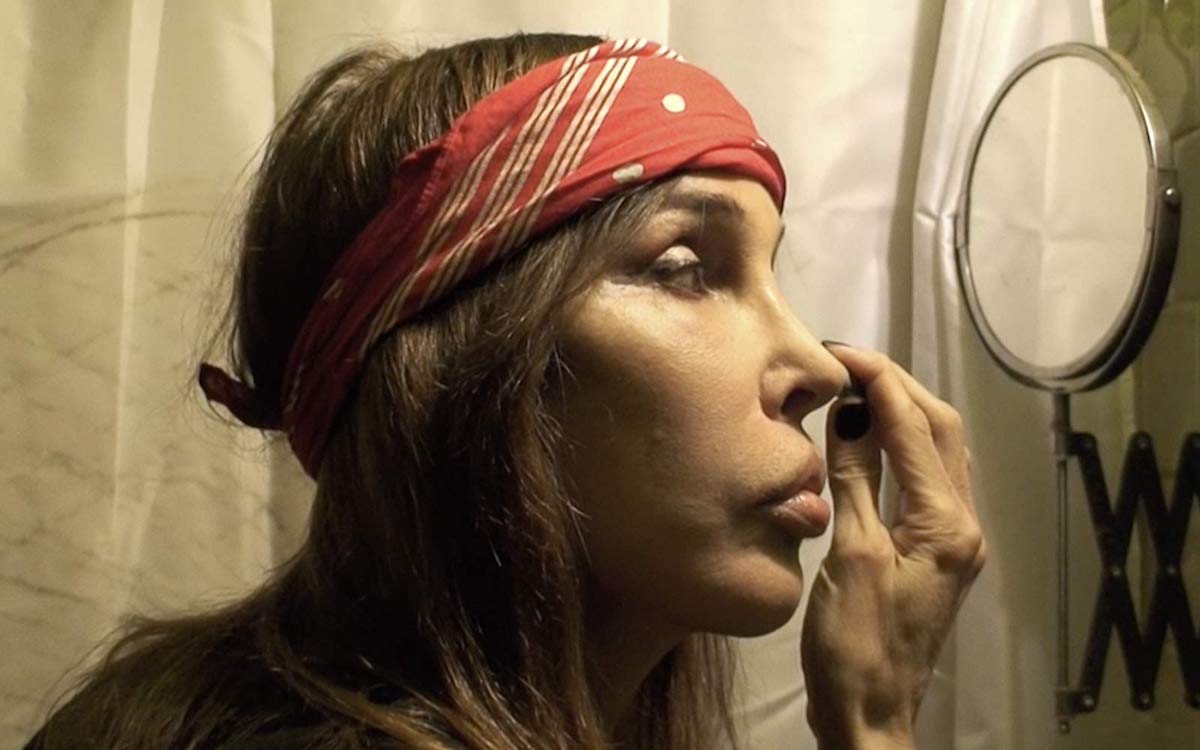
 Sophia Lamar in I Hate New York[/caption]
Made in Spain, the showcase of the Spanish films at the 2018 San Sebastian International Film Festival will spotlight eleven productions, including films by directors Daniel Calparsoro, Isabel Coixet, Álex de la Iglesia, Ramón Salazar and David Trueba. The Festival will also serve as the framework for presentation of the documentary Querido Fotogramas, directed by the Brazilian filmmaker Sergio Oksman.
Among the first works are Mi querida cofradía, by Marta Díaz de Lope Díaz (Ronda, Málaga, 1988), winner at the Malaga Festival of both the Silver Biznaga for Best Supporting Actress (Carmen Flores) and the Audience Award; and I Hate New York, by the journalist and filmmaker Gustavo Sánchez (Úbeda, Jaén, 1978), produced by the Bayona brothers.
Also part of the selection are Diana Toucedo (Pontevedra, 1982) who, having worked on sixteen feature films as an editor and having directed the non-fiction feature En todas as mans, debuted in feature films with Trinta lumes / Thirty Souls, premiered in the Panorama section of the Berlinale; and Les distàncies (Distances) by Elena Trapé (Barcelona, 1976), recipient of the Golden Biznaga for Best Spanish Film and of the Silver Biznagas for Best Director and Best Actress (Alexandra Jiménez) in Malaga. Trapé’s first film, Blog, was selected for Zabaltegi-New Directors eight years ago at the Festival, landing a special mention from the RTVE-Otra Mirada Award.
Having worked on eight feature films as an editor, works which have coexisted with her involvement in the film pedagogy project Cinema en curs – which has its corresponding event in San Sebastian through Tabakalera and the Elías Querejeta Zine Eskola (Zinema (h)abian) – Meritxell Colell (Barcelona, 1983) has now directed her first feature film, Con el viento / Amb el vent. Having been selected as a project by the Cinéfondation, the work premiered in the Forum section of the Berlinale. Colell will participate with her second feature film project, Dúo, in the Festival’s Europe-Latin America Co-Production Forum.
Among the films by long-standing directors are El aviso (The Warning), the latest work from Daniel Calparsoro (Barcelona, 1968), whose films have been presented in Cannes, Berlin and Venice, as well as at the Festival; The Bookshop, by Isabel Coixet (Barcelona, 1960), winner this year of the Goyas for Best Film, Director and Adapted Screenplay; Perfectos desconocidos (Perfect Strangers), latest proposal from the filmmaker Álex de la Iglesia (Bilbao, 1965), a frequent participant in San Sebastian Festival’s Official Selection with several films including La comunidad (Common Wealth, Silver Shell for Carmen Maura), Las brujas de Zugarramurdi (Witching & Bitching) and Mi gran noche (My Big Night); La enfermedad del domingo (Sunday’s Illness) by Ramón Salazar (Málaga, 1973), participant in the Panorama section of the Berlinale; and Casi 40 (Almost 40) by David Trueba (Madrid, 1969), the sequel of his first work, La buena vida (The Good Life), winner of the Jury Special Prize in Malaga. Trueba’s previous feature, Vivir con los ojos cerrados (Living is Easy with Eyes Closed), competed in San Sebastian’s Official Selection and won six Goya awards, including Best Film.
CASI 40 (ALMOST FORTY)
DAVID TRUEBA (SPAIN)
Lucía was a successful singer until separation of the duo that had made her a sensation and earned her fame drove her to a somewhat marginal position in the industry. Now she lives a more stable life, married and with two children, retired from the world of show business. But the plans of an old boyfriend from the days of her youth to make a small concert tour of several Spanish cities give her the excuse to get back onto the road. About to turn 40, the two will have to bear the intimate price of giving up on their life ideals.
CON EL VIENTO – AMB EL VENT (FACING THE WIND)
MERITXELL COLELL (SPAIN – ARGENTINA – FRANCE)
Mónica, a 47 year-old dancer, receives a phone call from Spain: her father is seriously ill. Twenty years down the line, she must return to the remote Burgos town of her birth. By the time she gets there, her father is dead. Her mother, to whom she has hardly spoken in all these years, asks her for help to sell the family house. Winter arrives. The perpetual silence, the extreme cold, and having to deal with her family will be harsh trials for Mónica, who will take refuge in the place she knows best: dancing. The film combines dance, documentary and independent film to construct a singular tale of family ties and relations in a universe of women.
EL AVISO (THE WARNING)
DANIEL CALPARSORO (SPAIN)
We are in 2008. Young Jon is a mathematical whiz kid obsessed with numerical reasoning. He’s a genius whose schizophrenia has deprived him of a promising scientific career, so that he has to make do with a job in a photocopying shop. One night like many others, on leaving work, Jon and his best friend, David, head for a petrol station to buy drinks for a dinner with Andrea, a childhood friend of both and the girlfriend David is about to propose to. David goes into the shop while Jon waits for him in the car. Just then there is a robbery and David is hit by a bullet that leaves him in an irreversible coma. From then on Jon will stop taking his medication and, crippled by guilt, start looking for meaning in his friend’s murder. He investigates past robberies until finally finding a common mathematical pattern to them. Continuing with this logic, he comes to the conclusion that Nico, a 10 year-old boy, will be murdered in the same place.
I HATE NEW YORK
GUSTAVO SÁNCHEZ (SPAIN)
New York, 2007-2017. Over a decade, and filming only with a home video camera and no script, the director delves into the private world of Amanda Lepore, Chloe Dzubilo, Sophia Lamar and T De Long; four artists and transgender activists from the city’s underground scene. Little by little, their testimonies reveal fragments of a past –sometimes dramatic, always fascinating and simply extraordinary– that formed their identities and transformed their lives. Their words, fears and hopes take the audience from an outsider’s point of view to being emotionally invested in their destiny.
LA ENFERMEDAD DEL DOMINGO (SUNDAY’S ILLNESS)
RAMÓN SALAZAR (SPAIN)
Driven by her husband’s diplomatic career, Anabel dedicates her life to philanthropy. Her selfless devotion to helping others has increased her popularity, and she is the go-to person in her exclusive circle when it comes to obtaining donations for humanitarian organisations. It is precisely at one of these charity dinners that she runs back into her past on recognising one of the waitresses providing the catering service as being her daughter Chiara, the girl she had abandoned at the age of eight and whom she hasn’t seen for thirty-five years. It’s no chance she’s there; Chiara has been looking for her. Mother and daughter embark on a journey into the past, alone, with a hard road before them in the attempt to recover thirty-five years in barely ten days. Or that’s what Anabel believes. The thing is that this journey has a hidden purpose for Chiara. And when Anabel discovers it she will have to make the most difficult decision of her life, after which she will never be the same again.
LES DISTÀNCIES (DISTANCES)
ELENA TRAPÉ (SPAIN)
Olivia, Eloy, Guille and Anna travel to Berlin to surprise their friend Comas with a visit for his 35th birthday. He doesn’t give them the welcome they expected and during the weekend their contradictions grow and their friendship is put to the test. Together they will discover that time and distance can change everything.
MI QUERIDA COFRADÍA (HOPELESSLY DEVOUT)
MARTA DÍAZ DE LOPE DÍAZ (SPAIN)
Carmen, a middle-aged woman from Malaga, Catholic and apostolic, is about to see her lifelong dream come true: to be president of her brotherhood. It will be the first time that a woman will have achieved such an honour. But finally her fellow members decide to choose her biggest rival, a man named Ignacio. Everything becomes even more complicated for Carmen on the day of the Easter procession, when she is involved in a situation she can only get out of with the help of the women around her.
PERFECTOS DESCONOCIDOS (PERFECT STRANGERS)
ÁLEX DE LA IGLESIA (SPAIN)
Four couples meet for dinner on the night of a lunar eclipse. A night of friendship and laughs, until suddenly the idea emerges: Why not do something different? What would happen if we left the mobile phones on the table within reach of everybody? Entire lives shared by everyone as they happen… An innocent game or a dangerous suggestion? Will the group of friends be able to withstand such a degree of sincerity, even if it is only for a time?
QUERIDO FOTOGRAMAS
SERGIO OKSMAN (SPAIN)
The 70th anniversary of the Fotogramas magazine comes in the shape of a sentimental voyage through the history of Spanish cinema thanks to a mosaic of voices represented by people who make films, those who write them and those who consume them. The documentary pays tribute to the readers of Fotogramas helped by the leading figures of Spanish cinema, who will read to the camera the most representative letters received at its offices in the history of the magazine.
THE BOOKSHOP
ISABEL COIXET (SPAIN – UK)
In the late ‘50s, Florence Green decides to make one of her greatest dreams come true: to leave London and open a small bookshop on the British coast. But to her surprise, the decision will trigger all sorts of reactions among the locals.
TRINTA LUMES / THIRTY SOULS
DIANA TOUCEDO (SPAIN)
Alba is 12 years old and eager to discover the unknown, mysterious and fascinating side of death. With her best friend Samuel they enter abandoned houses, wander around rundown villages and make their way into the mountains with their hidden parallel world. A voyage starting from innocence to discover the mystery of the struggle between life and death.
Sophia Lamar in I Hate New York[/caption]
Made in Spain, the showcase of the Spanish films at the 2018 San Sebastian International Film Festival will spotlight eleven productions, including films by directors Daniel Calparsoro, Isabel Coixet, Álex de la Iglesia, Ramón Salazar and David Trueba. The Festival will also serve as the framework for presentation of the documentary Querido Fotogramas, directed by the Brazilian filmmaker Sergio Oksman.
Among the first works are Mi querida cofradía, by Marta Díaz de Lope Díaz (Ronda, Málaga, 1988), winner at the Malaga Festival of both the Silver Biznaga for Best Supporting Actress (Carmen Flores) and the Audience Award; and I Hate New York, by the journalist and filmmaker Gustavo Sánchez (Úbeda, Jaén, 1978), produced by the Bayona brothers.
Also part of the selection are Diana Toucedo (Pontevedra, 1982) who, having worked on sixteen feature films as an editor and having directed the non-fiction feature En todas as mans, debuted in feature films with Trinta lumes / Thirty Souls, premiered in the Panorama section of the Berlinale; and Les distàncies (Distances) by Elena Trapé (Barcelona, 1976), recipient of the Golden Biznaga for Best Spanish Film and of the Silver Biznagas for Best Director and Best Actress (Alexandra Jiménez) in Malaga. Trapé’s first film, Blog, was selected for Zabaltegi-New Directors eight years ago at the Festival, landing a special mention from the RTVE-Otra Mirada Award.
Having worked on eight feature films as an editor, works which have coexisted with her involvement in the film pedagogy project Cinema en curs – which has its corresponding event in San Sebastian through Tabakalera and the Elías Querejeta Zine Eskola (Zinema (h)abian) – Meritxell Colell (Barcelona, 1983) has now directed her first feature film, Con el viento / Amb el vent. Having been selected as a project by the Cinéfondation, the work premiered in the Forum section of the Berlinale. Colell will participate with her second feature film project, Dúo, in the Festival’s Europe-Latin America Co-Production Forum.
Among the films by long-standing directors are El aviso (The Warning), the latest work from Daniel Calparsoro (Barcelona, 1968), whose films have been presented in Cannes, Berlin and Venice, as well as at the Festival; The Bookshop, by Isabel Coixet (Barcelona, 1960), winner this year of the Goyas for Best Film, Director and Adapted Screenplay; Perfectos desconocidos (Perfect Strangers), latest proposal from the filmmaker Álex de la Iglesia (Bilbao, 1965), a frequent participant in San Sebastian Festival’s Official Selection with several films including La comunidad (Common Wealth, Silver Shell for Carmen Maura), Las brujas de Zugarramurdi (Witching & Bitching) and Mi gran noche (My Big Night); La enfermedad del domingo (Sunday’s Illness) by Ramón Salazar (Málaga, 1973), participant in the Panorama section of the Berlinale; and Casi 40 (Almost 40) by David Trueba (Madrid, 1969), the sequel of his first work, La buena vida (The Good Life), winner of the Jury Special Prize in Malaga. Trueba’s previous feature, Vivir con los ojos cerrados (Living is Easy with Eyes Closed), competed in San Sebastian’s Official Selection and won six Goya awards, including Best Film.
CASI 40 (ALMOST FORTY)
DAVID TRUEBA (SPAIN)
Lucía was a successful singer until separation of the duo that had made her a sensation and earned her fame drove her to a somewhat marginal position in the industry. Now she lives a more stable life, married and with two children, retired from the world of show business. But the plans of an old boyfriend from the days of her youth to make a small concert tour of several Spanish cities give her the excuse to get back onto the road. About to turn 40, the two will have to bear the intimate price of giving up on their life ideals.
CON EL VIENTO – AMB EL VENT (FACING THE WIND)
MERITXELL COLELL (SPAIN – ARGENTINA – FRANCE)
Mónica, a 47 year-old dancer, receives a phone call from Spain: her father is seriously ill. Twenty years down the line, she must return to the remote Burgos town of her birth. By the time she gets there, her father is dead. Her mother, to whom she has hardly spoken in all these years, asks her for help to sell the family house. Winter arrives. The perpetual silence, the extreme cold, and having to deal with her family will be harsh trials for Mónica, who will take refuge in the place she knows best: dancing. The film combines dance, documentary and independent film to construct a singular tale of family ties and relations in a universe of women.
EL AVISO (THE WARNING)
DANIEL CALPARSORO (SPAIN)
We are in 2008. Young Jon is a mathematical whiz kid obsessed with numerical reasoning. He’s a genius whose schizophrenia has deprived him of a promising scientific career, so that he has to make do with a job in a photocopying shop. One night like many others, on leaving work, Jon and his best friend, David, head for a petrol station to buy drinks for a dinner with Andrea, a childhood friend of both and the girlfriend David is about to propose to. David goes into the shop while Jon waits for him in the car. Just then there is a robbery and David is hit by a bullet that leaves him in an irreversible coma. From then on Jon will stop taking his medication and, crippled by guilt, start looking for meaning in his friend’s murder. He investigates past robberies until finally finding a common mathematical pattern to them. Continuing with this logic, he comes to the conclusion that Nico, a 10 year-old boy, will be murdered in the same place.
I HATE NEW YORK
GUSTAVO SÁNCHEZ (SPAIN)
New York, 2007-2017. Over a decade, and filming only with a home video camera and no script, the director delves into the private world of Amanda Lepore, Chloe Dzubilo, Sophia Lamar and T De Long; four artists and transgender activists from the city’s underground scene. Little by little, their testimonies reveal fragments of a past –sometimes dramatic, always fascinating and simply extraordinary– that formed their identities and transformed their lives. Their words, fears and hopes take the audience from an outsider’s point of view to being emotionally invested in their destiny.
LA ENFERMEDAD DEL DOMINGO (SUNDAY’S ILLNESS)
RAMÓN SALAZAR (SPAIN)
Driven by her husband’s diplomatic career, Anabel dedicates her life to philanthropy. Her selfless devotion to helping others has increased her popularity, and she is the go-to person in her exclusive circle when it comes to obtaining donations for humanitarian organisations. It is precisely at one of these charity dinners that she runs back into her past on recognising one of the waitresses providing the catering service as being her daughter Chiara, the girl she had abandoned at the age of eight and whom she hasn’t seen for thirty-five years. It’s no chance she’s there; Chiara has been looking for her. Mother and daughter embark on a journey into the past, alone, with a hard road before them in the attempt to recover thirty-five years in barely ten days. Or that’s what Anabel believes. The thing is that this journey has a hidden purpose for Chiara. And when Anabel discovers it she will have to make the most difficult decision of her life, after which she will never be the same again.
LES DISTÀNCIES (DISTANCES)
ELENA TRAPÉ (SPAIN)
Olivia, Eloy, Guille and Anna travel to Berlin to surprise their friend Comas with a visit for his 35th birthday. He doesn’t give them the welcome they expected and during the weekend their contradictions grow and their friendship is put to the test. Together they will discover that time and distance can change everything.
MI QUERIDA COFRADÍA (HOPELESSLY DEVOUT)
MARTA DÍAZ DE LOPE DÍAZ (SPAIN)
Carmen, a middle-aged woman from Malaga, Catholic and apostolic, is about to see her lifelong dream come true: to be president of her brotherhood. It will be the first time that a woman will have achieved such an honour. But finally her fellow members decide to choose her biggest rival, a man named Ignacio. Everything becomes even more complicated for Carmen on the day of the Easter procession, when she is involved in a situation she can only get out of with the help of the women around her.
PERFECTOS DESCONOCIDOS (PERFECT STRANGERS)
ÁLEX DE LA IGLESIA (SPAIN)
Four couples meet for dinner on the night of a lunar eclipse. A night of friendship and laughs, until suddenly the idea emerges: Why not do something different? What would happen if we left the mobile phones on the table within reach of everybody? Entire lives shared by everyone as they happen… An innocent game or a dangerous suggestion? Will the group of friends be able to withstand such a degree of sincerity, even if it is only for a time?
QUERIDO FOTOGRAMAS
SERGIO OKSMAN (SPAIN)
The 70th anniversary of the Fotogramas magazine comes in the shape of a sentimental voyage through the history of Spanish cinema thanks to a mosaic of voices represented by people who make films, those who write them and those who consume them. The documentary pays tribute to the readers of Fotogramas helped by the leading figures of Spanish cinema, who will read to the camera the most representative letters received at its offices in the history of the magazine.
THE BOOKSHOP
ISABEL COIXET (SPAIN – UK)
In the late ‘50s, Florence Green decides to make one of her greatest dreams come true: to leave London and open a small bookshop on the British coast. But to her surprise, the decision will trigger all sorts of reactions among the locals.
TRINTA LUMES / THIRTY SOULS
DIANA TOUCEDO (SPAIN)
Alba is 12 years old and eager to discover the unknown, mysterious and fascinating side of death. With her best friend Samuel they enter abandoned houses, wander around rundown villages and make their way into the mountains with their hidden parallel world. A voyage starting from innocence to discover the mystery of the struggle between life and death.Sunday’s Illness (La enfermedad del domingo) (2018
After Anabel hosts an opulent dinner, she is confronted by Chiara, the daughter she abandoned decades earlier. Chiara arrives with just one request: that she and her mother spend ten days together.
Directed by Ramón Salazar Hoogers
Starring Barbara Lennie, Susi Sanchez.
Genre(s) Drama Film
-
ALMOST FORTY, I HATE NEW YORK Among Made in Spain Showcase at 2018 San Sebastian International Film Festival
[caption id="attachment_31594" align="aligncenter" width="1200"] Sophia Lamar in I Hate New York[/caption]
Made in Spain, the showcase of the Spanish films at the 2018 San Sebastian International Film Festival will spotlight eleven productions, including films by directors Daniel Calparsoro, Isabel Coixet, Álex de la Iglesia, Ramón Salazar and David Trueba. The Festival will also serve as the framework for presentation of the documentary Querido Fotogramas, directed by the Brazilian filmmaker Sergio Oksman.
Among the first works are Mi querida cofradía, by Marta Díaz de Lope Díaz (Ronda, Málaga, 1988), winner at the Malaga Festival of both the Silver Biznaga for Best Supporting Actress (Carmen Flores) and the Audience Award; and I Hate New York, by the journalist and filmmaker Gustavo Sánchez (Úbeda, Jaén, 1978), produced by the Bayona brothers.
Also part of the selection are Diana Toucedo (Pontevedra, 1982) who, having worked on sixteen feature films as an editor and having directed the non-fiction feature En todas as mans, debuted in feature films with Trinta lumes / Thirty Souls, premiered in the Panorama section of the Berlinale; and Les distàncies (Distances) by Elena Trapé (Barcelona, 1976), recipient of the Golden Biznaga for Best Spanish Film and of the Silver Biznagas for Best Director and Best Actress (Alexandra Jiménez) in Malaga. Trapé’s first film, Blog, was selected for Zabaltegi-New Directors eight years ago at the Festival, landing a special mention from the RTVE-Otra Mirada Award.
Having worked on eight feature films as an editor, works which have coexisted with her involvement in the film pedagogy project Cinema en curs – which has its corresponding event in San Sebastian through Tabakalera and the Elías Querejeta Zine Eskola (Zinema (h)abian) – Meritxell Colell (Barcelona, 1983) has now directed her first feature film, Con el viento / Amb el vent. Having been selected as a project by the Cinéfondation, the work premiered in the Forum section of the Berlinale. Colell will participate with her second feature film project, Dúo, in the Festival’s Europe-Latin America Co-Production Forum.
Among the films by long-standing directors are El aviso (The Warning), the latest work from Daniel Calparsoro (Barcelona, 1968), whose films have been presented in Cannes, Berlin and Venice, as well as at the Festival; The Bookshop, by Isabel Coixet (Barcelona, 1960), winner this year of the Goyas for Best Film, Director and Adapted Screenplay; Perfectos desconocidos (Perfect Strangers), latest proposal from the filmmaker Álex de la Iglesia (Bilbao, 1965), a frequent participant in San Sebastian Festival’s Official Selection with several films including La comunidad (Common Wealth, Silver Shell for Carmen Maura), Las brujas de Zugarramurdi (Witching & Bitching) and Mi gran noche (My Big Night); La enfermedad del domingo (Sunday’s Illness) by Ramón Salazar (Málaga, 1973), participant in the Panorama section of the Berlinale; and Casi 40 (Almost 40) by David Trueba (Madrid, 1969), the sequel of his first work, La buena vida (The Good Life), winner of the Jury Special Prize in Malaga. Trueba’s previous feature, Vivir con los ojos cerrados (Living is Easy with Eyes Closed), competed in San Sebastian’s Official Selection and won six Goya awards, including Best Film.
CASI 40 (ALMOST FORTY)
DAVID TRUEBA (SPAIN)
Lucía was a successful singer until separation of the duo that had made her a sensation and earned her fame drove her to a somewhat marginal position in the industry. Now she lives a more stable life, married and with two children, retired from the world of show business. But the plans of an old boyfriend from the days of her youth to make a small concert tour of several Spanish cities give her the excuse to get back onto the road. About to turn 40, the two will have to bear the intimate price of giving up on their life ideals.
CON EL VIENTO – AMB EL VENT (FACING THE WIND)
MERITXELL COLELL (SPAIN – ARGENTINA – FRANCE)
Mónica, a 47 year-old dancer, receives a phone call from Spain: her father is seriously ill. Twenty years down the line, she must return to the remote Burgos town of her birth. By the time she gets there, her father is dead. Her mother, to whom she has hardly spoken in all these years, asks her for help to sell the family house. Winter arrives. The perpetual silence, the extreme cold, and having to deal with her family will be harsh trials for Mónica, who will take refuge in the place she knows best: dancing. The film combines dance, documentary and independent film to construct a singular tale of family ties and relations in a universe of women.
EL AVISO (THE WARNING)
DANIEL CALPARSORO (SPAIN)
We are in 2008. Young Jon is a mathematical whiz kid obsessed with numerical reasoning. He’s a genius whose schizophrenia has deprived him of a promising scientific career, so that he has to make do with a job in a photocopying shop. One night like many others, on leaving work, Jon and his best friend, David, head for a petrol station to buy drinks for a dinner with Andrea, a childhood friend of both and the girlfriend David is about to propose to. David goes into the shop while Jon waits for him in the car. Just then there is a robbery and David is hit by a bullet that leaves him in an irreversible coma. From then on Jon will stop taking his medication and, crippled by guilt, start looking for meaning in his friend’s murder. He investigates past robberies until finally finding a common mathematical pattern to them. Continuing with this logic, he comes to the conclusion that Nico, a 10 year-old boy, will be murdered in the same place.
I HATE NEW YORK
GUSTAVO SÁNCHEZ (SPAIN)
New York, 2007-2017. Over a decade, and filming only with a home video camera and no script, the director delves into the private world of Amanda Lepore, Chloe Dzubilo, Sophia Lamar and T De Long; four artists and transgender activists from the city’s underground scene. Little by little, their testimonies reveal fragments of a past –sometimes dramatic, always fascinating and simply extraordinary– that formed their identities and transformed their lives. Their words, fears and hopes take the audience from an outsider’s point of view to being emotionally invested in their destiny.
LA ENFERMEDAD DEL DOMINGO (SUNDAY’S ILLNESS)
RAMÓN SALAZAR (SPAIN)
Driven by her husband’s diplomatic career, Anabel dedicates her life to philanthropy. Her selfless devotion to helping others has increased her popularity, and she is the go-to person in her exclusive circle when it comes to obtaining donations for humanitarian organisations. It is precisely at one of these charity dinners that she runs back into her past on recognising one of the waitresses providing the catering service as being her daughter Chiara, the girl she had abandoned at the age of eight and whom she hasn’t seen for thirty-five years. It’s no chance she’s there; Chiara has been looking for her. Mother and daughter embark on a journey into the past, alone, with a hard road before them in the attempt to recover thirty-five years in barely ten days. Or that’s what Anabel believes. The thing is that this journey has a hidden purpose for Chiara. And when Anabel discovers it she will have to make the most difficult decision of her life, after which she will never be the same again.
LES DISTÀNCIES (DISTANCES)
ELENA TRAPÉ (SPAIN)
Olivia, Eloy, Guille and Anna travel to Berlin to surprise their friend Comas with a visit for his 35th birthday. He doesn’t give them the welcome they expected and during the weekend their contradictions grow and their friendship is put to the test. Together they will discover that time and distance can change everything.
MI QUERIDA COFRADÍA (HOPELESSLY DEVOUT)
MARTA DÍAZ DE LOPE DÍAZ (SPAIN)
Carmen, a middle-aged woman from Malaga, Catholic and apostolic, is about to see her lifelong dream come true: to be president of her brotherhood. It will be the first time that a woman will have achieved such an honour. But finally her fellow members decide to choose her biggest rival, a man named Ignacio. Everything becomes even more complicated for Carmen on the day of the Easter procession, when she is involved in a situation she can only get out of with the help of the women around her.
PERFECTOS DESCONOCIDOS (PERFECT STRANGERS)
ÁLEX DE LA IGLESIA (SPAIN)
Four couples meet for dinner on the night of a lunar eclipse. A night of friendship and laughs, until suddenly the idea emerges: Why not do something different? What would happen if we left the mobile phones on the table within reach of everybody? Entire lives shared by everyone as they happen… An innocent game or a dangerous suggestion? Will the group of friends be able to withstand such a degree of sincerity, even if it is only for a time?
QUERIDO FOTOGRAMAS
SERGIO OKSMAN (SPAIN)
The 70th anniversary of the Fotogramas magazine comes in the shape of a sentimental voyage through the history of Spanish cinema thanks to a mosaic of voices represented by people who make films, those who write them and those who consume them. The documentary pays tribute to the readers of Fotogramas helped by the leading figures of Spanish cinema, who will read to the camera the most representative letters received at its offices in the history of the magazine.
THE BOOKSHOP
ISABEL COIXET (SPAIN – UK)
In the late ‘50s, Florence Green decides to make one of her greatest dreams come true: to leave London and open a small bookshop on the British coast. But to her surprise, the decision will trigger all sorts of reactions among the locals.
TRINTA LUMES / THIRTY SOULS
DIANA TOUCEDO (SPAIN)
Alba is 12 years old and eager to discover the unknown, mysterious and fascinating side of death. With her best friend Samuel they enter abandoned houses, wander around rundown villages and make their way into the mountains with their hidden parallel world. A voyage starting from innocence to discover the mystery of the struggle between life and death.
-
4 Netflix Films incl. “The Rachel Divide” to Premiere at 2018 Tribeca Film Festival | Trailer
[caption id="attachment_27460" align="aligncenter" width="1200"] THE RACHEL DIVIDE[/caption]
Netflix has dropped the trailer for the “The Rachel Divide” – the documentary on delf-described “trans racial” activist Rachel Dolezal, which along with three other films will premiere at the 2018 Tribeca Film Festival. The films include the North American debuts of Cargo and Sunday’s Illness (aka La Enfermedad Del Domingo); and world premieres of documentaries The Rachel Divide and The Bleeding Edge.
Cargo (Netflix Launch: May 18, 2018)
Stranded in rural Australia in the aftermath of a violent pandemic, an infected father desperately seeks a new home for his infant child, and a means to protect her from his own changing nature. Directed by Ben Howling and Yolanda Ramke and written by Yolanda Ramke, Cargo boasts a top-line international cast including Martin Freeman, Anthony Hayes, Susie Porter, Caren Pistorius, Kris McQuade, Natasha Wanganeen and David Gulpilil. Cargo is produced by Samantha Jennings and Kristina Ceyton of Causeway Films (The Babadook). Russell Ackerman, John Schoenfelder and Mark Patterson also serve as producers.
Sunday’s Illness (aka La Enfermedad Del Domingo) (Netflix Launch: June 15, 2018)
In Sunday’s Illness (aka La Enfermedad Del Domingo), Anabel abandoned her daughter Chiara when she was barely eight years old. Thirty-five years later Chiara returns with a strange request for her mother; she asks to spend ten days together. Anabel sees this trip as a chance to get her daughter back, but she doesn’t know that Chiara has a hidden purpose and she’ll have to face the most important decision of her life. Written and Directed by Ramón Salazar, the film stars Bárbara Lennie and Susi Sánchez. Sunday’s Illness is produced by Francisco Ramos and executive produced by Rafael López Manzanara.
THE RACHEL DIVIDE[/caption]
Netflix has dropped the trailer for the “The Rachel Divide” – the documentary on delf-described “trans racial” activist Rachel Dolezal, which along with three other films will premiere at the 2018 Tribeca Film Festival. The films include the North American debuts of Cargo and Sunday’s Illness (aka La Enfermedad Del Domingo); and world premieres of documentaries The Rachel Divide and The Bleeding Edge.
Cargo (Netflix Launch: May 18, 2018)
Stranded in rural Australia in the aftermath of a violent pandemic, an infected father desperately seeks a new home for his infant child, and a means to protect her from his own changing nature. Directed by Ben Howling and Yolanda Ramke and written by Yolanda Ramke, Cargo boasts a top-line international cast including Martin Freeman, Anthony Hayes, Susie Porter, Caren Pistorius, Kris McQuade, Natasha Wanganeen and David Gulpilil. Cargo is produced by Samantha Jennings and Kristina Ceyton of Causeway Films (The Babadook). Russell Ackerman, John Schoenfelder and Mark Patterson also serve as producers.
Sunday’s Illness (aka La Enfermedad Del Domingo) (Netflix Launch: June 15, 2018)
In Sunday’s Illness (aka La Enfermedad Del Domingo), Anabel abandoned her daughter Chiara when she was barely eight years old. Thirty-five years later Chiara returns with a strange request for her mother; she asks to spend ten days together. Anabel sees this trip as a chance to get her daughter back, but she doesn’t know that Chiara has a hidden purpose and she’ll have to face the most important decision of her life. Written and Directed by Ramón Salazar, the film stars Bárbara Lennie and Susi Sánchez. Sunday’s Illness is produced by Francisco Ramos and executive produced by Rafael López Manzanara.
DOCUMENTARY FEATURES
The Rachel Divide (Netflix Launch: April 27, 2018) Self-described “trans racial” activist Rachel Dolezal ignited an unprecedented media storm when a local news station in Spokane, WA outed her as a white woman who had been living as the black president of the NAACP. Since the controversy erupted, director Laura Brownson and team exclusively filmed with Rachel, her sons and her adopted sister Esther, capturing the intimate, vérité life story of a damaged character who lands squarely in the cross-hairs of race and identity politics in America – and exploring how that character still provokes negative reactions from millions who see her as the ultimate example of white privilege. A Netflix original documentary, The Rachel Divide, is executive produced by Academy Award winner Roger Ross Williams. https://www.youtube.com/watch?v=gyhOTvC1v-A The Bleeding Edge (Netflix Launch: 2018) America has the most technologically advanced health care system in the world, yet medical interventions have become the third leading cause of death, and the overwhelming majority of high-risk implanted devices never require a single clinical trial. In The Bleeding Edge, Academy Award nominated filmmakers Kirby Dick and Amy Ziering (The Invisible War, The Hunting Ground) turn their sights on the $400 billion medical device industry, examining lax regulations, corporate cover-ups, and profit driven incentives that put patients at risk daily. Weaving emotionally powerful stories of people whose lives have been irrevocably harmed, the film asks: what life-saving technologies may actually be killing us?
-
2018 Tribeca Film Festival Unveils Feature Film Lineup + Closes with World Premiere of “The Fourth Estate”
[caption id="attachment_27371" align="aligncenter" width="1200"]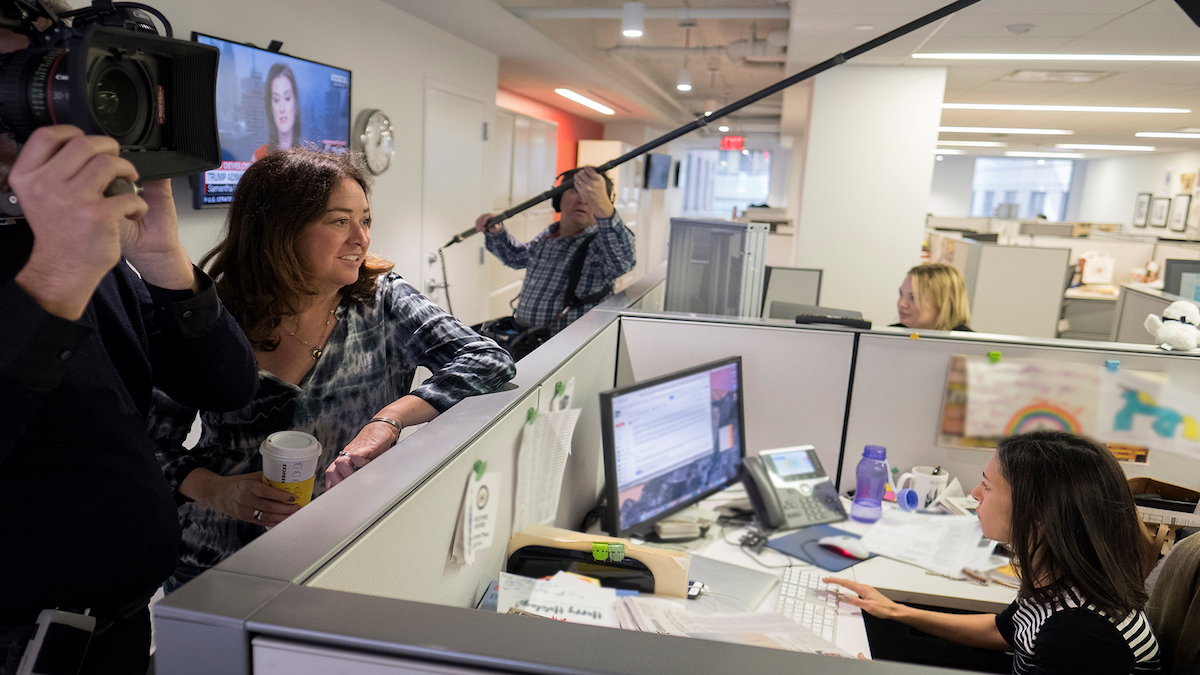 The Fourth Estate[/caption]
The 2018 Tribeca Film Festival revealed its feature film lineup championing the discovery of emerging voices and celebrating new work from established filmmaking talent. To close the Festival, Tribeca will World Premiere The Fourth Estate, from Oscar®-nominated director Liz Garbus, which follows The New York Times’ coverage of the Trump administration’s first year. The Centerpiece Gala will be the World Premiere of Drake Doremus’ sci-fi romance Zoe starring Ewan McGregor, Léa Seydoux, Rashida Jones, and Theo James. The 2018 Tribeca Film Festival takes place April 18-29.
The 2018 feature film program includes 96 films from 103 filmmakers. Of the 96 films, 46% of them are directed by women, the highest percentage in the Festival’s history. The lineup includes 75 World Premieres, 5 International Premieres, 9 North American Premieres, 3 U.S. Premieres, and 4 New York Premieres from 27 countries. This year’s program includes 46 first time filmmakers, with 18 directors returning to the Festival with their latest feature film projects. Tribeca’s 2018 slate was programmed from more than 8,789 total submissions.
Fifty-one narratives and 45 documentaries will debut over the course of the 12-day festival. The Competition section features 12 documentaries, 10 U.S. narratives and 10 international narratives; 14 Spotlight Narratives, 15 Spotlight Documentaries; 5 Midnight, 16 Viewpoints selections; and 11 Special Screenings.
The films in competition will compete for cash prizes totaling $165,000, as well as artwork from the Artists Awards program, offering work from acclaimed contemporary artists in select categories. One of the first awards to honor excellence in storytelling by a female writer or director, the 6th annual Nora Ephron Award, presented by CHANEL, will award a $25,000 prize to a woman who embodies the spirit and boldness of the late filmmaker.
This year’s Tribeca/ESPN Sports Film Festival, sponsored by Mohegan Sun, includes 5 documentaries and 1 narrative feature film, as well as a shorts program and more to be announced.
The 2018 film selections are as follows:
The Fourth Estate[/caption]
The 2018 Tribeca Film Festival revealed its feature film lineup championing the discovery of emerging voices and celebrating new work from established filmmaking talent. To close the Festival, Tribeca will World Premiere The Fourth Estate, from Oscar®-nominated director Liz Garbus, which follows The New York Times’ coverage of the Trump administration’s first year. The Centerpiece Gala will be the World Premiere of Drake Doremus’ sci-fi romance Zoe starring Ewan McGregor, Léa Seydoux, Rashida Jones, and Theo James. The 2018 Tribeca Film Festival takes place April 18-29.
The 2018 feature film program includes 96 films from 103 filmmakers. Of the 96 films, 46% of them are directed by women, the highest percentage in the Festival’s history. The lineup includes 75 World Premieres, 5 International Premieres, 9 North American Premieres, 3 U.S. Premieres, and 4 New York Premieres from 27 countries. This year’s program includes 46 first time filmmakers, with 18 directors returning to the Festival with their latest feature film projects. Tribeca’s 2018 slate was programmed from more than 8,789 total submissions.
Fifty-one narratives and 45 documentaries will debut over the course of the 12-day festival. The Competition section features 12 documentaries, 10 U.S. narratives and 10 international narratives; 14 Spotlight Narratives, 15 Spotlight Documentaries; 5 Midnight, 16 Viewpoints selections; and 11 Special Screenings.
The films in competition will compete for cash prizes totaling $165,000, as well as artwork from the Artists Awards program, offering work from acclaimed contemporary artists in select categories. One of the first awards to honor excellence in storytelling by a female writer or director, the 6th annual Nora Ephron Award, presented by CHANEL, will award a $25,000 prize to a woman who embodies the spirit and boldness of the late filmmaker.
This year’s Tribeca/ESPN Sports Film Festival, sponsored by Mohegan Sun, includes 5 documentaries and 1 narrative feature film, as well as a shorts program and more to be announced.
The 2018 film selections are as follows:
CENTERPIECE:
Zoe, directed by Drake Doremus, written by Richard Greenberg. Produced by Kevin Walsh, Michael Pruss, Drake Doremus, Robert George. (USA) – World Premiere, Feature Narrative. In a future world where cutting-edge technologies can simulate the high of true love, two colleagues at a revolutionary research lab yearn for a connection that’s real. With Léa Seydoux, Ewan McGregor, Christina Aguilera, Rashida Jones, Theo James, Miranda Otto, Matthew Gray Gubler, Anthony ShimCLOSING NIGHT:
The Fourth Estate, directed by Liz Garbus. Produced by Jenny Carchman, Liz Garbus, Justin Wilkes (USA) – World Premiere, Documentary. For the journalists at The New York Times, the election of Donald Trump presented a once in a generation challenge in how the press would cover a president who has declared the majority of the nation’s major news outlets “the enemy of the people.” Oscar-nominated filmmaker Liz Garbus witnessed the inner workings of journalism and investigative reporting from the front lines during this administrations’ first history-making year. A Showtime release After the movie: A conversation with The New York Times Executive Editor Dean Baquet, Washington Bureau Chief Elisabeth Bumiller, White House Correspondent Maggie Haberman, Washington Investigative Correspondent Mark Mazzetti, and director Liz Garbus.U.S. NARRATIVE COMPETITION
All About Nina, directed and written by Eva Vives. Produced by Eric B. Fleischman, Sean Tabibian, Natalie Qasabian, Eva Vives. (USA) – World Premiere. Nina Geld’s passion and talent have made her a rising star in the comedy scene, but she’s an emotional mess offstage. When a new professional opportunity coincides with a romantic one, she is forced to reckon with the intersection of her life and her art. With Mary Elizabeth Winstead, Common, Chace Crawford, Clea DuVall, Kate del Castillo, Beau Bridges. Diane, directed and written by Kent Jones. Produced by Luca Borghese, Ben Howe, Caroline Kaplan, Oren Moverman. (USA) – World Premiere. Diane is a devoted friend and caretaker, particularly to her drug-addicted son. But as those around her begin to drift away in the last quarter of her life, she is left to reckon with past choices and long-dormant memories in this haunting character study. With Mary Kay Place, Jake Lacy, Estelle Parsons, Andrea Martin, Deirdre O’Connell, Glynis O’Connor, Phyllis Somerville, Joyce Van Patten. Duck Butter, directed by Miguel Arteta, written by Miguel Arteta, Alia Shawkat. Produced by Mel Eslyn, Natalie Qasabian. (USA) – World Premiere. Two women, jaded by dishonest and broken relationships, make a pact to spend 24 uninterrupted hours together, having sex on the hour. Their romantic experiment intends to create a new form of intimacy, but it doesn’t quite go as planned. With Alia Shawkat, Laia Costa, Hong Chau, Kate Berlant, Kumail Nanjiani, Mark Duplass, Jay Duplass, Lindsay Burdge. A release from The Orchard. Ghostbox Cowboy, directed and written by John Maringouin. Produced by Molly Lynch, John Maringouin, John Montague, George Rush, Sean Gillane. (USA, China) – World Premiere. In this darkly comedic morality tale, tech entrepreneur Jimmy Van Horn arrives in China armed with an invention and confidence, only to learn that being American is not enough to succeed. With David Zellner, Robert Longstreet, Johnny Robichaux, Vincent Xie, Carrie Gege Zhang. Little Woods, directed and written by Nia DaCosta. Produced by Rachael Fung, Gabrielle Nadig. (USA) – World Premiere. In this dramatic thriller set in the fracking boomtown of Little Woods, North Dakota, two estranged sisters are driven to extremes when their mother dies, leaving them with one week to pay back her mortgage. With Tessa Thompson, Lily James, Luke Kirby, James Badge Dale, Lance Reddick. Maine, directed and written by Matthew Brown. Produced by Summer Shelton, Michael B. Clark, Alex Turtletaub. (USA) – World Premiere. A married woman’s journey of self-discovery and introspection while solo-hiking the Appalachian Trail ends up sidetracked when she encounters a lone hiker. With Laia Costa, Thomas Mann. Mapplethorpe, directed and written by Ondi Timoner. Produced by Eliza Dushku, Nathaniel Dushku, Richard J. Bosner, Ondi Timoner. (USA) – World Premiere. In the late 1960s, art-school dropout Robert Mapplethorpe moves into the Chelsea Hotel with dreams of stardom. He quickly becomes the enfant terrible of the photography world as the downtown counterculture of 1970s New York reaches its zenith. With Matt Smith, Marianne Rendón, John Benjamin Hickey, Brandon Sklenar, McKinley Belcher III, Mark Moses. O.G., directed by Madeleine Sackler, written by Stephen Belber. Produced by Madeleine Sackler, Boyd Holbrook. (USA) – World Premiere. An inmate entering the final weeks of a twenty-plus-year sentence must navigate between old loyalties and a new protégé, while he also grapples with the looming uncertainty of his return to life outside bars. With Jeffrey Wright, William Fichtner, Theothus Carter, Mare Winningham, Boyd Holbrook, David Patrick Kelly. Song of Back and Neck, directed and written by Paul Lieberstein. Produced by Paul Lieberstein, Jennifer Prediger, Kim Leadford. (USA) – World Premiere. A hapless man seeking treatment for his crippling back pain discovers a very unusual talent and unexpected love in this inventive romantic comedy from writer-director-star Paul Lieberstein (The Office). With Paul Lieberstein, Rosemarie DeWitt, Clark Duke, Brian d’Arcy James, Robert Pine, Paul Feig. State Like Sleep, directed and written by Meredith Danluck. Produced by Eddie Vaisman, Julia Lebedev, Angel Lopez. (USA) – World Premiere. Following the death of her husband, Katherine travels to Brussels, where a few loose ends become a whole web of secrets as she untangles her late spouse’s mysterious last days alive. With Katherine Waterston, Michael Shannon, Luke Evans, Michiel Huisman, Mary Kay Place.DOCUMENTARY COMPETITION
Blowin’ Up, directed and written by Stephanie Wang-Breal. Produced by Carrie Weprin. (USA) – World Premiere. In a courtroom in Queens, women facing prostitution charges may earn a chance at redemption thanks to an experimental program established by a team of rebel heroines working to change the system. Call Her Ganda, directed by PJ Raval, written by PJ Raval, Victoria Chalk. Produced by PJ Raval, Lisa Valencia-Svensson, Marty Syjuco, Kara Magsanoc-Alikpala. (USA, Philippines) – World Premiere. When a transgender Filipina woman is found dead in the motel room of a U.S. Marine, grassroots activists demand accountability. The ensuing case lays bare a constellation of social and political tensions between the United States and the Philippines. Island of the Hungry Ghosts, directed and written by Gabrielle Brady. Produced by Alexander Wadouh, Samm Haillay, Alex Kelly, Gizem Acarla, Gabrielle Brady. (Australia, Germany, UK) – World Premiere. Christmas Island, Australia is home to one of the largest land migrations on earth—that of forty million crabs journeying from jungle to sea. But the jungle holds another secret: a high-security facility that indefinitely detains individuals seeking asylum. The Man Who Stole Banksy, directed by Marco Proserpio, written by Marco Proserpio, Filippo Perfido, Christian Omodeo. Produced by Marco Proserpio, Filippo Perfido. (Italy) – World Premiere. In 2007, the anonymous graffiti artist Banksy painted a series of political works around Palestine, only to have them cut down and sold off to the highest bidder. A stylish examination of public space and the commodification of street art, narrated by Iggy Pop. Momentum Generation, directed and written by Jeff Zimbalist, Michael Zimbalist. Produced by Jeff Zimbalist, Michael Zimbalist, Colby Gottert, Greg Little, Justine Chiara, Karen Lauder, Laura Michalchyshyn, Lizzie Friedman, Tina Elmo. (USA) – World Premiere. In the 1990s, a motley band of teen surfers from the north shore of Oahu brought professional surfing to new heights. But as their stars rose, the competition threatened to tear their group apart. With Kelly Slater, Rob Machado, Shane Dorian, Taylor Knox, Benji Weatherley, Kalani Robb, and Ross Williams. No Greater Law, directed by Tom Dumican, written by Tom Dumican, Jesse Lichtenstein. Produced by Jesse Lichtenstein. (UK, USA) – World Premiere. In Idaho’s rugged Treasure Valley, the Followers of Christ believe in God, family, and faith healing. As an investigation into the community’s high infant mortality rate closes in on the church, one patriarch fights for his right to his faith. An A&E release. Phantom Cowboys, directed by Daniel Patrick Carbone. Produced by Ryan Scafuro, Annie Waldman, Daniel Patrick Carbone. (USA) – World Premiere. This searing documentary, which spans nearly a decade, is a meditation on youth, tradition, and the evolving hopes and dreams of modern adolescents in the forgotten industrial towns across America. The Rachel Divide, directed by Laura Brownson, written by Laura Brownson, Jeff Gilbert. Produced by Laura Brownson, Bridget Stokes, Khaliah Neal. (USA) – World Premiere. Rachel Dolezal became infamous when she was unmasked as a white woman passing for black so thoroughly that she had become the head of her local N.A.A.C.P. chapter. This portrait cuts through the very public controversy to reveal Dolezal’s motivations. A Netflix release. Tanzania Transit, directed by Jeroen van Velzen, written by Jeroen van Velzen, Esther Eenstroom. Produced by Digna Sinke. (Netherlands) – World Premiere. A train journey across Tanzania captures a microcosm of contemporary African society in Tribeca alum Jeroen van Velzen’s captivating and visually stunning road movie. United Skates, directed and produced by Dyana Winkler, Tina Brown. (USA) – World Premiere. Credited with incubating East Coast hip-hop and West Coast rap, America’s roller rinks have long been bastions of regional African-American culture, music, and dance. As rinks shutter across the country, a few activists mount a last stand. When Lambs Become Lions, directed by Jon Kasbe. Produced by Jon Kasbe, Innbo Shim, Tom Yellin, Andrew Harrison Brown. (USA) – World Premiere. In the Kenyan bush, a crackdown on ivory poaching forces a silver-tongued second-generation poacher to seek out an unlikely ally in this fly-on-the-wall look at both sides of the conservation divide. Yellow is Forbidden, directed and written by Pietra Brettkelly. Produced by Pietra Brettkelly, Richard Fletcher, Naomi Wallwork. (New Zealand) – World Premiere. Celebrated Chinese couturier Guo Pei is perhaps best known for designing the brilliant gold gown Rihanna wore to the Met Ball in 2015. But Guo’s quest to be recognized by the gatekeepers of Paris haute couture goes beyond the red carpet and taps into global power dynamics and the perpetual tension between art and commerce.INTERNATIONAL NARRATIVE COMPETITION
Amateurs (Amatörer), directed by Gabriela Pichler, written by Jonas Hassen Khemiri, Gabriela Pichler. Produced by Anna-Maria Kantarius. (Sweden) – North American Premiere. In this irresistibly charming social comedy, local officials, in a bid to lure a superstore chain to their quiet hamlet, set about producing a promotional video about their town—only to find themselves disrupted at every turn by two teens making their own rival film. With Fredrik Dahl, Yara Ebrahim, Zahraa Aldoujaili. Dry Martina, directed and written by Che Sandoval. Produced by Florencia Larrea, Gregorio González, Hernán Musaluppi, Natacha Cervi. (Chile, Argentina) – International Premiere. Passion and obsession mingle in this fresh comedy about an aging pop star who takes off to pursue a lover, and, while she’s at it, a better sense of self. With Antonella Costa, Patricio Contreras, Geraldine Neary, Pedro Campos, Héctor Morales. Lemonade (Luna de Miere), directed by Ioana Uricaru, written by Ioana Uricaru, Tatiana Ionașcu. Produced by Cristian Mungiu, Yanick Létourneau, Eike Goreczka, Christoph Kukula, Sean Wheelan, Anthony Muir. (Romania, Canada, Germany, Sweden) – International Premiere. Mara hopes to move her son from Romania to the U.S. and obtain a green card. But bureaucratic processes give way to authoritarian nightmares in this simmering social drama about American immigration and the institutional corruption of power. With Mălina Manovici, Steve Bacic, Dylan Scott Smith, Milan Hurduc, Ruxandra Maniu. The Night Eats the World (La nuit a dévoré le monde), directed and written by Dominique Rocher. (France) – North American Premiere. Following one hell of a party, Sam wakes up to the worst-ever morning after—blood-stained walls, an empty apartment building, and Parisian streets filled with the living dead. Even worse, he’s all alone. With Anders Danielsen Lie, Golshifteh Farahani, Denis Lavant. Obey, directed and written by Jamie Jones. Produced by Emily Jones, Ross Williams. (UK) – World Premiere. In the midst of the 2011 London riots, Leon grapples with the stark reality of his life and his relationship with his alcoholic mother while falling in love for the first time. With Marcus Rutherford, Sophie Kennedy Clark, Sam Gittens, T’Nia Miller, Jay Walker. The Party’s Just Beginning, directed and written by Karen Gillan. Produced by Mali Elfman, Andru R. Davies, Claire Mundell. (Scotland) – International Premiere. Lucy is a sharp-witted, foul-mouthed, heavy-drinking twenty-something who is still reeling from a recent loss. This surreal coming-of-age tale is a love letter to Gillan’s hometown in the Scottish Highlands. With Karen Gillan, Lee Pace, Matthew Beard, Paul Higgins, Siobhan Redmond, Jamie Quinn, Rachel Jackson. The Saint Bernard Syndicate, directed by Mads Brugger, written by Lærke Sanderhoff. Produced by Emilie Lebech Kaae, Jakob Kirstein Høgel. (Denmark) – World Premiere. Subversive satirist Mads Brugger’s latest is an odd-couple comedy about the pitfalls of striking out into the economic frontier; it charts two hapless Danes’ scheme to sell Saint Bernards to China’s middle class. Smuggling Hendrix, directed and written by Marios Piperides. Produced by Janine Teerling, Marios Piperides, Thanassis Karathanos, Martin Hampel, Costas Lambropoulos. (Cyprus) – World Premiere. Though caught between the mob and border patrol, washed-up musician Yiannis must put his plans to leave Cyprus on hold his when his beloved dog escapes across the wall to the island’s Turkish side. With Adam Bousdoukos, Fatih Al, Vicky Papadopoulou, Özgür Karadeniz. Sunday’s Illness (La Enfermedad del Domingo), directed by Ramón Salazar Hoogers, written by Ramón Salazar Hoogers. Produced by Francisco Ramos. (Spain) – North American Premiere. After Anabel hosts an opulent dinner, she is confronted by Chiara, the daughter she abandoned decades earlier. Chiara arrives with just one request: that she and her mother spend ten days together. With Barbara Lennie, Susi Sanchez. Virgins (Vierges), directed by Keren Ben Rafael, written by Keren Ben Rafael, Elise Benroubi. Produced by Caroline Bonmarchand. (France, Israel, Belgium) – World Premiere. Teenage Lana is languishing in her run-down hometown on Israel’s sun-soaked north coast—until an older, attractive writer arrives with tales of a mermaid sighting off the shore of the declining resort town. With Joy Rieger, Evgenia Dodina, Michael Aloni, Manuel Elkaslassy Vardi, Rami Heuberger.SPOTLIGHT NARRATIVE
All These Small Moments, directed and written by Melissa Miller Costanzo. Produced by Lauren Avinoam, Jed Mellick, Katie Leary. (USA) – World Premiere. Howie Sheffield is at a turning point. As he watches his parents’ relationship crumbling, he becomes infatuated with Odessa, a woman he sees each day on the bus ride to school. With Brendan Meyer, Jemima Kirke, Molly Ringwald, Brian d’Arcy James, Sam McCarthy, Harley Quinn Smith. Back Roads, directed by Alex Pettyfer, written by Tawni O’Dell, Adrian Lyne. Produced by Craig Robinson, Michael Ohoven, Ashley Mansour, Alex Pettyfer, Jake Seal, Dan Spilo. (USA) – World Premiere. A young man cares for his sisters after their mother is imprisoned for murdering their abusive father. When he strikes up an affair with a married woman, long-dormant family secrets bubble to the surface in this noir thriller. With Alex Pettyfer, Jennifer Morrison, Nicola Peltz, June Carryl, Juliette Lewis. Blue Night, directed by Fabien Constant, written by Laura Eason. Produced by Andrea Iervolino, Monika Bacardi, Sarah Jessica Parker, Alison Benson. (USA) – World Premiere. A devastating diagnosis sends a famous singer reeling through the streets of New York City in this French New Wave-inspired drama. With Sarah Jessica Parker, Simon Baker, Jacqueline Bisset, Common, Taylor Kinney, Renée Zellweger, Waleed Zuaiter. Daughter of Mine (Figlia mia), directed by Laura Bispuri, written by Francesca Manieri, Laura Bispuri. Produced by Marta Donzelli, Gregorio Paonessa, Maurizio Totti, Alessandro Usai, Viola Fügen, Michael Weber, Dan Wechsler. (Italy, Germany, Switzerland) – North American Premiere. On the windswept coast of Sardinia, two women compete for the affections of 10-year old Vittoria: her troubled, alcoholic birth mother Angelica and her doting adoptive mother Tina. With Valeria Golino, Alba Rohrwacher, Sara Casu, Udo Kier, Michele Carboni. Disobedience, directed by Sebastian Lelio, written by Sebastián Lelio, Rebecca Lenkiewicz. Produced by Frida Torresblanco, Ed Guiney, Rachel Weisz. (UK) – U.S. Premiere. After the death of her estranged rabbi father, a New York photographer returns to the Orthodox Jewish community in North London where she grew up and, in doing so, reignites long-dormant passions and controversies. With Rachel Weisz, Rachel McAdams, Alessandro Nivola. A Bleecker Street release. Egg, directed by Marianna Palka, written by Risa Mickenberg. Produced by Michele Ganeless, Alysia Reiner, David Alan Basche. (USA) – World Premiere. In provocateur Marianna Palka’s sharp and unflinching satire, two couples and a surrogate lay bare the complications, contradictions, heartbreak, and absurdities implicit in how we think about motherhood. With Christina Hendricks, Anna Camp, Alysia Reiner, David Alan Basche, Gbenga Akinnagbe. In a Relationship, directed and written by Sam Boyd. Produced by Jorge Garcia Castro, David Hunter, Ross Putman. (USA) – World Premiere. Long-term couple Owen and Hallie are breaking up—or maybe not?—and just as their relationship reaches a turning point, Matt and Willa embark on a romance of their own. A funny and deeply felt chronicle of one summer in the lives of two couples in Los Angeles. With Emma Roberts, Michael Angarano, Dree Hemingway, Patrick Gibson, Jay Ellis, Melora Walters. Jonathan, directed by Bill Oliver, written by Peter Nickowitz, Bill Oliver, Gregory Davis. Produced by Randy Manis, Ricky Tollman. (USA) – World Premiere. Jonathan is a young man with a strange condition that only his brother understands. But when he begins to yearn for a different life, their unique bond becomes increasingly tested in this twisty sci-fi drama. With Ansel Elgort, Suki Waterhouse, Patricia Clarkson. Mary Shelley, directed by Haifaa Al Mansour, written by Emma Jensen. Produced by Amy Baer, Alan Moloney, Ruth Coady. (Ireland, UK, Luxembourg, USA) – U.S. Premiere. The story of Mary Wollstonecraft Godwin’s whirlwind romance with the tempestuous poet Percy Shelley, a romance that led to her creation of one of the most enduring works of gothic literature before the age of 20: Frankenstein. With Elle Fanning, Douglas Booth, Bel Powley, Joanne Froggatt, Tom Sturridge, Maisie Williams. An IFC release. The Miseducation of Cameron Post, directed by Desiree Akhavan, written by Desiree Akhavan, Cecilia Frugiuele. Produced by Michael B. Clark, Alex Turtlelaub, Cecilia Frugiuele, Jonathan Montepare. (USA) – New York Premiere. After Cameron is caught making out with another girl on prom night, her conservative guardians send her to gay conversion therapy. There, she forges an unlikely community with her fellow teens in this Sundance-winning coming of age story. With Chloë Grace Moretz, Sasha lane, Forrest Goodluck, John Gallagher Jr., Jennifer Ehle. Nico, 1988, directed and written by Susanna Nicchiarelli. Produced by Marta Donzelli, Gregorio Paonessa, Joseph Rouschop, and Valérie Bournonville. (Italy, Belgium) – North American Premiere. This whirlwind road movie follows the final months on tour of the singer-songwriter Nico, one-time Warhol superstar and Velvet Underground vocalist. With Trine Dyrholm, John Gordon Sinclair, Anamaria Marinca, Sandor Funtek, Thomas Trabacchi, Karina Fernandez, Calvin Demba. A Magnolia release. The Seagull, directed by Michael Mayer, written by Stephen Karam. Produced by Jay Franke, David Herro, Robert Salerno, Tom Hulce, Leslie Urdang. (USA) – World Premiere. A sumptuous adaptation of the classic Chekhov play transports the audience to a picturesque lakeside estate, where a love triangle unfolds between the legendary diva Irina, her lover Boris, and the ingénue Nina. With Annette Bening, Saoirse Ronan, Corey Stoll, Elisabeth Moss, Mare Winningham, Jon Tenney, Glenn Fleshler, Michael Zegen, Billy Howle, Brian Dennehy. A Sony Pictures Classic release. Stockholm, directed and written by Robert Budreau. Produced by Nicholas Tabarrok, Robert Budreau, Jonathan Bronfman. (Canada, Sweden, USA) – World Premiere. In 1973, an unhinged American outlaw walked into a bank in Sweden demanding millions in cash in exchange for his hostages. The events that followed would capture the attention of the world and ultimately give a name to a new psychological phenomenon: Stockholm syndrome. With Ethan Hawke, Noomi Rapace, Mark Strong, Christopher Heyerdahl, Bea Santos, Thorbjorn Harr. Untogether, directed and written by Emma Forrest. Produced by Scott LaStaiti, Luke Daniels, Brandon Hogan. (USA) – World Premiere. Former writing prodigy Andrea tries not to fall for her one-night stand, while her sister Lisa throws herself into a newfound religious zeal (and the arms of her charismatic rabbi) to avoid the truth about her current relationship in this multi-character romantic drama. With Jamie Dornan, Jemima Kirke, Lola Kirke, Ben Mendelsohn, Billy Crystal, Alice Eve, Jennifer Grey, Scott Caan.SPOTLIGHT DOCUMENTARY
Bethany Hamilton: Unstoppable, directed by Aaron Lieber, written by Aaron Lieber, Carol Martori. Produced by Penny Edmiston, Jane Kelly Kosek. (USA) – World Premiere. One of the most fearless and accomplished athletes of her generation, Bethany Hamilton became a surfing wunderkind when she returned to the sport following a devastating shark attack at age 13. As she continues to chase waves she also now tackles motherhood. Also playing as part of the Tribeca/ESPN Sports Film Festival. The Bleeding Edge, directed by Amy Ziering, Kirby Dick. Produced by Kirby Dick, Amy Ziering. (USA) – World Premiere. Each year in the United States, unparalleled innovations in medical diagnostics, treatment, and technology hit the market. But when the same devices designed to save patients end up harming them, who is accountable? A Netflix release. General Magic, directed by Matthew Maude, Sarah Kerruish, written by Matt Maude, Sarah Kerruish, Jonathan Keys. Produced by Matt Maude, Sarah Kerruish. (UK, USA) – World Premiere. A Silicon Valley startup built by the best and brightest minds of the 1980s tech world, General Magic shipped the first handheld wireless personal communicator in 1994. It was decades ahead of its time—and a complete failure. With Tony Fadell, Marc Porat, Andy Hertzfeld, Megan Smith, Joanna Hoffman, Kevin Lynch. House Two, directed and written by Michael Epstein. Produced by Michael Epstein, Tony Wood. (USA) – World Premiere. In 2005, a group of U.S. Marines killed 24 unarmed Iraqi men, women, and children in a matter of minutes, sparking the largest criminal investigation in Marine Corps history. House Two delves into that investigation and the ensuing court proceedings, all the way up to the case’s shocking conclusion. Howard, directed and written by Don Hahn. Produced by Don Hahn, Lori Korngiebel. (USA) – World Premiere. Howard Ashman, the once-in-a-generation songwriting talent, penned the lyrics for Little Shop of Horrors and revitalized Disney with his work on The Little Mermaid, Beauty and the Beast, and Aladdin. Howard is a tribute to the lyricist and to the power of musical storytelling. With Howard Ashman, Alan Menken, Jeffrey Katzenberg, Bill Lauch, Sarah Gillespie, Peter Schneider. Into the Okavango, directed by Neil Gelinas, written by Neil Gelinas, Brian Newell. Produced by Neil Gelinas. (USA) – World Premiere. Botswana’s Okavango Delta is one of the planet’s last remaining true wildernesses, but studies have shown it is shrinking. A group of intrepid scientists embark on a four-month, 1500-mile journey upriver to the Okavango’s source to investigate why. A National Geographic release McQueen, directed Ian Bonhôte, Peter Ettedgui, written by Peter Ettedgui. Produced by Ian Bonhôte, Andee Ryder, Nick Taussig, Paul Van Carter. Legendary couturier Alexander McQueen’s rags to riches story is vividly brought to life by his closest friends and family, and through his revolutionary body of work, as inspired, tortured, and visionary as the man himself. A Bleecker Street release Roll Red Roll, directed by Nancy Schwartzman. Produced by Nancy Schwartzman, Jessica Devaney, Steven Lake. (USA) – World Premiere. At a 2012 pre-season high-school football party in Steubenville, Ohio, a young woman was raped. The aftermath exposed an entire culture of complicity—and Roll Red Roll maps out the roles that peer pressure, denial, sports machismo, and social media each played in the tragedy. Also playing as part of the Tribeca/ESPN Sports Film Festival. Ryuichi Sakamoto: Coda, directed and written by Stephen Nomura Schible. Produced by Eric Nyari, Yoshiko Hashimoto, Stephen Nomura Schible. (USA) – North American Premiere. Ryuichi Sakamoto has had a prolific career spanning over four decades, from techno-pop stardom to Oscar-winning film composer. Coda offers an intimate portrait of a legendary artist and a passionate activist. Say Her Name: The Life and Death of Sandra Bland, directed by Kate Davis, David Heilbroner. Produced by David Heilbroner, Kate Davis. (USA) – World Premiere. Sandra Bland was a bright, energetic activist whose life was cut short when a traffic stop resulted in a mysterious jail cell death just three days later. Say Her Name follows the two-year battle to uncover the truth. An HBO release. Serengeti Rules, directed and written by Nicolas Brown. Produced by David Allen. (UK) – World Premiere. A band of young scientists discover a radical new theory of the natural world—one that could help confront some of the biggest environmental challenges of our time. Songwriter, directed and written by Murray Cummings. Produced by Kimmie Kim. (UK) – North American Premiere. Songwriter is an intimate immersion into the intense and collaborative process that created Ed Sheeran’s chart-topping album, ÷. Studio 54, directed by Matt Tyrnauer. Produced by Matt Tyrnauer, Corey Reeser, John Battsek. (USA) – New York Premiere. In 1977, Studio 54 and its founders, Ian Schrager and Steve Rubell, epitomized New York hedonism. But by, 1979 the fantasy was over—and Studio 54 goes inside that meteoric rise and catastrophic fall. With Steve Rubell, Ian Schrager, Nile Rodgers, Norma Kamali, Karin Bacon, Myra Scheer. An A&E release. Time for Ilhan, directed by Norah Shapiro. Produced by Jennifer Steinman Sternin, Chris Newberry, Norah Shapiro. (USA) – World Premiere. In November 2016, Ilhan Omar made history as the first Somali Muslim woman to be elected for state office in America. Time for Ilhan offers an inspiring look at her campaign and the changing face of American politics. Tiny Shoulders: Rethinking Barbie, directed and written by Andrea Nevins. Produced by Cristan Crocker, Andrea Nevins. (USA) – World Premiere. Since her debut nearly 60 years ago, Barbie has been at turns a fashion idol and a cultural lightning rod. Tiny Shoulders steps behind the scenes as the icon undergoes her greatest reinvention yet. With Kim Culmone, Michelle Chidoni, Gloria Steinem, Roxane Gay, Peggy Orenstein. A Hulu release.VIEWPOINTS
Charm City, directed by Marilyn Ness, written by Marilyn Ness, Don Bernier. Produced by Katy Chevigny. (USA) – World Premiere, Feature Documentary. Charm City takes viewers beyond the television headlines and over the front lines of violence in Baltimore; in doing so, it reveals the grit and compassion of the city’s citizens, police, and government officials trying to reclaim their future. Crossroads, directed by Ron Yassen. Produced by Lauren Griswold. (USA) – World Premiere, Feature Documentary. Despite never having played the game before, a group of underprivileged teens emerge as a talented lacrosse team under the tutelage of Coach Bobby Selkin in this inspiring documentary. An ESPN Films release. Also playing as part of the Tribeca/ESPN Sports Film Festival. Dead Women Walking, directed and written by Hagar Ben-Asher. Produced by Clara Levy, Lorne Hiltser, Michael M. McGuire. (USA) – World Premiere, Feature Narrative. Nine vignettes depict the stages leading to execution for women on death row in this emotional account of the human toll of the death penalty—on both the inmates and those they encounter in their final hours. With Dale Dickey, Dot Marie Jones, Lynn Collins, Colleen Camp, June Carryl, and Ashton Sanders. The Elephant and the Butterfly (Drôle de Père), directed and written by Amélie van Elmbt. Produced by Adrienne D’Anna, Delphine Tomson. (Belgium, France) – North American Premiere, Feature Narrative. When her babysitter doesn’t show, a single mother is forced to leave her precocious five-year-old daughter with the girl’s estranged father for a long weekend in this heartfelt drama executive produced by Martin Scorsese and the Dardenne Brothers. With Isabelle Barth, Thomas Blanchard, Judith Chemla, Alice de Lencquesaing, Lina Doillon. The Feeling of Being Watched, directed and written by Assia Boundaoui. Produced by Jessica Devaney, Assia Boundaoui. (USA) – World Premiere, Feature Documentary. Journalist Assia Bendaoui sets out to investigate long-brewing rumors that her quiet, predominantly Arab-American neighborhood was being monitored by the FBI—and in the process, she exposes a surveillance program on a scale no one could have imagined. The Great Pretender, directed by Nathan Silver, written by Jack Dunphy. Produced by Matt Grady, Danelle Eliav, Nathan Silver, Jack Dunphy, Jere B Ford. (USA) – World Premiere, Feature Narrative. The lives of a French theater director, her ex-boyfriend, and the two actors playing them intersect dramatically in this tangled and darkly funny roundelay set in the New York theater world. With Esther Garrel, Keith Poulson, Maelle Poesy, Linas Phillips. Home + Away, directed by Matt Ogens. Produced by Todd Makurath, Luke Ricci, Nathaniel Greene, Matt Ogens, Nina Chaudry. (USA) – World Premiere, Feature Documentary. For the mostly Mexican-American students of El Paso’s Bowie High School, sports can offer a path to a better life. Home + Away follows three students as they pursue that route in search of success. Also playing as part of the Tribeca/ESPN Sports Film Festival. Jellyfish, directed by James Gardner, written by James Gardner, Simon Lord. Produced by James Gardner, Nikolas Holttum. (UK) – World Premiere, Feature Narrative. Sarah Taylor’s hardscrabble life has turned her into a teenage terror. When her drama teacher helps her channel her ferocious wit into comedy, her life’s delicate balance is set on a collision course with her newfound passion. With Liv Hil, Sinéad Matthews, Cyril Nri, Angus Barnett. Kaiser: The Greatest Footballer Never To Play Football, directed by Louis Myles, written by Louis Myles, Ivor Baddiel. Produced by Louis Myles, Tom Markham. (UK, Brazil) – World Premiere, Feature Documentary. Soccer stars were at the center of the scene in the glamorous nightlife meccas of 1980s Brazil. But in their midst, one of the biggest sports celebrities of his generation harbored a secret: He had never played a single game. With Carlos Henrique Raposo, Carlos Alberto Torres, Zico, Bebeto, Renato Gaúcho, Ricardo Rocha. Also playing as part of the Tribeca/ESPN Sports Film Festival. M, directed and written by Sara Forestier. Produced by Hugo Selignac. (France) – North American Premiere, Feature Narrative. Written by, directed by, and starring César Award winner Sara Forestier, this steamy drama explores the passionate relationship between a girl with a crippling speech impediment and an undereducated drag racer. With Sara Forestier, Redouanne Harjane, Jean-Pierre Léaud, Liv Andren. Presented in partnership with Venice Days. The Proposal, directed by Jill Magid. Produced by Jarred Alterman, Laura Coxson, Charlotte Cook. (USA) – World Premiere, Feature Documentary. When artist-turned-filmmaker Jill Magid learns that the archives of Mexico’s most famous architect are being held in a private collection, she devises a radical plan to return his legacy to the public. Satan & Adam, directed by V. Scott Balcerek, written by V. Scott Balcerek, Ryan Suffern. Produced by Frank Marshall, Ryan Suffern. (USA) – World Premiere, Feature Documentary. One was a demon on guitar; the other was fresh out of school and no slouch on harmonica. Satan & Adam is a rousing celebration of the blues that comprises documentary footage shot over the course of two decades. With Sterling Magee, Adam Gussow, The Edge, Rev. Al Sharpton, Harry Shearer, Quint Davis. Slut in a Good Way, directed by Sophie Lorain, written by Catherine Léger. Produced by Martin Paul-Hus. (Canada) – International Premiere, Feature Narrative. Three 17-year-old girlfriends get a job at the Toy Depot for the holiday season and become smitten with the guys who work alongside them in this charming teen sex comedy. With Marguerite Bouchard, Rose Adam, Romane Denis, Alex Godbout, Anthony Therrien, Vassili Schneider. We the Animals, directed by Jeremiah Zagar, written by Dan Kitrosser. Produced by Jeremy Yaches, Christina D. King, Andrew Goldman, Paul Mezey. (USA) – New York Premiere, Feature Narrative. This lyrical coming-of-age tale, based on the acclaimed novel, weaves magic realism into an exquisite portrait of three brothers, their troubled parents, and the secret that the youngest of them holds. With Raul Castillo, Sheila Vand, Evan Rosado, Isaiah Kristian, Josiah Gabriel. A release from The Orchard. When She Runs, directed by Robert Machoian, Rodrigo Ojeda-Beck, written by Kirstin Anderson, Robert Machoian, Rodrigo Ojeda-Beck. Produced by Laura Heberton. (USA) – World Premiere, Feature Narrative. Kristin is a young mother struggling to get by in her small town. One all-consuming passion—the chance to train for Olympic gold with a world-renowned running coach—offers a possible escape. With Kirstin Anderson, Ivan Gehring, Jonah Graham. Also playing as part of the Tribeca/ESPN Sports Film Festival. White Tide: The Legend of Culebra, directed by Theo Love. Produced by Bryan Storkel, Theo Love. (USA) – World Premiere, Feature Documentary. After he’s wiped out by the Great Recession, Rodney hears a story that could be his ticket out of debt. A map, an island, and buried treasure: If you knew where $2 million worth of cocaine was buried, would you dig that shit up?MIDNIGHT
7 Stages to Achieve Eternal Bliss By Passing Through the Gateway Chosen By the Holy Storsh, directed by Vivieno Caldinelli, written by Christopher Hewitson, Clayton Hewitson, Justin Jones. Produced by Patrick McErlean, Michael Moran, Daniel Noah, Josh C. Waller, Lisa Whalen, Elijah Wood. (USA) – World Premiere. Midwestern couple Claire and Paul are thrilled to find a great deal on an affordable Los Angeles apartment. But the rent is cheap for a reason: cult members keep breaking in at random to commit ritual suicide in their bathtub. With Kate Micucci, Sam Huntington, Dan Harmon, Taika Waititi, Mark McKinney. Braid, directed and written by Mitzi Peirone. Produced by Logan Steinhardt, Arielle Elwes. (USA) – World Premiere. Two drug dealers on the lam seek refuge inside their mentally unstable friend’s mansion. But in order to stay, they have to participate in her elaborate, and increasingly dangerous, game of permanent make-believe. With Madeline Brewer, Imogen Waterhouse, Sarah Hay, Scott Cohen. Cargo, directed by Ben Howling, Yolanda Ramke, written by Yolanda Ramke. Produced by Russell Akerman, Samantha Jennings, John Schoenfelder, Kristine Ceyton. (Australia) – World Premiere. An infected father navigates a zombie-riddled Australian Outback with his infant daughter. Fortunately, he’s found an Aboriginal community that may hold the disease’s cure. Unfortunately, he has only 48 hours to live. With Martin Freeman. A Netflix release. The Dark, directed and written by Justin P. Lange. Produced by Danny Krausz, Kurt Stocker, Laura Permutter, Andrew Nicholas McCann Smith. (Austria) – World Premiere. Undead and hating it, young flesh-eater Mina haunts the woods surrounding her childhood home. When she befriends a physically abused boy, she must figure out why, for once, she isn’t feeling homicidal. With Nadia Alexander, Toby Nichols, Karl Markovics. You Shall Not Sleep (No dormirás), directed by Gustavo Hernandez, written by Juma Fodde. Produced by Pablo Bossi, Pol Bossi, Agustin Bossi, Guido Rud, Juan Ignacio Cucucovich, Maria Luisa Gutierrez, Cristina Zumarraga, Juan Pablo Buscarini. (Argentina, Spain, Uruguay) – International Premiere. A young actress joins an experimental play set inside an abandoned asylum. The objective is clear: The actors must stay awake for as long as possible. The hospital’s former residents, however, have different plans. With Belen Rueda, Eva de Dominici, Natalia de Molina, German Palacios Eugenia, Tobal Juan Guilera.SPECIAL SCREENINGS
The American Meme, directed and written by Bert Marcus. Produced by Bert Marcus, Cassandra Hamar. (USA) – World Premiere, Feature Documentary. Paris Hilton, the Fat Jew, Kirill Bichutsky, and Brittany Furlan have all used social media to achieve massive internet fame. But, is it worth it? With DJ Khaled, Emily Ratajkowski, Hailey Baldwin. After the movie: A conversation with director Bert Marcus, subjects Paris Hilton, Kirill Bichutsky, and Brittany Furlan. Bathtubs Over Broadway, directed by Dava Whisenant, written by Ozzy Inguanzo, Dava Whisenant. Produced by Amanda Spain, Dava Whisenant, Susan Littenberg. (USA) – World Premiere, Feature Documentary. Comedy writer Steve Young’s assignment to scour bargain-bin vinyl for a Late Night segment becomes an unexpected, decades-spanning obsession when he stumbles upon the strange and hilarious world of industrial musicals in this musical-comedy-documentary. With David Letterman, Chita Rivera, Martin Short, Susan Stroman, Sheldon Harnick, Jello Biafra. After the movie: A conversation with members of the cast and a special performance inspired by the film with surprise guests. Blue Note Records: Beyond the Notes, directed and written by Sophie Huber. Produced by Sophie Huber, Chiemi Karasawa, Susanne Guggenberger, Hercli Bundi. (Switzerland, USA) – World Premiere, Feature Documentary. This is the history of Blue Note Records, the label that, since 1939, has recorded jazz giants ranging from Miles Davis to Robert Glasper—revolutionizing not only music, but also the world. With Herbie Hancock, Wayne Shorter, Robert Glasper, Don Was, Norah Jones. After the movie: A special guest performance by Blue Note artists Robert Glasper, Derrick Hodge, and Kendrick Scott. Every Act of Life, directed and written by Jeff Kaufman. Produced by Jeff Kaufman, Marcia Ross. (USA) – World Premiere, Feature Documentary. Every Act of Life presents a revealing portrait of four-time Tony-winning playwright Terrence McNally’s ground-breaking, six-decade career in the theater, fight for LGBTQ rights, and triumph over addiction. With Terrence McNally, Audra McDonald, Nathan Lane, Larry Kramer, Angela Lansbury, Christine Baranski. After the movie: A conversation with director Jeff Kaufman, playwright Terrence McNally, actor/director Joe Mantello, and actors F. Murray Abraham, Christine Baranski, and Chita Rivera. Moderated by New York Magazine writer-at-large Frank Rich. The Gospel According to André, directed by Kate Novack. Produced by Kate Novack, Andrew Rossi. (USA) – New York Premiere, Feature Documentary. From the segregated South to the fashion capitals of the world, The Gospel According to André recounts fashion editor André Leon Talley’s storied life and career through intimate conversations, rich archival, and testimonials from fashion luminaries including Anna Wintour, Tom Ford, and Marc Jacobs. With André Leon Talley. A Magnolia release. After the movie: A conversation with director Kate Novack and subject André Leon Talley, producer Andrew Rossi, executive producer Roger Ross Williams and producer Josh Braun. It’s a Hard Truth Ain’t It, directed by Madeleine Sackler. Produced by Stacey Reiss, Madeleine Sackler. (USA) – World Premiere, Feature Documentary. Given unprecedented access to a maximum security prison, filmmaker Madeleine Sackler worked with a group of inmates to tell their own stories, giving rise to this collaborative, intimate documentary project. It’s a Hard Truth Ain’t It is a companion piece to the Tribeca-premiering O.G. It is co-directed by thirteen men incarcerated at the Pendleton Correctional Facility in Pendleton, Indiana Netizens, directed, written, and produced by Cynthia Lowen. (USA) – World Premiere, Feature Documentary. In the midst of the #MeToo movement, three very different women whose lives were torn apart by online harassment devote themselves to fighting back against the internet’s Wild West of unpoliced misogyny, cyberstalking, and nonconsensual pornography. With Carrie Goldberg, Anita Sarkeesian, Tina Reine, Soraya Chemaly, Jamia Wilson, Mary Anne Franks. After the movie: A conversation with director Cynthia Lowen, subjects Tina Reine, Carrie Goldberg, and Anita Sarkeesian. Nigerian Prince, directed by Faraday Okoro, written by Faraday Okoro & Andrew Long. Produced by Oscar Hernandez, Bose Oshin, Faraday Okoro. (USA, Nigeria) – World Premiere, Feature Narrative. A troubled American teenager, sent away to his mother’s native Nigeria, finds himself entangled in a dangerous web of scams and corruption with a con-artist cousin as his guide. With Antonio J. Bell, Chinaza Uche, Tina Mba, Bimbo Manuel, Toyin Oshinaike, Craig Stott. To Dust, directed by Shawn Snyder, written by Shawn Snyder, Jason Duran. Produced by Emily Mortimer, Alessandro Nivola, Ron Perlman, Josh Crook, Scott Lochmus. (USA) – World Premiere, Feature Narrative. Traumatized by the death of his wife, a Hasidic cantor obsesses over how her body will decay. He seeks answers from a local biology professor in this, unlikeliest of buddy comedies. With Geza Rohrig, Matthew Broderick. After the movie: Tribeca Film Institute will host a conversation with writer/director Shawn Snyder, producers Emily Mortimer, Alessandro Nivola and Ron Perelman, cast members Geza Rohrig and Matthew Broderick, and biologist Dawnie Steadman. Hosted by Alfred P. Sloan Foundation Unbanned: The Legend of AJ1, directed and written by Dexton Deboree. Produced by Dexton Deboree, Stefanie Fink. (USA) – World Premiere, Feature Documentary. Through interviews with Michael Jordan, Spike Lee, and more, this vibrant documentary tells the origin story of the Air Jordan, and the impact it had on sports, hip-hop, and the birth of sneaker culture. With Spike Lee, Anthony Anderson, Chuck D, DJ Khaled, Michael Jordan, Michael B Jordan, Jason Sudeikis, Lena Waithe, Russell Westbrook. After the movie: A musical tribute to the film and the Air Jordan from Kid Ink, Gizzle, and more. Woman Walks Ahead, directed by Susanna White, written by Steven Knight. Produced by Edward Zwick, Marshall Herskovitz, Erika Olde, Richard Solomon, Andrea Calderwood. (USA) – U.S. Premiere, Feature Narrative. Based on a true story, 19th-century Brooklyn artist Catherine Weldon journeys west on a mission to paint a portrait of the legendary chief Sitting Bull, only to find a very different world—and man—than she was expecting. With Jessica Chastain, Michael Greyeyes, Chaske Spencer, Sam Rockwell, Ciarán Hinds, Bill Camp. A DirecTV/A24 release. After the movie: A conversation with director Susanna White, actor Sam Rockwell, and more.
-
2018 Berlin Film Festival Unveils Full Panorama Lineup, Opens with Wolfgang Fischer’s STYX
[caption id="attachment_26726" align="aligncenter" width="960"] Styx[/caption]
The 2018 Berlin International Film Festival has revealed the full lineup of the Panorama program, which will feature a total of 47 films from 40 countries, with 37 world premieres and 16 directorial debuts. 20 films will be screened in the scope of Panorama Dokumente , while 27 fiction features are shown in Panorama Special as well as the main program.
The section takes a look at Wolfgang Fischer’s Styx , which will open Panorama Special on February 16 at Zoo Palace. Nearly dialogue-free, the film tells the story of a female doctor on a sailing vacation.
A Czech production opens Panorama Dokumente. Jan Gebert’s Až přijde válka ( When the War Comes ) is the global trend of a socially acceptable form of nationalism using the example of the Slovak Slovenski Branci Slovak paramilitary organization. Árpád Bogdán’s feature film Genezis ( Genesis ) takes place on the series of attacks on Roma in Hungary in 2008/2009, exposing their effects on the victimized families and the community as well as casting light on the failures of the Hungarian judicial system pursuit of those guilty of crimes perpetrated under the dictatorial Franco regime is depicted in The Silence of Others, produced by Pedro Almodóvar. Former Brazilian president Dilma Roussef’s impeachment can be witnessed firsthand in O processo ( The Trial ).
In Generation Wealth , Lauren Greenfield raises awareness for the self-indulgent quest for luxury and the total surrender to vanity leading to a sort of “ultra-decadence,” while in Lemonade , produced by Cristian Mungiu, the American Dream remains tauntingly out of reach for those who can not afford to buy a piece of it. In the French-German production Game Girls , two women try to escape life on Skid Row, the USA’s “Capital City of the Homeless”. Shakedown immerses the viewer in the Afro-American queer strip club scene of Los Angeles 1990s, relating its protagonists’ search for freedom and self-determination to great immediacy. In the Italian production country, Iranian director Babak Jalali who is defending their cultural identity with dignity.
Family dynamics under the microscope: In Al Gami’ya ( What Comes Around ), the residents of one of Cairo’s poorest districts have developed a bank-free financing system for themselves. Two intimate portraits of rural conflict, set in Central China’s Henan province and the German state of Saxony-Anhalt respectively, are drawn in Jordan Schiele’s The Silk and the Flame and Rosa Hannah Ziegler’s family life ( Family Life ). Yang Mingming’s debut film Rou Qing Shi ( Girls Always Happy ) showcases the verbal duels of an odd mother-daughter duo looking for happiness in style or daydreams of getting rich quick. In La enfermedad del domingo ( Sunday’s Illness ), a mother and her daughter return to one another following years of estrangement. In Jibril , her final work for the Babelsberg University of Applied Sciences KONRAD WOLF, Henrika Kull depicts the isolation and love in the interaction between a single mom and a prison inmate.
The Argentinian production Marilyn and the Brazilian film Tinta Bruta ( Hard Paint ) both show the isolation and the inherent in their protagonists’ search for their place in the world. In the mafia tale La terra dell ‘abbastanza ( Boys Cry ), two young men discover an ostensibly simple way out of a sticky situation. A complex web of responsibilities is included in the two instalments of the miniseries Ondes de choc ( Shock Waves ), directed by Lionel Baier and Ursula Meier.
Three further films serve as reflections on cinema itself: Mes provinciales ( A Paris Education ), which is set in a Parisian millennial student milieu; Depending vois rouge ( I See Red People ), In Which Bojina Payanotova Confronts her parents With Their possible connections to the Bulgarian secret police; and Hotel Jugoslavija , in which director Nicolas Wagnières elevates at abandoned Grand Hotel to the status of contemporary witness to history, acting on his principle of “filming to retain and regain”.
Fluid boundaries between reality and fiction are especially present in four productions. Xiao Mei investigates the enigma surrounding the disappearance of a young woman while the dark fairy tale Koly padayut pereva ( When the Trees Fall ) includes the frightening and enchanting experiences of three generations of women. In a hybrid form between fiction and documentary film, Trinta Lumes ( Thirty Souls ) reimagines the Galician backcountry as a mythical place populated by both the living and the dead. Finally, in the deceptively calm flow of horizon ‘s ( Horizon ) images, a man is at risk of losing his footing in life after a separation.
The hard reality reflected in two productions from India and the Democratic Republic of the Congo was in stark contrast in this context. In Garbage , a young woman’s endures a nightmare of male violence. Kinshasa Makambo on the other hand provides insight into the brutal everyday existence of Congolese resistance fighters.
In addition to their appearance in Yocho , cinematic dystopias and allegories of reality are featured in Kim Ki-duk’s Inkan, gongkan, sikan grigo inkan ( Human, Space, Time and Human ) , in which of the widely differing backgrounds assembled on a warship develop a bestial need for patriarchal domination. From Iran comes the film Hojoom (Invasion ), which adeptly establishes an oppressive mood with its post-apocalyptic science-fiction world devoid of sunlight.
Partisan takes a look back at Frank Castorf’s twenty-five year legacy at Berlin’s Volksbühne theater. Chilly Gonzales, self-proclaimed president of the Berlin Underground, is the subject of Shut Up and Play the Piano . MATANGI / MAYA / MIA The Sri Lankan Resistance artist portrays the controversial star between the labels attached to the music and media industries. In Idris Elba’s directorial debut, Yardie , the score by Dickon Hinchcliffe (“Tindersticks”) accentuates the journey of a young man from Kingston to London .
Al Gami’ya ( What Comes Around ) – Lebanon / Egypt / Greece / Qatar / Slovenia
By Reem Saleh
Documentary
World Premiere
Až přijde válka ( When the War Comes ) – Czech Republic / Croatia
By Jan Gebert
Documentary
World Premiere
La enfermedad del domingo ( Sunday’s Illness ) – Spain
By Ramón Salazar
With Bárbara Lennie, Susi Sánchez, Greta Fernández, Miguel Ángel Solá, Richard Bohringer
World premiere
Familienleben ( Family Life ) – Germany
By Rosa Hannah Ziegler
Documentary
World Premiere
Game Girls – France / Germany
By Alina Skrzeszewska
Documentary
World Premiere
Garbage – India
By Q
With Tanmay Dhanania, Trimala Adhikari, Satarupa The
World Premiere
Generation Wealth – USA
By Lauren Greenfield
Documentary
International Premiere
Genezis ( Genesis ) – Hungary
By Árpád Bogdán
With Anna Marie Cseh, Enikő Anna Illési, Milán Csordá’s
World Premiere
Hojoom ( Invasion ) – Iran
By Shahram Mokri
With Abed Abest, Elaheh Bakhshi, Babak Karimi, Pedram Sharifi, Mehdi Etemad Saied
International Premiere
Horizonti ( Horizon ) – Georgia / Sweden
By Tinatin Kajrishvili
With George Bochorishvili, Ia Sukhitashvili, Jano Izoria, Soso Gogichaishvili
World Premiere
Hotel Jugoslavija – Switzerland
By Nicolas Wagnières
Documentary
European Premiere
Inkan, gongkan, sikan grigo inkan ( Human, Space, Time and Human ) – Republic of Korea
By Kim Ki-dukWith Mina Fujii, Jang Keun-suk, Ahn Sung-ki, Lee Sung-jae, Ryoo Seung-bum, Sung Ki-youn, Joe Odagiri
World premiere
Je vois rouge ( I See Red People ) – France / Bulgaria
By Bojina Panayotova
Documentary
World Premiere
Jibril – Germany
By Henrika Kull
With Susana Abdulmajid, Malik Adan, Doua Rahal, Emna El-Aouni
World Premiere
Kinshasa Makambo – Democratic Republic of the Congo / France / Switzerland / Germany / Qatar / Norway
By Dieudo Hamadi
Documentary
World Premiere
Koly padayut dereva ( When the Trees Fall ) – Ukraine / Poland / Macedonia
By Marysia Nikitiuk
With Anastasiia Pustovit, Sofia Halaimova, Maksym Samchyk, Mariya Svizhynska, Alla Samoilenko
World Premiere
Country – Italy / France / Netherlands / Mexico
By Babak Jalali
With Rod Rondeaux, Florence Klein, James Coleman, Wilma Pelly
World Premiere
Lemonade – Romania / Germany / Canada / Sweden
By Ioana Uricaru
With Mina Manovici, Steve Bacic, Dylan Scott Smith, Milan Hurduc, Ruxandra Maniu
World Premiere
Marilyn – Argentina / Chile
By Martín Rodríguez Redondo
With Walter Rodriguez, Catalina Saavedra, Germán de Silva, Ignacio Giménez, Rodolfo Garcia Werner
World Premiere
MATANGI / MAYA / MIA – USA / United Kingdom / Sri Lanka
By Steve Loveridge
With Maya Arulpragasam
Documentary
International Premiere
Mes provinciales ( A Paris Education ) – France
By Jean Paul Civeyrac
With Andranic Manet, Corentin Fila, Gonzague Van Bervesselès, Diane Rouxel, Jenna Thiam, Sophie Verbeeck
World Premiere
O processo ( The Trial ) – Brazil / Germany / Netherlands
By Maria Ramos
Documentary
World Premiere
Ondes de choc – Journal de ma tête ( Shock Waves – Diary of My Mind ) – Switzerland
By Ursula Meier
With Fanny Ardant, Kacey Mottet-Klein, Jean-Philippe Ecoffey, Carlo Brandt, Stéphanie Blanchoud, Jean-Quentin Châtelain
International Premiere
Ondes de choc – Prénom: Mathieu ( Shock Waves – First Name: Mathieu ) – Switzerland
By Lionel Baier
With Maxime Gorbatchevsky, Michel Vuillermoz, Ursina Lardi, Mickael Amman, Adrien Barazzone, Piere-Isaïe Duc, Nastassja Tanner
International Premiere
Partisan – Germany
By Lutz Pehnert, Matthias Ehlert, Adama Ulrich
With Frank Castorf, Sophie Rois, Kathrin Angerer, Herbert Fritsch, Henry Hübchen, Alexander Scheer
Documentary
World Premiere
Rou qing shi ( Girls Always Happy ) – People’s Republic of China
Yang Mingming
With Nai An, Yang Mingming, Zhang Xianmin, Li Qinqin, Huang Wei, Yuan Li
World Premiere
Shakedown – USA
By Leilah Weinraub
Documentary
World Premiere
Shut Up and Play the Piano – Germany / France / United Kingdom
By Philip Jedicke
With Chilly Gonzales, Peaches, Feist, Sibylle Berg, Jarvis Cocker
Documentary
World Premiere
La terra dell’abbastanza ( Boys Cry ) – Italy
By Damiano D’Innocenzo, Fabio D’Innocenzo
With Matteo Olivetti, Andrea Carpenzano, Milena Mancini, Max Tortora, Luca Zingaretti
World Premiere
The Silence of Others – USA / Spain
By Almudena Carracedo, Robert Bahar
Documentary
World Premiere
The Silk and the Flame – United States
By Jordan Schiele
Documentary
World Premiere
Styx – Germany / Austria
By Wolfgang Fischer
With Susanne Wolff, Gedion Oduor
World Premiere
Tinta bruta ( Hard Paint )- BrazilBy Marcio Reolon, Filipe Matzembacher
With Shico Menegat, Bruno Fernandes, Guega Peixoto, Sandra Dani, Frederico Vasque’s
World Premiere
Trinta Lumes ( Thirty Souls )- SpainBy Diana Toucedo
With Alba Arias, Samuel Vilariño’s
World Premiere
Xiao Mei – Taiwan
By Maren Hwang
With Chen Yi-Wen, Liu Kuan-Ting, Na Dow, Wu Chien-Ho, Yin Shin, Laurence Chiu, Chang Shao-Huai, Samantha Ko, Wu Kang-jen, Jao Cincin
World Premiere
Yardie – United Kingdom
By Idris Elba
With Aml Ameen, Shantol Jackson, Stephen Graham, Fraser James, Sheldon Shepherd, Everaldo Creary
European Premiere
Already featured films:
L’Animale – Austria by Katharina Mückstein
Bixa Travesty ( Tranny Fag ) – Brazil by Claudia Priscilla, Kiko Goifman
Ex Pajé ( Ex Shaman ) – Brazil by Luiz Bolognesi
Malambo, el hombre bueno (Malambo, the Good Man) – Argentina by Santiago Loza
Obscuro Barroco – France / Greece by Evangelia Kranioti
La omisión ( The Omission ) – Argentina / Netherlands / Switzerland by Sebastián Schjaer
River’s Edge – Japan by Isao Yukisada
Profiles – USA / UK / Cyprus by Timur Bekmambetov
That Summer – Sweden / Denmark, USA by Göran Hugo Olsson
Yocho (Foreboding) – Japan by Kiyoshi Kurosawa
Central Airport THF ( Central Airport THF ) – Germany / France / Brazil by Karim Aïnouz
Styx[/caption]
The 2018 Berlin International Film Festival has revealed the full lineup of the Panorama program, which will feature a total of 47 films from 40 countries, with 37 world premieres and 16 directorial debuts. 20 films will be screened in the scope of Panorama Dokumente , while 27 fiction features are shown in Panorama Special as well as the main program.
The section takes a look at Wolfgang Fischer’s Styx , which will open Panorama Special on February 16 at Zoo Palace. Nearly dialogue-free, the film tells the story of a female doctor on a sailing vacation.
A Czech production opens Panorama Dokumente. Jan Gebert’s Až přijde válka ( When the War Comes ) is the global trend of a socially acceptable form of nationalism using the example of the Slovak Slovenski Branci Slovak paramilitary organization. Árpád Bogdán’s feature film Genezis ( Genesis ) takes place on the series of attacks on Roma in Hungary in 2008/2009, exposing their effects on the victimized families and the community as well as casting light on the failures of the Hungarian judicial system pursuit of those guilty of crimes perpetrated under the dictatorial Franco regime is depicted in The Silence of Others, produced by Pedro Almodóvar. Former Brazilian president Dilma Roussef’s impeachment can be witnessed firsthand in O processo ( The Trial ).
In Generation Wealth , Lauren Greenfield raises awareness for the self-indulgent quest for luxury and the total surrender to vanity leading to a sort of “ultra-decadence,” while in Lemonade , produced by Cristian Mungiu, the American Dream remains tauntingly out of reach for those who can not afford to buy a piece of it. In the French-German production Game Girls , two women try to escape life on Skid Row, the USA’s “Capital City of the Homeless”. Shakedown immerses the viewer in the Afro-American queer strip club scene of Los Angeles 1990s, relating its protagonists’ search for freedom and self-determination to great immediacy. In the Italian production country, Iranian director Babak Jalali who is defending their cultural identity with dignity.
Family dynamics under the microscope: In Al Gami’ya ( What Comes Around ), the residents of one of Cairo’s poorest districts have developed a bank-free financing system for themselves. Two intimate portraits of rural conflict, set in Central China’s Henan province and the German state of Saxony-Anhalt respectively, are drawn in Jordan Schiele’s The Silk and the Flame and Rosa Hannah Ziegler’s family life ( Family Life ). Yang Mingming’s debut film Rou Qing Shi ( Girls Always Happy ) showcases the verbal duels of an odd mother-daughter duo looking for happiness in style or daydreams of getting rich quick. In La enfermedad del domingo ( Sunday’s Illness ), a mother and her daughter return to one another following years of estrangement. In Jibril , her final work for the Babelsberg University of Applied Sciences KONRAD WOLF, Henrika Kull depicts the isolation and love in the interaction between a single mom and a prison inmate.
The Argentinian production Marilyn and the Brazilian film Tinta Bruta ( Hard Paint ) both show the isolation and the inherent in their protagonists’ search for their place in the world. In the mafia tale La terra dell ‘abbastanza ( Boys Cry ), two young men discover an ostensibly simple way out of a sticky situation. A complex web of responsibilities is included in the two instalments of the miniseries Ondes de choc ( Shock Waves ), directed by Lionel Baier and Ursula Meier.
Three further films serve as reflections on cinema itself: Mes provinciales ( A Paris Education ), which is set in a Parisian millennial student milieu; Depending vois rouge ( I See Red People ), In Which Bojina Payanotova Confronts her parents With Their possible connections to the Bulgarian secret police; and Hotel Jugoslavija , in which director Nicolas Wagnières elevates at abandoned Grand Hotel to the status of contemporary witness to history, acting on his principle of “filming to retain and regain”.
Fluid boundaries between reality and fiction are especially present in four productions. Xiao Mei investigates the enigma surrounding the disappearance of a young woman while the dark fairy tale Koly padayut pereva ( When the Trees Fall ) includes the frightening and enchanting experiences of three generations of women. In a hybrid form between fiction and documentary film, Trinta Lumes ( Thirty Souls ) reimagines the Galician backcountry as a mythical place populated by both the living and the dead. Finally, in the deceptively calm flow of horizon ‘s ( Horizon ) images, a man is at risk of losing his footing in life after a separation.
The hard reality reflected in two productions from India and the Democratic Republic of the Congo was in stark contrast in this context. In Garbage , a young woman’s endures a nightmare of male violence. Kinshasa Makambo on the other hand provides insight into the brutal everyday existence of Congolese resistance fighters.
In addition to their appearance in Yocho , cinematic dystopias and allegories of reality are featured in Kim Ki-duk’s Inkan, gongkan, sikan grigo inkan ( Human, Space, Time and Human ) , in which of the widely differing backgrounds assembled on a warship develop a bestial need for patriarchal domination. From Iran comes the film Hojoom (Invasion ), which adeptly establishes an oppressive mood with its post-apocalyptic science-fiction world devoid of sunlight.
Partisan takes a look back at Frank Castorf’s twenty-five year legacy at Berlin’s Volksbühne theater. Chilly Gonzales, self-proclaimed president of the Berlin Underground, is the subject of Shut Up and Play the Piano . MATANGI / MAYA / MIA The Sri Lankan Resistance artist portrays the controversial star between the labels attached to the music and media industries. In Idris Elba’s directorial debut, Yardie , the score by Dickon Hinchcliffe (“Tindersticks”) accentuates the journey of a young man from Kingston to London .
Al Gami’ya ( What Comes Around ) – Lebanon / Egypt / Greece / Qatar / Slovenia
By Reem Saleh
Documentary
World Premiere
Až přijde válka ( When the War Comes ) – Czech Republic / Croatia
By Jan Gebert
Documentary
World Premiere
La enfermedad del domingo ( Sunday’s Illness ) – Spain
By Ramón Salazar
With Bárbara Lennie, Susi Sánchez, Greta Fernández, Miguel Ángel Solá, Richard Bohringer
World premiere
Familienleben ( Family Life ) – Germany
By Rosa Hannah Ziegler
Documentary
World Premiere
Game Girls – France / Germany
By Alina Skrzeszewska
Documentary
World Premiere
Garbage – India
By Q
With Tanmay Dhanania, Trimala Adhikari, Satarupa The
World Premiere
Generation Wealth – USA
By Lauren Greenfield
Documentary
International Premiere
Genezis ( Genesis ) – Hungary
By Árpád Bogdán
With Anna Marie Cseh, Enikő Anna Illési, Milán Csordá’s
World Premiere
Hojoom ( Invasion ) – Iran
By Shahram Mokri
With Abed Abest, Elaheh Bakhshi, Babak Karimi, Pedram Sharifi, Mehdi Etemad Saied
International Premiere
Horizonti ( Horizon ) – Georgia / Sweden
By Tinatin Kajrishvili
With George Bochorishvili, Ia Sukhitashvili, Jano Izoria, Soso Gogichaishvili
World Premiere
Hotel Jugoslavija – Switzerland
By Nicolas Wagnières
Documentary
European Premiere
Inkan, gongkan, sikan grigo inkan ( Human, Space, Time and Human ) – Republic of Korea
By Kim Ki-dukWith Mina Fujii, Jang Keun-suk, Ahn Sung-ki, Lee Sung-jae, Ryoo Seung-bum, Sung Ki-youn, Joe Odagiri
World premiere
Je vois rouge ( I See Red People ) – France / Bulgaria
By Bojina Panayotova
Documentary
World Premiere
Jibril – Germany
By Henrika Kull
With Susana Abdulmajid, Malik Adan, Doua Rahal, Emna El-Aouni
World Premiere
Kinshasa Makambo – Democratic Republic of the Congo / France / Switzerland / Germany / Qatar / Norway
By Dieudo Hamadi
Documentary
World Premiere
Koly padayut dereva ( When the Trees Fall ) – Ukraine / Poland / Macedonia
By Marysia Nikitiuk
With Anastasiia Pustovit, Sofia Halaimova, Maksym Samchyk, Mariya Svizhynska, Alla Samoilenko
World Premiere
Country – Italy / France / Netherlands / Mexico
By Babak Jalali
With Rod Rondeaux, Florence Klein, James Coleman, Wilma Pelly
World Premiere
Lemonade – Romania / Germany / Canada / Sweden
By Ioana Uricaru
With Mina Manovici, Steve Bacic, Dylan Scott Smith, Milan Hurduc, Ruxandra Maniu
World Premiere
Marilyn – Argentina / Chile
By Martín Rodríguez Redondo
With Walter Rodriguez, Catalina Saavedra, Germán de Silva, Ignacio Giménez, Rodolfo Garcia Werner
World Premiere
MATANGI / MAYA / MIA – USA / United Kingdom / Sri Lanka
By Steve Loveridge
With Maya Arulpragasam
Documentary
International Premiere
Mes provinciales ( A Paris Education ) – France
By Jean Paul Civeyrac
With Andranic Manet, Corentin Fila, Gonzague Van Bervesselès, Diane Rouxel, Jenna Thiam, Sophie Verbeeck
World Premiere
O processo ( The Trial ) – Brazil / Germany / Netherlands
By Maria Ramos
Documentary
World Premiere
Ondes de choc – Journal de ma tête ( Shock Waves – Diary of My Mind ) – Switzerland
By Ursula Meier
With Fanny Ardant, Kacey Mottet-Klein, Jean-Philippe Ecoffey, Carlo Brandt, Stéphanie Blanchoud, Jean-Quentin Châtelain
International Premiere
Ondes de choc – Prénom: Mathieu ( Shock Waves – First Name: Mathieu ) – Switzerland
By Lionel Baier
With Maxime Gorbatchevsky, Michel Vuillermoz, Ursina Lardi, Mickael Amman, Adrien Barazzone, Piere-Isaïe Duc, Nastassja Tanner
International Premiere
Partisan – Germany
By Lutz Pehnert, Matthias Ehlert, Adama Ulrich
With Frank Castorf, Sophie Rois, Kathrin Angerer, Herbert Fritsch, Henry Hübchen, Alexander Scheer
Documentary
World Premiere
Rou qing shi ( Girls Always Happy ) – People’s Republic of China
Yang Mingming
With Nai An, Yang Mingming, Zhang Xianmin, Li Qinqin, Huang Wei, Yuan Li
World Premiere
Shakedown – USA
By Leilah Weinraub
Documentary
World Premiere
Shut Up and Play the Piano – Germany / France / United Kingdom
By Philip Jedicke
With Chilly Gonzales, Peaches, Feist, Sibylle Berg, Jarvis Cocker
Documentary
World Premiere
La terra dell’abbastanza ( Boys Cry ) – Italy
By Damiano D’Innocenzo, Fabio D’Innocenzo
With Matteo Olivetti, Andrea Carpenzano, Milena Mancini, Max Tortora, Luca Zingaretti
World Premiere
The Silence of Others – USA / Spain
By Almudena Carracedo, Robert Bahar
Documentary
World Premiere
The Silk and the Flame – United States
By Jordan Schiele
Documentary
World Premiere
Styx – Germany / Austria
By Wolfgang Fischer
With Susanne Wolff, Gedion Oduor
World Premiere
Tinta bruta ( Hard Paint )- BrazilBy Marcio Reolon, Filipe Matzembacher
With Shico Menegat, Bruno Fernandes, Guega Peixoto, Sandra Dani, Frederico Vasque’s
World Premiere
Trinta Lumes ( Thirty Souls )- SpainBy Diana Toucedo
With Alba Arias, Samuel Vilariño’s
World Premiere
Xiao Mei – Taiwan
By Maren Hwang
With Chen Yi-Wen, Liu Kuan-Ting, Na Dow, Wu Chien-Ho, Yin Shin, Laurence Chiu, Chang Shao-Huai, Samantha Ko, Wu Kang-jen, Jao Cincin
World Premiere
Yardie – United Kingdom
By Idris Elba
With Aml Ameen, Shantol Jackson, Stephen Graham, Fraser James, Sheldon Shepherd, Everaldo Creary
European Premiere
Already featured films:
L’Animale – Austria by Katharina Mückstein
Bixa Travesty ( Tranny Fag ) – Brazil by Claudia Priscilla, Kiko Goifman
Ex Pajé ( Ex Shaman ) – Brazil by Luiz Bolognesi
Malambo, el hombre bueno (Malambo, the Good Man) – Argentina by Santiago Loza
Obscuro Barroco – France / Greece by Evangelia Kranioti
La omisión ( The Omission ) – Argentina / Netherlands / Switzerland by Sebastián Schjaer
River’s Edge – Japan by Isao Yukisada
Profiles – USA / UK / Cyprus by Timur Bekmambetov
That Summer – Sweden / Denmark, USA by Göran Hugo Olsson
Yocho (Foreboding) – Japan by Kiyoshi Kurosawa
Central Airport THF ( Central Airport THF ) – Germany / France / Brazil by Karim Aïnouz