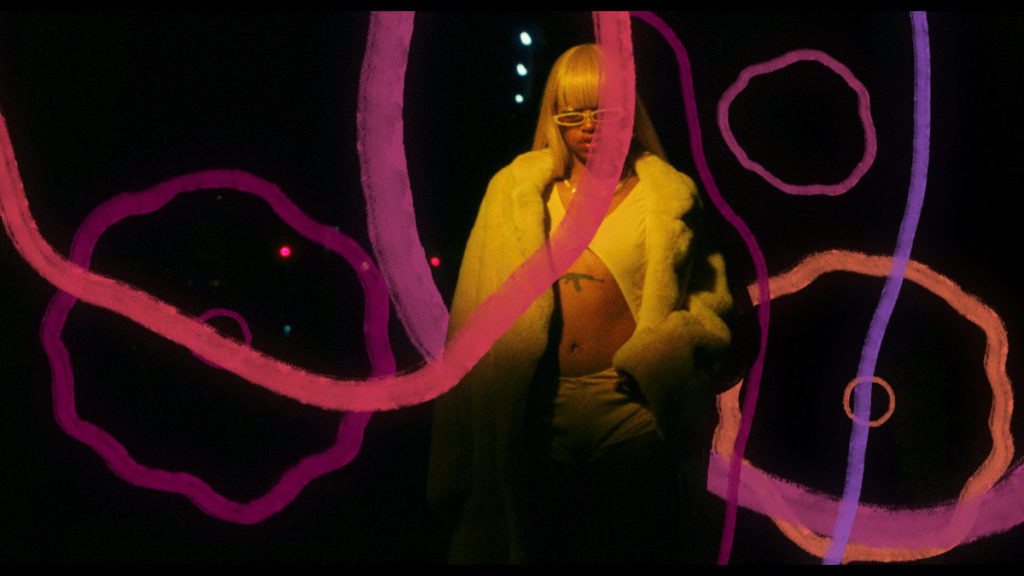
Her Smell by Alex Ross Perry[/caption]
Ranging from period pieces to police dramas, and even incorporating elements of sci-fi, the Toronto International Film Festival unveiled today the 12 feature films that comprise the 2018 Platform lineup. The program’s lineup includes four features (30%) directed or co-directed by women, and seven titles that feature strong women in leading roles. Hailing from the Americas, Europe, and Asia, all but two of the titles will be making their World Premiere at the Festival. Caroline Poggi & Jonathan Vinel’s Jessica Forever is the standout feature directorial debut in the program.
Now in its fourth year, Platform is the Toronto International Film Festival’s juried program that champions risk-taking, with a lineup of up to 12 works with high artistic merit and a bold directorial vision. A three-person jury selects the winner of the Toronto Platform Prize, an award of $25,000 CAD made possible by Air France, which will be presented to the best film in the lineup at the Awards Ceremony on the last day of the Festival.
Previous titles that have screened as part of the program include Armando Iannucci’s The Death of Stalin (2017), Warwick Thornton’s Sweet Country (2017), Pablo Larraín’s Jackie (2016), Barry Jenkins’ Moonlight (2016), and Eva Husson’s Bang Gang (2015).
-
Toronto International Film Festival Unveils 12 Bold Films on 2018 Platform Lineup
[caption id="attachment_31303" align="aligncenter" width="1200"]
Her Smell by Alex Ross Perry[/caption]
Ranging from period pieces to police dramas, and even incorporating elements of sci-fi, the Toronto International Film Festival unveiled today the 12 feature films that comprise the 2018 Platform lineup. The program’s lineup includes four features (30%) directed or co-directed by women, and seven titles that feature strong women in leading roles. Hailing from the Americas, Europe, and Asia, all but two of the titles will be making their World Premiere at the Festival. Caroline Poggi & Jonathan Vinel’s Jessica Forever is the standout feature directorial debut in the program.
Now in its fourth year, Platform is the Toronto International Film Festival’s juried program that champions risk-taking, with a lineup of up to 12 works with high artistic merit and a bold directorial vision. A three-person jury selects the winner of the Toronto Platform Prize, an award of $25,000 CAD made possible by Air France, which will be presented to the best film in the lineup at the Awards Ceremony on the last day of the Festival.
Previous titles that have screened as part of the program include Armando Iannucci’s The Death of Stalin (2017), Warwick Thornton’s Sweet Country (2017), Pablo Larraín’s Jackie (2016), Barry Jenkins’ Moonlight (2016), and Eva Husson’s Bang Gang (2015).
-
World Premiere of JESSICA FOREVER to Close Toronto International Film Festival’s 2018 Platform Program
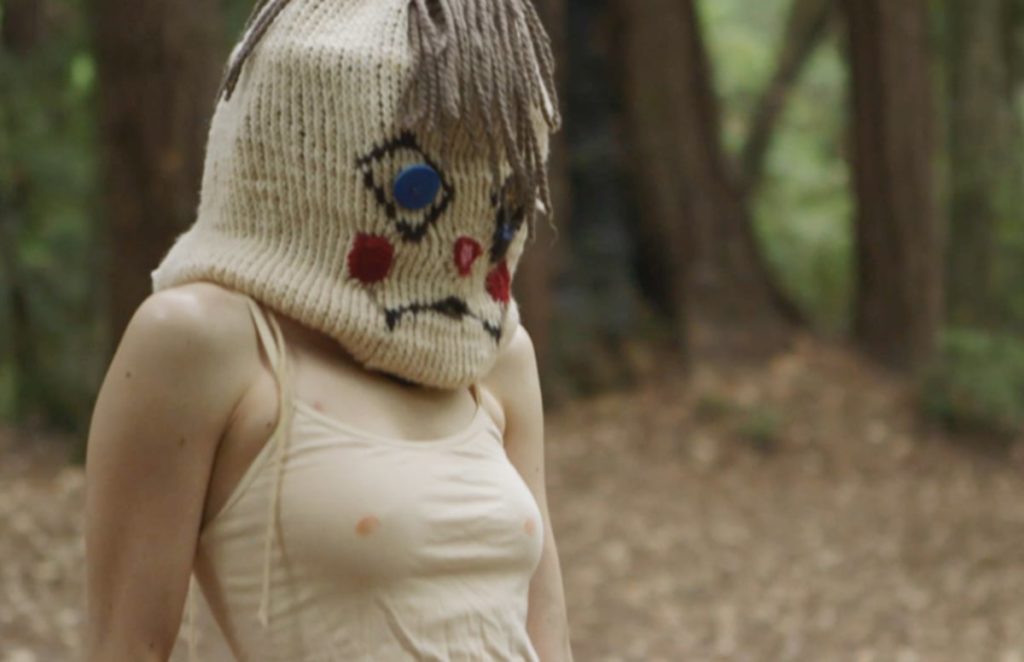
The World Premiere of Caroline Poggi and Jonathan Vinel’s highly anticipated feature-film debut, Jessica Forever, will be the closing film of the Toronto International Film Festival’s 2018 Platform program. The duo have previously collaborated on three critically acclaimed short films that have travelled the international festival circuit.
“Jessica Forever is among the most formally inventive titles in the lineup, and we are very pleased that it will be closing the program,” said TIFF Director & CEO Piers Handling. “This is exactly the kind of film that belongs in Platform: audacious, surprising, and effective in its futurism. We are excited to see how TIFF audiences will react to the film.”
Jessica Forever presents a dystopian world where violent youths wreak havoc. Jessica, the first person to show love and understanding to some of these troubled souls, is the leader of a group of rehabilitated marauders who are on a quest to create a more peaceful world.
“We are very happy to have Jessica Forever premiere in such a prestigious selection, and we feel really honored,” said the film’s co-directors. “It will be the first public screening of our movie, so it’s a strange mix between fear and joy. The Festival is also going to be our first trip to North America!”
The 43rd Toronto International Film Festival runs from September 6 to 16, 2018.
-
World Premiere of Tim Sutton’s Heartland Drama DONNYBROOK to Open 2018 Toronto International Film Festival’s Platform Program
The World Premiere of Donnybrook, the powerful new film from Tim Sutton (Memphis, Dark Night) will be the opening film of the 2018 Toronto International Film Festival’s Platform program. Starring Frank Grillo, Margaret Qualley, James Badge Dale and Jamie Bell, the film is Sutton’s fourth directorial effort, most ambitious project to date, and his first title at the Festival.
“Tim Sutton’s unflinching portrayal of the American heartland masterfully captures many of the anxieties that exist in our society today,” said TIFF Director & CEO Piers Handling. “Donnybrook is the perfect choice to open Platform, showcasing not only the calibre of filmmaking in the lineup, but also the depth of the challenging stories that make up the program.”
Set in the shadows of today’s America, Donnybrook tells the story of a young veteran who — seeing no way out for his poverty-stricken family — robs a gun shop to fund his entry fee into a legendary, bare-knuckle tournament, where the winner gets $100,000 and a chance for a new life.
“It’s a profound honor that Donnybrook was chosen to open this year’s Platform section at TIFF,” said Sutton. “I set out to make a film that reckons with the extreme times we are living in. Donnybrook is about the fight to survive — physically, financially, and emotionally. While creating it I found not only darkness, fear, and violence, but also beauty, tenderness, and wonder. I’m thrilled the programmers responded to the film, and I look forward to presenting it to audiences on the big screen with the cast and crew by my side.”
The 43rd Toronto International Film Festival runs from September 6 to 16, 2018.
-
GARRY WINOGRAND: ALL THINGS ARE PHOTOGRAPHABLE, Documentary on Photographer Garry Winogrand, Opens on September 19 [Trailer]
Garry Winogrand: All Things are Photographable is the first documentary made on the life and work of Garry Winogrand, who was the epic photographer of 20th century American life. Directed by Sasha Waters Freyer, the film will open on Wednesday, September 19 at New York’s Film Forum with a national rollout to follow.
“What is a photograph?” Garry Winogrand (1928-1984) asks in his iconic, gravelly Bronx accent. Decades before digital technology transformed how we make and see pictures, Winogrand made hundreds of thousands of them with his 35mm Leica, creating an encyclopedic portrait of America from the late 1950s to the early 1980s in the process. When he died suddenly at age 56, Winogrand left behind more than 10,000 rolls of film—more than a quarter of a million pictures! These images capture a bygone era: the New York of Mad Men and the early years of the Women’s Movement, the birth of American suburbs, and the glamour and alienation of Hollywood. He produced so many unseen images that it has taken until now for the full measure of his artistic legacy to emerge. Forged by Winogrand’s own words and images, Garry Winogrand: All Things are Photographable is a stunningly intimate portrait of an artist who both personified his era and transformed it.
Image (top): Portrait of Garry Winogrand. Credit: Judy Teller
Image (bottom): New York, 1968 [laughing woman with ice cream] Credit: Photographs by Garry Winogrand,Collection Center for Creative Photography, The University of Arizona. © The Estate of Garry Winogrand, courtesy of Fraenkel Gallery, San Francisco.
-
Chinese Director Zhang Yimou to Receive 2018 Jaeger-LeCoultre Glory to the Filmmaker Award of Venice Film Festival
Chinese director Zhang Yimou will be awarded the 2018 Jaeger-LeCoultre Glory to the Filmmaker of the 75th Venice International Film Festival. The award, dedicated to a figure who has left a particularly original mark on contemporary cinema, will be conferred on Zhang Yimou on September 6 2018 in the Sala Grande (Palazzo del Cinema), before the world premiere screening Out of Competition of his new film Ying (Shadow).
Regarding this acknowledgment, the Director of the Venice Film Festival Alberto Barbera has stated: “Zhang Yimou is not only one of the most important directors in contemporary cinema, but with his eclectic production, he has represented the evolution of global language of film, and at the same time, the exceptional growth of Chinese cinema. Zhang Yimou has been a pioneer thanks to his capacity to translate authors, stories and the richness of Chinese culture in general into a unique and unmistakable visual style. His unforgettable debut, Red Sorghum (1987), adapted from Nobel award winner Mo Yan, brought him international recognition as one of the most important directors of the Fifth Generation. Since then, his talent in combining the elegance of form with a universal type of narrative structure has won him important acknowledgments, including two Golden Lions for The Story of Qiu Ju (1992) and Not one less (1999). At the turn of the century, the martial arts film Hero (2002) – his third nomination for an Oscar as best foreign-language film – established him as an icon of the Chinese cinema at the global level, and won him the direction of the opening and closing ceremonies of the Olympic Games in Beijing (2008), followed by a series of major productions with International film stars. With Shadow (2018), to be presented in its world premiere screening at the 75th Venice International Film Festival, Zhang Yimou returns to martial arts films with the formal elegance and remarkable inventiveness that has always distinguished his cinema”.
Ying (Shadow) is a martial arts (wuxia) film about the conflict between two feudal groups. In China, during the period of the Three Kingdoms (220-280 circa A.D.), an exiled king and his people develop a plot to regain control of their land. The events are told from the points of view of the king, his sister, his commander, the women trapped in the royal palace and a common citizen.
Four times in Competition at the Venice Film Festival – in 1991 with Raise the Red Lantern, in 1992 with The Story of Qiu Ju, in 1997 with Keep Cool and in 1999 with Not One Less – winner of two Golden Lions, respectively in 1992 and in 1999, a Silver Lion in 1991 and a Coppa Volpi for Best Actress (Gong Li, in 1992 for The Story of Qiu Ju), Zhang Yimou is the only director to have won all the most important prizes of the Venice Film Festival in less than ten years.
Jaeger-LeCoultre is for the fourteenth consecutive year a sponsor of the Venice International Film Festival, and for the twelfth of the Glory to the Filmmaker award. The prize has been awarded in past years to Takeshi Kitano (2007), Abbas Kiarostami (2008), Agnès Varda (2008), Sylvester Stallone (2009), Mani Ratnam (2010), Al Pacino (2011), Spike Lee (2012), Ettore Scola (2013), James Franco (2014), Brian De Palma (2015), Amir Naderi (2016), Stephen Frears (2017).
The 75th Venice International Film Festival will be held on the Lido from August 29th to September 8th 2018, directed by Alberto Barbera and organized by the Biennale chaired by Paolo Baratta.
Zhang Yimou
Zhang Yimou was born in the People’s Republic of China in Xi’an (Province of Shaanxi) in 1950. Encouraged by director-producer Wu Tianming – who in 1987 became the Director of the Xi’an Studios, and began to gather new talents around him – Zhang was able to make his first film as a director, Red Sorghum (Hong gaoliang, 1987), an adaptation of a best-selling novel by Mo Yan, which won the Golden Bear in Berlin in 1988, bringing Zhang and his muse, actress Gong Li, to the attention of audiences and critics. Their artistic and personal relationship lasted through five films. In 1990, the film Ju dou, starring Gong Li, was the first Chinese film to be nominated for an Oscar as Best Foreign Language Film, after it was presented in competition at Cannes. The following year, Raise the Red Lantern (Da hong denglong gaogao gua), won the Silver Lion at the Venice Film Festival, and won him another nomination for an Oscar for Best Foreign-Language Film. His next film, The Story of Qiu Ju (Qiu Ju da guansi, 1992) won the Golden Lion and the Coppa Volpi for Gong Li in Venice. His fifth film with Gong Li, To Live (Huozhe, 1994), was an adaptation of a famous novel by Yu Hua and won the Special Jury Prize as well as Best Actor in Cannes. In 1995, his career took a first turn towards genre cinema with the gangster film Shanghai Triad (Yao ayao yao dao waipo giao, 1995), winner of the Technical Grand Prize in Cannes. The two films that followed were launched successfully at the Venice Film Festival: Keep Cool (Yohua haohao shuo, 1997), and Not One Less (Yige dou buneng shao, 1999), which won the Golden Lion in Venice. In 2000 with The Road Home (Wo de Fuqin muqin) he won the Silver Bear in Berlin, and the Audience Award at Sundance. The film marked the debut of the director’s new muse, Zhang Ziyi, who would work with him in three other films. Following the award-winning Happy Times (Xingfu Shiguang, 2000), also starring Zhang Ziyi, Zhang Yimou again changed course to steer his work towards genre cinema, and more specifically towards the wuxia (martial-chivalrous) genre, first with Hero (Ying xiong, 2002), nominated for an Oscar as Best Foreign-Language Film, and then with The House of Flying Daggers (Shi mian mai fu, 2004). At the time it was filmed, Hero was the costliest film in the history of Chinese cinema, distributed internationally in a new version presented by Quentin Tarantino, a great admirer of the Chinese director. Two years later, The House of Flying Daggers repeated the international success of the earlier film. In 2007, The Curse of the Golden Flower (Mancheng jindai huangjin jia), was yet another historical blockbuster with a budget unprecedented for China, an epic tragedy set during China’s Tang dynasty, starring Gong Li, who came back to work with the director after ten years, and Chow Yun Fat from Hong Kong. The film won him a nomination for an Oscar. In 2010 in Berlin, he presented A Woman, A Gun and a Noodle Shop, a remake of the Coen brothers’ Blood Simple. In 2016, he made the blockbuster film The Great Wall, his first English-language film starring Matt Damon, a fantasy inspired by the construction of the Great Wall of China, which grossed over 330 million dollars around the world, 45 in the United States alone.
-
Emmy-Winning Director/Producer Anthony Hemingway to Receive 2018 HollyShorts Film Festival Indie Maverick Award
Emmy-winning director/producer Anthony Hemingway will be the recipient of the 2018 HollyShorts Film Festival Indie Maverick Award. He will be presented the Award during the festival’s opening night celebration this Thursday August 9 at the TCL Chinese Theater. Past HollyShorts Indie Maverick honorees include Paul Haggis, David Lynch, Eli Roth, Joe Carnahan and Matthew Modine. The festival’s opening night celebration will be hosted by Ben Lyons host of ‘The Oscars: All Access’ for Oscar.com and ABC News.
Anthony Hemingway is on a hot streak, he’s one of the most sought after TV Director/Producers. He recently helmed the pilot episode of USA Network’s and Syfy’s The Purge series, based on the horror film franchise of the same name. The show hails from Universal Cable Productions and Blumhouse Television. In 2016, Hemingway directed and co-executive produced the FX hit-series “The People v. O.J. Simpson: American Crime Story,” which garnered him an Emmy Award for “Outstanding Limited Series,” a Golden Globe for “Best Miniseries or Television Film,” a BAFTA TV Award for “Best International Programme,” a PGA David L. Wolper Award for “Outstanding Producer of Long-Form Television,” a NAACP Image Award for “Outstanding Television Movie, Limited-Series or Dramatic Special,” and an Emmy nomination in the “Outstanding Directing for a Limited Series, Movie or a Dramatic Special” category.
HollyShorts opening night will feature English actress Nathalie Emmanuel (Game of Thrones) who will premiere her short film RUN (Directed by Alex Lanipekun). Joining Emmanuel on opening night will be Mark Lobatto’s short STEALING SILVER which stars Maisie Williams from Game of Thrones, Lisa Edelstein’s (The Girlfriend’s Guide) short film UNZIPPING, Jesse Bradford’s (Shooter) short film THE DAY OF MATTHEW MONTGOMERY, Jocelyn Stamat’s short film LABORATORY CONDITIONS, Carlson Young’s (MTV’s Scream) short THE BLAZING WORLD and JAMESON, a short film written by John Humber.
Nearly 400 short films will compete for the festival’s top prizes. Last year HollyShorts finalists included 3 out of the 5 Live Action Oscar nominees and the winning short Silent Child from Rachel Shenton and Chris Overton. This year, HollyShorts received an all-time record 5,000 submissions from over 80 countries. The competition will feature Live Action, Animation and Documentary Shorts as well as web series, student shorts, music videos, TV pilots, and VR. The festival also features a screenplay competition where the winning short gets greenlit, shot and shown at next year’s festival courtesy of Seattle Film Summit.
-
Films From Barry Jenkins, Alex Ross Perry, Claire Denis among Main Slate of 56th NY Film Festival
[caption id="attachment_31277" align="aligncenter" width="1200"]
If Beale Street Could Talk[/caption]
The Film Society of Lincoln Center today announced the 30 films for the Main Slate of the 56th New York Film Festival taking place September 28 to October 14, 2018.
This year’s Main Slate showcases films from 22 different countries, including new titles from celebrated auteurs, extraordinary work from directors making their first NYFF bows, and captivating features that wowed audiences at international festivals. Five films in the festival were honored at Cannes, including Hirokazu Kore-eda’s Palme d’Or–winner Shoplifters; Jean-Luc Godard’s The Image Book, awarded a Special Palme d’Or; Cold War, which took home the Best Director prize for Paweł Pawlikowski; and Alice Rohrwacher’s Happy as Lazzaro and Jafar Panahi’s 3 Faces, which shared the Best Screenplay award. Returning to the festival for the third consecutive year is Hong Sangsoo with two new films, joined by his fellow NYFF54 filmmakers Olivier Assayas and Barry Jenkins. Frederick Wiseman makes his 10th appearance at the festival, while other returning filmmakers include Joel & Ethan Coen, Alex Ross Perry, Claire Denis, Ulrich Köhler, Lee Chang-dong, Jia Zhangke, and Christian Petzold. Making both their directorial and NYFF debuts are Paul Dano and Richard Billingham, and Louis Garrel makes his first NYFF showing as a director. Other filmmakers new to the festival include Dominga Sotomayor, Christophe Honoré, Tamara Jenkins, Mariano Llinás, and Ying Liang, as well as Bi Gan and Ryûsuke Hamaguchi, both alumni of New Directors/New Films 2016.
The NYFF56 Opening Night is Yorgos Lanthimos’s The Favourite, Alfonso Cuarón’s ROMA is Centerpiece, and Julian Schnabel’s At Eternity’s Gate will close the festival.
NYFF Director and Selection Committee Chair Kent Jones said, “Francis Ford Coppola said that the cinema would become a real art form only when the tools of moviemaking became as inexpensive as paints, brushes, and canvases. That has come to pass, but at the same time it’s become increasingly tough to do serious work that is beholden to nothing but the filmmaker’s need to express these emotions in this form in moving images and sound. So if I were pressed to choose one word to describe the films in this year’s Main Slate, it would be: bravery. These films were made all over the globe, by young filmmakers like Dominga Sotomayor and masters like Fred Wiseman, by artists of vastly different sensibilities from Claire Denis to the Coen Brothers, Jafar Panahi to Jean-Luc Godard. And the unifying thread is their bravery, the bravery needed to fight past the urge to commercialized smoothness and mediocrity that is always assuming new forms. That’s what makes every single title in this year’s Main Slate so precious, and so vital.”
The 56th New York Film Festival Main Slate
Opening Night
The Favourite
Dir. Yorgos Lanthimos, Ireland/UK/USA, 2018, 121m
In Yorgos Lanthimos’s wildly intricate and very darkly funny new film, Sarah Churchill, the Duchess of Marlborough (Rachel Weisz), and her servant Abigail Hill (Emma Stone) engage in a sexually charged fight to the death for the body and soul of Queen Anne (Olivia Colman) at the height of the War of the Spanish Succession. This trio of truly brilliant performances is the dynamo that powers Lanthimos’s top-to-bottom reimagining of the costume epic, in which the visual pageantry of court life in 18th-century England becomes not just a lushly appointed backdrop but an ironically heightened counterpoint to the primal conflict unreeling behind closed doors. A Fox Searchlight Pictures release.
Centerpiece
ROMA
Dir. Alfonso Cuarón, Mexico/USA, 2018, 135m
In Alfonso Cuarón’s autobiographically inspired film, set in Mexico City in the early ’70s, we are placed within the physical and emotional terrain of a middle-class family whose center is quietly and unassumingly held by its beloved live-in nanny and housekeeper (Yalitza Aparicio). The cast is uniformly magnificent, but the real star of ROMA is the world itself, fully present and vibrantly alive, from sudden life-changing events to the slightest shifts in mood and atmosphere. Cuarón tells us an epic story of everyday life while also gently sweeping us into a vast cinematic experience, in which time and space breathe and majestically unfold. Shot in breathtaking black and white and featuring a sound design that represents something new in the medium, ROMA is a truly visionary work. A Netflix release.
Closing Night
At Eternity’s Gate
Dir. Julian Schnabel, USA/France, 2018, 106m
North American Premiere
Julian Schnabel’s ravishingly tactile and luminous new film takes a fresh look at the last days of Vincent van Gogh, and in the process revivifies our sense of the artist as a living, feeling human being. Schnabel; his co-writers Jean-Claude Carrière and Louise Kugelberg, also the film’s editor; and cinematographer Benoît Delhomme strip everything down to essentials, fusing the sensual, the emotional, and the spiritual. And the pulsing heart of At Eternity’s Gate is Willem Dafoe’s shattering performance: his Vincent is at once lucid, mad, brilliant, helpless, defeated, and, finally, triumphant. With Oscar Isaac as Gauguin, Rupert Friend as Theo, Mathieu Amalric as Dr. Gachet, Emmanuelle Seigner as Madame Ginoux, and Mads Mikkelsen as The Priest. A CBS Films release.
3 Faces
Dir. Jafar Panahi, Iran, 2018, 100m
U.S. Premiere
Iranian director Jafar Panahi’s fourth completed feature since he was officially banned from filmmaking is one of his very best. Panahi begins with a smartphone video shot by a young woman (Marziyeh Rezaei) who announces to the camera that her parents have forbidden her from realizing her dream of acting and then, by all appearances, takes her own life. The recipient of the video, Behnaz Jafari, as herself, asks Panahi, as himself, to drive her to the woman’s tiny home village near the Turkish border to investigate. From there, 3 Faces builds in narrative, thematic, and visual intricacy to put forth a grand expression of community and solidarity under the eye of oppression.
Asako I & II
Dir. Ryûsuke Hamaguchi, Japan/France, 2018, 119m
U.S. Premiere
A truly original Vertigo riff, based on a novel by Tomoka Shibasaki, Asako I & II is an enchanting, unnerving paean to the notion of love as a trance state. Asako (Erika Karata) and Baku (Masahiro Higashide) share an intense, all-consuming romance—but one day the moody Baku ups and vanishes. Two years later, having moved from Osaka to Tokyo, Asako meets Baku’s exact double. Ryûsuke Hamaguchi, who gained plenty of attention for 2015’s five-hour-plus Happy Hour, has returned with a beguiling and mysterious film that traces the trajectory of a love—or, to be accurate, two loves—found, lost, displaced, and regained. A Grasshopper Film release.
Ash Is Purest White
Dir. Jia Zhangke, China, 2018, 142m
U.S. Premiere
Jia Zhangke’s extraordinary body of work has doubled as a record of 21st-century China and its warp-speed transformations. A tragicomedy in the fullest sense, Ash Is Purest White is at once his funniest and saddest film, portraying the passage of time through narrative ellipses and, like his Mountains May Depart (NYFF53), a three-part structure. Despite its jianghu—criminal underworld—setting, Ash is less a gangster movie than a melodrama, beginning by following Qiao and her mobster boyfriend Bin as they stake out their turf against rivals and upstarts in 2001 postindustrial Datong before expanding out into an epic narrative of how abstract forces shape individual lives. As the formidable, quick-witted Qiao, a never better Zhao Tao has fashioned a heroine for the ages. A Cohen Media Group release.
The Ballad of Buster Scruggs
Dir. Joel Coen & Ethan Coen, USA, 2018, 128m
North American Premiere
Here’s something new from the Coen Brothers—an anthology of short films based on a fictional book of “western tales,” featuring Tim Blake Nelson as a murderous, white-hatted singing cowboy; James Franco as a bad luck bank-robber; Liam Neeson as the impresario of a traveling medicine show with increasingly diminishing returns; Tom Waits as a die-hard gold prospector; Zoe Kazan and Bill Heck as two shy people who almost come together on the wagon trail; and Tyne Daly, Saul Rubinek, Brendan Gleeson, Chelcie Ross, and Jonjo O’Neill as a motley crew on a stagecoach to nowhere. Each story is distinct, but unified by the thematic thread of mortality. As a whole movie experience, Buster Scruggs is wildly entertaining, and, like all Coen films, endlessly surprising. An Annapurna Production and Netflix release.
Burning
Dir. Lee Chang-dong, South Korea, 2018, 148m
Expanded from Haruki Murakami’s short story “Barn Burning,” the sixth feature from Korean master Lee Chang-dong, known best in the U.S. for such searing, emotional dramas as Secret Sunshine (NYFF45) and Poetry (NYFF48), begins by tracing a romantic triangle of sorts: Jongsu (Yoo Ah-in), an aspiring writer, becomes involved with a woman he knew from childhood, Haemi (Jun Jong-seo), who is about to embark on a trip to Africa. She returns some weeks later with a fellow Korean, the Gatsby-esque Ben (Steven Yeun), who has a mysterious source of income and a very unusual hobby. A tense, haunting multiple-character study, the film accumulates a series of unanswered questions and unspoken motivations to conjure a totalizing mood of uncertainty and quietly bends the contours of the thriller genre to brilliant effect. A Well Go USA release.
Cold War
Dir. Paweł Pawlikowski, Poland, 2018, 90m
Academy Award–winner Paweł Pawlikowski follows up his box-office sensation Ida with this bittersweet, exquisitely crafted tale of an impossible love. Set between the late 1940s and early 1960s, Cold War is, as the title implies, a Soviet-era drama, but it stringently and inventively avoids the clichés of many a classical-minded World War II art film, tracking the tempestuous love between pianist (Tomasz Kot) and singer (Joanna Kulig) as they navigate the realities of living in both Poland and Paris, in and outside of the Iron Curtain. Shot in crisp black-and-white and set to a bewitching jazzy score, Pawlikowski’s evocative film consummately depicts an uncompromising passion caught up in the gears of history. An Amazon Studios release.
A Faithful Man / L’Homme fidèle
Dir. Louis Garrel, France, 2018, 75m
U.S. Premiere
Nine years after she left him for his best friend, journalist Abel (Louis Garrel) gets back together with his recently widowed old flame Marianne (Laetitia Casta). It seems to be a beautiful new beginning, but soon the hapless Abel finds himself embroiled in all sorts of dramas: the come-ons of a wily jeune femme (Lily-Rose Depp), the machinations of Marianne’s morbid young son, and some unsavory questions about what exactly happened to his girlfriend’s first husband. Shifting points of view as nimbly as its players switch partners, the sophomore feature from actor/director Louis Garrel—co-written with the legendary Jean-Claude Carrière—is at once a beguiling bedroom farce and a slippery inquiry into truth, subjectivity, and the elusive nature of romantic attraction.
A Family Tour
Dir. Ying Liang, Taiwan/Hong Kong/Singapore/Malaysia, 2018, 107m
U.S. Premiere
Since his 2012 feature When Night Falls, a stinging critique of state power that the Chinese authorities attempted to suppress, the director Ying Liang has been forced to live in exile in Hong Kong. His return to feature filmmaking is a characteristically precise and powerful work, and, as inspired by his own precarious situation and based on a reunion with his in-laws, an autobiographical one. The film follows a Hong Kong–exiled director (Gong Zhe) as she travels to a film festival in Taiwan with her husband and toddler, while her ailing mother (Nai An) vacations there separately with a tour group. To avoid attracting attention, the family shadows the tour’s sightseeing itinerary, visiting each other during photo stops and mealtimes. An empathetic snapshot of a mother-daughter relationship, this brave, poised film is also a deeply moving testament to the inseparability of the personal and the political.
La Flor
Dir. Mariano Llinás, Argentina, 2018, 807m
North American Premiere
A decade in the making, Mariano Llinás’s follow-up to his 2008 cult classic Extraordinary Stories is an unrepeatable labor of love and madness that redefines the concept of binge viewing. The director himself appears at the start to preview the six disparate episodes that await, each starring the same four remarkable actresses: Elisa Carricajo, Valeria Correa, Pilar Gamboa, and Laura Paredes. Overflowing with nested subplots and whiplash digressions, La Flor shape-shifts from a B-movie to a musical to a spy thriller to a category-defying metafiction—all of them without endings—to a remake of a very well-known French classic and, finally, to an enigmatic period piece that lacks a beginning (granted, all notions of beginnings and endings become fuzzy after 14 hours). An adventure in scale and duration, La Flor is a marvelously entertaining exploration of the possibilities of fiction that lands somewhere close to its outer limits.
Grass
Dir. Hong Sangsoo, South Korea, 2018, 66m
U.S. Premiere
Sitting in a café, typing on a laptop, Areum (Kim Min-hee) eavesdrops on three dramatic situations unfolding in her general vicinity: a young woman bound for Europe and a male friend who erupt in vitriolic accusations, a washed-up actor trying to sweet-talk his way into staying with an old friend, and a narcissistic actor-director (Jung Jin-young) trying to rope a young writer into his next project. Playing out largely in long-take two-shots, these conversations create a kind of never-ending theatrical performance, with Areum as the anchor. With its raw emotions and seeming formal simplicity masking a complex episodic approach, Grass finds Korean master Hong Sangsoo setting up a fascinating narrative problem for himself and solving it as only he can. A Cinema Guild release.
Happy as Lazzaro / Lazzaro felice
Dir. Alice Rohrwacher, Italy, 2018, 128m
North American Premiere
In the transfiguring and transfixing third feature from Alice Rohrwacher (The Wonders, NYFF52), we find ourselves amid a throng of tobacco farmers living in a state of extreme deprivation on an estate known as Inviolata, with wide-eyed teenager Lazzaro (nonprofessional discovery Adriano Tardiolo) emerging as a focal point. Although this all seems to be taking place in the past (as implied by the warm grain of Hélène Louvart’s 16mm cinematography), a stunning mid-movie leap vaults the narrative squarely into the present day and into the realm of parable. In a fable touching on perennial class struggle with Christian overtones, Rohrwacher summons the spirit of Pasolini, while also nodding to Ermanno Olmi and Visconti. A Netflix release.
Her Smell
Dir. Alex Ross Perry, USA, 2018, 134m
U.S. Premiere
The latest from Alex Ross Perry (Listen Up Philip, NYFF52) traces the psychology of an unforgettable woman under the influence. Becky Something (Elisabeth Moss, in a powerhouse performance), the influential lead singer of a popular ’90s alt-rock outfit, struggles with her demons as friends, family, and bandmates alike behold her unraveling through a prism of horror, empathy, and resentment. Perry tracks Becky’s self-destruction—and potential creative redemption—through snaking long takes (arguably some of DP Sean Price Williams’s finest work) in claustrophobic backstage hallways, garishly lit dressing rooms, and recording studios, and the film’s ensemble cast (including Cara Delevingne, Ashley Benson, Amber Heard, Virginia Madsen, Dan Stevens, and Eric Stoltz) is impeccable in support of Moss’s rattling trip to the brink.
High Life
Dir. Claire Denis, Germany/France/USA/UK/Poland, 2018, 110m
U.S. Premiere
Claire Denis’s latest film is set aboard a spacecraft piloted by death row prisoners on a decades-long suicide mission to enter and harness the power of a black hole. But as is always the case with this filmmaker, the actual structure seems to evolve organically through moods and uncanny spells, and the closest juxtapositions of violence and intimacy. High Life features some of the most unsettling passages Denis has ever filmed, as well as moments of the greatest delicacy and tenderness. With Robert Pattinson, Juliette Binoche, André Benjamin, and Mia Goth.
Hotel by the River
Dir. Hong Sangsoo, South Korea, 2018, 96m
U.S. Premiere
Two tales intersect at a riverside hotel: an elderly poet (Ki Joo-bong), invited to stay there for free by the owner, summons his two estranged sons, sensing his life drawing to a close; and a young woman (Kim Min-hee) nursing a recently broken heart is visited by a friend who tries to console her. At times these threads overlap, at others they run tantalizingly close to each other. Using a stark black-and-white palette and handheld cinematography (with frequent DP Kim Hyung-ku), Hong crafts an affecting examination of family, mortality, and the ways in which we attempt to heal wounds old and fresh.
If Beale Street Could Talk
Dir. Barry Jenkins, USA, 2018
U.S. Premiere
Barry Jenkins’s follow-up to his Oscar-winning Moonlight is a carefully wrought adaptation of James Baldwin’s penultimate novel, set in Harlem in the early 1970s. Fonny (Stephan James) and Tish (KiKi Layne) are childhood friends who fall in love as young adults. Tish becomes pregnant, and Fonny suffers a fate tragically common to young African-American men: he is arrested and convicted for a crime he didn’t commit. Jenkins’s deeply soulful film stays focused on the emotional currents between parents and children, couples and friends, all of whom spend their lives repairing and reinforcing the precious but fraying bonds of family and community in an unforgiving racist world. With Regina King, Colman Domingo, Teyonah Parris, Aunjanue Ellis, and Michael Beach. An Annapurna Pictures release.
The Image Book / Le Livre d’image
Dir. Jean-Luc Godard, Switzerland, 2018, 90m
U.S. Premiere
Jean-Luc Godard’s “late period” probably began with 2001’s In Praise of Love, and since then he has been formulating and enacting a path toward an ending: the ending of individual films, the ending of engagement with cinema, and, now that he’s 87, the possible ending of his own existence. With The Image Book all barriers between the artist, his art, and his audience have dissolved. The film is structured in chapters and predominantly comprised of pre-existing images, many of which will be familiar from Godard’s previous work. The relationship between image and sound is, as always, intensely physical and sometimes jaw-dropping. And…isn’t it enough to say, simply, that this is the work of a master? And that you have to see it? A Kino Lorber release.
In My Room
Dir. Ulrich Köhler, Germany, 2018, 119m
U.S. Premiere
The fourth feature from German director Ulrich Köhler (Sleeping Sickness, NYFF49) takes a disarmingly realistic and restrained approach to a fantastical premise: the eternally popular fantasy of the last man on earth. Sad-sack, 40ish TV cameraman Armin (Hans Löw) has been summoned home by his father to help tend to his terminally ill grandmother, but awakens one morning to find the world around him entirely depopulated. Eventually, the film introduces a fellow survivor, an Eve (Elena Radonicich) to complicate the apparent contentment of its Adam. In My Room is a film of meticulous details and sly, subtle ironies, crafted by the skills, temperament, and philosophical inquiry of an emerging master. A Grasshopper Film release.
Long Day’s Journey Into Night
Dir. Bi Gan, China/France, 2018, 133m
U.S. Premiere
As proven by his knockout debut, Kaili Blues, Bi Gan is preoccupied with film’s potential to both materialize mental space and convey physical sensation. His cinematic ambitions are further crystallized, to say the least, in Long Day’s Journey Into Night, a noir-tinged film about a solitary man (Huang Jue) haunted by loss and regret, told in two parts: the first an achronological mosaic, the second a nocturnal dream. Again centering around his native province of Guizhou in southwest China, the director has created a film like nothing you’ve seen before, especially in the second half’s hour-long, gravity-defying 3D sequence shot, which plunges its protagonist—and us—through a labyrinthine cityscape.
Monrovia, Indiana
Dir. Frederick Wiseman, USA, 2018, 143m
U.S. Premiere
Every new film from Frederick Wiseman, now 88 years old, seems more vigorous and acute than the last. His subject here is Monrovia, Indiana; population 1063, as of 2017; located deep in the American heartland. Wiseman alights on key activities: talk among friends over coffee at the diner, packaging meat at the supermarket, trucks loading with corn, expansion debates at town planning commission meetings, and, most intriguingly, a funeral. Monrovia, Indiana is a tough, piercing look at the rhythm and texture of life as it is lived in a wide swathe of this country. A Zipporah Films release.
Non-Fiction / Doubles vies
Dir. Olivier Assayas, France, 2018, 106m
Set within the world of publishing, Olivier Assayas’s new film finds two hopelessly intertwined couples—Guillaume Canet’s troubled book executive and Juliette Binoche’s weary actress; Vincent Macaigne’s boorish novelist and Nora Hamzawi’s straight-and-balanced political operative—obsessed with the state of things, and how (or when) it will (or might) change. Is print dying? Has blogging replaced writing? Is fiction over? But the divide between what these characters—and their friends, and their enemies, and everyone in between—talk about and what is actually happening between them, moment by moment, is what gives Non-Fiction its very particular charm, humor, and lifelike stabs of emotion. A Sundance Selects release.
Private Life
Dir. Tamara Jenkins, USA, 2017, 123m
In Tamara Jenkins’s first film in ten years, Kathryn Hahn and Paul Giamatti are achingly real as Rachel and Richard, a middle-aged New York couple caught in the desperation, frustration, and exhaustion of trying to have a child, whether by fertility treatments or adoption or surrogate motherhood. They find a willing partner in Sadie (the formidable Kayli Carter), Richard’s niece by marriage, who happily agrees to donate her eggs, and the three of them build their own little outcast family in the process. Private Life is a wonder, by turns hilarious and harrowing (sometimes at once), and a very carefully observed portrait of middle-class Bohemian Manhattanites. With John Carroll Lynch and Molly Shannon. A Netflix release.
RAY & LIZ
Dir. Richard Billingham, UK, 2018, 107m
U.S. Premiere
English photographer and visual artist Richard Billingham’s first feature is grounded in the visual and emotional textures of his family portraits, particularly those of his deeply dysfunctional parents, whose names give the film its title. Billingham builds astonishing and unflinching scenes with his principal actors—Ella Smith as Liz, Justin Salinger as Ray, Patrick Romer as the older Ray, Tony Way and Sam Gittins as neighbors, and Joshua Millard-Lloyd as the youngest child—that play out second by second as if by some new form of direct transmission from the artist’s memory bank. There is not a single second of this electrifying debut that doesn’t feel 100% rooted in personal experience.
Shoplifters
Dir. Hirokazu Kore-eda, Japan, 2018, 121m
Hirokazu Kore-eda’s Cannes Palme d’Or winner is a heartrending glimpse into an often invisible segment of Japanese society: those struggling to stay afloat in the face of crushing poverty. On the the margins of Tokyo, a most unusual “family”—a collection of societal castoffs united by their shared outsiderhood and fierce loyalty to one another—survives by petty stealing and grifting. When they welcome into their fold a young girl who’s been abused by her parents, they risk exposing themselves to the authorities and upending their tenuous, below-the-radar existence. The director’s latest masterful, richly observed human drama makes the quietly radical case that it is love—not blood—that defines a family. A Magnolia Pictures release.
Sorry Angel
Dir. Christophe Honoré, France, 2018, 132m
North American Premiere
The ever-unpredictable Christophe Honoré (Love Songs) returns with perhaps his most personal, emotionally rich work yet. At once an intimate chronicle of a romance and a sprawling portrait of gay life in early 1990s France, Sorry Angel follows the intertwining journeys of Jacques (Pierre Deladonchamps), a worldly, HIV-positive Parisian writer confronting his own mortality, and Arthur (Vincent Lacoste), a curious, carefree university student just beginning to live. Brought together by chance, the men find themselves navigating a casual fling that gradually deepens into a tender, transformative bond. Graced with vivid, complex characters and inspired flights of cinematic imagination, this is a vibrant, life-affirming celebration of love, friendship, and human connection. Released by Strand Releasing.
Too Late to Die Young
Dir. Dominga Sotomayor, Chile/Brazil/Argentina/Netherlands/Qatar, 2018, 110m U.S. Premiere The year 1990 was when Chile transitioned to democracy, but all of that seems a world away for 16-year-old Sofia, who lives far off the grid in a mountain enclave of artists and bohemians. Too Late to Die Young takes place during the hot, languorous days between Christmas and New Year’s Day, when the troubling realities of the adult world—and the elemental forces of nature—begin to intrude on her teenage idyll. Shot in dreamily diaphanous, sun-splashed images and set to period-perfect pop, the second feature from one of Latin American cinema’s most artful and distinctive voices is at once nostalgic and piercing, a portrait of a young woman—and a country—on the cusp of exhilarating and terrifying change. Transit Dir. Christian Petzold, Germany/France, 2018, 101m U.S. Premiere In Christian Petzold’s brilliant and haunting adaptation of German novelist Anna Seghers’s 1942 book Transit Visa, a hollowed-out European refugee (Franz Rogowski), who has escaped from two concentration camps, arrives in Marseille assuming the identity of a dead novelist whose papers he is carrying. There he enters the arid, threadbare world of the refugee community, and becomes enmeshed in the lives of a desperate young mother and son, and a mysterious woman named Marie (Paula Beer). Transit is a film told in two tenses: 1940 and right now, historic past and immediate present, like two translucent panes held up to the light and mysteriously contrasting and blending. Wildlife Dir. Paul Dano, USA, 2018, 104m In the impressive directorial debut from actor Paul Dano (There Will Be Blood), a carefully wrought adaptation of Richard Ford’s 1990 novel, a family comes apart one loosely stitched seam at a time. We are in the lonely expanses of the American west in the mid-’60s. An affable man (Jake Gyllenhaal), down on his luck, runs off to fight the wildfires raging in the mountains. His wife (Carey Mulligan) strikes out blindly in search of security and finds herself running amok. It is left to their young adolescent son Joe (Ed Oxenbould) to hold the center. Co-written by Zoe Kazan, Wildlife is made with a sensitivity and at a level of craft that are increasingly rare in movies. An IFC Films release.
-
Kevin Brooks’ LAST DAY Wins $10,000 Memphis Film Prize
[caption id="attachment_31273" align="aligncenter" width="1200"]
Memphis Film Prize 2018 – Prize Presentation – David Merrill, Ricky D. Smith, Kevn Brooks, Gregory Kallenberg (Photo by Wildman)[/caption]
Last Day directed by Kevin Brooks is the winner of the 3rd annual Memphis Film Prize, along with the Film Prize’s coveted top award of $10,000 cash. Brooks’s Last Day centered on the plight of a young man facing a sentencing for a crime he did not commit, and the manner in which he and his wife deal with that potentially devastating news, while shielding it from their young daughter. The short film featured exemplary performances by Ricky D. Smith as the father and Rosalyn R. Ross as the mother.
Last Day was also one of four films among the ten finalists to be helmed by black filmmakers that also dealt with timely socio-economic and political topics in a dynamic and affecting manner (including Daniel R. Ferrell’s Dean’s List, Will Robbins’s Minority, and Jaron S. Lockridge’s The Stix).
“In our third year, the Memphis Film Prize films, once again, raised the bar in both ambition, vision, and technical skill, so Kevin and the cast and crew of Last Day sincerely earned our $10,000 prize,” said Gregory Kallenberg, founder and executive director of the Film Prize Foundation. “This year showed remarkable growth both in the number of filmmaker submissions, as well as the number of audience members turning out to watch the films and cast their votes. It’s become very clear that Memphis has embraced our mission at the Film Prize to inspire great filmmaking, and then reward it in a very direct and profitable way.”
This year, the rapidly growing event nearly doubled their audience numbers from last year with close to 1300 people attending the screenings throughout the weekend in Memphis. In three short years, Memphis Film Prize has not simply rewarded the winning films with their famously large checks, but has also influenced other film festivals to offer filmmakers more concrete benefits, be it cash prizes or paid residencies.
-
2018 Fantasia International Film Festival Wraps and Announces Audience Awards Winners
[caption id="attachment_29286" align="aligncenter" width="1024"]
John Cho stars in SEARCHING – directed by Aneesh Chaganty. Photo Courtesy of Screen Gems[/caption]
The Fantasia International Film Festival wrapped its 2018 edition on August 2nd with the sold out Canadian Premiere of Panos Cosmatos’ MANDY, and announced its final batch of awards, including the Audience Awards. The 23rd edition of Fantasia will occur July 11th through August 1st, 2019.
THE AUDIENCE AWARDS
Best Asian Feature Gold – 1987: When the Day Comes (South Korea, Dir: Jang Joon-hwan) Silver – One Cut of the Dead (Japan, Dir: Shinichiro Ueda) Bronze – The Travelling Cat Chronicles (Japan, Dir: Kôichirô Miki) Best European, North-South American Feature Gold – Terrified (Argentina, Dir: Demián Rugna) Silver – Heavy Trip (Belgium-Finland-Norway, Dir: Jukka Vidgren, Juuso Laatio) Bronze – Searching (USA, Dir: Aneesh Chaganty) Best Canadian or Quebec Feature Gold – Montreal Dead End (Canada, Dir: Various) Silver – Le Nid (Canada, Dir: David Paradis) Bronze – Knuckleball (Canada, Dir: Michael Peterson) Best Animated Feature Gold – Penguin Highway (Japan, Dir: Hiroyasu Ishida) Silver – Crisis Jung (France, Dir: Baptiste Gaubert, Jérémie Hoarau) Bronze – Violence Voyager (Japan, Dir: Ujicha) Guru Prize – Best Action Feature Gold – Chuck Steel: Night of the Trampires (UK, Dir: Mike Mort) Silver – The Witch: Part 1. The Subversion (South Korea, Dir: Park Hoon-jung) Bronze – Believer (South Korea, Dir: Lee Hae-young) Best Documentary Gold – Boiled Angels: The Trial of Mike Diana (USA, Dir: Frank Henenlotter) Best Short Film Gold – Fire In Cardboard City (New Zealand, Dir: Phil Brough) Silver – Eau de Jésus (Canada, Dir: Mat Rich) Bronze – Entropia (USA, Dir: Marinah Janello)THE ACTION! JURY AWARD
The Action! jury was comprised of Alain Moussi, Sebastien Landry, and Laurence “Baz” Morais. WINNER: Believer (South Korea, Dir: Lee Hae-young) Jury statement: “A gripping story supported by credible characters, convincingly performed. The direction is flawless, with action scenes in the service of the story, and not the other way around. For these reasons, BELIEVER enters the select club of excellent Korean revenge movies… with a twist.” Special Mention: Chuck Steel: Night of the Trampires (UK, Dir: Mike Mort) “Technically flawless, Chuck Steel has the merit of totally owning its DNA: a raw and explosive animated film that never wimps out. A motorcycle ride at 200 km/hour, on a gravel road. Thanks, Chuck Steel!”THE SÉQUENCES JURY PRIZE
The Séquences jury was comprised of Donato Totaro (President), Jules Couturier, and Pascal Grenier. WINNER: Bodied (USA, Dir: Joseph Kahn) “For its exciting re-invention of the sports film as a performance art that breathlessly captures the kinetic energy, tension, danger and social power (and fun) of battle rap.”THE L’ÉCRAN FANTASTIQUE AWARD
The L’Écran Fantastique Award for the 2018 edition of Fantasia goes to to Mari Okada’s Maquia: When the Promised Flower Blooms. This distinction is conferred on the film for the high quality of its animation, its exceptional sense of staging, at once epic and intimate, and the universal depth of its script, questioning notions surrounding parent-child relationships, and this, in a context both fantastic in the universe it depicts, and sharply realist in its humanist discourse. The Prix L’Écran Fantastique rewards a fantasy, horror, or sci-fi feature film produced in 2017 or 2018, unreleased in France and presented as part of Fantasia. The prize consists of a two- to four-page report confirmed for publication in an upcoming edition (with mention of the honorary title awarded as part of Fantasia), and a full page of free publicity during the release of the film in theatres in France. L’Écran Fantastique, which has been in existence for 49 years, is distributed in Europe and Quebec. Its head office is in Paris. Alain Schlockoff is the editor and Yves Rivard, the Canadian correspondent.MY FIRST FANTASIA AWARD
The MFF jury was comprised of Amy Lachapelle, Adèle Fortier, Félix Primeau, and Corinne Raymond Gold – Wishing Box (USA, Dir:Lizzie Zhang) Silver – Made in France (France, Dir: Various) Bronze – Drôle de poisson (France-Switzerland, Dir:Krishna Chandran A. Nair)
-
3100: RUN AND BECOME, Documentary on Endurance Runners Sprints into Theaters on August 17 [Trailer]
3100: Run and Become is a new documentary about why we run; featuring uplifting, and intimate portrait of endurance runners and what motivates them. The documentary directed by Sanjay Rawal (Food Chains) opens in theaters on August 17, 2018.
What would you do to transform your life? How far would you go to change yourself? Would you drive, would you fly, would you run?
These are the themes of a new documentary about why we run, 3100: Run and Become. This uplifting, intimate portrait of endurance runners and what motivates them opens around the US in theaters August 17, 2018.
3100: Run and Become follows Ashprihanal Aalto, an unassuming Finnish paperboy, and Shamita, an Austrian cellist, in their attempts to complete the Self-Transcendence 3100 Mile Race, the world’s longest certified footrace, which takes place each summer June through August. The 3100 encourages runners to discover the limits of their capacities–and to try to go beyond them. And go beyond, they must: the small group of competitors come from all over the world to run a distance that approximates a US cross-country run — a total of 3,100 miles in 52 days – 5,649 laps around one city block in Jamaica, Queens.
Ashprihanal and Shamita’s 3100 quest takes viewers from the heart of this astonishing event in New York to places around the world where ancient cultures have held running sacred for millennia: the Kalahari Desert, Arizona’s Navajo Reservation, and to the mountain temples of Japan. Through the heroic stories of three other runners (Shaun Martin, a Navajo runner and Board Member of Wings of America; Gaolo of the San Bushmen of the Kalahari; and Gyoman-san of the Monks of Mt. Hiei, Japan) 3100: Run and Become presents a portrait of endurance and transformation. Beyond competitiveness and athletic prowess, they run not for glory but for spiritual enlightenment, universal oneness –or because they simply have the responsibility to run.
3100: Run and Become is directed by Sanjay Rawal (Food Chains) and produced by Tanya Ager Meillier (Alias Ruby Blade, Capitalism: a Love Story). It was edited by Alex Meillier (Alias Ruby Blade, Obscene) and shot in 4K by Sean Kirby (Racing Extinction, We are X, Long Strange Trip). The film’s soundtrack, composed by Michael A. Levine, features an original song recorded by Roberta Flack, her first after suffering a stroke in 2016.
https://vimeo.com/261386426
DATE : CITY – THEATER
Aug 17 : Santa Fe – Center for Contemporary Art
Aug 24 : Albuquerque – Regal High Ridge
Aug 31 : Phoenix – Shea 14
Aug 31 : Sedona – Sedona 6
Aug 31 : Flagstaff – Flagstaff 16
Sep 7 : Eugene – Bijou Metro
Sep 7 : Seattle – Varsity Cinemas
Sep 7 : Portland – Cinema 21
Sep 7 : Bend – Pony Village 10
Sep 11 : Boulder – Int’l Film Series
Sep 14 : Denver – Sie FilmCenter
Sep 21 : Chicago – Gene Siskel
Sep 28 : North Lake Tahoe – Tahoe Art Haus and Cinema
Oct 26 : New York – Village East
Nov 9 : LA/Santa Monica – Laemmle Theater
-
Pope Francis Documentary Wins Founder’s Grand Prize at Michael Moore’s 2018 Traverse City Film Festival
Pope Francis – A Man of His Word, written and directed by three-time Academy Award® nominee Wim Wenders won the top prize, the Founders Grand Prize at Michael Moore’s 2018 Traverse City Film Festival. The Audience Awards went to “Streakers” by Peter Luisi for Best Non-Fiction Film, and “The Russian Five” by Joshua Riehl for Best Documentary.
2018 TRAVERSE CITY FILM FESTIVAL AWARDS
AUDIENCE AWARDS
AUDIENCE AWARD FOR BEST FICTION FILM “Streaker” by Peter Luisi AUDIENCE AWARD FOR BEST DOCUMENTARY “The Russian Five” by Joshua RiehlFOUNDERS AWARDS
THE MICHIGAN AWARD “Arthur Miller: Writer” by Rebecca Miller NORA EPHRON AWARD “Amateurs” by Gabriela Pichler BRUCE SINOFSKY AWARD FOR DOCUMENTARY FILMMAKING “One of Us” by Heidi Ewing and Rachel Grady SPECIAL AWARD FOR DOCUMENTARY FILMMAKING “Hillbilly” by Sally Rubin and Ashley York SPECIAL AWARD FOR EXUBERANCE IN DOCUMENTARY FILMMAKING “Bathtubs Over Broadway” by Dava Whisenant YOUSSEF CHAHINE AWARD “The Insult” by Ziad Doueiri STANLEY KUBRICK AWARD FOR BOLD AND INNOVATIVE FILMMAKING Fiction: “The Captain” by Robert Schwentke Non-Fiction: “Our New President” by Maxim Pozdorovkin ROGER EBERT PRIZE FOR BEST FILM BY A FIRST TIME FILMMAKER Fiction: “And Breathe Normally” by Ísold Uggadóttir Non-Fiction: “The Sentence” by Rudy Valdez BEST US FICTION FILM – TIE “Hostiles” by Scott Cooper “Hearts Beat Loud” by Brett Haley BEST FOREIGN FICTION FILM “1945” by Ferenc Török BEST US NONFICTION FILM “Jane Fonda in Five Acts” by Susan Lacy BEST FOREIGN NONFICTION FILM “The Silence of Others” by Robert Bahar, Almudena Carracedo [caption id="attachment_27614" align="aligncenter" width="1200"]
Pope Francis – A Man of His Word[/caption]
FOUNDERS GRAND PRIZE
“Pope Francis: A Man of His Word” by Wim Wenders
SHORT FILM AWARD WINNERS
STUART J. HOLLANDER PRIZE FOR BEST FAMILY FILM “Sherbert Rosencrantz, You’re Beautiful” by Natalie van den Dungen SPECIAL MENTION SHORT FILM “Lifeboat” by Skye Fitzgerald SPECIAL MENTION SHORT FILM “Mini Bimaadiziwin” by Shane McSauby AUDIENCE AWARD BEST DOCUMENTARY SHORT “Period. End of Sentence.” by Rayka Zehtabchi AUDIENCE AWARD BEST FICTION SHORT “Great Choice” by Robin Comisar BEST NONFICTION SHORT FILM “Period. End of Sentence.” by Rayka Zehtabchi BEST FICTION SHORT FILM “Emergency” by Carey WilliamsWINNERS OF THE TCFF BUMPER CONTEST, SPONSORED BY FIM GROUP
Honorable Mentions Tami Evans & Brenda Smith – “Pellicula Flickinicus” Ryan Schmitz, Rich Tran, Sierra Falconer – “Deserted” Patti Perkette – “What Makes a Movie?” Brad Geimenhardt – “Right On Time” John Hobbs – “One More Wish” Sierra Falconer – “The Last Ticket” Award Winners Don Blublaugh – “Game Night” Maggie Buerkle – “Photobomb” John Plough – “Lighthouse,” “Dogwalker,” “Popcorner”

Susanne Bartsch: On Top[/caption]
The documentary