
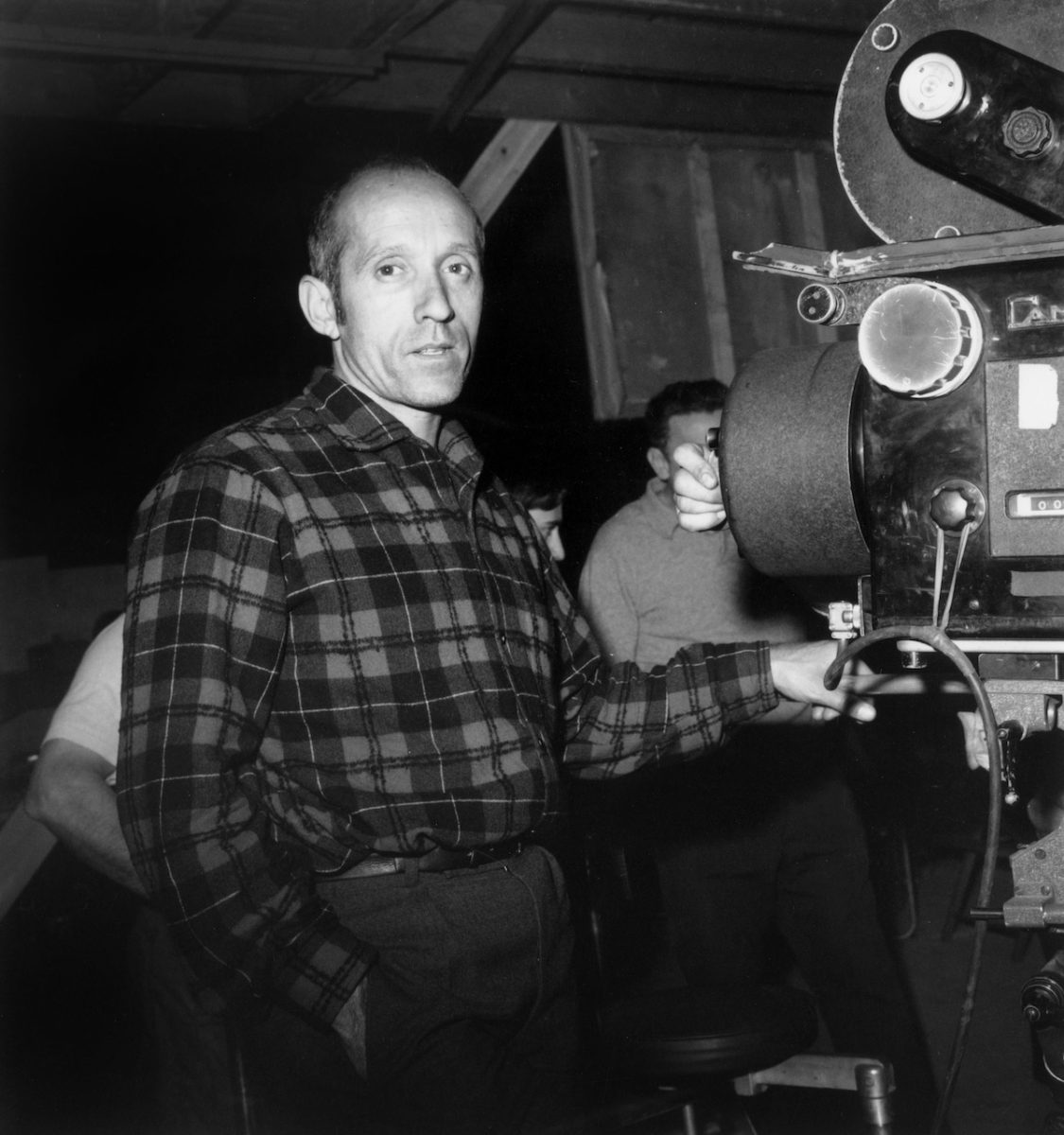
French director, screenwriter and novelist José Giovanni, known for his realistic, gritty crime novels, will be the focus of the retrospective at the 74th San Sebastián Film Festival.
Born Joseph Antoine Roger Damiani (1923-2004) in Paris, Giovanni became known for writing French crime movies and police thrillers known as polar.
Filmmaker Jacques Becker was captivated by his novel Le Trou, based on his time in jail (accused of murder and sentenced to death, although he escaped the guillotine when his punishment was commuted to hard labour), and adapted it for the screen. Co-written by Giovanni, the film Le Trou (The Hole) (1960), which was Becker’s posthumous work, screened as part of the retrospective dedicated to the director at the 2016 San Sebastián Festival.
His third novel, Classe tous risques (1958), was adapted to Classe tous risques (The Big Risk) (1960) by Claude Sautet, for which he also wrote the screenplay. And the second, Le Deuxième souffle (1958), was adapted years later by Jean-Pierre Melville in Le Deuxième souffle (Second Wind) (1966). Both this film and the one made by Sautet, to whom the Festival dedicated a retrospective in 2022, featured Lino Ventura, alongside Jean Gabin and Alain Delon.
Another of his books from 1958, L’Excommunié, provided the basis for Un nommé La Rocca (A Man Named Rocca) (1961), the film starring Jean-Paul Belmondo, directed by Jean Becker, Jacques’ son.
1963 saw the beginning of his collaboration with Jacques Deray: Symphonie pour un massacre (Symphony for a Massacre) (1963), Rififi à Tokyo (Rififi in Tokyo) (1963), L’homme de Marrakech (The Man from Marrakech) (1966) and Avec la peau des autres (To Skin a Spy) (1966), going on to do the same three years later with Robert Enrico: Les Grandes gueules (The Wise Guys) (1966), Les Aventuriers (The Last Adventure) (1967) and Ho! (Ho! Criminal Face) (1968).
Giovanni made his directing debut with La Loi du survivant (Law of Survival) (1967), a war-based polar featuring three of his main topics: the French resistance during WWII, the Corsican milieu, and betrayal.
From then on, except for Henri Verneuil’s Le Clan des Siciliens (The Sicilian Clan) (1969), a script he wrote based on August Le Breton’s novel, Giovanni concentrated mainly on directing.
Among the fifteen feature films he directed, as well as two films for television and three episodes of a couple of series, are Le Rapace (Birds of Prey) (1968), Dernier domicile connu (Last Known Address) (1970), Un aller simple (One Way Ticket) (1971), La Scoumoune (Hit Man) (1972), Deux hommes dans la ville (Two Men in Town) (1973), Le Gitan (The Gypsy) (1975), and Une robe noire pour un tueur (1981). In his last two films, Mon ami le traître (My Friend the Traitor) (1988) and Mon père, il m’a sauvé la vie (My Father Saved My Life) (2001), he turned to fiction to reflect on the decisive aspects that had marked his own life.
Organised by the Festival and the Filmoteca Vasca (Basque Film Archive) with the collaboration of the Filmoteca Española (Spanish Film Archive), the season will come with the publication of a book covering Giovanni’s complete body of work written by Felipe Cabrerizo.
Leave a Reply
You must be logged in to post a comment.