
PBS is releasing a new four-part docu-series, Once Upon a Time in Space, from filmmaker James Bluemel, sharing the human stories behind the exploration of space.
Featured in the series are NASA astronauts, including Charlie Bolden, Anna Lee Fisher, Bill Fisher, Michael Foale, Jerry Linenger, Mike Mullane, Dan Tani, and Terry Virts; cosmonauts Sergei Zalyotin and Alexander ‘Sasha’ Lazutkin; NASA officials; family members and more.
Once Upon a Time in Space premieres Tuesdays, July 14 – August 4, 2026, at 9 p.m. ET on PBS, PBS.org, and on the PBS app.
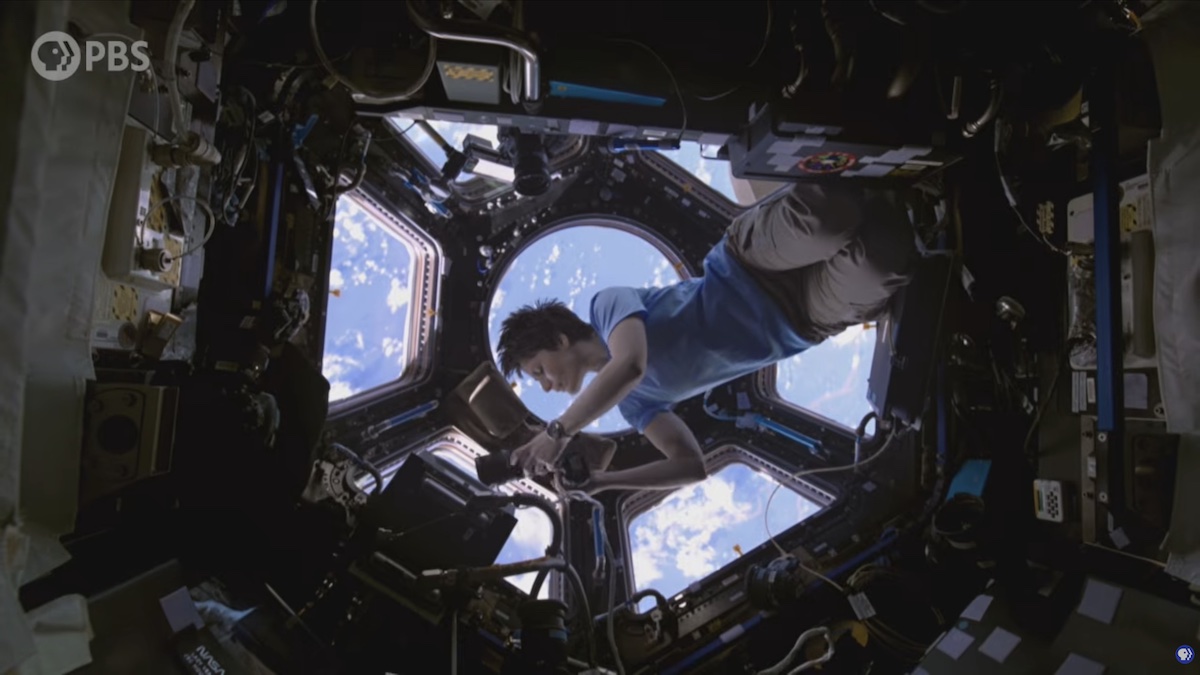
The series examines the personal experiences of astronauts, cosmonauts, ground-based participants, and the loved ones left behind on Earth. Across four episodes, it traces significant landmarks in spacefaring history, from the birth of the Shuttle and the pioneering Space Station Mir to the rise of commercial spaceflight. Through powerful firsthand testimony and intimate, unseen archival footage, a complex portrait of humanity emerges: one that lays bare both our fragility and boundless curiosity. Accounts of bravery, friendship, and tragedy are told against the backdrop of a rapidly changing world, connecting technical and geopolitical developments to those who experienced them.
Episode Descriptions:
Episode 1 “America First”
Tuesday, July 14:
At the height of the Cold War, the Soviet Union dominates the space race with a series of firsts, until the U.S. lands the first men on the moon in 1969. With the dawn of the Space Shuttle in 1976, the U.S. gains further ground on its rivals. In 1978, Ron McNair, Anna Fisher and Mike Mullane are among the group selected by NASA to fly aboard the Shuttle after the agency encouraged aspiring astronauts of all genders and racial backgrounds to apply.
Growing up under segregation in South Carolina, McNair had few role models for a life in space beyond Lieutenant Uhura of Star Trek. Vietnam veteran Mullane arrives at NASA skeptical that women or civilians could possess “the right stuff.” Emergency physician Fisher is thrust into the spotlight as the first mother in space. Her decision to leave her one-year-old daughter to fly into space intensifies the scrutiny.
As pressure mounts on the Shuttle program to meet military and commercial demands, disaster strikes in 1986 when Challenger explodes during launch, killing all seven astronauts. While the remaining U.S. shuttle fleet is grounded, the Soviet Union successfully launches Mir, the most sophisticated space station ever seen, and edges ahead in the space race.
Episode 2 “The Russian Thing”
Tuesday, July 21:
Like many Russians in the early 1990s, cosmonauts Sergei Zalyotin and Alexander ‘Sasha’ Lazutkin are struggling to make ends meet amid the chaos in post-Communist Russia. Although Space Station Mir is still in operation, Russia’s space program is fighting for survival, and the U.S. fears Russian rocket scientists could be recruited by “rogue states.” The Shuttle-Mir Program offers a solution: U.S. astronauts will train in Russia and live aboard Mir, providing funding for Russia while giving NASA vital long-duration spaceflight experience.
NASA astronaut Jerry Linenger launches to Mir in January 1997, followed by rookie cosmonaut Sasha. A week into Sasha’s stay, a fire threatens everyone on board. And when astronaut Michael Foale replaces Jerry, the crew faces an even greater crisis when a collision with a cargo ship damages Mir and sends it spinning out of control. Sasha and Michael work together in a desperate struggle to save themselves and the station. Their success lays the foundation for future U.S.-Russian cooperation and bonds the two men together in lifelong friendship.
Episode 3 “Politics Always Wins”
Tuesday, July 28:
In 1996, NASA assembles a cohort of astronauts to build the International Space Station (ISS) in orbit, including engineer Dan Tani. As the ISS takes shape, Russia’s aging Mir faces an uncertain future, its upkeep straining a fragile economy. Maverick millionaire Walt Anderson teams up with Dan’s space-obsessed friend Carlos “Gus” Gardellini to launch MirCorp, an audacious plan to lease Mir and turn it into a commercial space hub. But NASA pressures Russia to focus its resources on the ISS, and in March 2001, Mir is de-orbited. Russia’s symbol of national pride — and MirCorp’s bold experiment — is gone forever.
Meanwhile, the Expedition 1 crew, trained by NASA’s Ginger Kerrick, takes up residence aboard the ISS, marking the beginning of a continuous human presence in space. For Kerrick, it is a moment of quiet triumph, as the station becomes a beacon of cooperation — proof that, for now, collaboration has prevailed over conflict.
Episode 4 “Friends Forever”
Tuesday, August 4:
On February 1, 2003, Space Shuttle Columbia breaks up in the atmosphere as it prepares to land in Houston. With the ISS only halfway built, the U.S. has lost two of its six shuttles. But work continues to forge ahead, and when the ISS is completed in 2011, the Space Shuttle is retired after 30 years of service. The United States loses its ability to launch astronauts independently, forcing NASA to pay for seats on Russian rockets. In 2014, Russia annexes Crimea. From the ISS, astronaut Terry Virts and his Russian colleague watch red flashes on the ground over Ukraine — bombs falling. For Terry, the illusion of space as a peaceful refuge is shattered.
Elon Musk’s SpaceX eventually reinstates NASA’s ability to launch its own astronauts into space. As relations between the U.S. and Russia deteriorate and the ISS nears the end of its life, questions arise about whether cooperation will continue. At NASA, Ginger Kerrick hopes the ISS’s lesson — that collaboration is possible — will not be forgotten.
“World leaders are not interested in things that benefit the human race,” says Kerrick. “They’re interested in things that benefit their nation. But for a little while, I lived in a world that didn’t operate that way, and it was beautiful. And any of us that have lived that life really believe there is more we can accomplish together.”
Watch the official trailer for Once Upon a Time in Space above.
Leave a Reply
You must be logged in to post a comment.