
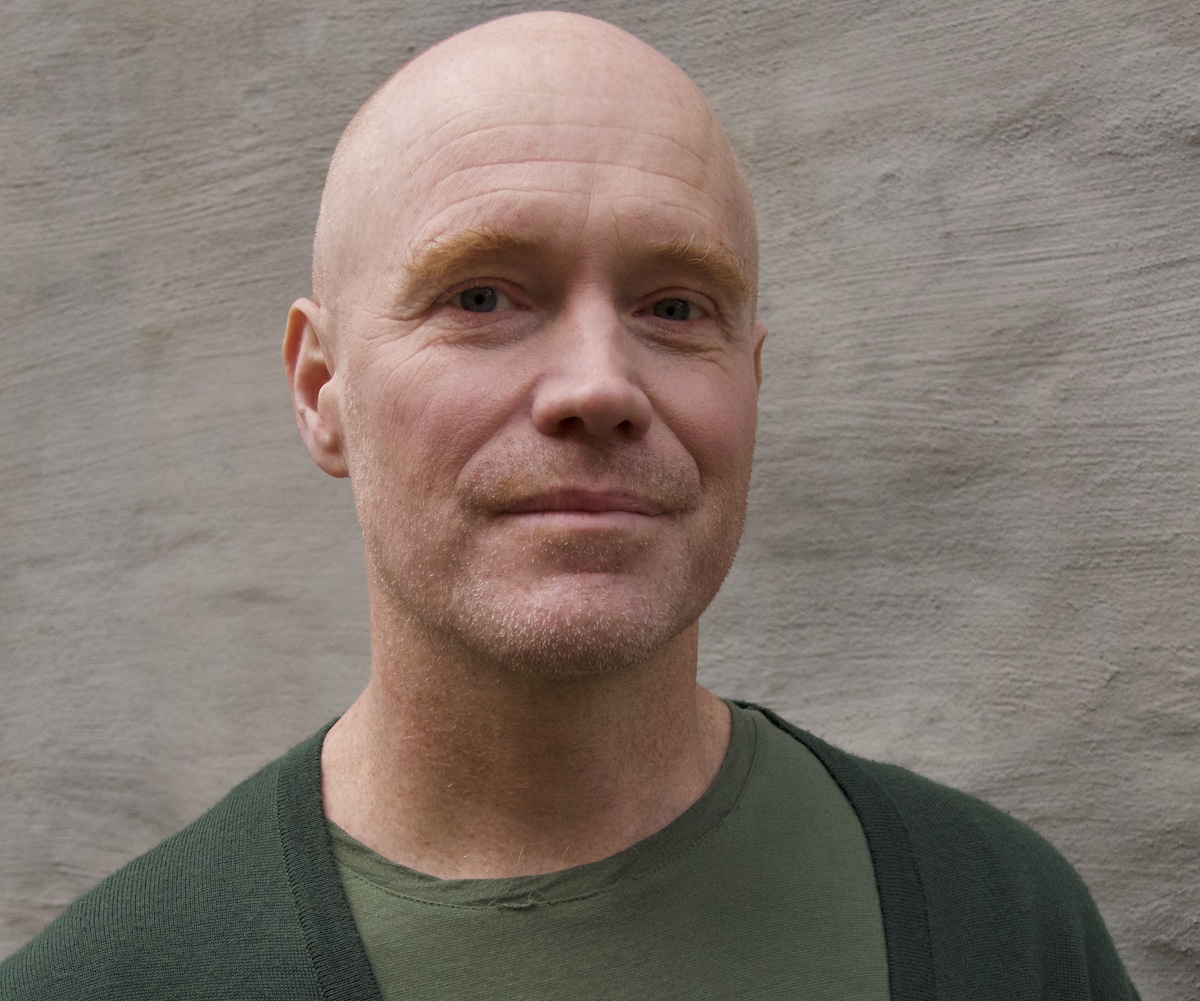
The award-winning documentary Celtic Utopia made its New York premiere at this year’s 2026 Brooklyn Film Festival.
Co-directed by Irish filmmaker Dennis Harvey and Swedish filmmaker Lars Lovén, this film tells a story about a new wave of Irish musicians who use traditional music to help navigate their colonial history and complicated present. It not only examines the factors that have shaped the modern-day Irish society, but also celebrates Irish folk music and its roots.
VIMooZ met with co-director Lars Lovén ahead of the New York screening to discuss director collaborations, inspiration behind the film, and its significance in today’s society.
SAMANTHA GO: Please introduce your film and tell us what it is about.
LARS LOVÉN: It’s a film about Ireland. Or, perhaps it’s about young musicians trying to find their way through a complicated past and present with the help of traditional music. With lots of music and archive material. And it’s a funny film, at least we think it’s funny!
SG: What inspired you to bring this story to the screen?
LL: Dennis and I met at work, and over the lunch table we almost immediately started to talk about Ireland today, the music of course, the wave of young folk musicians, but also about politics and history. Would it be reunited? What did Brexit mean for it? Why don’t you think of Ireland as a post-colonial society, even if it apparently is? The last [question] stuck and we started to play with that idea, what if we should actually try to portray Ireland and this new wave of musicians through that lens, the same way you would with any other former colony. Then, of course, it was a huge relief when we met the artists, and they responded so well to the idea of talking about a post-colonial Ireland.
SG: What themes or ideas were more important for you to explore in the film?
LL: We started out with a huge, long list of themes to cover: the language, the church, the migration, the north… Everything we thought had shaped Irish society. So the work we had to do was to cut it down for the sake of it actually being a comprehensible and hopefully enjoyable film. The meant we did leave out some things that we would have wanted in there as well, like the long history of emigration that is so prevalent in Irish society, and the importance of the traveller community in the keeping of the traditional music. Though there are traces in that in the songs, like in Wexford. In our film, it’s sung by Charles Hendy from The Mary Wallopers, but it’s written by one of the most well-known traveller musicians in Ireland, Pecker Dunne.
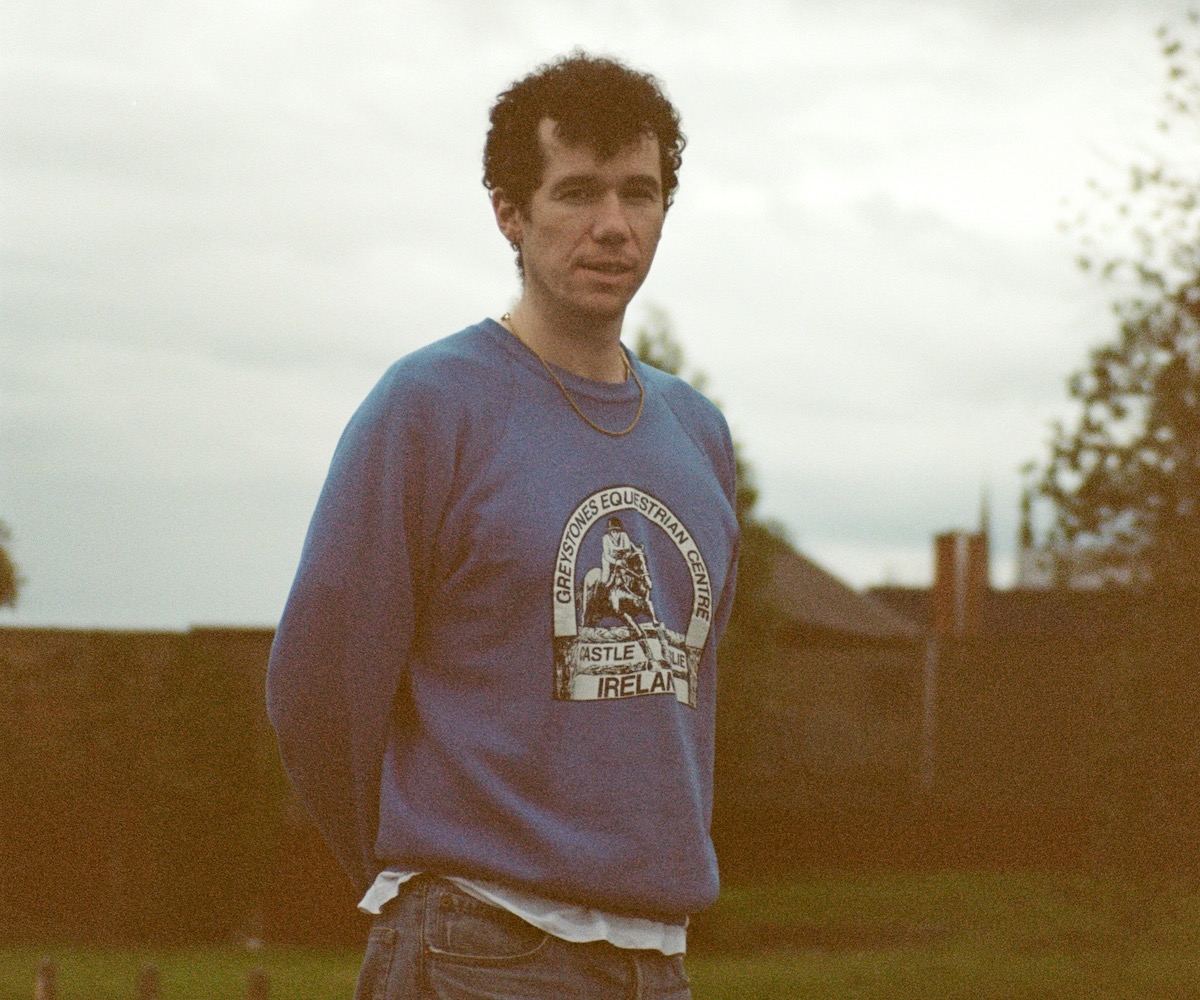
SG: How did your collaboration on this film come to be, and how did it benefit the film as a whole?
LL: As I mentioned, the whole film started as a discussion over the lunch table between Dennis and me, and then we kept that discussion ongoing throughout the film. In a way, you could say that the discussion became the film. I think the film benefited a lot from being a collaboration. When we started, Dennis, of course, knew immensely more than me about Irish society, identity, history, etc., but I think, as an outsider, I was able to see things from a different perspective. Maybe that helped us to see things differently – for example, the absurdity of some things in Irish society that Dennis might have taken for granted. It’s actually hard for me to see this film being made by just one of us.
SG: What has the journey of making this film been like from concept to completion?
LL: Oh, long story! But I think the film did end up very much as we envisioned from the start, with this mix of full songs, archive material, and young musicians talking about the present and the past. Then, of course, we went through stages (the film took more than five years to make) when we thought of making it in another way, focusing more on one group or on a specific theme, but in the end, we did want to paint a broad image and to get more aspects into it. So we settled for this kind of assembly and a storytelling that perhaps isn’t that straightforward all the time.
SG: What scene or moment in the film means the most to you personally?
LL: I’m always touched by the opening and closing scenes with Sean Fitzgerald in the streets of Dublin, the way he responds to the people interfering, the care and warmth he shows; as well as by Charles Hendy singing Wexford at a late-night party; it’s a once-in-a-lifetime performance.
SG: How would you describe the visual style or tone of the movie?
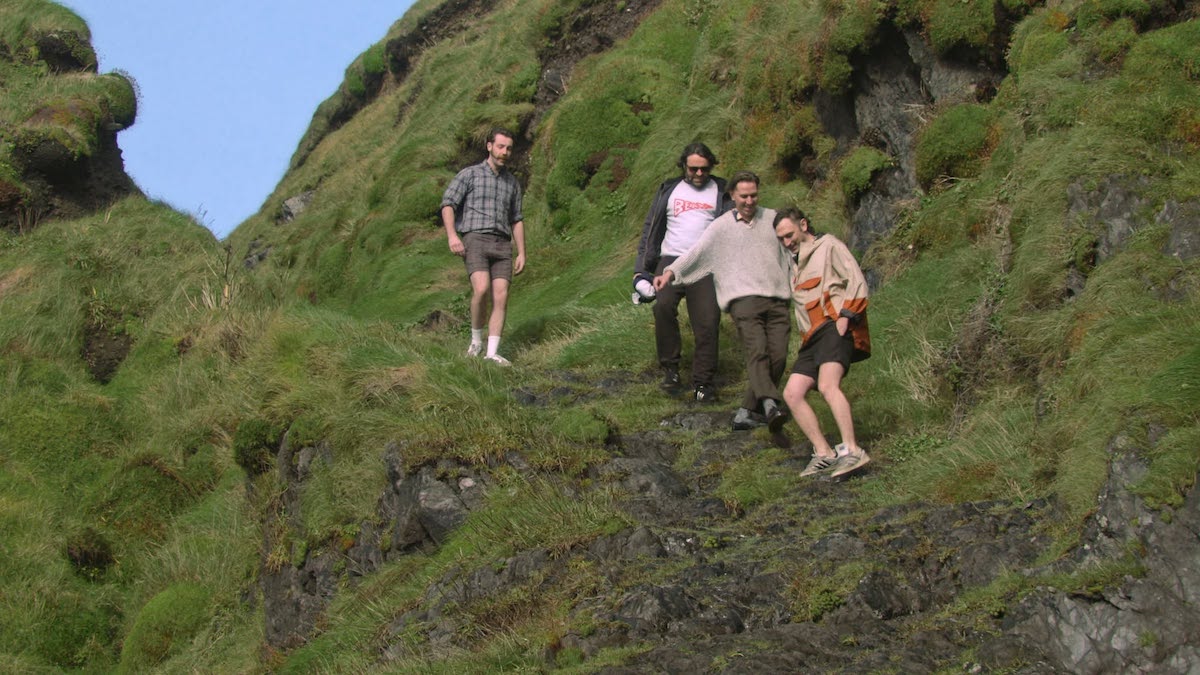
LL: We said from the start that we didn’t want to make this a postcard from Ireland type of film, with rolling hills falling into the sea, but then when you start filming in the countryside, it can be really hard to avoid that. But then we did want to contrast that with urban scenes, where we very much want to capture that sort of chaos, and where we were very much open to interruptions and interference, and to actually bring that into the film.
For the music, we knew we didn’t want to shoot concerts, but we wanted to capture the musicians in more intimate settings, among friends, out in the streets, or in the landscape. It was challenging at times, but I think it’s worth it.
The actual footage is thanks to our brilliant cinematographers, Tuva Björk and Jamie Goldrick.
SG: What do you hope viewers take away after watching the film?
LL: Hope! That, despite all that’s happening in the world at the moment, there is hope, at least that is what I take away, to me that’s what these young musicians project. They’re not looking to perpetuate the conflicts of the past – they are working hard to move forward, past that.
SG: What does screening at the Brooklyn Film Festival mean to you personally and professionally? What made you decide to premiere or showcase this film at this festival?
LL: To be honest, I did not know so much about the Brooklyn Film Festival, though I’ve heard of it, of course! I blame the seat between us for that! Coming from Europe, we tend to be a bit ignorant about the film festivals in the U.S. and Canada, apart from the really big ones; maybe they also seem harder to approach, our contacts tend to be in Europe.
That said, we’re so happy to have the film screened at the Brooklyn Film Festival and to finally have a New York premiere. And the film has been very well received in the U.S., with screenings in Chicago, Washington, Los Angeles, and San Francisco, to mention a few, and we were very glad about that.
SG: Why do you think independent film festivals are important for emerging filmmakers?
LL: I think independent film festivals are absolutely crucial. There are so many hurdles to pass as an emerging filmmaker: getting someone to believe in your idea, getting someone to fund it, and actually making the film. And then to actually get it screened somewhere! I don’t even know what we would do without the independent film festivals. Where would everything outside the mainstream be screened? First features, experimental films, films on topics that streaming networks would deem too niche, all the interesting stuff! We would have to invent those festivals if they weren’t already there.
This interview has been edited for length, clarity, and formatting. Some responses may have been condensed or lightly modified to improve readability while maintaining the original intent.
Leave a Reply
You must be logged in to post a comment.