
When it comes to diversity in media, cultural representation has, undeniably, progressed over the past few years. There are still steps to be made, however, as Indigenous cultures are not yet at the forefront of such representation.
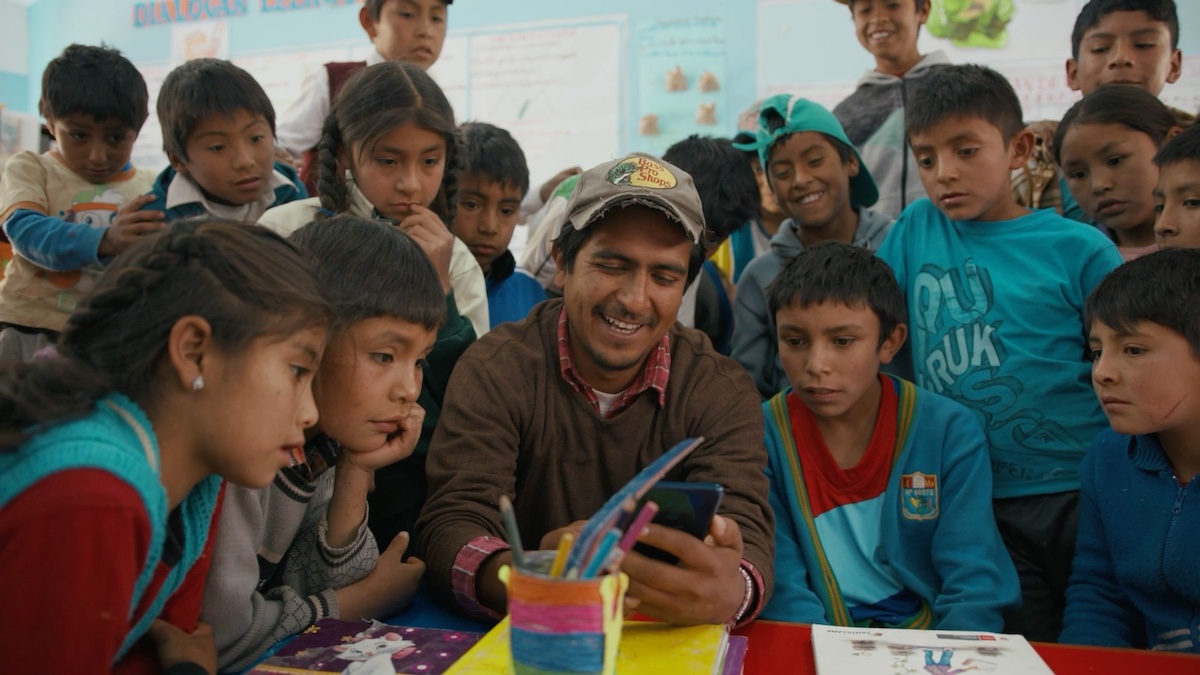
The Peruvian documentary, Runa Simi, Augusto Zegarra’s feature directorial debut, explores these themes of Indigenous representation and language preservation. Taking place in Cusco, in the Peruvian Andes, the film follows Fernando Valencia, a voice artist, Indigenous activist, painter, and single father to his son, Dylan. With his talent for imitating and voicing popular characters, Fernando launched Quechua Clips, a viral project that translates iconic animated scenes into Quechua, the ancestral language of the Incas. What followed was a wide audience of Quechua speakers who were eager to finally experience beloved stories in their own language.
Now, as Fernando begins his pursuit of a new dream – to dub Disney’s The Lion King – Runa Simi captures more than just a personal mission. It turns into a powerful call for language justice and cultural reclamation as it offers a glimpse into Quechua customs and reveals Fernando’s unwavering resilience.
Runa Simi has already picked up a number of awards from the festival season, including the Albert Maysles Award for Best Documentary Director at the Tribeca Festival, the Youth Jury Award at Sheffield DocFest, and the Ibero-American Award at the Palm Springs International Film Festival.
A thought-provoking and inspiring film, here are five things I learned while watching Runa Simi:
1. Mountains are sacred to the Quechua communities.
Quechua communities believe in Pachamama, translating to Mother Earth, and Apus, the mountain spirits. Here, mountains are not scenery or geological formations – they are sacred beings, spirits, and ancestors. Apus are recognized as protectors and benefactors, and one can consult the Apus through despacho ceremonies, coca leaf readings, or through dreams and visions.
2. Quechua is the second most spoken language in Peru.
With around four million speakers, Quechua is the second most spoken language in Peru and the most widely spoken Indigenous language in the country. However, the language is beginning to get lost as Quechua speakers continue to get discriminated against.
3. Many Quechua speakers were forced to learn Spanish.
There are around 10 million native Quechua speakers across South America, although many of them were forced to learn how to speak Spanish in order to avoid social discrimination and marginalization. Now, efforts to preserve the Quechua language have increased through cultural projects like the Quechua Clips.
4. Fernando’s Quechua Clips began with a retelling of Ice Age.
Quechua Clips, Fernando’s viral social media and cultural project, was created to help children understand and experience the joy of beloved movies. The project started with Fernando and his son, Dylan, dubbing movie clips, but Runa Simi documents their journey of dubbing the full-length 1994 classic, The Lion King. Through his work, Fernando emphasizes how everyone deserves entertainment and to be able to watch any and all movies despite what language is spoken.
5. Overall lack of Indigenous language representation in media.
One of the overarching themes of this film is the lack of Indigenous language representation across media. Runa Simi reveals the importance of representation, especially for young, impressionable children who belong to marginalized communities. With Fernando’s work, great strides have been made to bridge the gap for under-represented groups, but there is still a long way to go as Indigenous languages continue getting undermined and overlooked.
Leave a Reply
You must be logged in to post a comment.