
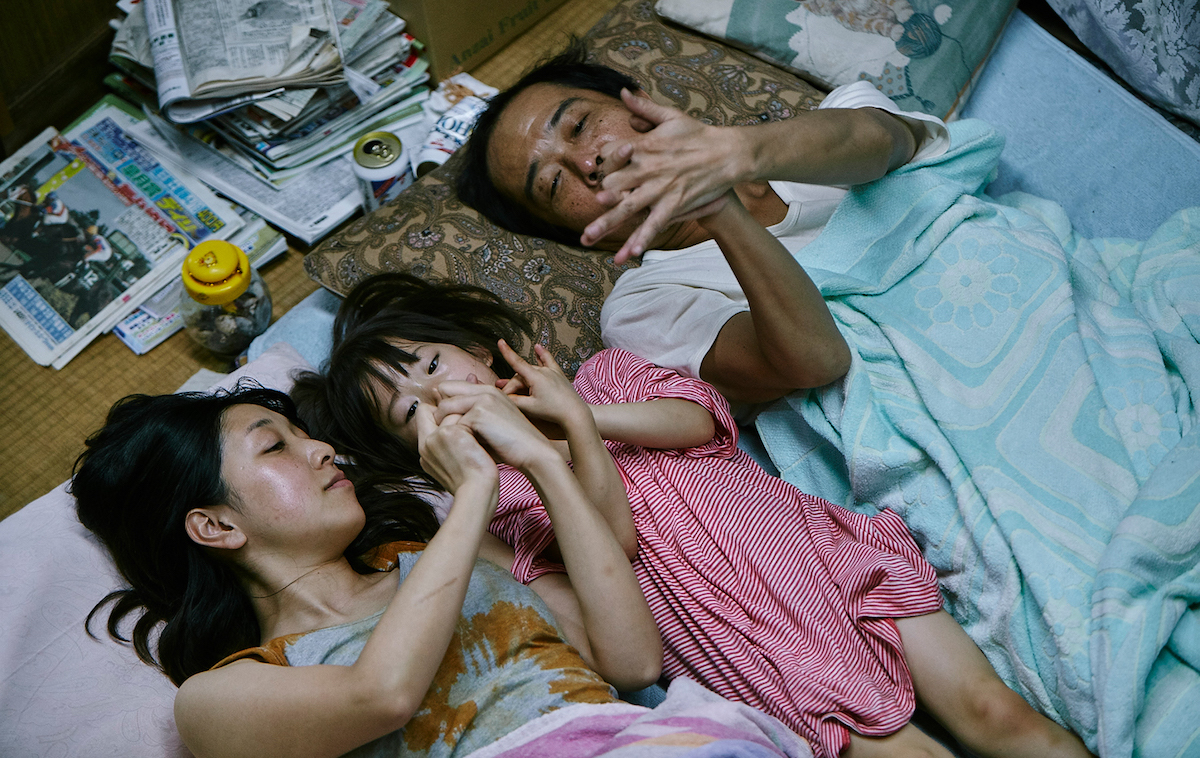
 Shoplifters[/caption]
The 36th Munich International Film festival drew to a close today Saturday, July 7, 2018 with the award ceremony and “Shoplifters” by Hirokazu Kore-eda won the ARRI/Osram Award for best international film.The Audience Award went to the film “Wackersdorf – Be Alert, Courageous and Solidaric” by Oliver Haffner.
Shoplifters[/caption]
The 36th Munich International Film festival drew to a close today Saturday, July 7, 2018 with the award ceremony and “Shoplifters” by Hirokazu Kore-eda won the ARRI/Osram Award for best international film.The Audience Award went to the film “Wackersdorf – Be Alert, Courageous and Solidaric” by Oliver Haffner.
Filmfest München (Munich International Film Festival)
Germany’s largest summer film festival, which screens some 200 films annually. Countless filmmakers come to Munich from all over the world to present their latest work in person and interact directly with audiences in a relaxed summertime setting.
Renowned actors and actresses including Melanie Griffith, Michael Caine, Ellen Burstyn, Bryan Cranston, Emma Thompson, Ralph Fiennes, and Antonio Banderas have graced the festival in recent years, while leading directors such as Sofia Coppola, Lucrecia Martel, Alexander Payne, and Bong Joon Ho have also come to Munich to see their work honored in retrospectives. Of all festivals, FILMFEST MÜNCHEN screens the most world premieres of German films. These have included such works as OH BOY by Jan-Ole Gerster and ALLES IST GUT by Eva Trobisch, both of which went on to receive multiple awards.
Filmfest München (Munich International Film Festival) started in 1983 and takes place in Munich, Germany
-
“Shoplifters” by Hirokazu Kore-eda wins Top Award at 36th Munich International FilmFest
[caption id="attachment_30641" align="aligncenter" width="1200"] Shoplifters[/caption]
The 36th Munich International Film festival drew to a close today Saturday, July 7, 2018 with the award ceremony and “Shoplifters” by Hirokazu Kore-eda won the ARRI/Osram Award for best international film.The Audience Award went to the film “Wackersdorf – Be Alert, Courageous and Solidaric” by Oliver Haffner.
-
Romantic Hip-Hop Comedy THE MOST BEAUTIFUL GIRL IN THE WORLD Starring Luna Wedler to World Premiere at Munich FilmFest
[caption id="attachment_29801" align="aligncenter" width="1200"]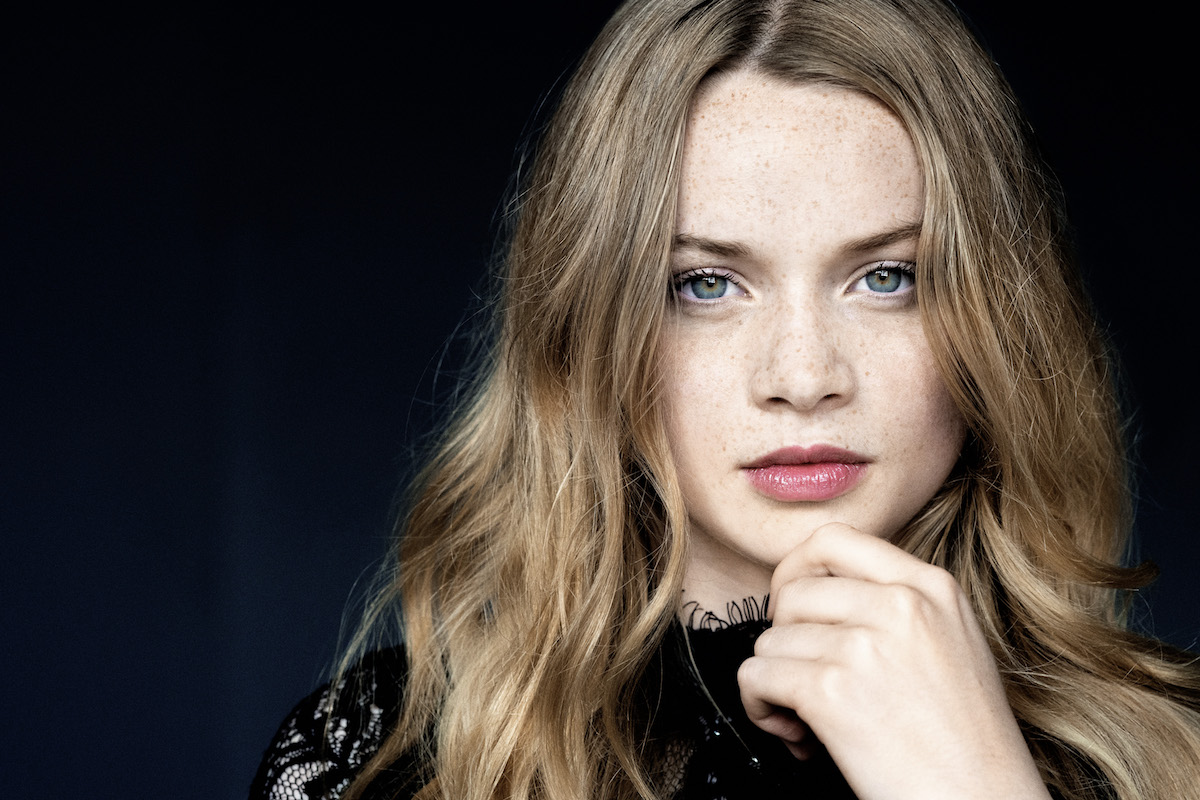 Luna Wedler[/caption]
Aron Lehmann’s romantic hip-hop comedy “The Most Beautiful Girl in the World”, featuring rising star Luna Wedler, newcomers Aaron Hilmer and Damian Hardung, and preeminent German actresses Anke Engelke and Heike Makatsch will world premiere at the Munich International Film Festival.
Watching streaming movies on a laptop alone is an everyday experience for any teenager. Cinema can offer so much more: a shared live experience. At the film festival, this even includes meeting stars as well as other fans. Once again, Munich International Film Festival is offering big-screen entertainment to young people between the ages of 14 and 24. The festival started in 2016 with the successful fantasy gem trilogy “Ruby Red”, “Sapphire Blue”, and “Emerald Green”. Last year, with the world premiere of Ute Wieland’s “Tigermilch” and an exclusive sneak peek at “Windstorm and the Wild Horses”, directed by Katja von Garnier, the focus was on brave girls. In 2018, the festival is pleased to continue this tradition by presenting, in cooperation with Tobis Film, the youth event “The Most Beautiful Girl in the World”. With his new film, director Aron Lehmann puts in his third appearance at Munich International Film Festival. His first feature-length film, “Kohlhaas oder die Verhältnismäßigkeit der Mittel”, opened the New German Cinema series in 2012, while “The Last Pig” was shown as part of that series in 2016.
New pupil Roxy, played by Luna Wedler, is turning all the boys’ heads. The quick-witted 17-year-old has just flunked out of her old school and is not at all interested in going on a trip with her new classmates. On the bus to Berlin, however, she soon befriends sensitive outsider Cyril (Aaron Hilmer), who quickly falls for her even though he doesn’t believe he has much of a chance with her. Roxy is interested in pretty boy Rick (Damian Hardung), who — unlike Cyril — isn’t very eloquent. And pick-up artist Benno (Jonas Ems) is also in the picture. This sounds tricky, and it is: In a daring matchmaking attempt, Cyril aims to protect Roxy from the player Benno, even if it means helping Rick to score with Roxy. He writes cool song lyrics and romantic text messages, and Roxy really goes for it. At first. But who will, in the end, win the heart of the most beautiful girl in the world?
In the comedy “The Most Beautiful Girl in the World”, European rising star Luna Wedler (“Blue My Mind”) as Roxy impresses not only newcomers Aaron Hilmer (“Sex, Pity and Loneliness”) and Damian Hardung, known from the VOX series “Red Bracelets” and the remake of “The Name of the Rose”. Director and screenplay co-author Aron Lehmann uses fresh hip-hop beats and clever turns of phrase to help narrate this turbulent and intricate romantic adventure story. This modern version of “Cyrano de Bergerac”, the famous play by Edmond Rostand from 1897 also features Anke Engelke as Cyril’s mother, Heike Makatsch and Johannes Allmayer (“Jesus Loves Me”) as teachers, and YouTube stars Jonas Ems and Julia Beautx as classmates.
The world premier of “The Most Beautiful Girl in the World” will be on Friday, June 29 at 4.30 pm at the Mathäser cinema. The national film release will be on September 6, 2018 (distribution: Tobis Film).
Luna Wedler[/caption]
Aron Lehmann’s romantic hip-hop comedy “The Most Beautiful Girl in the World”, featuring rising star Luna Wedler, newcomers Aaron Hilmer and Damian Hardung, and preeminent German actresses Anke Engelke and Heike Makatsch will world premiere at the Munich International Film Festival.
Watching streaming movies on a laptop alone is an everyday experience for any teenager. Cinema can offer so much more: a shared live experience. At the film festival, this even includes meeting stars as well as other fans. Once again, Munich International Film Festival is offering big-screen entertainment to young people between the ages of 14 and 24. The festival started in 2016 with the successful fantasy gem trilogy “Ruby Red”, “Sapphire Blue”, and “Emerald Green”. Last year, with the world premiere of Ute Wieland’s “Tigermilch” and an exclusive sneak peek at “Windstorm and the Wild Horses”, directed by Katja von Garnier, the focus was on brave girls. In 2018, the festival is pleased to continue this tradition by presenting, in cooperation with Tobis Film, the youth event “The Most Beautiful Girl in the World”. With his new film, director Aron Lehmann puts in his third appearance at Munich International Film Festival. His first feature-length film, “Kohlhaas oder die Verhältnismäßigkeit der Mittel”, opened the New German Cinema series in 2012, while “The Last Pig” was shown as part of that series in 2016.
New pupil Roxy, played by Luna Wedler, is turning all the boys’ heads. The quick-witted 17-year-old has just flunked out of her old school and is not at all interested in going on a trip with her new classmates. On the bus to Berlin, however, she soon befriends sensitive outsider Cyril (Aaron Hilmer), who quickly falls for her even though he doesn’t believe he has much of a chance with her. Roxy is interested in pretty boy Rick (Damian Hardung), who — unlike Cyril — isn’t very eloquent. And pick-up artist Benno (Jonas Ems) is also in the picture. This sounds tricky, and it is: In a daring matchmaking attempt, Cyril aims to protect Roxy from the player Benno, even if it means helping Rick to score with Roxy. He writes cool song lyrics and romantic text messages, and Roxy really goes for it. At first. But who will, in the end, win the heart of the most beautiful girl in the world?
In the comedy “The Most Beautiful Girl in the World”, European rising star Luna Wedler (“Blue My Mind”) as Roxy impresses not only newcomers Aaron Hilmer (“Sex, Pity and Loneliness”) and Damian Hardung, known from the VOX series “Red Bracelets” and the remake of “The Name of the Rose”. Director and screenplay co-author Aron Lehmann uses fresh hip-hop beats and clever turns of phrase to help narrate this turbulent and intricate romantic adventure story. This modern version of “Cyrano de Bergerac”, the famous play by Edmond Rostand from 1897 also features Anke Engelke as Cyril’s mother, Heike Makatsch and Johannes Allmayer (“Jesus Loves Me”) as teachers, and YouTube stars Jonas Ems and Julia Beautx as classmates.
The world premier of “The Most Beautiful Girl in the World” will be on Friday, June 29 at 4.30 pm at the Mathäser cinema. The national film release will be on September 6, 2018 (distribution: Tobis Film).
-
16 German Films to World Premiere in New German Cinema Section of Filmfest München
[caption id="attachment_29565" align="aligncenter" width="1200"]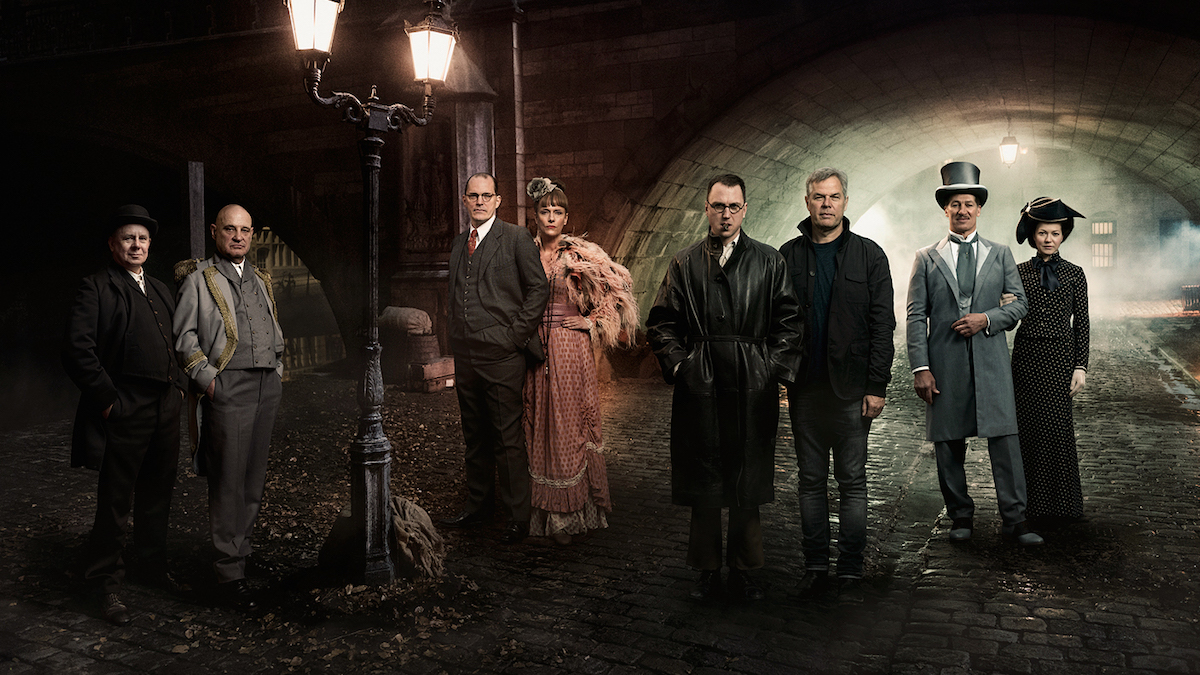 Mackie Messer – Brechts Dreigroschenfilm[/caption]
16 German film productions are celebrating their world premiere in the New German Cinema section of the Filmfest München – Munich International Film Festival. Starting things off is Joachim A. Lang’s “Mackie Messer – Brechts Dreigroschenfilm“, the opening film of the 36th Filmfest München, whose message is Brecht’s aphorism “In the contradiction lies the hope.”
Against the backdrop of historical circumstances, Oliver Haffner’s feature film “Wackersdorf – Be Alert, Courageous and Solidaric” raises a sensitive question about political activism: as personal as it is suspenseful, the film depicts opposition to the construction of a nuclear reprocessing plant in 1980s Bavaria.
“Safari – Match Me If You Can” by Munich director Rudi Gaul is about love in the digital age. A new dating app, Safari, makes the Bavarian capital a vehicle for self-promotion. Arthur Schnitzler’s stage play “La Ronde” is catapulted into the present day, with hilarious consequences.
Robert Bohrer and Emma Rose have submitted a most unusual “Love Movie”. An apathetic thirtysomething falls in love with a war photographer, and together they experience all the highs and lows of a relationship.
Jakob Lass, whose “Love Steaks” earned the Förderpreis Neues Deutsches Kino in four categories in 2013, is back in Munich. In his latest film, “Right Here Right Now”, we live through the last night of a Hamburg club and everything that a good farewell party entails. Partying is also a theme in Henning Gronkowski’s “Yung”. The film portrays Berlin teenagers on their (often wrong) way through the city and through life. Naturally this includes hedonism, sexuality, and drugs.
Several of the films in this year’s New German Cinema section broach the issue of relations between the sexes. Linus de Paoli’s thriller “A Young Man with High Potential” is the shocking story of a highly intelligent but prudish student of computer science who turns to chemical substances when rejected by the object of his affection. By contrast, in Leonel Dietsche’s “The New End”, only the men survive in a post-apocalyptic world in which might makes right.
Philipp Eichholtz’s comedy “Everything Always All the Time” is a bit more playful and lighthearted. In, Kim would like to be a man. That isn’t such an easy thing when others must first get used to this kind of new identity.
In Eva Trobisch’s drama, the protagonist tells herself things will be “All Good”. Since being raped, she does everything she can to keep up appearances — in order not to lose her job. Ann-Kristin Reyels’ “We Were Just Playing” is another film in which a character has a dark secret. Miro and Jona come from different worlds and want to be friends nonetheless.
Damian John Harper’s “In the Middle of the River” is about a traumatic incident: a young man returns to his home town to kill his grandfather. At the moment of truth, his plan is thwarted and the two men are forced to spend the rest of the day with each other. Family situations with a potential for conflict are also at the root of Michael Klier’s chamber play “Family Idiots”, about a mentally disabled girl whose family must decide whether to send her to an institution. It’s a moral question that threatens to pit the family members against each other. Katinka Narjes’ film “Sirens” is also about family ties: the bond between two sisters is indestructible, yet they must learn to let go.
Two documentaries are part of the New German Cinema section in 2018. In “The Brasch Family”, Annekatrin Hendel tells the story of three generations of a German family full of history, conflicts, and twists. In the meantime, Lola Randl, a previous guest at Filmfest München, offers a subjective and personal exercise in self-experimentation with “The Bees and the Birds”, moving to the countryside and exploring alternative ways of living both in front of and behind the camera.
As usual, the best achievements by new directors in the New German Cinema section will be awarded the Förderpreis Neues Deutsches Kino. The FIPRESCI Award will also be given for the fourth time to the best film in the section.
All the films in the New German Cinema section:
“A Young Man with High Potential”
by Linus de Paoli, Germany 2018
starring Adam Ild Rohweder, Amanda Plummer, Paulina Galazka, Vanja Bajdarova, Pit Bukowski Schattenkante, Hahn Film
“Alles ist gut” (“All Good”)
by Eva Trobisch, Germany 2018
starring Aenne Schwarz, Andreas Döhler, Hans Löw, Tilo Nest, Lina Wendel
TRIMAFILM GmbH, Starhaus Filmproduktion, BR
“Ende Neu” (“The New End”)
by Leonel Dietsche, Germany 2018
starring Sylvester Groth, Georg Friedrich, Milena Tscharntke, Samuel Schneider, Mick Morris Mehnert
Filmakademie Baden-Württemberg, SWR, Paxfilm
“Familie Brasch” (“The Brasch Family”)
by Annekatrin Hendel, Germany 2018
starring Marion Brasch, Katharina Thalbach, Christoph Hein, Bettina Wegner, Florian Havemann
IT WORKS! Medien GmbH, von Vietinghoff Filmproduktion, RBB, SWR, MDR
“Idioten der Familie” (“Family Idiots”)
by Michel Klier, Germany 2018
starring Lilith Stangenberg, Jördis Triebel, Hanno Koffler, Florian Stetter, Kai Scheve
Michael Klier-Film, almost famous UG, RBB, Arte
“In the Middle of the River”
by Damian John Harper, Germany/USA 2018
starring Eric Hunter, Max Thayer, Nikki Lowe, Matthew T. Metzler, Ava Del Cielo
Weydemann Bros., ZDF – Das kleine Fernsehspiel, Arte
“Kim hat einen Penis” (“Everything Always All the Time”)
by Philipp Eichholtz, Germany 2018
starring Martina Schöne-Radunski, Christian Ehrich, Stella Hilb, Matthias Lier, Lana Cooper
Von Oma gefördert
“Liebesfilm” (“Love Movie”)
by Robert Bohrer, Emma Rosa Simon, Germany 2018
starring Eric Klotzsch, Lana Cooper, Hartmut Becker, Sabine Vitua, Gerdy Zint
BASIS BERLIN Filmproduktion, Deutsche Film- und Fernsehakademie Berlin (DFFB), ZDF – Das kleine Fernsehspiel
“Mackie Messer – Brechts Dreigroschenfilm”
by Joachim A. Lang, Germany 2018 starring Lars Eidinger, Tobias Moretti, Hannah Herzsprung, Joachim Król, Claudia Michelsen
Zeitsprung Pictures GmbH, SWR, Arte, Velvet Films
“Nixen” (“Sirens”)
by Katinka Narjes, Germany 2018
starring Odine Johne, Lucy Wirth, Emelie Harbrecht, Roland Bonjour
Deutsche Film- und Fernsehakademie Berlin (DFFB)
“Safari – Match Me If You Can”
by Rudi Gaul, Germany 2018
starring Justus von Dohnányi, Sunnyi Melles, Elisa Schlott, Juliane Köhler, Max Mauff
Rat Pack Filmproduktion GmbH, Tele München GmbH, Martin Richter Filmproduktion
“So was von da” (“Right Here Right Now”)
by Jakob Lass, Germany 2018
starring Niklas Bruhn, Tinka Fürst, David Schütter, Mathias Bloech, Bela B. Felsenheimer
C-Films Deutschland GmbH, DCM Pictures GmbH, Tatami Films GmbH
“Von Bienen und Blumen” (“The Bees and the Birds”)
by Lola Randl, Germany 2018
starring Lola Randl
DETAiLFILM GmbH, Tohuwabohu GmbH
“Wackersdorf” (“Wackersdorf – Be Alert, Courageous and Solidaric”)
by Oliver Haffner, Germany 2018
starring Johannes Zeiler, Anna Maria Sturm, Peter Jordan, Fabian Hinrichs, Sigi Zimmerschied
if… Productions, BR, Arte
“Wir haben nur gespielt” (“We Were Just Playing”)
by Ann-Kristin Reyels, Germany 2018
starring Finn-Henry Reyels, Roman Bkhavnani, Silke Bodenbender, Godehard Giese
kurhaus production Film & Medien GmbH, ZDF – Das kleine Fernsehspiel
“Yung”
by Henning Gronkowski, Germany 2018
starring Janaina Liesenfeld, Emily Lau, Joy Grant, Abbie Dutton
G.G. Production GmbH, deutschfilm GmbH
Mackie Messer – Brechts Dreigroschenfilm[/caption]
16 German film productions are celebrating their world premiere in the New German Cinema section of the Filmfest München – Munich International Film Festival. Starting things off is Joachim A. Lang’s “Mackie Messer – Brechts Dreigroschenfilm“, the opening film of the 36th Filmfest München, whose message is Brecht’s aphorism “In the contradiction lies the hope.”
Against the backdrop of historical circumstances, Oliver Haffner’s feature film “Wackersdorf – Be Alert, Courageous and Solidaric” raises a sensitive question about political activism: as personal as it is suspenseful, the film depicts opposition to the construction of a nuclear reprocessing plant in 1980s Bavaria.
“Safari – Match Me If You Can” by Munich director Rudi Gaul is about love in the digital age. A new dating app, Safari, makes the Bavarian capital a vehicle for self-promotion. Arthur Schnitzler’s stage play “La Ronde” is catapulted into the present day, with hilarious consequences.
Robert Bohrer and Emma Rose have submitted a most unusual “Love Movie”. An apathetic thirtysomething falls in love with a war photographer, and together they experience all the highs and lows of a relationship.
Jakob Lass, whose “Love Steaks” earned the Förderpreis Neues Deutsches Kino in four categories in 2013, is back in Munich. In his latest film, “Right Here Right Now”, we live through the last night of a Hamburg club and everything that a good farewell party entails. Partying is also a theme in Henning Gronkowski’s “Yung”. The film portrays Berlin teenagers on their (often wrong) way through the city and through life. Naturally this includes hedonism, sexuality, and drugs.
Several of the films in this year’s New German Cinema section broach the issue of relations between the sexes. Linus de Paoli’s thriller “A Young Man with High Potential” is the shocking story of a highly intelligent but prudish student of computer science who turns to chemical substances when rejected by the object of his affection. By contrast, in Leonel Dietsche’s “The New End”, only the men survive in a post-apocalyptic world in which might makes right.
Philipp Eichholtz’s comedy “Everything Always All the Time” is a bit more playful and lighthearted. In, Kim would like to be a man. That isn’t such an easy thing when others must first get used to this kind of new identity.
In Eva Trobisch’s drama, the protagonist tells herself things will be “All Good”. Since being raped, she does everything she can to keep up appearances — in order not to lose her job. Ann-Kristin Reyels’ “We Were Just Playing” is another film in which a character has a dark secret. Miro and Jona come from different worlds and want to be friends nonetheless.
Damian John Harper’s “In the Middle of the River” is about a traumatic incident: a young man returns to his home town to kill his grandfather. At the moment of truth, his plan is thwarted and the two men are forced to spend the rest of the day with each other. Family situations with a potential for conflict are also at the root of Michael Klier’s chamber play “Family Idiots”, about a mentally disabled girl whose family must decide whether to send her to an institution. It’s a moral question that threatens to pit the family members against each other. Katinka Narjes’ film “Sirens” is also about family ties: the bond between two sisters is indestructible, yet they must learn to let go.
Two documentaries are part of the New German Cinema section in 2018. In “The Brasch Family”, Annekatrin Hendel tells the story of three generations of a German family full of history, conflicts, and twists. In the meantime, Lola Randl, a previous guest at Filmfest München, offers a subjective and personal exercise in self-experimentation with “The Bees and the Birds”, moving to the countryside and exploring alternative ways of living both in front of and behind the camera.
As usual, the best achievements by new directors in the New German Cinema section will be awarded the Förderpreis Neues Deutsches Kino. The FIPRESCI Award will also be given for the fourth time to the best film in the section.
All the films in the New German Cinema section:
“A Young Man with High Potential”
by Linus de Paoli, Germany 2018
starring Adam Ild Rohweder, Amanda Plummer, Paulina Galazka, Vanja Bajdarova, Pit Bukowski Schattenkante, Hahn Film
“Alles ist gut” (“All Good”)
by Eva Trobisch, Germany 2018
starring Aenne Schwarz, Andreas Döhler, Hans Löw, Tilo Nest, Lina Wendel
TRIMAFILM GmbH, Starhaus Filmproduktion, BR
“Ende Neu” (“The New End”)
by Leonel Dietsche, Germany 2018
starring Sylvester Groth, Georg Friedrich, Milena Tscharntke, Samuel Schneider, Mick Morris Mehnert
Filmakademie Baden-Württemberg, SWR, Paxfilm
“Familie Brasch” (“The Brasch Family”)
by Annekatrin Hendel, Germany 2018
starring Marion Brasch, Katharina Thalbach, Christoph Hein, Bettina Wegner, Florian Havemann
IT WORKS! Medien GmbH, von Vietinghoff Filmproduktion, RBB, SWR, MDR
“Idioten der Familie” (“Family Idiots”)
by Michel Klier, Germany 2018
starring Lilith Stangenberg, Jördis Triebel, Hanno Koffler, Florian Stetter, Kai Scheve
Michael Klier-Film, almost famous UG, RBB, Arte
“In the Middle of the River”
by Damian John Harper, Germany/USA 2018
starring Eric Hunter, Max Thayer, Nikki Lowe, Matthew T. Metzler, Ava Del Cielo
Weydemann Bros., ZDF – Das kleine Fernsehspiel, Arte
“Kim hat einen Penis” (“Everything Always All the Time”)
by Philipp Eichholtz, Germany 2018
starring Martina Schöne-Radunski, Christian Ehrich, Stella Hilb, Matthias Lier, Lana Cooper
Von Oma gefördert
“Liebesfilm” (“Love Movie”)
by Robert Bohrer, Emma Rosa Simon, Germany 2018
starring Eric Klotzsch, Lana Cooper, Hartmut Becker, Sabine Vitua, Gerdy Zint
BASIS BERLIN Filmproduktion, Deutsche Film- und Fernsehakademie Berlin (DFFB), ZDF – Das kleine Fernsehspiel
“Mackie Messer – Brechts Dreigroschenfilm”
by Joachim A. Lang, Germany 2018 starring Lars Eidinger, Tobias Moretti, Hannah Herzsprung, Joachim Król, Claudia Michelsen
Zeitsprung Pictures GmbH, SWR, Arte, Velvet Films
“Nixen” (“Sirens”)
by Katinka Narjes, Germany 2018
starring Odine Johne, Lucy Wirth, Emelie Harbrecht, Roland Bonjour
Deutsche Film- und Fernsehakademie Berlin (DFFB)
“Safari – Match Me If You Can”
by Rudi Gaul, Germany 2018
starring Justus von Dohnányi, Sunnyi Melles, Elisa Schlott, Juliane Köhler, Max Mauff
Rat Pack Filmproduktion GmbH, Tele München GmbH, Martin Richter Filmproduktion
“So was von da” (“Right Here Right Now”)
by Jakob Lass, Germany 2018
starring Niklas Bruhn, Tinka Fürst, David Schütter, Mathias Bloech, Bela B. Felsenheimer
C-Films Deutschland GmbH, DCM Pictures GmbH, Tatami Films GmbH
“Von Bienen und Blumen” (“The Bees and the Birds”)
by Lola Randl, Germany 2018
starring Lola Randl
DETAiLFILM GmbH, Tohuwabohu GmbH
“Wackersdorf” (“Wackersdorf – Be Alert, Courageous and Solidaric”)
by Oliver Haffner, Germany 2018
starring Johannes Zeiler, Anna Maria Sturm, Peter Jordan, Fabian Hinrichs, Sigi Zimmerschied
if… Productions, BR, Arte
“Wir haben nur gespielt” (“We Were Just Playing”)
by Ann-Kristin Reyels, Germany 2018
starring Finn-Henry Reyels, Roman Bkhavnani, Silke Bodenbender, Godehard Giese
kurhaus production Film & Medien GmbH, ZDF – Das kleine Fernsehspiel
“Yung”
by Henning Gronkowski, Germany 2018
starring Janaina Liesenfeld, Emily Lau, Joy Grant, Abbie Dutton
G.G. Production GmbH, deutschfilm GmbH
-
World Premiere of Joachim A. Lang’s “Mackie Messer – Brechts Dreigroschenfilm” to Open Munich Film Festival
[caption id="attachment_29565" align="aligncenter" width="1200"] Mackie Messer – Brechts Dreigroschenfilm[/caption]
Mackie Messer – Brechts Dreigroschenfilm will have its world premiere as the opening film of the 36th Munich International Film Festival on Thursday, June 28, 2018. Director Joachim A. Lang is expected to grace the red carpet along with Lars Eidinger, Tobias Moretti, Hannah Herzsprung, Joachim Król, Claudia Michelsen, Britta Hammelstein, Robert Stadlober, Peri Baumeister, and Godehard Giese.
Owing to the international success of his stage play “The Threepenny Opera” (1928) and Kurt Weill’s “Ballad of Mack the Knife”, which has become a hit around the world, film producers are lining up with offers for author and playwright Bertolt Brecht. It goes without saying that the production companies are more interested in their proceeds from the box office than in the author’s artistic vision.
Always the idealist, Brecht refuses to play by the rules of the film industry. He wants to create a completely new kind of film — radical, uncompromising, political — and deliberately seeks to make his dispute with the film industry public. He sues the production company in an unheard-of “threepenny court case” in which he fights for his creative autonomy. This dialectic of creative idealism and economic constraints sets the perfect stage for a cinematic feat of strength. Or as Brecht himself put it: “In the contradiction lies the hope.”
Joachim A. Lang’s lavish film debut “Mackie Messer – Brechts Dreigroschenfilm” fundamentally reinterprets Brecht’s classic work. The film uses numerous allusions in order to blur the line between reality and fiction; it switches fluidly and playfully between Brecht’s legal dispute and his film project, which — unfortunately — never really existed. An additional trick lends authenticity, however: everything that Brecht says in the film is based on real quotes from his life and his complete works.
“Mackie Messer – Brechts Dreigroschenfilm” offers a cast of the highest caliber: Lars Eidinger in the role of Bertolt Brecht, Tobias Moretti as Macheath, Hannah Herzsprung as Carola Neher and Polly, Joachim Król as Peachum, Claudia Michelsen as Mrs. Peachum, Robert Stadlober as Kurt Weill, Peri Baumeister as Elisabeth Hauptmann, Britta Hammelstein as Lotte Lenja and Seeräuber-Jenny, Meike Droste as Helene Weigel, Christian Redl as Tiger Brown, and Max Raabe as the street singer.
“Mackie Messer – Brechts Dreigroschenfilm” is a co-production of Zeitsprung Pictures, the SWR, and Velvet Films with the collaboration of ARTE. The film will also be shown in the New German Cinema section of Munich International Film Festival before coming to movie theaters across Germany on September 13, 2018 (distributor: Wild Bunch Germany).
-
Actress Emma Thompson to Receive 2018 CineMerit Award at Munich Filmfest
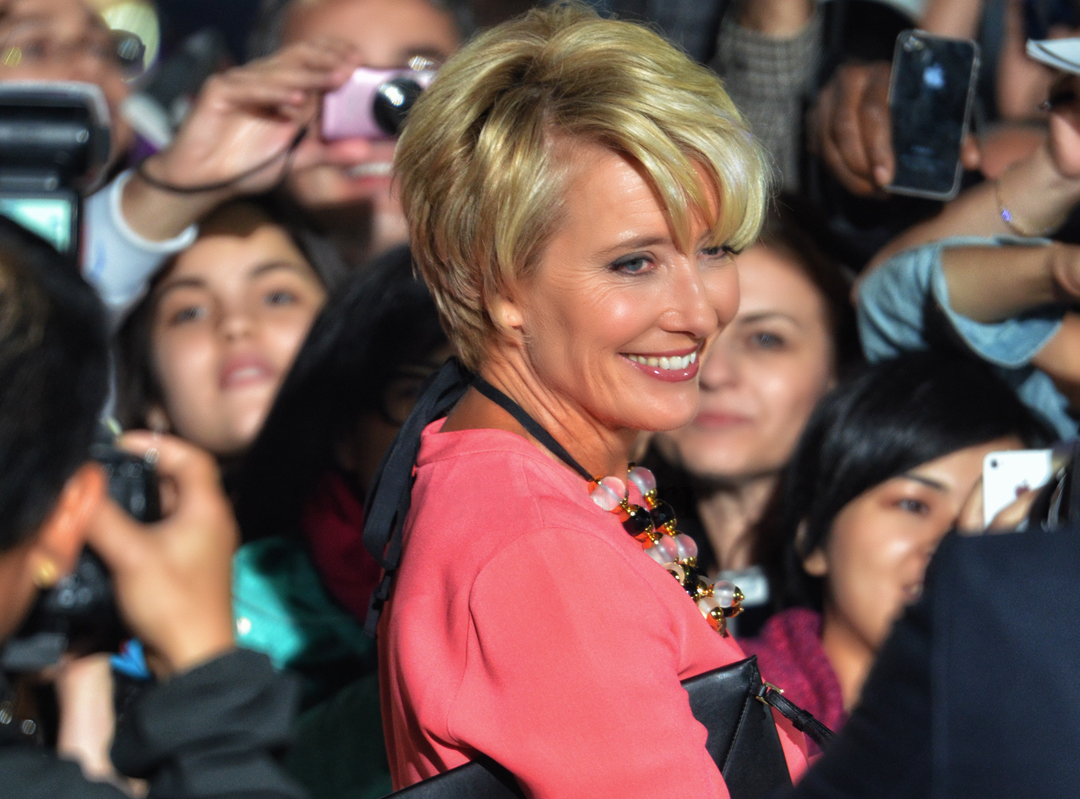 British actress and screenwriter Emma Thompson will receive the 2018 CineMerit Award at Munich International Film festival. In Munich, Emma Thompson will not only present her latest film, “The Children Act“, but will also meet the audience up close at the Filmmakers Live discussion in the Black Box at the Gasteig cultural center. In further homage to Emma Thompson, Munich International Film festival will also be showing three fantastic films in which she has previously starred: “Howards End”, “Sense and Sensibility”, and “Nanny McPhee”.
Witty, charming, profound: Emma Thompson is multitalented. In some 80 films, adapting everything from the works of Shakespeare to Harry Potter, the British actress has portrayed a wide variety of characters alongside Kate Winslet, Meryl Streep, Helena Bonham Carter, Anthony Hopkins, Alan Rickman, Tom Hanks, and many others. Thompson has succeeded in doing what no one else had done before: she received an Academy Award for best actress for her leading role in “Howards End” as well as one for best writing for her screenplay adaptation of Jane Austen’s “Sense and Sensibility”.
“In Emma Thompson, we welcome to the film festival a terrific actress who not only has an incredible sense of humor but who is also very modern and emancipated. The entire festival team is thrilled,” says festival director Diana Iljine. “Honoring Emma Thompson with the CineMerit Award makes an important statement at a time when the film industry is undergoing change. For many years, she has campaigned for equal rights as well as for prudent feminism. This makes her a wonderful example to young women.”
For the film festival, Emma Thompson is bringing her latest film, “The Children Act”, to Munich. In this film adaptation of Ian McEwan’s novel of the same title, Thompson plays Fiona Maye, a High Court judge specializing in family law. The case of a 17-year-old Jehovah’s Witness affects Fiona and her ailing marriage more than she could have imagined. In accordance with his religious beliefs, the teenage leukemia patient refuses a blood transfusion that could save his life. Is his young life more valuable than his religious devotion? Dealing with the boy causes Judge Fiona Maye to experience emotions that she has long suppressed.
Thompson’s acting career began with brief sketches as a member of the Cambridge Footlights, the university theatrical club that produced such comedy greats as Monty Python and Fry & Laurie. The London native soon stood out for her tragic roles, as with only the slightest of facial expressions, she is able to make her characters deeply human — something that few others have mastered. Time and again, her parts have included those of women who dissent with the norms and rules of society and their position in it. The three other films that Munich International Film festival is showing in homage to Emma Thompson have this in common:
In 1993, for “Howards End”, Emma Thompson received the Academy Award for best actress as well as Britain’s renowned BAFTA award. E. M. Foster’s novel was the basis for the story of two young women who find themselves in the world of an extremely affluent family. The estate Howards End comes to symbolize freedom and independence to the Victorian petty bourgeois. Helena Bonham Carter and Emma Thompson play two sisters caught up in a conflict between their youthful attempts at independence and the restraints that the customs of their time impose on them.
Emma Thompson’s love of literature and language is evident not only in the many film adaptations in which she’s acted, but also in her work as a screenwriter. In 1995, she adapted “Sense and Sensibility” for the screen, which earned her a second Academy Award. Munich International Film festival proudly presents this masterpiece by Ang Lee, starring Kate Winslet in one of her earliest roles.
In “Nanny McPhee”, however, the author is a little less benign. As the quirky, homely and strict governess of the title, she magically transforms Mr. Brown’s unruly children into well-behaved little angels. Here, too, Thompson demonstrated her literary talent as screenwriter and combined this with her precise acting.
British actress and screenwriter Emma Thompson will receive the 2018 CineMerit Award at Munich International Film festival. In Munich, Emma Thompson will not only present her latest film, “The Children Act“, but will also meet the audience up close at the Filmmakers Live discussion in the Black Box at the Gasteig cultural center. In further homage to Emma Thompson, Munich International Film festival will also be showing three fantastic films in which she has previously starred: “Howards End”, “Sense and Sensibility”, and “Nanny McPhee”.
Witty, charming, profound: Emma Thompson is multitalented. In some 80 films, adapting everything from the works of Shakespeare to Harry Potter, the British actress has portrayed a wide variety of characters alongside Kate Winslet, Meryl Streep, Helena Bonham Carter, Anthony Hopkins, Alan Rickman, Tom Hanks, and many others. Thompson has succeeded in doing what no one else had done before: she received an Academy Award for best actress for her leading role in “Howards End” as well as one for best writing for her screenplay adaptation of Jane Austen’s “Sense and Sensibility”.
“In Emma Thompson, we welcome to the film festival a terrific actress who not only has an incredible sense of humor but who is also very modern and emancipated. The entire festival team is thrilled,” says festival director Diana Iljine. “Honoring Emma Thompson with the CineMerit Award makes an important statement at a time when the film industry is undergoing change. For many years, she has campaigned for equal rights as well as for prudent feminism. This makes her a wonderful example to young women.”
For the film festival, Emma Thompson is bringing her latest film, “The Children Act”, to Munich. In this film adaptation of Ian McEwan’s novel of the same title, Thompson plays Fiona Maye, a High Court judge specializing in family law. The case of a 17-year-old Jehovah’s Witness affects Fiona and her ailing marriage more than she could have imagined. In accordance with his religious beliefs, the teenage leukemia patient refuses a blood transfusion that could save his life. Is his young life more valuable than his religious devotion? Dealing with the boy causes Judge Fiona Maye to experience emotions that she has long suppressed.
Thompson’s acting career began with brief sketches as a member of the Cambridge Footlights, the university theatrical club that produced such comedy greats as Monty Python and Fry & Laurie. The London native soon stood out for her tragic roles, as with only the slightest of facial expressions, she is able to make her characters deeply human — something that few others have mastered. Time and again, her parts have included those of women who dissent with the norms and rules of society and their position in it. The three other films that Munich International Film festival is showing in homage to Emma Thompson have this in common:
In 1993, for “Howards End”, Emma Thompson received the Academy Award for best actress as well as Britain’s renowned BAFTA award. E. M. Foster’s novel was the basis for the story of two young women who find themselves in the world of an extremely affluent family. The estate Howards End comes to symbolize freedom and independence to the Victorian petty bourgeois. Helena Bonham Carter and Emma Thompson play two sisters caught up in a conflict between their youthful attempts at independence and the restraints that the customs of their time impose on them.
Emma Thompson’s love of literature and language is evident not only in the many film adaptations in which she’s acted, but also in her work as a screenwriter. In 1995, she adapted “Sense and Sensibility” for the screen, which earned her a second Academy Award. Munich International Film festival proudly presents this masterpiece by Ang Lee, starring Kate Winslet in one of her earliest roles.
In “Nanny McPhee”, however, the author is a little less benign. As the quirky, homely and strict governess of the title, she magically transforms Mr. Brown’s unruly children into well-behaved little angels. Here, too, Thompson demonstrated her literary talent as screenwriter and combined this with her precise acting.
-
Russian Film LOVELESS Wins Best International Film at Munich Film Festival
[caption id="attachment_22301" align="aligncenter" width="1200"]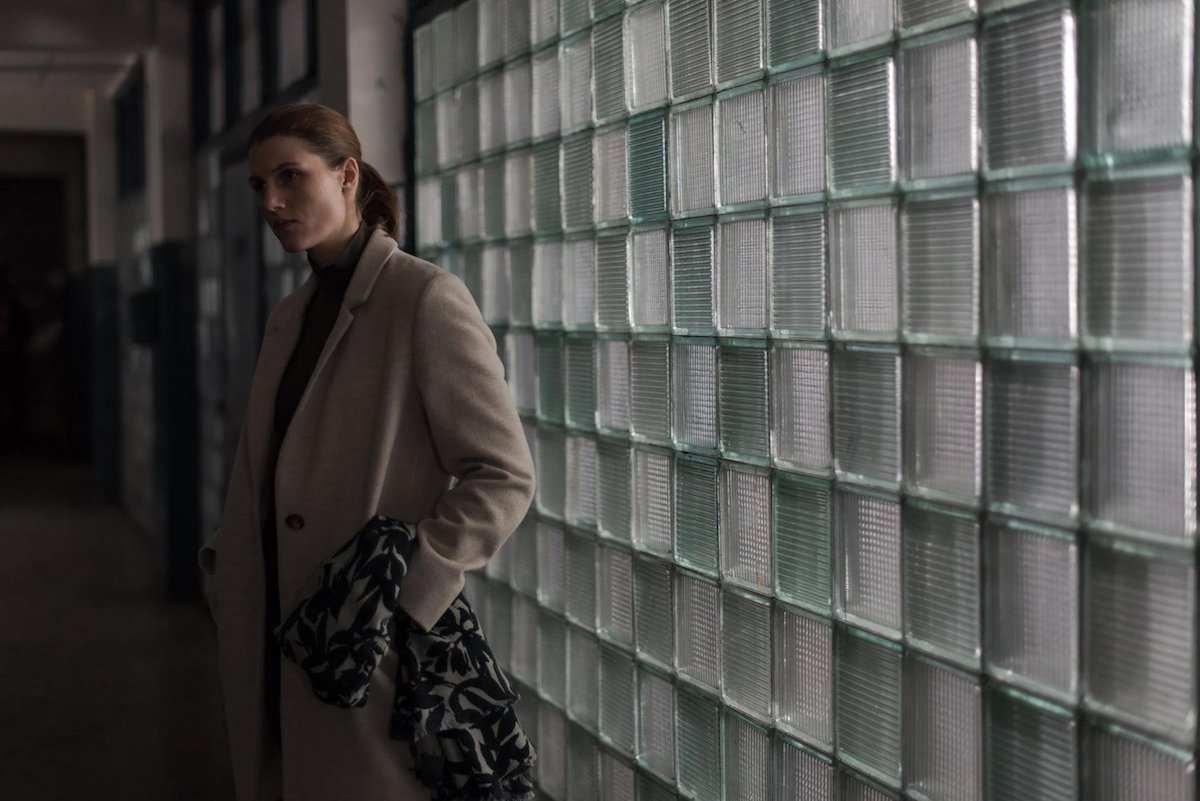 Loveless[/caption]
The Russian film “Loveless” by Andrey Zvyagintsev won the ARRI / OSRAM Award for best international film, at the Munich Film Festival. “Loveless” tells the story of Boris and Zhenya, going through a cruel divorce full of hatred and mutual accusations. Both have already have found new partners and both want as quickly as possible to leave the past behind. The past includes their son Alyosha, who suddenly disappears without a trace. “Loveless” won the Jury Prize at the Cannes Film Festival. A special mention was given to the Belgian film “Home” directed by Fien Troch.
The CineVision Award for the best international junior film was won by The Nothing Factory (A Fábrica de Nada) directed by Pedro Pinho. The jury commented “The film tells the story of a group factory workers who lose their jobs, but refuse to give up. The story is told in a very emphatic way, played and filmed, but to want without arousing cheap pity. The film provides no easy answers, but forces us thinking itself. It is a startling and highly entertaining form of agitprop for the 21st century.” A special mention was awarded to “Los Perros” by the Chilean director Marcela Said.
“Blind & Ugly” by Tom Lass won the FIPRESCI Prize 2017. The jury praised the balanced mix of drama, comedy and romance, as well as the successful occupation.
The audience prize went to the film “Still Young” by David Schlichter and Fabian Halbig. The film portrays the story of four boys from Dillingen who met each other at school and wanted to play German rock: the band Killerpilze.
The Children’s Film Festival Audience Award this year went to the team of directors Jakob Schuh, Jan Lachauer and Bin Han To for their animated film “Once Upon a Time … by Roald Dahl” ( “Revolting Rhymes“), co-produced by BBC and ZDF.
ONE FUTURE PRIZE is awarded to the Italian film Pure Hearts (Cuori Puri) . The jury justified its decision by saying, “. Roberto de Paolis complex debut film opened an intelligent and very touching look at the socio-political problems of contemporary Italy First seemingly only a love story about two young people from very different social backgrounds, taking the 1980 in Rome born director refugee issues increasingly into focus. “
Loveless[/caption]
The Russian film “Loveless” by Andrey Zvyagintsev won the ARRI / OSRAM Award for best international film, at the Munich Film Festival. “Loveless” tells the story of Boris and Zhenya, going through a cruel divorce full of hatred and mutual accusations. Both have already have found new partners and both want as quickly as possible to leave the past behind. The past includes their son Alyosha, who suddenly disappears without a trace. “Loveless” won the Jury Prize at the Cannes Film Festival. A special mention was given to the Belgian film “Home” directed by Fien Troch.
The CineVision Award for the best international junior film was won by The Nothing Factory (A Fábrica de Nada) directed by Pedro Pinho. The jury commented “The film tells the story of a group factory workers who lose their jobs, but refuse to give up. The story is told in a very emphatic way, played and filmed, but to want without arousing cheap pity. The film provides no easy answers, but forces us thinking itself. It is a startling and highly entertaining form of agitprop for the 21st century.” A special mention was awarded to “Los Perros” by the Chilean director Marcela Said.
“Blind & Ugly” by Tom Lass won the FIPRESCI Prize 2017. The jury praised the balanced mix of drama, comedy and romance, as well as the successful occupation.
The audience prize went to the film “Still Young” by David Schlichter and Fabian Halbig. The film portrays the story of four boys from Dillingen who met each other at school and wanted to play German rock: the band Killerpilze.
The Children’s Film Festival Audience Award this year went to the team of directors Jakob Schuh, Jan Lachauer and Bin Han To for their animated film “Once Upon a Time … by Roald Dahl” ( “Revolting Rhymes“), co-produced by BBC and ZDF.
ONE FUTURE PRIZE is awarded to the Italian film Pure Hearts (Cuori Puri) . The jury justified its decision by saying, “. Roberto de Paolis complex debut film opened an intelligent and very touching look at the socio-political problems of contemporary Italy First seemingly only a love story about two young people from very different social backgrounds, taking the 1980 in Rome born director refugee issues increasingly into focus. “
-
REVOLTING RHYMES Wins Children’s Film Festival Munich Audience Award | Trailer
[caption id="attachment_22925" align="aligncenter" width="1200"]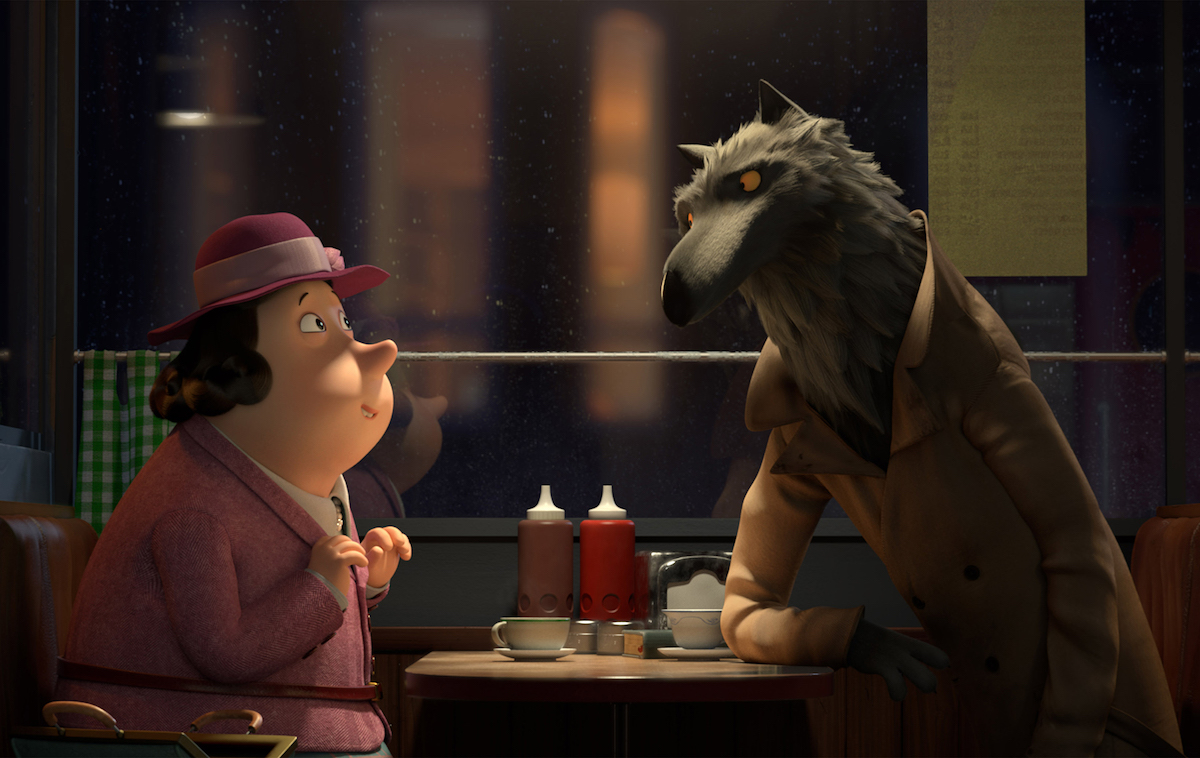 REVOLTING RHYMES: The babysitter listens to the wolf when he told her his story.[/caption]
Children’s Film Festival Audience Award at this year’s Filmfest Munich went to directors Jakob Schuh, Jan Lachauer and Bin Han To for their animated film REVOLTING RHYMES (ONCE UPON A TIME … TO ROALD DAHL).
Snow White, Little Red Riding Hood and a few other classic fairy tales – tilted once in a big bag, shaken up and fished out again. What comes out are completely new stories. Little Red Riding Hood and Snow White are best friends and take matters into their own hands. Since capitulated even the big bad wolf. It is great fun to watch this confusion that have animated fans loving the Oscar-nominated directors.
https://www.youtube.com/watch?v=pjOJaiWltYU
Other highlights of the young festival visitors have included Maria Novaros Tesoros ONLY ONE DAY by Martin Baltscheit, AMELIE RUNS by Tobias Wiemann and PRINCESS AND THE DRAGON by Michel Ocelot.
For adults and children, there were nine films, six short films and a meeting with the foley artist Max Bauer. An accompanying seminar for parents and educators about “horror and horror for children” and a technical discussion for filmmakers completed the program.
REVOLTING RHYMES: The babysitter listens to the wolf when he told her his story.[/caption]
Children’s Film Festival Audience Award at this year’s Filmfest Munich went to directors Jakob Schuh, Jan Lachauer and Bin Han To for their animated film REVOLTING RHYMES (ONCE UPON A TIME … TO ROALD DAHL).
Snow White, Little Red Riding Hood and a few other classic fairy tales – tilted once in a big bag, shaken up and fished out again. What comes out are completely new stories. Little Red Riding Hood and Snow White are best friends and take matters into their own hands. Since capitulated even the big bad wolf. It is great fun to watch this confusion that have animated fans loving the Oscar-nominated directors.
https://www.youtube.com/watch?v=pjOJaiWltYU
Other highlights of the young festival visitors have included Maria Novaros Tesoros ONLY ONE DAY by Martin Baltscheit, AMELIE RUNS by Tobias Wiemann and PRINCESS AND THE DRAGON by Michel Ocelot.
For adults and children, there were nine films, six short films and a meeting with the foley artist Max Bauer. An accompanying seminar for parents and educators about “horror and horror for children” and a technical discussion for filmmakers completed the program.
-
SUMMER HOUSES (Sommerhäuser) Wins Top New German Cinema Awards at Munich Film Festival
[caption id="attachment_22929" align="aligncenter" width="1200"]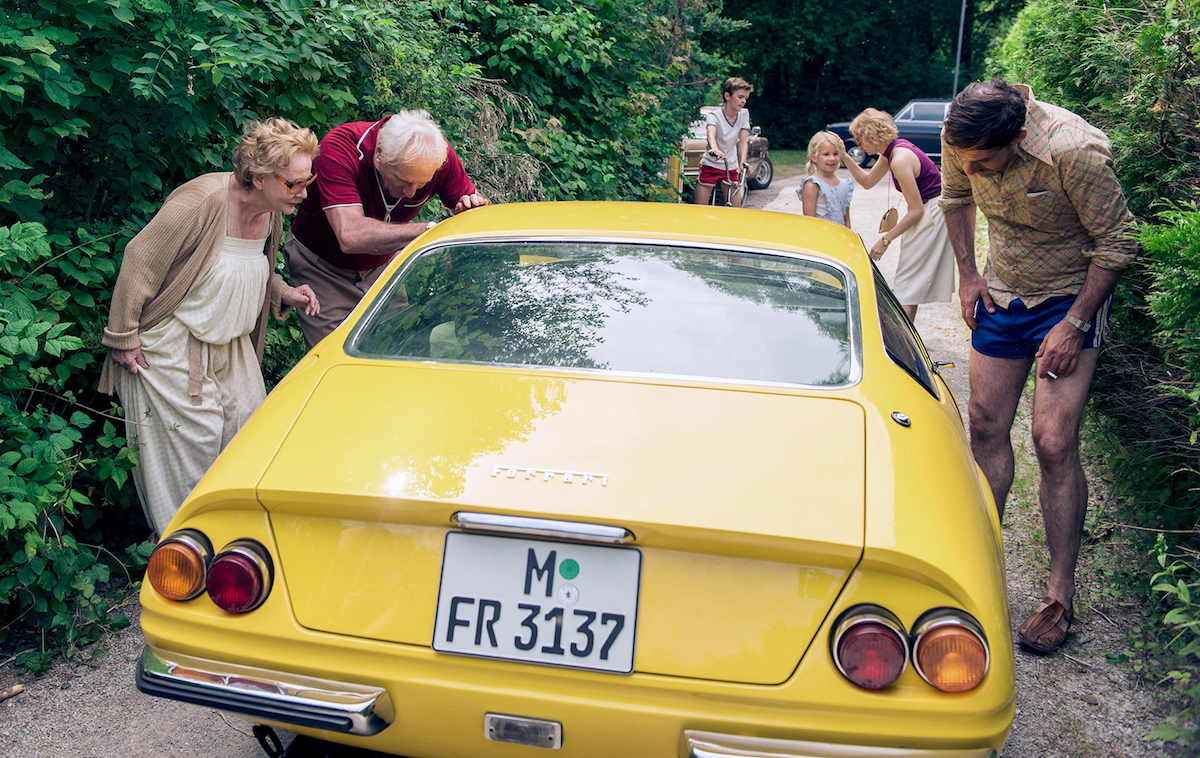 Summer Houses[/caption]
German young talents were awarded the coveted prize New German Cinema at the Munich Film Festival with Summer Houses (Sommerhäuser) winning two awards – Sonja Maria Kröner for Best Director; Philipp Worm and Tobias Walker for Best Production. In her debut film Kröner takes a trip back to the 1970s and is characterized in atmospheric images, the portrait of a family. It is 1976, the family community garden to the scene of absurd comic situations in the sweltering summer of the year.
Annika Meier was named Best Actress for her role in Arne Feldhusens techno trip “Magical Mystery or: the return of Karl Schmidt.” “In a wild troop of crazed stars of the DJ and techno scene, the center of grandiose of Charly Hübner is embodied, the actress Annika Meier projects through her tight, direct and serious game out, “said the jury.
Julia Langhof and Thomas Gerhold received the prize for Best Screenplay for “Lomo – The Language of Many Others.” The twins Karl and Anna are nearing graduation: While the ambitious Anna already pretty much know how their lives will pass, Karl devotes all his attention rather his blog “The language of many others”. There, he posts, among other things personal recordings of his own family, which Charles ratio represents to his father a test of endurance.
The winners Award New German Cinema 2017
Award New German Cinema: DIRECTOR (30,000 euros)
Sonja Maria Kröner for “Summer Houses”
Award New German Cinema: SPECTACLE (10,000 euros)
Annika Meier for “Magical Mystery or: the return of Karl Schmidt”
Award New German Cinema: SCRIPT (10,000 euros)
Julia Langhof and Thomas Gerhold for “Lomo – The Language of Many Others”
Award New German Cinema: PRODUCTION (20,000 euros)
Philipp Worm and Tobias Walker for “Summer Houses”
Summer Houses[/caption]
German young talents were awarded the coveted prize New German Cinema at the Munich Film Festival with Summer Houses (Sommerhäuser) winning two awards – Sonja Maria Kröner for Best Director; Philipp Worm and Tobias Walker for Best Production. In her debut film Kröner takes a trip back to the 1970s and is characterized in atmospheric images, the portrait of a family. It is 1976, the family community garden to the scene of absurd comic situations in the sweltering summer of the year.
Annika Meier was named Best Actress for her role in Arne Feldhusens techno trip “Magical Mystery or: the return of Karl Schmidt.” “In a wild troop of crazed stars of the DJ and techno scene, the center of grandiose of Charly Hübner is embodied, the actress Annika Meier projects through her tight, direct and serious game out, “said the jury.
Julia Langhof and Thomas Gerhold received the prize for Best Screenplay for “Lomo – The Language of Many Others.” The twins Karl and Anna are nearing graduation: While the ambitious Anna already pretty much know how their lives will pass, Karl devotes all his attention rather his blog “The language of many others”. There, he posts, among other things personal recordings of his own family, which Charles ratio represents to his father a test of endurance.
The winners Award New German Cinema 2017
Award New German Cinema: DIRECTOR (30,000 euros)
Sonja Maria Kröner for “Summer Houses”
Award New German Cinema: SPECTACLE (10,000 euros)
Annika Meier for “Magical Mystery or: the return of Karl Schmidt”
Award New German Cinema: SCRIPT (10,000 euros)
Julia Langhof and Thomas Gerhold for “Lomo – The Language of Many Others”
Award New German Cinema: PRODUCTION (20,000 euros)
Philipp Worm and Tobias Walker for “Summer Houses”
-
BABAI is Big Winner with 3 New German Cinema Award 2015 at Munich Film Festival
 Visar Morinas debut film “Babai” (Father) won three New German Cinema Award 2015 at Filmfest München (Munich Film Festival). Visar Morina received the Award for Best Director and Best Screenplay for his debut. In addition, its two main characters Astrit Kabashi and Val Maloku were jointly awarded the Award New German Cinema Theater.
“Babai” explores the story of Nori (Val Maloku) and his father Gezim (Astrit Kabashi) both street cigarette vendor in Kosovo of nineties, during Milosevic regime, where the father wants to find a way to illegally migrate to Germany and his son does everything he can so he could be with his father. Caught between the wish to live together and the need to deal with the harsh reality, the father-son relationship comes to a point where nothing between them is as it used to be.
Visar Morinas debut film “Babai” (Father) won three New German Cinema Award 2015 at Filmfest München (Munich Film Festival). Visar Morina received the Award for Best Director and Best Screenplay for his debut. In addition, its two main characters Astrit Kabashi and Val Maloku were jointly awarded the Award New German Cinema Theater.
“Babai” explores the story of Nori (Val Maloku) and his father Gezim (Astrit Kabashi) both street cigarette vendor in Kosovo of nineties, during Milosevic regime, where the father wants to find a way to illegally migrate to Germany and his son does everything he can so he could be with his father. Caught between the wish to live together and the need to deal with the harsh reality, the father-son relationship comes to a point where nothing between them is as it used to be.
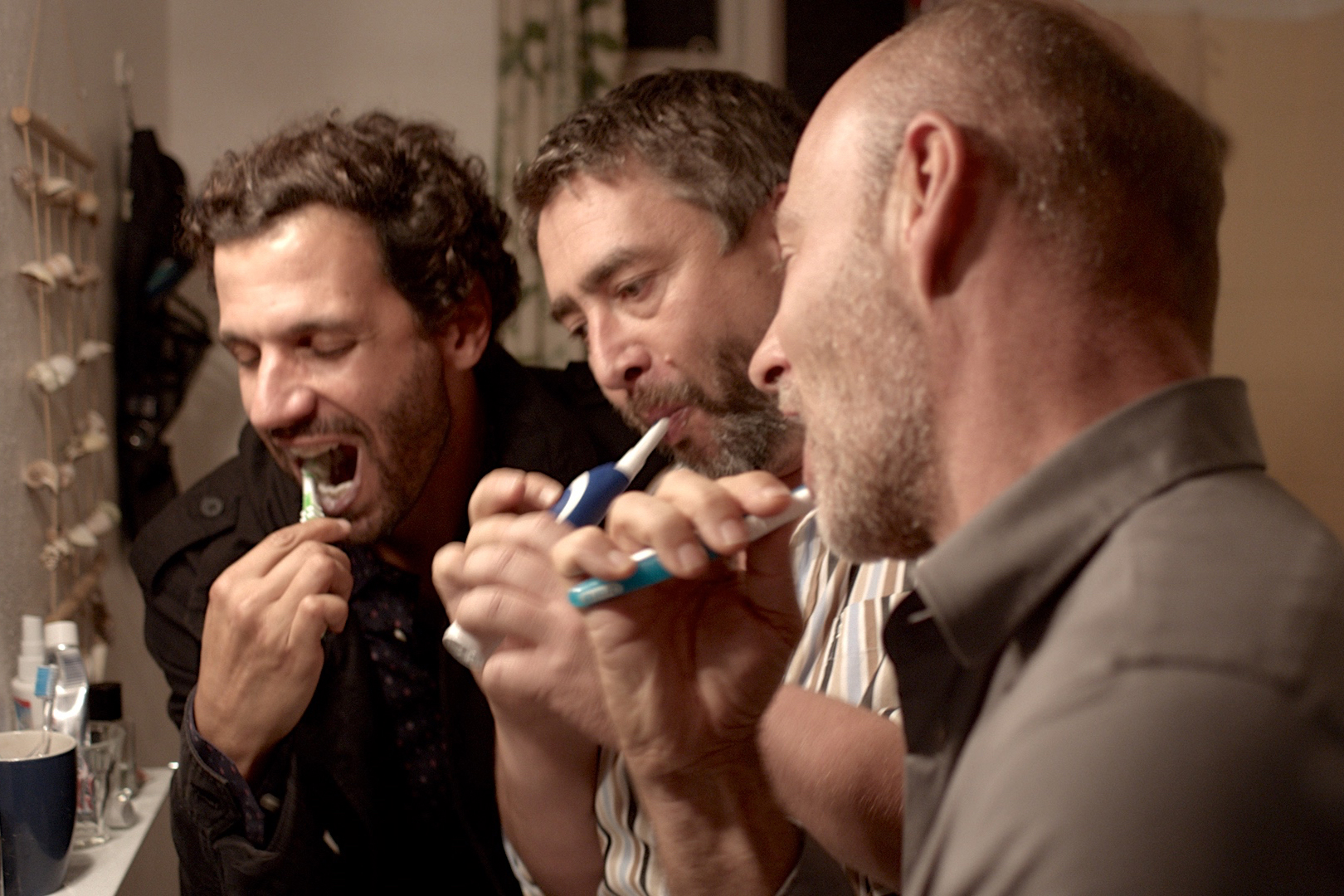 The New German Cinema Award for Best Production went to Steve Hudson, Sonja Ewers for Happy Hour. The warm-hearted comedy by Franz Müller revolves around a man freshly abandoned by his wife in his forties, who travels with two buddies to Ireland to celebrate being a man.
The winners Award New German Cinema 2015
Award New German Cinema director (30,000 euros)
Visar Morina for Babai
The jury: “No lies No Poznan Not a moment of self-indulgence Not a false note, the film brings tears in her eyes – Wuttränen, tears of impotence and grief – and brings the audience but then full of hope and…. much greater force and especially responsibility back to life. responsibility for our lives. Life. The life that we lead people. Together. Babai is a masterpiece of a young master, before we bow deeply. ”
“Babai” is a production of NiKo film in co-production with Produksioni Krusha, Skopje Film Studio and Eaux Vives Productions. Director / Screenwriter: Visar Morina.
Award New German Cinema screenplay (10,000 euros)
Visar Morina for Babai
The jury: “If all the fears are finally silenced before failure, the fear of not enough to be laughed Excluded and to be alone when all the wrong sometime no longer applies, then sometimes stirs a quiet voice for drinks and….. . Although shy Merciless, with no sugar -.. but full of truth and love Babai is written from the first to the last sentence in this voice Banned, agitated and overwhelmed, we have listened to her. ”
Award New German Cinema Theater (10,000 euros)
Val Maloku, Astrit Kabashi for Babai
The jury: “In the film Babai have us Val Maloku as son and Astrit Kabashi when his father in her first film roles absolutely convinced and touches like the son like a little adult faced his father so that he has left and betrayed him because. he fled without him to Germany, just took off, will be unforgettable. The father in turn is always opposite in conflict with his natural desire for a new chance at life and his feelings the son who forces him to assume responsibility and his role as to meet father. The two are in their interaction as natural and sincere, as if they had the story actually experienced. We understand by it what people happen to us, if not met our desire for a normal, independent life without further ado and we have to fight. Val Maloku and Astrit Kabashi have touched us and shaken by their game at heart. ”
Award New German Cinema Production (20,000 euros)
Steve Hudson, Sonja Ewers for Happy Hour
The jury: “A film that the jury completely carried away and really convinced on all its artisanal levels A warm-hearted constellation of narrow Ü40 friends in their common self-discovery Strip to Ireland Wild Irish countryside, their songs and drink, but above all the.. heart-warming, of course gripping Irish Women loosen and lead them out of their cramped thinking and living patterns. These worldly-wise and the very fact witty comedy captivates A through by a great writer, brisk timing, famous wit, charm and a wonderful camera. and by successful low marketing budget production, with a high potential with its grandiose performers to meet like-minded couples at the box office. ”
“Happy Hour” is a production the gringo films GmbH in co-production with film Boutique – Katharina Jacob & Markéta Polednová GbR and Ripple World Pictures. Director / Screenwriter: Franz Müller.
The New German Cinema Award for Best Production went to Steve Hudson, Sonja Ewers for Happy Hour. The warm-hearted comedy by Franz Müller revolves around a man freshly abandoned by his wife in his forties, who travels with two buddies to Ireland to celebrate being a man.
The winners Award New German Cinema 2015
Award New German Cinema director (30,000 euros)
Visar Morina for Babai
The jury: “No lies No Poznan Not a moment of self-indulgence Not a false note, the film brings tears in her eyes – Wuttränen, tears of impotence and grief – and brings the audience but then full of hope and…. much greater force and especially responsibility back to life. responsibility for our lives. Life. The life that we lead people. Together. Babai is a masterpiece of a young master, before we bow deeply. ”
“Babai” is a production of NiKo film in co-production with Produksioni Krusha, Skopje Film Studio and Eaux Vives Productions. Director / Screenwriter: Visar Morina.
Award New German Cinema screenplay (10,000 euros)
Visar Morina for Babai
The jury: “If all the fears are finally silenced before failure, the fear of not enough to be laughed Excluded and to be alone when all the wrong sometime no longer applies, then sometimes stirs a quiet voice for drinks and….. . Although shy Merciless, with no sugar -.. but full of truth and love Babai is written from the first to the last sentence in this voice Banned, agitated and overwhelmed, we have listened to her. ”
Award New German Cinema Theater (10,000 euros)
Val Maloku, Astrit Kabashi for Babai
The jury: “In the film Babai have us Val Maloku as son and Astrit Kabashi when his father in her first film roles absolutely convinced and touches like the son like a little adult faced his father so that he has left and betrayed him because. he fled without him to Germany, just took off, will be unforgettable. The father in turn is always opposite in conflict with his natural desire for a new chance at life and his feelings the son who forces him to assume responsibility and his role as to meet father. The two are in their interaction as natural and sincere, as if they had the story actually experienced. We understand by it what people happen to us, if not met our desire for a normal, independent life without further ado and we have to fight. Val Maloku and Astrit Kabashi have touched us and shaken by their game at heart. ”
Award New German Cinema Production (20,000 euros)
Steve Hudson, Sonja Ewers for Happy Hour
The jury: “A film that the jury completely carried away and really convinced on all its artisanal levels A warm-hearted constellation of narrow Ü40 friends in their common self-discovery Strip to Ireland Wild Irish countryside, their songs and drink, but above all the.. heart-warming, of course gripping Irish Women loosen and lead them out of their cramped thinking and living patterns. These worldly-wise and the very fact witty comedy captivates A through by a great writer, brisk timing, famous wit, charm and a wonderful camera. and by successful low marketing budget production, with a high potential with its grandiose performers to meet like-minded couples at the box office. ”
“Happy Hour” is a production the gringo films GmbH in co-production with film Boutique – Katharina Jacob & Markéta Polednová GbR and Ripple World Pictures. Director / Screenwriter: Franz Müller.
-
John Malkovich & Otar Iosseliani to receive CineMerit Award at 2011 Munich Film Festival
[caption id="attachment_1395" align="alignnone" width="480"]
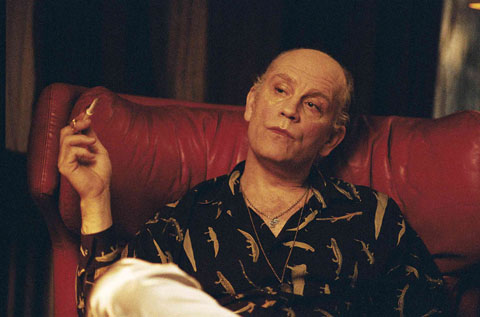 Masks within masks: Malkovich playing a Kubrick impostor in COLOUR ME KUBRICK – A TRUE…ISH STORY[/caption]
[caption id="attachment_1396" align="alignnone" width="480"]
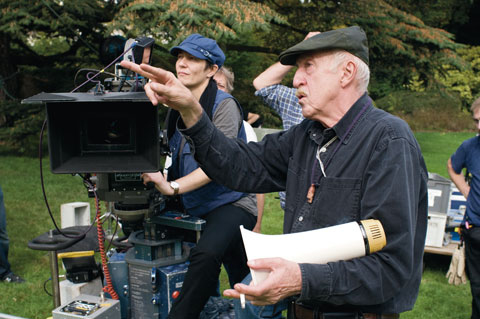 In his element: Otar Iosseliani and DoP Julie Grunebaum shooting CHANTRAPAS[/caption]
This year, FILMFEST MÜNCHEN aka Munich Film Festival honors Georgian writer-director Otar Iosseliani and American acting icon John Malkovich with the CineMerit Award.
Every year, FILMFEST MÜNCHEN presents the CineMerit Award, sponsored by German carmaker Audi, to outstanding personalities in the international film community for extraordinary contributions to motion pictures as an art form.
Festival Director Andreas Ströhl: “Otar Iosseliani is the unsurpassed master of the melancholy comedy, and John Malkovich has always been in a class of his own. His unconventional performances make every film he’s in worth seeing. We’re very proud that they are both coming to Munich for the festival.”
Otar Iosseliani, born in Tbilisi in 1934, is one of the grandseigneurs of poetic cinema. The internationally acclaimed filmmaker began making films in Georgia in the ’60s and ’70s. Unwilling to put up with Soviet censorship, he emigrated to France in 1982. His films are characterized by a unique visual and narrative style, an ironic world view and an all-embracing love of humanity despite people’s shortcomings.
Otar Iosseliani will receive his CineMerit Award at the festival’s Award Ceremony on July 1st at 6 pm. The keynote speaker is the Berlin-based Georgian director Dito Tsintsadze. Following the ceremony, Iosseliani’s latest film will be screened: CHANTRAPAS (France, 2010) is about a Georgian filmmaker who leaves his homeland in search of a better life – a film with obvious autobiographical content. FILMFEST MÜNCHEN will be screening six of this exceptional director’s films in all.
John Malkovich is one of the greatest actors of his generation but he is also a producer, writer and director. He has played every imaginable character in the course of his career. Malkovich, the man with the endearing malicious smile, acts in Hollywood blockbusters as well as no budget films.
John Malkovich will receive his CineMerit Award at a gala on June 27 at 7:30 pm in the festival center. Veronica Ferres, who appeared in KLIMT with Malkovich, is the keynote speaker. Brian Cook’s COLOUR ME KUBRICK – A TRUE…ISH STORY will follow. Five other Malkovich films are also being screened, among them Volker Schlörndorff’s THE OGRE, Spike Jonze’s BEING JOHN MALKOVICH, Raoul Ruiz’ KLIMT and THE DANCER UPSTAIRS, which Malkovich also directed.[ source: FILMFEST MÜNCHEN ]