The 24th edition of New York Asian Film Festival (NYAFF) running July 11–27, 2025, unveiled the lineup of films. This year’s theme is “Cinema as Disruption” spotlighting films that challenge, provoke, and reimagine.

New York Asian Film Festival (NYAFF) in presented annually collaboration with Subway Cinema and Film at Lincoln Center since 2010. The festival is North America’s leading festival of popular Asian cinema.
Since 2002, the New York Asian Film Festival has been an annual celebration of the best and boldest in Asian cinema. As the first film festival in North America to champion the works of today’s leading Asian auteurs, NYAFF continues to introduce vibrant and vital voices ranging from explosive blockbusters to eccentric arthouse gems. As we celebrate Asian representation more than ever, NYAFF provides an essential connection and awareness to our community, to New Yorkers, and beyond.
New York Asian Film Festival started in 2002 and takes place in New York, New York
The 24th edition of New York Asian Film Festival (NYAFF) running July 11–27, 2025, unveiled the lineup of films. This year’s theme is “Cinema as Disruption” spotlighting films that challenge, provoke, and reimagine.

The 23rd New York Asian Film Festival (NYAFF) unveiled the eight titles nominated for this year’s Uncaged Award for Best Feature Film Competition, which shines a spotlight on filmmakers whose singular visions deserve to be internationally heralded

The world premiere of Park Beom-Su’s Victory will kick off the 23rd edition of the New York Asian Film Festival (NYAFF) set to take place July 12th – 22nd at Film at Lincoln Center. The festival will host the premieres of 20 feature debuts, an amplified number of films focusing on LGBTQ+ characters and themes, including several that represent touchpoints in queer cinema.

The North American premiere of the Korean genre mashup Killing Romance, directed by Lee Won-suk will kick off the 22nd edition of the New York Asian Film Festival (NYAFF). The director will be joined at Film at Lincoln Center on opening night by his lead actor, Lee Sun-kyun (Parasite, A Hard Day), who turns in an unforgettable performance as the indescribably overbearing husband of a disgraced supermodel-movie star, fully armed with his history of versatile roles in everything from art-house collaborations with Hong Sang-soo to rom-coms to his SAG Award-winning turn in Bong Joon Ho’s Parasite. Director Lee Won-suk has a rich history with NYAFF—his first film, How to Use Guys with Secret Tips, premiered at NYAFF 2013, and Lee won the Audience Award at NYAFF 2015 with his second feature, the big-budget period drama The Royal Tailor.

Ryoo Seung-wan’s tense action thriller Escape from Mogadishu, starring Kim Yoon-seok (NYAFF Star Asia winner 2018) and Zo In-sung will kick off 20th edition of New York Asian Film Festival (NYAFF) at Film at Lincoln Center on August 6. The dramatic film is based on real events that took place in 1991 at the onset of the Somali Civil War, and depicts the perilous escape attempted by North and South Korean embassy workers who were stranded in the title city during the conflict. (Well Go USA is releasing the film in the United States and Canada.)
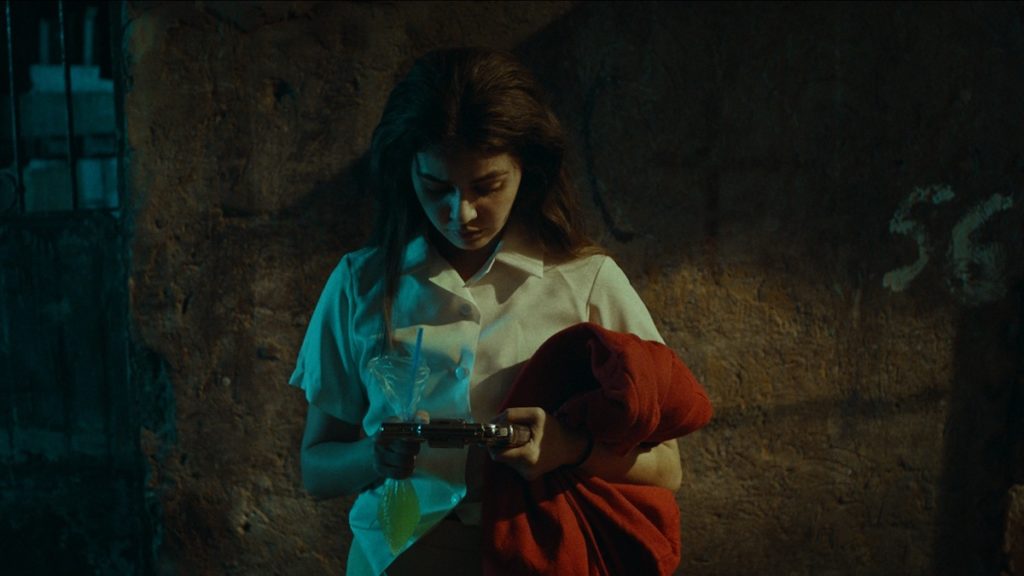
The 19th New York Asian Film Festival will be a special virtual edition from August 28 to September 12, 2020. The festival continues to highlight women both behind and in front of the camera, and features a specific FOCUS on women filmmakers: Women Transforming Film, starting with The Opening Film – the North American Premiere of The Girl and the Gun (Babae at Baril), directed by Rae Red, led by a superb performance by actress Janine Gutierrez.
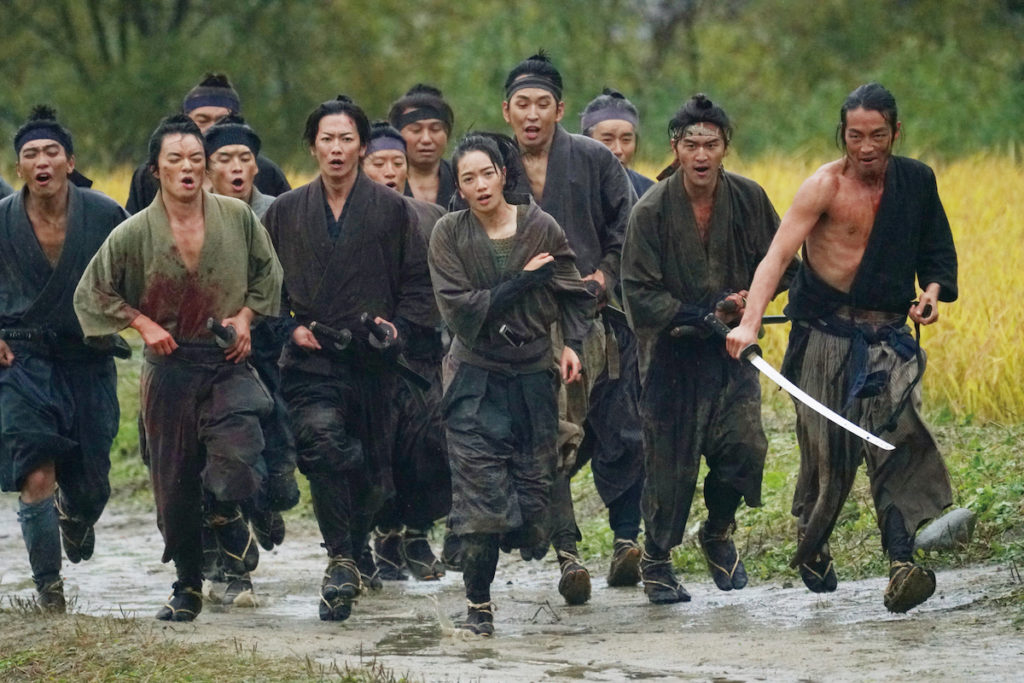
After last year’s Savage Seventeen, this year’s 18th edition of the New York Asian Film Festival (NYAFF) is dubbed the “Still Too Young to Die” edition and will run June 28 to July 14, 2019.
 Hong Kong’s Stephy Tang will receive the Screen International Rising Star Asia Award at the 17th New York Asian Film Festival (NYAF) on July 7th before a screening of her film The Empty Hands. Tang, a former volleyball star and model, started out in the entertainment business as the lead singer of the phenomenally popular girls’ band The Cookies before launching her successful solo career. In addition to concerts, albums and television appearances, she started her own fashion label and wrote a romance novel. In film, she is best known for her pairing with Alex Fong in a series of popular rom-coms directed by Patrick Kong from 2006-2015.
NYAFF is celebrating Tang for her recent shift in career direction, taking on a series of more challenging roles. In Cheung Wing-kai’s Somewhere Beyond the Mist, she plays a pregnant policewoman investigating a morbid murder case; in Chapman To’s The Empty Hands, she plays a young woman who reaches self-actualization by stepping back into the ring after the death of her estranged father, a karate master. She trained for six months for the latter role.
Tang recently told the South China Morning Post that she hopes The Empty Hands represents a new era of “more female-oriented films in Hong Kong”. She said, “In the last few years, I have been hoping that people would recognize me as an actress rather than as a singer. Of course I still do concerts but, in the past, I made movies as a singer, and now I hope I’m more an actress doing music. I’m determined to make this happen.”
Samuel Jamier, NYAFF’s executive director says, “At a time when Hong Kong cinema is reinventing itself and finding a new maturity, we’re excited to award an actress who has also reinvented herself. We believe that Stephy Tang has the talent, determination and charisma to become one of Hong Kong’s leading actors in the years to come.”
The previous recipients of the Screen International Rising Star Asia Award were Japan’s Fumi Nikaido in 2014; Japan’s Shota Sometani in 2015; Japan’s Go Ayano, China’s Jelly Lin, and the Philippines’ Teri Malvar in 2016; and Thailand’s Chutimon “Aokbab” Chuengcharoensukying in 2017.
Hong Kong’s Stephy Tang will receive the Screen International Rising Star Asia Award at the 17th New York Asian Film Festival (NYAF) on July 7th before a screening of her film The Empty Hands. Tang, a former volleyball star and model, started out in the entertainment business as the lead singer of the phenomenally popular girls’ band The Cookies before launching her successful solo career. In addition to concerts, albums and television appearances, she started her own fashion label and wrote a romance novel. In film, she is best known for her pairing with Alex Fong in a series of popular rom-coms directed by Patrick Kong from 2006-2015.
NYAFF is celebrating Tang for her recent shift in career direction, taking on a series of more challenging roles. In Cheung Wing-kai’s Somewhere Beyond the Mist, she plays a pregnant policewoman investigating a morbid murder case; in Chapman To’s The Empty Hands, she plays a young woman who reaches self-actualization by stepping back into the ring after the death of her estranged father, a karate master. She trained for six months for the latter role.
Tang recently told the South China Morning Post that she hopes The Empty Hands represents a new era of “more female-oriented films in Hong Kong”. She said, “In the last few years, I have been hoping that people would recognize me as an actress rather than as a singer. Of course I still do concerts but, in the past, I made movies as a singer, and now I hope I’m more an actress doing music. I’m determined to make this happen.”
Samuel Jamier, NYAFF’s executive director says, “At a time when Hong Kong cinema is reinventing itself and finding a new maturity, we’re excited to award an actress who has also reinvented herself. We believe that Stephy Tang has the talent, determination and charisma to become one of Hong Kong’s leading actors in the years to come.”
The previous recipients of the Screen International Rising Star Asia Award were Japan’s Fumi Nikaido in 2014; Japan’s Shota Sometani in 2015; Japan’s Go Ayano, China’s Jelly Lin, and the Philippines’ Teri Malvar in 2016; and Thailand’s Chutimon “Aokbab” Chuengcharoensukying in 2017.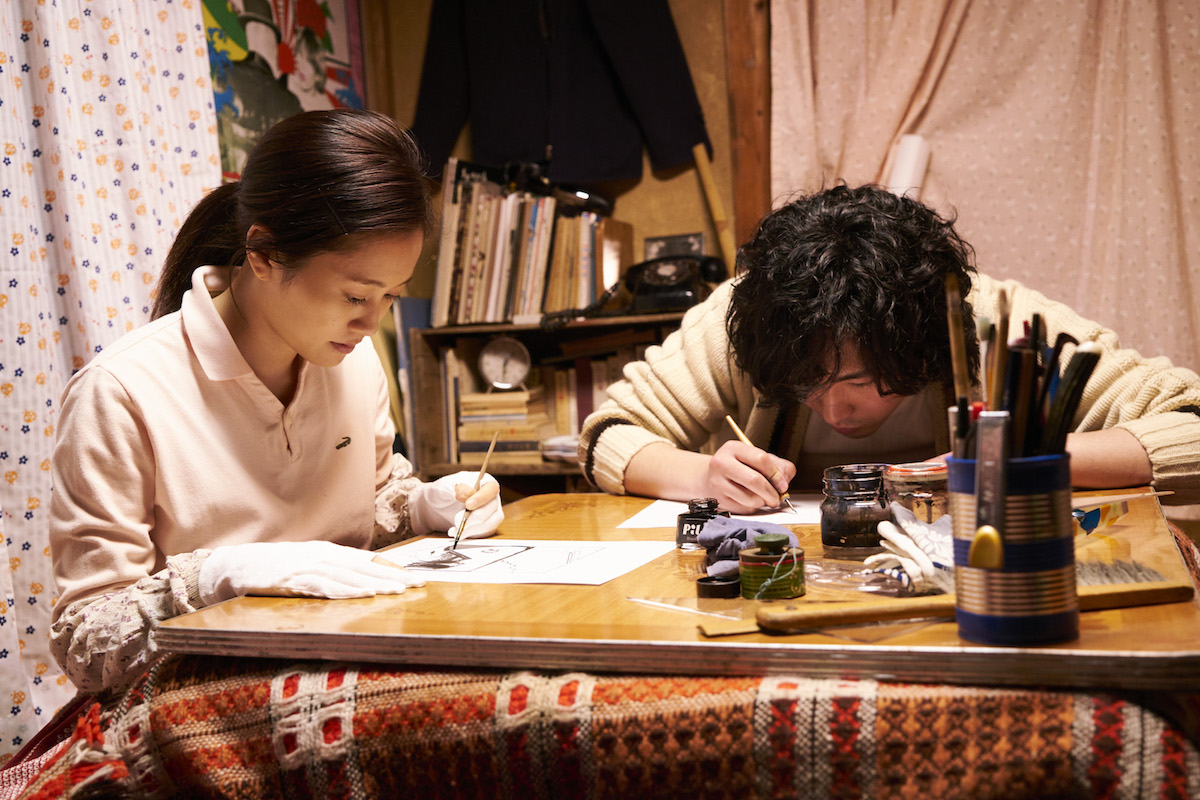 Dynamite Graffiti[/caption]
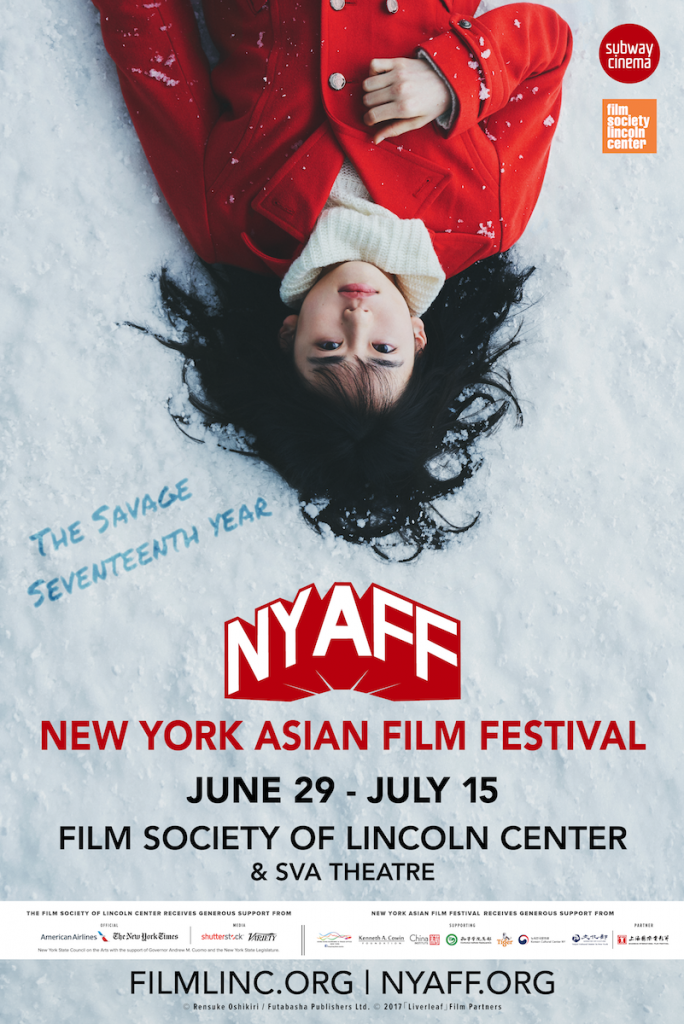
From vicious, life destroying phone scams to balletic battles between equally corrupt cops and yakuza, the 17th edition of the New York Asian Film Festival (NYAFF), returns June 29 to July 15, 2018, with films that reflect on contemporary society while offering extreme genre pleasures. There are self referential takes on cinematic zombies, existential date nights, and teens finding their own corners of the world despite familial and societal expectations. After last year’s Sweet Sixteen, this year’s program is dubbed the Savage Seventeenth edition with four world premieres, three international premieres, 21 North American premieres, three U.S. premieres, and twelve New York premieres, showcasing the most exciting comedies, dramas, thrillers, romances, horrors and arthouse films from East Asia.
Savage Seventeen: The festival has a rich history of presenting films that deal with the social issue of teenage bullying. Many of these have proven to be launching pads for some of Asia’s biggest stars, and the subject is at the root of such modern classics as All About Lily ChouChou, Whispering Corridors, and Confessions. In a year when youths in the U.S. are standing their ground and demanding political change, NYAFF presents the North American premieres of three films about teenagers who just won’t take it anymore: Kim Uiseok’s After My Death, Ogata Takaomi’s The Hungry Lion, and Naito Eisuke’s competition title Liverleaf.
Opening Night is the North American premiere of Tominaga Masanori’s Dynamite Graffiti, an unorthodox and sprightly drama based on the life and times of Japanese porn mag king Suei Akira, who cultivated future artists such as Araki Nobuyoshi and Moriyama Daido. This spirited tale of sexual exploitation is an ode to free expression, proving that the so called “smut” of today might very well become the art of tomorrow. The film is a metaphor for the humble origins of the festival as a Chinatownborn grindhouse showcase introducing the works of Johnnie To and several of the modern masters of Korean cinema.
[caption id="attachment_30085" align="aligncenter" width="1200"]
Dynamite Graffiti[/caption]
From vicious, life destroying phone scams to balletic battles between equally corrupt cops and yakuza, the 17th edition of the New York Asian Film Festival (NYAFF), returns June 29 to July 15, 2018, with films that reflect on contemporary society while offering extreme genre pleasures. There are self referential takes on cinematic zombies, existential date nights, and teens finding their own corners of the world despite familial and societal expectations. After last year’s Sweet Sixteen, this year’s program is dubbed the Savage Seventeenth edition with four world premieres, three international premieres, 21 North American premieres, three U.S. premieres, and twelve New York premieres, showcasing the most exciting comedies, dramas, thrillers, romances, horrors and arthouse films from East Asia.
Savage Seventeen: The festival has a rich history of presenting films that deal with the social issue of teenage bullying. Many of these have proven to be launching pads for some of Asia’s biggest stars, and the subject is at the root of such modern classics as All About Lily ChouChou, Whispering Corridors, and Confessions. In a year when youths in the U.S. are standing their ground and demanding political change, NYAFF presents the North American premieres of three films about teenagers who just won’t take it anymore: Kim Uiseok’s After My Death, Ogata Takaomi’s The Hungry Lion, and Naito Eisuke’s competition title Liverleaf.
Opening Night is the North American premiere of Tominaga Masanori’s Dynamite Graffiti, an unorthodox and sprightly drama based on the life and times of Japanese porn mag king Suei Akira, who cultivated future artists such as Araki Nobuyoshi and Moriyama Daido. This spirited tale of sexual exploitation is an ode to free expression, proving that the so called “smut” of today might very well become the art of tomorrow. The film is a metaphor for the humble origins of the festival as a Chinatownborn grindhouse showcase introducing the works of Johnnie To and several of the modern masters of Korean cinema.
[caption id="attachment_30085" align="aligncenter" width="1200"]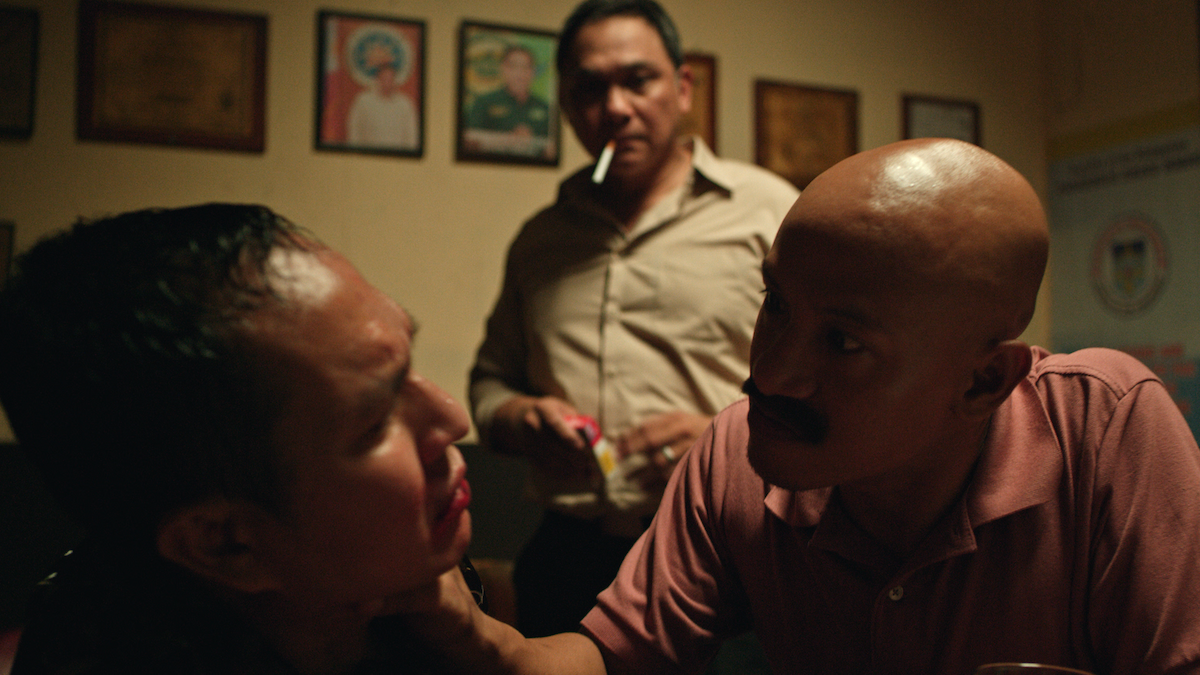 BuyBust[/caption]
Closing Night is the world premiere of Erik Matti’s BuyBust from the Philippines. On the surface, it is structured like an action film in the vein of The Raid, with superstar Anne Curtis and MMA world champion Brandon Vera as narcs taking down a drug kingpin against insurmountable odds over one unrelenting rainy night. The film employed 309 stuntmen and features a wildly ambitious three minute, one cut action scene. Being a Matti film, it also offers a searing perspective on the ongoing drug war and broader issues of political corruption. The director and stars will attend the screening.
[caption id="attachment_30086" align="aligncenter" width="1200"]
BuyBust[/caption]
Closing Night is the world premiere of Erik Matti’s BuyBust from the Philippines. On the surface, it is structured like an action film in the vein of The Raid, with superstar Anne Curtis and MMA world champion Brandon Vera as narcs taking down a drug kingpin against insurmountable odds over one unrelenting rainy night. The film employed 309 stuntmen and features a wildly ambitious three minute, one cut action scene. Being a Matti film, it also offers a searing perspective on the ongoing drug war and broader issues of political corruption. The director and stars will attend the screening.
[caption id="attachment_30086" align="aligncenter" width="1200"] Men on the Dragon[/caption]
The Centerpiece is the world premiere of Sunny Chan’s Men on the Dragon, starring Francis Ng and Jennifer Yu. Always central to the festival’s DNA, Hong Kong cinema demonstrates the resiliency of an industry whose identity is easily blurred with Mainland China, but on which it also exerts a considerable influence and provides storytelling expertise and craftsmanship. The film is a quintessential underdog story about a group of blue collar workers who reluctantly join their company’s dragon boat team. A directorial debut of a veteran Hong Kong screenwriter, Chan’s film is being presented one year after NYAFF had a special focus on firsttime directors from the territory. Chan and actress Jennifer Yu will be among the attending guests.
Seven films will battle in the second edition of the festival’s relaunched Main Competition: Shiraishi Kazuya’s Blood of Wolves (Japan), Nam Ron’s Crossroads: One Two Jaga (Malaysia), Naito Eisuke’s Liverleaf (Japan), Dong Yue’s The Looming Storm (China), Sunny Chan’s Men on the Dragon (Hong Kong), Jeon Gowoon’s Microhabitat (South Korea), and Treb Monteras’s Respeto (Philippines). Six of the seven films are receiving their North American premieres at NYAFF, with one world premiere. Four of the competition titles are debut films, reflecting the festival’s ongoing support for new directors.
This year, the festival presents two Star Asia Awards:
South Korea’s Kim Yunseok is best known to North American audiences for his role as the grizzled excop in 2008 serial killer thriller The Chaser. A decade on, he stands firmly in the top tier of his country’s leading men. Like his contemporaries Song Kangho and Choi Minshik, he came late to movies after a background in theater. Jang Joonhwan’s powerful drama 1987: When the Day Comes screens, in which Kim plays the frightening head of South Korea’s anticommunist bureau, hellbent on holding back the country’s democracy movement.
Chinese filmmaker Jiang Wu’s career has bridged independent cinema and mainstream success for 25 years. Two decades ago, he was at the forefront of a new populist independent cinema about big city life that transformed modern Chinese cinema with Zhang Yang’s Shower. He has worked with Zhang Yimou (To Live), Jiang Wen (Let the Bullets Fly), Jia Zhangke (A Touch of Sin), and Herman Yau (Shock Wave). Xin Yukun’s part noir, part western Wrath of Silence will screen in tribute, in which his terrifying nouveau riche mining magnate falls into a trap of his own design.
The Star Asia Lifetime Achievement Award goes to Japan’s Harada Masato, a former U.S.based film critic. He is most recognizable to Western viewers for his role as the villain Mr. Omura opposite Tom Cruise in The Last Samurai. Since his debut in 1979, he has positioned himself as one of Japan’s most unique and important directors. While he has worked in nearly every genre, he is best known for tackling societal issues such as teenage prostitution, illegal immigrants, and the role of the media. Screening in the festival are his dark classic gem Kamikaze Taxi on 35mm, the recent Kakekomi (2016), a period piece about female empowerment, and his most recent historical epic Sekigahara, about the oneday battle in 1600 that defined modern Japan.
The Screen International Rising Star Asia Award recipient will be announced at a later date.
The Hong Kong Panorama, backbone of the festival’s programming, returns with nine features, including two world premieres: Sunny Chan’s debut Men of the Dragon and Antony Chan’s comeback House of the Rising Sons. Antony Chan is an original member of The Wynners, the popular teenidol band of the 1970s that launched the careers of megastars Alan Tam and Kenny Bee. Chan, the band’s drummer, returns to the director’s chair after 26 years to present a vibrant biopic that avoids hagiography. Highlighting the miracles of motion and irresistible kinetic force that are the signature of Hong Kong cinema, is a threefilm Dante Lam tribute, and an actionpacked thriller run on July 4: Jonathan Li’s debut The Brink, Oxide Pang’s The Big Call, and Wilson Yip’s Paradox. Also screening is Chapman To’s family drama set in the world of karate, The Empty Hands starring Stephy Tang.
The China section continues to take a more central role. One year ago, NYAFF committed to supporting the new generation of firsttime directors emerging in Asia with the Young Blood series, focusing on Hong Kong; this year the festival shifts to Mainland China. Once again, the films are heady and diverse in subject matter, including Hunanset, raindrenched serialkiller thriller The Looming Storm, Inner Mongoliaset sexagenarian drama Old Beast (produced by Chinese auteur Wang Xiaoshuai), and the razorsharp Northeastern comedy Looking for Lucky, which revolves around a man, his father, and a missing dog. The Chinese film industry is changing fast, and trends are best reflected in where new directors are taking it. We also present films about the shifting rules of romance: Dude’s Manual and The ExFiles 3: The Return of the Exes.
The New Cinema from Japan lineup is represented by one of the festival’s largest contingents of directors yet. In addition to NYAFF’s tribute to veteran director Harada Masato, the festival is bringing a group that could be described as defining a “new wave” of Japanese cinema: Naito Eisuke with his circleofrevenge drama Liverleaf, Ogata Takaomi with experimental youth drama The Hungry Lion, Takeshita Masao with slowburn drama The Midnight Bus, and Kanata Wolf with his slacker debut Smokin’ on the Moon. Also attending is actor Emoto Tasuku who brings his mischievous charm to the protagonist of porn publishing odyssey Dynamite Graffiti. Other highlights include Sato Shinsuke’s crossgenerational superhero showdown Inuyashiki, Ueda Shinichiro’s meta zombie film homage One Cut of the Dead, and Yukisada Isao’s brutal youth drama River’s Edge.
There are ten films in the South Korean Cinema section. This year, femaledirected titles represent almost half of the NYAFF selection. They include Jeon Gowoon’s competition title Microhabitat, Yim Soonrye’s Little Forest, and Jeong Gayoung’s Hit the Night. Actress and director Jeong’s positioning of herself as a female Hong Sangsoo—she recently starred in and directed Bitch on the Beach—is itself a critique of the macho posturing of much of South Korean cinema.
The festival selected five films showcasing the uniqueness of Taiwan cinema and the strength of both its arthouse productions and its genre output. Of note is the North American premiere of gangster film Gatao 2: Rise of the King, poised comfortably between classic yakuza and triad movies from Japan and Hong Kong. In complete contrast is The Last Verse, which charts a romantic relationship through the turbulence of three presidential eras; it was directed by Tseng Yingting, one of Taiwan cinema’s freshest voices since Edward Yang.
This year’s program features the largest Southeast Asian Vanguard selection yet, representing a fifth of the festival lineup. This region is one of the most creative corners of Asia, which NYAFF continues to champion in the film selection and guest lineup. Outside of Asia, arguably no other film event has so fully committed to exploring Southeast Asian cinema, which is at the heart of the festival’s future. Six films from the Philippines, three films from Thailand, two films from Malaysia, and one film from Indonesia will screen.
The festival goes all in on the Philippines with the largest lineup in NYAFF since 2013. Three strong films examine the nation’s ongoing drug war: Mikhail Red’s Neomanila, about a “mother and son” death squad; Treb Monteras’ Respeto, set in the milieu of rap battles; and Erik Matti’s BuyBust. There will also be a special screening of Matti’s thriller On the Job. On opening night, NYAFF hosts the world premiere of Richard Somes’s brutal We Will Not Die Tonight, starring Erich Gonzales as a stuntwoman trying to survive a single night. On a lighter note, Irene Villamor’s blockbuster (anti)romance Sid & Aya (Not a Love Story) screens, also starring Anne Curtis from BuyBust.
There has been a recent Malaysian New Wave reflecting the country’s societal and political changes, and it is only now reaching our cinema screens. NYAFF presents two films that would never have seen the light before 2018: police corruption thriller Crossroads: One Two Jaga and black magic thriller Dukun. The latter is the longburied debut of top Malaysian director Dain Said, screening twelve years after its shoot was completed. Together with Brutal/Jagat (NYAFF 2016), these films hint at why Malaysian cinema is a territory to watch.
Southeast Asian Westerns: The links between the western genre and Japanese cinema are well documented, from remakes of Akira Kurosawa’s classics to Lee Sungil’s own remake of Clint Eastwood’s Unforgiven. But the western was also a genre embraced in Southeast Asia for decades, most recently with two Indonesian films: Mouly Surya’s Marlina the Murderer in Four Acts (which opens in New York on June 22) and Mike Wiluan’s Buffalo Boys, which screens on the final day of the festival. Like their Northeast Asian counterparts (the Manchurian western), the genre offers tales of freedom and emancipation with Eastern heroes rising against their colonial oppressors. This year, Wisit Sasanatieng’s madcap Tears of the Black Tiger returns in a special 35mm screening.
Men on the Dragon[/caption]
The Centerpiece is the world premiere of Sunny Chan’s Men on the Dragon, starring Francis Ng and Jennifer Yu. Always central to the festival’s DNA, Hong Kong cinema demonstrates the resiliency of an industry whose identity is easily blurred with Mainland China, but on which it also exerts a considerable influence and provides storytelling expertise and craftsmanship. The film is a quintessential underdog story about a group of blue collar workers who reluctantly join their company’s dragon boat team. A directorial debut of a veteran Hong Kong screenwriter, Chan’s film is being presented one year after NYAFF had a special focus on firsttime directors from the territory. Chan and actress Jennifer Yu will be among the attending guests.
Seven films will battle in the second edition of the festival’s relaunched Main Competition: Shiraishi Kazuya’s Blood of Wolves (Japan), Nam Ron’s Crossroads: One Two Jaga (Malaysia), Naito Eisuke’s Liverleaf (Japan), Dong Yue’s The Looming Storm (China), Sunny Chan’s Men on the Dragon (Hong Kong), Jeon Gowoon’s Microhabitat (South Korea), and Treb Monteras’s Respeto (Philippines). Six of the seven films are receiving their North American premieres at NYAFF, with one world premiere. Four of the competition titles are debut films, reflecting the festival’s ongoing support for new directors.
This year, the festival presents two Star Asia Awards:
South Korea’s Kim Yunseok is best known to North American audiences for his role as the grizzled excop in 2008 serial killer thriller The Chaser. A decade on, he stands firmly in the top tier of his country’s leading men. Like his contemporaries Song Kangho and Choi Minshik, he came late to movies after a background in theater. Jang Joonhwan’s powerful drama 1987: When the Day Comes screens, in which Kim plays the frightening head of South Korea’s anticommunist bureau, hellbent on holding back the country’s democracy movement.
Chinese filmmaker Jiang Wu’s career has bridged independent cinema and mainstream success for 25 years. Two decades ago, he was at the forefront of a new populist independent cinema about big city life that transformed modern Chinese cinema with Zhang Yang’s Shower. He has worked with Zhang Yimou (To Live), Jiang Wen (Let the Bullets Fly), Jia Zhangke (A Touch of Sin), and Herman Yau (Shock Wave). Xin Yukun’s part noir, part western Wrath of Silence will screen in tribute, in which his terrifying nouveau riche mining magnate falls into a trap of his own design.
The Star Asia Lifetime Achievement Award goes to Japan’s Harada Masato, a former U.S.based film critic. He is most recognizable to Western viewers for his role as the villain Mr. Omura opposite Tom Cruise in The Last Samurai. Since his debut in 1979, he has positioned himself as one of Japan’s most unique and important directors. While he has worked in nearly every genre, he is best known for tackling societal issues such as teenage prostitution, illegal immigrants, and the role of the media. Screening in the festival are his dark classic gem Kamikaze Taxi on 35mm, the recent Kakekomi (2016), a period piece about female empowerment, and his most recent historical epic Sekigahara, about the oneday battle in 1600 that defined modern Japan.
The Screen International Rising Star Asia Award recipient will be announced at a later date.
The Hong Kong Panorama, backbone of the festival’s programming, returns with nine features, including two world premieres: Sunny Chan’s debut Men of the Dragon and Antony Chan’s comeback House of the Rising Sons. Antony Chan is an original member of The Wynners, the popular teenidol band of the 1970s that launched the careers of megastars Alan Tam and Kenny Bee. Chan, the band’s drummer, returns to the director’s chair after 26 years to present a vibrant biopic that avoids hagiography. Highlighting the miracles of motion and irresistible kinetic force that are the signature of Hong Kong cinema, is a threefilm Dante Lam tribute, and an actionpacked thriller run on July 4: Jonathan Li’s debut The Brink, Oxide Pang’s The Big Call, and Wilson Yip’s Paradox. Also screening is Chapman To’s family drama set in the world of karate, The Empty Hands starring Stephy Tang.
The China section continues to take a more central role. One year ago, NYAFF committed to supporting the new generation of firsttime directors emerging in Asia with the Young Blood series, focusing on Hong Kong; this year the festival shifts to Mainland China. Once again, the films are heady and diverse in subject matter, including Hunanset, raindrenched serialkiller thriller The Looming Storm, Inner Mongoliaset sexagenarian drama Old Beast (produced by Chinese auteur Wang Xiaoshuai), and the razorsharp Northeastern comedy Looking for Lucky, which revolves around a man, his father, and a missing dog. The Chinese film industry is changing fast, and trends are best reflected in where new directors are taking it. We also present films about the shifting rules of romance: Dude’s Manual and The ExFiles 3: The Return of the Exes.
The New Cinema from Japan lineup is represented by one of the festival’s largest contingents of directors yet. In addition to NYAFF’s tribute to veteran director Harada Masato, the festival is bringing a group that could be described as defining a “new wave” of Japanese cinema: Naito Eisuke with his circleofrevenge drama Liverleaf, Ogata Takaomi with experimental youth drama The Hungry Lion, Takeshita Masao with slowburn drama The Midnight Bus, and Kanata Wolf with his slacker debut Smokin’ on the Moon. Also attending is actor Emoto Tasuku who brings his mischievous charm to the protagonist of porn publishing odyssey Dynamite Graffiti. Other highlights include Sato Shinsuke’s crossgenerational superhero showdown Inuyashiki, Ueda Shinichiro’s meta zombie film homage One Cut of the Dead, and Yukisada Isao’s brutal youth drama River’s Edge.
There are ten films in the South Korean Cinema section. This year, femaledirected titles represent almost half of the NYAFF selection. They include Jeon Gowoon’s competition title Microhabitat, Yim Soonrye’s Little Forest, and Jeong Gayoung’s Hit the Night. Actress and director Jeong’s positioning of herself as a female Hong Sangsoo—she recently starred in and directed Bitch on the Beach—is itself a critique of the macho posturing of much of South Korean cinema.
The festival selected five films showcasing the uniqueness of Taiwan cinema and the strength of both its arthouse productions and its genre output. Of note is the North American premiere of gangster film Gatao 2: Rise of the King, poised comfortably between classic yakuza and triad movies from Japan and Hong Kong. In complete contrast is The Last Verse, which charts a romantic relationship through the turbulence of three presidential eras; it was directed by Tseng Yingting, one of Taiwan cinema’s freshest voices since Edward Yang.
This year’s program features the largest Southeast Asian Vanguard selection yet, representing a fifth of the festival lineup. This region is one of the most creative corners of Asia, which NYAFF continues to champion in the film selection and guest lineup. Outside of Asia, arguably no other film event has so fully committed to exploring Southeast Asian cinema, which is at the heart of the festival’s future. Six films from the Philippines, three films from Thailand, two films from Malaysia, and one film from Indonesia will screen.
The festival goes all in on the Philippines with the largest lineup in NYAFF since 2013. Three strong films examine the nation’s ongoing drug war: Mikhail Red’s Neomanila, about a “mother and son” death squad; Treb Monteras’ Respeto, set in the milieu of rap battles; and Erik Matti’s BuyBust. There will also be a special screening of Matti’s thriller On the Job. On opening night, NYAFF hosts the world premiere of Richard Somes’s brutal We Will Not Die Tonight, starring Erich Gonzales as a stuntwoman trying to survive a single night. On a lighter note, Irene Villamor’s blockbuster (anti)romance Sid & Aya (Not a Love Story) screens, also starring Anne Curtis from BuyBust.
There has been a recent Malaysian New Wave reflecting the country’s societal and political changes, and it is only now reaching our cinema screens. NYAFF presents two films that would never have seen the light before 2018: police corruption thriller Crossroads: One Two Jaga and black magic thriller Dukun. The latter is the longburied debut of top Malaysian director Dain Said, screening twelve years after its shoot was completed. Together with Brutal/Jagat (NYAFF 2016), these films hint at why Malaysian cinema is a territory to watch.
Southeast Asian Westerns: The links between the western genre and Japanese cinema are well documented, from remakes of Akira Kurosawa’s classics to Lee Sungil’s own remake of Clint Eastwood’s Unforgiven. But the western was also a genre embraced in Southeast Asia for decades, most recently with two Indonesian films: Mouly Surya’s Marlina the Murderer in Four Acts (which opens in New York on June 22) and Mike Wiluan’s Buffalo Boys, which screens on the final day of the festival. Like their Northeast Asian counterparts (the Manchurian western), the genre offers tales of freedom and emancipation with Eastern heroes rising against their colonial oppressors. This year, Wisit Sasanatieng’s madcap Tears of the Black Tiger returns in a special 35mm screening.