
 Jonah Hill’s Mid90s will make its New York premiere as the secret screening at this year’s 56th New York Film Festival taking place September 28 to October 14, 2018.
Jonah Hill’s directorial debut is a frank, intimate, and emotionally layered reflection on an unlikely coming-of-age in the world of 90s L.A. skate culture. Thirteen-year-old Stevie (Sunny Suljic), growing up with a loving but largely absent mother (Katherine Waterston) and a resentful brother (Lucas Hedges), seeks refuge with older kids who hang out (and barely work) at a Los Angeles skate shop. The energy between Stevie and his crew, played by Ryder McLaughlin, Olan Prenatt, Gio Galicia, and Na-kel Smith, fuels a film that is at once lyrical, hilarious, terrifying, and just…real.
https://www.youtube.com/watch?v=DU5gJGSuelM
Jonah Hill’s Mid90s will make its New York premiere as the secret screening at this year’s 56th New York Film Festival taking place September 28 to October 14, 2018.
Jonah Hill’s directorial debut is a frank, intimate, and emotionally layered reflection on an unlikely coming-of-age in the world of 90s L.A. skate culture. Thirteen-year-old Stevie (Sunny Suljic), growing up with a loving but largely absent mother (Katherine Waterston) and a resentful brother (Lucas Hedges), seeks refuge with older kids who hang out (and barely work) at a Los Angeles skate shop. The energy between Stevie and his crew, played by Ryder McLaughlin, Olan Prenatt, Gio Galicia, and Na-kel Smith, fuels a film that is at once lyrical, hilarious, terrifying, and just…real.
https://www.youtube.com/watch?v=DU5gJGSuelMNew York Film Festival
Since 1963, the New York Film Festival has brought new and important cinematic works from around the world to Lincoln Center. In addition to the Main Slate official selections, the festival includes newly restored classics, special events, filmmaker talks, panel discussions, an Avant-Garde showcase, and much more. The New York Film Festival highlights the best in world cinema, featuring top films from celebrated filmmakers as well as fresh new talent.
New York Film Festival started in 1963 and takes place in New York, New York, U.S.
-
NY Film Festival Reveals Jonah Hill’s MID90s as Secret Screening [Trailer]
Jonah Hill’s Mid90s will make its New York premiere as the secret screening at this year’s 56th New York Film Festival taking place September 28 to October 14, 2018.
Jonah Hill’s directorial debut is a frank, intimate, and emotionally layered reflection on an unlikely coming-of-age in the world of 90s L.A. skate culture. Thirteen-year-old Stevie (Sunny Suljic), growing up with a loving but largely absent mother (Katherine Waterston) and a resentful brother (Lucas Hedges), seeks refuge with older kids who hang out (and barely work) at a Los Angeles skate shop. The energy between Stevie and his crew, played by Ryder McLaughlin, Olan Prenatt, Gio Galicia, and Na-kel Smith, fuels a film that is at once lyrical, hilarious, terrifying, and just…real.
https://www.youtube.com/watch?v=DU5gJGSuelM
-
New York Film Festival Unveils Official 2018 Poster
 It is here – the poster for the 56th New York Film Festival (September 28 – October 14), collaboratively designed by cinematographer Ed Lachman and visual artist JR. NYFF posters are a yearly artistic signature of the festival, and Lachman and JR join an impressive legacy of artists whose work has been commissioned for it, including Andy Warhol, Roy Lichtenstein, David Hockney, Julian Schnabel, Cindy Sherman, and last year’s artist, Richard Serra.
“This year’s poster came together in the best imaginable way—spontaneously, at last year’s festival,” said New York Film Festival Director Kent Jones. “Dan Stern, our board president, was talking to Ed Lachman, one of the best DPs alive, a visual artist, and a regular at the NYFF, and asked him if he had any interest in doing a poster for this year. Ed thought it over, got back to Dan, and told him that he and JR—who was at the festival with his amazing collaboration with Agnès Varda, Faces Places—had been discussing the possibility of a collaboration, and they’d agreed that the NYFF poster presented them with a great opportunity. The result is better than we could ever have imagined, a real thing of beauty, and it’s going to be a favorite.”
On the partnership and thought process behind this year’s poster, Ed Lachman explains, “Being at the Festival is the highlight of the year for me, when I’m not working. It’s a place to meet, share, and experience what cinema can be. The opportunity to create the poster for the New York Film Festival and collaborate with JR was a formidable experience and similar to filmmaking, where one works with other visual artists to create a project. I’ve had the greatest respect and admiration for his work over the years, both visually and how he engages communities he’s portraying within a social context, which I think is so important in today’s world, to find how we’re all connected, rather than separated and divided.”
According to Lachman, “The idea came together using JR’s emblematic eyes . . . What is cinema without the mind, the heart, and the eyes of the filmmakers? Using the director’s eyes can symbolize the creative force behind the images and the stories that the Festival has championed and represented to New York over the years, supported by the audience holding the placards of their eyes, and what can be more New York than our alleyways?”
A revered and award-winning cinematographer, Ed Lachman has shot more than 100 narrative, experimental, and documentary titles in the United States and internationally. He is known for his collaborations with Todd Haynes, Steven Soderbergh, Robert Altman, Paul Schrader, Todd Solondz, Sofia Coppola, Werner Herzog, Wim Wenders, Volker Schlöndorff, Ulrich Seidl, and Jean Luc-Godard, among others.
Lachman’s work has garnered him numerous honors including Academy Award nominations for his work on Carol (2015) and Far from Heaven (2002), as well as an Emmy nomination for the HBO miniseries Mildred Pierce (2011). He has been honored with the American Society of Cinematographers Lifetime Achievement Award, Telluride Medallion Award, Gotham Award, and this year at Cannes with the 2018 Angenieux ExcelLens in Cinematography Award. Lachman is also known as a visual artist who has had installations, videos, and photography at the Whitney Museum of American Art, MoMA, the Ludwig Museum in Germany, and many other museums and galleries throughout the world.
JR exhibits freely in the streets of the world, catching the attention of people who are not typical museum visitors. In 2006, he created Portrait of a Generation, images of suburban “thugs” that he posted in huge formats in the bourgeois districts of Paris. In 2007, with Marco, he made Face 2 Face, large portraits of Israelis and Palestinians standing facing each other in eight Palestinian and Israeli Cities, considered the biggest illegal exhibition ever. In 2011, he received the TED Prize. Later that same year, he created Inside Out, a global participatory art project that transforms messages of personal identity into works of art. As of September 2017, over 350,000 people from more than 140 countries have participated, through mail or gigantic photo booths.
His recent projects include a collaboration with New York City Ballet; the feature documentary Faces Places, co-directed with Nouvelle Vague legend Agnès Varda; seemingly “erasing” the pyramid outside of the Louvre; giant scaffolding installations at the 2016 Rio Olympics; an exhibition on the abandoned hospital of Ellis Island; and a gigantic installation at the U.S.-Mexico border fence. As he remains anonymous and doesn’t explain his enlarged full-frame portraits, JR leaves the space empty for an encounter between the subject/protagonist and the passerby/interpreter.
A special thank you to photographers David Godlis and Julie Cunnah for their photo contributions to the poster. Chantal Akerman photo courtesy of Kenneth Saunders/The Guardian.
The complete list of NYFF poster artists:
Larry Rivers, 1963
Saul Bass, 1964
Bruce Conner, 1965
Roy Lichtenstein, 1966
Andy Warhol, 1967
Henry Pearson, 1968
Marisol (Escobar), 1969
James Rosenquist, 1970
Frank Stella, 1971
Josef Albers, 1972
Niki de Saint Phalle, 1973
Jean Tinguely, 1974
Carol Summers, 1975
Allan D’Arcangelo, 1976
Jim Dine, 1977
Richard Avedon, 1978
Michelangelo Pistoletto, 1979
Les Levine, 1980
David Hockney, 1981
Robert Rauschenberg, 1982
Jack Youngerman, 1983
Robert Breer, 1984
Tom Wesselmann, 1985
Elinor Bunin, 1986
Sol Lewitt, 1987
Milton Glaser, 1988
Jennifer Bartlett, 1989
Eric Fischl, 1990
Philip Pearlstein, 1991
William Wegman, 1992
Sheila Metzner, 1993
William Copley, 1994
Diane Arbus, 1995
Juan Gatti, 1996
Larry Rivers, 1997
Martin Scorsese, 1998
Ivan Chermayeff, 1999
Tamar Hirschl, 2000
Manny Farber, 2001
Julian Schnabel, 2002
Junichi Taki, 2003
Jeff Bridges, 2004
Maurice Pialat, 2005
Mary Ellen Mark, 2006
agnès b., 2007
Robert Cottingham, 2008
Gregory Crewdson, 2009
John Baldessari, 2010
Lorna Simpson, 2011
Cindy Sherman, 2012
Tacita Dean, 2013
Laurie Simmons, 2014
Laurie Anderson, 2015
Apichatpong Weerasethakul, 2016
Richard Serra, 2017
It is here – the poster for the 56th New York Film Festival (September 28 – October 14), collaboratively designed by cinematographer Ed Lachman and visual artist JR. NYFF posters are a yearly artistic signature of the festival, and Lachman and JR join an impressive legacy of artists whose work has been commissioned for it, including Andy Warhol, Roy Lichtenstein, David Hockney, Julian Schnabel, Cindy Sherman, and last year’s artist, Richard Serra.
“This year’s poster came together in the best imaginable way—spontaneously, at last year’s festival,” said New York Film Festival Director Kent Jones. “Dan Stern, our board president, was talking to Ed Lachman, one of the best DPs alive, a visual artist, and a regular at the NYFF, and asked him if he had any interest in doing a poster for this year. Ed thought it over, got back to Dan, and told him that he and JR—who was at the festival with his amazing collaboration with Agnès Varda, Faces Places—had been discussing the possibility of a collaboration, and they’d agreed that the NYFF poster presented them with a great opportunity. The result is better than we could ever have imagined, a real thing of beauty, and it’s going to be a favorite.”
On the partnership and thought process behind this year’s poster, Ed Lachman explains, “Being at the Festival is the highlight of the year for me, when I’m not working. It’s a place to meet, share, and experience what cinema can be. The opportunity to create the poster for the New York Film Festival and collaborate with JR was a formidable experience and similar to filmmaking, where one works with other visual artists to create a project. I’ve had the greatest respect and admiration for his work over the years, both visually and how he engages communities he’s portraying within a social context, which I think is so important in today’s world, to find how we’re all connected, rather than separated and divided.”
According to Lachman, “The idea came together using JR’s emblematic eyes . . . What is cinema without the mind, the heart, and the eyes of the filmmakers? Using the director’s eyes can symbolize the creative force behind the images and the stories that the Festival has championed and represented to New York over the years, supported by the audience holding the placards of their eyes, and what can be more New York than our alleyways?”
A revered and award-winning cinematographer, Ed Lachman has shot more than 100 narrative, experimental, and documentary titles in the United States and internationally. He is known for his collaborations with Todd Haynes, Steven Soderbergh, Robert Altman, Paul Schrader, Todd Solondz, Sofia Coppola, Werner Herzog, Wim Wenders, Volker Schlöndorff, Ulrich Seidl, and Jean Luc-Godard, among others.
Lachman’s work has garnered him numerous honors including Academy Award nominations for his work on Carol (2015) and Far from Heaven (2002), as well as an Emmy nomination for the HBO miniseries Mildred Pierce (2011). He has been honored with the American Society of Cinematographers Lifetime Achievement Award, Telluride Medallion Award, Gotham Award, and this year at Cannes with the 2018 Angenieux ExcelLens in Cinematography Award. Lachman is also known as a visual artist who has had installations, videos, and photography at the Whitney Museum of American Art, MoMA, the Ludwig Museum in Germany, and many other museums and galleries throughout the world.
JR exhibits freely in the streets of the world, catching the attention of people who are not typical museum visitors. In 2006, he created Portrait of a Generation, images of suburban “thugs” that he posted in huge formats in the bourgeois districts of Paris. In 2007, with Marco, he made Face 2 Face, large portraits of Israelis and Palestinians standing facing each other in eight Palestinian and Israeli Cities, considered the biggest illegal exhibition ever. In 2011, he received the TED Prize. Later that same year, he created Inside Out, a global participatory art project that transforms messages of personal identity into works of art. As of September 2017, over 350,000 people from more than 140 countries have participated, through mail or gigantic photo booths.
His recent projects include a collaboration with New York City Ballet; the feature documentary Faces Places, co-directed with Nouvelle Vague legend Agnès Varda; seemingly “erasing” the pyramid outside of the Louvre; giant scaffolding installations at the 2016 Rio Olympics; an exhibition on the abandoned hospital of Ellis Island; and a gigantic installation at the U.S.-Mexico border fence. As he remains anonymous and doesn’t explain his enlarged full-frame portraits, JR leaves the space empty for an encounter between the subject/protagonist and the passerby/interpreter.
A special thank you to photographers David Godlis and Julie Cunnah for their photo contributions to the poster. Chantal Akerman photo courtesy of Kenneth Saunders/The Guardian.
The complete list of NYFF poster artists:
Larry Rivers, 1963
Saul Bass, 1964
Bruce Conner, 1965
Roy Lichtenstein, 1966
Andy Warhol, 1967
Henry Pearson, 1968
Marisol (Escobar), 1969
James Rosenquist, 1970
Frank Stella, 1971
Josef Albers, 1972
Niki de Saint Phalle, 1973
Jean Tinguely, 1974
Carol Summers, 1975
Allan D’Arcangelo, 1976
Jim Dine, 1977
Richard Avedon, 1978
Michelangelo Pistoletto, 1979
Les Levine, 1980
David Hockney, 1981
Robert Rauschenberg, 1982
Jack Youngerman, 1983
Robert Breer, 1984
Tom Wesselmann, 1985
Elinor Bunin, 1986
Sol Lewitt, 1987
Milton Glaser, 1988
Jennifer Bartlett, 1989
Eric Fischl, 1990
Philip Pearlstein, 1991
William Wegman, 1992
Sheila Metzner, 1993
William Copley, 1994
Diane Arbus, 1995
Juan Gatti, 1996
Larry Rivers, 1997
Martin Scorsese, 1998
Ivan Chermayeff, 1999
Tamar Hirschl, 2000
Manny Farber, 2001
Julian Schnabel, 2002
Junichi Taki, 2003
Jeff Bridges, 2004
Maurice Pialat, 2005
Mary Ellen Mark, 2006
agnès b., 2007
Robert Cottingham, 2008
Gregory Crewdson, 2009
John Baldessari, 2010
Lorna Simpson, 2011
Cindy Sherman, 2012
Tacita Dean, 2013
Laurie Simmons, 2014
Laurie Anderson, 2015
Apichatpong Weerasethakul, 2016
Richard Serra, 2017
-
New York Film Festival Shorts Lineup + Talks with Alfonso Cuarón, Claire Denis
 The lineup for Shorts and Talks during the 56th New York Film Festival will feature films from nine countries as well as from burgeoning talent here in New York, the shorts section presents 21 films in four different programs. NYFF Talks will bring wide-ranging conversations with directors featured in NYFF56 to the public.
HBO® is the presenting sponsor of NYFF Talks, which includes Directors Dialogues and On Cinema. This year’s Directors Dialogues feature conversations with Centerpiece filmmaker Alfonso Cuarón, Main Slate filmmakers Jia Zhangke and Alice Rohrwacher (NYFF54 Filmmaker in Residence), and Spotlight on Documentary director Errol Morris. High Life director Claire Denis is this year’s On Cinema talk, an in-depth discussion with NYFF Director Kent Jones. HBO® also sponsors NYFF Live, which will be announced in September.
The Shorts selection includes two International Programs, featuring a mix of narrative, animation, and documentary work by established and emerging directors; annual thriller program Genre Stories; and New York Stories, featuring some of the most exciting filmmakers living and working in New York today.
Highlights include the world premieres of To the Unknown and The North Wind’s Gift, directed by Michael Almereyda (Experimenter, NYFF53); The Chore, directed by Ashley Connor and Joe Stankus (The Layover, NYFF55); Quarterbacks, directed by Jason Giampietro (Unpresidented, NYFF55), and Eleanore Pienta’s Ada.
The lineup for Shorts and Talks during the 56th New York Film Festival will feature films from nine countries as well as from burgeoning talent here in New York, the shorts section presents 21 films in four different programs. NYFF Talks will bring wide-ranging conversations with directors featured in NYFF56 to the public.
HBO® is the presenting sponsor of NYFF Talks, which includes Directors Dialogues and On Cinema. This year’s Directors Dialogues feature conversations with Centerpiece filmmaker Alfonso Cuarón, Main Slate filmmakers Jia Zhangke and Alice Rohrwacher (NYFF54 Filmmaker in Residence), and Spotlight on Documentary director Errol Morris. High Life director Claire Denis is this year’s On Cinema talk, an in-depth discussion with NYFF Director Kent Jones. HBO® also sponsors NYFF Live, which will be announced in September.
The Shorts selection includes two International Programs, featuring a mix of narrative, animation, and documentary work by established and emerging directors; annual thriller program Genre Stories; and New York Stories, featuring some of the most exciting filmmakers living and working in New York today.
Highlights include the world premieres of To the Unknown and The North Wind’s Gift, directed by Michael Almereyda (Experimenter, NYFF53); The Chore, directed by Ashley Connor and Joe Stankus (The Layover, NYFF55); Quarterbacks, directed by Jason Giampietro (Unpresidented, NYFF55), and Eleanore Pienta’s Ada.
SHORT FILM
International Shorts I
Anteu João Vladimiro, Portugal/France, 29m Portuguese with English subtitles North American Premiere This vividly stylized and formally audacious work from Portuguese director João Vladimiro follows the life of a young man as he gradually becomes the last living person of his village. Here There Is No Earth Martin Diccico, USA/Turkey, 2018, 6m Turkish with English subtitles North American Premiere A testimony about a shepherd’s fatal encounter at the Turkish-Armenian border provides a haunting perspective on the countries’ physical and invisible lines of separation. jeny303 Laura Huertas Millán, Colombia/France, 2018, 7m Spanish with English subtitles North American Premiere Footage of an abandoned Bauhaus-style building accompanies confessionals from Jeny, a self-described living work of art, in this fleeting meditation on architecture and biography. Man in the Well / Jing li of ren Hu Bo, China, 2017, 16m Mandarin with English subtitles U.S. Premiere Desperation and ruin pervade this unsettling short from the late novelist-turned-filmmaker Hu Bo (An Elephant Sitting Still), in which two starving children encounter a dead body. Tourneur Yalda Afsah, Germany, 2018, 15m U.S. Premiere Yalda Afsah’s nonverbal documentary beholds the strange, subtly tense proceedings of a bullfight in the south of France, in which young men confront the animal inside the arena.International Shorts II
Black Dog Joshua Tuthill, USA, 2017, 15m New York Premiere Through its uncanny blend of archival footage and stop-motion animation, Black Dog evokes a nightmarish conception of an American family during the 1960s Space Race. Down There Zhengfan Yang, China, 2018, 11m U.S. Premiere A single long take observes the collective psychology of an apartment building after a quiet night is interrupted by an off-screen sound. Glorious Acceptance of Nicolas Chauvin / Le Discours d’acceptation glorieux de Nicolas Chauvin Benjamin Crotty, France, 2018, 27m North American Premiere Benjamin Crotty’s latest is this hilarious and unpredictable portrait of Nicolas Chauvin—a possibly apocryphal Napoleonic soldier whose name is the basis for the word chauvinism—as he recounts his travails via a lifetime achievement award speech. Let Us Now Praise Movies / Y ahora elogiemos las películas Nicolás Zukerfeld, Argentina, 2017, 15m Spanish with English subtitles North American Premiere A young critic balances his time between a day job at a stationary store and managing a film magazine in this amusingly intelligent homage to the small yet boundless moments so many films leave out. Veslemøy’s Song Sofia Bohdanowicz, Canada, 2018, 9m U.S. Premiere Shot on hand-processed black-and-white film, Sofia Bohdanowicz’s wry, wistful narrative-doc follows a young woman (Deragh Campbell) as she investigates the legacy of the once celebrated Canadian musician Kathleen Parlow.Genre Stories
Acid Just Philippot, France, 2017, 18m NY Premiere As contaminated rain threatens to wipe out humanity, a married couple desperately battle to keep their young son safe. Child of the Sky Phillip Montgomery, USA, 2018, 15m NY Premiere Lost in the desert, a woman gets lured into a nightmarish world of cult violence in this deeply chilling Mesopotamian myth–infused tale told through ferocious dance movements. Helsinki Mansplaining Massacre Ilja Rautsi, Finland, 2018, 15m NY Premiere A female car-crash survivor offers a very definitive response to the incessant “educating” by the infantile male chauvinists of the household that’s taken her in. The Slows Nicole Perlman, USA, 2018, 20m NY Premiere In a regenerating post-apocalyptic world, the only remaining traces of naturally reproduced life face extinction. Toto Danny Lee, USA, 2018, 17m NY Premiere The career of an embittered former horror star (M. Emmet Walsh) who longs for his glory days comes gruesomely full circle. New York Stories TRT: 63m Ada Eleanore Pienta, USA, 2018, 11m World Premiere In her funny, expressive, and dialogue-free directorial debut, actress Eleanore Pienta plays an eccentric woman trying to get from point A to point B and, in the process, finding New York City an obstacle course of casual hostility and bizarre behaviors. The Chore Ashley Connor & Joe Stankus, USA, 2018, 8m World Premiere Ashley Connor and Joe Stankus’s latest quotidian miniature follows two brothers going grocery shopping together, musing on the products they come across, reminiscing about the past, and, finally, comparing notes on snickerdoodle recipes. God Never Dies / Dios Nunca Muere Barbara Cigarroa, USA/Ireland, 2018, 14m Spanish with English subtitles Filmed in New York’s Hudson Valley, Barbara Cigarroa’s captivating work of docu-fiction offers a rare, real glimpse into the secluded life of a migrant farmworker as she struggles to raise two children on her own. The North Wind’s Gift Michael Almereyda, USA, 2018, 19m World Premiere Michael Almereyda’s contemporary riff on an Italian folktale (shot in black-and-white 16mm by Sean Price Williams), in which a magic microwave ensnares a starving family and their landlord, is a delightfully peculiar moral tale of greed, trickery, and the elemental forces of nature. Quarterbacks Jason Giampietro, USA, 2018, 6m World Premiere In Giampietro’s comic latest, some friends’ dinner conversation about the impending NFL Draft becomes a frank discussion of the state of race relations within the league and amongst its fans. To the Unknown Michael Almereyda, USA, 2018, 6m World Premiere Almereyda’s reading of Kenneth Koch’s “To the Unknown” transforms footage of the everyday into a moving tribute to one of the New York School’s most treasured and inventive poets.
-
NY Film Festival Announces Special Events + Premiere of Barry Jenkins’s IF BEALE STREET COULD TALK
[caption id="attachment_31277" align="aligncenter" width="1200"]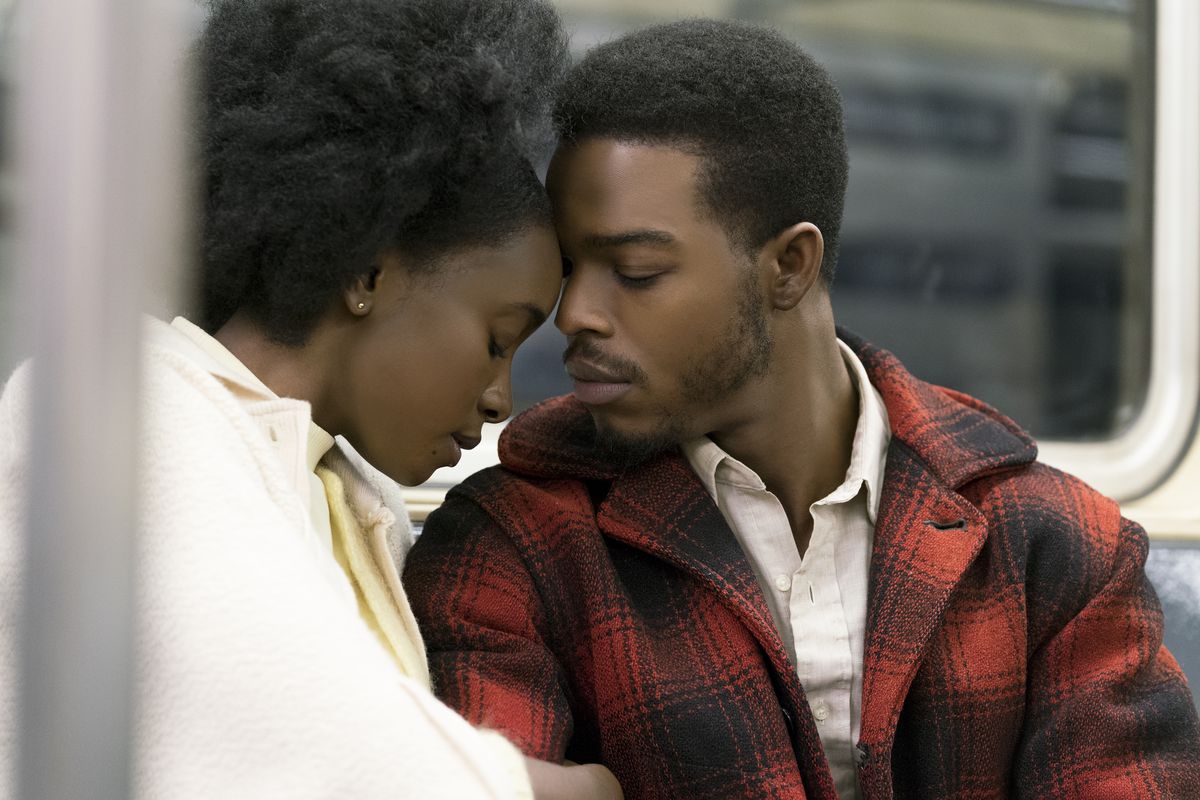 If Beale Street Could Talk[/caption]
The Special Events section for the 56th New York Film will feature the U.S. premiere of If Beale Street Could Talk will at the world famous Apollo Theater, the first time that the festival will present a screening at the historic theater. The film was largely shot in New York City, including many Harlem locations. In celebration of the vibrant community and their support of the film, Annapurna, the Film Society of Lincoln Center, and the Apollo Theater will work together to present a host of outreach programs. Local students as well as Harlem residents will be among the first audiences invited to see the James Baldwin adaptation, in the neighborhood that is home to its characters. The film will also screen on the Lincoln Center campus during the festival.
Writer-director Barry Jenkins said, “It’s been an honor working with the estate to bring this piece of James Baldwin’s legacy to the screen. From the birthplace of Baldwin to the streets and homes within which we made this film, the honor is doubly felt in the NYFF’s generous offer to widen its borders for our U.S. premiere: up on 125th Street, in the community Jimmy forever knew as HOME.”
The Festival will screen Orson Welles’s long-awaited The Other Side of the Wind, finally completed by his collaborators this year, which follows the last night in the life of a legendary Hollywood filmmaker as he completes his final film. Wind will screen alongside Morgan Neville’s in-depth documentary They’ll Love Me When I’m Dead, which uncovers the fascinating story behind Welles’s last completed film, 50 years in the making.
Rex Ingram’s World War I epic The Four Horsemen of the Apocalypse (1921), the breakout film for iconic silent actor Rudolph Valentino, will screen on a beautiful 35mm print from Martin Scorsese’s collection, accompanied by the North American premiere of a new live score written and performed by a five-piece orchestra led by Matthew Nolan.
The sixth annual Film Comment Presents selections are Ali Abbasi’s genre-friendly fantasy-drama Border, which won Cannes’ Un Certain Regard award, and The Wild Pear Tree, an intimate portrait of a promising but adrift young literary graduate from Turkish Palme d’Or winner Nuri Bilge Ceylan (Once Upon a Time in Anatolia, NYFF49). In previous years, Film Comment has championed films such as Sergei Loznitsa’s A Gentle Creature, Terence Davies’s A Quiet Passion, Steve McQueen’s 12 Years a Slave, and László Nemes’s Son of Saul. The magazine will also host three live events: a roundtable discussion with a trio of NYFF filmmakers about their experiences as movie lovers and creators, a dialogue on representation in cinema, and a critical wrap report of the festival’s highs and lows. All three will also be recorded for the weekly Film Comment Podcast.
The Four Horsemen of the Apocalypse
Dir. Rex Ingram, USA, 1921, 132m, 35mm
Rex Ingram’s adaptation of the famous novel by Vicente Blasco Ibáñez gave us one of cinema’s greatest antiwar films and catapulted actor Rudolph Valentino into history as one of the first screen idols. The Four Horsemen of the Apocalypse is a devastating epic centered around a divided Argentine family fighting on opposite sides during World War I. Famously remembered for the cool, sensual, and powerful tango sequence lead by Valentino, the film endures for Ingram’s meticulous attention to mise en scène—beautiful and macabre compositions alike—and the nuanced performances from a cast including Alice Terry and Josef Swickard. The Film Society is pleased to present the North American premiere of a live score written and performed by Matthew Nolan (electric guitar/electronics), Seán Mac Erlaine (reeds/electronics/vocal), Adrian Crowley (Mellotron/vocal), Kevin Murphy (cello/vocal), and Barry Adamson (bass guitar/percussion/synths/
If Beale Street Could Talk[/caption]
The Special Events section for the 56th New York Film will feature the U.S. premiere of If Beale Street Could Talk will at the world famous Apollo Theater, the first time that the festival will present a screening at the historic theater. The film was largely shot in New York City, including many Harlem locations. In celebration of the vibrant community and their support of the film, Annapurna, the Film Society of Lincoln Center, and the Apollo Theater will work together to present a host of outreach programs. Local students as well as Harlem residents will be among the first audiences invited to see the James Baldwin adaptation, in the neighborhood that is home to its characters. The film will also screen on the Lincoln Center campus during the festival.
Writer-director Barry Jenkins said, “It’s been an honor working with the estate to bring this piece of James Baldwin’s legacy to the screen. From the birthplace of Baldwin to the streets and homes within which we made this film, the honor is doubly felt in the NYFF’s generous offer to widen its borders for our U.S. premiere: up on 125th Street, in the community Jimmy forever knew as HOME.”
The Festival will screen Orson Welles’s long-awaited The Other Side of the Wind, finally completed by his collaborators this year, which follows the last night in the life of a legendary Hollywood filmmaker as he completes his final film. Wind will screen alongside Morgan Neville’s in-depth documentary They’ll Love Me When I’m Dead, which uncovers the fascinating story behind Welles’s last completed film, 50 years in the making.
Rex Ingram’s World War I epic The Four Horsemen of the Apocalypse (1921), the breakout film for iconic silent actor Rudolph Valentino, will screen on a beautiful 35mm print from Martin Scorsese’s collection, accompanied by the North American premiere of a new live score written and performed by a five-piece orchestra led by Matthew Nolan.
The sixth annual Film Comment Presents selections are Ali Abbasi’s genre-friendly fantasy-drama Border, which won Cannes’ Un Certain Regard award, and The Wild Pear Tree, an intimate portrait of a promising but adrift young literary graduate from Turkish Palme d’Or winner Nuri Bilge Ceylan (Once Upon a Time in Anatolia, NYFF49). In previous years, Film Comment has championed films such as Sergei Loznitsa’s A Gentle Creature, Terence Davies’s A Quiet Passion, Steve McQueen’s 12 Years a Slave, and László Nemes’s Son of Saul. The magazine will also host three live events: a roundtable discussion with a trio of NYFF filmmakers about their experiences as movie lovers and creators, a dialogue on representation in cinema, and a critical wrap report of the festival’s highs and lows. All three will also be recorded for the weekly Film Comment Podcast.
The Four Horsemen of the Apocalypse
Dir. Rex Ingram, USA, 1921, 132m, 35mm
Rex Ingram’s adaptation of the famous novel by Vicente Blasco Ibáñez gave us one of cinema’s greatest antiwar films and catapulted actor Rudolph Valentino into history as one of the first screen idols. The Four Horsemen of the Apocalypse is a devastating epic centered around a divided Argentine family fighting on opposite sides during World War I. Famously remembered for the cool, sensual, and powerful tango sequence lead by Valentino, the film endures for Ingram’s meticulous attention to mise en scène—beautiful and macabre compositions alike—and the nuanced performances from a cast including Alice Terry and Josef Swickard. The Film Society is pleased to present the North American premiere of a live score written and performed by Matthew Nolan (electric guitar/electronics), Seán Mac Erlaine (reeds/electronics/vocal), Adrian Crowley (Mellotron/vocal), Kevin Murphy (cello/vocal), and Barry Adamson (bass guitar/percussion/synths/vocal). The score was commissioned by and premiered at the St. Patrick’s Festival Dublin in March 2018. Supported by Culture Ireland. Special 35mm print courtesy of Martin Scorsese from the M.S. Collection at the George Eastman Museum. The Other Side of the Wind Dir. Orson Welles, USA, 2018, 122m Cinema lovers around the world have been waiting to see this legendary movie for more than 40 years. Orson Welles started shooting in 1970 with a precarious funding scheme, an ever-mutating script, and the lead role of Jake Hannaford, an old-guard macho Hollywood director at the end of his tether, yet to be cast. When he died fifteen years later, the film was not only unfinished but in legal limbo. Almost 50 years after Welles started shooting, The Other Side of the Wind has finally been completed by Welles’s collaborators. The film features a collection of actors as eclectic as the cast of Touch of Evil, including John Huston as Hannaford, Peter Bogdanovich, Oja Kodar, Edmund O’Brien, Susan Strasberg, Lilli Palmer, Paul Stewart, Mercedes McCambridge, Cameron Mitchell, Paul Mazursky, Henry Jaglom, Claude Chabrol, and, in a movie-stealing performance as Hannaford’s right-hand man, Welles’s old collaborator Norman Foster. A Netflix release. They’ll Love Me When I’m Dead Dir. Morgan Neville, USA, 2018, 98m The story of the making of The Other Side of the Wind is as engrossing and rich in character and incident, and perhaps even more epic in scale, than the film itself. Morgan Neville’s documentary complements and deepens the experience of Welles’s film by placing it within the context of his life and career, setting the scene and the particular mood of Hollywood in the early 1970s, and chronicling every last creative, legal, financial, and behavioral twist and turn on the circuitous road from the first set-up to the first official screening almost 50 years later. The title, of course, comes from none other than Welles himself. A Netflix release. FILM COMMENT AT NYFF
Film Comment Presents:
Border Dir. Ali Abbasi, Sweden/Denmark, 2018, 108m Scandinavian mythology makes for a visceral fantastical drama on the mystery of identity in this adaptation of a story by Let the Right One In writer John Ajvide Lindqvist. Ali Abbasi’s twisty Cannes award-winner (Un Certain Regard, 2018) centers on a customs inspector, Tina, who possesses the ability to sniff out contraband and moral corruption. Her findings lead her into a criminal investigation, but the heart of Border lies with Tina, who tires of her deadbeat roommate and experiences a full-bodied awakening like little else seen on screen. Grounding it all is Eva Melander’s outstanding, minutely sensitive performance, the true north for Abbasi’s genre-driven momentum. A NEON release. The Wild Pear Tree Dir. Nuri Bilge Ceylan, Turkey, 2018, 188m The gorgeous backdrop of rolling country and idyllic farmland are cold comfort to the frustrated hero of The Wild Pear Tree. Turkish auteur Nuri Bilge Ceylan (Once Upon a Time in Anatolia) captures the wrenching struggles of a bright literary graduate, Sinan (Aydın Doğu Demirko), who is trying to take flight in a world he can’t entirely accept. Ceylan revives a deeply humanist cinema of ideas in tracking Sinan’s path through the more urgent questions of youth, romance, religious orthodoxy, and shaking off the burdens of your family—without ennobling the all-too-human Sinan. Often shooting in unbroken takes, Ceylan compellingly “renders the frustrations of this young man as so much misplaced passion” (Kent Jones, Film Comment). A Cinema Guild release.Film Comment Live:
The Cinema of Experience At this year’s NYFF, filmmakers are rising to the challenge of representing diverse experiences at a pivotal time in our nation’s history. Our guests will discuss how cinematic technique is used to reflect such experiences and what is different about the latest generation of storytelling. Filmmakers Chat For the third year, Film Comment gives you the rare chance to see some of today’s most important filmmakers in dialogue with each other. A selection of directors whose films are screening at this edition of NYFF will talk together in a discussion moderated by Film Comment editor-in-chief Nicolas Rapold. Festival Wrap In what is becoming an annual tradition, Film Comment contributing critics and editors gather for the festival’s last weekend and talk about the films they’ve seen, discussing—or arguing about—the selections in the lineup, from Main Slate and beyond.
-
Documentaries with Roger Ailes, Maria Callas and Bill Cunningham in NY Film Festival Spotlight on Documentary
[caption id="attachment_31523" align="aligncenter" width="1200"]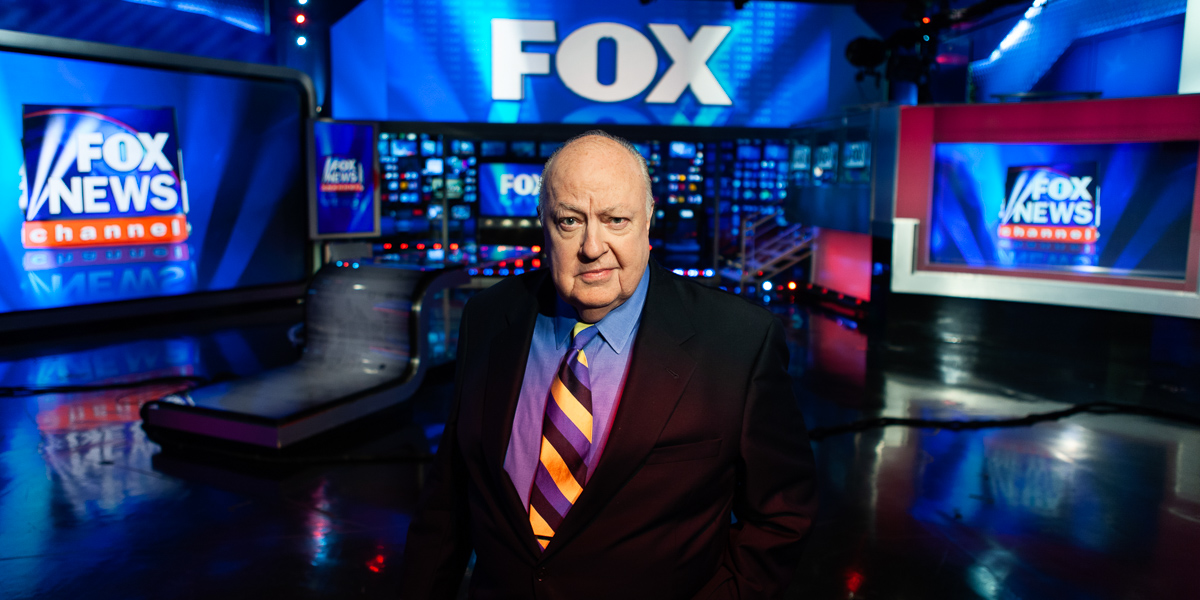 Divide and Conquer: The Story of Roger Ailes[/caption]
This year’s lineup for the Spotlight on Documentary section of the 56th New York Film Festival features intimate portraits of artists, depictions of the quest for political and social justice, and much more. Selections include three documentaries spotlighting controversial political figures, including former FOX News chairman Roger Ailes in Divide and Conquer: The Story of Roger Ailes, directed by Alexis Bloom (Bright Lights, NYFF54); The Waldheim Waltz, in which director Ruth Beckermann employs archival footage to examine the media’s role in the political ascension of former UN Secretary-General and Austrian president Kurt Waldheim; and returning NYFF filmmaker Errol Morris’s American Dharma, an unflinching, unnerving interrogation of former Trump strategist Steve Bannon. Other notable documentary subjects include Maria Callas, the legendary soprano whose rise to stardom, tumultuous public life, and vocal decline are vividly portrayed in Tom Volf’s Maria by Callas, and iconic New York street photographer Bill Cunningham, whose ruminations on his life and career are depicted in new archival footage in Mark Bozek’s lovely and invigorating The Times of Bill Cunningham.
In a double feature presentation, Ron Mann’s Carmine Street Guitars and returning NYFF director Manfred Kirchheimer’s Dream of a City portray uniquely New York stories: Mann’s film is centered on Rick Kelly, luthier of the eponymous music shop, as he builds new guitars with repurposed timber from storied New York spots like the Hotel Chelsea and McSorley’s, while the astonishing Dream of a City captures old New York firsthand, featuring stunning black and white 16mm images of city life shot by Kirchheimer and Walter Hess from 1958 to 1960. The documentary lineup also features stories of war past and present, showcasing perspectives from both the front lines and the home front. In a new restoration, William Wyler’s essential 1944 WWII combat documentary The Memphis Belle: A Story of a Flying Fortress will screen as a companion piece to Erik Nelson’s The Cold Blue, which combines the remaining unused 16mm footage from Wyler’s film with the spoken recollections of nine of the last surviving World War II veterans to craft an experience of a different kind. Capturing the devastating effects of the ongoing war in the Middle East, James Longley’s Angels Are Made of Light follows schoolchildren as they come of age alongside the adults preparing them for an unstable future in the shattered, wartorn city of Kabul, Afghanistan.
Other highlights of the Spotlight on Documentary section include the World Premiere of Tom Surgal’s Fire Music, a fittingly wild and freeform tribute to the sights and sounds of the free jazz movement; John Bruce & NYFF alum Paweł Wojtasik’s End of Life, a supremely composed meditation on the act of dying; What You Gonna Do When the World’s on Fire?, Roberto Minervini’s urgent, lyrical portrait of African-Americans in New Orleans struggling to find social justice while maintaining their cultural identity; and Watergate, in which director Charles Ferguson (Inside Job, NYFF48) reopens the infamous investigation to create a real-life political suspense story built from archival footage, drawing disquieting parallels with the current presidency and criminal investigation.
American Dharma
Dir. Errol Morris, USA/UK, 2018, 100m
U.S. Premiere
Errol Morris’s productively unnerving new film is an encounter with none other than Steve Bannon—former Goldman Sachs partner and movie executive, self-proclaimed “populist” warrior, and long-time cinephile. Morris faces off with his subject in a Quonset hut set modeled on a Bannon favorite, Twelve O’Clock High, and questions him about the most disturbing and divisive milestones in his career as a media-savvy libertarian/anarchist/
Divide and Conquer: The Story of Roger Ailes[/caption]
This year’s lineup for the Spotlight on Documentary section of the 56th New York Film Festival features intimate portraits of artists, depictions of the quest for political and social justice, and much more. Selections include three documentaries spotlighting controversial political figures, including former FOX News chairman Roger Ailes in Divide and Conquer: The Story of Roger Ailes, directed by Alexis Bloom (Bright Lights, NYFF54); The Waldheim Waltz, in which director Ruth Beckermann employs archival footage to examine the media’s role in the political ascension of former UN Secretary-General and Austrian president Kurt Waldheim; and returning NYFF filmmaker Errol Morris’s American Dharma, an unflinching, unnerving interrogation of former Trump strategist Steve Bannon. Other notable documentary subjects include Maria Callas, the legendary soprano whose rise to stardom, tumultuous public life, and vocal decline are vividly portrayed in Tom Volf’s Maria by Callas, and iconic New York street photographer Bill Cunningham, whose ruminations on his life and career are depicted in new archival footage in Mark Bozek’s lovely and invigorating The Times of Bill Cunningham.
In a double feature presentation, Ron Mann’s Carmine Street Guitars and returning NYFF director Manfred Kirchheimer’s Dream of a City portray uniquely New York stories: Mann’s film is centered on Rick Kelly, luthier of the eponymous music shop, as he builds new guitars with repurposed timber from storied New York spots like the Hotel Chelsea and McSorley’s, while the astonishing Dream of a City captures old New York firsthand, featuring stunning black and white 16mm images of city life shot by Kirchheimer and Walter Hess from 1958 to 1960. The documentary lineup also features stories of war past and present, showcasing perspectives from both the front lines and the home front. In a new restoration, William Wyler’s essential 1944 WWII combat documentary The Memphis Belle: A Story of a Flying Fortress will screen as a companion piece to Erik Nelson’s The Cold Blue, which combines the remaining unused 16mm footage from Wyler’s film with the spoken recollections of nine of the last surviving World War II veterans to craft an experience of a different kind. Capturing the devastating effects of the ongoing war in the Middle East, James Longley’s Angels Are Made of Light follows schoolchildren as they come of age alongside the adults preparing them for an unstable future in the shattered, wartorn city of Kabul, Afghanistan.
Other highlights of the Spotlight on Documentary section include the World Premiere of Tom Surgal’s Fire Music, a fittingly wild and freeform tribute to the sights and sounds of the free jazz movement; John Bruce & NYFF alum Paweł Wojtasik’s End of Life, a supremely composed meditation on the act of dying; What You Gonna Do When the World’s on Fire?, Roberto Minervini’s urgent, lyrical portrait of African-Americans in New Orleans struggling to find social justice while maintaining their cultural identity; and Watergate, in which director Charles Ferguson (Inside Job, NYFF48) reopens the infamous investigation to create a real-life political suspense story built from archival footage, drawing disquieting parallels with the current presidency and criminal investigation.
American Dharma
Dir. Errol Morris, USA/UK, 2018, 100m
U.S. Premiere
Errol Morris’s productively unnerving new film is an encounter with none other than Steve Bannon—former Goldman Sachs partner and movie executive, self-proclaimed “populist” warrior, and long-time cinephile. Morris faces off with his subject in a Quonset hut set modeled on a Bannon favorite, Twelve O’Clock High, and questions him about the most disturbing and divisive milestones in his career as a media-savvy libertarian/anarchist/activist, from Breitbart News’ takedown of Anthony Weiner to Bannon’s incendiary alliance with our current president to the tragic milestone of Charlottesville. American Dharma is an unflinching film, and a deeply disturbing experience. To quote William Carlos Williams, “The pure products of America go crazy…” Angels Are Made of Light Dir. James Longley, USA/Denmark/Norway, 2018, 117m In the new film from James Longley (Iraq in Fragments), made over a period of several years, school children grow up before our eyes into young adults in the shattered city of Kabul in the country of Afghanistan. Longley meticulously constructs a framework—at once humanist, historical and poetic—for the trajectories of his young subjects and the adults doing their best to nurture them and prepare them for an unstable and unpredictable future. Angels Are Made of Light is a film of wonders great and small, some terrifying and some deeply moving, made by a truly ethical and attentive artist. Carmine Street Guitars Dir. Ron Mann, Canada, 2018, 80m U.S. Premiere The vibe is always deep and the groove is always sweet in Ron Mann’s lovely portrait of a week in the life of luthier Rick Kelly’s eponymous ground floor shop. Here, with help from his 93-year-old mother (and bookkeeper) and young apprentice Cindy Hulej, Kelly builds new guitars out of “the bones of old New York,” i.e. timber discarded from storied spots like the Hotel Chelsea and McSorley’s. A few regular customers—including Lenny Kaye, Bill Frisell, Charlie Sexton, Marc Ribot, and the film’s “instigator,” Jim Jarmusch—drop in along the way for repairs or test runs of Rick’s newest models. Or just to hang out and be with the music. Preceded by: Dream of a City Dir. Manfred Kirchheimer, USA, 2018, 39m World Premiere The 87-year old Manny Kirchheimer, a filmmaker’s filmmaker, has spent decades quietly documenting the life of our city, where he has resided since fleeing Nazi Germany with his family in 1936. Kirchheimer’s films can be placed in the proud tradition of New York–based “impressionistic” nonfiction films like Jay Leyda’s A Bronx Morning and D.A. Pennebaker’s Daybreak Express, but they have a meditative power, tending to the surreal, that is absolutely unique. This astonishing new film, comprised of stunning black and white 16mm images of construction sites and street life and harbor traffic shot by Kirchheimer and his old friend Walter Hess from 1958 to 1960, and set to Shostakovich and Debussy, is like a precious, wayward signal received 60 years after transmission. A Grasshopper Film / Cinema Conservancy Release. The Cold Blue Dir. Erik Nelson, USA, 2018, 73m Erik Nelson’s new film is built primarily from color 16mm images shot in the spring of 1943 by director William Wyler and his crew on 8th Air Force bombing raids over Germany and strategic locations in occupied France. Wyler shot over 15 hours of footage on a series of raids with the 91st bomber group, from which he crafted his 1943 film The Memphis Belle. From the remaining raw footage, Nelson has crafted an experience of a different kind, filtered through the spoken recollections of nine veterans, among the last survivors of the War in Europe. Divide and Conquer: The Story of Roger Ailes Dir. Alexis Bloom, USA, 2018, 107m This is the epic tale of Roger Ailes, the hemophiliac boy from Warren, Ohio, who worked his way up from television production, to the Nixon White House, to George H.W. Bush’s successful 1988 presidential campaign, to the stewardship of Rupert Murdoch’s Fox News, which he built into a full-fledged right-wing propaganda machine disguised as a news organization that played a starring role in the 2016 presidential election. In the bargain, Ailes and his cohorts created a host environment for an exceptionally pure strain of power-wielding misogyny that proved to be his undoing. Director Alexis Bloom goes about her task methodically, establishes her facts scrupulously, and finishes things off with an appropriately ironic edge. An A&E IndieFilms release. End of Life Dir. John Bruce & Paweł Wojtasik, USA/Greece, 2017, 91m U.S. Premiere John Bruce and Paweł Wojtasik’s radiant film takes a respectful and serenely composed look at the very activity, the actual work, of dying for five individuals: Sarah Grossman, the spiritual teacher Ram Dass, Carol Verostek, Doris Johnson, and the artist, writer, and performer Matt Freedman. This is not a film of rhetoric but of concentrated and sustained attention to an area of experience at which we all arrive but from which the living flinch. Bruce and Wojtasik are tuned to a very special and extraordinarily delicate wavelength as artists, and they create a rare form from the silences, the incantatory repetitions, the mysterious repeated gestures, and the communions with the mystery of being enacted by the dying. A Grasshopper Film release. Fire Music Dir. Tom Surgal, USA, 2018, 90m World Premiere Tom Surgal’s film looks at the astonishing sounds (and sights) of that combustible and wildly diverse moment in music known as free jazz, which more or less began with Ornette Coleman, whose tone clusters and abandonment of strict rhythms opened the floor from under modern jazz. Surgal pays close attention to the Art Ensemble of Chicago, Albert Ayler, Eric Dolphy, Sam Rivers, Sun Ra & His Arkestra, and, of course, the recently deceased piano genius Cecil Taylor. Filled with priceless archival footage and photographs, Fire Music is a fittingly wild and freeform tribute to music that makes your hair stand on end. Maria by Callas Dir. Tom Volf, USA, 2018, 113m The legendary soprano Maria Callas—American-born, ethnically Greek, and a true citizen of the world—was one of the supreme artists and cultural stars of the mid-20th century, and she became almost synonymous with the art form to which she devoted her life—Leonard Bernstein once called Callas “the Bible of opera.” Tom Volf’s film, comprised of archival photographs, newsreels, interviews, precious performance footage, and selections from her diary, takes us through Callas’s life: from her childhood, early training, and rise to stardom, through her tumultuous public life and vocal decline, and to her death from a heart attack at the age of 53. This is a cinematic love note to a great artist, and a vivid audiovisual document of mid-century western culture. A Sony Pictures Classics release. The Memphis Belle: A Story of a Flying Fortress Dir. William Wyler, USA, 1944, 45m In February of 1943, Major William Wyler went up in a B-17, 16mm camera in hand, on his first combat mission over Bremen with the Ninety-First Bomber Group. On this and the missions that followed, the Hollywood master, then at the height of his career, braved freezing and perilous conditions to get the images he needed, saw his sound man perish on a return trip from a raid over Brest, and refused an order to stop flying combat missions issued by his superiors, worried that he would be taken prisoner in Germany and identified as the Jewish director of Mrs. Miniver. The final result was Memphis Belle, one of the greatest of the WWII combat documentaries, and it has now been meticulously and painstakingly restored. The Times of Bill Cunningham Dir. Mark Bozek, USA, 2018, 71m World Premiere Mark Bozek began work on this lovely and invigorating film about the now legendary street photographer on the day of Cunningham’s death in 2016 at the age of 87. Bozek is working with precious material, including a lengthy 1994 filmed interview with Cunningham (shot when he received a Media Award from the Council of Fashion Designers of America) and his subject’s earliest pre-New York Times photographs, long unseen. In his customarily cheerful and plainspoken manner, Cunningham takes us through his Irish Catholic upbringing in Boston, his army stint, his move to New York in 1948 (which was controversial for his straitlaced family), his days as a milliner, his close friendships with Nona Park and Sophie Shonnard of Chez Ninon, his beginnings as a photographer, and his liberated and wholly democratic view of fashion. Narrated by Sarah Jessica Parker. The Waldheim Waltz / Waldheims Walzer Dir. Ruth Beckermann, Austria, 2018, 93m Kurt Waldheim was an Austrian diplomat and politician who served as Secretary-General of the United Nations from 1972 to 1982. In 1986, his nation elected him as president despite a controversy over his previously undisclosed role in the Nazi regime during World War II. Using archival footage, Ruth Beckermann (The Dreamed Ones, Art of the Real 2016) studies how various media reported Waldheim’s accession and, more broadly, the influence of false naïveté and political pressure by those in positions of power. The Waldheim Waltz is an intelligent, timely work of activist filmmaking—one whose questions about collective complicity, memory, and historical responsibility are as important to ask today as they were more than 30 years ago. A Menemsha Films release. Watergate Dir. Charles Ferguson, USA, 2018, 240m Charles Ferguson reopens the case of Watergate, from the 1972 break-in to Nixon’s 1974 resignation and beyond, and gives it a new and bracing life. The filmmaker creates a real-life political suspense story, one remarkable detail at a time, built from archival footage; interviews with surviving members of the Nixon White House (including Pat Buchanan and John Dean), reporters (Lesley Stahl, Dan Rather and, of course, Bob Woodward and Carl Bernstein), special prosecutors (Richard Ben-Veniste, Jill Wine-Banks); the Senate Watergate Committee (Lowell Weicker), members of the House Judiciary Committee who debated Nixon’s impeachment (Elizabeth Holtzman), modern commentators, and historians; and carefully executed recreations based on the Oval Office recordings. Ferguson also accomplishes the difficult and immediately relevant task of drawing extremely disquieting fact-based parallels with another presidency and criminal investigation, still underway. An A&E release. What You Gonna Do When the World’s on Fire? Dir. Roberto Minervini, Italy/USA/France, 2018, 123m U.S. Premiere Italian-born, American South–based filmmaker Roberto Minervini’s follow-up to his Texas Trilogy is a portrait of African-Americans in New Orleans struggling to maintain their unique cultural identity and to find social justice. Shot in very sharp black and white, the film is focused on Judy, trying to keep her family afloat and save her bar before it’s snapped up by speculators; Ronoldo and Titus, two brothers growing up surrounded by violence and with a father in jail; Kevin, trying to keep the glorious local traditions of the Mardi Gras Indians alive; and the local Black Panthers, trying to stand up against a new, deadly wave of racism. This is a passionately urgent and strangely lyrical film experience.
-
2018 New York Film Festival Reveals Revivals Lineup + Dan Talbot and Pierre Rissient Retrospective
[caption id="attachment_31508" align="aligncenter" width="1200"] Searching for Ingmar Bergman[/caption]
The Film Society of Lincoln Center announced the Revivals sections for the 56th New York Film Festival along with this year’s three-part Retrospective section paying tribute to late film industry luminaries Dan Talbot and Pierre Rissient, and spotlights three documentary odes to cinema.
NYFF Director and Selection Committee Chair Kent Jones said, “For Pierre and Dan, two genuine heroes, everything to do with cinema was urgent. This year’s retrospective section pays tribute to both men, who passed away within six months of each other.”
Founder of New Yorker Films and longtime director of Lincoln Plaza Cinemas, beloved exhibitor and distributor Dan Talbot championed countless foreign and independent art-house titles throughout his career. He introduced films such as Bernardo Bertolucci’s Before the Revolution to U.S. audiences and supported the work of notable auteurs Straub-Huillet, Nagisa Oshima, Jean-Luc Godard, Rainer Werner Fassbinder, and more stateside.
Producer, publicist, distributor, curator, and cinema polymath Pierre Rissient was known for his unparalleled taste and industry wisdom. He has been credited with shaping the careers of filmmakers from Clint Eastwood to Joseph Losey to King Hu, and counted Raoul Walsh and Fritz Lang among his personal favorites.
The Retrospective section also includes three special and very different documentaries about the movies: a lament for Viennese film critic and festival director Hans Hurch, a portrait of the great cinema pioneer Alice Guy-Blaché, and a tribute to Ingmar Bergman.
The Revivals section showcases important works from renowned filmmakers that have been digitally remastered, restored, and preserved with the assistance of generous partners. Highlights this year include Edgar G. Ulmer’s noir road movie Detour, which gleams anew in this gorgeous restoration; Djibril Diop Mambéty’s neocolonialist satire Hyenas, the Senegalese auteur’s adaptation of Friedrich Dürrenmatt’s play The Visit; a 20th anniversary restoration of Alexei Guerman’s Khrustalyov, My Car!, a nightmarish portrait of Stalin-era paranoia; and J.L. Anderson’s American independent curio Spring Night, Summer Night, which was disinvited from the 5th New York Film Festival but returns for its due just over 50 years later.
Searching for Ingmar Bergman[/caption]
The Film Society of Lincoln Center announced the Revivals sections for the 56th New York Film Festival along with this year’s three-part Retrospective section paying tribute to late film industry luminaries Dan Talbot and Pierre Rissient, and spotlights three documentary odes to cinema.
NYFF Director and Selection Committee Chair Kent Jones said, “For Pierre and Dan, two genuine heroes, everything to do with cinema was urgent. This year’s retrospective section pays tribute to both men, who passed away within six months of each other.”
Founder of New Yorker Films and longtime director of Lincoln Plaza Cinemas, beloved exhibitor and distributor Dan Talbot championed countless foreign and independent art-house titles throughout his career. He introduced films such as Bernardo Bertolucci’s Before the Revolution to U.S. audiences and supported the work of notable auteurs Straub-Huillet, Nagisa Oshima, Jean-Luc Godard, Rainer Werner Fassbinder, and more stateside.
Producer, publicist, distributor, curator, and cinema polymath Pierre Rissient was known for his unparalleled taste and industry wisdom. He has been credited with shaping the careers of filmmakers from Clint Eastwood to Joseph Losey to King Hu, and counted Raoul Walsh and Fritz Lang among his personal favorites.
The Retrospective section also includes three special and very different documentaries about the movies: a lament for Viennese film critic and festival director Hans Hurch, a portrait of the great cinema pioneer Alice Guy-Blaché, and a tribute to Ingmar Bergman.
The Revivals section showcases important works from renowned filmmakers that have been digitally remastered, restored, and preserved with the assistance of generous partners. Highlights this year include Edgar G. Ulmer’s noir road movie Detour, which gleams anew in this gorgeous restoration; Djibril Diop Mambéty’s neocolonialist satire Hyenas, the Senegalese auteur’s adaptation of Friedrich Dürrenmatt’s play The Visit; a 20th anniversary restoration of Alexei Guerman’s Khrustalyov, My Car!, a nightmarish portrait of Stalin-era paranoia; and J.L. Anderson’s American independent curio Spring Night, Summer Night, which was disinvited from the 5th New York Film Festival but returns for its due just over 50 years later.
REVIVALS
Detour Dir. Edgar G. Ulmer, USA, 1945, 68m Edgar G. Ulmer’s 1945 classic, made at the Poverty Row production company PRC somewhere between 14 and 18 shooting days for $100,000, has come to be regarded, justifiably, as the essence of film noir. Ulmer and his team turned the very cheapness of the enterprise into an aesthetic asset and created a film experience that reeks of sweat, rust, and mildew. For years, Detour was only available in dupey, substandard prints, which seemed appropriate. In the ’90s, a photochemical restoration improved matters, but the quality was far from optimal. Now we have a restoration of a different order, made from vastly superior elements. “To be able to see so much detail in the frame, in the settings and in the faces of the actors,” says Martin Scorsese, “is truly startling, and it makes for a far richer and deeper experience.” Restored by the Academy Film Archive and The Film Foundation, in collaboration with the Cinémathèque Royale de Belgique, The Museum of Modern Art, and the Cinémathèque Française, with funding from the George Lucas Family Foundation. Enamorada Dir. Emilo Fernández, Mexico, 1946, 99m This wildly passionate and visually beautiful love story from director Emilio Fernandéz and cinematographer Gabriel Figueroa, a follow-up to their wildly successful Maria Candelaria, remains one of the most popular Mexican films ever made. As Farran Smith Nehme has written, it was “one of the biggest hits of Fernández’s career and a high-water mark for nearly everyone involved.” The romance between between a revolutionary General (Pedro Armendariz) and the daughter of a nobleman (Maria Félix) set during the Mexican revolution (in which Fernandéz himself fought) was inspired by The Taming of the Shrew and, for the finale, by the end of Sternberg’s Morocco. Restoration led by UCLA Film & Television Archive and The Film Foundation’s World Cinema Project in collaboration with Fundacion Televisa AC and the UNAM Filmoteca, funded by Material World Charitable Foundation. Hyenas / Ramatou Dir. Djibril Diop Mambéty, Senegal/Switzerland/France, 1992, 110m “When a story ends—or ‘falls into the ocean,’ as we say—it creates dreams,” said the great Senegalese director Djibril Diop Mambéty in an interview after the completion of his second film, Hyenas, a wildly freeform adaptation of Friedrich Dürrenmatt’s The Visit. A wealthy woman (Ami Diakhate) returns to her—and Mambéty’s—home village, and offers the inhabitants a vast sum in exchange for the murder of the local man who seduced and abandoned her when she was young. “I do not refuse the word didactic,” said Mambéty of his very special body of work, and of the particular plight of African cinema. “My task was to identify the enemy of humankind: money, the International Monetary Fund, and the World Bank. I think my target is clear.” A Thelma Film AG release. Restored over the course of 2017 by Eclair Digital in Vanves, France. Restoration was taken on by Thelma Film AG (Switzerland). I Am Cuba Dir. Mikhail Kalatozov, Cuba/USSR, 1964, 108m Mikhail Kalatozov’s wildly mobile, hallucinatory film was initially rejected by both Cuban and Soviet officials for excessive naiveté and an insufficiently revolutionary spirit, and went largely disregarded and almost unknown for nearly 30 years. That all changed in the early nineties—a remarkable era in film culture, chock full of rediscoveries—when G. Cabrera Infante programmed it at the Telluride Film Festival, and Martin Scorsese and Francis Ford Coppola co-presented a Milestone Films release. I Am Cuba is a one-of-a-kind film experience, a visually mind-bending bolt from the historical blue. Milestone Film & Video’s 4K restoration from the original Gosfilmofond 35mm interpositive and mag tracks was done at Metropolis Post with Jason Crump (colorist) and Ian Bostick (restoration artist). 4K scan by Colorlab, Rockville, MD. Khrustalyov, My Car! / Khrustalyov, mashinu! Dir. Alexei Guerman, USSR/France, 1998, 150m The time is 1953, the place is Moscow; the Jewish purges are still on, and Stalin is on his deathbed. When General Yuri Glinsky, a military surgeon, tries to escape, he is abducted, taken to the lowest rungs of hell, and deposited at the heart of the enigma. Alexei Guerman’s deeply personal penultimate film is a work of solid and constant disorientation, masterfully orchestrated. Enigmatic phrases, sounds, gestures, and micro-events pass before our eyes and ears before we or the alternately jumpy and exhausted characters can make sense of them. Guerman’s lustrous black and white images and meticulously constructed soundscape are permeated with the feel of life in a totalitarian society, where something monumental is underway but no one knows precisely what or when or how it will break. The original 35mm fine grain positive was scanned in 2K resolution on an Arriscan at Eclair, Paris. The film was graded and restored at Dragon DI, Wales. Restoration supervised by James White, Arrow Films; restoration produced by Daniel Bird. Neapolitan Carousel Dir. Ettore Giannini, Italy, 1954, 129m One of the first color films made in Italy, Ettore Giannini’s 1954 film version of his stage musical begins in the present day, with sheet music hanging on a barrel organ blown through the streets of Naples: every individual song tells a story of the history of the city, from the Moorish invasion in the 14th century through the arrival of the Americans at the end of WWII. Giannini assembled an amazing roster of talent for his film, including one-time Ballets Russes principal dancer and Powell-Pressburger mainstay Léonide Massine (who also choreographed), the great comic actor Paolo Stoppa, and a young Sophia Loren. Restored by the Cineteca di Bologna at L’Immagine Ritrovata laboratory and The Film Foundation with funding provided by the Hollywood Foreign Press Association. None Shall Escape Dir. André de Toth, USA, 1944, 85m The Hungarian emigré André de Toth directed this unflinching look at the rise of Nazism right before the end of the war, the first Hollywood film to address Nazi genocide. Written by Lester Cole, soon to become a member of the Hollywood Ten, None Shall Escapeis structured as a series of flashbacks that dramatize the testimony of witnesses in a near-future postwar tribunal. Alexander Knox is the German everyman, a WWI vet who slowly, gradually accepts National Socialism and becomes a mass murderer. With Marsha Hunt—her career and Knox’s would both be affected by the Red Scare. A Sony Pictures Repertory release. 4K digital restoration from original nitrate negative and original nitrate track negative. The Red House Dir. Delmer Daves, USA, 1947, 100m This moody, visually potent film, directed by Delmer Daves and independently produced by star Edward G. Robinson with Sol Lesser, is something of an anomaly in late ’40s moviemaking, a piece of contemporary gothic Americana. Robinson plays Pete, a farmer who shares his home with his sister (Judith Anderson) and his adopted niece Meg (Allene Roberts). Meg becomes increasingly attached to a sweet local boy (Lon McAllister), and together they venture into the woods in search of a red house that Pete has forbidden them to enter. The emotional heart of The Red House can be found in the extraordinary close-ups of Roberts and McAllister, shot by the great DP (and frequent John Ford collaborator) Bert Glennon. Restored by the UCLA Film & Television Archive and The Film Foundation, with funding provided by the George Lucas Family Foundation. Spring Night, Summer Night Dir. J.L. Anderson, USA, 1967, 82m J.L. Anderson’s haunted Appalachian romance occupies a proud place alongside such similarly hand-crafted, off-the-grid American independent films as Carnival of Souls, The Exiles, Night of the Living Dead, and Wanda. Made in coal-mining country in northeastern Ohio with local amateur actors, the film is carefully observed (Anderson and his producer Franklin Miller spent two years scouting locations becoming familiar with the place and the people) and beautifully and lovingly realized. Spring Night, Summer Night has had an extremely checkered history, including a release in a version crudely recut for the exploitation market with the title Miss Jessica Is Pregnant. It was invited to the 1968 New York Film Festival, only to be unceremoniously bumped to make way for John Cassavetes’s Faces. Fifty years later, we’re re-extending the invitation and promising that it’s solid. A Restoration and Reconstruction Project of Cinema Preservation Alliance by Peter Conheim and Ross Lipman. Produced by Nicolas Winding Refn. Tunes of Glory Dir. Ronald Neame, UK, 1960, 106m Ronald Neame’s adaptation of James Kennaway’s novel is a spare, dramatically potent war of nerves, about the power struggle between a tough lower-middle-class Scottish Major due to be replaced as Battalion commander of a Highland regiment and an aristocratic Colonel traumatized by captivity during the war. At its center are two breathtaking performances: John Mills as the Colonel and Alec Guinness, in a genuine tour de force, as the Major (apparently, after they had read the script, each actor had originally wanted to play the other’s role). With Dennis Price, Kay Walsh, Susannah York, and Gordon Jackson. Restored by the Academy Film Archive and The Film Foundation in collaboration with Janus Films and The Museum of Modern Art. Restoration funding provided by the George Lucas Family Foundation. The War at Home Dir. Glenn Silber and Barry Alexander Brown, USA, 1979, 100m This meticulously constructed 1979 film recounts the development of the movement against the American war in Vietnam on the Madison campus of the University of Wisconsin, from 1963 to 1970. Using carefully assembled archival and news footage and thoughtful interviews with many of the participants, it culminates in the 1967 Dow Chemical sit-in and the bombing of the Army Math Research Center three years later. One of the great works of American documentary moviemaking, The War at Home has also become a time capsule of the moment of its own making, a welcome emanation from the era of analog editing, and a reminder of how much power people have when they take to the streets in protest. A Catalyst Media Productions release. New 4K restoration by IndieCollect.RETROSPECTIVE
Tribute to Dan Talbot Before the Revolution Dir. Bernardo Bertolucci, Italy, 1964, 105m Dan Talbot began as an exhibitor, and he started his distribution company, New Yorker Films, for the best possible reason: he saw a film that he loved and he wanted to share it with as many people as possible. The film was Bernardo Bertolucci’s masterful second feature, a deeply personal portrait of a generation gripped by political uncertainty. Set in the director’s hometown of Parma, it follows the travails of a young student struggling to reconcile his militant views with his bourgeois lifestyle (and his fiancée), who drifts into a passionate affair with his radical aunt. One of the key films of the ’60s, Before the Revolution set many aspiring filmmakers on their own autobiographical courses. 35mm print from Istituto Luce Cinecittà. Straub-Huillet Program: Machorka-Muff Dir. Jean-Marie Straub, Danièle Huillet; West Germany; 1963; 18m The Bridegroom, the Comedienne and the Pimp Dir. Jean-Marie Straub, Danièle Huillet; West Germany; 1968; 23m Not Reconciled Dir. Jean-Marie Straub, Danièle Huillet; West Germany; 1965; 55m In 1966, Dan and Toby Talbot went to a party thrown by Bertolucci and his friend and co-writer Gianni Amico in Rome. Suddenly, the bell rang. “Shh-sh,” said Bertolucci. “Get rid of the pot! Put the drinks away. The Straubs are here!” That someone would pick up any single film directed by Jean-Marie Straub and Danièle Huillet is utterly unthinkable in the context of the present moment, but for decades New Yorker Films handled all of them. These three films, often shown together, are among their very best: an idiosyncratic adaptation of Heinrich Böll’s short story “Bonn Diary,” about a former Nazi colonel cynically reflecting on the sheer stupidity of the bourgeoisie; a three-part short comprised of a nocturnal tour of Munich, a high-speed stage production of Bruckner’s Sickness of Youth, and the marriage of James and Lilith, who guns down her pimp (played by Rainer Werner Fassbinder); and their stunning, thrillingly compressed adaptation of Böll’s novel Billiards at Half-Past. A Grasshopper Film release. The Ceremony Dir. Nagisa Oshima, Japan, 1971, 123m New Yorker developed a close relationship with the filmmaker once known as “the Japanese Godard,” Nagisa Oshima, and they programmed a groundbreaking retrospective of his early films during their brief tenure at the Metro on 100th Street. This disarmingly atmospheric portrait of a family’s collective psychopathology recounts the saga of the Sakurada clan, whose decline plays out over the course of 25 years and multiple funerals and weddings. Operating at the height of his iconoclastic powers, Oshima renders the family’s unraveling with an arresting sense of foreboding and an air of gothic fatalism, enriched by Tôru Takemitsu’s quintessentially modernist score. Every Man for Himself / Sauve qui peut (la vie) Dir. Jean-Luc Godard, France/Austria/West Germany/Switzerland, 1980, 87m “Dan jumped straight to the point,” wrote Toby in her book The New Yorker Theater and Other Scenes from a Life at the Movies. “‘I love your work and would like to distribute anything you make.’” Over the years, New Yorker handled many of Godard’s films, including his return to 35mm character-based storytelling after a decade of experimentation in video. What Godard called his “second first film” is a moving portrait of restless, intertwining lives, and the myriad forms of self-debasement and survival in a capitalist state, with Jacques Dutronc (as “Paul Godard”), Nathalie Baye, Isabelle Huppert, and, in an unforgettable anti-cameo, the voice of Marguerite Duras. An NYFF18 selection. The American Friend Dir. Wim Wenders, West Germany/France, 1977, 125m Dan Talbot and New Yorker Films put the New German Cinema of the 1970s on the map in this country, and one of their key titles was Wim Wenders’s spellbinding adaptation of Patricia Highsmith’s Ripley’s Game (and a little bit of Ripley Underground). Dennis Hopper is the sociopathic charmer Tom Ripley, transformed by Wenders into an urban cowboy peddler of forged paintings who ensnares Bruno Ganz’s gravely ill Swiss-born art framer into a plot to assassinate a Mafioso. Shot in multiple New York and European locations in low-lit, cool blue and gold tones by the great Robby Müller, this brooding, dreamlike thriller conjures a world ruled by chaos and indiscriminate American dominance. It also features a stunning array of performances and guest appearances by filmmakers, including Nick Ray, Gérard Blain, Sam Fuller, Jean Eustache, Daniel Schmid, and Peter Lilienthal. An NYFF15 selection. The Marriage of Maria Braun Dir. Rainer Werner Fassbinder, West Germany, 1979, 120m “I bought 11 Fassbinders in one shot, like rugs,” Dan told Anthony Kaufman in a 2009 interview. As was the case with every New Yorker acquisition, the motive was not financial. So one can imagine the surprise at their offices when this 1979 film about a poor German soldier’s wife (Hanna Schygulla) who uses her wiles and savvy to rise as a businesswoman and take part in the “wirtschaftwunder” or postwar economic miracle, became an arthouse hit—per François Truffaut, this was the movie that broke Fassbinder “out of the ivory tower of the cinephiles” and earned him the acclaim he had always sought. The Marriage of Maria Braun was also the Closing Night selection of the 17th New York Film Festival. My Dinner with André Dir. Louis Malle, USA, 1981, 110m When Dan read Wallace Shawn and André Gregory’s script for My Dinner with André, he was so excited that he helped Louis Malle procure production funding from Gaumont. The film, an encounter between the two writers playing themselves discussing mortality, money, despair, and love over a meal at an upper west side restaurant (according to Gregory, Malle’s one direction was “Talk faster”), becoming a sensation at the art house, playing to packed houses for a solid year, and a favorite on the brand-new home video circuit. My Dinner with André is entertaining, confessional, funny, moving, and suffused with melancholy and joy…like life.Tribute to Pierre Rissient
Manila in the Claws of Light / Maynila: Sa mga kuko ng liwanag Dir. Lino Brocka, Philippines, 1975, 124m Pierre Rissient championed the work of countless filmmakers—as a programmer of the MacMahon Theatre in Paris, as a publicist in partnership with his lifelong friend Bertrand Tavernier, as a scout for Cannes, as a distributor and producer, and always as a lover of cinema with an avid desire to always learn and see more. As Todd McCarthy wrote, it was Pierre who “single-handedly brought the work of the late Filipino director Lino Brocka to the world’s attention.” This searing melodrama, with Bembel Roco and Hilda Koronel as doomed lovers, is one of Brocka’s greatest. “Lino knew all the arteries of this swarming city,” wrote Pierre, “and he penetrated them just as he penetrated the veins of the outcasts in his films. Sometimes a vein would crack open and bleed. And that blood oozed onto the screen.” A Touch of Zen Dir. King Hu, Hong Kong, 1971/1975, 200m Pierre developed a special love for Asia and its many cinemas, and he was the one who properly introduced the great wuxia master King Hu to the west, bringing the uncut version of his masterpiece, A Touch of Zen, to the 1975 Cannes Film Festival. Supreme fantasist, Ming dynasty scholar, and incomparable artist, Hu elevated the martial-arts genre to unparalleled heights. Three years in the making and his greatest film, A Touch of Zen was released in truncated form in Hong Kong in 1971 and yanked from theaters after a week. Four years later, after Rissient saved the film from oblivion and it won a grand prize for technical achievement, the unthinkable occurred: King Hu received an apology from his studio heads. Time Without Pity Dir. Joseph Losey, UK, 1957, 85m Pierre was close to many of the American writers and directors who had been through the blacklist, including Jules Dassin, Abraham Polonsky, John Berry, and Cy Endfield, and he was a great admirer of the films of Joseph Losey (his feelings about the man himself were another matter). Rissient was crucial in bringing attention to this consummately tense noir, one of Losey’s greatest films. The narrative, unfurling at a breakneck pace, chronicles the plight of a recovering alcoholic (Michael Redgrave) with a mere 24 hours to prove the innocence of his son, accused of murdering his girlfriend. The first film that Losey signed with his own name after his flight to Europe in the early ’50s, Time Without Pity established him as an essential auteur in the eyes of French cinephiles. Play Misty for Me Dir. Clint Eastwood, USA, 1971, 102m When Clint Eastwood won his first Oscar, in 1992 for Unforgiven, he thanked “the French” for their support. But it was one French citizen in particular who was there from the start of his career as a filmmaker. Eastwood’s first film, about a casual romantic encounter between a Northern California DJ (played by the director) and a woman named Evelyn (Jessica Walter) that turns harrowingly obsessive, is an essential film from an essential moment in cinema known as Hollywood in the ’70s. While the film was well-received, it was Pierre who recognized that Play Misty for Me marked the debut of a truly distinctive talent. From there, a close and abiding friendship bloomed. Mother India Dir. Mehboob Khan, India, 1957, 172m When we gave this film a run at the Walter Reade Theater in 2002, Pierre was only too happy to provide a simple but eloquent quote: “Air…space…light—that’s Mother India.” This seminal Bollywood film, a remake of Khan’s earlier Aurat (1940), is about the trials and tribulations of Radha (Nargis), a poor villager caught in the historic whirlwind of the struggles endured in her country after gaining its independence from Britain. Striving to raise her sons and make ends meet in the face of poverty and natural disasters alike, Radha endures through the strength of her convictions and her unflappable sense of morality. Mother India is a powerful experience, for both its place in film history and its incarnation of human resilience. House by the River Dir. Fritz Lang, USA, 1950, 89m There were few filmmakers whose work Pierre revered more than Fritz Lang, whom he counted among his friends. When Lang came to the Cinémathèque Française for a retrospective of his work in the late 1950s, Pierre and Claude Chabrol asked him about this wild gothic period melodrama, made at Republic Pictures, starring Louis Hayward and Jane Wyatt, a print of which could not be found and which was still unseen in France. Lang, said Pierre, “could describe shot by shot the first ten, twelve minutes of the film. It was almost as if we were seeing the film.” Pierre not only found a way of seeing House by the River, he acquired the rights and distributed the film himself. The Man I Love Dir. Raoul Walsh, USA, 1947, 96m Raoul Walsh was another honored figure in Pierre’s pantheon. On one occasion, when the subject of one of Walsh’s films came up, Pierre simply whistled in admiration. This 1947 film, somewhere between noir, musical, and melodrama, is one of Walsh’s least recognized and most moving, rich in the “daily human pathetique” that Manny Farber identified as the director’s richest vein. Ida Lupino is the Manhattan lounge singer who heads to Los Angeles to live with her family and start a new life. Bruce Bennett is the musician she falls for, and Robert Alda is the brash club owner who won’t take no for an answer. If one were pressed for a single word to describe this movie, it would be “soulful.”Three Documentaries on Cinema
In this year’s retrospective section, we also include three special and very different documentaries about the movies: a lament for Viennese film critic and festival director Hans Hurch, a portrait of the great cinema pioneer Alice Guy-Blaché, and a tribute to Ingmar Bergman. Be Natural: The Untold Story of Alice Guy-Blaché Dir. Pamela B. Green, USA, 2018, 103m Alice Guy-Blaché was a true pioneer who got into the movie business at the very beginning—in 1894, at the age of 21. Two years later, she was made head of production at Gaumont and started directing films. She and her husband moved to the United States, and she founded her own company, Solax, in 1910—they started in Flushing and moved to a bigger facility in Fort Lee, New Jersey. But by 1919, Guy-Blaché’s career came to an abrupt end, and she and the 1000 films that bore her name were largely forgotten. Pamela B. Green’s energetic film is both a tribute and a detective story, tracing the circumstances by which this extraordinary artist faded from memory and the path toward her reclamation. Narration by Jodie Foster. Preceded by: Falling Leaves (1912) One of Alice Guy-Blaché’s most beautiful films, this two-reeler concerns a girl who tries to keep her consumptive sister alive by magical means. Music composed and performed by Makia Matsumura. A collaborative restoration for the Alice Guy-Blaché retrospective at the Whitney Museum of American Art. Mastered from a 2K scan of a surviving nitrate print received by the Library of Congress in 1983 from the Public Archives of Canada/Jerome House Collection. 2018 Digital restoration produced by Bret Wood for Kino Lorber, Inc. Introduzione all’Oscuro Dir. Gastón Solnicki, Argentina/Austria, 2018, 71m North American Premiere The new film from Gastón Solnicki (Kékszakállú, NYFF54) is a tribute to his great friend Hans Hurch, one-time film critic and assistant to Jean-Marie Straub and Danièle Huillet, and director of the Vienna International Film Festival from 1997 to his unexpected death from a heart attack last July at the age of 64. Solnicki pays tribute to Hurch by creating a cinematic form for his own mourning. He doesn’t simply visit his friend’s old haunts, he responds rhythmically, in images and sounds, to Hurch’s recorded voice delivering admonitions and gentle warnings during the editing of an earlier film. Introduzione all’Oscuro is truly a work of the cinema, and a moving communion with a friend whose presence is felt in the memory of the places, the people, the coffee, and the films he loved. Searching for Ingmar Bergman Dir. Margarethe von Trotta, Germany/France, 2018, 99m U.S. Premiere On the occasion of Ingmar Bergman’s centenary comes this lovely, personal film from one of his greatest admirers, Margarethe von Trotta. This is a tribute from an artist with a such a deep affinity for the subject that it opens to genuine and sometimes disquieting inquiry. In his writings and in his films, Bergman himself strove for an honest accounting and true self-revelation, but it is fascinating to hear and see the observations of loved ones and collaborators (often one and the same), particularly his son Daniel, whose relationship with his father was multi-layered. A rich and quietly absorbing portrait of an immense artist. An Oscilloscope Laboratories release. https://www.youtube.com/watch?v=CGeHGcKh1KM
-
New York Film Festival Reveals 2018 Convergence Program Lineup of Virtual Reality and Immersive Cinema
[caption id="attachment_31448" align="aligncenter" width="1200"] Rone[/caption]
The seventh edition of the highly anticipated Convergence program returns to the 56th New York Film Festival delving into innovative modes of storytelling via interactive experiences, featuring Virtual Reality, Immersive Cinema, AI, and more.
Over the course of NYFF’s final weekend, audiences can experience wide-ranging selections of Virtual Reality and Immersive Cinema with several World Premieres including: What Goes Up/Must Come Down, a combination of VR and video installation that takes viewers through the gorgeous Instagram sensation of the Pingxi Sky Lantern Festival and the environmental destruction the lanterns cause once tourists leave; Blue Bird, an immersive animated VR film that feels like a painting come to life; and Hope Against the Haze, a journey into the citizen-led effort to rid the once pristine beaches of Mumbai of the trash that overwhelms them. Additionally, Convergence will present the U.S. premiere of Cycles, Walt Disney Animation Studios’ first ever VR short, a brilliant meditation on what makes a house a home.
Convergence includes virtual cinema works, a program of VR documentaries, and a special “Arcade,” giving participants the opportunity to experience several VR stories from multiple creators in the same space. In addition, there will be a live Columbia Digital Storytelling Lab, where participants can engage with an AI system through conversation and see how the AI uses their conversations to create its own “human” story. Other highlights include Battle Scar, an animated VR experience featuring Rosario Dawson, which brings to life the Lower East Side’s ’70s punk culture; Fire Escape, an interactive thriller set on a Brooklyn fire escape that leads to an adventure filled with deceit and murder; and the documentary My Africa, a journey into the daily life of a young Samburu woman, narrated by Academy Award-winner Lupita Nyong’o.
Rone[/caption]
The seventh edition of the highly anticipated Convergence program returns to the 56th New York Film Festival delving into innovative modes of storytelling via interactive experiences, featuring Virtual Reality, Immersive Cinema, AI, and more.
Over the course of NYFF’s final weekend, audiences can experience wide-ranging selections of Virtual Reality and Immersive Cinema with several World Premieres including: What Goes Up/Must Come Down, a combination of VR and video installation that takes viewers through the gorgeous Instagram sensation of the Pingxi Sky Lantern Festival and the environmental destruction the lanterns cause once tourists leave; Blue Bird, an immersive animated VR film that feels like a painting come to life; and Hope Against the Haze, a journey into the citizen-led effort to rid the once pristine beaches of Mumbai of the trash that overwhelms them. Additionally, Convergence will present the U.S. premiere of Cycles, Walt Disney Animation Studios’ first ever VR short, a brilliant meditation on what makes a house a home.
Convergence includes virtual cinema works, a program of VR documentaries, and a special “Arcade,” giving participants the opportunity to experience several VR stories from multiple creators in the same space. In addition, there will be a live Columbia Digital Storytelling Lab, where participants can engage with an AI system through conversation and see how the AI uses their conversations to create its own “human” story. Other highlights include Battle Scar, an animated VR experience featuring Rosario Dawson, which brings to life the Lower East Side’s ’70s punk culture; Fire Escape, an interactive thriller set on a Brooklyn fire escape that leads to an adventure filled with deceit and murder; and the documentary My Africa, a journey into the daily life of a young Samburu woman, narrated by Academy Award-winner Lupita Nyong’o.
VIRTUAL CINEMA PROGRAM
Fire Escape Virtual Reality/Google DayDream Dir. Navid Khonsari, USA, 2018, 45m It’s impossible not to think of Hitchcock’s classic Rear Window during the opening moments of this sleekly rendered, interactive thriller. Cast in the role of an urban voyeur, our nightly sojourns onto a Brooklyn fire escape give us a front row seat to the dramas unfolding in the apartment across the street. The familiar—and safe—distance between audience and action is shattered when your “in-game” phone chirps; soon, we are not just watching events, but are thrust into a world of deceit and murder via text, chat, and immersive audio. This cutting-edge adventure from inkStories (Hero and 1979 Revolution), shown for the first time in its entirety, blurs the lines between game, film, and episodic storytelling, all while creating something entirely new. What Goes Up/Must Come Down Virtual Reality & Video Installation Dir. Eline Jongsma and Kel O’Neill, USA, 2018, 10m World Premiere Each year as the celebration for the Lunar New Year winds down, tourists converge on a village just outside of Taipei to launch thousands of lanterns into the night sky. They represent the hopes of their owners, and as they soar into the darkness they make for one hell of an Instagram post. But what happens when dawn breaks, the tourists leave, and those thousands of wishes fall out of the sky? Ingeniously weaving virtual reality and conventional 2D filmmaking, Jongsma and O’Neill fuse two discrete documentaries about the Pingxi Sky Lantern Festival into a singular whole, and suggest that our dreams may have staggering, real-world consequences.VIRTUAL REALITY DOCUMENTARY PROGRAM
The Drummer Virtual Reality – Documentary Dir. Ana Kler, USA, 2017, 3m An intimate portrait of Jesus, a street musician who performs every day in Manhattan’s Union Square. Hope Against the Haze Virtual Reality – Documentary Dir. Tiffany Hill, India, 2018, 12m World Premiere Mumbai is on the verge of crisis: thousands of pounds of trash are poured onto the city’s once vital beaches every day. This piece helps you join the citizen-led effort committed to reclaiming a paradise in the heart of the city by removing 12 million pounds of garbage. My Africa Virtual Reality – Documentary Dir. David Allen, USA/UK, 2018, 10m Academy Award–winning actress Lupita Nyong’o narrates the story of a young Samburu woman, Naltwasha Leripe, who takes audiences through her daily routine, from caring for livestock to saving a baby elephant from poachers.ARCADE PIECES
Awake: Episode I Virtual Reality – Narrative Dir. Martin Taylor, Australia, 2018, 20m The mysteries of time, obsession, and the self are examined in this cinematic virtual reality experience. Harry is a prisoner, not only of his own home but also of his obsession with a recurring dream of his lost love, Rose. Audiences step into the character’s dream world, shaping the story as it unfolds around him. Participants’ actions will reveal layers of story, artifacts of the past, and vital clues necessary to save Harry, as well as reveal the hidden potential of humanity. Thought-provoking and entertaining, Awake: Episode I combines an engaging narrative with cutting-edge technology, showing the power of this immersive form of storytelling. Battle Scar Virtual Reality – Narrative Dir. Marin Allais and Nico Casavecchia, USA/France, 2018 Any mention of the New York music scene of the late 1970s conjures images of the Ramones and Talking Heads, crowded clubs like CBGB, and neighborhoods such as the Bowery and the East Village. When the fates of wide-eyed lyricist to-be Lupe (voiced by Rosario Dawson) and budding frontwoman Debbie collide, the two women form a friendship that leads them through the unique crucible of the Lower East Side’s punk subculture. A coming-of-age tale of two artists, this animated, episodic piece plays with point of view and perspective to filter New York’s past through today’s technology. Blue Bird Virtual Reality – Narrative Dir. Armando Brown, Miranda Conway, Seth Greenwood, Vinod Krishnan, Allie Perdomo, Parnaz Rad, Belen Saenz de Viteri, Nicole Tylor, Chuzhong Xie, USA, 2017, 3m World Premiere A bluebird struggles to escape the caverns of a withered heart and find its way through the history of a scarred life in this expressive animated piece. Cycles Virtual Reality – Narrative Dir. Jeff Gipson, USA, 2018, 3m U.S. Premiere Churchill said, “We shape our buildings; thereafter they shape us.” There’s a profound difference between a house and a home: the first is a structure made up of four walls, a roof, and a floor; the second is much more than a place. This experimental VR short from Walt Disney Animation Studios centers on this distinction. Inspired by director Jeff Gipson’s childhood recollections of spending time with his grandparents, this is a bittersweet meditation on memory, emotion, family, and all that goes into making a home. Rone Virtual Reality – Documentary Dir. Lester Francois, Australia, 2017, 15m In the early 2000s, muralist Rone became a driving force within Melbourne’s street art scene. His distinctive large-scale portraits of female faces comment on both gentrification and the masculinity that dominated his artistic circle. His pieces can be found inside decaying buildings and on crumbling walls from New York to Tokyo, as well as in the National Gallery of Australia. Lester Francois’s vivid 360-degree film plunges viewers into Rone’s process and philosophy. Where Thoughts Go Dir. Lucas Rizzotto, USA, 2018 Virtual Reality – Experimental Documentary, 24m In our hyper-connected world, technologies that should bring people together often seem to push them further apart; meaningful interactions feel scant, and emotions can be liabilities. Where Thoughts Go seeks to change that. Viewers take part in an ever-evolving social experience that is intimate in scale but vast in scope. While guided through a series of questions, players are invited to explore the thoughts, dreams, and memories of previous visitors to this poignant digital landscape, and in so doing, reflect on their own lives.SPECIAL EVENT
Frankenstein AI: A Monster Made by Many Live Prototyping Experience Presented by Lance Weiler, Columbia Digital Storytelling Lab, 120m It was an innocuous challenge, issued by Lord Byron 200 years ago, that sparked Mary Shelley’s imagination to bring Frankenstein to life. Join Columbia University School of the Arts’ Digital Storytelling Lab as they bring this spark to NYFF Convergence with a special lab session mixing story, play, design, and AI. Working with lab facilitators, participants will prototype an immersive dinner party, where guests will interact with a custom-made “Frankenstein” AI through voice and text. The AI will engage in conversation, surfacing audience fears and hopes through personal stories. Those same fears and hopes will become the “body parts” that the AI will use to craft its own ghost story, questioning the act of creation and reminding us all what it means to be human.
-
2018 New York Film Festival Announces Projections Lineup of Innovative and Experimental Films
[caption id="attachment_31380" align="aligncenter" width="1200"] Diamantino[/caption]
The Film Society of Lincoln Center announced the complete lineup for the Projections section of the 56th New York Film Festival – comprised of seven features, seven shorts programs, and two short works.
Drawing on a broad range of innovative modes and techniques, including experimental narratives, avant-garde poetics, crossovers into documentary realms, and contemporary art practices, Projections brings together a diverse offering of short, medium, and feature-length work by some of today’s most essential and groundbreaking filmmakers and artists.
Among the highlights are Gabriel Abrantes and Daniel Schmidt’s Diamantino, Projections Opening Night film and winner of the top prize at Cannes Critics Week this year; the North American premiere of Roi Soleil by Albert Serra (The Death of Louis XIV, NYFF54); and the fifth NYFF appearance from Tsai Ming-liang, who returns for the first time since 2013 with Your Face. The lineup also features the NYFF debuts of several Film Society of Lincoln Center alumni: Laura Huertas Millán (The Labyrinth), whose work was previously shown in Art of the Real and Neighboring Scenes; Akosua Adoma Owusu (Mahogany Too), whose short films have played both the New York African Film Festival and New Directors/New Films; Mariana Caló & Francisco Queimadela (Luminous Shadow), who screened as part of Art of the Real in 2016; and Ted Fendt (Classical Period) and Helena Wittmann (Ada Kaleh), both alum of New Directors/New Films.
Two films in Projections will be shown on 35mm, including James Benning’s 1977 debut feature 11×14, in a new restoration by the Austrian Film Museum, and eight will be exhibited on 16mm celluloid, including a rare screening of Ericka Beckman’s short films Cinderella and You The Better, restored by the Academy Film Archive.
A number of contemporary artists are featured in Projections, including new work from Jeremy Shaw, whose Quantification Trilogy imagines a dystopian social order; Ben Thorp Brown, studying Walter Gropius’s shoe warehouse in Gropius Memory Palace; Lawrence Abu Hamdan, whose Walled, Unwalled is staged within two soundproof booths; Beatrice Gibson, intimately reframing the current political climate in I Hope I’m Loud When I’m Dead; Andrew Norman Wilson, whose Kodak imagines a dialogue between George Eastman and a blind former film technician; James Richards, collaborating for the second time with Steve Reinke for their mid-length film What Weakens the Flesh Is the Flesh Itself; and Dora Garcia, making her feature film debut with Second Time Around, which shared the grand prize at FIDMarseille with Roi Soleil. Projections also showcases returning filmmakers Laida Lertxundi (Words, Planets), Ben Rivers (Trees Down Here), Janie Geiser (Valeria Street), Sylvia Schedelbauer (Wishing Well), Sky Hopinka (Fainting Spells), Mary Helena Clark (The Glass Note), and Jodie Mack, making her fifth Projections appearance with her debut feature The Grand Bizarre.
Diamantino[/caption]
The Film Society of Lincoln Center announced the complete lineup for the Projections section of the 56th New York Film Festival – comprised of seven features, seven shorts programs, and two short works.
Drawing on a broad range of innovative modes and techniques, including experimental narratives, avant-garde poetics, crossovers into documentary realms, and contemporary art practices, Projections brings together a diverse offering of short, medium, and feature-length work by some of today’s most essential and groundbreaking filmmakers and artists.
Among the highlights are Gabriel Abrantes and Daniel Schmidt’s Diamantino, Projections Opening Night film and winner of the top prize at Cannes Critics Week this year; the North American premiere of Roi Soleil by Albert Serra (The Death of Louis XIV, NYFF54); and the fifth NYFF appearance from Tsai Ming-liang, who returns for the first time since 2013 with Your Face. The lineup also features the NYFF debuts of several Film Society of Lincoln Center alumni: Laura Huertas Millán (The Labyrinth), whose work was previously shown in Art of the Real and Neighboring Scenes; Akosua Adoma Owusu (Mahogany Too), whose short films have played both the New York African Film Festival and New Directors/New Films; Mariana Caló & Francisco Queimadela (Luminous Shadow), who screened as part of Art of the Real in 2016; and Ted Fendt (Classical Period) and Helena Wittmann (Ada Kaleh), both alum of New Directors/New Films.
Two films in Projections will be shown on 35mm, including James Benning’s 1977 debut feature 11×14, in a new restoration by the Austrian Film Museum, and eight will be exhibited on 16mm celluloid, including a rare screening of Ericka Beckman’s short films Cinderella and You The Better, restored by the Academy Film Archive.
A number of contemporary artists are featured in Projections, including new work from Jeremy Shaw, whose Quantification Trilogy imagines a dystopian social order; Ben Thorp Brown, studying Walter Gropius’s shoe warehouse in Gropius Memory Palace; Lawrence Abu Hamdan, whose Walled, Unwalled is staged within two soundproof booths; Beatrice Gibson, intimately reframing the current political climate in I Hope I’m Loud When I’m Dead; Andrew Norman Wilson, whose Kodak imagines a dialogue between George Eastman and a blind former film technician; James Richards, collaborating for the second time with Steve Reinke for their mid-length film What Weakens the Flesh Is the Flesh Itself; and Dora Garcia, making her feature film debut with Second Time Around, which shared the grand prize at FIDMarseille with Roi Soleil. Projections also showcases returning filmmakers Laida Lertxundi (Words, Planets), Ben Rivers (Trees Down Here), Janie Geiser (Valeria Street), Sylvia Schedelbauer (Wishing Well), Sky Hopinka (Fainting Spells), Mary Helena Clark (The Glass Note), and Jodie Mack, making her fifth Projections appearance with her debut feature The Grand Bizarre.
56th New York Film Festival Projections Lineup
FEATURES
Opening Night Diamantino by Daniel Schmidt and Gabriel Abrantes U.S. Premiere, Portugal/France/Brazil, 2018, 92m When he misses the big goal on the world’s largest stage, chiseled fútbol star Diamantino (Carloto Cotta) flees the public eye; no longer able to conjure the giant fluffy puppies that guided him to superstardom, he is rendered a vessel without a purpose. And thus begins an unexpected journey toward love and enlightenment that involves cloning, the CIA, a Syrian refugee, and Diamantino’s nefarious twin sisters. A perversely pleasurable sendup of Brexit, genetic science, and the ongoing refugee crises, this dazzlingly original feature from longtime collaborators Daniel Schmidt and Gabriel Abrantes skewers its subjects with loving cinematic gusto. Walter Reade Theater, 165 W. 65th St. 11 x 14 by James Benning USA, 1977, 35mm, 82m James Benning’s first feature-length film announced the arrival of a radical new voice in the evolution of moving image art, and remains a landmark of the American avant-garde. Composed of 65 beautifully framed shots of provincial life and suburban domesticity, this 16mm-shot travelogue of the Midwestern United States advanced notions of structuralist cinema while forming a visual tapestry of the American heartland in all its rugged glory. Restored by the Austrian Film Museum in collaboration with Arsenal – Institute for Film and Video Art. Classical Period by Ted Fendt North American Premiere, USA, 2018, 16mm, 62m A group of young intellectuals partake in playful rounds of academic sparring in Fendt’s second feature, an über-cinephilic treatise on language, literature, and theology. Between Dante discussion groups and solitary linguistic exercises, Cal (Calvin Engime) engages his friends in a series of discursive debates that, while reaching far and wide across history, eventually correlate to more interpersonal concerns. Shot on rough-hewn 16mm with a formal rigor to match its characters’ studied personas, Fendt’s encyclopedic take on cinema stimulates the mind as much as it does the senses. The Grand Bizarre by Jodie Mack U.S. Premiere, USA, 2018, 16mm, 61m A film of boundless energy and ingenuity, the first feature by American animator Jodie Mack is a color-coordinated, rhythmically tuned fantasia for the senses. Filmed over five years and in as many countries, this all-analog travelogue finds thousands of textiles and printed designs dancing across locations from Mexico to Morocco to India. With handmade charm and a topical touch, Mack traces the industrial cogs of fabric production and consumption that make our material world turn. A motion picture in the truest sense. Roi Soleil by Albert Serra North American Premiere, Spain/Portugal, 2018, 62m Catalan director Albert Serra’s follow-up to his magisterial The Death of Louis XIV (NYFF54) is another forensic documentation of the Sun King’s final breaths. Here, however, Versailles is replaced with the glow of the gallery. Featuring Lluís Serrat (Sancho from Serra’s Honor of the Knights) in a filmed performance of a 2017 installation, Roi Soleil boldly crossbreeds performance art and observational cinema. As we watch the King writhe and moan—sometimes painfully, sometimes humorously—in mortal agony, his prone body bathed in bloodred fluorescents, the spectator’s role is increasingly called into question, implicating the viewer in the public consumption of this very private experience. Second Time Around / Segunda Vez by Dora García North American Premiere, Belgium/Norway, 2018, 94m Spanish contemporary artist Dora García’s first feature explores the intersection of politics, psychoanalysis, and performance as developed through various texts and artistic stagings of the 1960s and ’70s. Through evocative reconstructions of Argentinian theorist Oscar Masotta’s storied “happenings,” and lightly dramatized vignettes based on contemporaneous writings by Macedonio Fernández and Julio Cortázar (whose story “Segunda Vez” lends the film its title), García nimbly interweaves narrative and nonfiction devices to arrive at something wholly distinct from either––cinema as historical intervention. Your Face by Tsai Ming-liang North American Premiere, Taiwan, 2018, 76m Radically rethinking the tired talking-heads template, Tsai Ming-liang’s latest digital experiment turns the human face into a subject of dramatic intrigue. Comprised of a series of portrait shots of mostly anonymous individuals (Tsai devotees will no doubt recognize his long-time muse, Lee Kang-sheng), the film shrewdly deemphasizes language while reducing context to a bare minimum. In their place, the beauty and imperfections of each face take center stage. Accompanied by Ryuichi Sakamoto’s soundtrack of dynamically modulating drone frequencies, Tsai’s subjects variously speak, stare, and, at one point, sleep as the camera quietly registers the weight of personal history and accumulated experience writ beautifully across every last pore and crevasse.SHORTS
Ericka Beckman Program Cinderella, USA, 1986, 16mm, 27m You The Better, USA, 1983, 16mm, 31m TRT: 58m Incorporating elements of theater, dance, and performative fantasy, the films of Ericka Beckman are unique documents of the conjoined trajectory of Pop Art and the American avant-garde. Whimsically examining issues of self-image, gender, and female sexuality, Beckman’s surrealist odysseys employ universal narrative threads as allegorical building blocks for ambitiously staged productions that variously utilize optical printing, in-camera editing, and early 3D mapping technology. Following a number of Super 8 shorts made while studying at CalArts, Beckman moved to 16mm for the proto-interactive gameplay adventure You The Better (1983) and a musical reimagining of Cinderella (1986), pocket epics that speak to her infectious creativity. Restored by the Academy Film Archive and BB Optics. Quantification Trilogy by Jeremy Shaw Quickeners, Germany, 2014, 37m Liminals, Germany, 2017, 31m I Can See Forever, Germany, 2018, 43m U.S. Premiere, TRT: 111m Under the guise of nonfiction, Shaw’s vérité-style trilogy imagines a dystopian—and increasingly familiar—social order in which marginalized societies strive against extinction. Through transcendental experiments and cathartic rituals, these future humans seek feelings of desire and faith that have been expunged from the species’ capacities. The medium-length Quickeners (2014), Liminals (2017), and his latest, I Can See Forever (2018), redefine the bounds of archival cinema, conveying sci-fi narratives through various retro-analogue formats and clinical voiceover narration.Program 1: Place Revisited
A Return by James Edmonds Germany, 2018, 16mm, 6m James Edmonds’s intricately constructed 16mm montage film brings two disparate settings—Berlin and a village in the South of England—into the same cinematic headspace. Locating likenesses between soft light and overcast coasts, the comfort of sun-dappled interiors and the warmth of a tree-lined field, Edmonds both summons natural juxtapositions and creates unexpected harmony through deft superimpositions. Valeria Street by Janie Geiser North American Premiere, USA, 2018, 11m Initiated by an unearthed photograph of her father and his colleagues around a conference table in a generic mid-century office, Geiser’s evocative collage film charts a personal-political path through the recesses of America’s industrial ecosystem. Using animation and re-photography effects, Geiser presents an array of images (geometric diagrams, blueprints, live-action landscape shots) in a prismatic reflection on power structures in the workplace. Mahogany Too by Akosua Adoma Owusu USA/Ghana, 2018, 3m This vibrant, Nollywood-inspired spin on the 1975 Motown-produced movie Mahogany, features actress Esosa E vogueing through the city streets under the sign of Diana Ross’s iconic fashionista Tracy Chambers. Shot on warm 16mm, Akosua Adoma Owusu’s contemporary gloss on a beloved character celebrates her ever-progressive sense of style and self-assurance. Between Relating and Use by Nazli Dinçel Argentina/USA, 2018, 16mm, 9m In this ethical examination of ethnographic art, Dinçel dissects the thin line separating unconscious fantasy from cultural appropriation. Pairing the words of scholars Laura Mark and D.W. Winnicott with sensual 16mm images of the human body in direct contact with the natural environment, the film slowly turns the notion of fetishization into a tool for reflexive thought. Trees Down Here by Ben Rivers U.S. Premiere, UK, 2018, 35mm, 14m Ben Rivers investigates the oak-paneled buildings and birch-lined grounds of Cowan’s Court at Churchill College in this serene architectural study. His rhythmic montage—comprising site plans and construction models, images of animals and architecture—sketches an expansive view of a solitary environment. Eye of a Needle by Katherin McInnis World Premiere, USA, 2018, 5m Archival stills of the Great Depression come shuddering to life in Katherin McInnis’s work of photographic montage. Rapidly alternating, minutely offset images of young farm laborers in the American South create the illusion of movement around a cut-out focal point, matched by a scratch beat built on chasms of negative space. Wishing Well by Sylvia Schedelbauer Germany, 2018, 13m Sylvia Schedelbauer’s previously monochrome world comes bursting forth in full color in this hypnotic trip through the landscape of memory and adolescence, which conjoins original HD imagery and 16mm found footage of an anonymous young boy in the throes of discovery. Through superimpositions and flicker effects, the film traces a simultaneously interior and exterior path across disparate temporalities that nonetheless retains a bracing immediacy.Program 2: Strategies for Renewal
Key, washer, coin by Alan Segal World Premiere, Argentina, 2018, 14m The formal and semantic languages of advertisements are dissected in this investigative essay that breaks the marketing model down to its component parts, highlighting the complex capitalist infrastructure that fuels our economic reality. Words, Planets by Laida Lertxundi U.S. Premiere, USA/Spain, 2018, 10m An ode to motherhood and nature’s cosmic energies, Laida Lertxundi’s enchanting diary film presents disparate scenes gathered from rural locales ranging from Havana to Devil’s Punchbowl. Inspired by the compositional strategies of Chinese painter Shih-t’ao, Lertxundi links her warmly saturated imagery through the words of Lucy Lippard and R.D. Laing and the recurrent skip of an infectious pop song, and in the process offers a gentle reminder of (mother) Earth’s boundless gifts. Life After Love by Zachary Epcar North American Premiere, USA, 2018, 8m In this serene study of lost love and natural light, parked cars in public spaces become sanctuaries for emotional renewal. Paired with reflective voiceover and strangely comforting self-help recordings, Zachary Epcar’s casually inventive images, highlighting sun-baked glass and asphalt surfaces, imbue the mid-afternoon heat with the promise of a better tomorrow. I Hope I’m Loud When I’m Dead by Beatrice Gibson U.S. Premiere, UK, 2018, 20m Reframing our current political moment in intimate terms, Gibson’s urgent snapshot of worldwide social calamities doubles as a document of practical resistance. In Gibson’s hands, the music of Pauline Oliveros and the words of poets CA Conrad and Eileen Myles imbue images of street riots, the Grenfell Fire, and the mass refugee migration with complexity and grace. The Air of the Earth in Your Lungs by Ross Meckfessel U.S. Premiere, USA/Japan, 2018, 16mm, 11m The real and the virtual fold together and apart until space itself is rendered immaterial in this slipstream of digital-modulated environments that brings together landscape photography, video game interfaces, and drone-conducted land surveys in brisk montage.Program 3: Trips to the Interior
Fainting Spells by Sky Hopinka World Premiere, USA, 2018, 11m Sky Hopinka looks to native lore to take up the legend of the Xąwįska, or Indian Pipe Plant, a root used by the Ho-Chunk tribe to revive people who have fainted. Framed as an epistolary correspondence between imagined subjects, the film braids apocalyptic imagery and elegantly scrolling text into a hypnotic consideration of myth and memory. Chooka by Parastoo Anoushahpour, Faraz Anoushahpour, and Ryan Ferko U.S. Premiere, Iran/Canada, 2018, 21m Shot in the Gilan Province of northern Iran, a region that saw the influx of hundreds of North American engineers commissioned to build a paper factory in 1973, Chooka meditates on the lingering effects of the era’s industrial expansion. Guided by the recollections of those whose roots stretch back to before the Revolution, the film creates illuminating connections between archival footage, new images of the factory ruins, and excerpts from a pair of contemporaneous films shot in the same area by Bahram Beyzaie. Ada Kaleh by Helena Wittmann U.S. Premiere, Germany, 2018, 14m This precisely calibrated domestic diorama alights upon the imagined futures of a group of anonymous young adults. In Helena Wittmann’s warmly rendered feat of formalist filmmaking, questions of time and the realities of space convene in languid interior pans, incremental shifts in light, and the private reflections of her subjects. The Labyrinth / El Laberinto by Laura Huertas Millán U.S. Premiere, Colombia/France, 2018, 21m A notorious drug lord leads the viewer on a tour of the bloodstained Colombian jungle and a most curious architectural landmark: an exact replica of the villa from ’80s soap opera Dynasty. Seamlessly intercutting enigmatic clips from the show with original 16mm landscape imagery, this revealing ethnographic study bridges an uncanny pop-historical divide.Program 4: Form and Function
Mixed Signals by Courtney Stephens North American Premiere, USA, 2018, 16mm, 8m Stricken with an undisclosed illness, the narrator of this reflexive work draws evocative parallels between the darkened hulls of an industrial ocean liner and an increasingly disorienting mental state. Courtney Stephens was inspired by the nautical imagery and turbulent inner monologue of Hannah Weiner’s maritime code poems. Luminous Shadow / Sombra Luminosa by Mariana Caló and Francisco Queimadela North American Premiere, Portugal, 2018, 22m A meditation on the human form and its many representations over the centuries, this archaeological essay compiles images of statues, photos, sketches, and news clippings from Portugal’s Jose de Guimarães International Arts Centre. The filmmakers conjure a slipstream of interrelated origin stories via brief bits of narration and tableaux of various animal and mineral elements. The Glass Note by Mary Helena Clark U.S. Premiere, USA, 2018, 9m In this elliptical audiovisual diary, cinema’s extrasensory capacity is given surprising form. Here, what we see (the human throat, Gothic statuary, digitally generated furniture) often contradicts what we hear (birdsong, tightly wound rope, lithophonic stones), but the combined effect speaks to a utopian and universal ideal of filmic language. Walled, Unwalled by Lawrence Abu Hamdan U.S. Premiere, Germany, 2018, 21m Lawrence Abu Hamdan finds in a former GDR state radio station a perfect conduit for his ongoing cinematic interrogation of the political dimensions of sound. Centered on a series of court cases that used auditory or sensory evidence based on information gathered through walls, the film is staged within two soundproof booths, in which a live narrator recites witness testimonies while projected text and images create organic superimpositions. It’s an exploration of the fundamental abstractions of seeing and listening.Program 5: Persistent Analogues
Kodak by Andrew Norman Wilson World Premiere, USA, 2018, 29m A semi-biographical fiction inspired by his father’s work at one of Kodak’s first processing labs, Wilson’s speculative gloss on the evolution of photochemical science entwines multiple perspectives and personas. Co-written by James N. Kienitz Wilkins, Kodak imagines a dialogue between a blind, mentally unstable former film technician and George Eastman himself, recordings of whom play out over a procession of photographs, home video footage, vintage Kodak ads, and animations. What Weakens the Flesh Is the Flesh Itself by Steve Reinke and James Richards U.S. Premiere, Wales/Germany/USA/Canada, 2017, 40m The second collaborative work by Steve Reinke and James Richards begins as an intimate look at the autoerotic photography of Albrecht Becker, an artist imprisoned by the Nazis for homosexual behavior. Soundtracked by a mix of free jazz percussion, acoustic balladry, and droning synth patches, the work blossoms into a meditation on masculinity and the relationship between the human form and its persistent analogues, forever preserved in archives.AMPHITHEATER
From Its Mouth Came a River of High-End Residential Appliances by Jon Wang U.S. Premiere, USA, 2018, 13m Hundreds of feet in the air, a drone approaches a row of skyscrapers along Hong Kong’s affluent southern coast. The target: giant holes in the buildings’ facades kept clear for the passage of mythological dragons. Over three successive trips, an affectless voice offers thoughts on feng shui architecture, ideological resistance, and notions of queer identity. Gropius Memory Palace by Ben Thorp Brown North American Premiere, USA, 2017, 20m Part architectural film, part ASMR exercise, this observational study of Walter Gropius’s famed shoe warehouse, The Fagus Factory, is a meditation in every sense. Opening against soft white light and the soothing sounds of a hypnotherapist’s voice, Ben Thorp Brown’s film transports the audience inside Gropius’s landmark. Droning ambience and languid images of laborers at work foster a psychoanalytic space through which the viewer may deeply consider the nature of memory and its constant negotiation between context and content.
-
Films From Barry Jenkins, Alex Ross Perry, Claire Denis among Main Slate of 56th NY Film Festival
[caption id="attachment_31277" align="aligncenter" width="1200"] If Beale Street Could Talk[/caption]
The Film Society of Lincoln Center today announced the 30 films for the Main Slate of the 56th New York Film Festival taking place September 28 to October 14, 2018.
This year’s Main Slate showcases films from 22 different countries, including new titles from celebrated auteurs, extraordinary work from directors making their first NYFF bows, and captivating features that wowed audiences at international festivals. Five films in the festival were honored at Cannes, including Hirokazu Kore-eda’s Palme d’Or–winner Shoplifters; Jean-Luc Godard’s The Image Book, awarded a Special Palme d’Or; Cold War, which took home the Best Director prize for Paweł Pawlikowski; and Alice Rohrwacher’s Happy as Lazzaro and Jafar Panahi’s 3 Faces, which shared the Best Screenplay award. Returning to the festival for the third consecutive year is Hong Sangsoo with two new films, joined by his fellow NYFF54 filmmakers Olivier Assayas and Barry Jenkins. Frederick Wiseman makes his 10th appearance at the festival, while other returning filmmakers include Joel & Ethan Coen, Alex Ross Perry, Claire Denis, Ulrich Köhler, Lee Chang-dong, Jia Zhangke, and Christian Petzold. Making both their directorial and NYFF debuts are Paul Dano and Richard Billingham, and Louis Garrel makes his first NYFF showing as a director. Other filmmakers new to the festival include Dominga Sotomayor, Christophe Honoré, Tamara Jenkins, Mariano Llinás, and Ying Liang, as well as Bi Gan and Ryûsuke Hamaguchi, both alumni of New Directors/New Films 2016.
The NYFF56 Opening Night is Yorgos Lanthimos’s The Favourite, Alfonso Cuarón’s ROMA is Centerpiece, and Julian Schnabel’s At Eternity’s Gate will close the festival.
NYFF Director and Selection Committee Chair Kent Jones said, “Francis Ford Coppola said that the cinema would become a real art form only when the tools of moviemaking became as inexpensive as paints, brushes, and canvases. That has come to pass, but at the same time it’s become increasingly tough to do serious work that is beholden to nothing but the filmmaker’s need to express these emotions in this form in moving images and sound. So if I were pressed to choose one word to describe the films in this year’s Main Slate, it would be: bravery. These films were made all over the globe, by young filmmakers like Dominga Sotomayor and masters like Fred Wiseman, by artists of vastly different sensibilities from Claire Denis to the Coen Brothers, Jafar Panahi to Jean-Luc Godard. And the unifying thread is their bravery, the bravery needed to fight past the urge to commercialized smoothness and mediocrity that is always assuming new forms. That’s what makes every single title in this year’s Main Slate so precious, and so vital.”
The 56th New York Film Festival Main Slate
Opening Night
The Favourite
Dir. Yorgos Lanthimos, Ireland/UK/USA, 2018, 121m
In Yorgos Lanthimos’s wildly intricate and very darkly funny new film, Sarah Churchill, the Duchess of Marlborough (Rachel Weisz), and her servant Abigail Hill (Emma Stone) engage in a sexually charged fight to the death for the body and soul of Queen Anne (Olivia Colman) at the height of the War of the Spanish Succession. This trio of truly brilliant performances is the dynamo that powers Lanthimos’s top-to-bottom reimagining of the costume epic, in which the visual pageantry of court life in 18th-century England becomes not just a lushly appointed backdrop but an ironically heightened counterpoint to the primal conflict unreeling behind closed doors. A Fox Searchlight Pictures release.
Centerpiece
ROMA
Dir. Alfonso Cuarón, Mexico/USA, 2018, 135m
In Alfonso Cuarón’s autobiographically inspired film, set in Mexico City in the early ’70s, we are placed within the physical and emotional terrain of a middle-class family whose center is quietly and unassumingly held by its beloved live-in nanny and housekeeper (Yalitza Aparicio). The cast is uniformly magnificent, but the real star of ROMA is the world itself, fully present and vibrantly alive, from sudden life-changing events to the slightest shifts in mood and atmosphere. Cuarón tells us an epic story of everyday life while also gently sweeping us into a vast cinematic experience, in which time and space breathe and majestically unfold. Shot in breathtaking black and white and featuring a sound design that represents something new in the medium, ROMA is a truly visionary work. A Netflix release.
Closing Night
At Eternity’s Gate
Dir. Julian Schnabel, USA/France, 2018, 106m
North American Premiere
Julian Schnabel’s ravishingly tactile and luminous new film takes a fresh look at the last days of Vincent van Gogh, and in the process revivifies our sense of the artist as a living, feeling human being. Schnabel; his co-writers Jean-Claude Carrière and Louise Kugelberg, also the film’s editor; and cinematographer Benoît Delhomme strip everything down to essentials, fusing the sensual, the emotional, and the spiritual. And the pulsing heart of At Eternity’s Gate is Willem Dafoe’s shattering performance: his Vincent is at once lucid, mad, brilliant, helpless, defeated, and, finally, triumphant. With Oscar Isaac as Gauguin, Rupert Friend as Theo, Mathieu Amalric as Dr. Gachet, Emmanuelle Seigner as Madame Ginoux, and Mads Mikkelsen as The Priest. A CBS Films release.
3 Faces
Dir. Jafar Panahi, Iran, 2018, 100m
U.S. Premiere
Iranian director Jafar Panahi’s fourth completed feature since he was officially banned from filmmaking is one of his very best. Panahi begins with a smartphone video shot by a young woman (Marziyeh Rezaei) who announces to the camera that her parents have forbidden her from realizing her dream of acting and then, by all appearances, takes her own life. The recipient of the video, Behnaz Jafari, as herself, asks Panahi, as himself, to drive her to the woman’s tiny home village near the Turkish border to investigate. From there, 3 Faces builds in narrative, thematic, and visual intricacy to put forth a grand expression of community and solidarity under the eye of oppression.
Asako I & II
Dir. Ryûsuke Hamaguchi, Japan/France, 2018, 119m
U.S. Premiere
A truly original Vertigo riff, based on a novel by Tomoka Shibasaki, Asako I & II is an enchanting, unnerving paean to the notion of love as a trance state. Asako (Erika Karata) and Baku (Masahiro Higashide) share an intense, all-consuming romance—but one day the moody Baku ups and vanishes. Two years later, having moved from Osaka to Tokyo, Asako meets Baku’s exact double. Ryûsuke Hamaguchi, who gained plenty of attention for 2015’s five-hour-plus Happy Hour, has returned with a beguiling and mysterious film that traces the trajectory of a love—or, to be accurate, two loves—found, lost, displaced, and regained. A Grasshopper Film release.
Ash Is Purest White
Dir. Jia Zhangke, China, 2018, 142m
U.S. Premiere
Jia Zhangke’s extraordinary body of work has doubled as a record of 21st-century China and its warp-speed transformations. A tragicomedy in the fullest sense, Ash Is Purest White is at once his funniest and saddest film, portraying the passage of time through narrative ellipses and, like his Mountains May Depart (NYFF53), a three-part structure. Despite its jianghu—criminal underworld—setting, Ash is less a gangster movie than a melodrama, beginning by following Qiao and her mobster boyfriend Bin as they stake out their turf against rivals and upstarts in 2001 postindustrial Datong before expanding out into an epic narrative of how abstract forces shape individual lives. As the formidable, quick-witted Qiao, a never better Zhao Tao has fashioned a heroine for the ages. A Cohen Media Group release.
The Ballad of Buster Scruggs
Dir. Joel Coen & Ethan Coen, USA, 2018, 128m
North American Premiere
Here’s something new from the Coen Brothers—an anthology of short films based on a fictional book of “western tales,” featuring Tim Blake Nelson as a murderous, white-hatted singing cowboy; James Franco as a bad luck bank-robber; Liam Neeson as the impresario of a traveling medicine show with increasingly diminishing returns; Tom Waits as a die-hard gold prospector; Zoe Kazan and Bill Heck as two shy people who almost come together on the wagon trail; and Tyne Daly, Saul Rubinek, Brendan Gleeson, Chelcie Ross, and Jonjo O’Neill as a motley crew on a stagecoach to nowhere. Each story is distinct, but unified by the thematic thread of mortality. As a whole movie experience, Buster Scruggs is wildly entertaining, and, like all Coen films, endlessly surprising. An Annapurna Production and Netflix release.
Burning
Dir. Lee Chang-dong, South Korea, 2018, 148m
Expanded from Haruki Murakami’s short story “Barn Burning,” the sixth feature from Korean master Lee Chang-dong, known best in the U.S. for such searing, emotional dramas as Secret Sunshine (NYFF45) and Poetry (NYFF48), begins by tracing a romantic triangle of sorts: Jongsu (Yoo Ah-in), an aspiring writer, becomes involved with a woman he knew from childhood, Haemi (Jun Jong-seo), who is about to embark on a trip to Africa. She returns some weeks later with a fellow Korean, the Gatsby-esque Ben (Steven Yeun), who has a mysterious source of income and a very unusual hobby. A tense, haunting multiple-character study, the film accumulates a series of unanswered questions and unspoken motivations to conjure a totalizing mood of uncertainty and quietly bends the contours of the thriller genre to brilliant effect. A Well Go USA release.
Cold War
Dir. Paweł Pawlikowski, Poland, 2018, 90m
Academy Award–winner Paweł Pawlikowski follows up his box-office sensation Ida with this bittersweet, exquisitely crafted tale of an impossible love. Set between the late 1940s and early 1960s, Cold War is, as the title implies, a Soviet-era drama, but it stringently and inventively avoids the clichés of many a classical-minded World War II art film, tracking the tempestuous love between pianist (Tomasz Kot) and singer (Joanna Kulig) as they navigate the realities of living in both Poland and Paris, in and outside of the Iron Curtain. Shot in crisp black-and-white and set to a bewitching jazzy score, Pawlikowski’s evocative film consummately depicts an uncompromising passion caught up in the gears of history. An Amazon Studios release.
A Faithful Man / L’Homme fidèle
Dir. Louis Garrel, France, 2018, 75m
U.S. Premiere
Nine years after she left him for his best friend, journalist Abel (Louis Garrel) gets back together with his recently widowed old flame Marianne (Laetitia Casta). It seems to be a beautiful new beginning, but soon the hapless Abel finds himself embroiled in all sorts of dramas: the come-ons of a wily jeune femme (Lily-Rose Depp), the machinations of Marianne’s morbid young son, and some unsavory questions about what exactly happened to his girlfriend’s first husband. Shifting points of view as nimbly as its players switch partners, the sophomore feature from actor/director Louis Garrel—co-written with the legendary Jean-Claude Carrière—is at once a beguiling bedroom farce and a slippery inquiry into truth, subjectivity, and the elusive nature of romantic attraction.
A Family Tour
Dir. Ying Liang, Taiwan/Hong Kong/Singapore/Malaysia, 2018, 107m
U.S. Premiere
Since his 2012 feature When Night Falls, a stinging critique of state power that the Chinese authorities attempted to suppress, the director Ying Liang has been forced to live in exile in Hong Kong. His return to feature filmmaking is a characteristically precise and powerful work, and, as inspired by his own precarious situation and based on a reunion with his in-laws, an autobiographical one. The film follows a Hong Kong–exiled director (Gong Zhe) as she travels to a film festival in Taiwan with her husband and toddler, while her ailing mother (Nai An) vacations there separately with a tour group. To avoid attracting attention, the family shadows the tour’s sightseeing itinerary, visiting each other during photo stops and mealtimes. An empathetic snapshot of a mother-daughter relationship, this brave, poised film is also a deeply moving testament to the inseparability of the personal and the political.
La Flor
Dir. Mariano Llinás, Argentina, 2018, 807m
North American Premiere
A decade in the making, Mariano Llinás’s follow-up to his 2008 cult classic Extraordinary Stories is an unrepeatable labor of love and madness that redefines the concept of binge viewing. The director himself appears at the start to preview the six disparate episodes that await, each starring the same four remarkable actresses: Elisa Carricajo, Valeria Correa, Pilar Gamboa, and Laura Paredes. Overflowing with nested subplots and whiplash digressions, La Flor shape-shifts from a B-movie to a musical to a spy thriller to a category-defying metafiction—all of them without endings—to a remake of a very well-known French classic and, finally, to an enigmatic period piece that lacks a beginning (granted, all notions of beginnings and endings become fuzzy after 14 hours). An adventure in scale and duration, La Flor is a marvelously entertaining exploration of the possibilities of fiction that lands somewhere close to its outer limits.
Grass
Dir. Hong Sangsoo, South Korea, 2018, 66m
U.S. Premiere
Sitting in a café, typing on a laptop, Areum (Kim Min-hee) eavesdrops on three dramatic situations unfolding in her general vicinity: a young woman bound for Europe and a male friend who erupt in vitriolic accusations, a washed-up actor trying to sweet-talk his way into staying with an old friend, and a narcissistic actor-director (Jung Jin-young) trying to rope a young writer into his next project. Playing out largely in long-take two-shots, these conversations create a kind of never-ending theatrical performance, with Areum as the anchor. With its raw emotions and seeming formal simplicity masking a complex episodic approach, Grass finds Korean master Hong Sangsoo setting up a fascinating narrative problem for himself and solving it as only he can. A Cinema Guild release.
Happy as Lazzaro / Lazzaro felice
Dir. Alice Rohrwacher, Italy, 2018, 128m
North American Premiere
In the transfiguring and transfixing third feature from Alice Rohrwacher (The Wonders, NYFF52), we find ourselves amid a throng of tobacco farmers living in a state of extreme deprivation on an estate known as Inviolata, with wide-eyed teenager Lazzaro (nonprofessional discovery Adriano Tardiolo) emerging as a focal point. Although this all seems to be taking place in the past (as implied by the warm grain of Hélène Louvart’s 16mm cinematography), a stunning mid-movie leap vaults the narrative squarely into the present day and into the realm of parable. In a fable touching on perennial class struggle with Christian overtones, Rohrwacher summons the spirit of Pasolini, while also nodding to Ermanno Olmi and Visconti. A Netflix release.
Her Smell
Dir. Alex Ross Perry, USA, 2018, 134m
U.S. Premiere
The latest from Alex Ross Perry (Listen Up Philip, NYFF52) traces the psychology of an unforgettable woman under the influence. Becky Something (Elisabeth Moss, in a powerhouse performance), the influential lead singer of a popular ’90s alt-rock outfit, struggles with her demons as friends, family, and bandmates alike behold her unraveling through a prism of horror, empathy, and resentment. Perry tracks Becky’s self-destruction—and potential creative redemption—through snaking long takes (arguably some of DP Sean Price Williams’s finest work) in claustrophobic backstage hallways, garishly lit dressing rooms, and recording studios, and the film’s ensemble cast (including Cara Delevingne, Ashley Benson, Amber Heard, Virginia Madsen, Dan Stevens, and Eric Stoltz) is impeccable in support of Moss’s rattling trip to the brink.
High Life
Dir. Claire Denis, Germany/France/USA/UK/Poland, 2018, 110m
U.S. Premiere
Claire Denis’s latest film is set aboard a spacecraft piloted by death row prisoners on a decades-long suicide mission to enter and harness the power of a black hole. But as is always the case with this filmmaker, the actual structure seems to evolve organically through moods and uncanny spells, and the closest juxtapositions of violence and intimacy. High Life features some of the most unsettling passages Denis has ever filmed, as well as moments of the greatest delicacy and tenderness. With Robert Pattinson, Juliette Binoche, André Benjamin, and Mia Goth.
Hotel by the River
Dir. Hong Sangsoo, South Korea, 2018, 96m
U.S. Premiere
Two tales intersect at a riverside hotel: an elderly poet (Ki Joo-bong), invited to stay there for free by the owner, summons his two estranged sons, sensing his life drawing to a close; and a young woman (Kim Min-hee) nursing a recently broken heart is visited by a friend who tries to console her. At times these threads overlap, at others they run tantalizingly close to each other. Using a stark black-and-white palette and handheld cinematography (with frequent DP Kim Hyung-ku), Hong crafts an affecting examination of family, mortality, and the ways in which we attempt to heal wounds old and fresh.
If Beale Street Could Talk
Dir. Barry Jenkins, USA, 2018
U.S. Premiere
Barry Jenkins’s follow-up to his Oscar-winning Moonlight is a carefully wrought adaptation of James Baldwin’s penultimate novel, set in Harlem in the early 1970s. Fonny (Stephan James) and Tish (KiKi Layne) are childhood friends who fall in love as young adults. Tish becomes pregnant, and Fonny suffers a fate tragically common to young African-American men: he is arrested and convicted for a crime he didn’t commit. Jenkins’s deeply soulful film stays focused on the emotional currents between parents and children, couples and friends, all of whom spend their lives repairing and reinforcing the precious but fraying bonds of family and community in an unforgiving racist world. With Regina King, Colman Domingo, Teyonah Parris, Aunjanue Ellis, and Michael Beach. An Annapurna Pictures release.
The Image Book / Le Livre d’image
Dir. Jean-Luc Godard, Switzerland, 2018, 90m
U.S. Premiere
Jean-Luc Godard’s “late period” probably began with 2001’s In Praise of Love, and since then he has been formulating and enacting a path toward an ending: the ending of individual films, the ending of engagement with cinema, and, now that he’s 87, the possible ending of his own existence. With The Image Book all barriers between the artist, his art, and his audience have dissolved. The film is structured in chapters and predominantly comprised of pre-existing images, many of which will be familiar from Godard’s previous work. The relationship between image and sound is, as always, intensely physical and sometimes jaw-dropping. And…isn’t it enough to say, simply, that this is the work of a master? And that you have to see it? A Kino Lorber release.
In My Room
Dir. Ulrich Köhler, Germany, 2018, 119m
U.S. Premiere
The fourth feature from German director Ulrich Köhler (Sleeping Sickness, NYFF49) takes a disarmingly realistic and restrained approach to a fantastical premise: the eternally popular fantasy of the last man on earth. Sad-sack, 40ish TV cameraman Armin (Hans Löw) has been summoned home by his father to help tend to his terminally ill grandmother, but awakens one morning to find the world around him entirely depopulated. Eventually, the film introduces a fellow survivor, an Eve (Elena Radonicich) to complicate the apparent contentment of its Adam. In My Room is a film of meticulous details and sly, subtle ironies, crafted by the skills, temperament, and philosophical inquiry of an emerging master. A Grasshopper Film release.
Long Day’s Journey Into Night
Dir. Bi Gan, China/France, 2018, 133m
U.S. Premiere
As proven by his knockout debut, Kaili Blues, Bi Gan is preoccupied with film’s potential to both materialize mental space and convey physical sensation. His cinematic ambitions are further crystallized, to say the least, in Long Day’s Journey Into Night, a noir-tinged film about a solitary man (Huang Jue) haunted by loss and regret, told in two parts: the first an achronological mosaic, the second a nocturnal dream. Again centering around his native province of Guizhou in southwest China, the director has created a film like nothing you’ve seen before, especially in the second half’s hour-long, gravity-defying 3D sequence shot, which plunges its protagonist—and us—through a labyrinthine cityscape.
Monrovia, Indiana
Dir. Frederick Wiseman, USA, 2018, 143m
U.S. Premiere
Every new film from Frederick Wiseman, now 88 years old, seems more vigorous and acute than the last. His subject here is Monrovia, Indiana; population 1063, as of 2017; located deep in the American heartland. Wiseman alights on key activities: talk among friends over coffee at the diner, packaging meat at the supermarket, trucks loading with corn, expansion debates at town planning commission meetings, and, most intriguingly, a funeral. Monrovia, Indiana is a tough, piercing look at the rhythm and texture of life as it is lived in a wide swathe of this country. A Zipporah Films release.
Non-Fiction / Doubles vies
Dir. Olivier Assayas, France, 2018, 106m
Set within the world of publishing, Olivier Assayas’s new film finds two hopelessly intertwined couples—Guillaume Canet’s troubled book executive and Juliette Binoche’s weary actress; Vincent Macaigne’s boorish novelist and Nora Hamzawi’s straight-and-balanced political operative—obsessed with the state of things, and how (or when) it will (or might) change. Is print dying? Has blogging replaced writing? Is fiction over? But the divide between what these characters—and their friends, and their enemies, and everyone in between—talk about and what is actually happening between them, moment by moment, is what gives Non-Fiction its very particular charm, humor, and lifelike stabs of emotion. A Sundance Selects release.
Private Life
Dir. Tamara Jenkins, USA, 2017, 123m
In Tamara Jenkins’s first film in ten years, Kathryn Hahn and Paul Giamatti are achingly real as Rachel and Richard, a middle-aged New York couple caught in the desperation, frustration, and exhaustion of trying to have a child, whether by fertility treatments or adoption or surrogate motherhood. They find a willing partner in Sadie (the formidable Kayli Carter), Richard’s niece by marriage, who happily agrees to donate her eggs, and the three of them build their own little outcast family in the process. Private Life is a wonder, by turns hilarious and harrowing (sometimes at once), and a very carefully observed portrait of middle-class Bohemian Manhattanites. With John Carroll Lynch and Molly Shannon. A Netflix release.
RAY & LIZ
Dir. Richard Billingham, UK, 2018, 107m
U.S. Premiere
English photographer and visual artist Richard Billingham’s first feature is grounded in the visual and emotional textures of his family portraits, particularly those of his deeply dysfunctional parents, whose names give the film its title. Billingham builds astonishing and unflinching scenes with his principal actors—Ella Smith as Liz, Justin Salinger as Ray, Patrick Romer as the older Ray, Tony Way and Sam Gittins as neighbors, and Joshua Millard-Lloyd as the youngest child—that play out second by second as if by some new form of direct transmission from the artist’s memory bank. There is not a single second of this electrifying debut that doesn’t feel 100% rooted in personal experience.
Shoplifters
Dir. Hirokazu Kore-eda, Japan, 2018, 121m
Hirokazu Kore-eda’s Cannes Palme d’Or winner is a heartrending glimpse into an often invisible segment of Japanese society: those struggling to stay afloat in the face of crushing poverty. On the the margins of Tokyo, a most unusual “family”—a collection of societal castoffs united by their shared outsiderhood and fierce loyalty to one another—survives by petty stealing and grifting. When they welcome into their fold a young girl who’s been abused by her parents, they risk exposing themselves to the authorities and upending their tenuous, below-the-radar existence. The director’s latest masterful, richly observed human drama makes the quietly radical case that it is love—not blood—that defines a family. A Magnolia Pictures release.
Sorry Angel
Dir. Christophe Honoré, France, 2018, 132m
North American Premiere
The ever-unpredictable Christophe Honoré (Love Songs) returns with perhaps his most personal, emotionally rich work yet. At once an intimate chronicle of a romance and a sprawling portrait of gay life in early 1990s France, Sorry Angel follows the intertwining journeys of Jacques (Pierre Deladonchamps), a worldly, HIV-positive Parisian writer confronting his own mortality, and Arthur (Vincent Lacoste), a curious, carefree university student just beginning to live. Brought together by chance, the men find themselves navigating a casual fling that gradually deepens into a tender, transformative bond. Graced with vivid, complex characters and inspired flights of cinematic imagination, this is a vibrant, life-affirming celebration of love, friendship, and human connection. Released by Strand Releasing.
Too Late to Die Young
Dir. Dominga Sotomayor, Chile/Brazil/Argentina/Netherlands/Qatar, 2018, 110m U.S. Premiere The year 1990 was when Chile transitioned to democracy, but all of that seems a world away for 16-year-old Sofia, who lives far off the grid in a mountain enclave of artists and bohemians. Too Late to Die Young takes place during the hot, languorous days between Christmas and New Year’s Day, when the troubling realities of the adult world—and the elemental forces of nature—begin to intrude on her teenage idyll. Shot in dreamily diaphanous, sun-splashed images and set to period-perfect pop, the second feature from one of Latin American cinema’s most artful and distinctive voices is at once nostalgic and piercing, a portrait of a young woman—and a country—on the cusp of exhilarating and terrifying change. Transit Dir. Christian Petzold, Germany/France, 2018, 101m U.S. Premiere In Christian Petzold’s brilliant and haunting adaptation of German novelist Anna Seghers’s 1942 book Transit Visa, a hollowed-out European refugee (Franz Rogowski), who has escaped from two concentration camps, arrives in Marseille assuming the identity of a dead novelist whose papers he is carrying. There he enters the arid, threadbare world of the refugee community, and becomes enmeshed in the lives of a desperate young mother and son, and a mysterious woman named Marie (Paula Beer). Transit is a film told in two tenses: 1940 and right now, historic past and immediate present, like two translucent panes held up to the light and mysteriously contrasting and blending. Wildlife Dir. Paul Dano, USA, 2018, 104m In the impressive directorial debut from actor Paul Dano (There Will Be Blood), a carefully wrought adaptation of Richard Ford’s 1990 novel, a family comes apart one loosely stitched seam at a time. We are in the lonely expanses of the American west in the mid-’60s. An affable man (Jake Gyllenhaal), down on his luck, runs off to fight the wildfires raging in the mountains. His wife (Carey Mulligan) strikes out blindly in search of security and finds herself running amok. It is left to their young adolescent son Joe (Ed Oxenbould) to hold the center. Co-written by Zoe Kazan, Wildlife is made with a sensitivity and at a level of craft that are increasingly rare in movies. An IFC Films release.
-
Julian Schnabel’s AT ETERNITY’S GATE to Close 56th New York Film Festival
 Julian Schnabel’s At Eternity’s Gate will make its North American premiere as the Closing Night film of the 56th New York Film Festival at Alice Tully Hall on Friday, October 12, 2018. CBS Films will release the film in November 2018.
Julian Schnabel’s ravishingly tactile and luminous new film takes a fresh look at the last days of Vincent van Gogh, and in the process revivifies our sense of the artist as a living, feeling human being. Schnabel; his co-writers Jean-Claude Carrière and Louise Kugelberg, also the film’s editor; and cinematographer Benoît Delhomme strip everything down to essentials, fusing the sensual, the emotional, and the spiritual. And the pulsing heart of At Eternity’s Gate is Willem Dafoe’s shattering performance: his Vincent is at once lucid, mad, brilliant, helpless, defeated, and, finally, triumphant. With Oscar Isaac as Gauguin, Rupert Friend as Theo, Mathieu Amalric as Dr. Gachet, Emmanuelle Seigner as Madame Ginoux, and Mads Mikkelsen as The Priest.
New York Film Festival Director and Selection Committee Chair Kent Jones said, “At Eternity’s Gate is such a surprising film, for all kinds of reasons. Julian Schnabel makes use of the most up-to-date information about Vincent van Gogh, altering our accepted ideas of how he lived and died; he grounds the film in the very action of painting, the intense contact between an artist and the world of forms and textures colored by light; and he gives us Willem Dafoe’s performance as Vincent—acting this pure is endlessly surprising.”
“I would like to say thank you to Kent Jones and the NYFF selection committee on behalf of Willem Dafoe, who is Vincent van Gogh in the film, and the cast and crew, who I have been so privileged to work with, for choosing At Eternity’s Gate for Closing Night,” said Schnabel. “It is a profound honor to be included with the other films and to be part of the history of Closing Night films that came before us. Looking forward to sitting in the audience with everybody.”
Earlier this summer, NYFF announced Yorgos Lanthimos’s The Favourite as Opening Night and Alfonso Cuarón’s ROMA as the Centerpiece selection. This year’s gala screenings, including Closing Night, will be held on Fridays instead of Saturdays.
The 56th New York Film Festival runs September 28 to October 14, 2018.
Julian Schnabel’s At Eternity’s Gate will make its North American premiere as the Closing Night film of the 56th New York Film Festival at Alice Tully Hall on Friday, October 12, 2018. CBS Films will release the film in November 2018.
Julian Schnabel’s ravishingly tactile and luminous new film takes a fresh look at the last days of Vincent van Gogh, and in the process revivifies our sense of the artist as a living, feeling human being. Schnabel; his co-writers Jean-Claude Carrière and Louise Kugelberg, also the film’s editor; and cinematographer Benoît Delhomme strip everything down to essentials, fusing the sensual, the emotional, and the spiritual. And the pulsing heart of At Eternity’s Gate is Willem Dafoe’s shattering performance: his Vincent is at once lucid, mad, brilliant, helpless, defeated, and, finally, triumphant. With Oscar Isaac as Gauguin, Rupert Friend as Theo, Mathieu Amalric as Dr. Gachet, Emmanuelle Seigner as Madame Ginoux, and Mads Mikkelsen as The Priest.
New York Film Festival Director and Selection Committee Chair Kent Jones said, “At Eternity’s Gate is such a surprising film, for all kinds of reasons. Julian Schnabel makes use of the most up-to-date information about Vincent van Gogh, altering our accepted ideas of how he lived and died; he grounds the film in the very action of painting, the intense contact between an artist and the world of forms and textures colored by light; and he gives us Willem Dafoe’s performance as Vincent—acting this pure is endlessly surprising.”
“I would like to say thank you to Kent Jones and the NYFF selection committee on behalf of Willem Dafoe, who is Vincent van Gogh in the film, and the cast and crew, who I have been so privileged to work with, for choosing At Eternity’s Gate for Closing Night,” said Schnabel. “It is a profound honor to be included with the other films and to be part of the history of Closing Night films that came before us. Looking forward to sitting in the audience with everybody.”
Earlier this summer, NYFF announced Yorgos Lanthimos’s The Favourite as Opening Night and Alfonso Cuarón’s ROMA as the Centerpiece selection. This year’s gala screenings, including Closing Night, will be held on Fridays instead of Saturdays.
The 56th New York Film Festival runs September 28 to October 14, 2018.
-
THE FAVOURITE starring Rachel Weisz and Emma Stone To Open New York Film Festival
 Yorgos Lanthimos’s The Favourite starring Rachel Weisz and Emma Stone will make its New York premiere as the Opening Night film of the 56th New York Film Festival on Friday, September 28, 2018 at Alice Tully Hall. The Favourite is a Fox Searchlight Pictures release and opens November 23, 2018.
In Yorgos Lanthimos’s wildly intricate and very darkly funny new film, Sarah Churchill, the Duchess of Marlborough (Rachel Weisz), and her servant Abigail Hill (Emma Stone) engage in a sexually charged fight to the death for the body and soul of Queen Anne (Olivia Colman) at the height of the War of the Spanish Succession. This trio of truly brilliant performances is the dynamo that powers Lanthimos’s top-to-bottom reimagining of the costume epic, in which the visual pageantry of court life in 18th-century England becomes not just a lushly appointed backdrop but an ironically heightened counterpoint to the primal conflict unreeling behind closed doors.
Yorgos Lanthimos’s The Favourite starring Rachel Weisz and Emma Stone will make its New York premiere as the Opening Night film of the 56th New York Film Festival on Friday, September 28, 2018 at Alice Tully Hall. The Favourite is a Fox Searchlight Pictures release and opens November 23, 2018.
In Yorgos Lanthimos’s wildly intricate and very darkly funny new film, Sarah Churchill, the Duchess of Marlborough (Rachel Weisz), and her servant Abigail Hill (Emma Stone) engage in a sexually charged fight to the death for the body and soul of Queen Anne (Olivia Colman) at the height of the War of the Spanish Succession. This trio of truly brilliant performances is the dynamo that powers Lanthimos’s top-to-bottom reimagining of the costume epic, in which the visual pageantry of court life in 18th-century England becomes not just a lushly appointed backdrop but an ironically heightened counterpoint to the primal conflict unreeling behind closed doors.
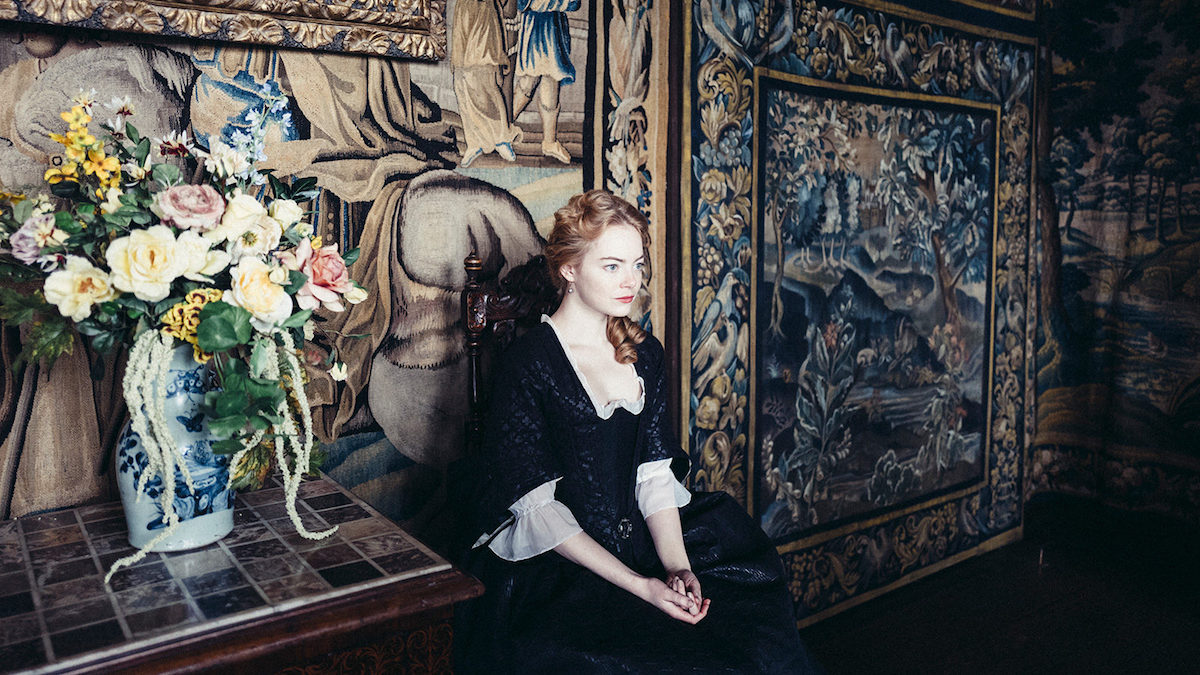 New York Film Festival Director and Selection Committee Chair Kent Jones said, “The Favourite is a lot of things at once, each of them perfectly meshed: a historical epic; a visual feast; a wild, wild ride; a formidable display of the art of acting from Rachel Weisz, Emma Stone, and Olivia Colman, abetted by a brilliant cast; a tour de force from Yorgos Lanthimos. And… it’s a blast. We’re very excited to have it as our opening night film.”
“It’s a great privilege to be showing The Favourite for the opening night of the New York Film Festival, which is a very special place for the film,” said Lanthimos. “I had a wonderful experience screening The Lobster at this distinct festival and I’m looking forward to sharing The Favourite with audiences in New York. I was envisioning this film for many years and eventually had a lot of fun making it.”
The 17-day New York Film Festival (September 28 – October 14) highlights the best in world cinema, featuring works from celebrated filmmakers as well as fresh new talent.
New York Film Festival Director and Selection Committee Chair Kent Jones said, “The Favourite is a lot of things at once, each of them perfectly meshed: a historical epic; a visual feast; a wild, wild ride; a formidable display of the art of acting from Rachel Weisz, Emma Stone, and Olivia Colman, abetted by a brilliant cast; a tour de force from Yorgos Lanthimos. And… it’s a blast. We’re very excited to have it as our opening night film.”
“It’s a great privilege to be showing The Favourite for the opening night of the New York Film Festival, which is a very special place for the film,” said Lanthimos. “I had a wonderful experience screening The Lobster at this distinct festival and I’m looking forward to sharing The Favourite with audiences in New York. I was envisioning this film for many years and eventually had a lot of fun making it.”
The 17-day New York Film Festival (September 28 – October 14) highlights the best in world cinema, featuring works from celebrated filmmakers as well as fresh new talent.
New York Film Festival Opening Night Films
2017 Last Flag Flying (Richard Linklater, US) 2016 13TH (Ava DuVernay, US) 2015 The Walk (Robert Zemeckis, US) 2014 Gone Girl (David Fincher, US) 2013 Captain Phillips (Paul Greengrass, US) 2012 Life of Pi (Ang Lee, US) 2011 Carnage (Roman Polanski, France/Poland) 2010 The Social Network (David Fincher, US) 2009 Wild Grass (Alain Resnais, France) 2008 The Class (Laurent Cantet, France) 2007 The Darjeeling Limited (Wes Anderson, US) 2006 The Queen (Stephen Frears, UK) 2005 Good Night, and Good Luck. (George Clooney, US) 2004 Look at Me (Agnès Jaoui, France) 2003 Mystic River (Clint Eastwood, US) 2002 About Schmidt (Alexander Payne, US) 2001 Va savoir (Jacques Rivette, France) 2000 Dancer in the Dark (Lars von Trier, Denmark) 1999 All About My Mother (Pedro Almodóvar, Spain) 1998 Celebrity (Woody Allen, US) 1997 The Ice Storm (Ang Lee, US) 1996 Secrets & Lies (Mike Leigh, UK) 1995 Shanghai Triad (Zhang Yimou, China) 1994 Pulp Fiction (Quentin Tarantino, US) 1993 Short Cuts (Robert Altman, US) 1992 Olivier Olivier (Agnieszka Holland, France) 1991 The Double Life of Veronique (Krzysztof Kieslowski, Poland/France) 1990 Miller’s Crossing (Joel Coen, US) 1989 Too Beautiful for You (Bertrand Blier, France) 1988 Women on the Verge of a Nervous Breakdown (Pedro Almodóvar, Spain) 1987 Dark Eyes (Nikita Mikhalkov, Soviet Union) 1986 Down by Law (Jim Jarmusch, US) 1985 Ran (Akira Kurosawa, Japan) 1984 Country (Richard Pearce, US) 1983 The Big Chill (Lawrence Kasdan, US) 1982 Veronika Voss (Rainer Werner Fassbinder, West Germany) 1981 Chariots of Fire (Hugh Hudson, UK) 1980 Melvin and Howard (Jonathan Demme, US) 1979 Luna (Bernardo Bertolucci, Italy/US) 1978 A Wedding (Robert Altman, US) 1977 One Sings, the Other Doesn’t (Agnès Varda, France) 1976 Small Change (François Truffaut, France) 1975 Conversation Piece (Luchino Visconti, Italy) 1974 Don’t Cry with Your Mouth Full (Pascal Thomas, France) 1973 Day for Night (François Truffaut, France) 1972 Chloe in the Afternoon (Eric Rohmer, France) 1971 The Debut (Gleb Panfilov, Soviet Union) 1970 The Wild Child (François Truffaut, France) 1969 Bob & Carol & Ted & Alice (Paul Mazursky, US) 1968 Capricious Summer (Jiri Menzel, Czechoslovakia) 1967 The Battle of Algiers (Gillo Pontecorvo, Italy/Algeria) 1966 Loves of a Blonde (Milos Forman, Czechoslovakia) 1965 Alphaville (Jean-Luc Godard, France) 1964 Hamlet (Grigori Kozintsev, USSR) 1963 The Exterminating Angel (Luis Buñuel, Mexico)
-
Alfonso Cuarón’s ROMA to Premiere in NY as Centerpiece of 56th New York Film Festival
 Alfonso Cuarón’s ROMA will have its New York premiere as the Centerpiece film of the 56th New York Film Festival at Alice Tully Hall on Friday, October 5, 2018. ROMA is a Netflix release and will launch globally and in theaters later this year.
In Alfonso Cuarón’s autobiographically inspired film, set in Mexico City in the early ’70s, we are placed within the physical and emotional terrain of a middle-class family whose center is quietly and unassumingly held by its beloved live-in nanny and housekeeper (Yalitza Aparicio). The cast is uniformly magnificent, but the real star of ROMA is the world itself, fully present and vibrantly alive, from sudden life-changing events to the slightest shifts in mood and atmosphere. Cuarón tells us an epic story of everyday life while also gently sweeping us into a vast cinematic experience, in which time and space breathe and majestically unfold. Shot in breathtaking black and white and featuring a sound design that represents something new in the medium, ROMA is a truly visionary work.
New York Film Festival Director and Selection Committee Chair Kent Jones said, “I was absolutely stunned by ROMA from beginning to end—by the craftsmanship and the artistry of everyone involved, by the physical power and gravitational force of the images, by the realization that I was seeing something magical: a story of ongoing life grounded within the immensity and mystery of just being here on this planet. Alfonso Cuarón’s film is a wonder.”
“I am honored ROMA has been selected for the Centerpiece slot at this year’s New York Film Festival,” said Cuarón. “NYFF has a longstanding history of celebrating meaningful and compelling filmmaking and it felt right to return to the festival with ROMA—an incredibly personal, illuminating, and transformative project for me.”
The 17-day New York Film Festival taking place September 28 to October 14, 2018, highlights the best in world cinema, featuring works from celebrated filmmakers as well as fresh new talent.
Alfonso Cuarón’s ROMA will have its New York premiere as the Centerpiece film of the 56th New York Film Festival at Alice Tully Hall on Friday, October 5, 2018. ROMA is a Netflix release and will launch globally and in theaters later this year.
In Alfonso Cuarón’s autobiographically inspired film, set in Mexico City in the early ’70s, we are placed within the physical and emotional terrain of a middle-class family whose center is quietly and unassumingly held by its beloved live-in nanny and housekeeper (Yalitza Aparicio). The cast is uniformly magnificent, but the real star of ROMA is the world itself, fully present and vibrantly alive, from sudden life-changing events to the slightest shifts in mood and atmosphere. Cuarón tells us an epic story of everyday life while also gently sweeping us into a vast cinematic experience, in which time and space breathe and majestically unfold. Shot in breathtaking black and white and featuring a sound design that represents something new in the medium, ROMA is a truly visionary work.
New York Film Festival Director and Selection Committee Chair Kent Jones said, “I was absolutely stunned by ROMA from beginning to end—by the craftsmanship and the artistry of everyone involved, by the physical power and gravitational force of the images, by the realization that I was seeing something magical: a story of ongoing life grounded within the immensity and mystery of just being here on this planet. Alfonso Cuarón’s film is a wonder.”
“I am honored ROMA has been selected for the Centerpiece slot at this year’s New York Film Festival,” said Cuarón. “NYFF has a longstanding history of celebrating meaningful and compelling filmmaking and it felt right to return to the festival with ROMA—an incredibly personal, illuminating, and transformative project for me.”
The 17-day New York Film Festival taking place September 28 to October 14, 2018, highlights the best in world cinema, featuring works from celebrated filmmakers as well as fresh new talent.