[caption id="attachment_2165" align="alignnone"] Special Flight[/caption]
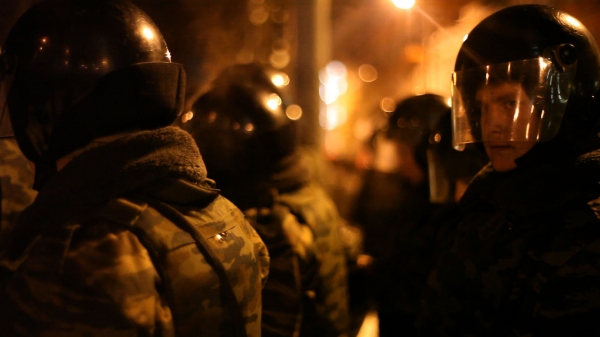
The winning films of this year’s One World International Human Rights Documentary Film Festival in Prague, Czech Republic were announced at the closing ceremony and the Best Film Award was given to Special Flight by Swiss director Fernand Melgar.
This year the festival screened over 60 films including I am a Woman Now, Girl Model, The Price of Sex, Carte Blanche, Mama Illegal, Big Boys Gone Bananas!*, The Substance, and Taste the Waste.
One World 2012 Winning Films
Grand Jury
Choosing from documentaries shortlisted for the Main Competition (15 films this year), the Grand Jury presents the Best Film Award and Best Director Award.
The Best Film Award goes to Special Flight (Special Flight / Switzerland/ 2011 / 103 min) by Swiss director Fernand Melgar.
”The Swiss film Special Flight looks at refugees at an internment facility in Switzerland who are waiting to learn whether they will be sent back to their home countries or whether they will be granted asylum. In addition to the extraordinary and unprecedented access gained by the filmmaker, the jury was impressed by this film’s exceptional storytelling and dramaturgy, its flawless controlled camera work, its intelligent and precise editing, and perhaps above all, by the filmmaker’s compassion and respect for his characters. This film succeeds in transforming reality into a work of art,” said Grand Jury member Peter Lom.
[caption id="attachment_2331" align="alignnone"]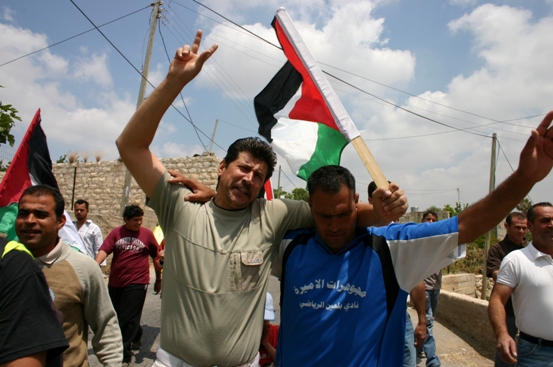 5 Broken Cameras[/caption]
The Best Director Award goes to 5 Broken Cameras (5 Broken Cameras/ Israel, Palestine, Netherlands, France / 2011 / 90 min) by Emad Burnat and Guy Davidi. The award will be presented at the closing ceremony to Emad Burnat whose shots of the Palestine village of Bil’in were used to make the film.
“We have decided to present the Best Director Award to 5 Broken Cameras – a film that shows the conflict between Palestinian villagers and Jewish settlers. Rubber projectiles are shot mechanically at unarmed individuals; we see the gradual trampling of any decency or rule of law and the steady increase in aggression on both sides – perhaps no other film has so perfectly captured these scenes as does this unique long-term documentary. Moreover, the directors show how one can still act with non-violence, and endless courage and uncompromising dignity. His actions are awe-inspiring, and the result is an extraordinary film,” said Grand Jury member Robert Sedláček.
This year’s Grand Jury included director Ali Samadi Ahadi whose documentary Green Wave received two awards at the last year’s One World Film Festival; artistic director of the Golden Apricot International Film Festival Susanna Harutyunyan; Czech-Canadian director Petr Lom whose latest film Back to the Square opened this year’s One World Film Festival; Sara Rüster from the Swedish Film Institute; and award-winning Czech director Robert Sedláček.
Rudolf Vrba Jury
The Rudolf Vrba Jury awards the best film in the Right to Know category; the jury members are human rights advocates, international representatives of the non-profit sector, and donors.
[caption id="attachment_1891" align="alignnone"] Big Boys Gone Bananas![/caption]
The Rudolf Vrba Award goes to Big Boys Gone Bananas!* (Big Boys Gone Bananas!* / Sweden / 2011 / 87 min) by Swedish director Fredrik Gertten. In Prague, the film was represented by its producer Margaret Jangord who will also receive the award at the ceremony.
“The film highlights the perseverance of human rights defenders and their fight against the dominating powers of international corporations that threaten freedom of speech. The film empowers citizen reporters, investigative journalists and the society to investigate wrongdoings and get involved in cross border issues. This film should be for sure screened in journalism schools,” said jury member Elena Milashina.
[caption id="attachment_2580" align="alignnone" width="550"] Who Killed Natasha?[/caption]
The Special Mention of Rudolf Vrba Jury goes to Who Killed Natasha? (Who Killed Natasha? / France, Serbia, Croatia, UK / 2011 / 64 min) by Mylène Sauloy.
“Natasha Estemirova was the last person from a generation of human rights defenders and journalists who documented abuses and crimes in Chechnya. A special tribute should be paid to the investigative journalists and human rights defenders who risk their lives to bring information to the public,” said jury member Paul Radu.
This year’s Rudolf Vrba Jury included Egyptian journalist and founder of TortureInEgypt.net Noha Atef; director of the organisation Human Rights Without Frontiers International Willy Fautré; human rights activist and member of the Kachin people of northern Burma Naung Latt; investigative journalist Elena Milashina of the Russian independent daily Novaya Gazeta; and journalist and executive director of the Organised Crime and Corruption Reporting Project Paul Radu.
Václav Havel Jury
The Václav Havel Jury awards a film that makes an exceptional contribution to the defence of human rights.
The special mention to a film that makes an exceptional contribution to the defence of human rights goes to Who Killed Natasha? (Who Killed Natasha? / France, Serbia, Croatia, UK / 2011 / 64 min) by Mylène Sauloy; this is the second award the film receives at this year’s One World Film Festival.
“The film looks at the immense courage of human rights advocates as well as at the cynicism of the state-supported terror against citizens along with the brutality the violent regime can unleash against defenceless population. Above all, the film’s thorough investigative form basically unravels the connections between the murders of human rights advocates and the government,” said jury member Šimon Pánek.
This year’s Václav Havel Jury included long-term colleagues of the Czech ex-president Helena Dluhošová and Martin Vidlák: and director of People in Need Šimon Pánek.
Czech Radio Jury
The Czech Radio Jury presents the Czech Radio Award for creative use of music and sound in a documentary film.
The Czech Radio Jury Award goes to Into Oblivion (Into Oblivion / Czech Republic / 2011 / 52 min) by Czech director Šimon Špidla who has introduced the film himself at the festival and who will also attend the closing ceremony.
“The jury acknowledges the close synergy between the visual and sound elements of the film blurring the differences between the traditional categories of sound and music composition. Complementing the film’s topic with a parallel narrative structure, the full sound contributes significantly towards the emotional impression of the film,” the jury said.
This year’s Czech Radio Jury included Czech Radio sound engineers Michal Rataj, Ladislav Železný, and Tomáš Zikmund.
Student Jury
The Student Jury awards the best film in the festival’s selection of films for students One World in Schools; the jury members are secondary school students.
The Student Jury Award goes to Life in Stills (Life in Stills / Israel / 2011 / 58 min) by Israeli director Tamar Tal who has introduced the film herself at the festival and who plans to prolong her stay in Prague to receive the award in person.
“The film presents several important subjects, including a look at everyday life in Israel, which we had previously known only in the context of the Israeli-Palestinian conflict. At the same time, it reveals the life of senior citizens and awakens our interest in the older people around us,” the jury said.
This year’s Student Jury included four secondary school students, organisers of One World in Schools student film clubs – Michaela Rudolfová, Tereza Vágnerová, Anežka Nováková, and Pavlína Juračková.
Bageterie Boulevard Audience Award
The voting for the Audience Award closes on Wednesday; the winning film will be announced at the closing ceremony in Lucerna on Thursday, 15 March 2012.
One World Social Innovation Award
The seventh One World festival jury awards the best and the most effective social campaign that makes the best use of new media to make a real positive impact; the jury members are communication experts.
The One World Social Innovation Award for 2011 goes to the Russian online project Liza Alert – a network of volunteers activated by means of new media during searches for missing children in Russia, effectively standing in for the incompetent police charged with doing so. The award was presented to project coordinators Irina Vorobieva and Marina Kaceanov at the gala ceremony at the French Institute on Monday, 12 March 2012.
“Liza Alert is a project that fulfilled, with excellence, the main competition criteria. First, it is the only case among all the nominees when we know that the project saved lives. Secondly, it is able to mobilise people in real time through a range of tools including web and SMS. And most importantly, it pushes the responsible bodies to take action,” said jury member Camilla Hawthorne.
This year’s One World Social Innovation Jury included Gregory Asmolov whose project Help Map won the One World Social Competition Award last year; Manager of Digital Media Initiatives at Radio Free Europe/Radio Liberty Camilla Hawthorne; and director of Vodafone Czech Republic Foundation Ondřej Zapletal.