di Eliza McNitt (USA, France)
BEST VR EXPERIENCE AWARD (FOR INTERACTIVE CONTENT) to:
HFPA Award – HFPA (Hollywood Foreign Press Association)
Presented to three filmmakers (director, producer) from the Orizzonti category awarded for Best Film, Best Director and Special Jury Prize
Casa Wabi – Mantarraya Award (Fundación Casa Wabi – Mantarraya Group)
To the director winner of the Award for a Debut Film of the 75th Venice Film Festival
FIPRESCI Award (International Federation of Film Critics)
Napszállta (Sunset) by László Nemes
Best Film from Orizzonti and from the parallel sections: Lissa Ammetsajjel (Still Recording) by Saeed Al Batal and Ghiath Ayoub
SIGNIS Award (International World Catholic Association for Communication)
ROMA by Alfonso Cuarón
Special Mention: 22 JULY by Paul Greengrass
Leoncino d’Oro Award (Agiscuola)
WERK OHNE AUTOR by Florian Henckel von Donnersmarck
Cinema for UNICEF:
What you gonna do when the world’s on fire? by Roberto Minervini
Francesco Pasinetti Award (Sindacato Nazionale Giornalisti Cinematografici Italiani)
CAPRI-REVOLUTION by Mario Martone
Special Pasinetti Award:
SULLA MIA PELLE by Alessio Cremonini
ALESSANDRO BORGHI and JASMINE TRINCA
Brian Award (UAAR, Unione degli Atei e degli Agnostici Razionalisti)
SULLA MIA PELLE by Alessio Cremonini
Queer Lion Award (Associazione di Promozione Sociale Queer Lion)
JOSÉ by Li Cheng
ARCA Cinemagiovani Award
Best Italian Film in Venice: CAPRI-REVOLUTION by Mario Martone
Best Film of Venezia 75: WERK OHNE AUTOR by Florian Henckel von Donnersmarck
CICT – UNESCO “Enrico Fulchignoni” Award (Conseil International du Cinema et de la Télévision)
EL PEPE, UNA VIDA SUPREMA by Emir Kusturica
FEDIC Award (Federazione Italiana dei Cineclub)
SULLA MIA PELLE by Alessio Cremonini
Special Mention FEDIC:
RICORDI? by Valerio Mieli
Mention FEDIC Il Giornale del Cibo:
I VILLANI by Daniele De Michele
Fondazione Mimmo Rotella Award
JULIAN SCHNABEL and WILLEM DAFOE
Lanterna Magica Award (Associazione Nazionale C.G.S.)
AMANDA by Mikhael Hers
Gillo Pontecorvo Award (Istituto Internazionale per il cinema e l’audiovisivo dei paesi latini)
Best co-production for a debut film: THE ROAD NOT TAKEN by Tang Gaopeng
Smithers Foundation Award (International Council of Film and Television at UNESCO and the Observatory on Cultural Communication at U.N.)
A STAR IS BORN by Bradley Cooper
Special Mention: THE MOUNTAIN by Rick Alverson
Interfilm Award for Promoting Interreligious Dialogue (International Interchurch Film Organisation)
TEL AVIV ON FIRE by Sameh Zoabi
Green Drop Award (Green Cross Italia)
AT ETERNITY’S GATE by Julian Schnabel
WILLEM DAFOE
Premio Soundtrack Stars (Free Event and SNGCI)
Best Soundtrack: CAPRI-REVOLUTION by Mario Martone, music by Sacha Ring and Philipp Thimm
Best original song: A SUSPIRIUM by Thom Yorke for the film Suspiria by Luca Guadagnino
Special Mention: JUDY HILL for the film What You Gonna Do When the World’s on Fire by Roberto Minervini
Sun Film Group Audience Award (Settimana Internazionale della Critica)
LISSA AMMETSAJJEL (STILL RECORDING) by Saeed Al Batal and Ghiath Ayoub
Circolo del Cinema di Verona Award (Settimana Internazionale della Critica)
BETES BLONDES (BLONDE ANIMALS) by Maxime Matray and Alexia Walther
Mario Serandrei – Hotel Saturnia & International Award for the Best Technical Contribution
(Settimana Internazionale della Critica)
LISSA AMMETSAJJEL (STILL RECORDING) by Saeed Al Batal and Ghiath Ayoub
Award for Best Short Film SIC@SIC 2018 (Settimana Internazionale della Critica)
MALO TEMPO by Tommaso Perfetti
Award for Best Director SIC@SIC 2018 (Settimana Internazionale della Critica)
GAGARIN, MI MANCHERAI by Domenico De Orsi
Award for Best Technical Contribution SIC@SIC 2018 (Settimana Internazionale della Critica)
QUELLE BRUTTE COSE by Loris Giuseppe Nese
Label Europa Cinemas Award (Giornate degli Autori)
JOY by Sudabeh Mortezai
BNL People’s Choice Award (Giornate degli Autori)
RICORDI? by Valerio Mieli
GdA Director’s Award (Giornate degli Autori)
C’EST ÇA L’AMOUR by Claire Burge
HRNs Award (Human Rights Nights Association)
A Letter to a Friend in Gaza by Amos Gitai
Special Mention: PETERLOO by Mike Leigh
Special Mention: 1938 DIVERSI by Giorgio Treves
Sorriso diverso Award (Ass. studentesca “L’università cerca lavoro”, UCL)
Best Film: UN GIORNO ALL’IMPROVVISO by Cirio D’Emilio
NuovoImaie Award (Artists’ Rights in collaboration with SNGCI and SNCCI)
Linda Caridi and
Giampiero De Concilio
Sfera 1932 Award (Consorzio Venezia e il suo Lido with Seguso Vetri d’Arte – Murano dal 1397)
CAPRI-REVOLUTION by Mario Martone
UNIMED Award (Mediterranean Universities Union)
A TRAMWAY IN JERUSALEM by Amos Gitai
La Pellicola d’Oro Award (Association “Articolo 9 Cultura & Spettacolo” and “S.A.S. Cinema”)
FRANCO RAGUSA Special effects for the film Suspiria
KATIA SCHWEIGGL Best tailor for the film Capri-Revolution
SARTORIA ATELIER NICOLAO DI STEFANO NICOLAO Lifetime Achievement
Lizzani Award – ANAC (Associazione Nazionale Autori Cinematografici)
CAPRI-REVOLUTION by Mario Martone
Premio Vivere da Sportivi, Fair play al cinema (Vivere da sportivi: a scuola di fair play Assoc.)
What you gonna do when the world’s on fire? by Roberto Minervini
Special Mention: ZEN SUL GHIACCIO SOTTILE by Margherita Ferri
Special Mention: Lissa ammetsajjel (Still Recording) by Saeed al Batal and Ghiath Ayoub
Edipo Re Award (Università degli Studi di Padova e ResInt Rete dell’Economia Sociale Internazionale)
LISSA AMMETSAJJEL (STILL RECORDING) by Saeed Al Batal and Ghiath Ayoub


 ROMA[/caption]
The Jury of the 2018 Venice Film Festival chaired by Guillermo del Toro awarded the top prize, Golden Lion for Best Film to
ROMA[/caption]
The Jury of the 2018 Venice Film Festival chaired by Guillermo del Toro awarded the top prize, Golden Lion for Best Film to  The 2018 Venice Film Festival will host a special screening of Vanessa Redgrave’s latest film The Aspern Papers, directed by Julien Landais, as part of Tribute to Redgrave on the occasion of her Golden Lion for Lifetime Achievement 2018 award. In addition to Vanessa Redgrave, the film stars Jonathan Rhys Meyers and Joely Richardson.
Julien Landais directed The Aspern Papers from a script he wrote with Jean Pavans and Hannah Bhuiya, which is based on Pavans’ adaptation of the novella by Henry James. Poppy Delevingne, Jon Kortajarena and Lois Robbins co-star alongside Morgane Polanski, Barbara Meier, Alice Aufray, and Nicolas Hau.
The 2018 Venice Film Festival will host a special screening of Vanessa Redgrave’s latest film The Aspern Papers, directed by Julien Landais, as part of Tribute to Redgrave on the occasion of her Golden Lion for Lifetime Achievement 2018 award. In addition to Vanessa Redgrave, the film stars Jonathan Rhys Meyers and Joely Richardson.
Julien Landais directed The Aspern Papers from a script he wrote with Jean Pavans and Hannah Bhuiya, which is based on Pavans’ adaptation of the novella by Henry James. Poppy Delevingne, Jon Kortajarena and Lois Robbins co-star alongside Morgane Polanski, Barbara Meier, Alice Aufray, and Nicolas Hau.
 The Aspern Papers is a story of obsession, grandeur lost, and dreams of Byronic adventures. Set in Venice in the late 19th century, it centres on Morton Vint (Jonathan Rhys Meyers), an ambitious editor who is fascinated by the romantic poet Jeffrey Aspern (Jon Kortajarena) and by his icon’s short and wildly romantic life. Having travelled from America to Venice, he is determined to get his hands on the letters Aspern wrote to his beautiful lover and muse, Juliana Bordereau (Vanessa Redgrave). Now the ferocious guardian of their secrets Juliana lives in a Venetian palazzo with her niece (Joely Richardson) who she seems to control and Morton tries to manipulate. But when the ambitious adventurer trifles with Miss Tina’s affections she learns to see through his scheme.
The 75th Venice International Film Festival will be held from August 29th to September 8th, 2018
https://www.youtube.com/watch?v=NssUm89BXII
The Aspern Papers is a story of obsession, grandeur lost, and dreams of Byronic adventures. Set in Venice in the late 19th century, it centres on Morton Vint (Jonathan Rhys Meyers), an ambitious editor who is fascinated by the romantic poet Jeffrey Aspern (Jon Kortajarena) and by his icon’s short and wildly romantic life. Having travelled from America to Venice, he is determined to get his hands on the letters Aspern wrote to his beautiful lover and muse, Juliana Bordereau (Vanessa Redgrave). Now the ferocious guardian of their secrets Juliana lives in a Venetian palazzo with her niece (Joely Richardson) who she seems to control and Morton tries to manipulate. But when the ambitious adventurer trifles with Miss Tina’s affections she learns to see through his scheme.
The 75th Venice International Film Festival will be held from August 29th to September 8th, 2018
https://www.youtube.com/watch?v=NssUm89BXII Chinese director Zhang Yimou will be awarded the 2018 Jaeger-LeCoultre Glory to the Filmmaker of the 75th Venice International Film Festival. The award, dedicated to a figure who has left a particularly original mark on contemporary cinema, will be conferred on Zhang Yimou on September 6 2018 in the Sala Grande (Palazzo del Cinema), before the world premiere screening Out of Competition of his new film Ying (
 Driven[/caption]
The world premiere of Driven directed by Nick Hamm (
Driven[/caption]
The world premiere of Driven directed by Nick Hamm (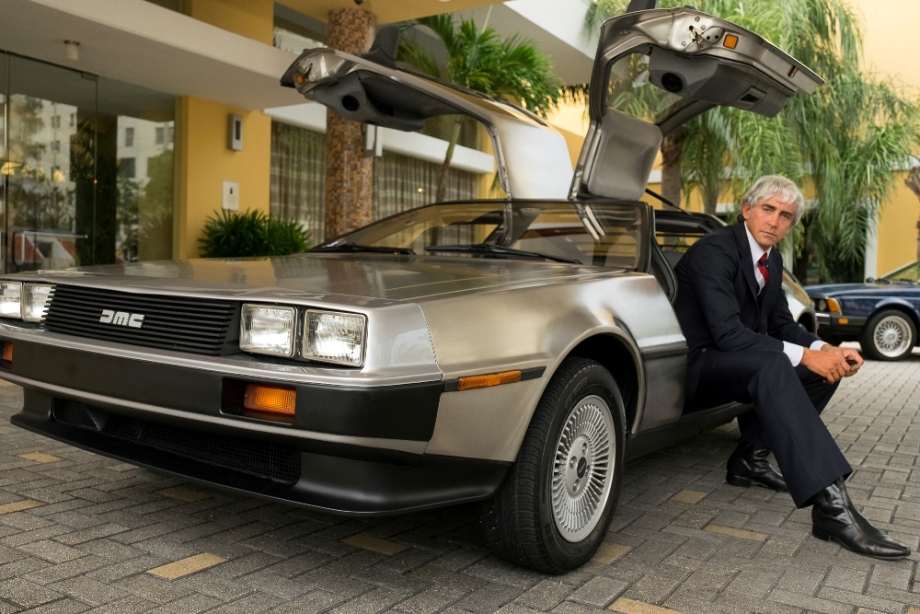 Driven[/caption]
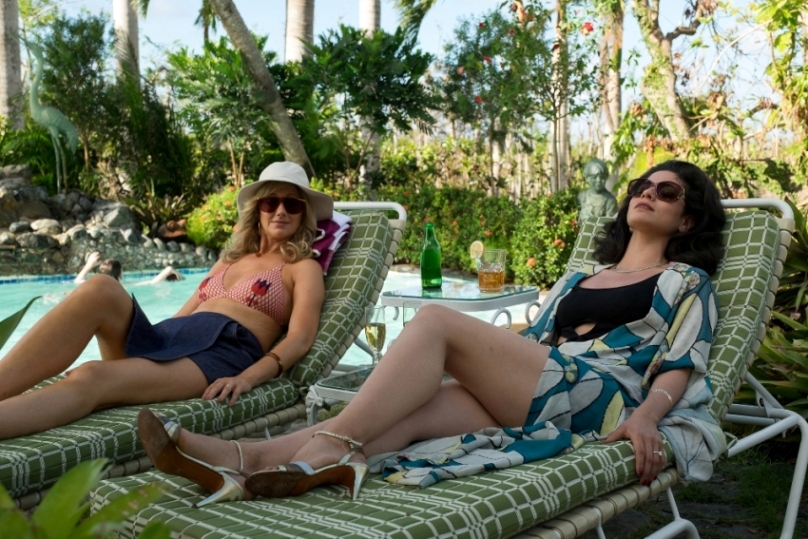
The cast of Driven is led by Lee Pace (Guardians of the Galaxy, The Hobbit) as motoring engineer and designer John DeLorean, Jason Sudeikis (Downsizing), as Jim Hoffman, DeLorean’s friend and con-man tuned FBI informant, Judy Greer (Ant-Man) as Hoffman’s strong-willed wife Ellen and Corey Stoll (House of Cards, Midnight in Paris) as ambitious FBI agent Benedict Tissa.
Nick Hamm declared: “Venice is an inspiring festival with an incredible audience. I am both honoured and delighted to be invited back to share this crazy, untold story.”
The 75th Venice International Film Festival directed by Alberto Barbera and organized by the Biennale di Venezia, chaired by Paolo Baratta, will take place August 29 to September 8, 2018.
Driven[/caption]
The cast of Driven is led by Lee Pace (Guardians of the Galaxy, The Hobbit) as motoring engineer and designer John DeLorean, Jason Sudeikis (Downsizing), as Jim Hoffman, DeLorean’s friend and con-man tuned FBI informant, Judy Greer (Ant-Man) as Hoffman’s strong-willed wife Ellen and Corey Stoll (House of Cards, Midnight in Paris) as ambitious FBI agent Benedict Tissa.
Nick Hamm declared: “Venice is an inspiring festival with an incredible audience. I am both honoured and delighted to be invited back to share this crazy, untold story.”
The 75th Venice International Film Festival directed by Alberto Barbera and organized by the Biennale di Venezia, chaired by Paolo Baratta, will take place August 29 to September 8, 2018.
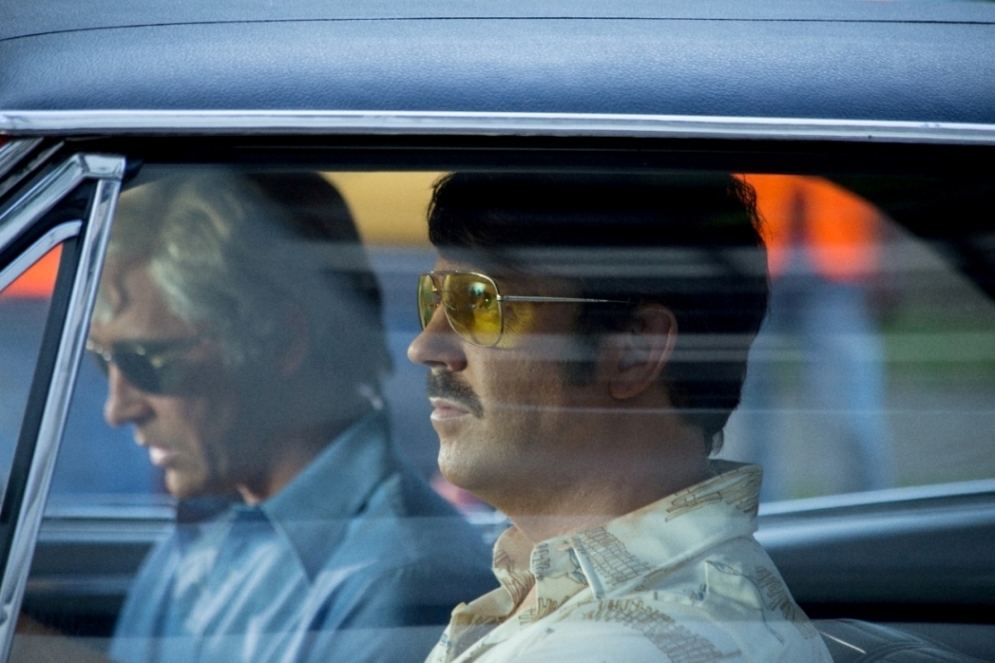 Driven[/caption]
It’s 1974 and Jim Hoffman (Jason Sudeikis) is your average family man—father of two, hard-working pilot, doting husband to Ellen (Judy Greer). Oh, he’s also an occasional drug smuggler. And when Jim is caught using his family vacation to smuggle cocaine into the US, ambitious FBI agent Benedict J. Tisa (Corey Stoll) sees an opportunity to earn a major victory for the Bureau by using Jim to entrap his elusive supplier.
Starting over in an affluent San Diego neighbourhood on the government’s payroll, Jim’s duties as a confidential informant get side-tracked when he befriends his famous neighbour, motoring engineer and designer John DeLorean (Lee Pace). Bedazzled by DeLorean’s charm and vision, Jim soon finds himself in DeLorean’s inner circle at the launch of a new enterprise that promises to revolutionize the American motor industry.
However, when DeLorean’s dream hits the buffers with his company set to go belly-up, and Tisa’s nowhere near getting his guy, Jim suddenly finds himself caught between two desperate men who are willing to do anything to succeed.
Driven[/caption]
It’s 1974 and Jim Hoffman (Jason Sudeikis) is your average family man—father of two, hard-working pilot, doting husband to Ellen (Judy Greer). Oh, he’s also an occasional drug smuggler. And when Jim is caught using his family vacation to smuggle cocaine into the US, ambitious FBI agent Benedict J. Tisa (Corey Stoll) sees an opportunity to earn a major victory for the Bureau by using Jim to entrap his elusive supplier.
Starting over in an affluent San Diego neighbourhood on the government’s payroll, Jim’s duties as a confidential informant get side-tracked when he befriends his famous neighbour, motoring engineer and designer John DeLorean (Lee Pace). Bedazzled by DeLorean’s charm and vision, Jim soon finds himself in DeLorean’s inner circle at the launch of a new enterprise that promises to revolutionize the American motor industry.
However, when DeLorean’s dream hits the buffers with his company set to go belly-up, and Tisa’s nowhere near getting his guy, Jim suddenly finds himself caught between two desperate men who are willing to do anything to succeed.
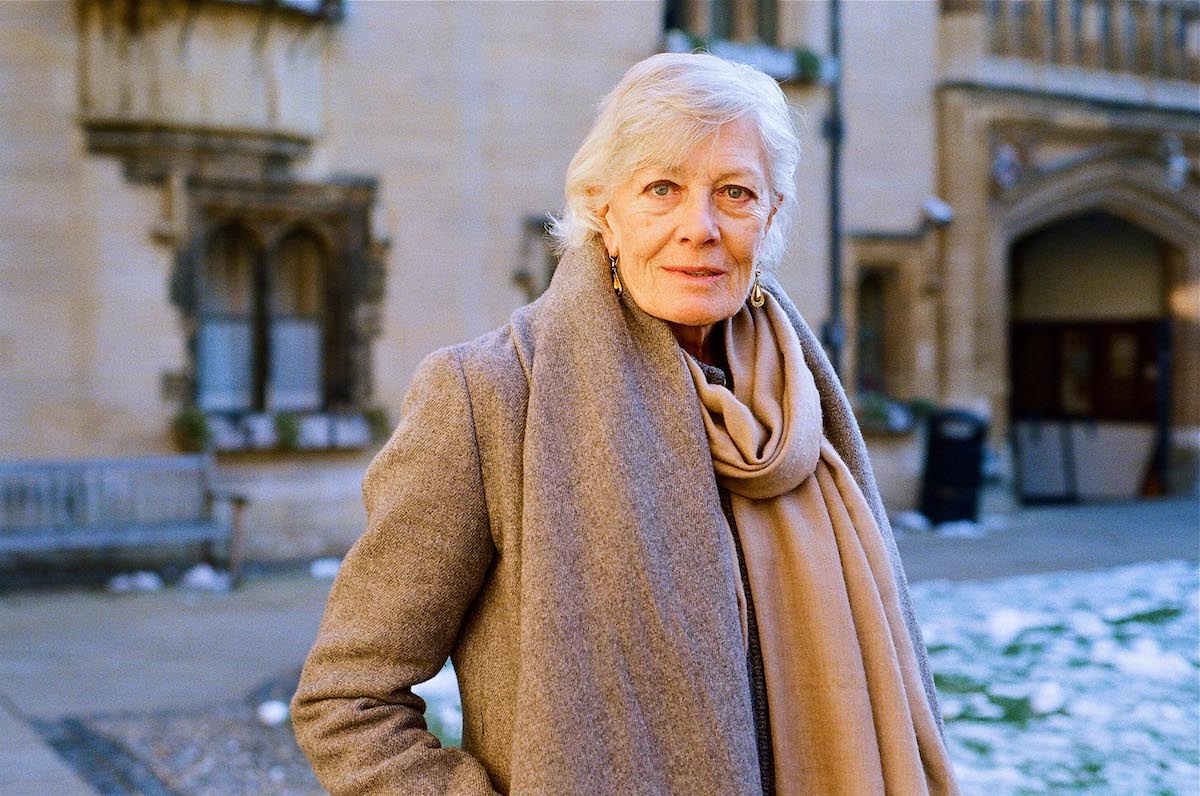 Actress Vanessa Redgrave will be awarded the Golden Lion for Lifetime Achievement at the 75th Venice International Film Festival (29 August – 8 September, 2018). Vanessa Redgrave joins director David Cronenberg, who will also receive the Golden Lion for Lifetime Achievement at the 75th Venice Film Festival.
Vanessa Redgrave declared: “I am astonished and especially delighted to hear that I will be awarded by the Venice Film Festival for a life’s work in film. Last summer I was filming in Venice in The Aspern Papers. Many many years ago I filmed La vacanza in the marshes of the Veneto. My character spoke every word in the Venetian dialect. I bet I am the only non-Italian actress to act an entire role in Venetian dialect! Thank you a million dear Festival! “.
Alberto Barbera declared: “Unanimously considered one of today’s best actresses, Redgrave’s sensitive, infinitely faceted performances ideally render complex and often controversial characters. Gifted with a natural elegance, innate seductive power, and extraordinary talent, she can nonchalantly pass from European art house cinema to lavish Hollywood productions, from the stage to TV sets, each time offering top-quality results. In the sixty years of her professional activity, her performances have displayed authoritativeness and total control over the roles she plays, a boundless and highly sophisticated generosity, and a healthy dose of the courage and fighting spirit which are a hallmark of her compassionate, artistic nature”.
Actress Vanessa Redgrave will be awarded the Golden Lion for Lifetime Achievement at the 75th Venice International Film Festival (29 August – 8 September, 2018). Vanessa Redgrave joins director David Cronenberg, who will also receive the Golden Lion for Lifetime Achievement at the 75th Venice Film Festival.
Vanessa Redgrave declared: “I am astonished and especially delighted to hear that I will be awarded by the Venice Film Festival for a life’s work in film. Last summer I was filming in Venice in The Aspern Papers. Many many years ago I filmed La vacanza in the marshes of the Veneto. My character spoke every word in the Venetian dialect. I bet I am the only non-Italian actress to act an entire role in Venetian dialect! Thank you a million dear Festival! “.
Alberto Barbera declared: “Unanimously considered one of today’s best actresses, Redgrave’s sensitive, infinitely faceted performances ideally render complex and often controversial characters. Gifted with a natural elegance, innate seductive power, and extraordinary talent, she can nonchalantly pass from European art house cinema to lavish Hollywood productions, from the stage to TV sets, each time offering top-quality results. In the sixty years of her professional activity, her performances have displayed authoritativeness and total control over the roles she plays, a boundless and highly sophisticated generosity, and a healthy dose of the courage and fighting spirit which are a hallmark of her compassionate, artistic nature”.
 A Star is Born, the much-anticipated directorial debut of four-time Oscar® nominee Bradley Cooper and feature film debut of award-winning actor and Oscar® -nominated musical artist Lady Gaga, will have its out-of-competition world premiere at the 75th Venice International Film Festival.
The premiere screening of A Star is Born, which was also co-written and produced by Cooper, will be held on Friday, August 31st, in the Sala Grande at the Palazzo del Cinema on the Venice Lido. The 75th Venice International Film Festival will take place at the Lido from August 29 to September 8, 2018; it is directed by Alberto Barbera and organized by la Biennale di Venezia, chaired by Paolo Baratta. Slated for release beginning October 5, 2018, the film will be distributed worldwide by Warner Bros.
In this new take on the powerful love story, Cooper plays seasoned musician Jackson Maine, who discovers—and falls in love with—struggling artist Ally (Gaga). She has just about given up on her dream to make it big as a singer until Jack coaxes her into the spotlight. But even as Ally’s career takes off, the personal side of their relationship is breaking down, as Jack fights an ongoing battle with his own internal demons.
A Star is Born features original songs performed live on-camera by Cooper and Gaga, who wrote a number of tracks together and in collaboration with such musical artists as Lukas Nelson, Jason Isbell and Mark Ronson. The film’s ensemble cast also includes Andrew Dice Clay, with Dave Chappelle and Sam Elliott.
A Star is Born, the much-anticipated directorial debut of four-time Oscar® nominee Bradley Cooper and feature film debut of award-winning actor and Oscar® -nominated musical artist Lady Gaga, will have its out-of-competition world premiere at the 75th Venice International Film Festival.
The premiere screening of A Star is Born, which was also co-written and produced by Cooper, will be held on Friday, August 31st, in the Sala Grande at the Palazzo del Cinema on the Venice Lido. The 75th Venice International Film Festival will take place at the Lido from August 29 to September 8, 2018; it is directed by Alberto Barbera and organized by la Biennale di Venezia, chaired by Paolo Baratta. Slated for release beginning October 5, 2018, the film will be distributed worldwide by Warner Bros.
In this new take on the powerful love story, Cooper plays seasoned musician Jackson Maine, who discovers—and falls in love with—struggling artist Ally (Gaga). She has just about given up on her dream to make it big as a singer until Jack coaxes her into the spotlight. But even as Ally’s career takes off, the personal side of their relationship is breaking down, as Jack fights an ongoing battle with his own internal demons.
A Star is Born features original songs performed live on-camera by Cooper and Gaga, who wrote a number of tracks together and in collaboration with such musical artists as Lukas Nelson, Jason Isbell and Mark Ronson. The film’s ensemble cast also includes Andrew Dice Clay, with Dave Chappelle and Sam Elliott. First Man, directed by Damien Chazelle (
 The silent film classic The Golem – How He Came Into The World (Der Golem – Wie er in die Welt kam, 1920), written and directed by Paul Wegener, is the film chosen for the Pre-opening event of the 75th Venice International Film Festival of the Biennale di Venezia, to be shown in the Sala Darsena (Palazzo del Cinema) on the Lido on Tuesday August 28th.
The Golem – How He Came Into The World will be screened from a new digital copy made from the original negative that was thought to have been lost, restored in 4K and supervised by the Friedrich-Wilhelm-Murnau-Stiftung in Wiesbaden (Germany) and by the Cinémathèque Royale de Belgique (Cinematek) in Brussels, to be shown in its world premiere screening. The digital restoration was done by Immagine ritrovata in Bologna.
The screening of The Golem – How He Came Into The World will be scored with original music by maestro Admir Shkurtaj, commissioned by La Biennale di Venezia, and performed live by the Mesimèr Ensemble wth members: Hersjana Matmuja (soprano), Giorgio Distante (Bb trumpet, midi trumpet), Pino Basile (cupafon – a set of friction drums, percussions, ocarina), Vanessa Sotgiù (synthesizer, piano), Iacopo Conoci (cello), Admir Shkurtaj (conductor, electronics, accordion, piano).
The 75th Venice International Film Festival will be held on the Lido from August 29th to September 8th 2018, directed by Alberto Barbera and organized by La Biennale chaired by Paolo Baratta.
The silent film classic The Golem – How He Came Into The World (Der Golem – Wie er in die Welt kam, 1920), written and directed by Paul Wegener, is the film chosen for the Pre-opening event of the 75th Venice International Film Festival of the Biennale di Venezia, to be shown in the Sala Darsena (Palazzo del Cinema) on the Lido on Tuesday August 28th.
The Golem – How He Came Into The World will be screened from a new digital copy made from the original negative that was thought to have been lost, restored in 4K and supervised by the Friedrich-Wilhelm-Murnau-Stiftung in Wiesbaden (Germany) and by the Cinémathèque Royale de Belgique (Cinematek) in Brussels, to be shown in its world premiere screening. The digital restoration was done by Immagine ritrovata in Bologna.
The screening of The Golem – How He Came Into The World will be scored with original music by maestro Admir Shkurtaj, commissioned by La Biennale di Venezia, and performed live by the Mesimèr Ensemble wth members: Hersjana Matmuja (soprano), Giorgio Distante (Bb trumpet, midi trumpet), Pino Basile (cupafon – a set of friction drums, percussions, ocarina), Vanessa Sotgiù (synthesizer, piano), Iacopo Conoci (cello), Admir Shkurtaj (conductor, electronics, accordion, piano).
The 75th Venice International Film Festival will be held on the Lido from August 29th to September 8th 2018, directed by Alberto Barbera and organized by La Biennale chaired by Paolo Baratta.