Film Reviews

  • REVIEW: My Father and The Man in Black

    MY FATHER AND THE MAN IN BLACK

    With no disrespect intended to any ladies reading this, it’s been said that no story carries the emotional impact of a story about the relationship between a father and his son.  From the days of the Bible and mythology, countless stories have used that relationship as a basis for emotional conflict, from fantasy films like Star Wars and Field of Dreams to biographical films like Walk the Line. Indeed, it is because of that last film that the documentary MY FATHER AND THE MAN IN BLACK exists.

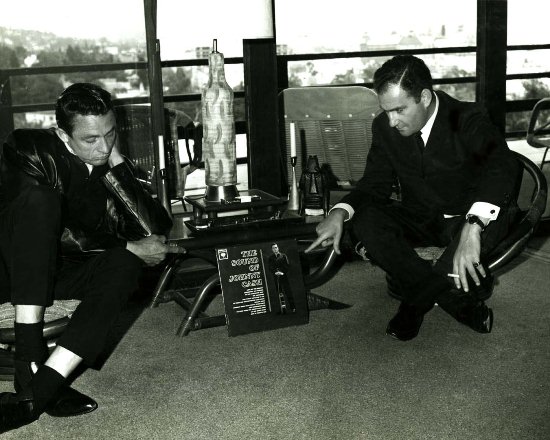
    This documentary is about Saul Holiff, who served as Johnny Cash’s manager from 1960 to 1973.  Saul Holiff, who committed suicide several years ago because he was suffering from a terminal illness, had an estranged relationship with his son Jonathan Holiff – Jonathan confesses, “I knew more about my father from his obituary than from the man himself.”   Shortly before the release of the successful Johnny Cash biopic Walk the Line, Jonathan quit his unsatisfying job as a successful Hollywood agent and moved back in with his mother.  While living with her they were bombarded with calls from Cash fans looking for memorabilia in the wake of Cash’s resurgence in popularity.  Jonathan’s mother revealed to him that his father had left a storage locker filled with a treasure trove of information and mementos regarding his time managing Cash.  This documentary chronicles Jonathan’s discovery of who his father really was through what he finds in the locker.

    Jonathan Holiff has a great story to tell about this relationship to his father and his father’s relationship to Johnny Cash.  However — and I know this might sound odd — I don’t think Jonathan Holiff was the right filmmaker to tell this story.  While Jonathan was an extremely successful Hollywood agent and television producer, that doesn’t necessarily translate to filmmaking skill.  Since Jonathan is undergoing a very personal journey with this documentary it makes sense that he serves writer, director, and producer of the film, but several questionable creative decisions really hurt the final product.

    For instance, perhaps my least favorite technique in documentaries is shooting narrative-style recreations of true events.  It not only seems false to me, but it begs the question of why the filmmakers didn’t choose one style or the other.  It appears that Holiff has spent a lot of money shooting narrative recreations of his father’s interactions with Cash with lookalike actors in their places. But why? Saul Holiff’s story is fascinating on its own and is told through incredible archival photos, film clips, and, most of all, audio recordings.  These are historical documents that uncover untold aspects of the life of one of country music’s most iconic figures (or two if you count Cash’s wife June Carter).  I would have liked to have seen more authenticity and less awkward recreations.

    Regardless of that poor choice in technique, Holiff discovers deep emotional connections and parallels with the father he previously wanted nothing to do with, and learns that his father’s chief flaw was trying to manage his family life like he managed Cash.

    Though MY FATHER AND THE MAN IN BLACK has won several awards and generally positive reviews at numerous film festivals, I can’t help but think it would have been a much better documentary if it took a different creative direction.  Cash fans will enjoy it more than most (even if he doesn’t get the most glowing portrayal), but others will probably want to pass.

    http://youtu.be/jtovAxxPo2Q 

    RATING 2 out of 5 : See it … At Your Own Risk

    Read more


  • REVIEW: ABIGAIL HARM

    Abigail Harm

    Totally detached from society, as a matter of personal choice Abigail Harm is as anti-social and introverted as they come. Her only human interaction from day to day is that of her commitment to the service of reading to clients whom she sees at their home, as she reads from their favorite novels or other materials of choice. As the famous Korean folktale would have it,  one which tells of love, true love, the ever lasting kind which results from the taming of a deer, who is appears robe-less in need of consolation. One most unexpected evening a gentleman in need of food and temporary shelter appears in Abigail’s home. Over a meal she prepares, the man questions Abigail’s understanding of  love, to which she admits her only experience with it was through her parents, as an infant.  His one wish for Abigail becomes that she truly gets to feel what love is. He enlightens her to the myth of ‘The Woodcutter and the Nymph’ impressing upon her the importance of keeping her eyes open to her true love which is forthcoming.  In a matter of days, Abigails entire existence is revamped via this revelation, and literal appearance of a man in need of her as she is in need of he.

    With her new relationship, and new outlook on life Abigail Harm now allows herself to experience as everyone else in humanity would seem to know it. Watch as the once anti-social becomes a butterfly all at the behest and coercion of love and intimacy.  The two share moments once unforeseen in her world, or expected, for that matter, to the tune of one of a potentially classic love story.

    abigail harm

    Experiencing nothing short of love which is overwhelming at times for her psyche, Abigail quickly learns to embrace the attention of another human being.

    Many live a life which they desire could mirror fairy and folk tale, but quite often it does not happen; Abigail Harm gives us the hope and lesson of how we would might one day be in that small percentage of fruition. A great gem is shared regarding the importance of caring, of loving, and being loved as well as the need to be invaluable to someone whom you hope to keep forever; share in the joy of happiness and live if only vicariously, through Abigail Harm.

    http://youtu.be/_jJfumiMcZo

    “ABIGAIL HARM” Opening August 30th at The QUAD, NYC

    Winner Grand Jury Prize Best Narrative Feature and Outstanding Director  
    2013 Los Angeles Asian Pacific Film Festival
     
    Directed by Lee Isaac Chung
    Starring Amanda Plumber, Tetsuo Kuramochi, Will Patton and Burt Young
    Written by Samuel Gray Anderson and Lee Isaac Chung
    Produced by Eugene Suen, Samuel Gray Anderson and Pablo Thomas
    TRT: 80 Minutes 

    Read more


  • REVIEW: THÉRÈSE

    Thérèse Desqueyroux

    All screen adaptations of classic novels face the same inevitable obstacle: though they need not best their source material, they must work twice as hard as an original film to justify their existence. Why watch an adaptation of Jane Eyre, of Pride and Prejudice, or of Madame Bovary when those original texts are so celebrated and so readily available?

    François Mauriac’s 1927 novel Thérèse Desqueyroux may not be as well known on this side of the Atlantic as those novels, but it is nevertheless a French classic. The literary origins of the late Claude Miller’s adaptation, which has its United States premiere at the Film Society of Lincoln Center are manifestly and regrettably obvious. The events of the film take place over many years and lack the propulsive dramatic force of stories crafted directly for the screen. The last third of the movie does not build to climax but simply and unsatisfyingly peters out. Miller’s direction, meanwhile, is pedestrian at best: this is not a movie made up of striking, original images. His visual choices convey little about the characters or the narrative.

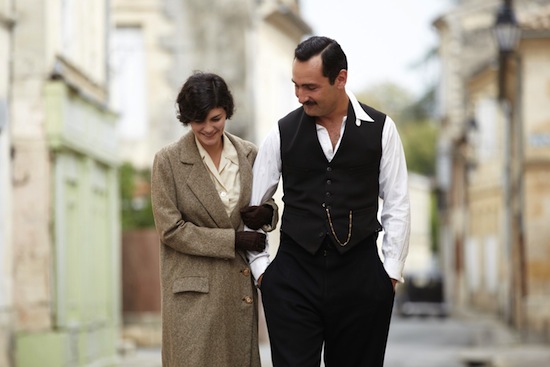
    But there is something else about the film that hearkens back to prose fiction, and particularly to the novels of the late nineteenth and early twentieth centuries: Thérèse herself. She is a fascinating creature, one we cannot help but find compelling even if we would not, perhaps, want to deal with her in real life. If the film deserves to exist at all – and I’m not sure it does – that is due to Audrey Tatou’s performance in the lead role, which is truly remarkable. It’s safe to assume that readers of Mauriac’s novel are privy to Thérèse’s innermost emotions, but viewers of Miller’s film have to rely primarily on Tatou’s performance to figure out what is going on inside her character’s head. She effortlessly telegraphs each of Thérèse’s thoughts and feelings to the audience, despite the fact that the character is nearly always acting a very different role in front of her family.

    The press materials for the film compare Thérèse to Emma Bovary and Anna Karenina, which is certainly valid: she, like both of them, is trapped in an unsatisfying marriage; she, like them, yearns for the city while imprisoned in the stultifying country. She is ultimately separated from her child, toward whom she has never expressed much maternal feeling. But Emma is a fool and Anna is a martyr, and Thérèse is something harder and slipperier. Deliberately or not, she owes far more to Kate Croy, the anti-hero of Henry James’ The Wings of the Dove, than to the long list of suicidal women who populate so many nineteenth-century novels. Kate is manipulative, conniving, and amoral, but she is not without feeling. Tatou’s performance, indeed, is strongly reminiscent of Helena Bonham Carter’s as Kate in the 1997 adaptation of that novel, easily one of the most successful adaptations of a complex nineteenth-century text. The minds behind that movie were smart enough to shape their story into something undeniably cinematic. Despite the relative age of the source material, it feels new.

    THÉRÈSE, alas, feels no such thing. Though changes were certainly made to the source material, the film nevertheless plays like an old book that has been translated directly – and uncreatively – to the screen. Thérèse struggles against the bonds of her family and the staid, bourgeois society of which they are a part; Tatou struggles equally against the bonds of a movie that does not really know what to do with her. It is a crying shame that one of her most complex and accomplished performances came to be in so undeserving a movie.

    “THÉRÈSE”
    dir. Claude Miller
    feat. Audrey Tatou, Gilles Lellouche, Anaïs Demoustier
    MPI Pictures
    110 minutes, NR

    http://youtu.be/MzRWaFMQFbw

    Read more


  • REVIEW: Drinking Buddies

    DRINKING BUDDIES

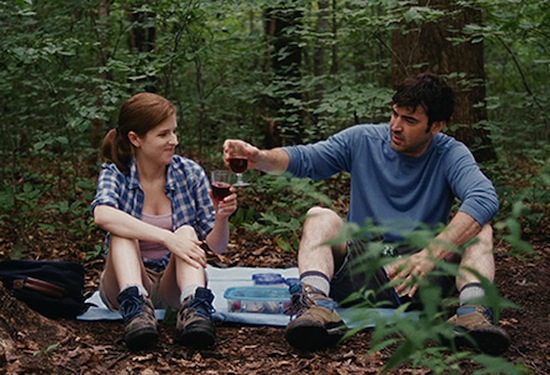
    Appearances are often deceiving. Two people who might appear to be perfect for each other on the surface by the way they interact might be incompatible once things get deeper. In DRINKING BUDDIES, a romantic comedy from writer/director Joe Swanberg (V/H/S), pretty and playful Kate (Olivia Wilde) works as a marketer at a Chicago-area brewery. Though she is in a relationship with the pedantic Chris (Ron Livingston), she clearly has better chemistry with one of the brewers she works with, Luke (Jake Johnson). However, the outgoing Luke is engaged to Jill (Anna Kendrick), a somewhat shy special education teacher.

    Just from reading the description of those characters you might think that Kate and Luke are a better fit for each other, and on the surface that’s obvious. While they’re together they’re flirty and playful. Kate in particular is clearly struggling with the romantic feelings she has for Luke, and while the two are always talking they never talk about what’s going on between them. On the other hand, Jill and Chris seem to have a connection of their own – Chris is the type of guy who doesn’t think Kate is sophisticated enough for him (he stops making out with her to give her a John Updike book to read. Yeah, he’s THAT guy). He doesn’t even like the free beer Kate gives him! Nonetheless, Jill is still compatible with Luke – it’s really the “interesting, polite gentleman” (as Jill calls Chris) who is the odd man out. But that still leaves the question of what becomes of Luke, Jill, and Kate.

    Drinking Buddies is an exercise in body language and brilliant camera work. Because Kate and Luke never talk about their relationship (or lack thereof), shots are built around their symbolic physical closeness and distance. Because of what is seen and not said, it’s an incredibly tense movie despite being about relationships – as a viewer you almost want to cut in and state the obvious to all the main players. But that’s what makes Drinking Buddies such a fun movie. Swanberg could have gone the easy route by making Kendrick’s Jill an ice queen (after all, that’s how most mainstream romantic comedies do it), but just because Kendrick’s Jill is mousier than Wilde’s Kate doesn’t mean she’s not right for Luke.

    If you like your movies subtle, Drinking Buddies is a wonderful film. I immediately wanted to watch it again to see what I missed of the actors telling a story without stating the obvious. In particular, I was blown away by Wilde – I’ve only seen her in big-budget films like TRON: Legacy and Cowboys & Aliens, so I never suspected she could pull off a subtle role like this. If mainstream romantic comedies have burned you out on their silliness, Drinking Buddies will restore your faith in the genre.

    Also, look for an uncredited Jason Sudeikis as Kate and Luke’s goofy boss, Gene Dentler (who is oddly credited as “Himself”).

    Review Rating: 4 out of 5 : See it …… It’s Very Good

    http://youtu.be/Dj9Q92s97Uc

    Read more


  • REVIEW: Sparrows Dance

    SPARROWS DANCE

    The clock is ticking; the days are passing, as she sits behind closed doors, paralyzed by fear.

    SPARROWS DANCE, directed by Noah Buschel, explores the life of a former actress (Marin Ireland) who has been sequestered in her apartment for a year. Her daily existence is plagued by fear. This fear serves to clog her life, until she meets Wes the plumber (Paul Sparks).

    She is a young woman who wanders from room to room, existing in total fear. She has many crutches used to stave off her ‘fear of’. Her days are spent in utter isolation; her existence is one of self-imposed exile. Each day passes with her engaging in simple routines: sleeping, eating, exercising and watching T.V. Her daily sustenance is conveyed to her door. It is through this door that she communicates with the outside world.

    She lives vicariously through the lives of the people in the old movies. While scarfing down a wrap, she watches an old movie in which the male character cheats on his wife. She has a forlorn expression on her face. A look that says: ‘I am right to be in a state of solitude.’

    She also witnesses a crime in progress from her window and she dials 911. She acts, while the other witnesses look on in fear. It shows that in spite of her phobia her humanity shines forth.

    One day her toilet overflows, water is everywhere and the neighbor alerts her to the problem by banging on her door. Her reaction to this intrusion is to withdraw under her bedcovers. Eventually, she utters a response: “I’ll take care of it.” She contacts a plumbing company and they agree to send a plumber. She struggles with this and requests that service be provided via phone. In the end, she is forced to give in.

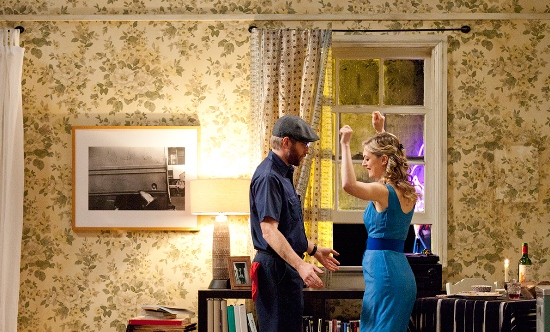
    Wes, the plumber, is intelligent, confident, and empathetic. He enters her solitary life and gently attempts to prod her out of her shell. Soon, he has her dancing, smiling and sharing her fears. She is swept off her feet. Wes encourages her to venture forth onto the stage of life. She is overcome with immense fear at his prodding. She wrestles with her phobia and lashes out at Wes.

    Will she vanquish her fears? Only time will tell…

    The director/writer, Noah Buschel, is brilliant in his portrayal of agoraphobia. The music is effectively interspersed throughout the film. The lighting techniques implemented are truly commendable. It is a sensitive and captivating portrayal of this phobia.

    http://youtu.be/pWuq198T15k

    Read more


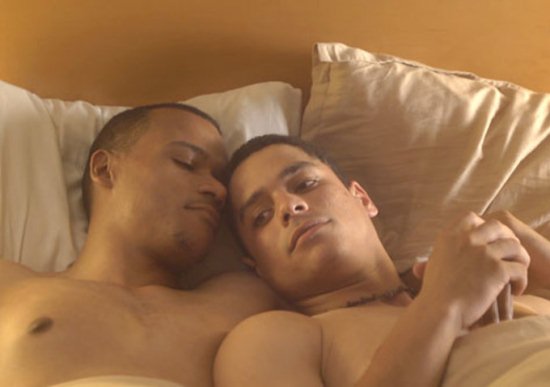
  • REVIEW: THE HAPPY SAD

     thehappysad

    When Stan’s girlfriend of six months, Annie drops the bomb on him that she has been preoccupied more recently and not fully committed to their relationship, he becomes unsettled. Reminding her of their agreement to always be candid about the things that happen in their lives, she elaborates to the truth of her infatuation for and brewing relationship with Mandy. Baffled to say the least Stan admits that he no longer wishes to date Mandy, for now. Meanwhile, Marcus and Aaron are looking for ways to spice up their relationship, at the exact moment when their sexual peak is seemingly in reach; agreeing to explore an “open relationship” the two attempt to set boundaries for their trysts, collectively which they assume would lead to mountains of fun for these liberal New Yorkers, marked by exploratory flings.

    Unsure of her reasoning for sharing such news, Annie is caught between temptation, uncertainly, and possible feelings both for Mandy with whom she is only an acquaintance, while Aaron and Marcus try to find ways to not fall out of love with each other all the while falling into the idea of being with other men. Realizing that they may not trust each other the way that they thought, tension grows as the two are trying to hide their actual experiences when they are not together. Sharing an apartment has seemed to make the two more distant than ever, if that makes any sense.

    A twist of fate, maybe, or oddly coincidental, the two couples plights intertwine in an extremely provocative manner. Erotic Dreams are brought to fruition, morals are tested, lies maintained, relationships altered and developed, all under the New York City skies. Hows that for a smorgishborg of events. Thanks to director Rodney Evans, you are given a first class ticket to a “powerful, and timely, narrative film exploring issues of sexuality, fidelity, and race in contemporary America.” Hold on for this thrill ride

    Note to the general public: The Happy all have a sense of sadness, its an irony of life; nothing is perfect, and cheers to those who have figured that out. The winners in life are risk takers, that ambitious crop of persons who have the courage to obtain, by any means necessary. Forgive as you will, forget what you may, cause at the end of the day its about perseverance, and your ability to cope, or better yet to thrive not just survive in relationships, the same as life. Bare witness to a cast of very good performances, and bouts with living life on life’s term, all while trying a hand at monogamy. A tough task !

    The Happy Sad Official Site

    http://youtu.be/GKp_fZ4M-zE

    Read more


  • REVIEW: LEE DANIELS’ THE BUTLER

    Lee Daniels’ The Butler 

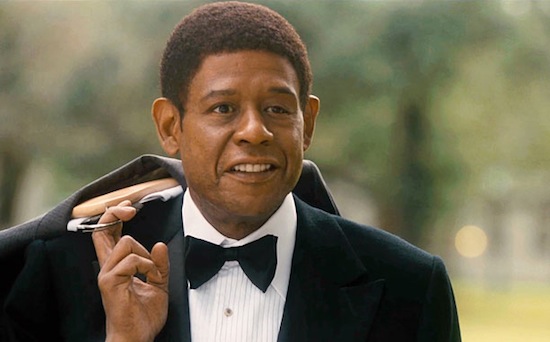
    By now, you’ve likely heard all about LEE DANIELS’ THE BUTLER, the story of an African-American man who served on the White House staff through eight administrations. In the film Forest Whitaker stars as Cecil Gaines, who is loosely based off actual White House butler Eugene Allen. Of course, don’t be fooled by the marketing – reading the Washington Post article the film was initially based on, shows that the film is fictionalized to a great degree. Because of that, in some ways The Butler is like a real-life version of Forest Gump, though by no means do I mean to compare the obviously completely different protagonists (to be like Forest Gump, Cecil would have had to do something like stop the Cuban Missile Crisis by misplacing JFK’s silverware).

    Whereas the real-life Eugene was born in Virginia, Cecil is a child of cotton fields in the Deep South. After a horrific childhood tragedy he slowly grows into his role as a servant and constantly impresses the right people until he is hired by the White House. However, his service to white presidents in the racially turbulent 1950s, 1960s, and 1970s puts him at odds with his eldest son Louis (David Oyelowo), and while we witness Cecil’s humorous encounters with numerous presidents we also witness his rocky relationship with Louis, who gradually becomes involved in the Civil Rights Movement.

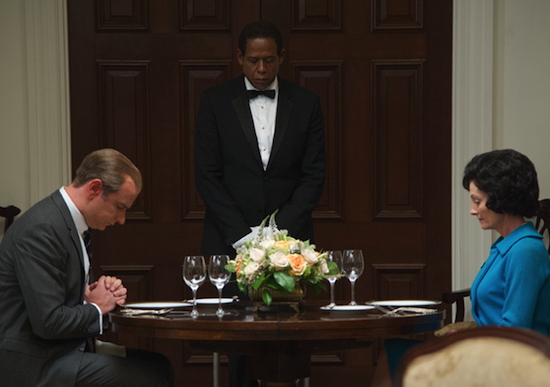
    If you go to see the The Butler to see caricatures of former presidents, be prepared – their appearances are limited to glorified cameos that are often played for laughs. The idea seems to be to show the presidents at their worst, so you see Eisenhower (a miscast Robin Williams) cowering over his decision to enforce Brown v. Board of Ed, Lyndon Johnson (Liev Schreiber) on the toilet, Nixon (an even more miscast John Cusack) pandering for votes and drunkenly insisting he’ll never resign, and Ronald Reagan (Alan Rickman) trying to hide things from Nancy (Jane Fonda). Only John F. Kennedy (James Marsden) gets off without looking ridiculous, partially because Marsden plays him straighter than the other presidential actors and partially because, well, I’m sure you know how Hollywood feels about the Kennedys. I mean, you’d think a White House butler would’ve seen a mistress or two running around Kennedy’s office, right? As for Gerald Ford and Jimmy Carter, they get a pass via a montage that zooms through late 70s/early 80s American history, which, inexplicably, ends with a lengthy shot of Princess Diana. This leads to a major all-serious tonal shift in the last half hour of the film that is far removed from Eugene Allen’s actual life.

    Aside from the presidents, the film does have an impressive cast beyond the always great Whitaker. Oyelowo’s Louis is a great foil for Cecil, even if the Louis character is entirely fictional. I was also surprised by how good Cuba Gooding Jr. is as Cecil’s fellow butler Carter. Considering the last film I saw Gooding in was opposite Dolph Lundgren in the direct-to-video One in the Chamber, his funny performance here could put his career back on track. Another surprise is Oprah Winfrey, who plays Cecil’s oft-drunk wife Gloria. She’s a better actress than I expected, but most of her lines are delivered as sassy quips, even the lines of her dialogue that aren’t supposed to be sassy quips. She also curiously seems to age at half the rate that Cecil ages. Still, the shame of that is that there about a half-dozen far more proficient middle-aged African-American actresses who deserved the role over her and could have done something more than a two-dimensional sassy wife.

    In that sense, the engaging father/son story and the more comedic upstairs/downstairs presidential comedy seem like two completely different movies. While the drawing card is obviously the presidents, it’s the far weaker part of the film. Surprisingly, it’s the fictional story of Cecil and Louis that is the most moving. It makes me wonder if the real-life Eugene Allen’s story would’ve been better told as a documentary. Director Lee Daniels went from directing films with small scope like Shadowboxer, Precious, and The Paperboy to The Butler, and I think that explains why the film’s weaker parts are the ones that meant to be more “epic” in scope. I believed in the scenes of Louis facing harsh racism as an activist. I did not believe the scenes of Cusack’s goofy Nixon handing campaign buttons to the butler staff. I’d think screenwriter Danny Strong, who wrote HBO political movies Recount and Game Change, would have had a better handle on the political material.

    Lee Daniels’ The Butler

    Despite the August release date, The Butler is the most obvious Weinstein Company Oscar bait since The King’s Speech. While being Oscar bait isn’t necessarily a bad thing (The King’s Speech alone is evidence of that), I figure you’ve seen enough Oscar bait movies to know how thick The Butler lays it on. It’s a very good movie, but it misses the “great” mark by trying to be too goofy and too preachy at the same time.

    Film Review Rating 3 out of 5 : See it … It’s Good

    http://youtu.be/9uBXH_DLxsU

    Read more


  • REVIEW: WHEN COMEDY WENT TO SCHOOL

    “A time when a vacation meant a trip to the Catskills”

    when-comedy-went-to-school-1

    And with it you were assured to see a show. Now whether or not it was to your liking was no guarantee. Moments afte ther decline of Vaudeville and Burlesque there existed a huge void in American activities and passtime; what once ensured entertainment was now old news, yet the audience remained. 75 miles NW of New York lie a region called the Catskills, still til this day, a place of hotels, rooming houses, and more. As it remains very popular today, there was a time when the Catskills were the end all be all in vacation options. Tourists from all over frequented this area in search of opportunity; to relax, to engage, to mingle, and more.

    when-comedy-went-to-school-2

    For a batch of young men and women who set their sites on being apart of something special, a thriving industry, these travelers were the perfect tool and conduit to their success. “When comedy went so school” it was practiced, studied; For legends like Jerry Lewis, Sid Ceasar, Jackie Mason, Jerry Stiller and Dick Gregory the hotels and resorts of the Catskills were a place to earn a good days pay while ironing out the kinks in their stage performance. Comedy. which once was slap stick or somewhat dramatic was now centered around being downright hilarious (thats if u got lucky). At the time these novice performers used the Catskills for exactly what it was worth: good meals, good scenery, good company, and beyond all else, good money., and practice.

    Taking center stage at bingo halls, theaters, restaurants, anywhere else that the promoters dictated these ambitious inpiduals kick the door down to a new age. In this film, Director Ron Frank and host Robert Klein provide a tutorial, which chronicles the history of comedy and its marriage to the Catskills. Where stars were made, or saved; where people enjoyed their effort encouraged their development and criticized their missing of the mark

    when-comedy-went-to-school

    “A boot camp….Basic training for a generation plus of our most gifted comics”

    The Rodney Dangerfields, Gabe Cohens of the world all got their feet wet. Before becoming household names the Larry Kings and David Brenners went to school with comedy, for comedy. Laced with creative biblical references, interestingly substantiated by interpretations, or manipulation for that matter. Get to understand this treatise on the beginnings of Comedy. From the tumbler to the stand up expert, entertainment in the Catskills evolved, and from that evolutuion was born a new genre- COMEDY

    http://youtu.be/Rwr-U1z1F60

    Read more


  • REVIEW: Jerry Lewis, Jerry Stiller, Robert Klein in WHEN COMEDY WENT TO SCHOOL

    when-comedy-went-to-school

    I’ve always had a deep respect for standup comedians, which I regard as one of the toughest gigs in all of entertainment. However, standup comedy as we know is a relatively modern form of entertainment, and the origin of how it grew from vaudeville can be pinpointed to the Catskill Mountains in upstate New York, where dozens of the greatest comedians of all time developed their acts.

    WHEN COMEDY WENT TO SCHOOL, a documentary about the influence the Catskills vacation region had on Jewish comedians, explores what exactly made the area such an enclave for future funnymen (and women). Narrated by Robert Klein, comedian and former Catskills busboy, and featuring interviews with Jerry Lewis, Jerry Stiller, Sid Caesar, Jackie Mason, and other comedy icons, along with plenty of vintage clips of Mel Brooks, Woody Allen, Lenny Bruce, and Rodney Dangerfield, When Comedy Went to School is full of laughs as it tells the story of how modern standup comedy developed among Jewish vacationers.

    The height of the “Borscht Belt” experience lasted for a very brief time — roughly between the end of the vaudeville era and the rise of television and cheap air travel. But those three decades gave birth to so much of what we think about modern comedy. In that sense, your enjoyment of When Comedy Went to School will totally depend on how interested you are in the history of comedy. If standup comedy isn’t your thing – especially if older comedians don’t make you laugh – you probably won’t enjoy it. However, if you still crack up at Mel Brooks or Woody Allen comedies (and if you don’t you’re not friend of mine), you’ll find a lot to enjoy in this documentary.

    It also delves in the special relationship Jewish entertainers have with comedy and how the Catskills served as an almost Jewish-only summer paradise where entertainers felt comfortable working on their craft away from their homes in New York City. Like Klein, many of the comedians actually started as busboys and waiters and learned that they could earn more tips by injecting comedy into their interactions with guests. Early in the documentary Jerry Lewis calls it a “laboratory,” and it’s hard to find a more appropriate analogy for what role the Catskills scene did for all those great comedians and the development of standup comedy overall.

    At only 76 minutes, the documentary flies by. However, in the last twenty minutes I would’ve loved to have seen more vintage clips of the comedians rather than the focus on the decline of the Catskills as a vacation destination. I understand why directors Ron Frank and Mevlut Akkaya went in that direction (especially since I’m sure the vintage clips didn’t come free), but I know I could’ve watched hours of clips of comedians cracking their best jokes.

    Film Review Rating 3 out of 5 : See it … It’s Good

    WHEN COMEDY WENT TO SCHOOL opens in NYC at IFC Center on July 31, Long Island on August 2, and Los Angeles on August 16.

    http://youtu.be/Rwr-U1z1F60

    Read more


  • REVIEW: ROMEOWS (Retired Older Men Eating Out Wednesdays)

    romeow

    “If you accept a dinner invitation you have a moral obligation to be amusing”

    Famous words of the Dutchess of windsor, which serve as the perfect personification of what the ROMEOWS stand for, as a collective. Comprised of Retired old men, Brooklyn college Alumnus who come together each and every Wednesday for the purpose of brotherhood. Documenting their history, their unity, their commitment to one another and their pride in not only their roots but their alma mater as well, ROMEOWS is a lesson in relationships.

    Have you ever experienced a bond so unbreakable that you would schedule the rest of your entire existence around the prerequisite of sharing time and space wit the other(s) who share in this link? If you havent, dont fret, but what you will get to learn and admire are those who can relate. Their story may very well be similar in so many ways to others, but the authenticity in this feature film is unmistakable. The roundtable which serves as a platform for their sharing, and caring is awe inspiring.

    50 years removed from their shared dormitory, Lords House on the campus of world renowned Brooklyn College, these gentlemen are as vibrant and unified as ever. Take a ride on their journey of life, of comraderie, of perspective. From remembering when Brooklyn was the world, or when Nathan’s hot dogs were 15 cents a pop, and a trip on your bicycle to Coney Island was the highlight of your life. Share in the simplicity of the importance of true friendship.

    In an age where everything is so “right now” ROMEOWS as a film focuses on the sweet taste of patience, of not giving into the demands of time in a sense. We are trained, as men more specifically to be firm in our position, our feelings; that is if we are ever bold enough to develop any. We talk sports, out of the need to know more than someone else, we cheer for our team only wanting to be the at the trophy presentation, not for the momento but for the bragging rights. We encourage one another but only to the point where it does not infringe on our ego. Ever dreamed of a place where these are not the rules? Where the new rules are all inclusive, organic, universal, and more than anything based on a love and concern for your fellow man; truly wanting what is best for him the same as you want it for yourself.

    What resonates most for me is the importance of memories, all be it good or bad, memories; those thoughts if you will, which truly encompass the term longevity. Decades, trends, moments have passed but what remains are the ROMEOWS. A group of men, retired, who honor their vow to each other, to their institution, and to dinner at 7PM on Wednesday Nights. A must see if you ask me. Wanna learn about forever, and sharing it with those who mean the most, take notes from the ROMEOWS

    ROMEOWS opens in theaters Friday July 19th.

    Read more


  • REVIEW: Fruitvale Station

    fruitvalestation

    FRUITVALE STATION is based on one of those horrific, real-life stories of when a police officer makes a heinous, unjustifiable decision.

    The film opens with amateur footage shot on a cell phone of the actual frantic, fatal moments in the early morning hours of New Year’s Day 2009 recreated in Frutivale Station’s harrowing climax. The recreation begins a little over twenty-four hours before, with Oscar (Michael B. Jordan), a twenty-two year old small-time dope dealer and ex-con, arguing with Sopina (Melanie Diaz), his girlfriend and the mother of his four year-old child, Tatiana (the adorable Ariana Neal) about Oscar recently cheating on her. The movie then follows Oscar throughout the rest of his New Year’s Eve – which also happens to be his mother’s birthday – as he tries to follow through on his resolution to give up dealing dope and get his job back at the supermarket, which he was recently fired from for constantly being late. However, it’s New Year’s Eve and Sopina wants to go out to San Francisco to party. Though Oscar’s mother (the wonderful Octavia Spencer) begs him to take the train to avoid driving drunk, it turns out to be the wrong decision when Oscar is confronted by someone from his past and is later detained by the police in a frightening, chaotic scene.

    The final thirty minutes of Fruitvale Station are alternately scary and heartbreaking, but the preceding fifty minutes does just about everything it can to make sure the audience sees Oscar as a sympathetic character. For example, the film illustrates that:
    – Oscar is nice to strangers, as shown by him helping a pretty young girl he meets in the supermarket learn how to fry fish by calling his darling grandma.
    – Oscar is kind to animals, as evidenced by the care he shows to a stray dog.
    – Oscar is caring father, as evidenced by him constantly playing with his daughter.
    – Oscar is a nice guy, as evidenced by the perpetual smile on his face.
    – Oscar is committed to his family, as evidenced by his demeanor at his mother’s birthday dinner.
    – Oscar is committed to turning his life around, as evidenced by his very first words in the film and his actions throughout the film. He also drinks nothing more than a swig out of a bottle on New Year’s Eve.

    This includes scenes and situations that only the real-life Oscar would have been witness to, and thus their authenticity is questionable. The real-life Oscar may have been all of these things and more, but first time feature writer/director Ryan Cooglar risks making “movie Oscar” sympathetic to the point that it is over the top. Movie Oscar is an overwhelmingly charming individual, and though he has some moments of aggression and cowardice, there is little to dislike about him. Had movie Oscar lived the film shows no doubt that he would’ve become a model citizen on the straight and narrow, though it’s impossible to know how Oscar’s life would have gone. Of course, it’s still impossible not to feel sympathy for his character during the film’s climax.

    Octavia Spencer in Fruitvale Station

    Though those parts of the film might seem manipulative, there are parts that are chillingly authentic. Octavia Spencer’s performance as Oscar’s mother brings the film to another level. The interaction between her and Michael B. Jordan shows that Jordan has a bright future. Melanie Diaz also demonstrates her character’s pain effectively (but apropos of nothing, Sophina has the biggest hoop earrings I have ever seen in my life). Since the case revolved around cell phone footage, it’s also really clever that the importance of cell phones in our lives these days is demonstrated by superimposing Oscar’s text messaging on the screen. Lastly, Cooglar is wise to give the police officers some sympathy by making the most aggressive, scariest one (Kevin Durand) later the most calming.

    As a whole, the film is a powerful look at the last hours in the life of a young man trying to transcend his environment. However, Cooglar would have served the true story better by not being so obviously cinematically manipulative with the material (the horrific circumstances alone make Oscar sympathetic). As his first film this is forgivable, but it’s a lesson he will need to learn to grow as a director.

    Fim Review Rating 3 out of  5 : See it … It’s Good

    http://youtu.be/CxUG-FjefDk

    Read more


  • REVIEW: BYZANTIUM

    byzantium

    Isn’t it funny how a movie that starts with a line in voiceover narration like “my story can never be told” ends up being a two hour movie in which that story is told in great detail, right?

    Eleanor (Saorise Ronan) and Clara (Gemma Arterton) are 200 year old vampire-like creatures (called “succreants”) in modern day England. Though they refer to each other as sisters, Clara is actually Eleanor’s mother. Eleanor keeps her blood thirst in check by only feeding on dying old people, while Clara supports them by prostituting. After meeting a doughy, bespectacled customer who owns a hotel named Byzantium, Clara sets up a brothel and believes that their problems have been solved. However, Eleanor meets a gangly, nervous teenager named Frank (Caleb Landry Jones) and she finds herself drawn to him. She aches to reveal her true nature to him but Clara has so far kept her unaware of the costs of that decision – they are being tracked by powerful dark forces. Intercut with this narrative is the story of how Clara and Eleanor became succreants and why they must hide their true nature from the world.

    Comparisons to the Twilight series are inevitable, though BYZANTIUM is a bloodier, more vicious take on the material (still, though BYZANTIUM is rated R it is only briefly gruesome and gratuitous). At the very least, it’s a movie that is more tolerable for boyfriends (Gemma Arterton in various states of undress being more preferable than sparkly Robert Pattinson).

    The film was adapted from the 2007 play A Vampire Story by Moira Buffini, who also adapted it for the screen, and was directed by Neil Jordan, who is best known for winning an Oscar for directing The Crying Game. I mention them both because I’m not sure who to blame for the two-hour runtime, which is far longer than necessary. This is because Byzantium has a tendency to repeat itself. For example, for roughly the first third of the movie Eleanor crosses paths with Frank (often by choice), but then runs away from when he gets too close (physically and emotionally). That’s a fine story bit, but not when it is repeated three times. It even becomes a joke when Frank (who, I might add, tends to dress like a hobbit) finally says to her “why do you keep running away from me?” Similarly, much of the film’s dialogue is spoken in harsh whispers meaning that there is this dreary tone running through the film for nearly its entire length.

    However, BYZANTIUM is filled with gorgeous shots and both Arterton and Ronan rise above the sometimes silly dialogue with their performances. The movie will likely play extremely well with the Twilight crowd, especially those who liked the books and thought the film adaptations were too cheesy. Byzantium replaces that melodrama with blood and melancholia, which is a much better mixture.

    Review Rating: 3 out of 5: See it …..  It’s Good

    http://youtu.be/Ej2YBAuqvGk

    Read more