Film Reviews

  • REVIEW: Mike Mills Wonderful New Film “Beginners” stars Ewan MacGregor, Christopher Plummer and Melanie Laurent-and must be seen immediately!

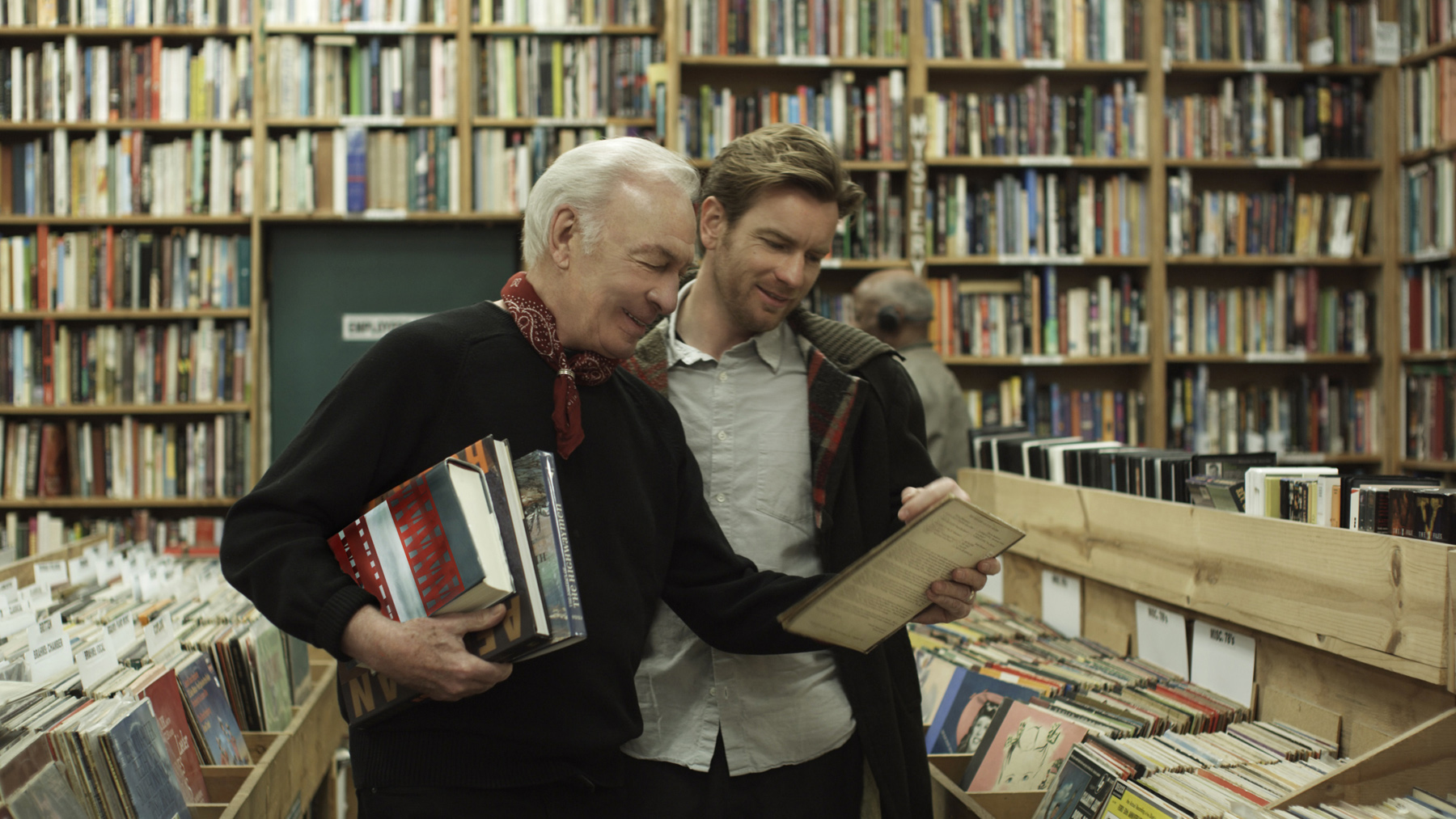
    There are a certain few films that you know from the first few frames that something essential and true is being conjure. Mike Mills wonderful new film “Beginners,” starring Ewan MacGregor, Christopher Plummer, and Melanie Laurent, opens this week. Ewan MacGregor plays Oliver Fields, a sweet illustrator in his late thirties who quickly and quietly falls head over heels for French actress Anna (Melanie Laurent of “Inglorious Basterds”) while she is shacked up at the Biltmore Hotel during a film shoot. While falling into this new love, the commitment-shy Fields starts thinking about his late father, Hal Fields (Christopher Plummer).

    “Beginners” is based on a true story of Mills’ own elderly father’s decision to come-out as a gay man at 75- shortly after his wife’s passing-then begin to literally live out loud and proud as a gay man before succumbing to his own death from cancer, years later. Complete with a wonderful group of nurturing, gay friends and sweetly sexy, young lover (Goran Visnjic of “ER”), Hal’s new life enlightens and enables his son to see love in an entirely new light. In fact, his father’s joyous, fulfilling new existence allows Oliver to see that it is possible for him.

    Christopher Plummer plays Hal Fields with his own enigmatic, gorgeous ease, and it is amazing to see how MacGregor takes in and plays off the masterly performance from Plummer. It is truly one of the most beautiful father-son relationships I’ve ever seen depicted onscreen. Laurent is totally luminous, as usual, and also adds her own succinct generational weight to her portrait of Anna, a busy French actress who, before meeting Oliver, preferred the company of empty hotel rooms to any kind of real, breathing relationship.

    “Beginners” shows us how a certain post-Vietnam generation is still being haunted by the previous era’s mistakes, unhappiness and haunting nostalgia. Being a child born of the mid-Sixties himself, Mills uses his own highly creative and varied background as an music video director, illustrator and graphic artist to collage out feelings in a quietly beautiful, brand-new and whip-smart cinematic form. There is not a single false note in Ewan MacGregor’s performance. He and Laurent shine bright with both the quiet glory of new love, while battling off the heavy weight of their own, carried-down emotional baggage. Christopher Plummer is, quite simply, outstanding- giving a magnetic, warm and oh-so watchful performance as Oliver’s powerful memories of his now-deceased father resonate and collide with his present relationship.

    Amidst the memories, the nostalgia and the sweet tumult of the present, LA has rarely been given a better, more iconic treatment. The locations, from the Richard Neutra “Health House” occupied by Oliver’s dying father, to the hills of Griffith Park, to rollerskating (yes!) in the lobby of the Biltmore Hotel, Mills shows Los Angeles shining or smudged- all depending on Oliver’s mood. Oh, and there is a sanguine Jack Russell terrier, (once belonging to Hal,) who speaks to Oliver in hilariously plaintive subtitle.

    It’s an important, masterful film, as Mills seems to be shaping up to be one of only a handful of American filmmakers giving actual adults in this country a real voice and authentic identity. I cannot wait to see what he’s going to create next. Go and see this film for many reasons- but, please, please… just go and really see it.

    {youtube}EGgD64wDye0{/youtube}

    Read more


  • REVIEW:The Big Uneasy .. worth seeing for a whole new perspective on the Hurricane Katrina disaster

    There have been some important documentaries about Hurricane Katrina, including Spike Lee’s epic When the Levees Broke, and the very personal Trouble the Water, but Harry Shearer’s The Big Uneasy is worth seeing for a whole new perspective on the disaster, one that was far from “natural.”

    Shearer (an actor and comedian, as well as New Orleans resident) presents a wealth of data and evidence proving undoubtedly that it was the many engineering and design flaws, largely the work of the US Army Corps of Engineers, which led to the flooding of the city. He interviews three main figures, two academic scientists and an Corps engineer, whose expertise and knowledge in the field is indisputable, and whose findings have led to one losing his job, and the others being ostracized. The two scientists, Robert Bea and Ivor van Heerden, were part of two separate scientific investigations examining the levees, and how, why, and when they broke. Their investigations were largely ignored and led to big lawsuits with little results. The engineer Maria Garzino worked with the Corps prior to Katrina testing the pumps that were meant to keep flooding water out of the city, but that were defective and “temporarily” installed anyway. She released a memo warning of these defects, and hit wall after wall of federal and governmental authorities.

    These three testimonies make up the core of the film’s argument, but some other enlightening aspects of the film’s investigation include the debate about the wetlands surrounding the city, which provide a natural defense against hurricanes but are severely depleted, and a new design option for New Orleans, mimicking the use of water in places like Holland, where the water running through cities has been designed into tributaries rather than damned off. The documentary also goes back decades in time to the “Mr Go” project in the late 50s– the first huge engineering mistake made in New Orleans, never repaired, and part of the reason for the flooding.

    The Big Uneasy gives an almost overwhelming amount of new information that has not fully been released to the public before, and although it is in some ways a conspiracy, it is rooted in fact, and the cover up is simply abominable. The film certainly incriminates the Army Corps and the US Congress, but the interviews with Corps employees and soldiers speak for themselves. The cinematic style of the documentary is something to be desired; it’s mostly talking heads, documents highlighted onscreen, and some celebrity voice-overs, as well as animated sequences mapping out the flood, but an original style isn’t the goal of the film. Rather, like An Inconvenient Truth, it seeks to give crucial information to the public in an effective manner. One hopes that it will escape the controversy of the former film; unless you work or endorse the Army Corps, I don’t see how you could have mixed feelings about the information given. To balance the scientific talk, Shearer attempts to provide some sardonic wit and a more personal perspective on the subject with an appearance by John Goodman, and input from regular New Orleanians about their city. And, so as not to fully depress the audience, the film attempts ends on a hopeful note for the future.

    Opens Friday, May 20th in NYC

    {youtube}iST8js4HtOY{/youtube}

    Read more


  • REVIEW: The Topp Twins: Untouchable Girls… succeeds in entertaining

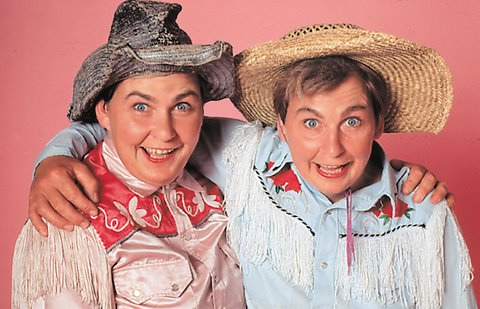
    The Topp Twins: Untouchable Girls is a new documentary directed by New Zealand filmmaker Leanne Pooley on two fascinating subjects—the performing duo Lynda and Jools Topp, twins who have become cultural and national icons in New Zealand over the past 25 years. As one interviewee says, a pair of yodeling lesbian twins doesn’t sound all that impressive on paper, but their act, which includes country music, comedy, and interaction with audience members, succeeds in entertaining extremely diverse groups of people, while subtly making a political statement simply by being who they are. The twins are described in the film by various people as “an anarchist variety act,” “relatively shameless,” and “a healthy, moral, cheerful cowgirl image for out lesbians.” These unique sisters fit a multitude of descriptions, all of them positive.

    The Topp Twins grew up on a farm in New Zealand, and are still very close to the land and animals of their upbringing. When they’re not touring the world, they enjoy the simple life of riding horses and raising cattle, but don’t mistake them for “simple” folk. As the film shows, they have a very interesting background, having spent time in the army, busked in the streets to start their music career, and then became very active in political and social issues, fighting for Maori land rights, a nuclear-free New Zealand, and gay rights. In everything they’ve done, Lynda and Jools have remained constant in their dedication to each other, and their undying lighthearted and positive energy, which of course carries into their acts.

    Pooley’s film captures this close relationship and amazingly limitless joy. A straightforward and traditional documentary, it also includes great concert and archival footage, hilarious and improvised interviews with the Topp’s comedy characters, such as Ken and Ken, and Camp Mother and Camp Leader. The film gets to the heart of these two wonderful subjects, and upon seeing it, one will no doubt want to find out where they might be touring next.

    {youtube}HtSDaOscM_I{/youtube}

    Read more


  • REVIEW: The Bully Projects from the 2011 Tribeca Film Festival

    [caption id="attachment_1328" align="alignnone" width="560"]Norwegian film “Turn me on, goddammit”[/caption]

    The themes of bullying, being bullied, and the horrific effects it can have on a child were displayed in full force at this year’s 2011 Tribeca Film Festival in New York.

    Director Lee Hirsch, who was himself bullied as a child, helms this poignant, thorough and very topical “Bully Project,” which takes you not only into the lives of children being ridiculed and teased at school, but, literally, onto the school bus right along with both the weak and the tormented. He also highlights two families who both suffered a devastating loss when their child killed themselves. (One middle-school age child, and one teen-ager).


    Far from being sheer heartache in motion, Hirsch’s agenda seems to be one of getting the school’s faculty and leadership more involved (in what has become a national issue of serious force),  while school administrators argue that it is the parents who need to teach their children to respect others. The doc just got picked up by the Weinstein Company, so you will soon be able to judge for yourself.  I loved it.

    The new Tony Kaye film “Detachment,” starring Adrien Brody, Marcia Gay Harden, Christina Hendricks, James Caan and Lucy Liu, not only dives head-on into the life of one very tortured, teenage girl’s life, but into the life of her teachers and head principal’s.

    Brody brings his natural, irresistible talent to the forefront of this film, which is, to put it mildly, completely heart-wrenching. You get to see both sides of the equation fully here- the teenager with far too much emotional weight on her shoulders, the classroom of disrespectful kids who border on terrorizing, and the lonely, exhausting lives of these high school teachers. It is quite something to see a subject portrayed so starkly, and Kaye is clearly mad as hell about the subject- as he is far too talented to be this heavy-handed without being aware of it. This film is supposed to hit you like a ton of bricks, and it most certainly does.  This should be rudimentary viewing for anyone with a kid about to enter public school, or anyone who wants to know why people always consistently say that teachers should be making a million dollars a year.

    The Norwegian film “Turn me on, goddammit,” was a minor hit at Tribeca this year. It features some very natural, great performances by non-actors, and is the first feature from director Jannicke Systad Jacobsen. It centers on a very horny teenager, Alma, who gets bumped down into the nether regions of the high school hierarchy after a boy that she has a crush on “pokes” her leg with his penis at a party. She soon becomes known as “Dick Alma, ” and is completely shunned at school. I wasn’t as crazy as everyone was else about this film, but it is a lot of fun, and is even stranger set against the bleak, rural Norwegian landscape. Alma perseveres far better than the subjects and characters of the film above, which also made it a pleasure to watch.

    Read more


  • REVIEW: Octubre is an enjoyable film, careful and deliberate

    Octubre is a lauded new Peruvian film that was recently at New Directors/New Films and has been at multiple other international festivals; it is the first feature of a team of brothers—writers/directors Daniel and Diego Vega Vidal. It’s a film of few words, so to speak, simple, with not too much fuss made. The film begins with Clemente (Bruno Odar), a moneylender who’s trusted and known in Lima as the pawnbroker’s son. He lives alone, visits prostitutes often, and leads a quiet, austere life. That life is disrupted when he finds a baby in a basket has been left in his home. We learn that it’s the baby of a hooker and that he is presumably the father. While he searches for the mother, he hires Sofia (Gabriela Velasquez), his lonely and kind-hearted neighbor, to look after the baby. Thrown into the mix is Don Fico (Carlos Gasols), an old man getting by on the street s of Lima and trying to save his money (he uses Clemente as his bank). A makeshift and unusual family is created in Clemente’s house, but he seems quite unaware of it, unfamiliar as he is with real human connection, beyond cold business interactions.

    Framing the narrative is the Procession of the Lord of Miracles, a religious tradition that takes place in Lima through the month of October. Faith and religion are represented strongly—Sofia marches in the Procession and calls the baby Milagritos (little miracle), and the Virgin Mary is on a significant piece of money paid to Clemente. But the filmmakers treat religion as a fact of life and an important tradition in Peru, a realistic aspect of the society, rather than making a specific statement about it. The film has great humour, subtle and natural comedic moments that enrich the somber environment, as well as a strong attention to sex and desire, also portrayed in a simple and matter-of-fact way.

    There is a certain economy about this film; nothing is shown unnecessarily, every shot has a reason. But that reason may not have anything to do with the plot, nor is every shot rigidly structured, some of the best seem to have been captured almost accidentally. This style of film making creates a great nuance that enriches the characters—the well-framed and bare cinematography often reveals something about the characters and lends itself to the overall feeling of the film. The audience is often not shown things they may expect to see, rather we hear something off-screen, or deduce what has just happened without actually seeing it. Again, the filmmakers do not waste time with unnecessary images, only images that have relevance to the overall statements of the film.

    Do not expect too much from this film in terms of action or even plot, it is focused on character and place more than story. Nor do we get a particularly satisfying ending, it’s rather abrupt. But if one takes it as it is, Octubre is an enjoyable film, careful and deliberate, a small yet poignant portrayal of people coming together, moving beyond basic survival towards a greater hope, perhaps with some help from little miracles.

    Opens May 6th in NYC

    In Spanish with English subtitles

    {youtube}9PjtJEs8jjo{/youtube}

    Read more


  • REVIEW: Underwater Love; ..the most obscurely sweet and original soft-core porn musical I have ever seen

    “Underwater Love,” (Onna No Kappa) a Japanese film directed by Shinji Imaoka, is the most obscurely sweet and original soft-core porn musical I have ever seen. Actually, come to think of it, this would be my first soft-core porn musical, and for what it was intended to be, I appreciated this film from beginning to end. The story itself merges Japanese fantasy with reality. It centers around Asuka, who is a thirty-something fish factory worker in a small Japanese village outside of Tokyo. She is engaged to her boss Taki, and seems to live a more than ordinary lifestyle with little variance or excitement. One day she sees a Kappa, a mythological water creature that is part human. It is her friend Aoki, who long ago drowned at the age of 17. He has mysteriously come back into her life as a tortoiseshell, beak faced creature. It is amusing to see this Kappa so accepted and integrated into normal human life. We also travel with him and Asuka to the fantastical world he inhabits as a mythological Kappa.

    Read more


  • REVIEW: Blank City; Nostalgic, Eye-opening, Timely…

    Blank City is at once nostalgic, in its look back towards a time and place that was full of raw energy and desperate creativity; eye-opening, with its fantastic clips of experimental films that few people today have probably seen; and very timely, since it speaks directly to our current culture of artists, hipsters and struggling indie filmmakers scraping by in contemporary New York, a city very different from the one portrayed in this film, but the same city nonetheless. Celine Danhier’s documentary is all of these things, and more. It explores the films and music being made in New York in the late 1970s and early 80s, leading to the art boom of the 80s and 90s, the spread of punk and hip hop, and the rise of independent film. The time and place is portrayed by the use of film clips, musical performance footage, and honest and humorous recollections of the people who experienced it. The people interviewed include familiar celebrities, such as Jim Jarmusch, Debbie Harry, and Steve Buscemi, and lesser known artists like Amos Poe, Vivienne Dick, and Nick Zedd.

    Read more


  • REVIEW: Elektra Luxx

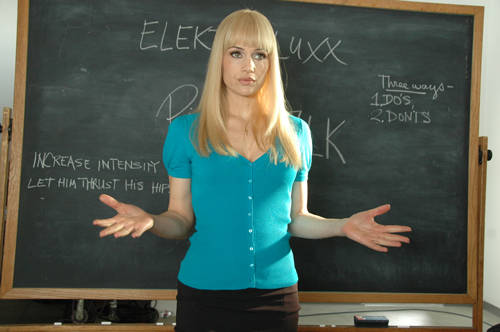
    Elektra Luxx is Sebastian Guiterrez’s sequel to a previous film, Women In Trouble. Picking up a month after the events of the first film, the plot centers on the porn star Elektra, played by Carla Gugino, and her struggle to change her lifestyle after discovering she is pregnant.  One act of good will Elektra provides for society is teaching a sexual education class for women.  A flight attendant Cora, played by Marley Shelton, confronts Elektra after class with lyrics written about Elektra from deceased rock star husband Nick Chapel.  In exchange for these lyrics, Cora requests that Elektra seduce her fiancée.  While catching them in the act, Cora hopes to feel less guilty about having cheated on her own fiancée.  Elektra agrees to play Devil’s advocate, which, after discovering she is pregnant, sends her into a crisis that demands the Mother Mary herself interject.  The story branches out to introduce Adrianne Palicki’s (Friday Night Lights) character, a porn star acquainted to Elektra. Her personality leaves you wanting to strangle or dash while her charms and bluntness leave the characters who encounter her shocked yet complacent, if not confused.  Though these women make the same type of films, they could not be more diverse, and depart on their separate journeys.

    Read more


  • REVIEW: Queen To Play (Joueuse)

    Queen To Play (Joueuse) is the first feature from filmmaker Caroline Bottaro, which stars Kevin Kline and the incandescent Sandrine Bonnaire.

    Read more


  • REVIEW: The Desert of Forbidden Art

    The Desert of Forbidden Art is a fascinating documentary by Tchavdar Georgiev and Amanda Pope, exploring an unknown art world made up of amazing artists whose work was condemned in their lifetimes largely because of Stalin’s regime, and consequently not recognized until recently. The film centers on the story of how one man, Igor Savitsky (whose narration is voiced by Sir Ben Kinglsey), made it his life’s goal to collect the work of Russian artists who had worked during the 1920s and 30s. He collected 44,000 paintings and drawings by these artists and created a museum in the middle of rural Uzbekistan. It is a straightforward documentary, with conventional techniques, but the subject makes it somewhat extraordinary, as it is story that has never been told on film before.

    Read more


  • REVIEW: Desert Flower – True Story of Somalian Supermodel Waris Dirie

    Sherry Hormann’s film Desert Flower is the true story of the life of supermodel Waris Dirie, and a very important one to be told. The film is based on her autobiography and brings us through the amazing journey from her life in Somalia as a child to her shift into modeling stardom in London and eventual women’s rights activism. The execution of this story, however, is less than impressive. It follows pretty conventional modes of narrative, with some obvious and sentimental scenes and plot devices. But it is saved from being a predictable made-for-TV type of film by a very strong cast and moments of poignancy.

    Read more