
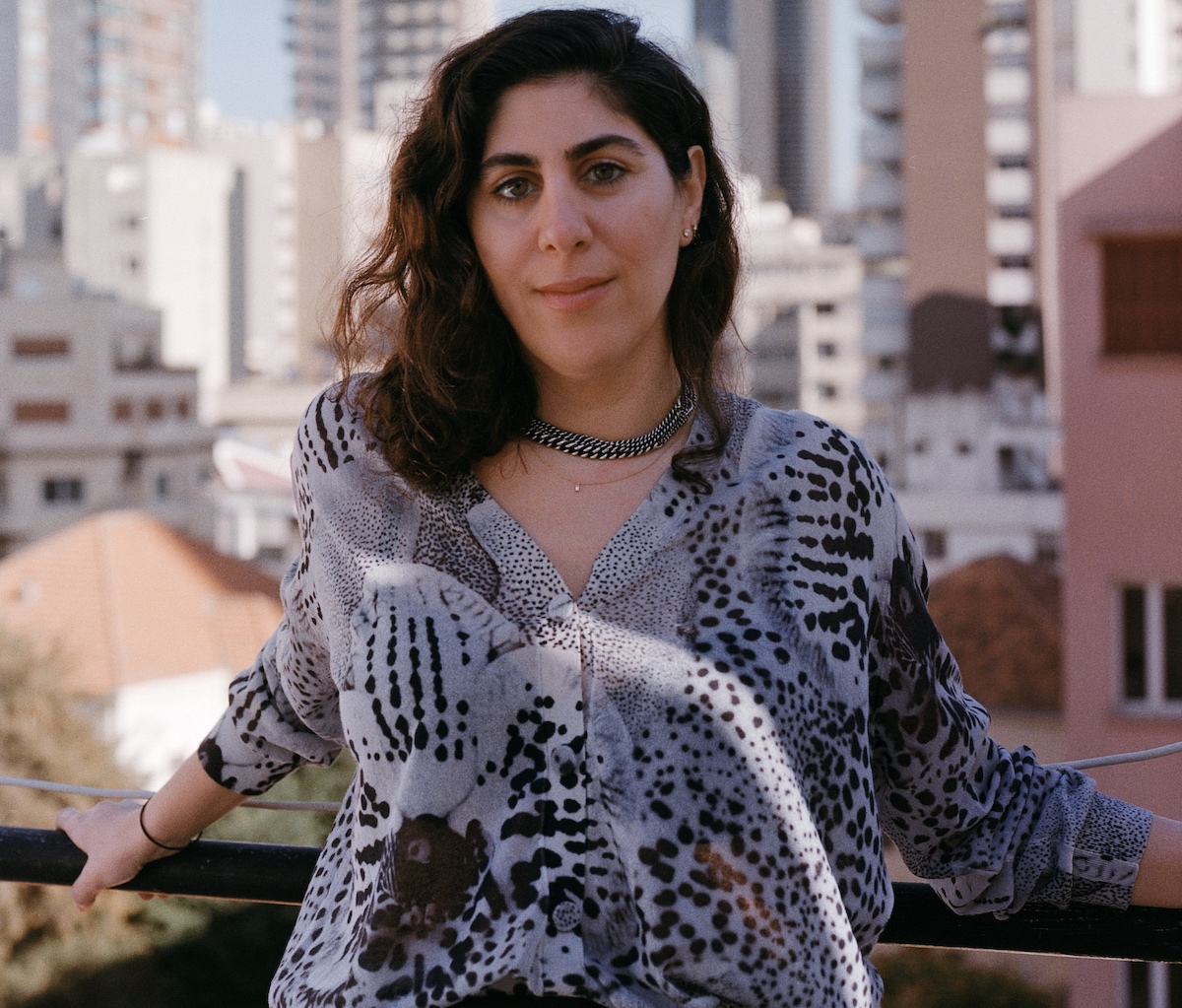
Do You Love Me is an award-winning debut feature by Lebanese filmmaker Lana Daher that takes audiences on a journey through Lebanon’s audiovisual memory.
Described as a “love letter to Beirut”, this film is composed entirely of archival footage, highlighting 70 years of TV, film, home videos and photography. It tells a story about Lebanese history and the people that make it just that, from citizens to artists and filmmakers – preserving the memory and the history of a nation that lacks a national archive.
The film had its world premiere at the 82nd Venice Film Festival, as part of the official selection of Giornate degli Autori.
VIMooZ met with writer and director Lana Daher to speak about the film’s creative process and what the film means to Lebanese audiences.
SAMANTHA GO: First, tell me about yourself. Where are you from, and how did you get into filmmaking?
LANA DAHER: I’m Lebanese, and I live in Beirut; I’m from the south of Lebanon. I initially studied graphic design and fine arts, and then I worked for several years in that industry, but then I also started experimenting with sound and music and filming things independently, and eventually I did my master’s in filmmaking in London. Around maybe two years after that, I started working on my first feature – this one, Do You Love Me.
SG: Was there something that happened for you to realize that you wanted to pursue filmmaking for your master’s?
LD: I don’t know. I mean, it was very intuitive. I love the relationship of moving image and sound and what that creates. For me, what I think is in common, whether it’s in graphic design or film, or even anything, for a few years I even DJ’ed – it’s just this ability to tell a story or take someone on a journey, whether it’s with graphics or with music, or anything. I love the aspect of storytelling, and I used to love going to the movies from a very young age.
SG: Do You Love Me is your debut feature. Could you introduce that film and tell us what it is about?
LD: It’s an archive-based documentary, and it’s about memory, Lebanese history, and our relationship to memory within society. But for me, it’s also very much about trauma and cycles of violence that we go through.
It’s really about life in Lebanon over the past so many years, but it’s not a linear film; it’s not chronological. It’s made completely from archives. A little bit more than half of those archives are independent Lebanese cinema, from the late fifties until today, and the other half are podcasts, home videos, short films, journalistic archives, lots of photography, lots of songs, also.
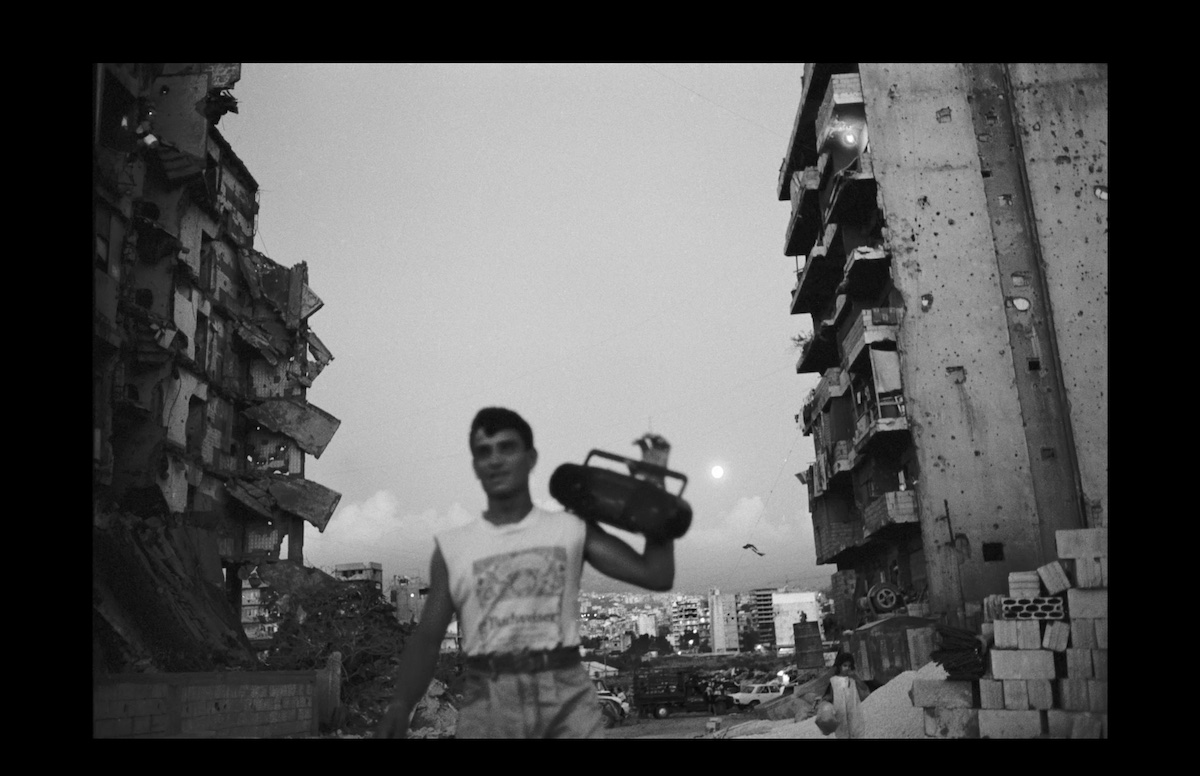
SG: Your work is grounded in “deep research and intuitive storytelling.” When creating a film like this one, what draws you to this style of storytelling and creation process in particular, as opposed to the more “traditional” documentary style with talking heads and interviews?
LD: I wanted something that was a little bit dreamier. I wanted to make a film about these topics, but it was a film that people could also create their own associations while watching it. I didn’t want something that was so limiting, in a sense; that’s also why I neither put these talking head interviews nor did I put my own voiceover. I created the voiceover of the film from existing dialogue from other voiceovers, from many different soundscapes. The reason for this, I mean, on one end it’s a very personal, artistic choice. It’s also just the things I’m attracted to, the way I think, all of that.
On the other hand, this goes from the premise of, like, Lebanon: we don’t have this one national archive, and we don’t have a unified history book. From that, my feeling was: how can I make something that is built and constructed from all these existing memories and existing archives, and how can I use the past to talk about the present, but in a way that’s poetic yet very grounded in reality, like a mix of those things? And I felt that if all these different representations of Lebanon, or more specifically Beirut, already exist, and then I stitch it together – my own representation – then maybe that would allow the space of the film to suddenly become something that looks like our collective memory. And I felt that creating that space is so much more powerful than having a talking heads interview where somebody is just dictating to you their opinion or their experience. The way we made the film, there’s enough room for the audience to also participate with their own imagination. There’s just enough without getting lost, but there’s also enough to participate.
SG: I read that you looked through 20 thousand hours of archival footage. What was the process of searching for and gathering material like?
LD: I think it would be more than four thousand hours [of archival footage], but it was 20 thousand sources. It was very difficult, because again we don’t have a unified national archive. It was really challenging. I basically ended up going to some private archives, some personal collections, some abandoned archives, and I had to go to each individual, including the filmmakers or the producers of the film, to actually receive material. [Sometimes I had to] go to places where nothing was digitized and find a way to just access things.
We have almost 400 contracts for every sound and image in the film, so it was very difficult to find the material but also so challenging to actually license it. That took years of work. Everything that we were finding, I was collecting and inputting into Adobe Premiere and organizing in different timelines, under different thematics and different categories to make the editing process easier.
SG: Is there a moment from the film that you find particularly powerful or moving? What was it like or how did it feel to discover that material?
LD: Honestly, so many, but what comes to mind is, I was looking through my friend’s home videos and her sister was being filmed by their dad, and it’s a moment where there’s an actual sonic boom, even though they’re in the mountains. A sonic boom is when a military plane flies very low and it breaks the sound barrier. It usually makes a loud sound; it sounds like an explosion. That was so powerful because I don’t even think that anyone in their family remembers this moment because sonic booms are not normal, but they happen here because the [Israel Defense Forces] just like to break the sound barrier, and they like to scare people. So that [moment] was really special because it was so weird. First, it was such a natural, unhinged, unexpected thing to happen on camera, and the little girl starts crying, and then at the same time it was very weird for me because the last few years have been very difficult in Lebanon; I live in Beirut, and there’s been an on-and-off, very violent war. So it was so weird for me to see these home videos that are more than 30 years old and to see that the IDF was doing this s*** back then and they’re still doing this right now. It was a strange moment but very, very special to find on camera like that, in a home video.
SG: There’s a phrase in your film trailer that states, “Disorientation is part of the journey” – What does that phrase mean to you?
LD: So that phrase has two roles. On one end, there’s life in Beirut, which is extremely chaotic; you never know when something might happen. Things here sometimes feel like they’re a little bit upside down, but that’s just normal because that’s the way it is here, or that’s the way it’s been for the longest time. But also, on another end, the film is not linear because trauma is not linear and memory is not linear. For me, it was important not to follow a chronological timeline in the film. But at the same time, having that as a statement at the beginning of the film, on one end it represents how things are in the city, but on a smaller scale and on the scale of the film, it represents the journey of the film itself. It’s interesting because the moment we had that sentence, it seems that most spectators were then comfortable enough to feel a little bit confused in the first 10 minutes of the film. And then everybody finds their own pace with the film, and suddenly they’re hooked, and they’re able to get it and to follow. I think that having that sentence really helped people to accept that they might be confused in the first couple of minutes, but then it’s going to be okay because that confusion is almost part of the nature of the film.
SG: Is there a specific message that you wanted to convey with this film?
LD: I don’t know if there’s one specific message, because the message kind of changes if you’re Lebanese or not. I think for the Lebanese audience I wanted to create a space where the film can hold space for the feelings we might have about everything that has happened. I also wanted to create these inter-generational bridges, which have been happening. When people watch the film, there’s a very interesting connection happening between generations. But I really wanted the film to hold space for all that pain and grief that’s more for a Lebanese audience. But for an international audience, I also wanted to show a different side. I wanted to show not the actual events that you see on the news, but rather how these events make us feel or how we experience them. I also wanted to show that yes, despite all this pain, we’re not just a number or a statistic of war or death – we’re actually people who love to live and who come from a beautiful place, and who have a lot of joy and other things in their lives other than what Western media tends to portray.

SG: What were the reactions of your Lebanese audiences like?
LD: Very, very powerful. It’s been really interesting. A lot of people found it cathartic, a lot of people found it really difficult. They were upset, but they thought they were okay with being upset; they were upset to watch the film. It also depends on how old they are. Much older generations found that it’s such an important film, but they were very upset that we are still in this state of war. The younger generation felt that they understood their parents more, but they also felt that there was a lot of hope, or a lot of joy. Also, whether people live here or not changes how they feel about it, how much they’ve worked on their relationship with Lebanon. Some people, for example, who immigrated and don’t want to come back, they see this film as a validation of why they are away. Other people see this film as a validation of why they stayed. So it’s been very diverse.
SG: Going into it, did you expect those differing reactions among the different generations? Or did you just have an emotion or story that you just wanted to express?
LD: I thought a lot about my audience, but I wasn’t thinking of all the different things that they might feel. But I did consider the audience and at least making the film understandable, and as a cinematic experience I wanted it to be enjoyable. But yeah, I thought a lot about that, but of course I’ve had amazing surprises that are beyond my expectations. But I thought a lot about how people would feel, and I knew that it’s going to be a good feeling for some and it’s going to be a horrible feeling for others.
I did not want [the film] to be so violent that people leave the theater, so I also worked a lot on that. I’ve only heard of two people who left – one had a panic attack, and the other was crying so much that he had to leave – and again, these are people who have been through very traumatic experiences, but also maybe they haven’t been able to fully overcome those experiences. And so sitting in the space of this film is extremely difficult.
SG: As a Lebanese person and filmmaker, how do you feel about being able to share such a unique story about the place that you’re from?
LD: It feels great. I feel very lucky and very privileged that I can share it, but also I worked really hard on this film for eight years, so I feel very pleased and very privileged and very happy and very fulfilled. I worked so hard on this, and it’s about this place that I come from, and it’s really born from my experience of living here, and that I’m now able to share it with the world is so meaningful, especially in the last year with everything happening. If I was traveling around with something that was completely unrelated, I think that would have felt really bad for me because when you live in Lebanon, and you’re going through endless states of war and struggle, and then you travel and you see that the rest of the world’s just continuing with the rest of their life, it feels really shitty. So when I travel, and I’m able to share the film and create discussions around it, it also makes me feel like I’m a bit useful in all of this – it’s like my way of giving back.
This interview has been edited for length, clarity, and formatting. Some responses may have been condensed or lightly modified to improve readability while maintaining the original intent.
Leave a Reply
You must be logged in to post a comment.